
Updated on: August 14, 2026
Scandinavian interior design is the most borrowed and least understood of the major styles. It gets reduced to white walls and pale wood, which misses what actually holds it together: a set of decisions about light, material and function made by people who spend half the year short of daylight. The result reads as calm rather than austere, and that distinction is the whole discipline.
What follows covers what the style actually is, how it differs from Nordic design and from minimalism generally, what hygge means in practice, and twelve pieces from Danish, Swedish and Norwegian studios.
What is Scandinavian interior design?
Scandinavian interior design is an approach built on functional simplicity, natural materials and maximising available light. It emerged in Denmark, Sweden and Norway through the early twentieth century, formalised by the 1950s Design in Scandinavia exhibitions, and rests on a democratic premise — that well-made objects should be affordable and useful rather than decorative and rare.
The core principles
- Light first. Pale walls, pale timber and unobstructed windows exist to make the most of limited daylight, not because white is fashionable. Layered lamps take over when the daylight goes.
- Function decides form. If a detail does not do something, it comes off. That is why joinery is left visible in so much Scandinavian furniture — the connection is the ornament.
- Natural material, honestly finished. Ash, birch, beech, wool, leather and ceramic, usually oiled or waxed rather than lacquered so the surface can be repaired instead of replaced.
- Restraint, not emptiness. Few objects, each with enough presence to hold a surface. Consequently the palette stays neutral while one or two saturated accents do the work colour usually does.
Scandinavian versus Nordic versus minimalist
These three get used interchangeably and should not be. Scandinavian refers specifically to Denmark, Sweden and Norway. Nordic is broader, taking in Finland and Iceland — which brings a colder palette, more stone and concrete, and Finland’s distinct modernist lineage. Minimalism is a separate discipline entirely: it can be steel and glass, and it carries no obligation to be warm.
Therefore the useful distinction is comfort. A minimalist room can be deliberately severe. A Scandinavian one is trying to be liveable in February.
What hygge actually means
Hygge is Danish, pronounced roughly HOO-guh, and it describes a quality of atmosphere rather than a look — warmth, ease, the absence of anything demanding your attention. It is not a shopping category, which is why “hygge decor” is slightly a contradiction: you cannot buy the thing, only the conditions for it.
In practice those conditions are consistent. Low, warm, multiple light sources rather than one overhead fixture. Tactile materials within reach — wool, wood, ceramic. And enough order that the room is not asking anything of you. The Norwegian equivalent is koselig, the Swedish mys.
12 Scandinavian designs from independent studios
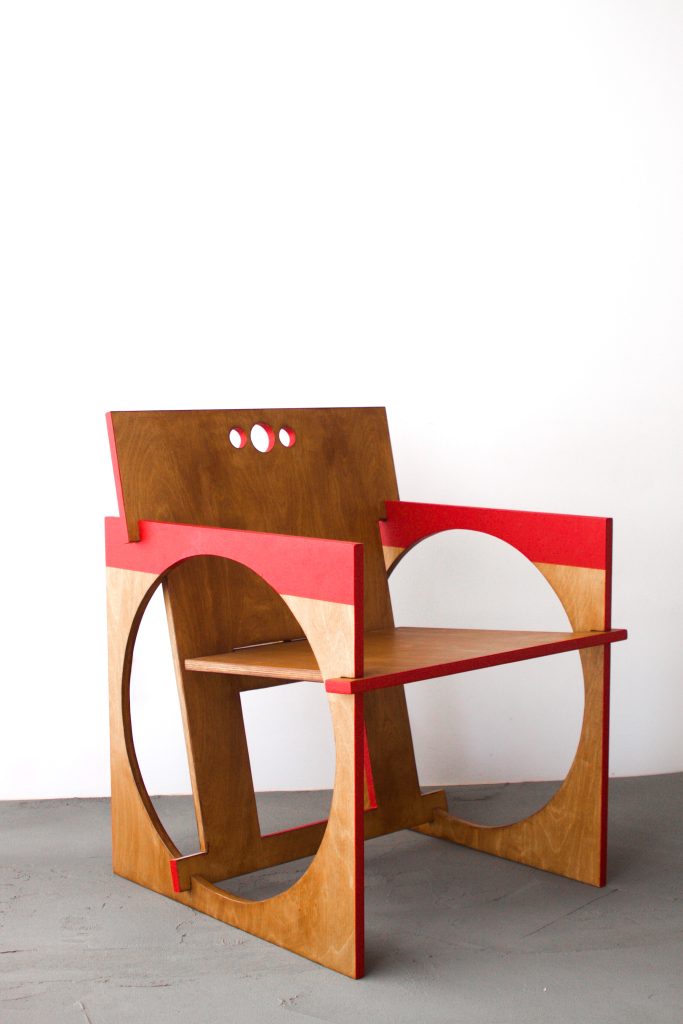
Sedia Tonda by Edoardo Lietti Studio
Sun Wall Lamp in Aluminum by Anne Nowak
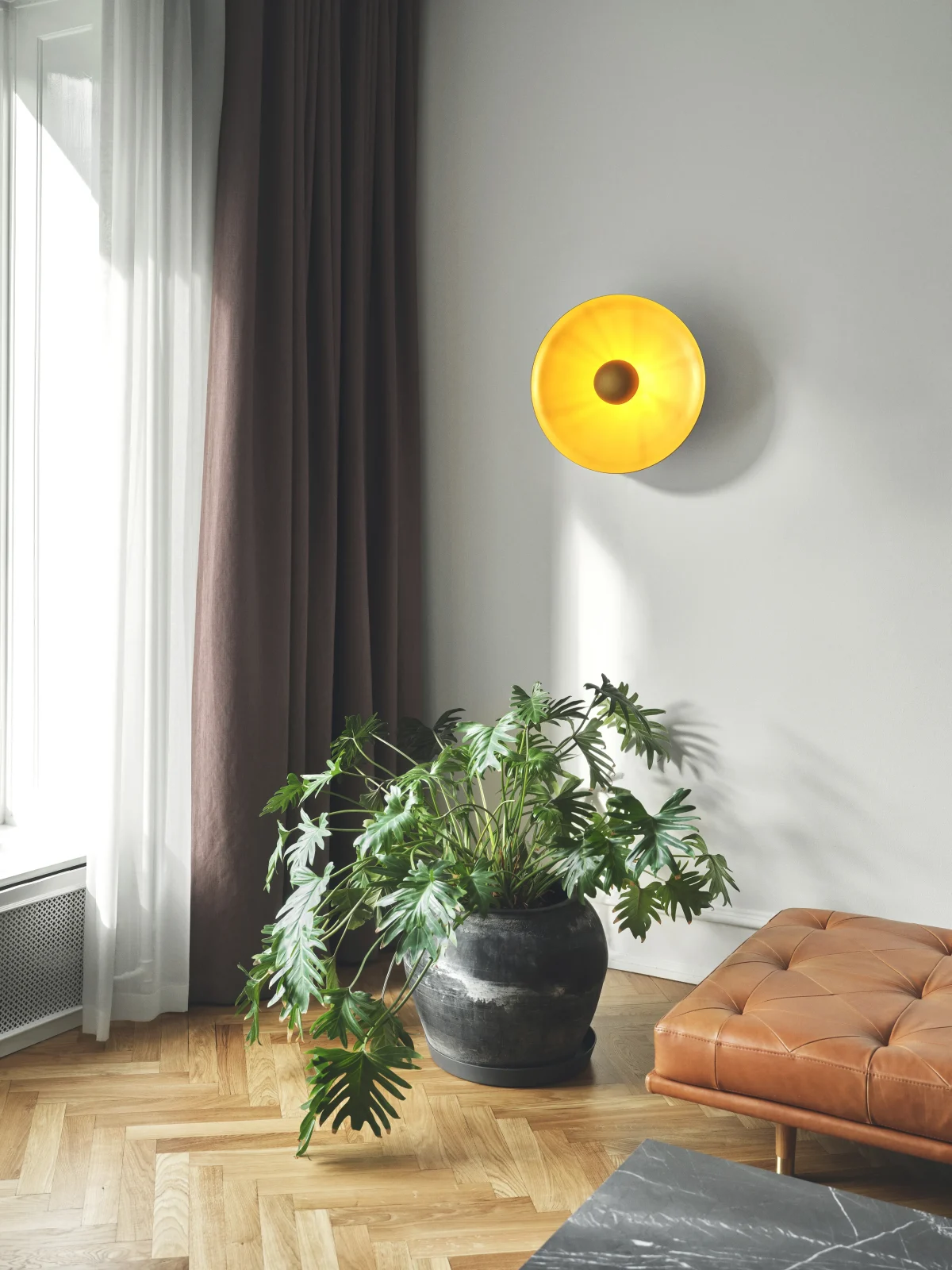
Lit, the Sun becomes a nebula encased in an iron shell. Switched off, it is a round relief resembling a distant planet — two genuinely different objects depending on the hour. Made in Denmark from aluminium and hand-painted by the artist, part of the Moon Light series made with Art Group 1103. Mounts directly to the wall on three screws.
By Anne Nowak
€1.340 incl. tax
Björn Office Chair by Olle Sahlqvist
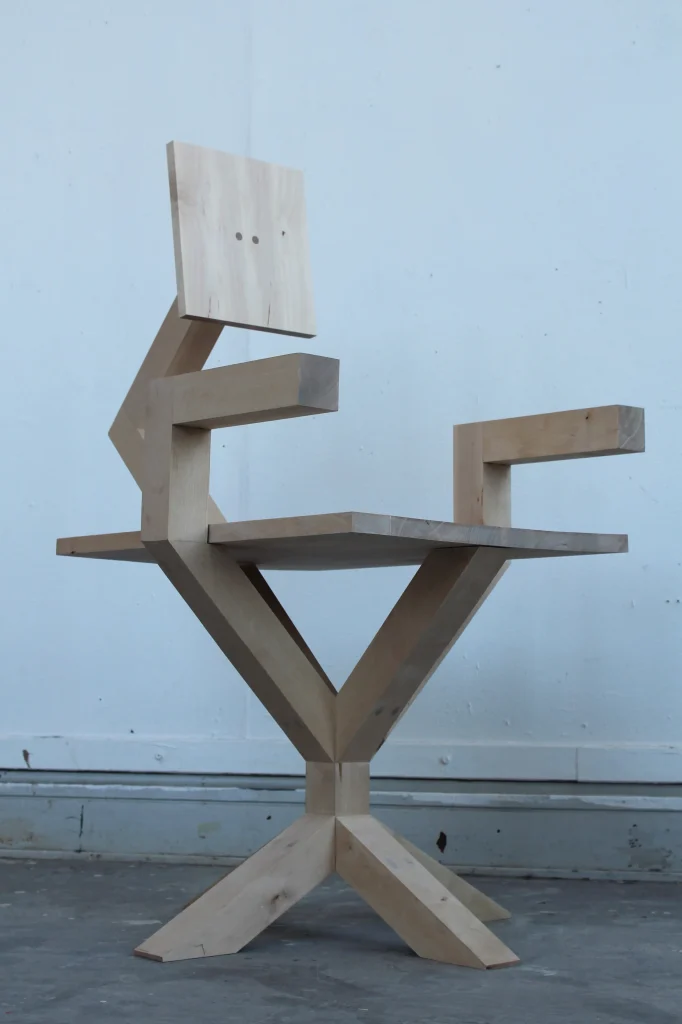
An office chair that argues for wood where the category defaults to moulded plastic and mesh. The couplings and connections are the design — large timber volumes and geometric shapes held by visible joinery rather than hidden hardware. Radical minimalism applied to the least romantic piece of furniture in the house.
€6.000 incl. tax
Not So Public Bench by Thomas Gayet

From the ALUCUTS series: bolted assemblies of 12mm aluminium plate, cut and organised empirically until the piece resolves itself. The making is deliberately unconcealed — blade-scarred edges contrast against the mirror finish, and countersunk allen bolts mark every connection. Standard seat height 42cm, mirror or brushed finish, and rated for outdoor use. Two-seater; a three-seater is available.
By Thomas Gayet
€3.400 incl. tax
“Næss” Chair by Christian Udjus
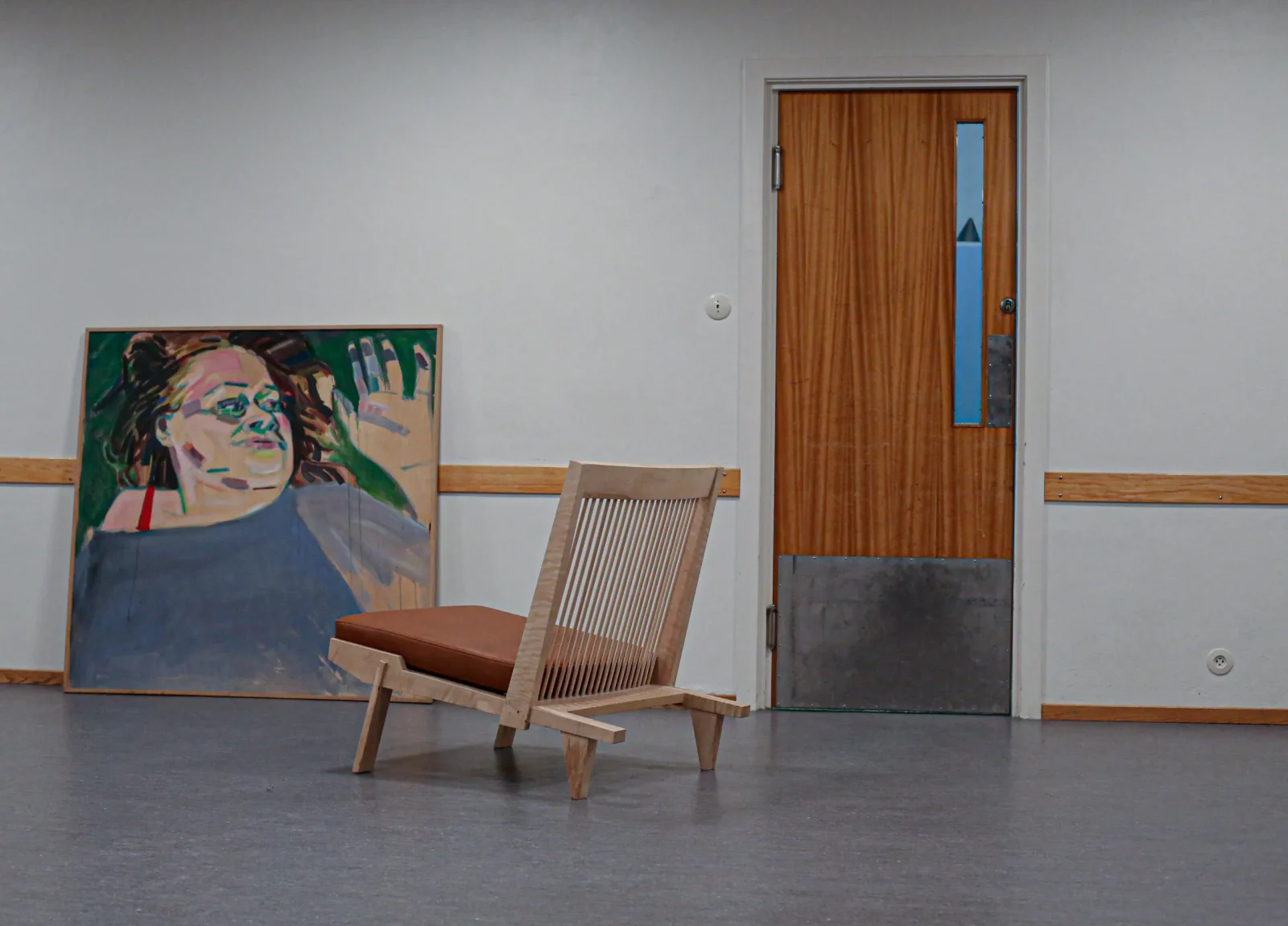
A chair built low enough to see straight into the fireplace from. The back is made of 20 stiles mounted so they float, flexing to the sitting position rather than holding one shape — which is what keeps a robust beech frame reading as light. Treated with furniture wax for a soft natural sheen and a tactile surface. A matching foot stool is available separately.
€3.140 incl. tax
“mylla” Rug by Lisa Darland

Sweden burns or discards over a thousand tonnes of wool a year while importing wool goods worth four hundred million kronor. Mylla is a direct answer to that: 100% Swedish wool from farms in Skåne and Halland, knitted and then woven on a custom frame in the designer’s own studio. Minimal cutting of the fibres produces a spongy texture solid enough to sit on. Mylla is Swedish for mixing things into the soil.
By Lisa Darland
€15.840 incl. tax
Lo And Behold # 4 by Signe Fensholt
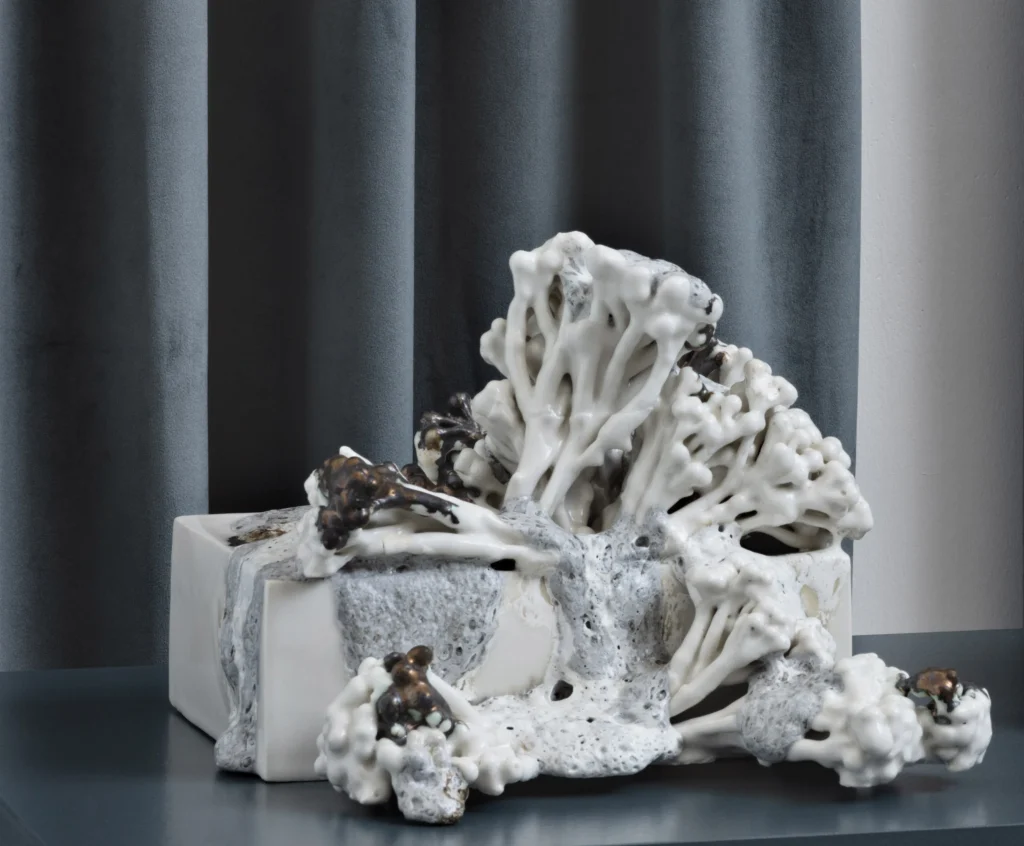
One of seven unique porcelain tableaus. A tableau is a snapshot holding an entire narrative, and this one tells the story of its own making — the piece is a stage for a performance that took place inside the kiln. The result sits between careful calculation and a deliberate loss of control, keeping an imprint of growth, decay, gravity and adaptation.
€1.200 incl. tax
Melted Porcelain Vase V.5 by John Nordenstein
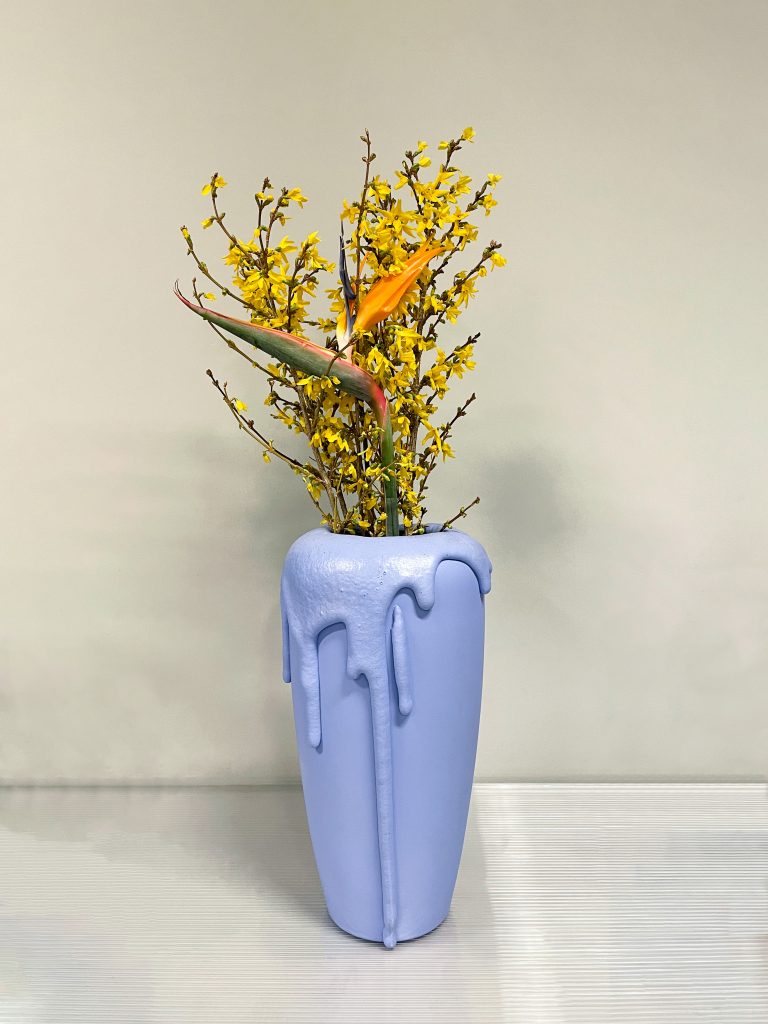
A sculptural floor vase in pastel purple, built up across many layers rather than painted in any conventional sense — each material contributing its own thickness, viscosity, glossiness or transparency. The idea began with a fascination with things melting or dripping away, and with upcycling: giving something old a new and colourful surface. Signed by the artist underneath.
€680 incl. tax
Wood & Wax Mirror by Ebba Lindgren
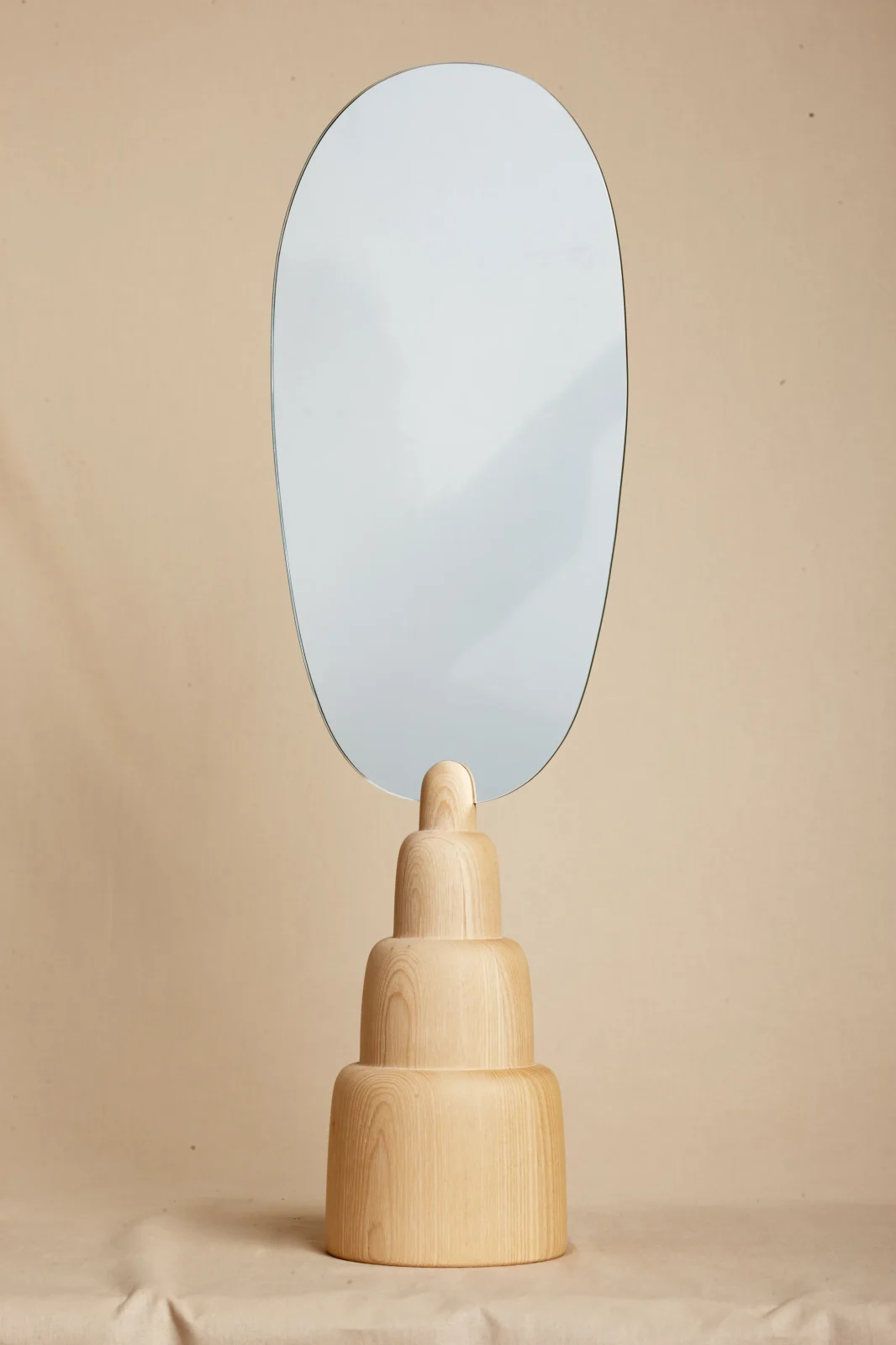
An oval that appears to balance on the tiers of an ash-wood base — the whole piece is a proportion exercise. Produced in the artist’s local area in southern Sweden, with the wood coated in hard wax oil rather than lacquer. That finish is the practical point: dents and stains can be sanded out with fine paper and the surface re-treated, so the mirror is repairable rather than disposable.
€600 incl. tax
Blob Ceramic Lamp by Lisa Hartwig Ericson
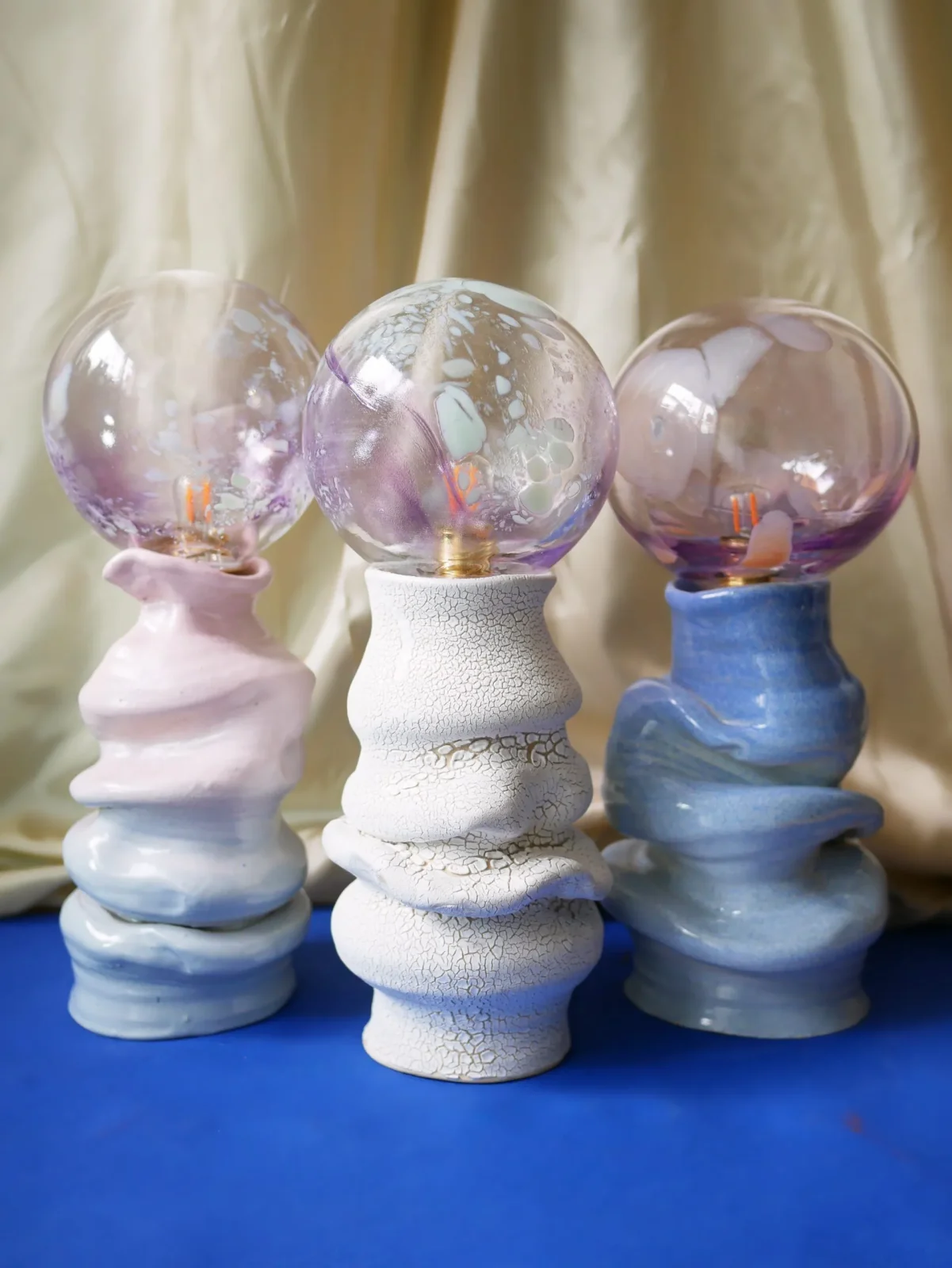
A handmade table lamp in glazed ceramics with mouth-blown glass and an LED inside. Three variations: light purple glass dotted with green, light purple dotted with peach, or purple and green together. The colour pairings are the whole proposition — restrained in form, distinctly unrestrained in palette. Takes smaller LED bulbs only, on Swedish electrical standard.
€850 incl. tax
‘Woolwalls’ in Sustainable Wool by Jeanett Knipschildt
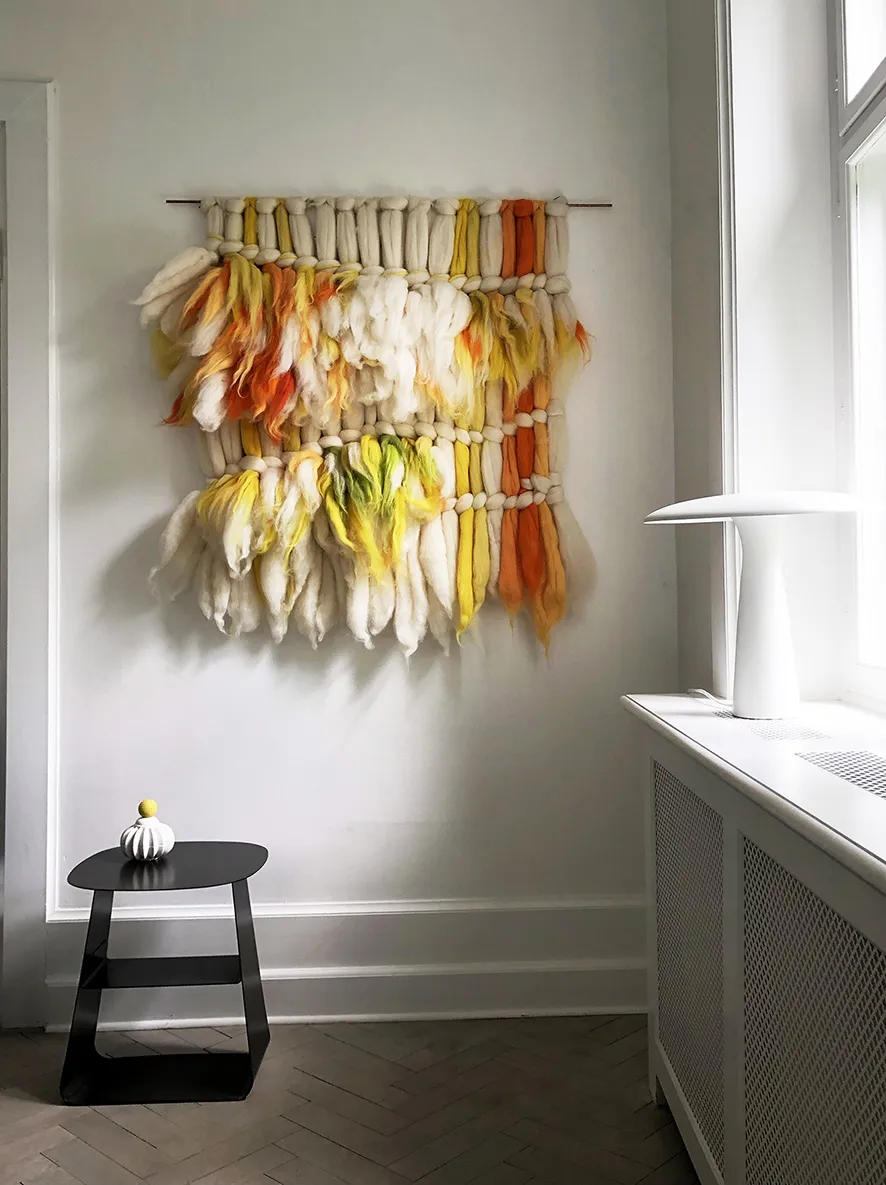
Handwoven in 100% European Merino wool, hung from a recycled brass stick on a leather string. As a wall piece it does acoustic work as well as visual — a thick woven wool panel absorbs mid-range frequencies in a way framed art cannot. It also rejects fire and water and never needs dusting. Keep it away from an open window or door.
€1.224 incl. tax
“Tango” Side Table by Kim Thomé

Three cylindrical materials — glass, aluminium and wood — bonded with tinted UV glue so the join becomes the feature. The point where glass meets metal is normally engineered to disappear; dyeing the adhesive turns it into the detail you notice first. The tinting process was developed specifically for this series.
By Kim Thomé
€900 incl. tax
Scandinavian design room by room
Living room
Low seating, a wool rug anchoring the group, and three or four lamps rather than one ceiling fixture. Pull the furniture inward off the walls so the arrangement has a centre — pushing everything to the perimeter is what makes a room read as a waiting area. Keep one wall piece rather than a gallery of small frames, and let the timber and textile carry the warmth. Our guide to a cozy living room covers the lighting logic in detail.
Bedroom
Scandinavian bedrooms run plainer than the rest of the house: pale timber, undyed linen, and almost no pattern. The one place to spend is what your feet meet — a wool rug beside the bed rather than under a desk. Keep bedside lighting low and warm, and avoid anything reflective, which is why lacquered furniture rarely appears in this context.
Home office
The category the style handles best and the market handles worst. A wooden chair with visible joinery — the Björn above is the argument — will outlast three ergonomic mesh chairs and looks like furniture rather than equipment. Put the desk near the window, add one task lamp, and keep the surface clear enough that the room reverts to being a room when you stop working.
Frequently asked questions
What defines Scandinavian interior design?
Functional simplicity, natural materials and a focus on maximising light. Pale timber, neutral palettes, visible joinery, and few objects each chosen to last. The underlying premise is democratic — good design should be useful and affordable rather than rare and decorative.
How do you pronounce hygge?
Roughly HOO-guh, with the stress on the first syllable and a soft second one. It is Danish, and the Norwegian and Swedish equivalents are koselig and mys.
What is the difference between Scandinavian and Nordic design?
Scandinavian refers to Denmark, Sweden and Norway. Nordic is broader, including Finland and Iceland — which brings a cooler palette, more stone and concrete, and Finland’s separate modernist tradition. In practice Nordic tends to read starker; Scandinavian tends to read warmer.
Is Scandinavian design the same as minimalism?
No. Minimalism is a broader discipline that can be executed in steel, glass and concrete with no obligation to be comfortable. Scandinavian design is committed to warmth and liveability — restraint in the object count, but natural materials and soft light doing the work.
Why is Scandinavian furniture mostly pale wood?
Partly what grows there — ash, birch, beech and pine are local — and partly light. Pale timber reflects daylight around a room in a way dark hardwood does not, which matters considerably at latitudes where winter daylight is scarce. It is a practical decision that became a look.
Can Scandinavian design use colour?
Yes, and the assumption that it cannot is the most common misreading. The palette stays neutral so that one or two saturated accents can carry real weight — the neon Woolwalls piece and the Blob lamp above are both squarely within the tradition rather than exceptions to it.
Browse our entire catalogue of Scandinavian designers
Danish, Swedish and Norwegian designers keep redefining minimalism and functionality on their own terms. Neutral tones dominate, with subtle pops of color adding vibrancy, and elements of coastal, rustic and minimalist thinking blend into pieces that bring calm and a touch of whimsy to a room. The use of natural materials — wood, textiles and ceramics — alongside a focus on function is what keeps Scandinavian design a calming presence in a chaotic world.