Updated on: August 14, 2026
Brass is an alloy of copper and zinc, and almost everything designers like about it follows from that one fact. The copper gives it warmth and the capacity to patina; the zinc makes it hard enough to machine, cast and hammer. Change the ratio and you change the colour, from pale gold to deep red.
It has been in continuous use for roughly three thousand years, which is unusual for any material, and it remains in production for reasons that are practical rather than sentimental. What follows covers what brass actually is, how it differs from bronze, why it tarnishes and whether you should stop it — plus ten pieces from independent studios.
What is brass?
What brass is made of
Copper and zinc, in proportions that vary considerably by application. Common brasses run from roughly 60–90% copper, with the balance zinc and occasionally small additions of lead, tin or aluminium for machinability or corrosion resistance.
The ratio determines the colour, which is why “brass” describes a range rather than one shade. High-copper brasses read red and warm; higher zinc content pushes the alloy toward pale yellow. Consequently two brass objects from different makers rarely match exactly — worth knowing before mixing pieces in one room.
Brass versus bronze
The distinction is the second element. Brass is copper and zinc; bronze is copper and tin. Bronze is older, harder and more corrosion-resistant in salt water, which is why it dominates sculpture, bearings and marine fittings. Brass is more malleable and easier to machine, which is why it dominates instruments, fittings and decorative work.
Visually, bronze tends duller and browner, brass brighter and more yellow — though patina narrows the gap over time. If you need to be certain, bronze is heavier for its volume and rings differently when struck.
Is brass magnetic?
No. Neither copper nor zinc is ferromagnetic, so genuine brass will not hold a magnet. That makes a fridge magnet the quickest field test for brass-plated steel — if it sticks, there is steel underneath and the brass is a surface coating a few microns thick, which will eventually wear through.
Why brass tarnishes, and whether to stop it
Brass oxidises on contact with air, moisture and skin oils, darkening through gold to brown and eventually to a deep, uneven patina. This is a surface reaction rather than corrosion — the metal underneath is unaffected, which is why a two-hundred-year-old brass handle can be polished back to bright.
Whether that is a problem is a design decision, not a maintenance one. Lacquered brass stays bright until the lacquer fails, at which point it tarnishes unevenly and has to be stripped. Unlacquered brass darkens from the start, faster where it is handled, and eventually reads as one continuous surface. Several of the pieces below are explicitly built for the second outcome.
How to clean brass
For light tarnish, a soft dry cloth is usually enough. For more, a proprietary brass polish applied with a soft cloth and buffed off works, as does the household approach of lemon juice with a little bicarbonate of soda — mildly acidic, which is what lifts the oxide.
Three cautions. Never use abrasives or scouring pads, which leave permanent scratches. Never polish lacquered brass, since you will damage the coating rather than the tarnish. And check before you start whether the darkening is patina the maker intended — polishing it off is not reversible in any quick way.
10 brass pieces from independent studios
Taco De Luz – Large Suspended Satin Brass Lamp by Studio Aristotelis Barakos

Completely handmade in Greece, from the hand-hammered reflector sheet down to the tubular light source inside it. Hammering is the reason the surface behaves as it does — thousands of small facets scatter the light rather than throwing a single hard reflection, which is the difference between warm and glaring in a polished metal shade.
€5.400 incl. tax
Citiez 0.3 Pendant Lamp in Brass and Steel by Niels Stoeltie
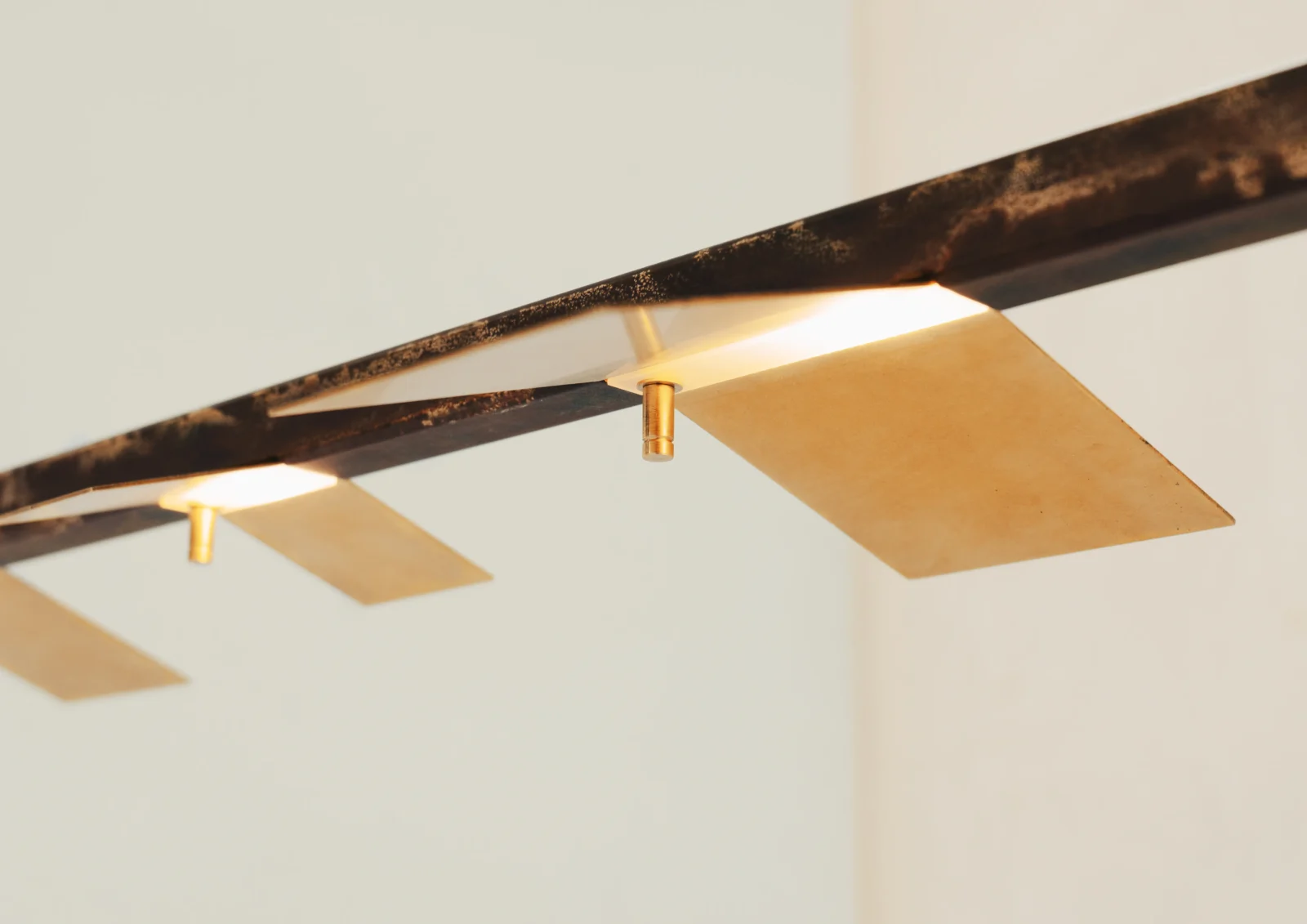
Brass set against steel — a pairing that works precisely because the two metals age in opposite directions. The steel holds its cool grey while the brass warms and darkens, so the contrast between them increases over the years rather than settling. A substantial pendant for a room with the ceiling height to carry it.
€7.500 incl. tax
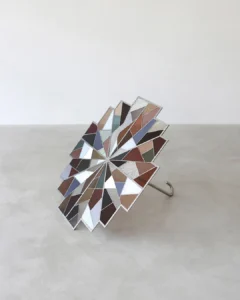
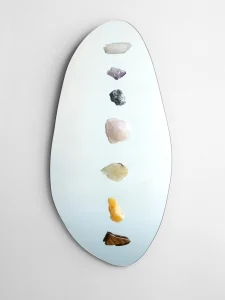
“Glory” Mirror by VAUST Studio

Not a mirror in the conventional sense — a polished brass sheet reflects, but softly and imprecisely, and that distortion is the piece. It also decreases over time as the surface oxidises and the refraction weakens, so the object is designed to gradually stop working as intended. Held by a black oak base and set against a vertical marble element. From the V33 collection.
By VAUST Studio
€9.000 incl. tax
Arinna Pendant Light by MARAU
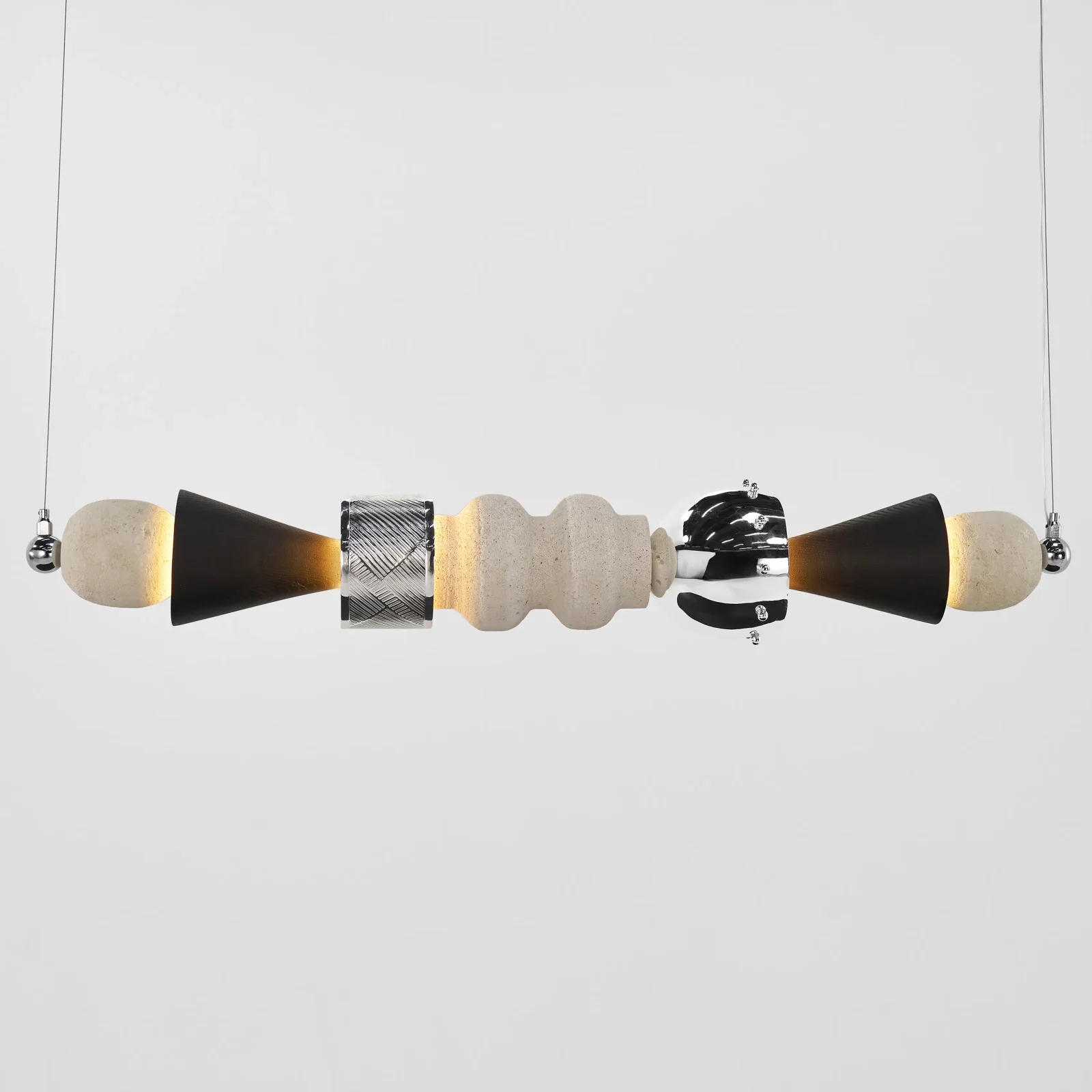
Named for the Hittite sun goddess, and scaled accordingly. The largest piece here and the one that most clearly demonstrates why brass suits lighting: the alloy reflects at a warmer colour temperature than steel or aluminium, so light bouncing off it arrives softer than it left the bulb. A commissioning-scale object rather than an impulse one.
By MARAU
€15.000 incl. tax
Aria Ceiling Light Pendant Lamp In Brass by Stem

Solid brass rods cast from hand-sculpted patterns, so the maker’s touch survives into the metal — expect pour ripples and slight surface pitting, which are production marks rather than faults. The linen shade is hand-embroidered from impressions borrowed from a child’s sketch. Made to order, and compatible across regions, though 110–120V markets need the LED strip and driver sourced locally.
By Stem
€4.150 incl. tax
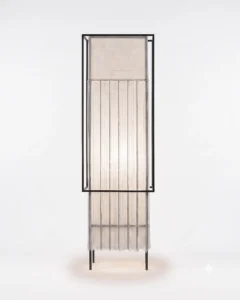
Biiit 002 Table Lamp in Paper and Brass by manodesignstudio.com
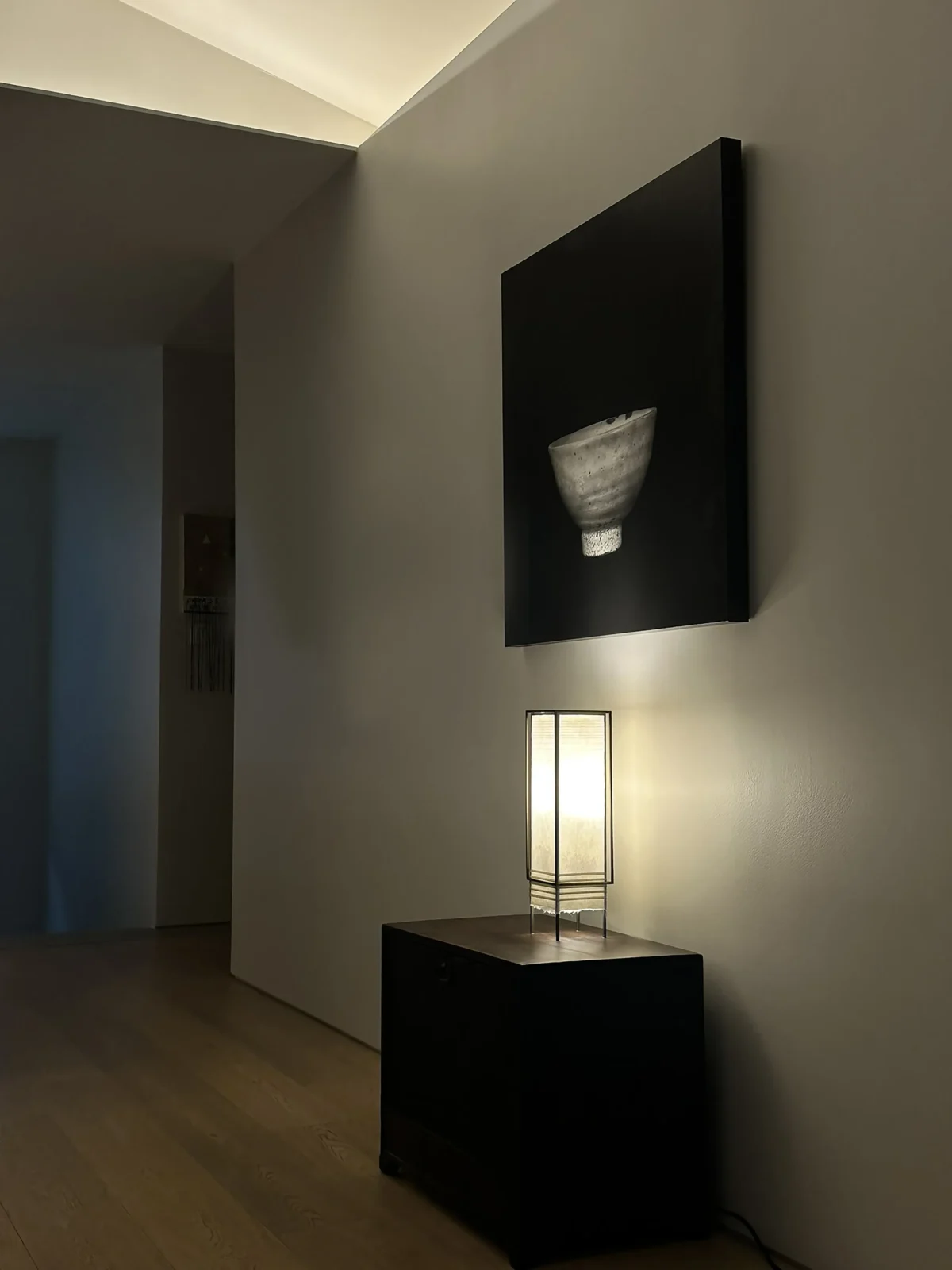
Paper against brass, which is an unusually good pairing — the paper diffuses light to an even glow while the brass supplies the structure and the warmth at the base. It also inverts the usual weight relationship, putting the fragile material on the outside and the durable one underneath. One of a numbered series.
€1.500 incl. tax
Marri Mirror by MARAU
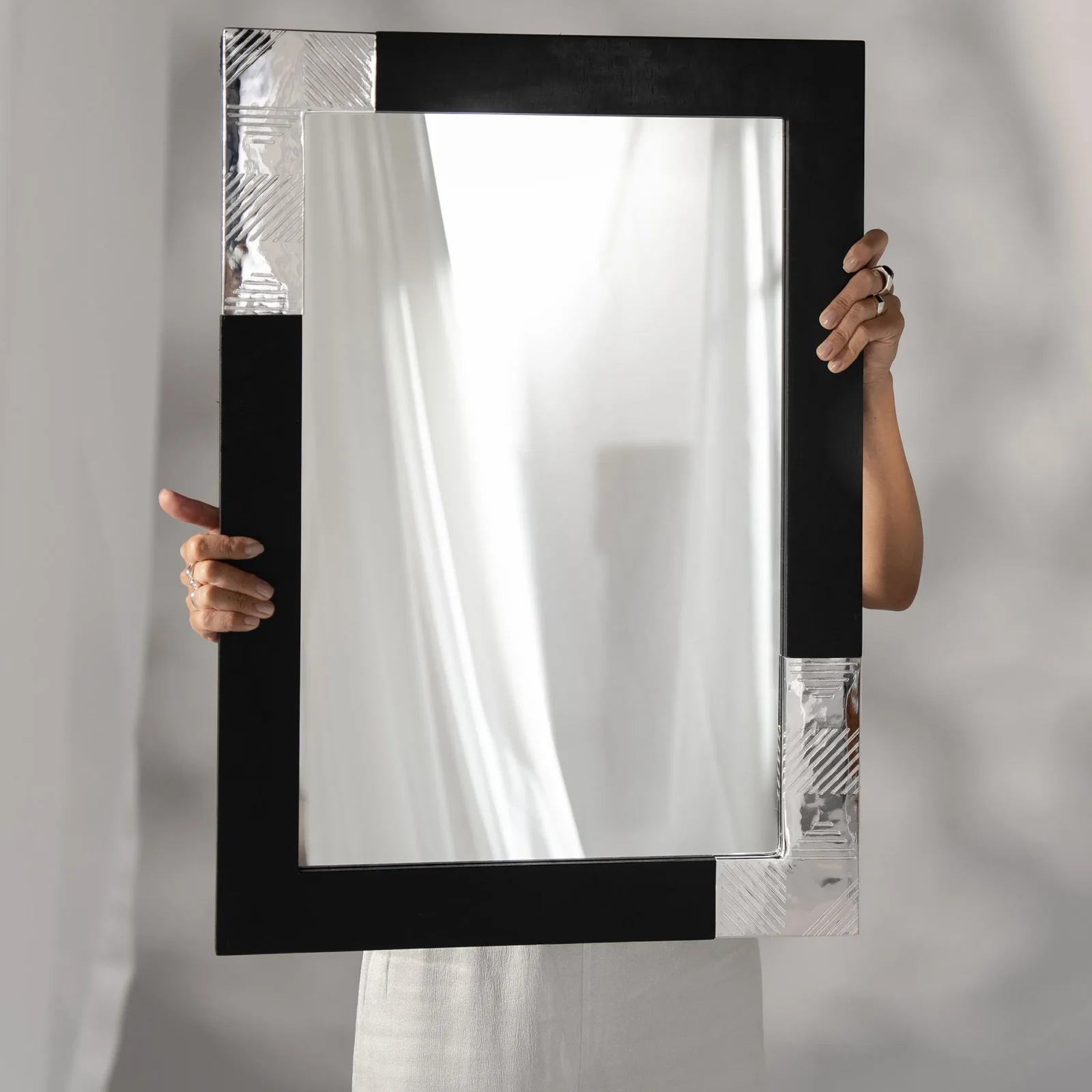
A conventional mirror surface in a brass surround — the practical counterpart to the Glory above, which refuses to reflect clearly on purpose. Brass is the right frame material for a mirror precisely because it warms the light bouncing back into the room, which glass and steel do not. Currently reduced from €9,000.
By MARAU
€7.650 incl. tax
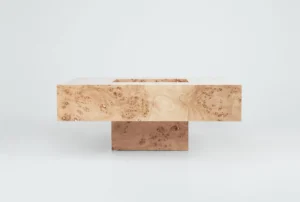
Taru Side Table by MARAU
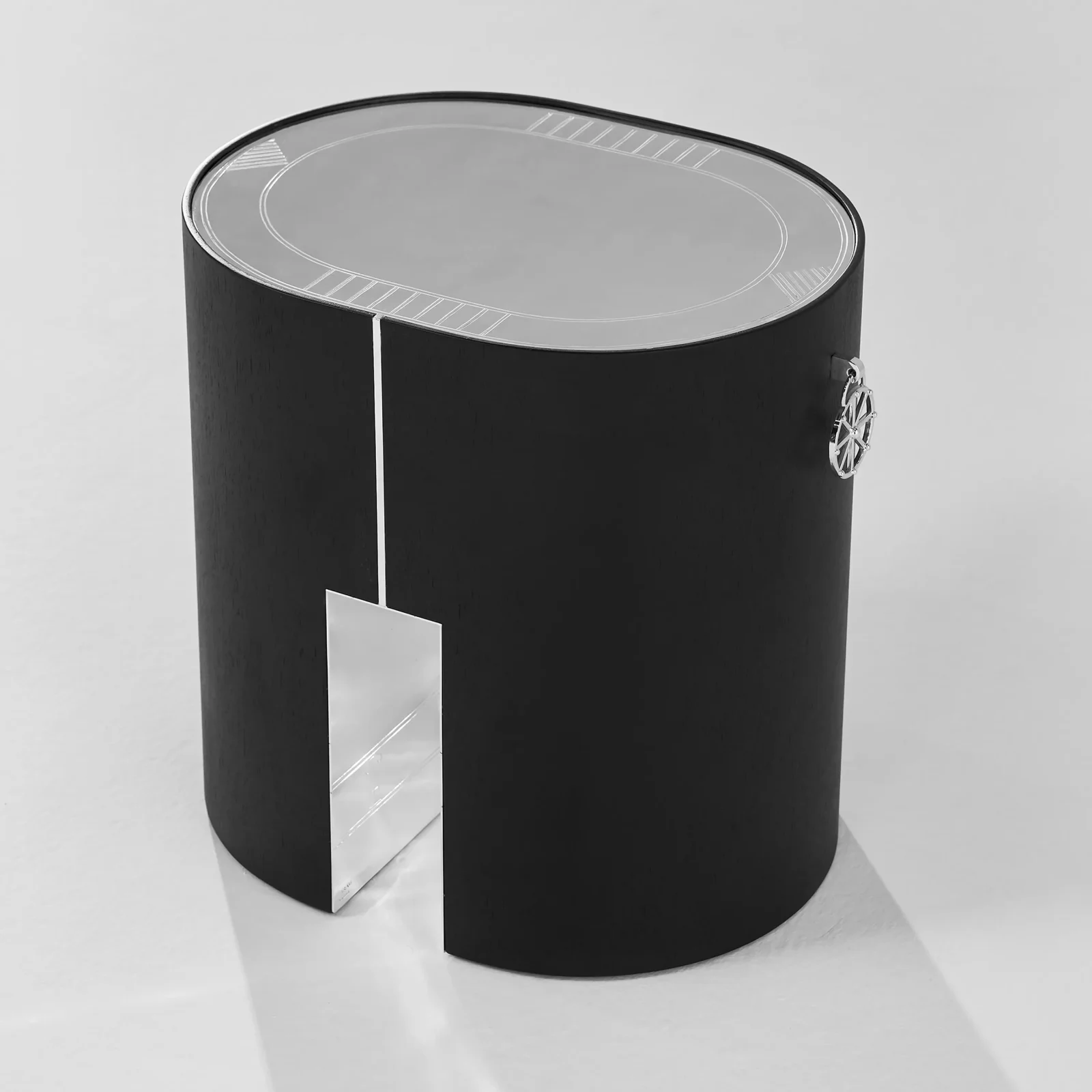
Brass used structurally rather than as trim, which is where the alloy’s hardness earns its place — it takes load without the thickness steel would need for the same span. On a side table that matters visually as much as mechanically, since the supports can be slender enough to disappear.
By MARAU
€15.000 incl. tax
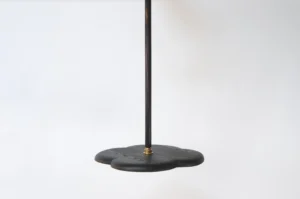
Giria – Tree Bark Pedestal Bowl by Evelina Kudabaite

Giria is Lithuanian for an old-growth forest. The bowl is made by hand from the bark dust of oak, pine or ash — material destined for waste — set on a polished brass tube that gives the raw surface something to contrast against. No two are alike, since each bark type produces a different colour and roughness. Dry use only.
€210 – €240 incl. tax
Taru Pouf by MARAU
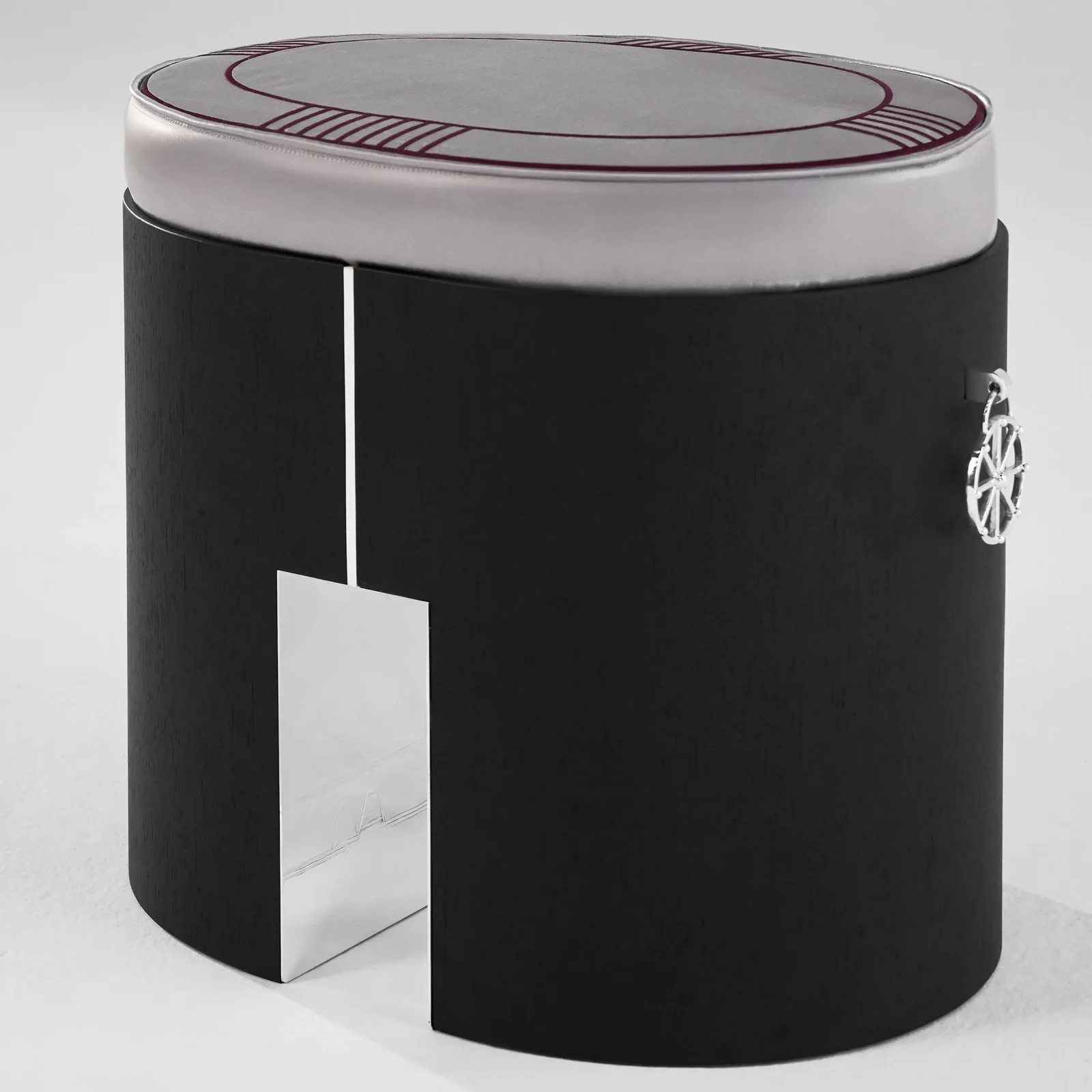
The companion to the side table, and a rarer proposition — brass in seating, where the metal has to take dynamic rather than static load. It also means the piece will patina fastest exactly where hands and legs meet it, so the wear pattern becomes a record of use rather than damage.
By MARAU
€12.000 incl. tax
Frequently asked questions
What is brass made of?
Copper and zinc, typically between 60% and 90% copper with the balance zinc. Small amounts of lead, tin or aluminium are sometimes added for machinability or corrosion resistance. The ratio determines the colour, which is why brass ranges from pale yellow to deep red.
What is the difference between brass and bronze?
The alloying element. Brass is copper and zinc; bronze is copper and tin. Bronze is harder and more corrosion-resistant in salt water, so it suits sculpture and marine use. Brass is more malleable and easier to machine, so it suits instruments, fittings and decorative work.
Is brass magnetic?
No — neither copper nor zinc is ferromagnetic. That makes a magnet a quick test for brass-plated steel: if it sticks, the brass is only a thin surface coating over steel.
Does brass tarnish?
Yes. It oxidises on contact with air, moisture and skin oils, darkening through gold to brown and eventually to a deep patina. It is a surface reaction, not corrosion — the metal beneath is unaffected, which is why very old brass can still be polished back to bright.
How do you clean brass?
A soft dry cloth for light tarnish; a proprietary brass polish or lemon juice with bicarbonate of soda for more. Never use abrasives or scouring pads, and never polish lacquered brass — you will damage the coating rather than the tarnish.
Should you let brass patina or keep it polished?
A design decision rather than a maintenance one. Unlacquered brass darkens evenly with use and many makers intend that. Lacquered brass stays bright until the coating fails, then tarnishes patchily and needs stripping. Check which you have before reaching for polish.
Browse our selection of brass objects
ADORNO works with independent studios using brass structurally as well as decoratively — cast, hammered, brazed and left to age. Each piece is chosen for material quality and for making a design argument rather than following one.