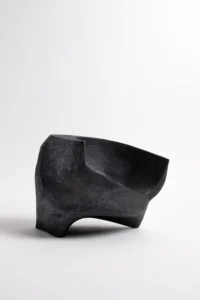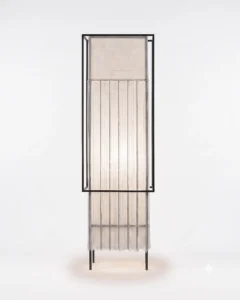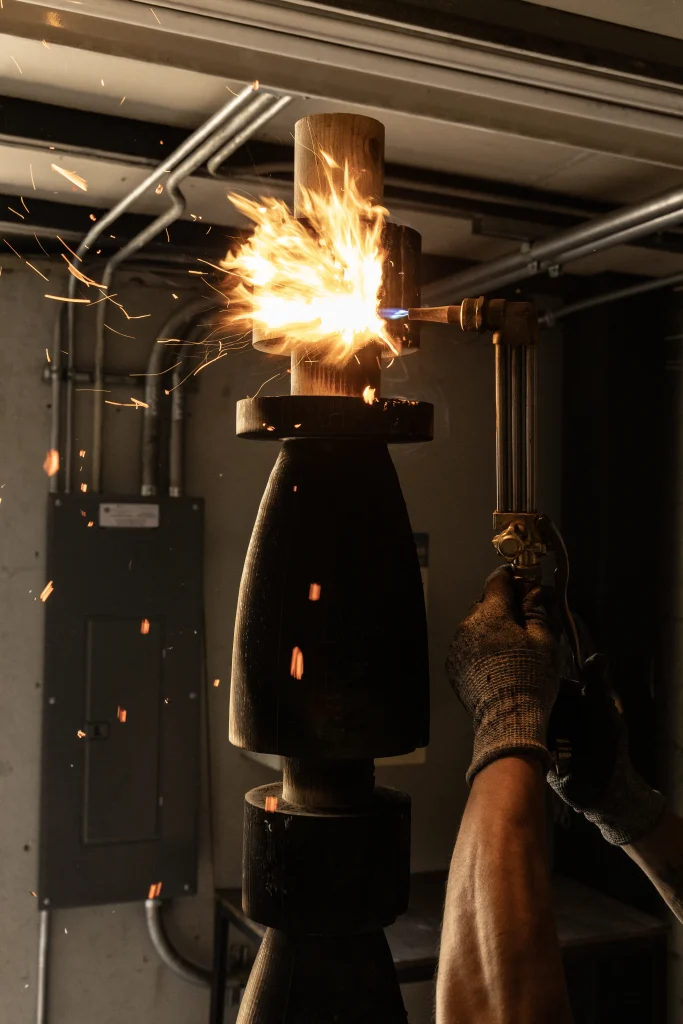
Fire usually ends a piece of wood. In Japan, it learned to keep one going.
Updated on: October 15, 2026
Shou sugi ban is the Japanese practice of charring wood to preserve it. The name translates loosely as “burnt cedar board,” and for centuries the technique protected houses from rain, rot and insects. The method is simple: a board meets an open flame until its surface turns to carbon, then it is brushed and oiled. What remains is a burnt wood finish somewhere between charcoal, leather and stone.
Today, the same fire has moved indoors. Makers in Mexico, Brazil, Germany and Hungary now char oak, pine and parota into consoles, lamps, chairs and tables. Below, ADORNO explains the technique, how to choose and care for charred wood furniture, and ten pieces worth collecting now.
What is shou sugi ban?
Shou sugi ban is a wood preservation technique in which the surface of a board is deliberately burned to form a protective layer of char. In Japan it is usually called yakisugi, meaning “burned cedar.” As a result, yakisugi vs shou sugi ban is not a choice between two methods; it is one tradition with two names. Notably, the carbon layer sheds water and offers nothing to insects or fungi, which is why architects still clad houses in it, as Wallpaper* and Dwell have documented. Outside Japan, the same finish is also called charred wood, burnt wood or Japanese burnt wood.
How to choose shou sugi ban furniture
Start with the depth of the burn. A light, unbrushed char looks silvery and can rub off, whereas a brushed and oiled burn is smooth enough for tables and seating. Next, look for real texture. True charred wood has ridges where the soft grain burned away, and its color shifts from jet black to deep brown; by contrast, black stain is flat and uniform. Finally, consider where the piece will live: a side table beside a linen sofa needs a fully sealed surface, while a wall mirror can carry a rawer burn.
Materials and construction
Cedar
Shou sugi ban cedar is the original. Light and resinous, cedar chars deeply, which makes it the default for siding but too soft for most tabletops.
Oak
Dense oak takes a shallow, even char, and its grain rises into a ribbed texture once brushed. Consequently, it is the furniture maker’s favorite for consoles, tables and chair frames.
Pine and other woods
Shou sugi ban pine burns unevenly, so brushing leaves a deep, corrugated surface. Meanwhile, hardwoods such as parota and freijó take a controlled char that suits turned or delicate forms.
The finish
After burning, makers brush away loose carbon, leaving roughly 1/16 to 1/8 inch (1.5 to 3 mm) of char, then seal it with oil, wax or a water-based finish. Increasingly, the black is paired with brushed aluminum or white marble to sharpen the contrast.
10 shou sugi ban pieces to collect now
Tecolli Side Table In Burnt Oak Wood by LØRDAG & SØNDAG
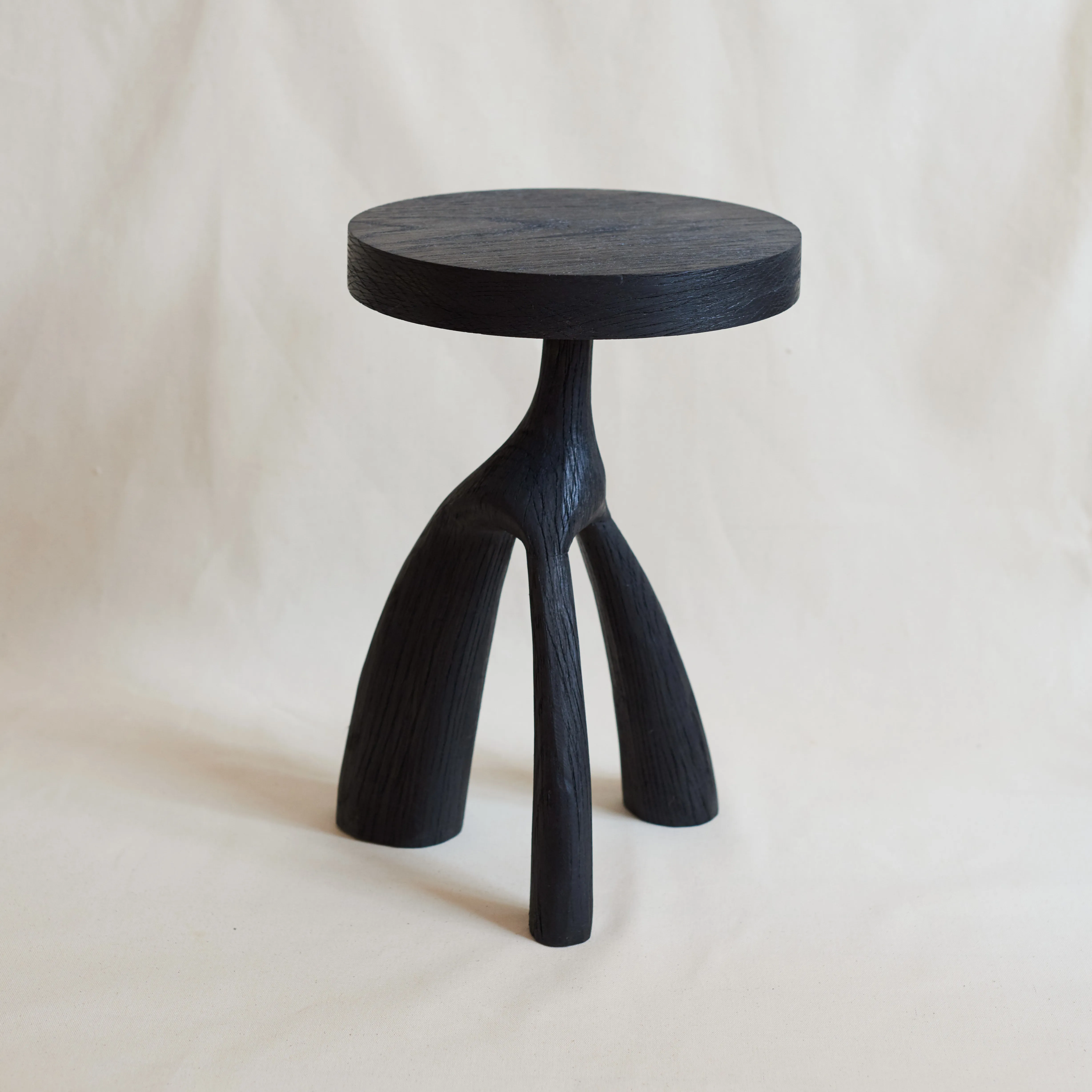
Turned from oak and burned by the yakisugi method in Tonalá, Jalisco, Tecolli takes its name from the Nahuatl word for charcoal. Three curved legs splay like roots beneath the round top, giving a 23-inch (59 cm) table the presence of a small sculpture.
By LØRDAG & SØNDAG
€940 incl. tax
Obsidian Console | Burned Solid Oak by NO AGE STUDIO
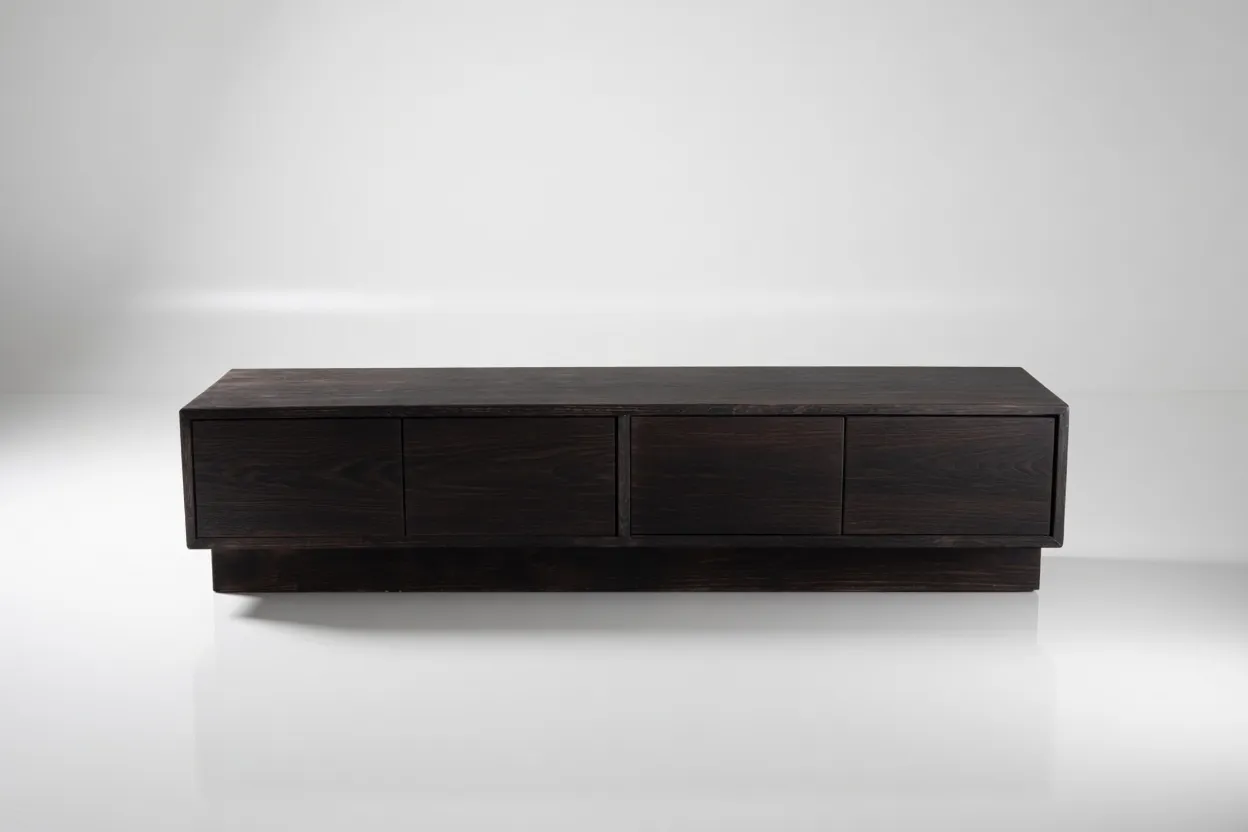
Solid oak is charred by hand and oiled, so each of the four doors carries its own tone. At 72 inches (183 cm) wide on a recessed base, it floats as a media unit in the living room or a long sideboard.
By NO AGE STUDIO
€4.060 incl. tax
Yakisugi Coffee Table in Burnt Oak and Aluminum by case studios

Made in Germany, this table sets burnt oak on hand-sanded, waxed aluminum, so grain and metal catch light in opposite ways. Only 12 inches (30 cm) high, it suits a low coffee table setup.
By case studios
€2.190 incl. tax
Mezquite Table Lamp in Burned Pinewood and Natural Linen by Isabel Moncada

Isabel Moncada turns a solid pine trunk, then burns it so the grain surfaces and small cracks open at random. A linen shade warms the 38-inch (97 cm) base, one of the most collected table lamps in this family.
By Isabel Moncada
€2.925 incl. tax
Fire Ctrl Side Table in Oak Wood by Daniel Elkayam
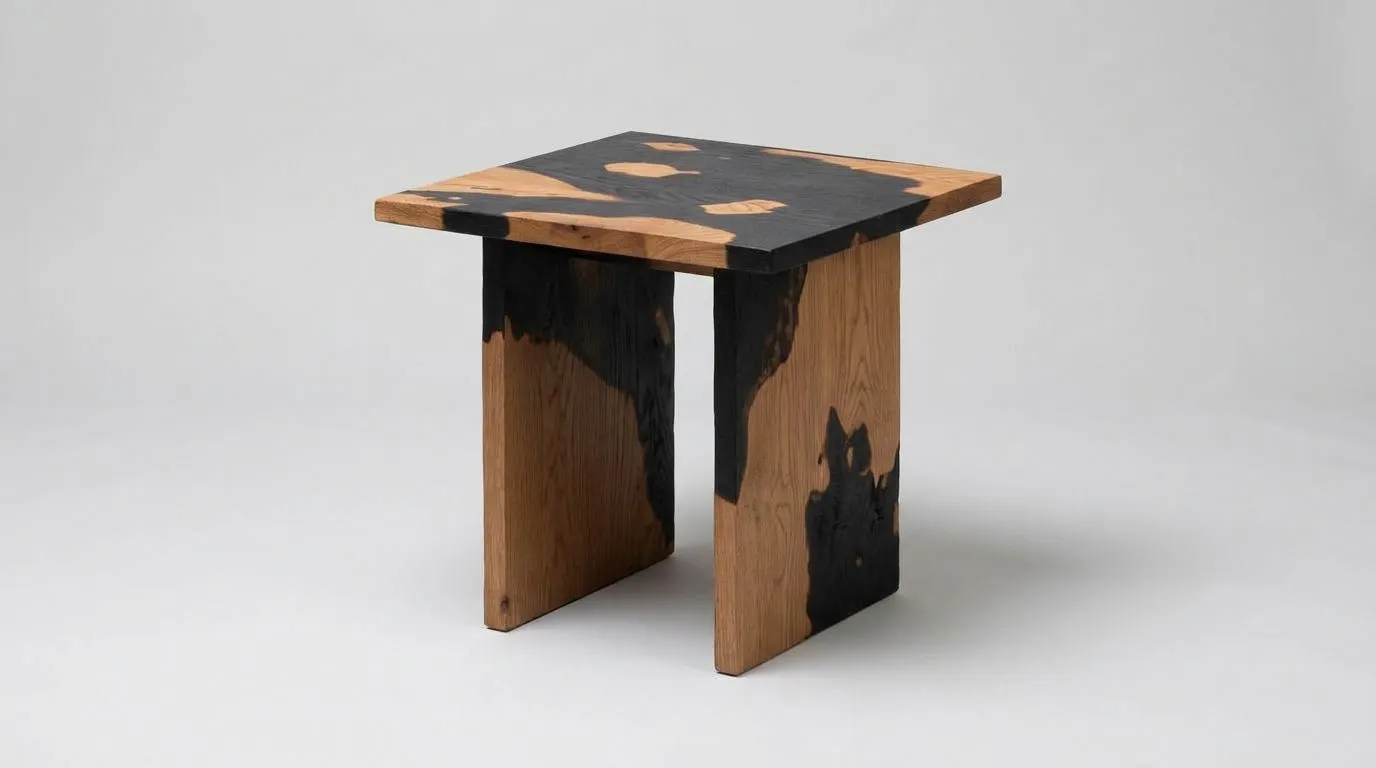
Daniel Elkayam plays fire against water on raw oak, and the evaporation leaves black patches shaped like animal markings. As a result, no two tables share a pattern, and the plain 24-inch (60 cm) square form lets the burn do the talking.
By Daniel Elkayam
€3.150 incl. tax
The Black Sheep Coffee Table in Burnt Pine Wood by Masha Volkova
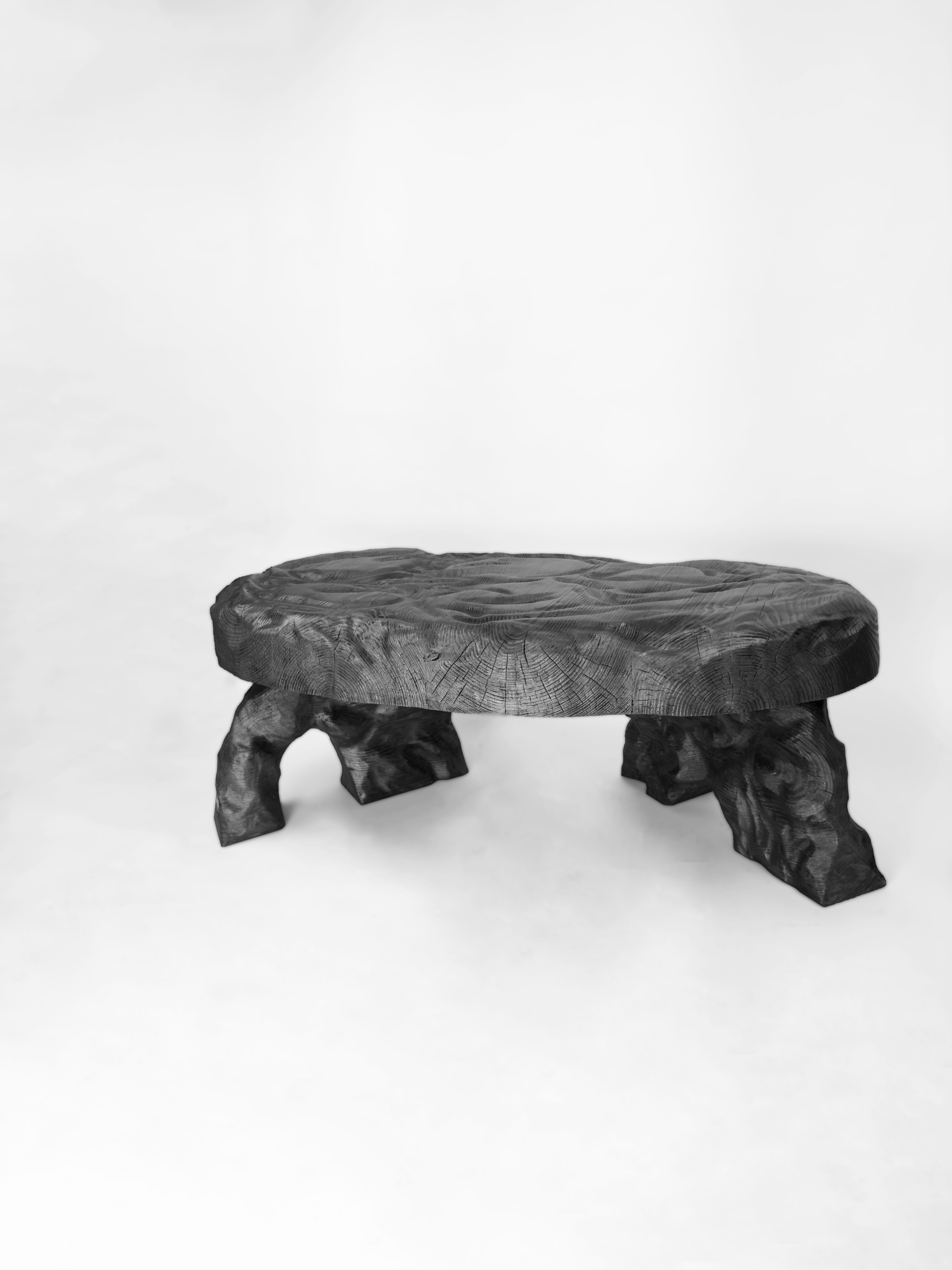
Carved, burned and coated, this pine table is Masha Volkova’s portrait of a friend who kept rising from the ashes. Its rough top rests on stout legs, so the 39-inch (100 cm) piece feels pulled from a single log.
By Masha Volkova
€2.600 incl. tax
Angulo Burnt Oak Chair by Toro Manifesto
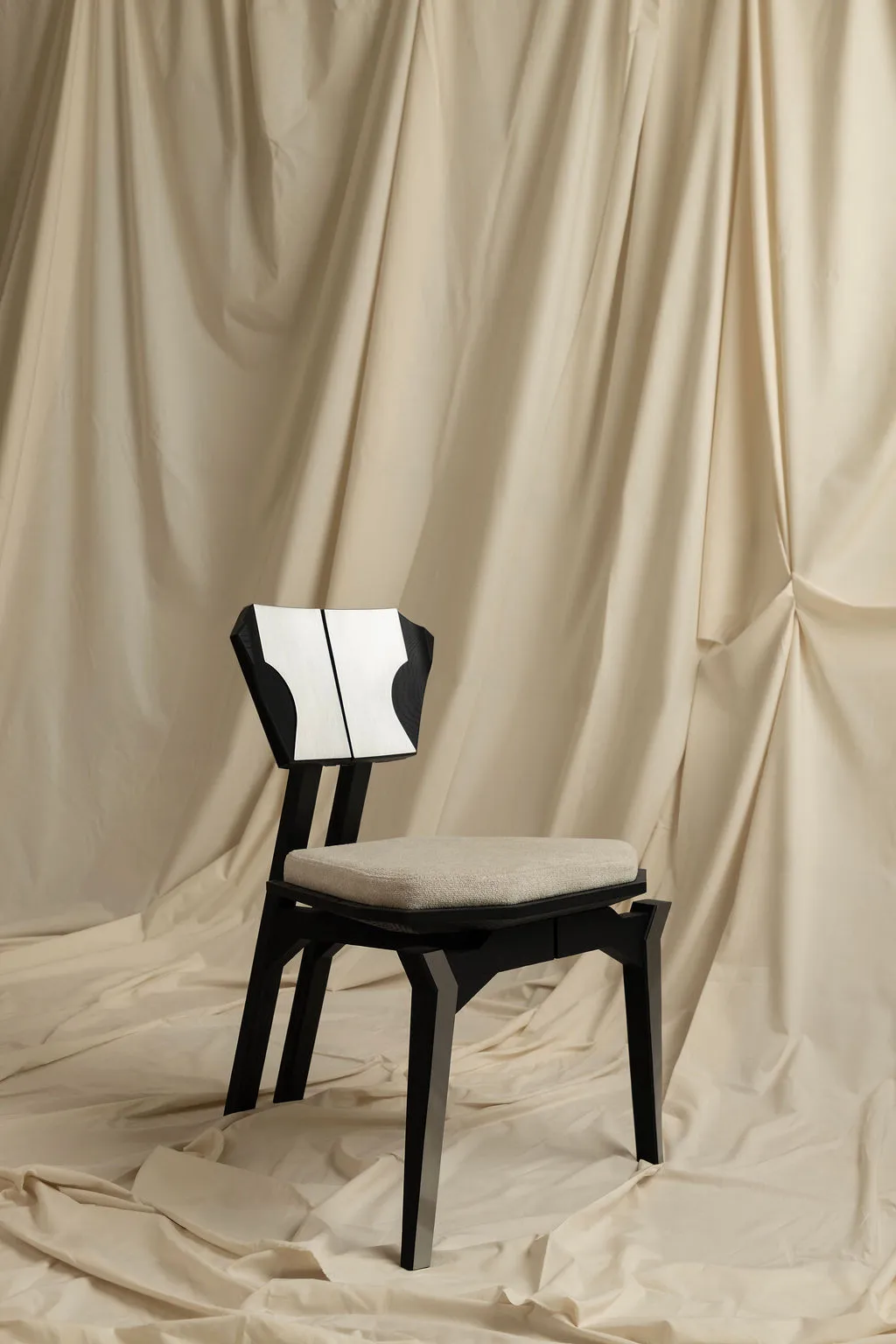
Made in a wood workshop outside Mexico City, Angulo pairs burnt white oak with steel and a seat in fabric or leather. Its angular backrest splits into dark and light planes, and at 31 inches (78 cm) tall it suits a dining table or a desk.
By Toro Manifesto
€1.780 incl. tax
Burning Mirror – Melting Collection | Sculptural Mirror In Burned Wood And White Marble by Gábor Góbi
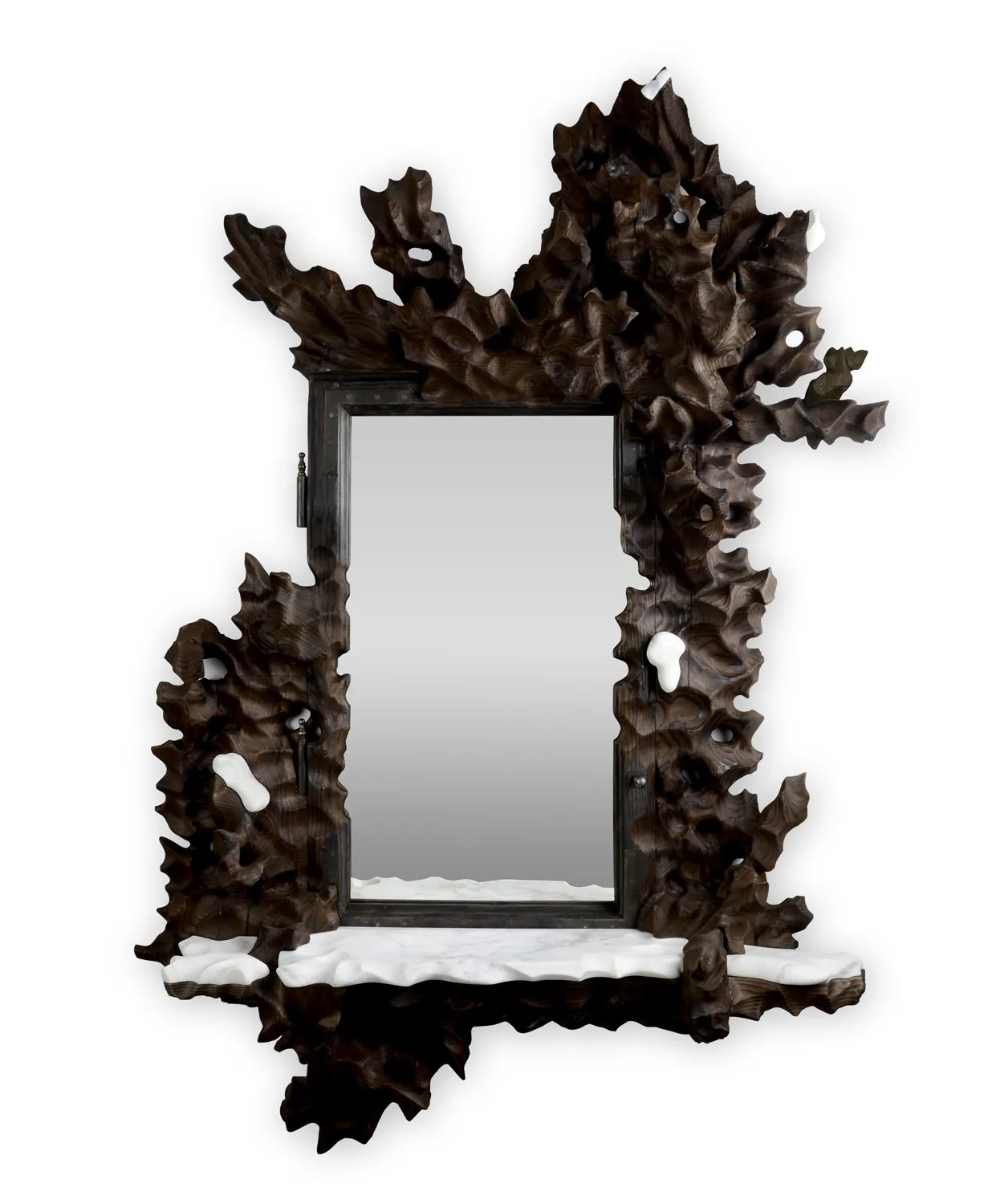
Gábor Góbi grows hand-carved charred wood beyond a reclaimed window frame and lets white marble flow out below. The 59-inch (150 cm) mirror seems to melt, turning an entryway wall into a gallery.
By Gábor Góbi
€24.390 incl. tax
The Square Desk Carbonized by am.o atelier
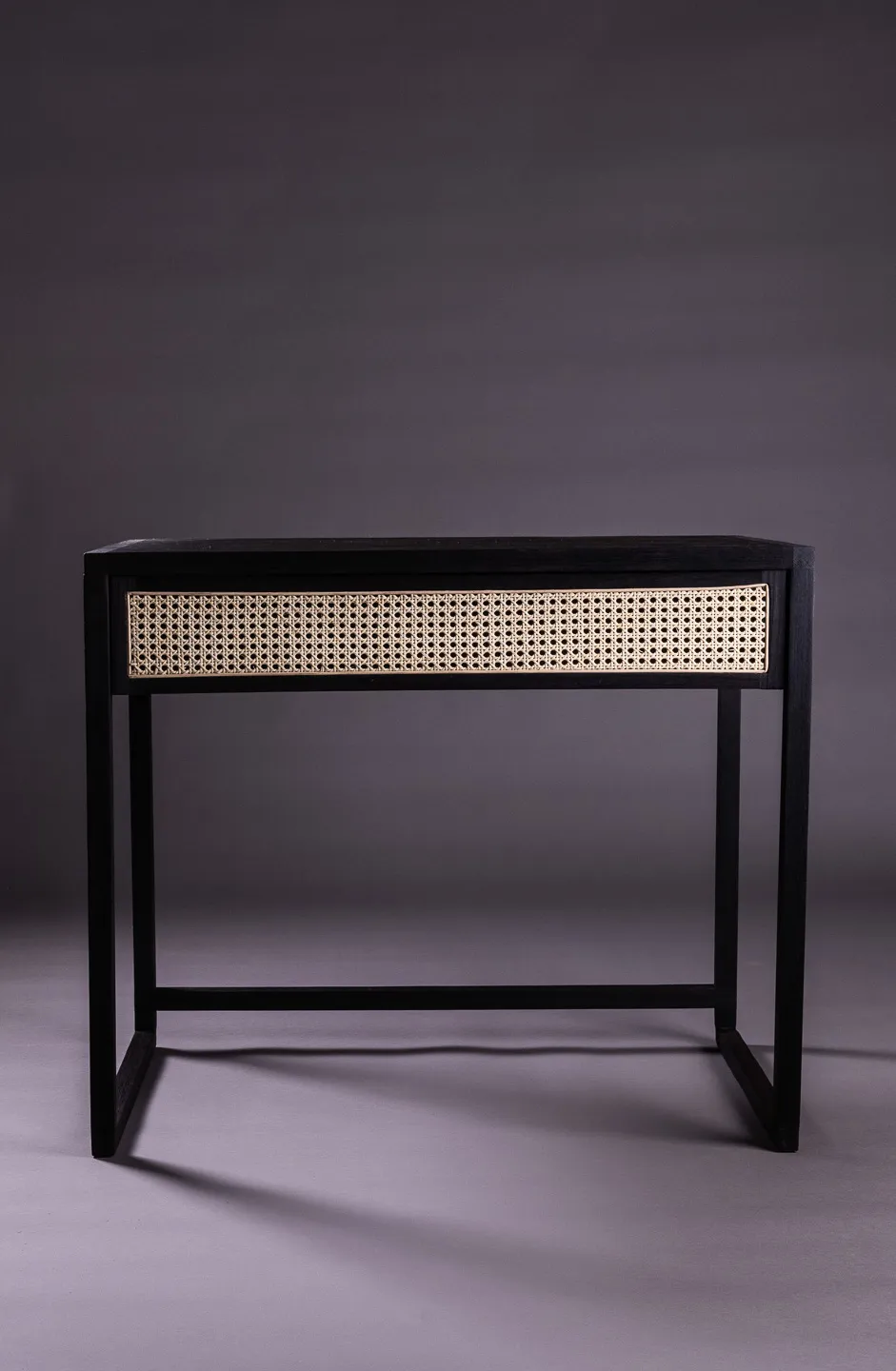
Solid freijó wood is ebonized with shou sugi ban and fitted with a drawer faced in natural Indian straw. Its straight lines nod to Brazilian furniture of the 1950s, and it fits neatly in a home office.
By am.o atelier
€2.193 incl. tax
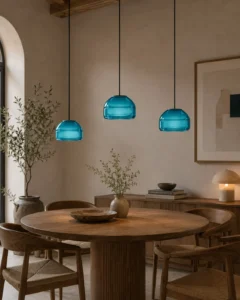
Chema Pendant Lamp in Parota Wood by Daniel Orozco Estudio

Turned from Yucatán parota, Chema is burned to deepen its grain and sealed with a water-based finish. The 26-inch (65 cm) half-sphere throws light downward, an ideal pendant over a dining table.
By Daniel Orozco Estudio
€1.154 incl. tax
Shou sugi ban interior design, room by room
Living room. A shou sugi ban coffee table is the natural starting point. Leave about 18 inches (46 cm) to the sofa, and set the black against pale linen or wool so the texture stays visible.
Dining room. In the dining room, a charred sideboard grounds the wall, while one burnt pendant above the table ties the scheme together.
Entryway, bedroom and office. An entryway console or mirror makes one strong first impression. Similarly, a charred side table in the bedroom or a carbonized desk adds depth without crowding the room.
Caring for shou sugi ban furniture
Soot. A brushed and sealed piece should not mark clothes. If a new piece releases a little carbon, wipe it with a dry microfiber cloth until it comes away clean.
Re-oiling. Indoors, a light coat of the maker’s oil every 12 to 24 months keeps the burnt wood finish deep and sealed. Avoid solvent cleaners, which dull the char.
Water, heat and moving. Use coasters and trivets, and blot spills quickly. Lift heavy oak pieces rather than dragging them, and add felt pads to protect floors.
Frequently asked questions
What is shou sugi ban?
A Japanese technique that chars the surface of wood to protect it from moisture, insects and decay, then brushes and oils it to a textured black finish.
Is yakisugi the same as shou sugi ban?
Yes. Yakisugi is the Japanese name; shou sugi ban is the term used in the United States and Europe.
What is the best wood for shou sugi ban?
Cedar is traditional for siding. For furniture, oak, pine and hardwoods such as parota hold up better to daily use.
Does charred wood rub off?
Raw char does. Brushed and oiled shou sugi ban furniture should not, apart from a little dust on a brand-new piece.
How long does shou sugi ban last?
Exterior yakisugi is often said to last 80 years or more. Indoors, charred furniture lasts indefinitely with occasional re-oiling.
Can shou sugi ban furniture go outdoors?
Only when the maker says so. Most charred furniture is sealed for interiors, so keep it under cover.
Why shou sugi ban earns its place
Few finishes record their own making so plainly. Every ridge and shift from black to brown shows where the flame moved, so a charred piece never looks mass-produced. Consequently, the studios on ADORNO keep returning to fire, from Mexican pine lamps to German oak-and-aluminum tables, all in natural wood built to last.