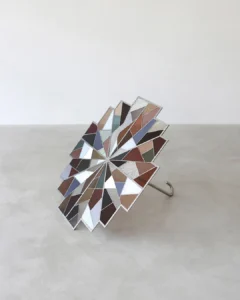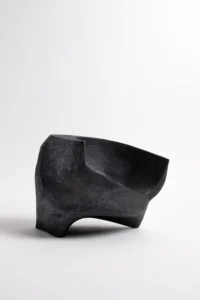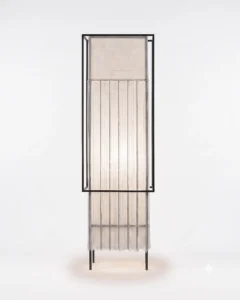
An accent table holds a drink and a lamp. The good ones also hold your attention.
An accent table is the smallest table in most rooms and, often, the most telling. Unlike a dining table, it has no fixed job and no fixed address. It moves from the sofa to the bed to the hallway, and each time it carries a lamp, a stack of books or a glass of something cold. Because the brief is so loose, designers treat it as open ground: a place to test a material, a technique or an idea at a scale that still fits through a door.
This selection gathers ten accent tables by independent designers on ADORNO, in folded stainless steel, hand-chased metal, burnt wood, oak beneath smoked glass, aluminum and plant-based 3D-printed PLA. Some double as stools; one folds flat into a box; one branches upward like a root system turned to furniture. Below, a guide to choosing, placing and caring for them, followed by the pieces themselves.
What is an accent table?
An accent table is a small, freestanding table chosen as much for its presence as for its surface. Functionally, it overlaps with the side table and the end table: it sits beside seating or a bed and holds the things you reach for. The difference is emphasis. An end table is usually sized to sit flush at the end of a sofa, often in a matching set, while an accent table goes wherever a room needs a point of interest, whether that is a corner, a stretch of empty wall or the gap between two lounge chairs. In other words, an end table answers a layout; an accent table answers a mood.
The category is broad by design. Pedestals, drink tables, low stools and nightstands all slip into it, which is exactly why it suits collectible design. Accordingly, many of the pieces below come from studios that also work in sculpture, and several exist as editions of one.
How to choose an accent table
- Start with height, because it decides whether the table works at all. Beside a sofa or armchair, the top should sit level with the arm or up to 2 in (5 cm) below it; for most seating, that lands between 20 and 26 in (51 and 66 cm). By contrast, a table between two chairs can sit slightly lower, and a table carrying one of your table lamps can sit slightly higher, since the shade does the work of bringing light to eye level.
- Next, check the footprint. A top of 14 to 20 in (36 to 51 cm) across holds a lamp, a book and a glass without crowding the seat beside it. Finally, leave at least 30 in (76 cm) of walkway around it so it never becomes an obstacle.
- Then consider shape and visual weight. Round tops ease circulation in tight rooms and soften a layout full of right angles, whereas square and rectangular tops line up neatly against a sofa or a wall. Meanwhile, a solid, monolithic base reads heavy and grounds a sparse room, while an open frame or slender legs keep a small living room feeling light.
- Lastly, decide whether the table should match or contrast. Many interior designers vary the finish between the coffee table and the accent tables, pairing wood with metal or stone with lacquer, so the room reads as collected rather than bought as a set.
Materials and construction
Stainless steel and folded metal
Stainless steel is the workhorse of contemporary accent tables. Laser-cut sheet can be folded into sharp, light structures, and a satin or brushed finish hides fingerprints and small scratches. Notably, it also tolerates heat and water, which makes metal tables a sensible choice beside a sofa, where hot mugs and wet glasses land daily.
Aluminum
Lighter than steel and naturally corrosion-resistant, aluminum suits tables that move around, from sofa to bedside and back again. Polished, it throws back light like a mirror; sandblasted or anodized, it turns soft and matte. Moreover, its low weight means a table can double as a stool without becoming a chore to carry.
Solid and stained wood
Wood remains the warmest option and the easiest to live with. Solid hardwoods can be sanded and refinished for decades, while stained and ebonized finishes give oak or ash a graphic, near-black profile that pairs well with stone and steel. However, wood moves with humidity, so wooden side tables need coasters, felt pads and a stable indoor climate.
Charred and fire-treated wood
Burning wood is an old way to protect it. The Japanese technique of yakisugi, known in the West as shou sugi ban, chars cedar boards to make them more resistant to weather and pests, as Architizer’s guide to charred wood explains. Contemporary furniture makers borrow the principle for its surface rather than its durability, since fire leaves patterns no tool could plan. Consequently, each charred piece is a one-off, and the finish is usually sealed to keep soot off hands and fabric.
3D-printed and composite materials
Additive manufacturing has moved from prototypes into finished furniture. Plant-based PLA, a bioplastic usually made from corn starch or sugarcane, can be printed into curved, layered forms that would be wasteful to carve, then sanded and lacquered to a furniture-grade gloss. Similarly, biopolymers and recycled plastic now appear in accent tables with real structural strength, part of a wider shift we explored in studios rethinking our objects’ life cycles.
Stone
Marble, travertine and volcanic stone bring weight and permanence, and a stone top shrugs off a hot mug. That said, stone is porous and etches under acids such as wine and citrus, so it needs sealing once a year. For a closer look at the material, see our edit of marble side tables, or browse marble tables across every category.
10 accent tables by independent designers
Arranged roughly from the most everyday to the most sculptural, every piece below is available now or made to order.
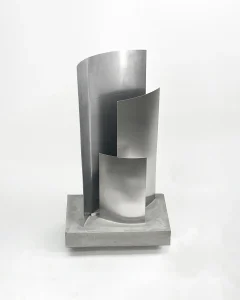
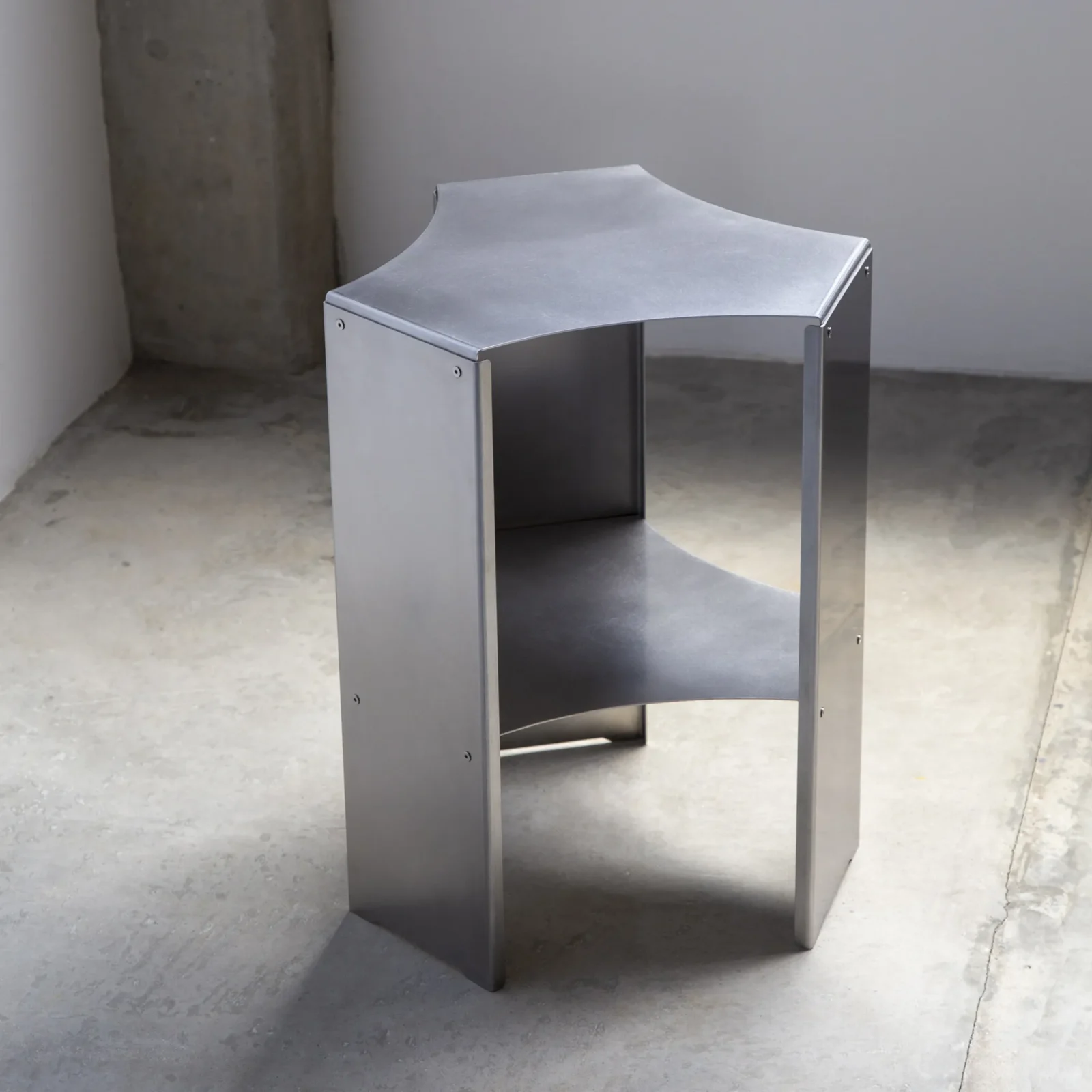
Vortice 50 Side Table In Stainless Steel by T44 design studio
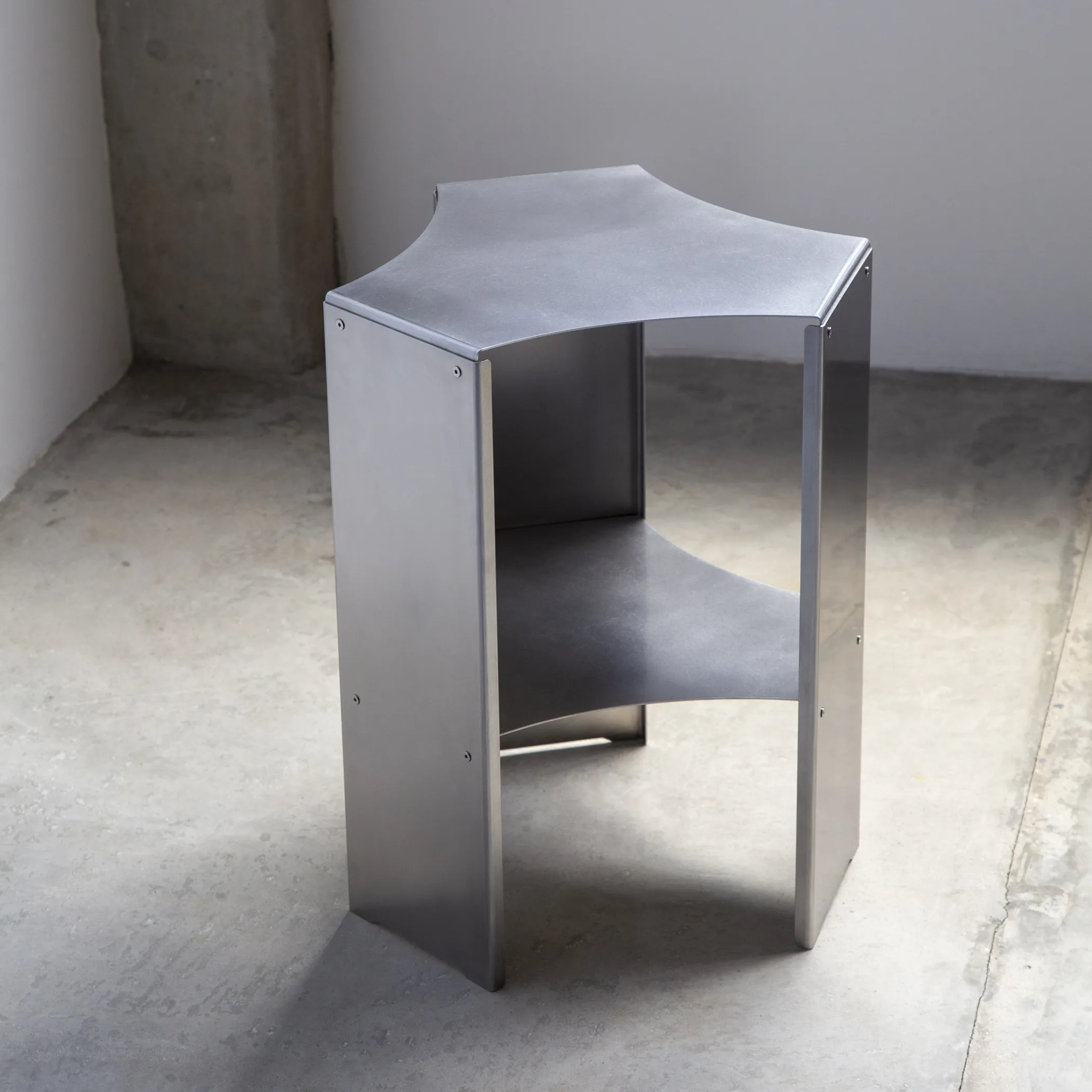
Laser-cut from 304 stainless steel, then precision-folded and joined with visible screws, the Vortice 50 wears its construction openly. Its geometry borrows from the aerodynamics of a propeller, and a second level at mid-height holds books or a small object beneath the top. At 20 in (51 cm) tall and roughly 16 x 14 in (41 x 35.5 cm) across, it works beside a sofa or as a bedside table, while the orbital satin finish softens everyday marks.
€730 incl. tax
Plus01 Medium by 301 Design Studio
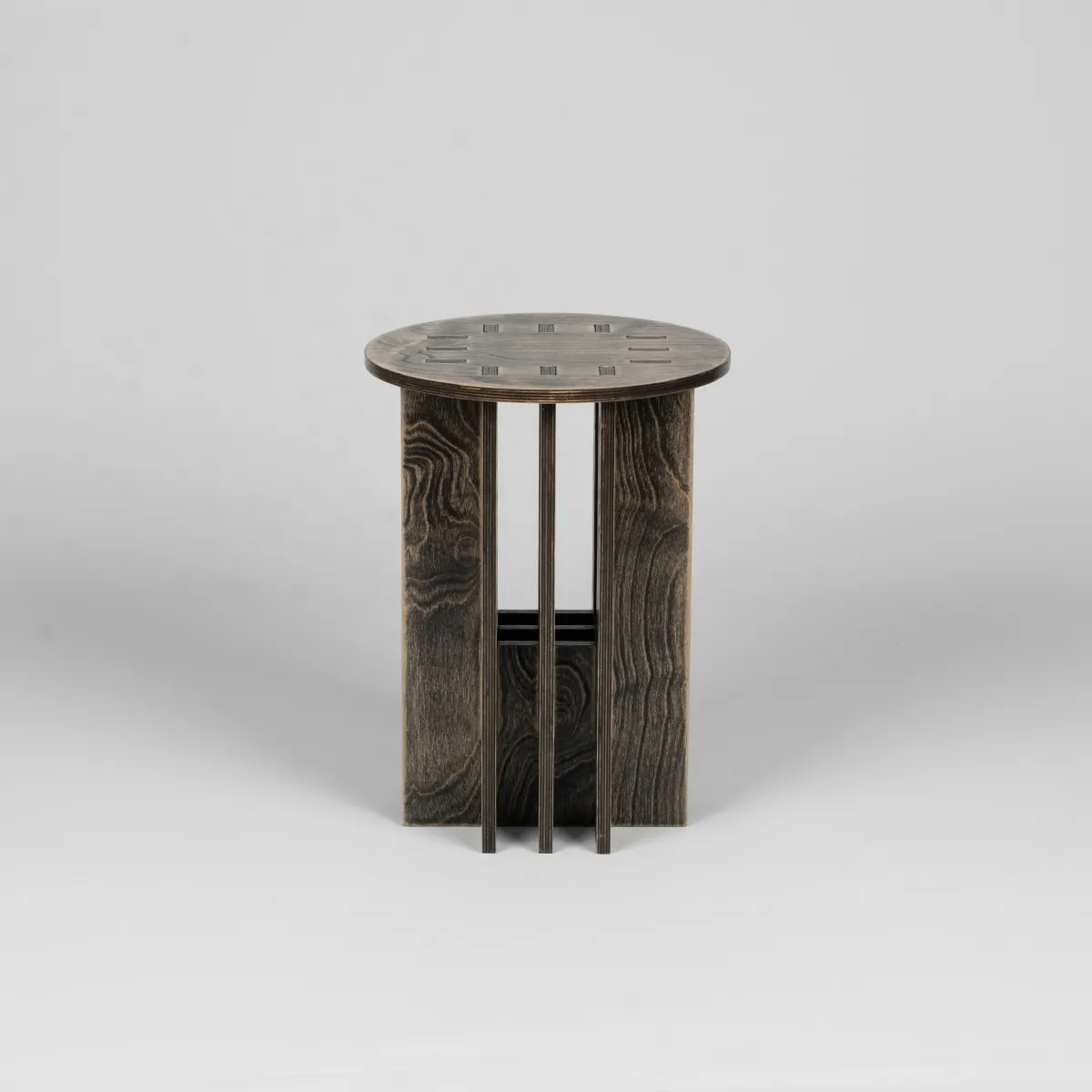
Layered wooden surfaces and visible joints give the Plus01 Medium the look of a small piece of architecture. A circular top rests on vertical supports, and the balance between the two keeps the profile calm from every side. Furthermore, it switches roles easily, serving as a low accent table one day and an extra seat the next, in natural, black, blue or green.
€800 incl. tax
Fire Ctrl Side Table in Oak Wood by Daniel Elkayam
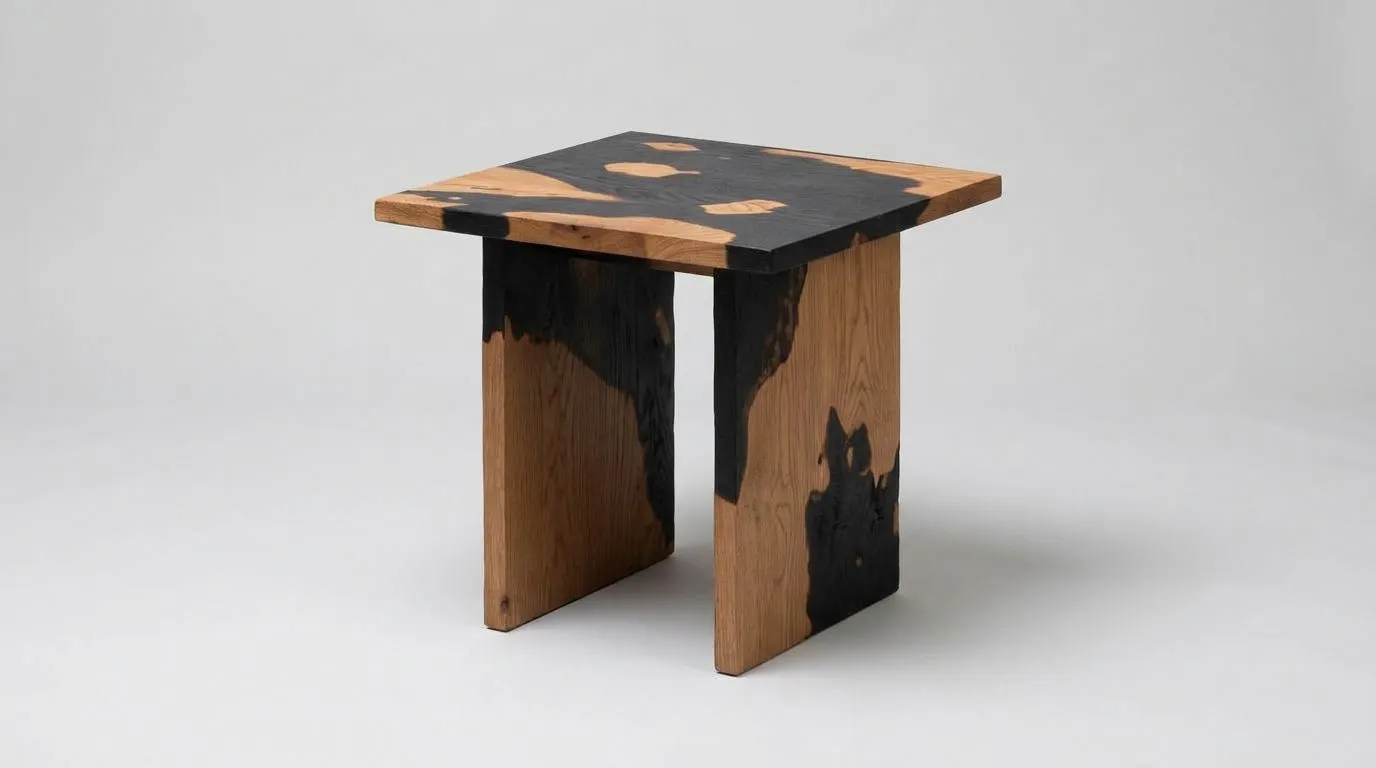
Daniel Elkayam surfaces this table with a burning technique of his own, playing doses of fire against water on the wood. As the water evaporates and resists the flame, it leaves semi-random burnt markings that read almost like animal hide. Indeed, no two tables in the series carry the same pattern, which makes each one as much a record of a process as a place to set down a glass.
€3.150 incl. tax
U – 001 – Side Table – Cream by Rollo Studio
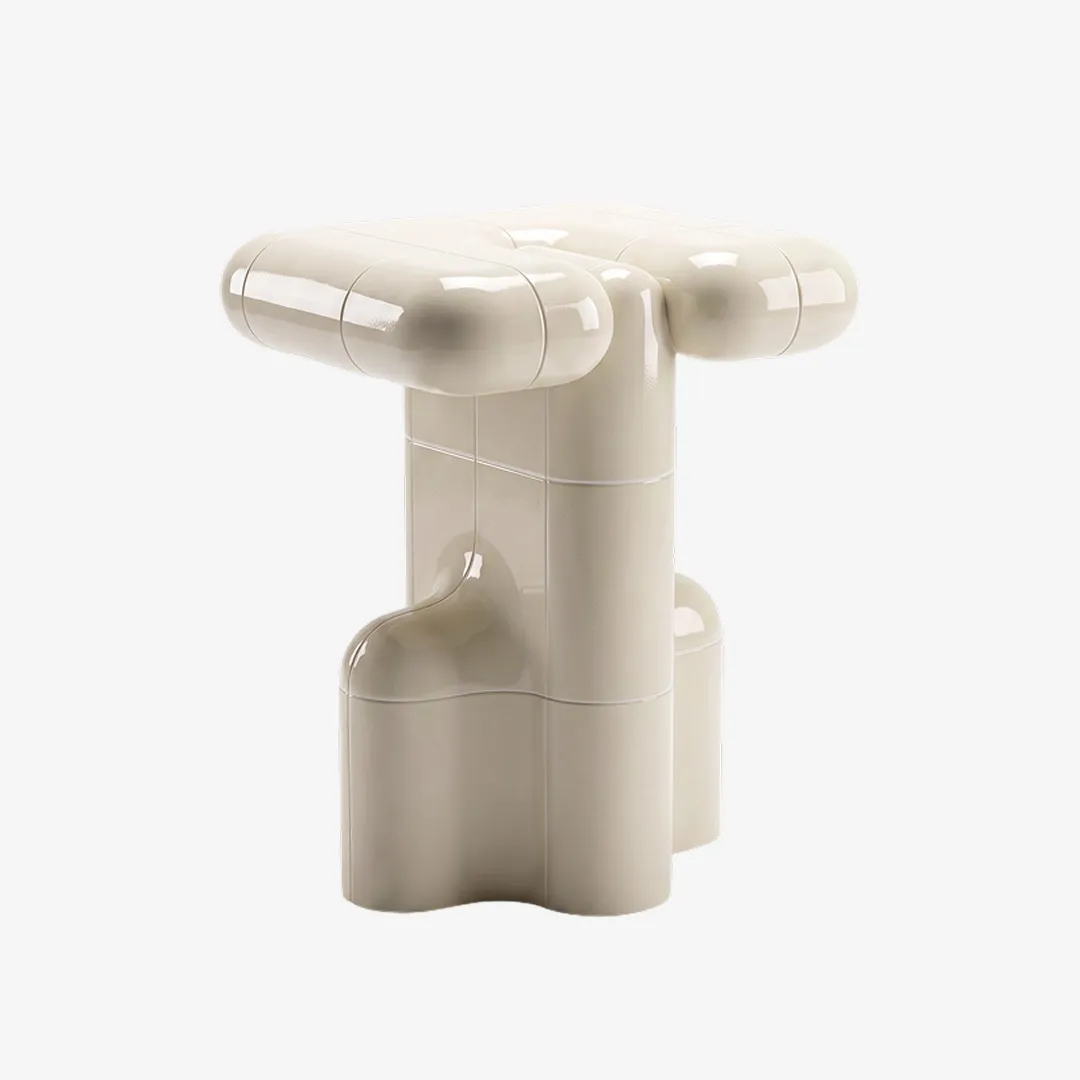
Rollo Studio prints the U-001 in plant-based PLA at its studio in Valencia, then sands and paints it to a deep, furniture-grade gloss. Stacked, curved tiles shape a silhouette that shifts from every angle, reading as furniture from one side and as a small monument from the next. At 15 x 15 x 18 in (38 x 38 x 46 cm), it sits neatly beside a lounge chair, and the same form is made to order in five other colorways, from Chalk to Garnet.
By Rollo Studio
€1.620 incl. tax
Liquid Table Tin Coated Steel by FURN OBJECT
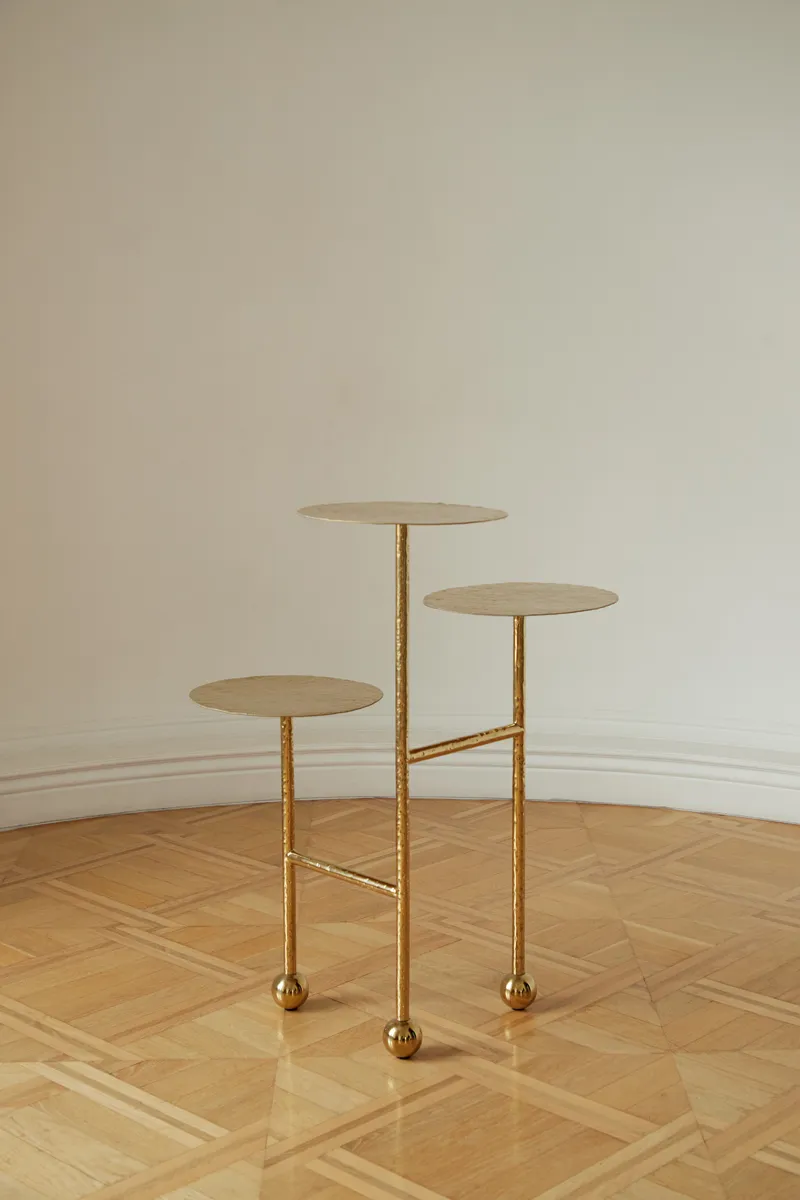
Hand-forged in Ukraine, the Liquid Table is cut from steel and then worked by chasing, an old metalworking technique that hammers texture into the surface by hand. The rippled finish recalls the Black Sea seen from the shores of Odesa, and three levels let it serve as an accent table, a low coffee table or a pedestal for a favorite object. Indeed, each one carries the studio’s hallmark and serial number under the top, with a certificate of authenticity.
By FURN OBJECT
€3.600 incl. tax
Formation Side Table in Oak Veneer and Smoked Glass by Theodóra Alfreðsdóttir
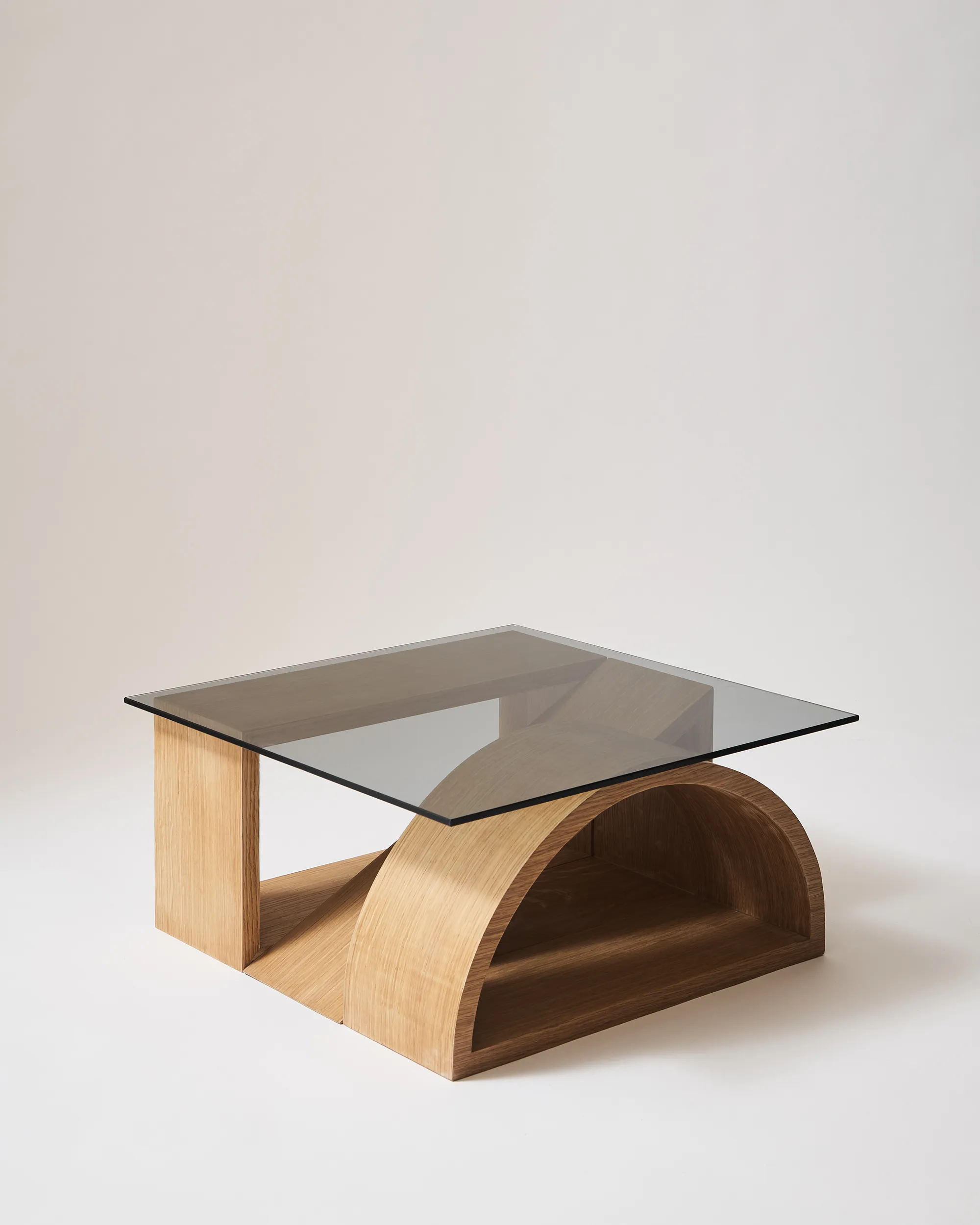
Theodóra Alfreðsdóttir builds each Formation table from three elemental shapes, a square, a triangle and a circle, arranged in oak veneer beneath a smoked glass top. Because the glass sits lightly above, the composition stays visible from every angle, so the table reads as a small still life of weight and space. As a result, it brings geometry and a touch of transparency to a reading corner, where a solid, darker table might feel heavy.
€950 incl. tax
012 Side Table in Aluminum by OFAA
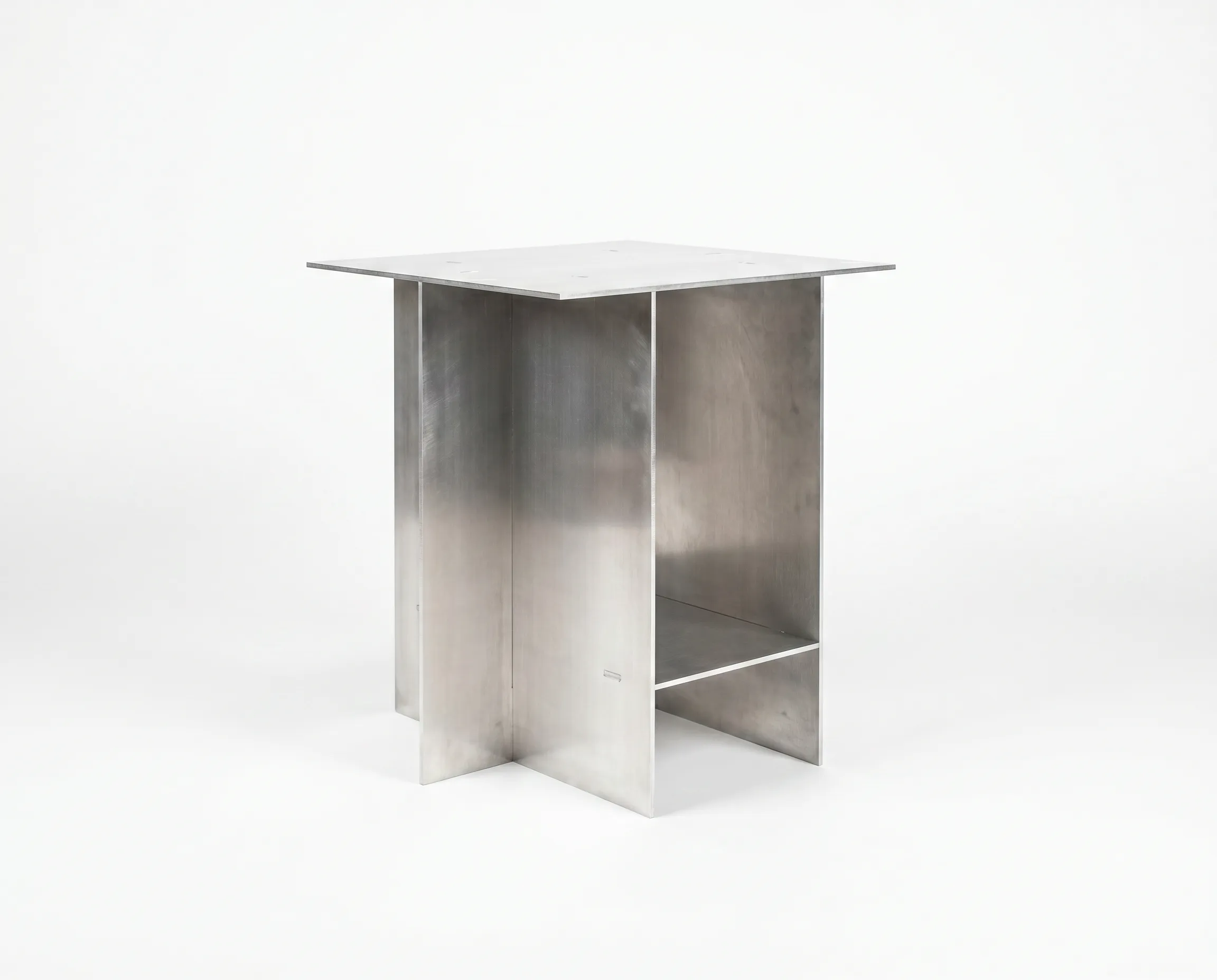
Pared back to a few aluminum planes, the 012 makes room for books, drinks and everyday objects. Its proportions sit right between table and stool, and the studio leaves the choice to the owner. Therefore, it is one of the most adaptable pieces here, at home beside a sofa, at the foot of a bed or pulled out as a spare seat when guests arrive.
By OFAA
€1.350 incl. tax
Dahlia Stool/side Table by Luis Gimeno Design
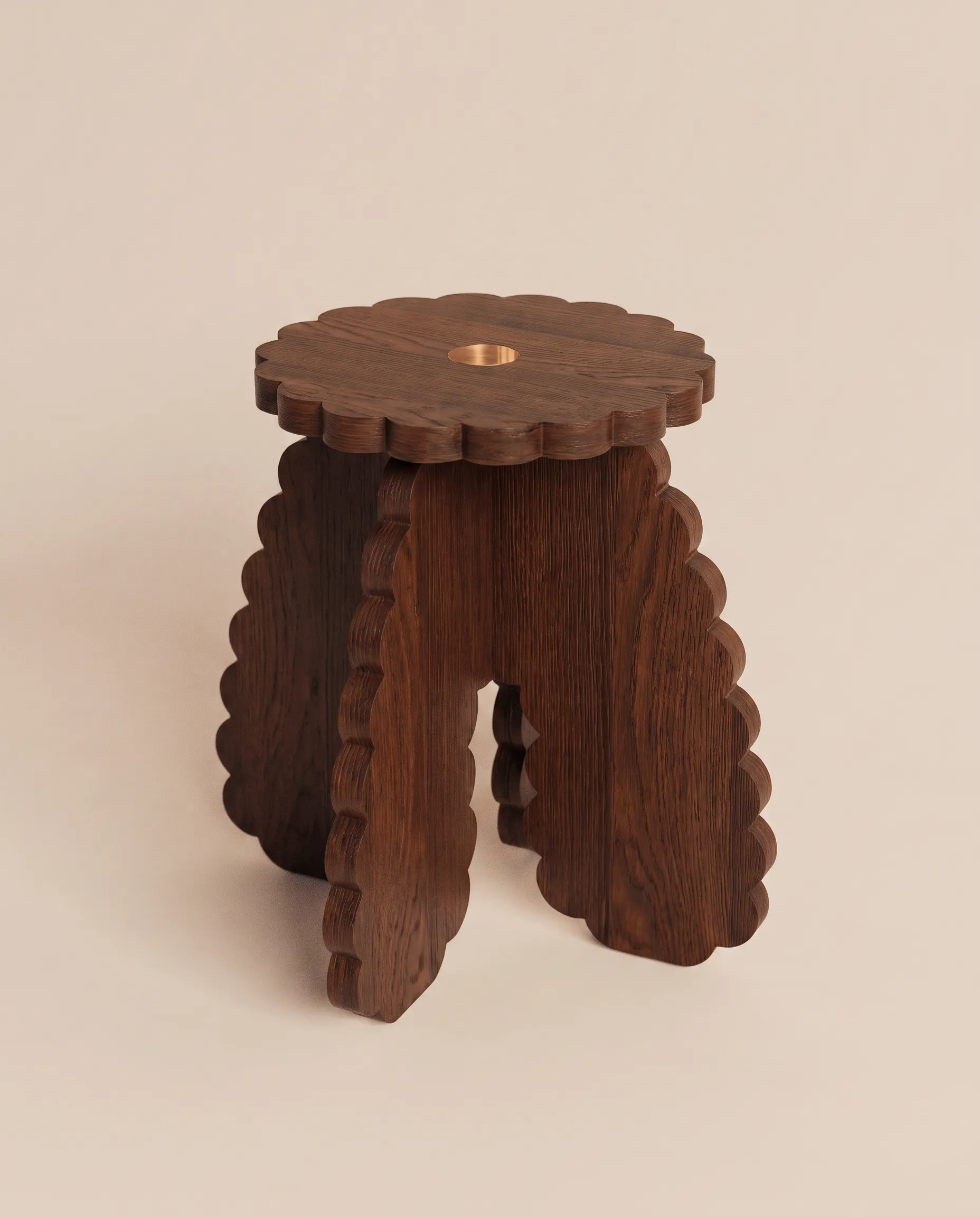
Carved in solid wood, the Dahlia takes its cue from the rhythm of a flower. A softly scalloped edge runs around the circular top, and the legs repeat the same undulating line, so the whole piece reads as one gesture. Notably, a small metal insert at the center of the top adds a cool counterpoint to the grain, in brown or black.
€990 incl. tax
Foldtable Side Table in Aluminum by FlatFlat
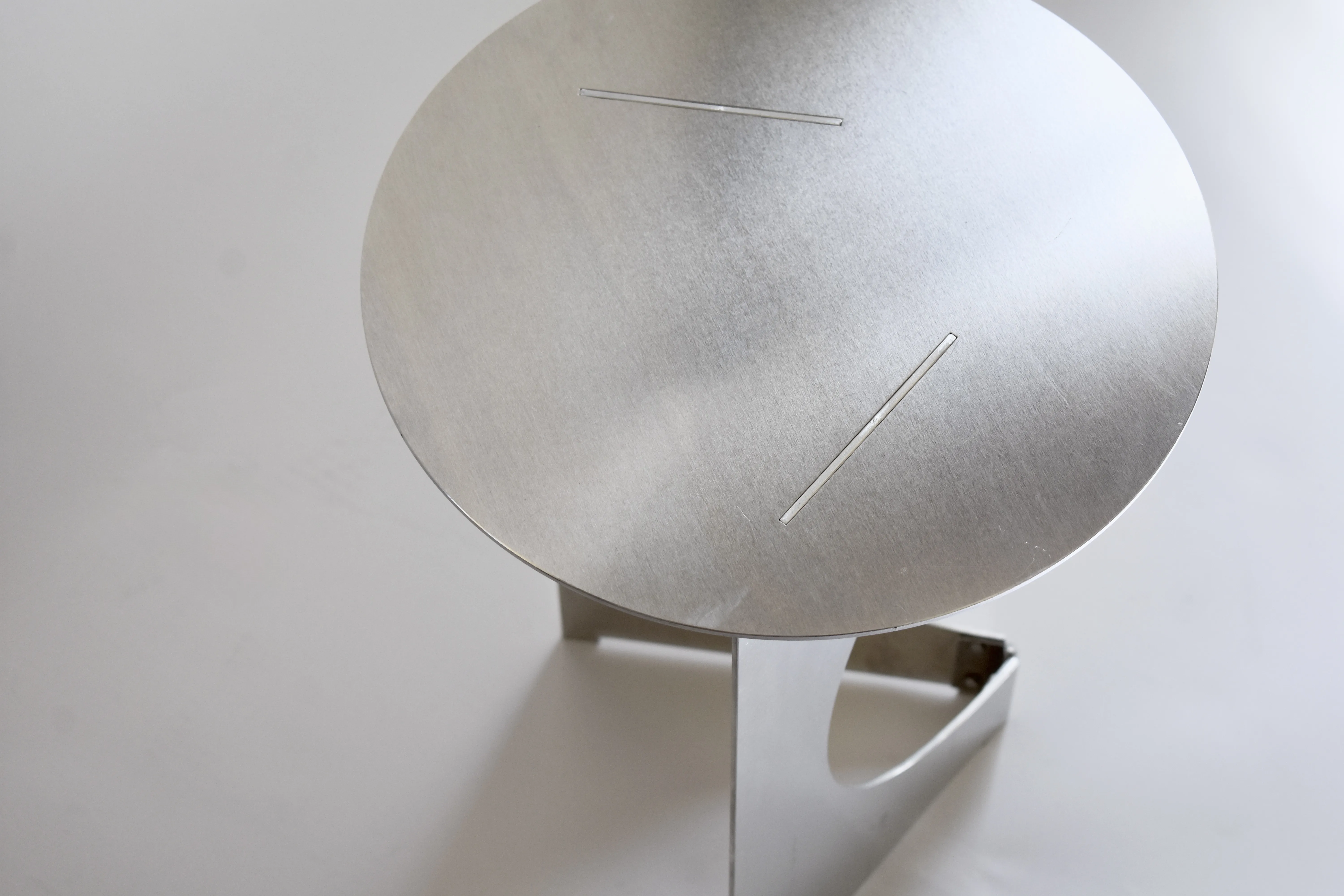
The Foldtable assembles without hardware and folds back down to pack flat into a standard 12 x 18 in (30 x 45 cm) box. Small surface marks from the hands-on making are part of its character rather than flaws. Accordingly, it is the easiest entry point in this edit: a first accent table for a rental, a guest room or a home that changes often.
By FlatFlat
€172 incl. tax
Dendria Side Table in Biopolymer and Stainless Steel by diploria studio
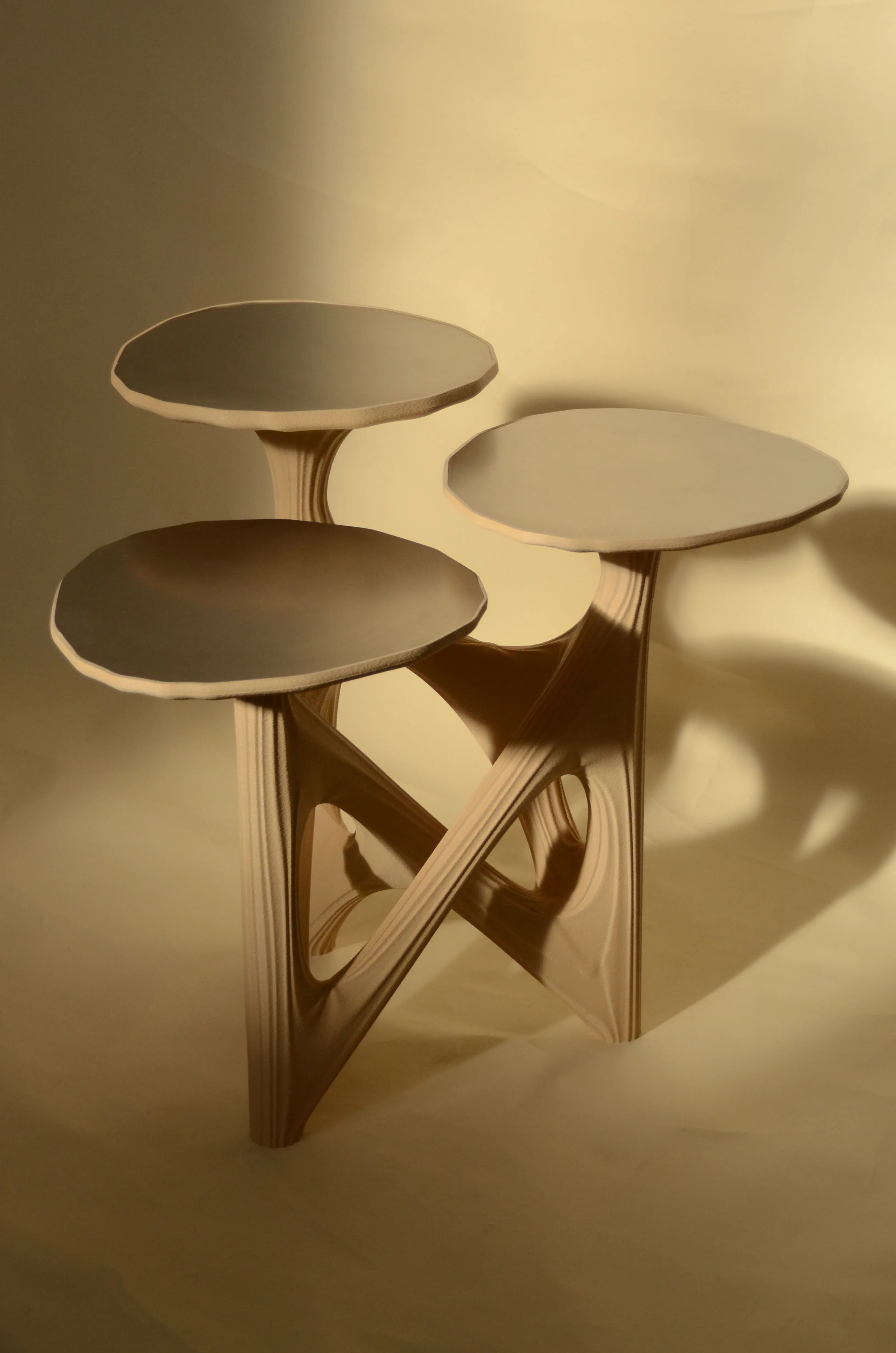
diploria studio prints the Dendria base in biopolymer over seven days, layer by layer, around a hidden steel skeleton, so the form branches like a root system or a forest canopy. Three islands rise from the legs at staggered heights, each capped with brushed stainless steel, giving a glass, a book and a small object their own level. Moreover, the soft matte sand finish keeps the branching form calm, and each piece is made to order in Hamburg.
€3.250 incl. tax
Accent tables room by room
Living room
Beside the sofa, an accent table carries the lamp, the remote and the evening’s book. Keep its top within 2 in (5 cm) of the sofa arm, and set it 2 to 4 in (5 to 10 cm) from the cushion so a glass stays within easy reach. In a larger room, a pair of contrasting tables, one metal and one wood, keeps the symmetry without the monotony.
Beside a lounge chair or reading corner
A single chair needs less table than a sofa. A round top 14 to 18 in (36 to 46 cm) across, placed between two accent chairs angled toward each other, turns them into a conversation. Meanwhile, a table that doubles as a stool earns its keep twice over here. For pairing ideas, see our edit of lounge chairs for the living room.
Bedroom
Used as a nightstand, an accent table should sit level with the top of the mattress, usually 24 to 28 in (61 to 71 cm) high. A lower shelf helps with books, and a sculptural piece works best when the bed itself is plain. By contrast, in a tight bedroom, a slim pedestal leaves more floor than a cabinet-style nightstand, and the room breathes for it.
Entryway and hallway
By the door, an accent table becomes a landing spot for keys, mail and a small vase. Choose a narrow footprint, around 12 to 16 in (30 to 41 cm) deep, and a stable base, since hallways see bags, coats and passing elbows. Above it, one of our wall mirrors completes the vignette. If you need a longer surface, look to entryway tables instead.
Troubleshooting accent tables
Leveling and wobble
Most wobble comes from the floor rather than the table. Check with a small level first; on wood floors, adjustable glides or a discreet felt shim under the short leg usually solve it. For tables with screwed or bolted construction, retighten the fixings once or twice a year, since seasonal humidity loosens joints in wooden frames.
Protecting the surface
Hot mugs and cold, sweating glasses cause most marks on wood and lacquer, so coasters and a small tray do a lot of quiet work. Keep wood and high-gloss finishes out of direct sun and at least 3 ft (91 cm) from radiators. Meanwhile, felt pads underneath protect your floor each time the table moves.
Removing marks from wood, metal and stone
For white water rings on wood, a hairdryer on low heat often draws out the moisture trapped in the finish. Stainless steel and aluminum clean with warm water and mild soap, wiped along the grain and dried with a microfiber cloth; avoid abrasive pads, which scratch satin and polished surfaces alike. On stone, blot spills immediately and use a pH-neutral cleaner, since acidic liquids can etch marble within minutes.
Stability for tall or top-heavy pieces
A lamp, a vase and a stack of books together raise the center of gravity. Place the heaviest item at the middle of the top, keep sculptural tables out of main walkways, and choose heavier bases in stone, solid wood or steel where children or pets are around. Similarly, a tilted or asymmetric form should sit against a wall rather than in open floor.
Moving a table safely
Lift rather than drag; dragging stresses joints and scratches floors. Grip the base, not the top, since tops are often attached with fewer fixings than they look. For stone tops, separate top from base if the design allows and carry each on its edge with two people.
Frequently asked questions
What is the main purpose of an accent table?
To add a surface where you need one and a point of interest where a room feels flat. Practically, it holds lamps, drinks and books beside seating or a bed. Visually, it introduces a material, color or form that the larger furniture does not.
What’s the difference between an end table and an accent table?
An end table is sized and placed for the end of a sofa, often in matching pairs. An accent table is chosen more for its presence and can sit anywhere: beside a chair, in a corner or by the door. Many pieces serve as both.
What do you put on an accent table?
Keep it to three things or fewer: a light source, something personal and something functional. For example, a lamp, a small object or candleholder, and a coaster or tray. Leave about a third of the top clear so it still works as a table.
How tall should an accent table be?
Level with the arm of the neighboring sofa or chair, or up to 2 in (5 cm) lower, which typically means 20 to 26 in (51 to 66 cm). As a nightstand, match the top of the mattress, usually 24 to 28 in (61 to 71 cm).
Can an accent table be used as a stool?
Some are designed for it. The Plus01 Medium, the 012 and the Dahlia are all listed as both stool and side table. Otherwise, check the product page for load guidance before sitting on any table.
How do I protect an accent table’s surface?
Use coasters, a tray for anything hot or wet, and felt pads underneath. Seal stone once a year, keep wood away from radiators and direct sun, and clean metal with mild soap rather than abrasives.
Why accent tables earn their place
An accent table asks for very little floor and gives back a great deal. It finishes a seating group, carries light into a dark corner and, at its best, introduces the one material or form a room was missing. Because it is small, it is also the most forgiving place to start collecting: a piece in burnt wood or hand-chased steel can move from room to room, and home to home, and keep earning its spot. As we argued in Side Tables: Small Role, Big Performance, the supporting cast often carries the scene.
Ultimately, the pieces above show how far a modest brief can travel, from folded steel to rippled, hand-hammered metal and from a flat-pack kit to a branching table printed over seven days. Choose the height first and the material second, then let the form do the talking. And if space is the real constraint, our guide to small room decor picks up where this one leaves off.