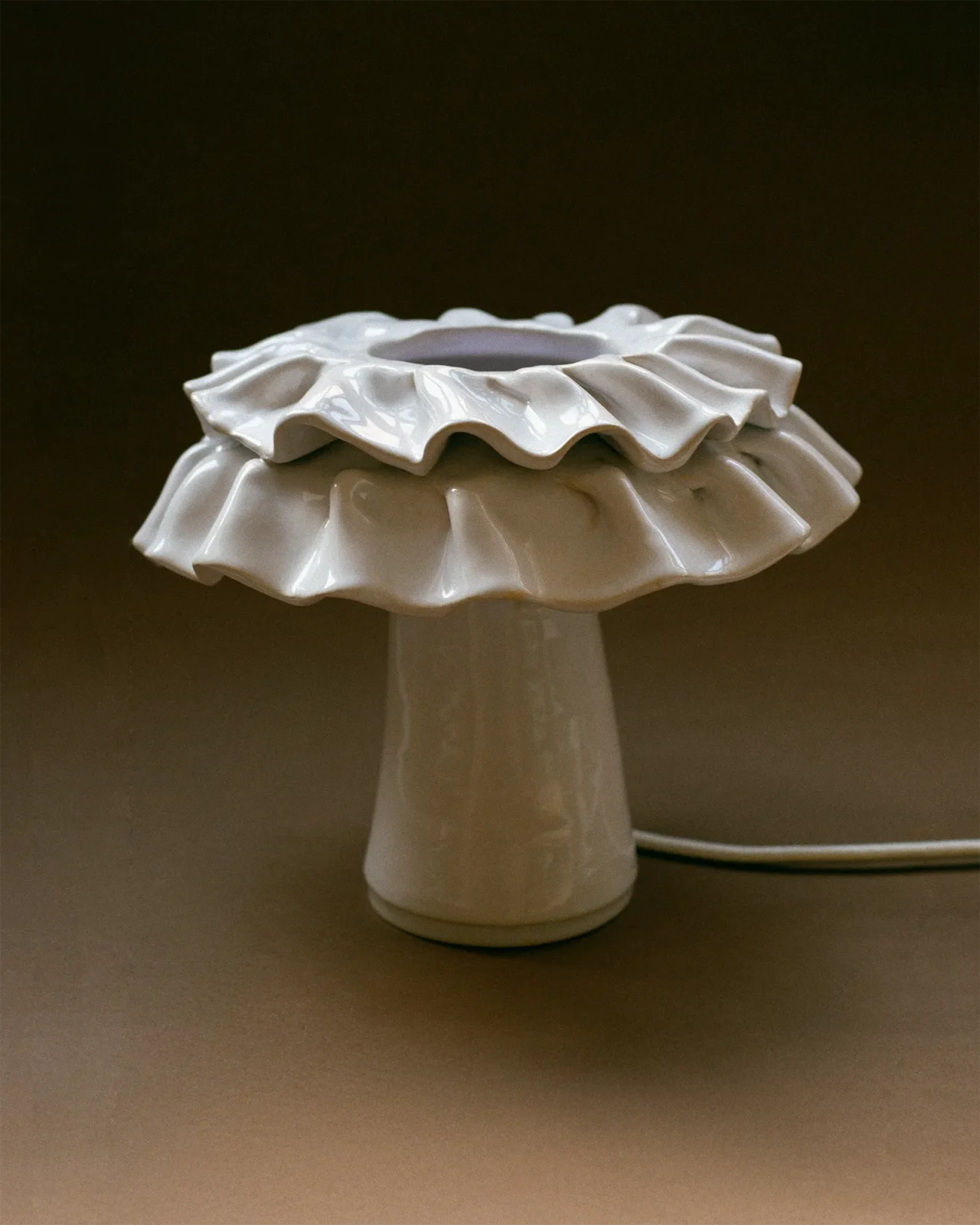
A gallery wall is not a collection of pictures. It is one large shape made of smaller ones, and the shape is what you are actually designing.
That is the whole method, and it explains why most gallery walls fail. People choose the frames first, hang them one at a time, and hope a composition emerges. What emerges instead is a scatter that reads as busy from across the room and never looks finished, because nothing was defining its outer edge.
Where a gallery wall belongs
It wants a large, uninterrupted wall in a room you move through — a stairwell, a hallway, the wall behind a dining table, a big living room wall with a sofa under it.
It is the wrong move in a small room. A scatter of small frames lands in the 40 to 70 inch (100–178 cm) band where people actually look, and adds the maximum number of edges for the eye to count — which is what makes a tight room feel tighter. Our guides to small room decor and small living rooms make the case for one larger piece instead.
The test is the wall, not the taste: more than about 6 feet (180 cm) of clear wall and it will work. Below that, it reads as clutter however well composed.
Build the rectangle first
Before choosing anything, decide the outer dimensions of the whole arrangement. Over furniture, the group should span two-thirds to three-quarters of the furniture’s width — on an 84 inch (215 cm) sofa, a block 56 to 63 inches (140–160 cm) wide. On an empty wall, fill 60 to 75% of the usable area.
Then work inside it. Lay everything on the floor, photograph it from directly above, and adjust from the photo — you will see imbalance in an image that you cannot see standing over it.
The numbers
- Spacing: 2 to 3 inches (5–7.5 cm), identical throughout. Uneven gaps are the clearest sign a wall was hung one piece at a time.
- Height: center of the whole group at 57 inches (145 cm) from the floor — not the center of any one frame.
- Above furniture: 6 to 8 inches (15–20 cm) above a sofa back.
- Margins: 4 to 6 inches (10–15 cm) clear of a door frame, window casing or corner.
Six layouts
- Grid. Identical frames, even rows, uniform spacing. The most forgiving and the most formal.
- Salon hang. Mixed sizes packed densely against an implied rectangle. Hardest to do well.
- Single row. One horizontal line aligned on center. Calm, and ideal in hallways.
- Two rows. Above and below a shared axis, for walls that are wide but not tall.
- Staircase. Centers tracking a line parallel to the handrail.
- Asymmetric cluster. One large anchor off-center, smaller pieces around it. The most forgiving of mismatched sizes.
Pick one and commit. A grid that drifts into asymmetry reads as a mistake rather than a decision.
What holds a mixed group together
One element has to repeat, or the wall reads as accumulation. Any of four will do: a shared frame finish, a shared palette, a shared subject, or a shared material.
Then give the group an anchor — one piece at least twice the area of the others, placed off-center. It gives the eye somewhere to land first, and it is what stops a salon hang reading as a flat field.
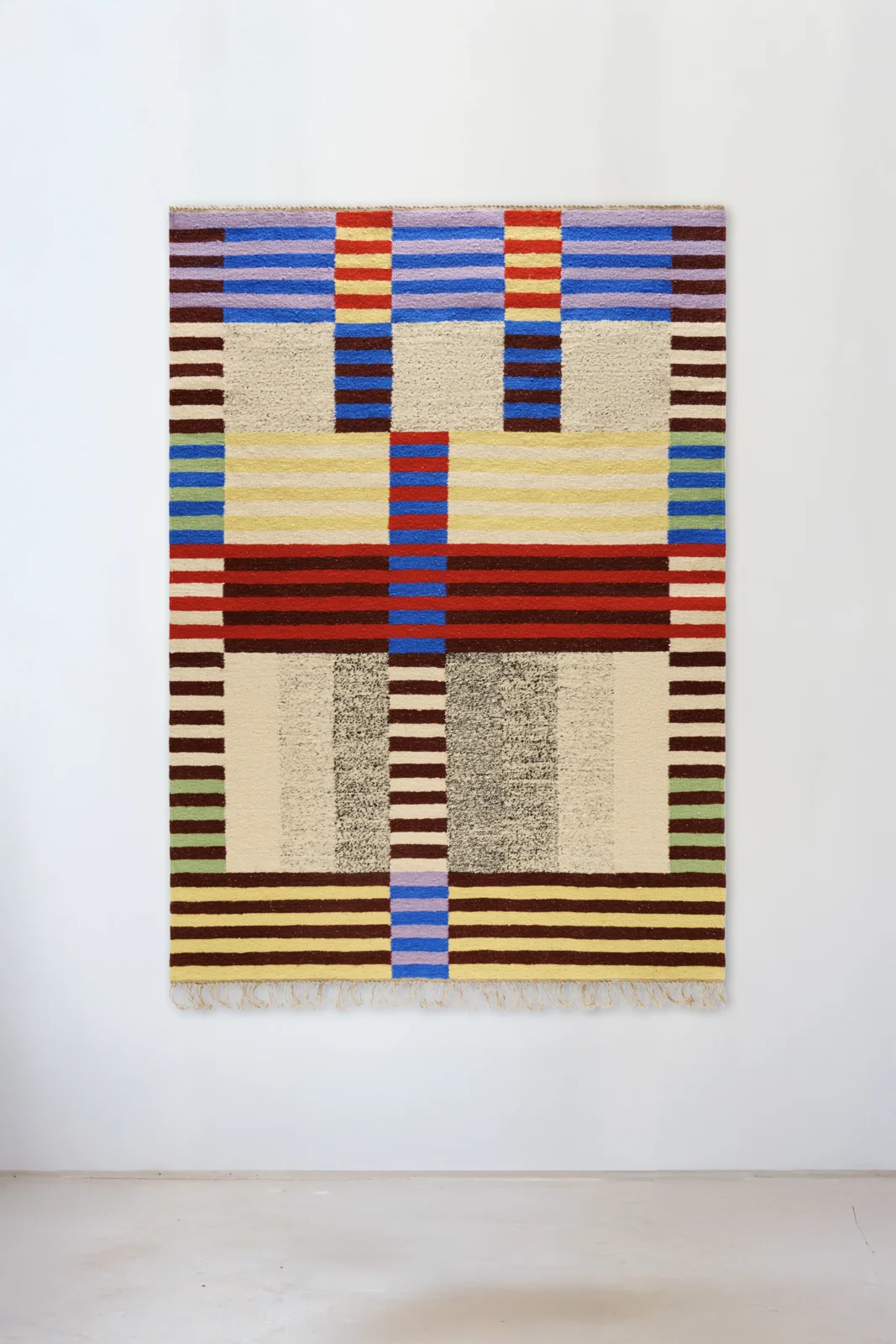
Tapestries
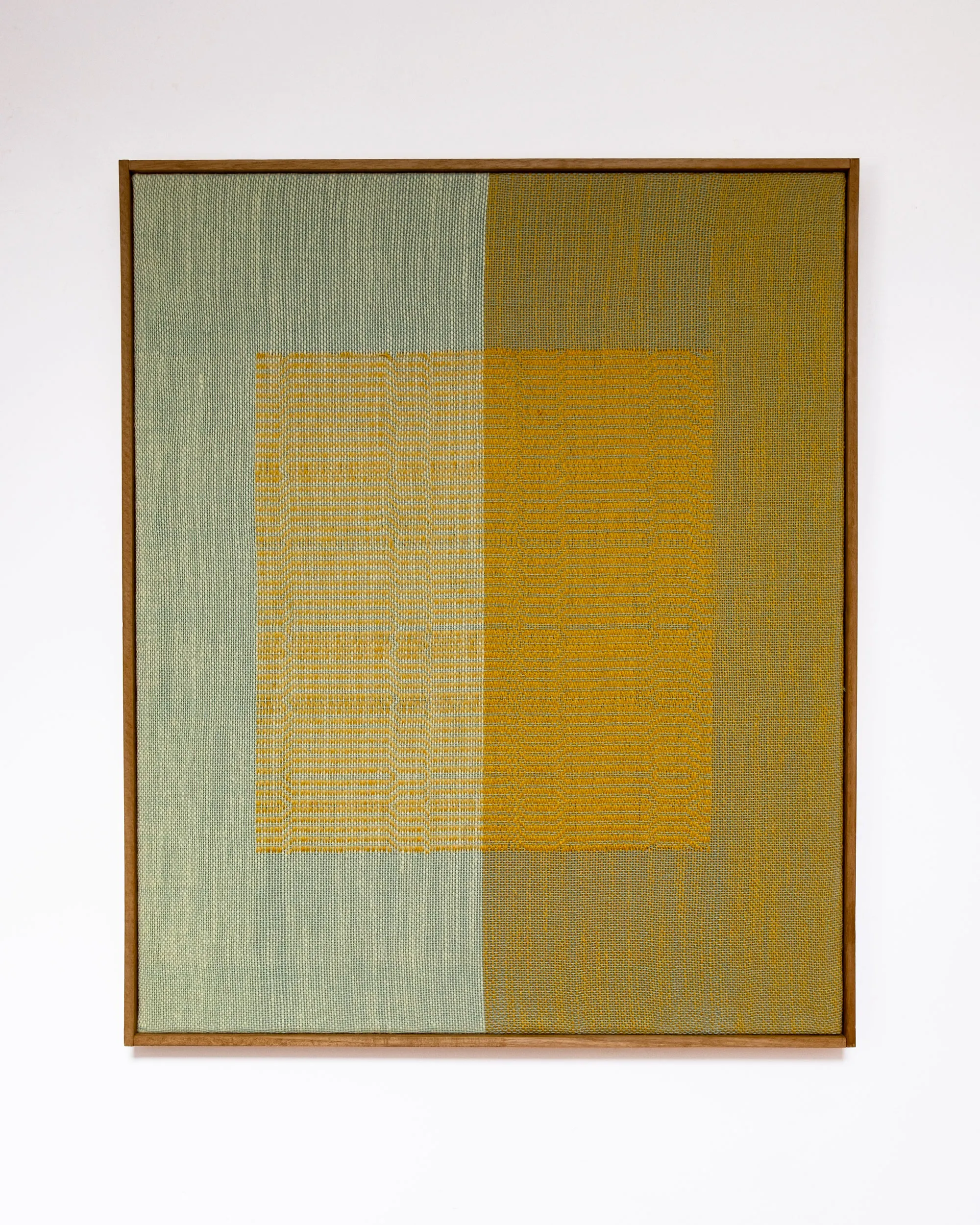
Textile is the quietest way to put something large on a wall. It absorbs sound rather than reflecting it, it has no glass to catch window glare, and the weave carries color at a depth that print cannot. A single tapestry can also do the job of an entire gallery wall, which makes it the honest alternative in rooms too small for a group.


Wall sculptures
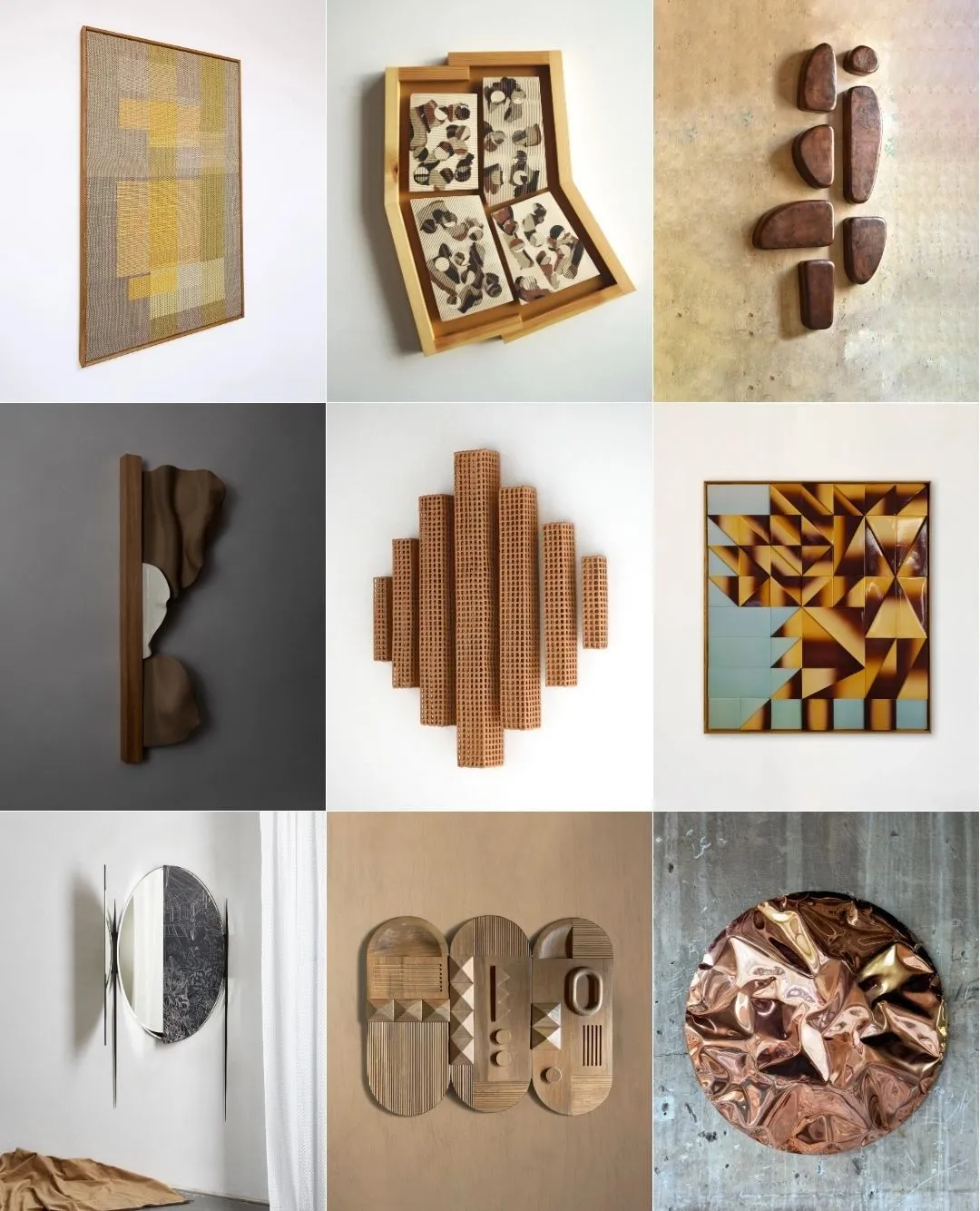
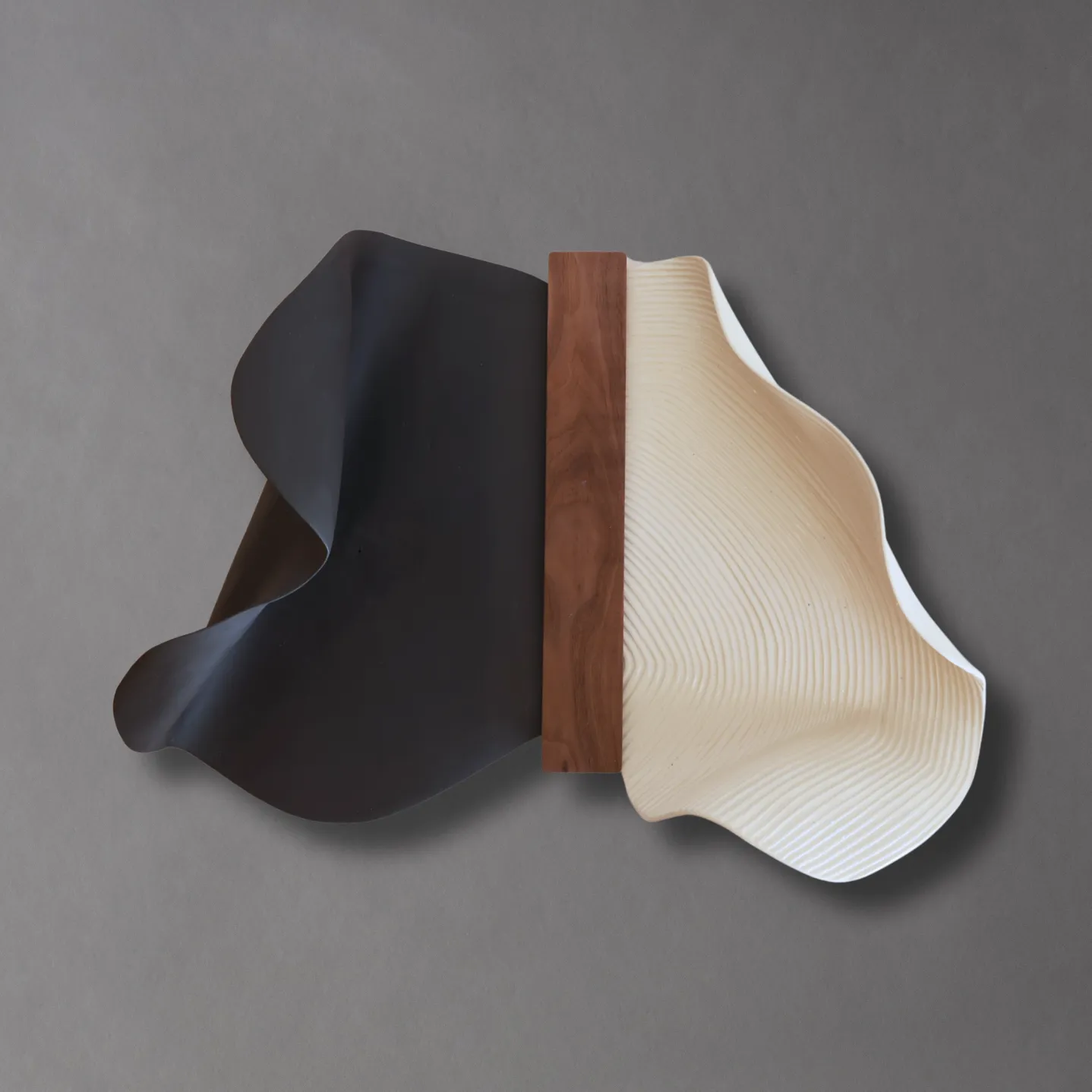
A sculptural piece is the natural anchor for a gallery wall, because it has mass and an outline that framed work does not. One in a group of flat pieces does more than three more prints would.
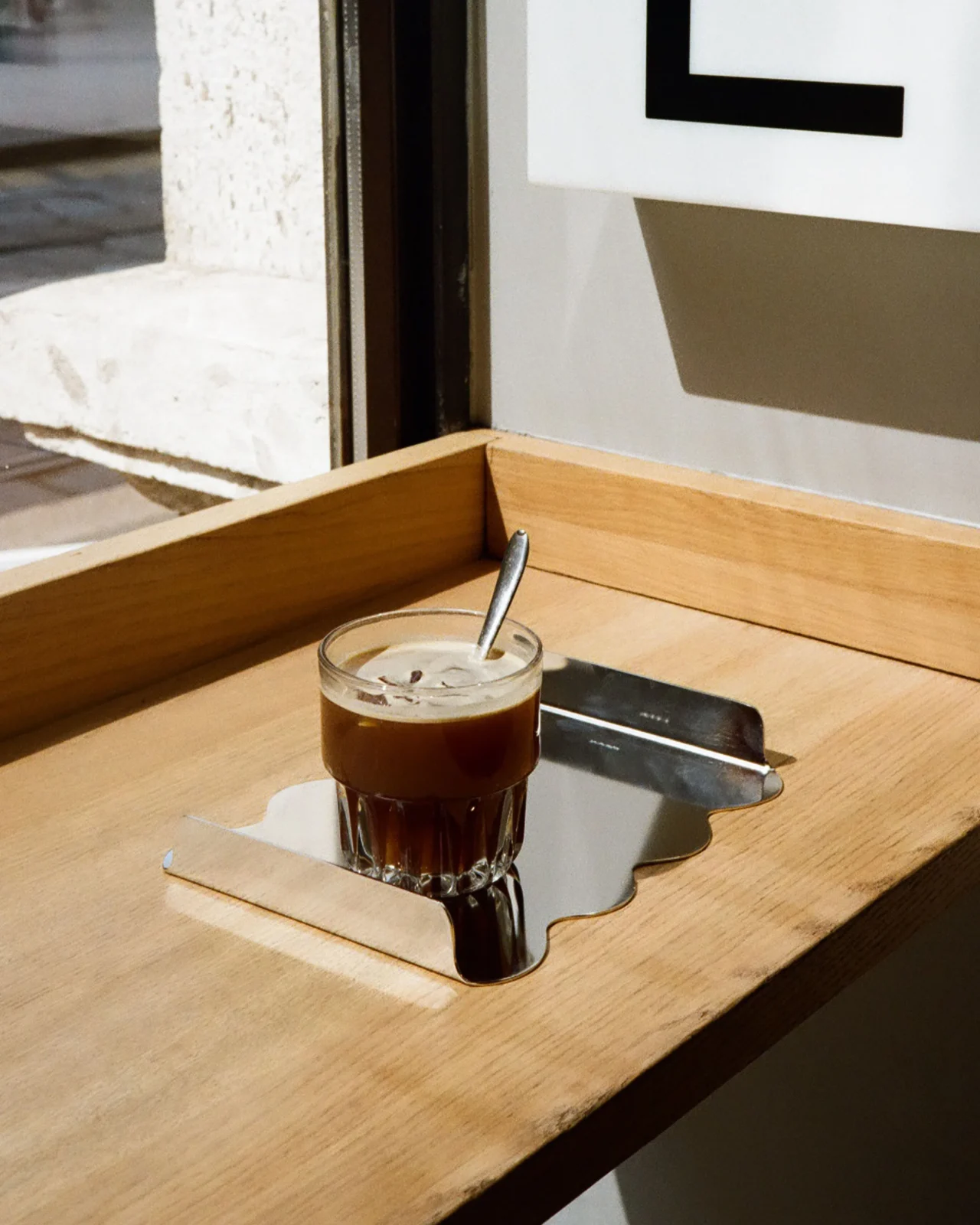
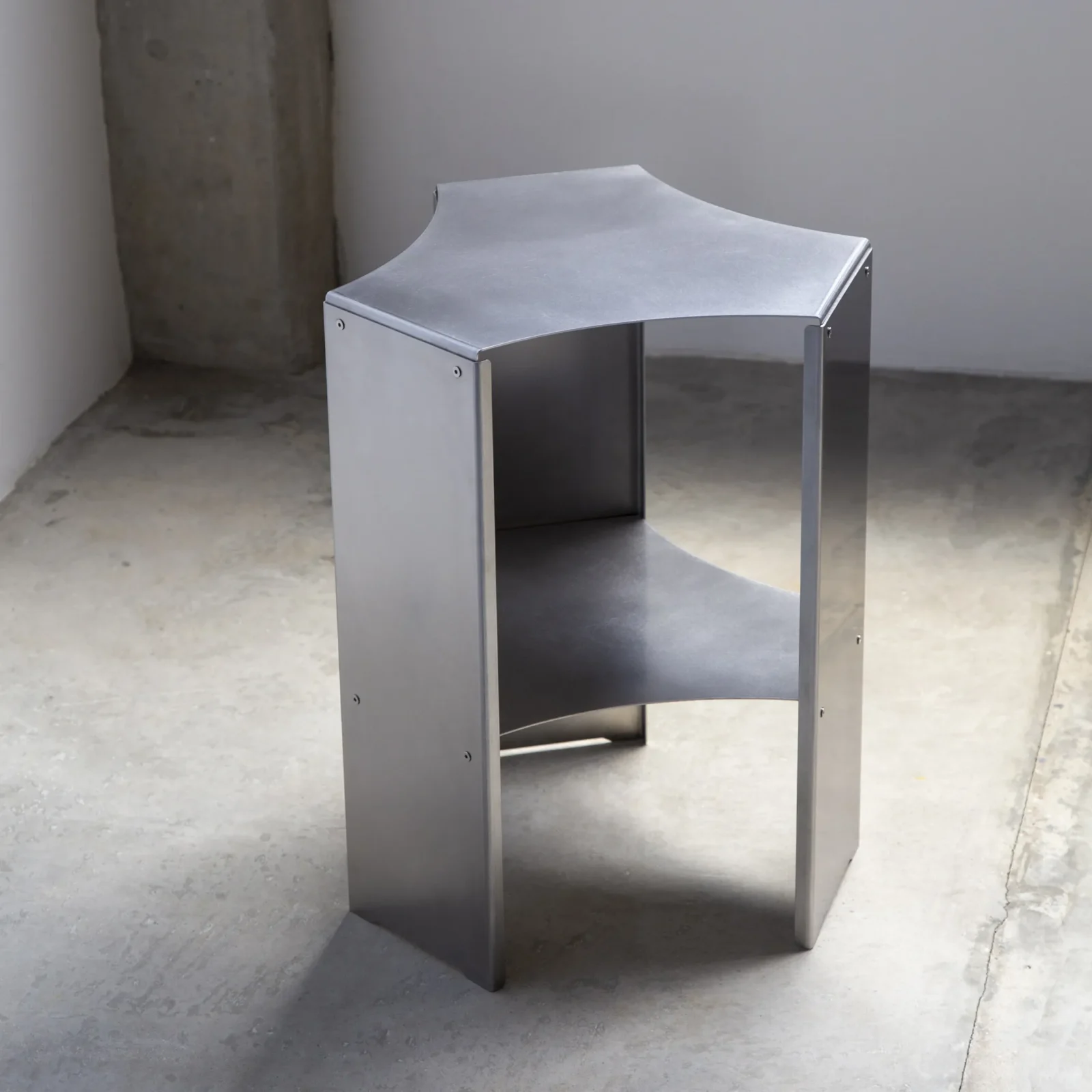
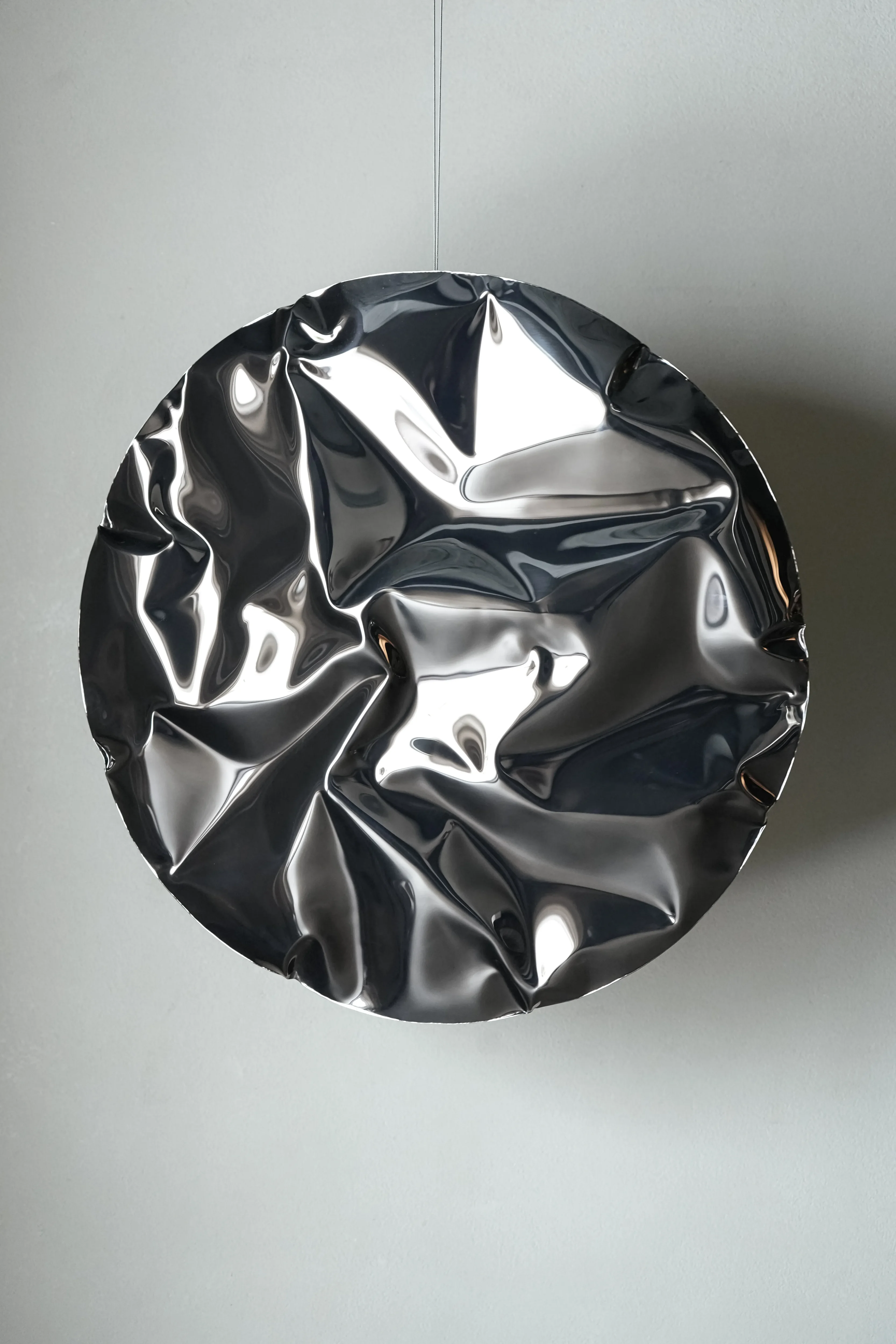
Depth is the reason. A flat printed image looks identical under every light in the room, which is why so much framed art stops being noticed within a fortnight. Mirror-polished steel, glazed stoneware and carved relief cast their own shadows or throw light back, so the wall changes between morning and evening. The folded steel of Nitush and Aroosh‘s Ramé does both at once.
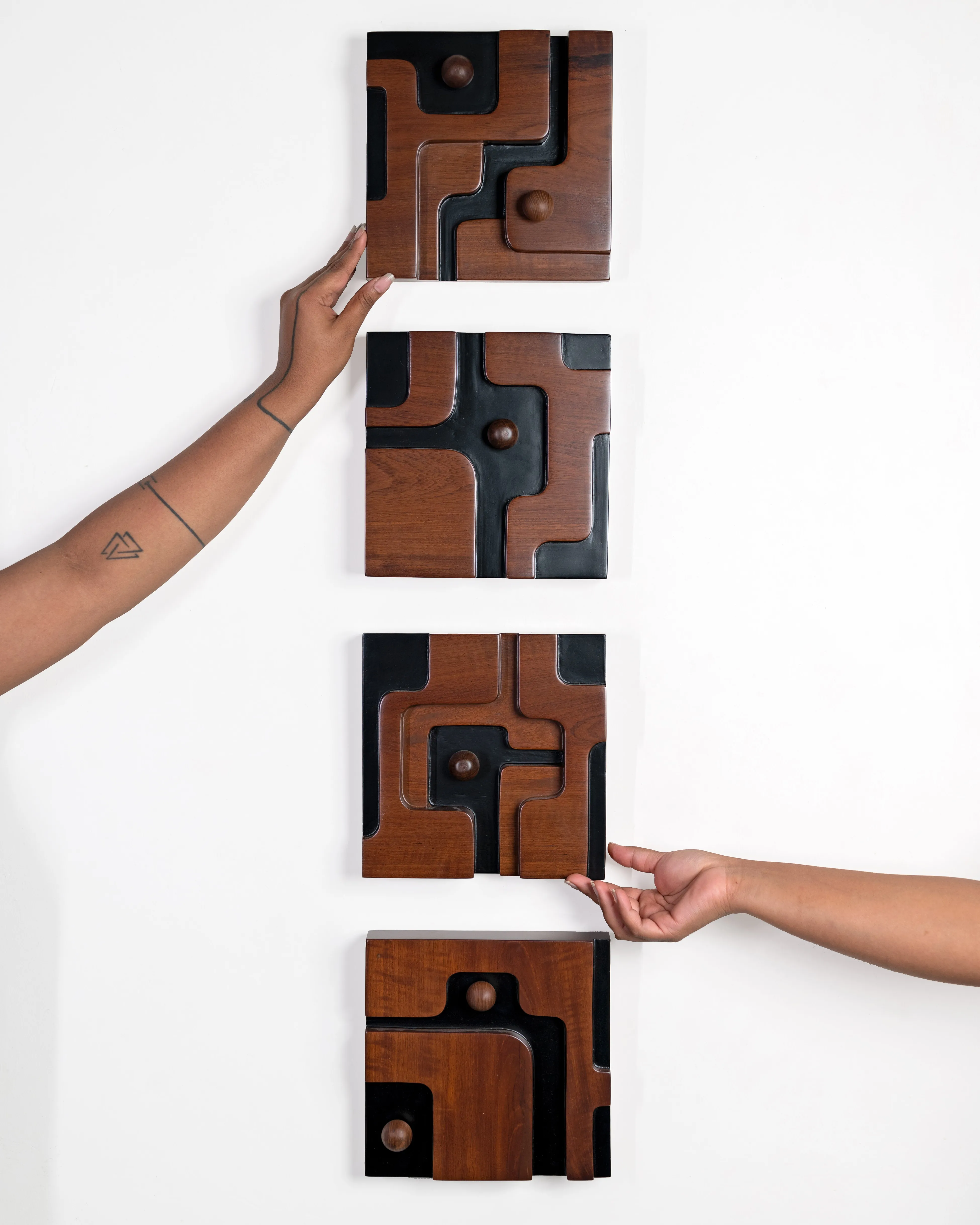
A piece that arrives as a set is the shortcut worth knowing. It solves the spacing, the relationships and the palette in one decision, and it can be hung tightly as a block or spread across a larger wall without losing its logic.
Wall art and panels
Panels and woven wall art sit between a tapestry and a sculpture: flat enough to hang in a group, textured enough to hold their own among framed work.
They also solve the repetition problem by themselves. A series from one maker — Susanna Costantini‘s Bandiera pieces, or Prangé‘s washi paper and walnut panels — gives you the shared element a mixed group has to work hardest for, without matching anything else in the room.


Wall mirrors
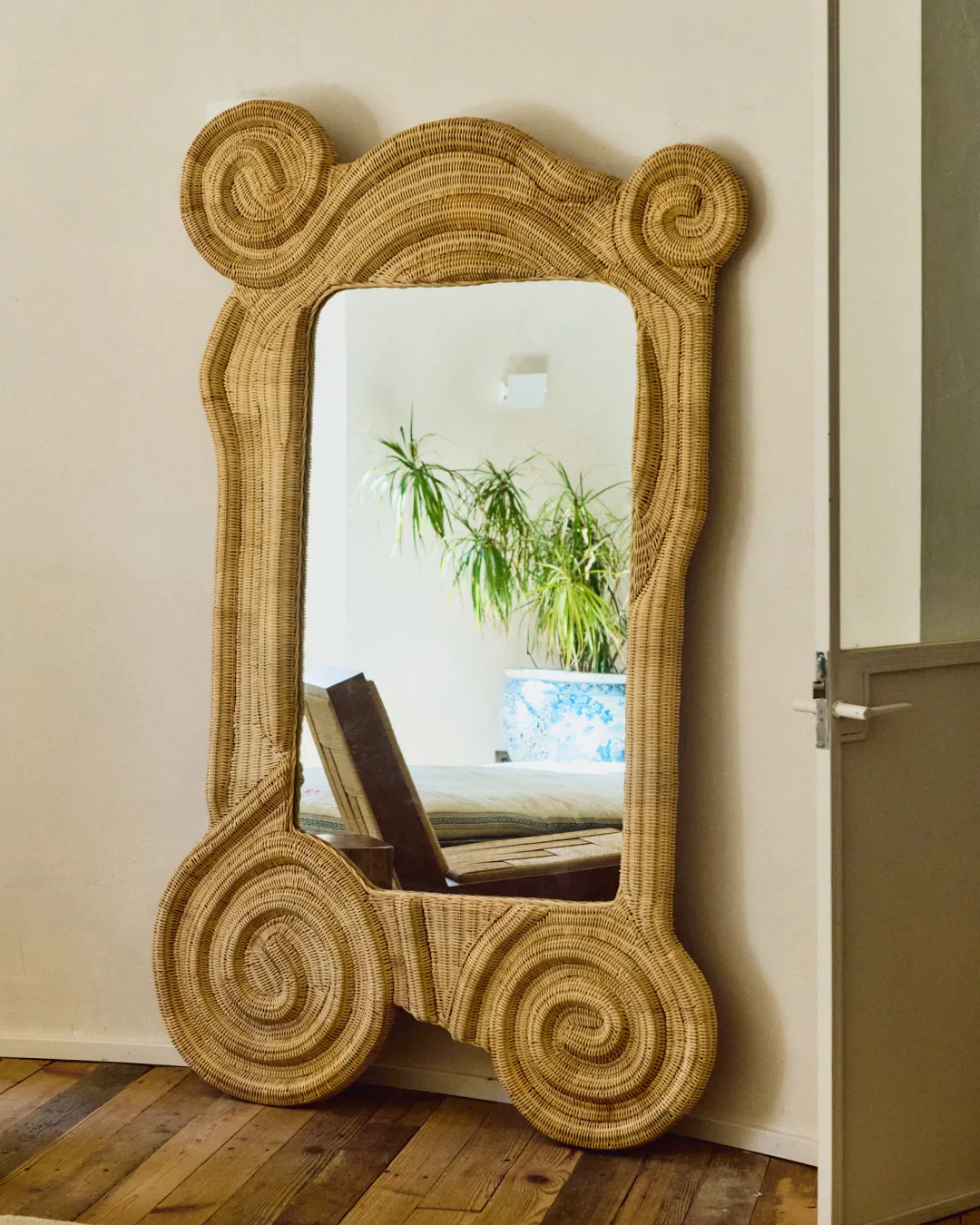
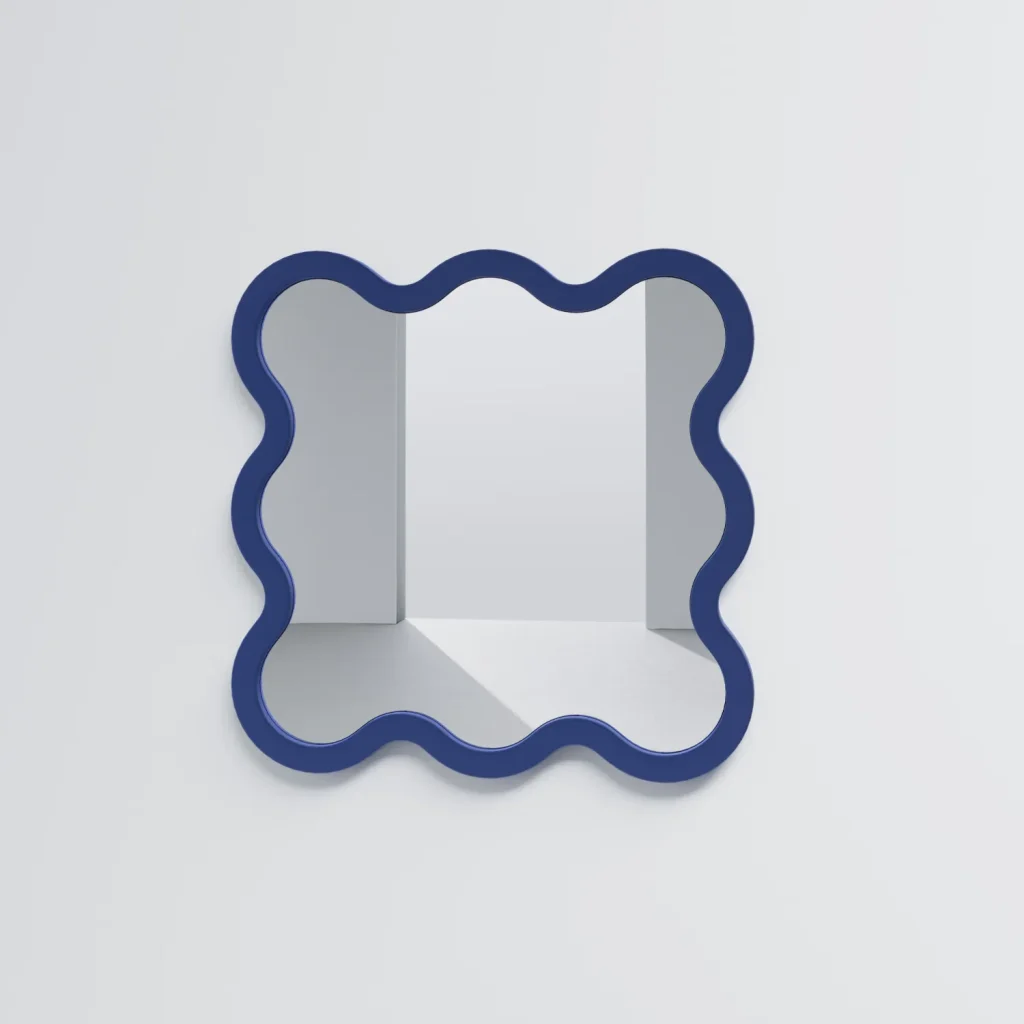
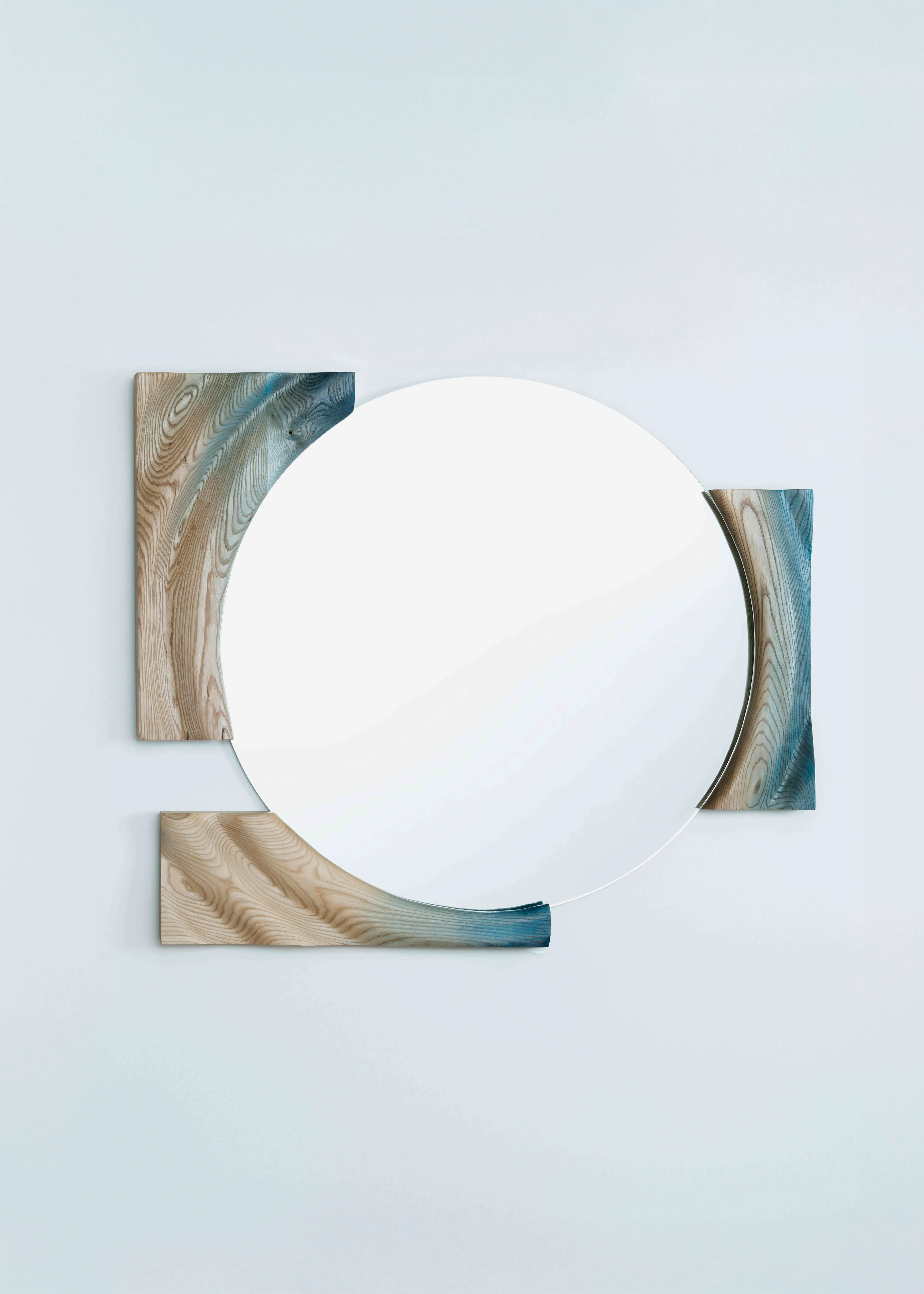
One mirror in a group changes the whole arrangement. It adds depth where everything else is flat, and it reflects the opposite wall so the composition is never quite the same twice.
Keep it to one and treat it as the anchor. Check what it faces before committing — a mirror reflecting a blank wall wastes its one advantage. Our guide to the types of mirrors covers shape and format.

How to hang it
- Lay it out on the floor and photograph it from above. Adjust from the photo.
- Cut paper templates for every piece, and mark the hanging point on each — measure from the top edge of the piece to its hook at tension.
- Tape the templates up and live with them for a day.
- Check the outer rectangle and spacing with a tape measure, the horizontals with a level.
- Drive the fixing straight through the mark, then tear the paper away. No measuring on the wall, no pencil marks.
- Hang from the center outward, so error pushes to the edges rather than the middle.
Plasterboard needs proper anchors or a stud beyond a few kilograms; masonry needs a plug and screw. Heavy relief and ceramic want two fixing points, which also keeps them level over time.
On a staircase
Follow the slope. Track the centers along an imaginary line parallel to the handrail, keeping the same perpendicular distance from the rail throughout, and measure roughly 57 inches (145 cm) from the nose of the tread you would be standing on. Keep everything shallow, since a staircase is circulation space.
Common mistakes
- No outer shape. Without a readable boundary it is a scatter.
- Uneven spacing. The clearest sign a wall was hung one piece at a time.
- Hung too high. Center at 57 inches (145 cm), not aligned to a door frame.
- Everything the same size. No anchor means nowhere for the eye to land.
- Too many small pieces. Six good ones beat fourteen adequate ones.
- Nothing repeating. One shared element, or it reads as accumulation.
- Built in a small room. Wrong device for the space.
Frequently asked questions
How do you lay out a gallery wall?
Decide the outer rectangle first — two-thirds to three-quarters of the width of the furniture below, or 60 to 75% of an empty wall — then arrange inside it. Lay everything on the floor, photograph it from above, adjust from the photo, then tape paper templates up for a day before hanging anything.
How much space should be between frames?
Two to three inches (5–7.5 cm), identical throughout. Use 1.5 inches (4 cm) for small frames and up to 4 (10 cm) for large ones, but keep the gap uniform. Uneven spacing is the most visible error in a gallery wall.
How high should a gallery wall be hung?
With the center of the whole arrangement at 57 inches (145 cm) from the floor, measured to the center of the group rather than any single frame. Above a sofa, leave 6 to 8 inches (15–20 cm) between the furniture back and the lowest piece.
Do gallery wall pieces have to match?
No, but something has to repeat — the frame finish, the palette, the subject or the material. A wall where every element differs reads as accumulation. Six to nine pieces is a comfortable range, and dimensional work needs fewer than flat print does.
One shape, made of several
Get the outer rectangle right, keep the spacing uniform, give the group an anchor and one repeating element, and the individual choices inside matter far less than people think.
What composition cannot fix is the content. A wall of prints chosen for their frames will always read as decoration; a wall of made objects with real surface will not. Our wall decor guide covers choosing individual pieces.