-

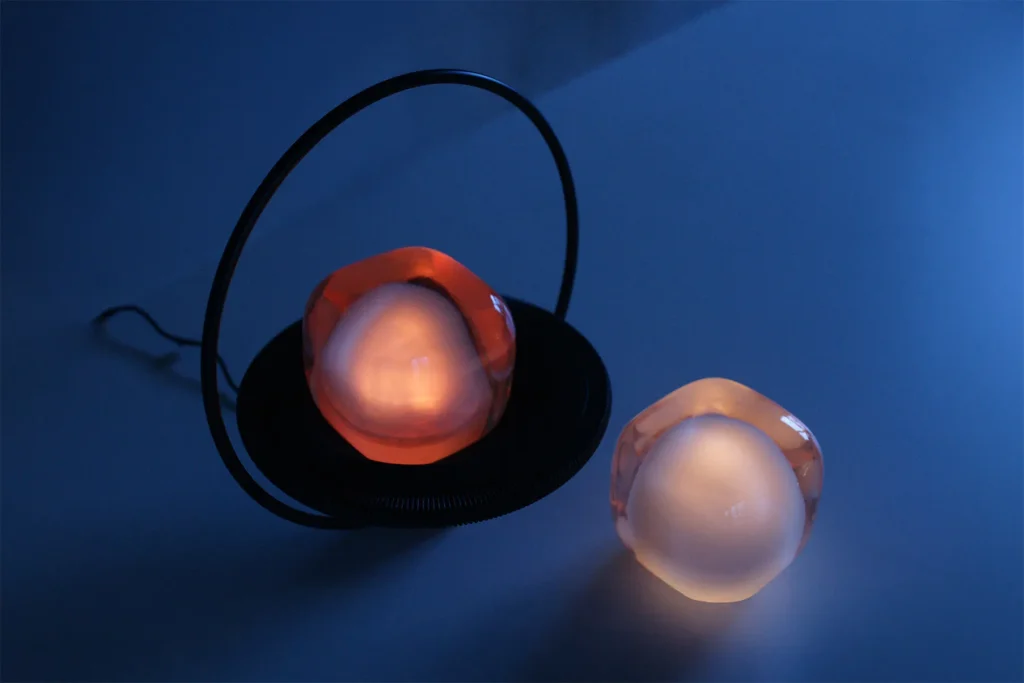
Bright Side Table Floor Lamp in Glass and Stainless Steel
By Ziroru Studio
€1.485 This product has multiple variants. The options may be chosen on the product page -
 In stock
Herbarium Mini Lunaria Wall Sconce in Glass and Plywood
By Mateusz Wappa
€1.200 -
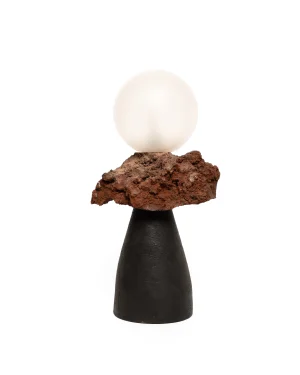
Hof Tezon Lamp
By Daniel Orozco Estudio
€475 -
 In stock
Lullaby and Hygge Pendant Lamp in Resin and Steel
By BDCI
€1.400 This product has multiple variants. The options may be chosen on the product page -
 In stock
Herbarium Eryngium Wall Sconce in Glass and Plywood
By Mateusz Wappa
€2.000 -
 In stock
Herbarium Rumex Wall Sconce in Glass and Plywood
By Mateusz Wappa
€2.000 -
 In stock
Herbarium Mini Daucus Wall Sconce in Glass and Plywood
By Mateusz Wappa
€1.200 -
 In stock
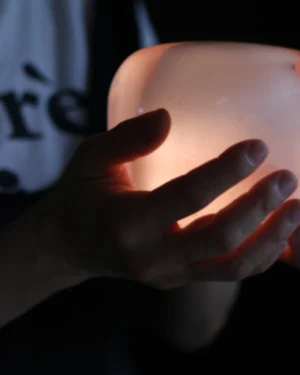
Lullaby And Hygge Standing Table Lamp in Resin
By BDCI
€1.550 This product has multiple variants. The options may be chosen on the product page -
 In stock
Lullaby And The Ring Cradle Table Lamp in Resin
By BDCI
€570 This product has multiple variants. The options may be chosen on the product page -
 In stock
Herbarium Tanacetum Wall Sconce in Glass and Plywood
By Mateusz Wappa
€2.000 -
 In stock
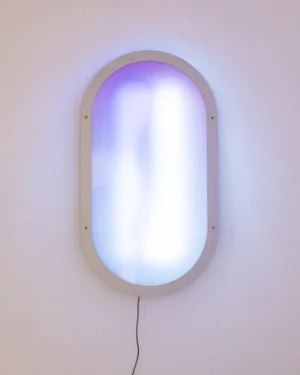
Cumulo Aluminium
By Valentine Maurice
€2.600 -
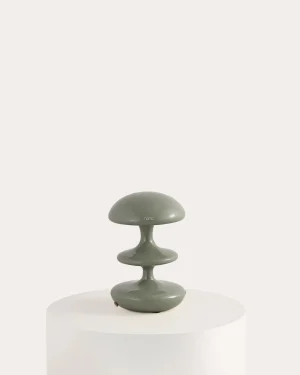
Atom Table Lamp In Aluminum
By Nama Home
€515 This product has multiple variants. The options may be chosen on the product page -
 Sold
SoldOff-Grid Table Lamp in Aluminum
By Klemens Schillinger
€1.500 - €1.700 This product has multiple variants. The options may be chosen on the product page
Cordless and Rechargeable Designer Lighting
Every room has a place that wants a lamp and has no socket near it: the middle of a dining table, a windowsill, a bathroom shelf, a balcony, the sideboard on the wall the electrician never reached. Cordless lighting exists for those positions, and it has quietly become one of the more interesting areas of contemporary design — because once you remove the cable, the object is free to be anything.
This is a growing selection of portable and rechargeable pieces from independent designers and studios. It changes as makers release new work, so it is worth checking the unique and limited-edition pieces and what is ready to ship, or asking our curation team what is currently available in a particular format.
Three Ways to Avoid an Electrician
People come across this category from two different problems, and it helps to separate them.
- Truly cordless pieces run on a rechargeable cell or replaceable batteries, with no cable at all. They can be carried, set down anywhere and moved with the evening. This is the only option for a table with no socket beneath it, or a wall you cannot chase.
- Corded pieces that need no wiring plug into an existing socket rather than a junction box. A pendant on a long flex hooked over a ceiling point, or a wall light with a visible cable running down to a socket, gives you a permanent piece without an electrician — the cable becomes part of the design rather than something to hide. Several designers in our wall lamps and pendant lamps collections work this way.
- Candlelight needs neither. Candleholders, lanterns and handmade candles put light exactly where a cordless lamp would, with no charging routine and no battery to age.
What to Check Before You Buy
Cordless lighting lives or dies on its specification, and the numbers matter more than they do for a mains lamp.
- Run time: most portable pieces give somewhere between 5 and 20 hours depending on brightness. Dimming extends this dramatically — a lamp that runs 6 hours at full output may run 30 at its lowest setting.
- Charge time and method: typically, 3–6 hours, usually over USB-C, sometimes via a dock or magnetic base. A dock is worth having if the lamp is used nightly, since it turns charging into a habit rather than a chore.
- Output: cordless pieces are ambient by nature, usually 50–400 lumens. Treat one as atmosphere, a companion to a main table lamp or floor lamp rather than a replacement for either.
- Dimming and controls: touch-sensitive bases, stepped switches and rotary dimmers are common. Look for a lamp that remembers its last setting.
- Replaceable cell: the single most important question for a piece you intend to keep. A lamp with a serviceable battery lasts decades; one with a sealed cell lasts as long as the cell does.
- Weather rating: rechargeable does not mean waterproof. For terraces and gardens, check the rating and see our outdoor lights collection.
Where Cordless Lighting Earns Its Place
On a dining table, where a lamp per setting does what candles do and can be cleared away. On a bathroom or kitchen shelf with no socket. On a balcony or terrace at dusk. In a rented flat where nothing can be wired. Beside a bed on the wrong wall. In a hallway niche, on a stair landing, beside a bath, or on a restaurant table — hospitality is where cordless lighting has advanced fastest, because a lamp per table transforms a room and a charging routine is easier to manage than a floor full of cables.
Batteries, Longevity and Care
A lithium cell is a consumable in a way that a brass body is not. Most hold a useful charge for something like 500 full cycles, or three to five years of regular use, after which run time shortens noticeably. Storing a lamp fully discharged for months is what shortens that life most; leaving it at roughly half charge in a cool place is kinder. Where a maker offers a replaceable cell or a service route, a cordless piece becomes as long-lived as any other object in this catalogue — which is the whole point of buying at this level.
Explore the full collectible lighting collection, or tell our curation team the position you need to light and we will suggest what suits it.
What is a battery operated or cordless light?
A light with its own power source rather than a connection to the mains — either a built-in rechargeable cell or replaceable batteries. Because it has no cable, it can be placed anywhere and moved freely, which makes it the answer for tables, shelves, terraces and walls with no socket or wiring nearby.
Is rechargeable better than replaceable batteries?
For a designed object, usually yes. A rechargeable cell means no waste, a slimmer form, consistent output and no battery compartment to design around. Replaceable batteries have one real advantage: when they die you fit new ones, whereas a sealed rechargeable cell eventually ends the useful life of the whole piece unless the maker allows servicing.
How long does a cordless lamp last on one charge?
Typically 5 to 20 hours, depending entirely on brightness. The figures makers quote are usually at the lowest setting, so read them accordingly. Dimming is the biggest variable — running a lamp at a third of its output can more than triple its run time, and low output is what most people actually want from a portable piece.
How long does it take to charge, and can I use it while charging?
Most pieces charge in around 3 to 6 hours, generally over USB-C, sometimes on a dock or magnetic base. Many can be used while plugged in, though not all, and a lamp designed for a charging base is usually meant to sit on it between uses. If a lamp will be used every evening, a dock is worth prioritizing over a cable.
Are cordless lamps bright enough to read by?
Some are, most are not intended to be. Portable pieces typically produce 50–400 lumens, which suits ambient and accent light rather than sustained reading. If reading is the purpose, look for a rechargeable task lamp with directed light at the upper end of that range, or use a mains lamp and keep the cordless piece for atmosphere.
Can the battery be replaced when it stops holding a charge?
This is the question we would ask first, and the answer varies by maker. Some designs use a serviceable or user-replaceable cell; others are sealed. For a piece you intend to keep for decades, a replaceable cell or a stated repair route matters more than any specification on the box — ask us about a specific piece and we will find out from the studio.
What is the difference between cordless and plug-in?
A cordless lamp has no cable at all. A plug-in piece has a cable but no hardwiring: it runs to an ordinary socket instead of a junction box, which means no electrician and no holes in the ceiling. Both solve the "I can't rewire this room" problem, but only a cordless piece solves "there is no socket anywhere near where I want light."
Do you have plug-in pendants and wall lights that avoid hardwiring?
Some designers make pieces with a visible fabric or textile cable intended to run to a socket, which is a genuine design decision rather than a compromise — the cable is part of the object. Availability varies by studio and by piece, so check the product description or ask us before buying if that is a requirement.
Are cordless lights dimmable, and do they have touch controls?
Very often, yes — dimming matters more here than on a mains lamp because it directly extends run time, so most makers include it. Touch-sensitive bases and stepped switches are common. Look for a lamp that remembers its last brightness, so you are not resetting it every evening.
Can I use a cordless lamp outdoors?
Only if it is rated for it. Rechargeable does not mean weatherproof, and a portable lamp carried onto a terrace for an evening is a different proposition from one left out overnight. Check the stated rating, keep unrated pieces under cover, and bring anything portable back inside — which also extends the life of the battery.
Are they suitable for bathrooms?
A cordless lamp on a shelf away from direct splashing is one of the easier ways to light a bathroom without any wiring, which is why they have become popular there. It is still worth checking the rating and keeping the piece away from the bath and shower zones, since humidity affects electronics over time even where water never lands directly.
Do you have solar lamps?
Solar is common in mass-market garden lighting and uncommon in collectible design, because panels and the light they produce sit awkwardly with handmade objects. Rechargeable pieces achieve the same freedom from wiring with better light quality and more control. Ask our curation team if solar is a firm requirement.
Do you have smart, app-controlled or color-changing lamps?
Rarely. These are handmade objects rather than connected devices, so app control, RGB color and remotes fall outside what most studios make. Where a piece uses a standard bulb socket, a smart bulb of your own choosing will give you scheduling and dimming without altering the design.
Are cordless lamps a good idea for restaurants and hotels?
They are one of the few ways to put a lamp on every table, and hospitality has driven much of the innovation in this format. The practical questions are charging logistics — how many units, how many docks, whose job it is at closing time — and battery servicing over a two-to-three-year cycle. We can discuss quantities, lead times and replacement cells through our trade programme.
Can I take one on a plane, and how do they ship?
Lithium batteries have to travel in cabin baggage rather than checked luggage on most airlines, and there are limits on capacity. Shipping is also affected: cells above certain thresholds face carrier restrictions, which can lengthen delivery times or limit destinations. Ask us before ordering to a remote address or with a fixed deadline.
How should I store a cordless lamp I am not using?
Not flat. Leaving a lithium cell fully discharged for months is what shortens its life most. Charge it to roughly half, keep it somewhere cool and dry, and top it up every few months. For seasonal pieces used on a terrace in summer, that small habit is the difference between a battery that lasts two years and one that lasts five.