A serving bowl leaves the kitchen full and comes back empty. In between, it holds the table.
Serving bowls and platters are the pieces that travel: from kitchen to table, from hand to hand, and back to the counter between meals. These nine, by independent studios, are chosen for the material first: grown mycelium, cast concrete, leather-cast porcelain and carved stoneware.
How to choose serving bowls and platters
- Size: for salads and sides for four to six people, look for a bowl 9 to 12 in (23 to 30 cm) across. Small bowls of 4 to 6 in (10 to 15 cm) take dips, sauces, salt and nuts.
- Shape: deep bowls keep dressed food contained, flat platters show off arranged food, and a raised rim catches juices.
- Material: glazed stoneware and porcelain are the most practical for daily use. Hand-blown glass needs hand washing and no heat, while concrete and mycelium suit dry foods.
- Finish: gold or platinum luster is never dishwasher or microwave safe. Check the product page for food-safe ratings before serving.
- Mix, don’t match: a table reads more collected when materials vary. Small matcha bowls make good companions to a large platter, and our unique tableware edit has more to pair.
Materials at a glance
- Stoneware and porcelain: dense and sealed by glaze, so they resist stains and odors. Fully glazed pieces are often dishwasher safe.
- Concrete: heavy and stable, which makes it a natural fruit or bread bowl.
- Mycelium: grown from the root network of fungi, light as cork and best kept for dry foods.
- Gold luster: a decorative finish over glaze. Wash it by hand and keep it out of the microwave.
9 serving bowls and platters to shop
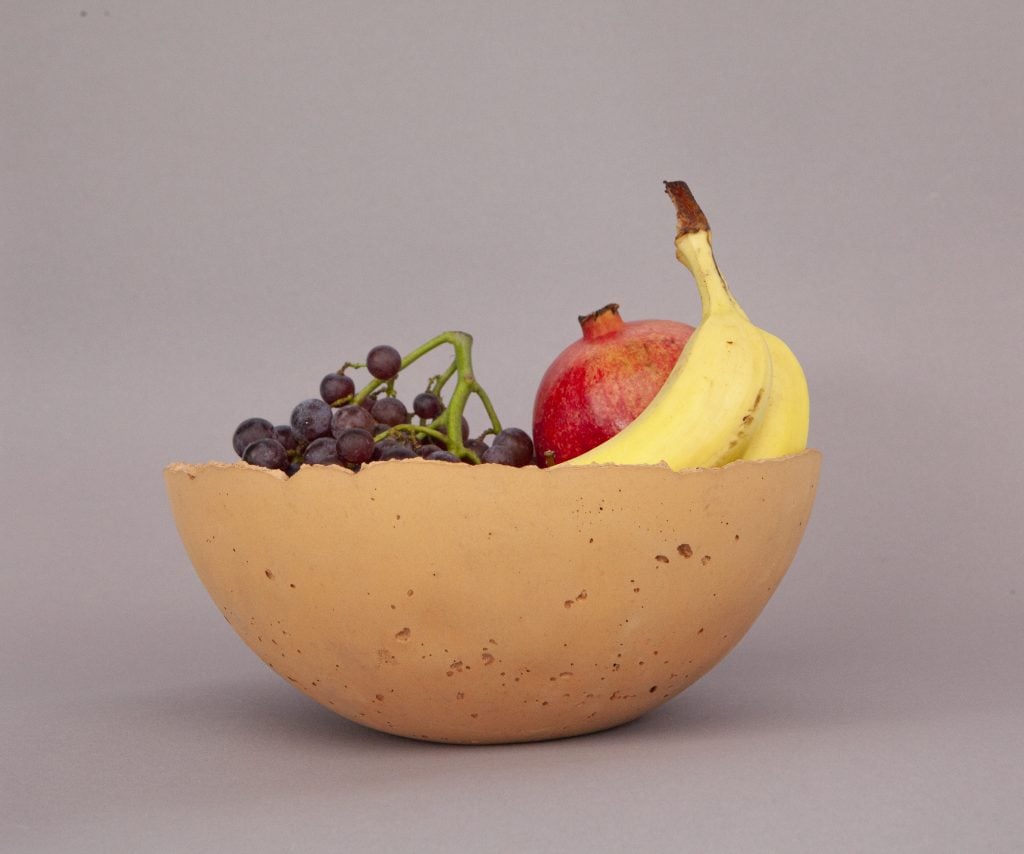
Betonschüssel – Concrete Bowl by clasik.studio

Cast in concrete in Cologne, Germany, with a free-form rim in warm brown or orange. At 9.8 in (25 cm) across, it is a generous bowl for fruit or bread, and the most accessible piece here.
By clasik.studio
€45 incl. tax
Mycelium Bowl No.3 by SOLATERRE

Grown from the mycelium of a regional medicinal mushroom in Austria, this one-of-a-kind bowl is light as cork and leathery to the touch. At 9.4 in (24 cm) across, it is made for dry food such as bread, nuts or whole fruit.
By SOLATERRE
€353 incl. tax
Jaguar Decorative Ceramic Platter With Gold Luster Details by ANDEAN

Slip-cast in Ecuador in matte black or dark green glaze, with gold luster jaguar teeth taken from a pre-Columbian stone mortar. At 9.4 in (24 cm) across, it suits bread or whole fruit; the luster means hand washing only.
By ANDEAN
€338 incl. tax
Kawa Matchawan – Limited Edition Leather-cast Porcelain Tea Bowl by Luft Tanaka Studio
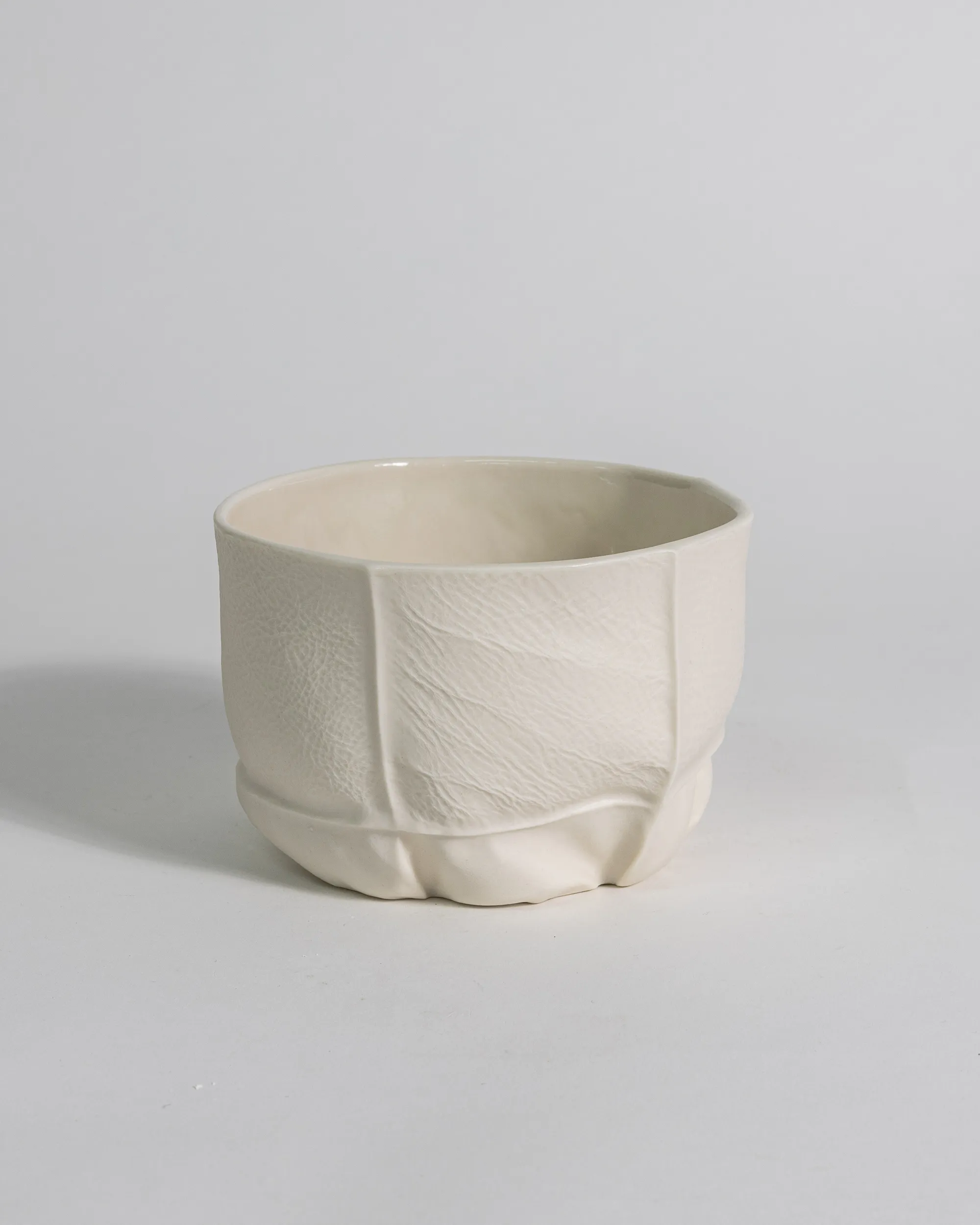
Porcelain cast in a leather mold, so the seams and grain stay on the surface. Food safe and 5.5 in (14 cm) across, it works as a small bowl for sauces or a single serving. Hand wash only; a limited edition of 10.
By Luft Tanaka Studio
€300 incl. tax
Verde 10 – stoneware Matcha Bowl by Federica Paglia

A stoneware bowl set on a brass pivot above a base of leaf-like relief, made in Rome, Italy. Food safe and 4.7 in (12 cm) across, it lifts a small serving of nuts or sweets above the table. A limited edition of 10.
By Federica Paglia
€460 incl. tax
Fleuve Chawan – Porcelain Matcha Bowl by SCHOEMIG PORZELLAN
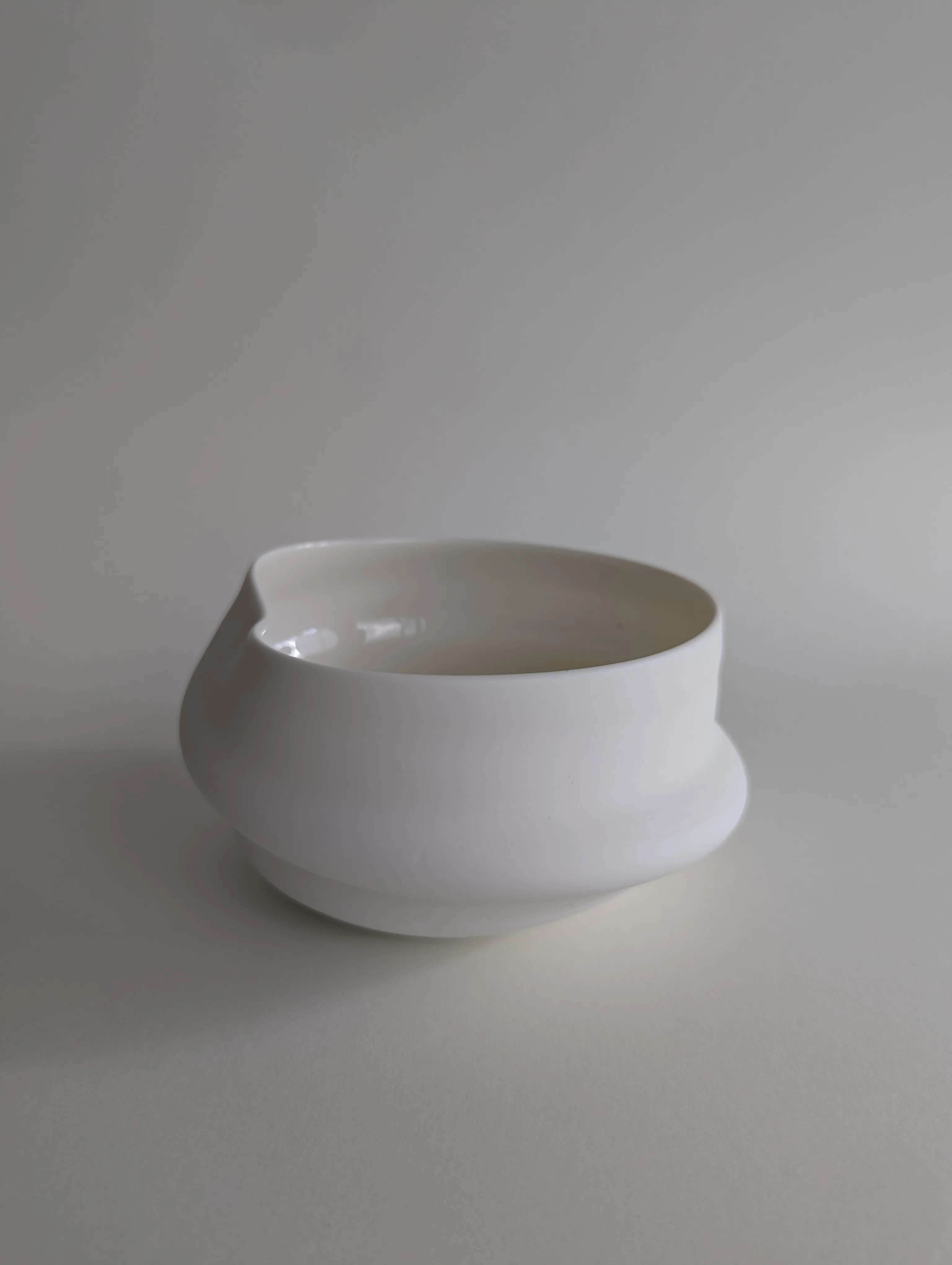
Hand-thrown porcelain from Berlin, with a softly rippled rim, a glossy inside and a matte outside. It holds 11.8 fl oz (350 ml) and is dishwasher and microwave safe, so it moves easily from dips to sides to dessert.
By SCHOEMIG PORZELLAN
€115 incl. tax
Samiria Raku Chawan – Ceremonial KENÉ pattern Matcha Bowl by Vale Ro

A raku-inspired bowl hand-carved with kené, the sacred geometric patterns of the Shipibo-Konibo people of the Peruvian Amazon. At 3.9 in (10 cm) across, it holds dry snacks or, as intended, a bowl of matcha.
By Vale Ro
€220 incl. tax
Jama Decorative Ceramic Platter With Gold Luster Details by ANDEAN

The Jaguar platter’s companion reinterprets a Jama-Coaque censer from Quito’s Museo Casa del Alabado, with gold luster on a matte glaze. Keep it for dry foods or display, and wash it by hand.
By ANDEAN
€333 incl. tax
Rsa (rhythmic Slow Activity) matcha Bowl by Studio S II

Studio S II turned recorded tones of Lake Tazawa, Japan, into a 3D form, which gives this wheel-thrown stoneware bowl its pinched rim. At 4.7 in (12 cm) wide, it holds a dip, a sauce or a bowl of matcha. Made in Brooklyn, the United States.
By Studio S II
€250 incl. tax
Setting the table with serving bowls and platters
- Everyday: one medium bowl of 8 to 10 in (20 to 25 cm) moves from salad to pasta to fruit. Keep it on the counter between meals, next to everyday plates.
- Dinner parties: plan one serving piece per dish plus a spare, and vary the heights so one dish becomes the focal point.
- Holidays: size up to a platter of 16 to 18 in (41 to 46 cm) for a roast. More ideas in how to set the holiday table.
- Mixing and layering: pair one large piece with small bowls for dips and salt, and keep one color or finish constant. A linen tablecloth ties it all together.
Caring for serving bowls and platters
- Wash by hand anything with luster, hand-blown glass, concrete or mycelium. Fully glazed porcelain is usually dishwasher safe.
- Avoid thermal shock: let ceramic and glass reach room temperature before adding hot food.
- Lift metal marks from glazes with a paste of baking soda and water.
- Store with care: keep platters upright and place a cloth between stacked bowls. See how to plan a full spread in our Thanksgiving tablescape guide.
Frequently asked questions
What size serving bowl do I need?
For four to six people, a bowl 9 to 12 in (23 to 30 cm) across covers most salads and sides. For eight or more, size up or use two bowls.
Can a matcha bowl be used as a serving bowl?
Yes. A chawan is usually 4 to 5.5 in (10 to 14 cm) across, the right size for dips, sauces, nuts or a single dessert. Check that it is food safe first.
Are handmade serving bowls dishwasher safe?
Some are, such as fully glazed porcelain. Luster details, hand-blown glass, concrete and mycelium should always be washed by hand.
How do I know if a ceramic serving bowl is lead-free?
Buy from makers who state that the glaze is food safe. The U.S. Food and Drug Administration publishes guidance on lead in glazed pottery.
Why serving bowls and platters earn their place
Most tableware comes in sets. Serving bowls and platters, by contrast, are chosen one at a time, which is why they are where a table starts to feel personal. Browse more bowls and trays on ADORNO.