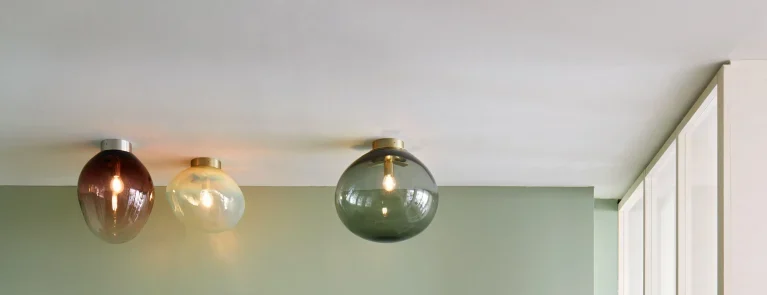
-
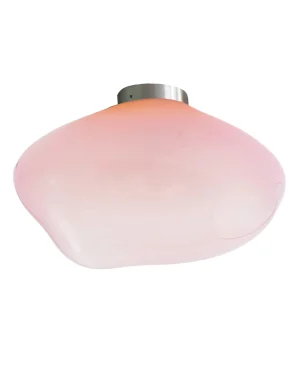
Haumea Convex Ceiling Lamp (Flamingo Opaque) in Blown Glass
By ELOA - Unique Lights
€2.330 - €4.085 This product has multiple variants. The options may be chosen on the product page -
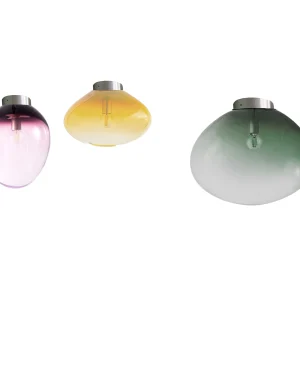
Airisi-Astrea-Sirius Ceiling Lamp in Blown Glass
By ELOA - Unique Lights
€2.330 - €3.180 This product has multiple variants. The options may be chosen on the product page -
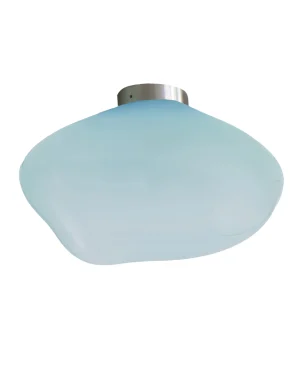
Haumea Convex Ceiling Lamp (Blue Opaque) in Blown Glass
By ELOA - Unique Lights
€2.330 - €4.085 This product has multiple variants. The options may be chosen on the product page -
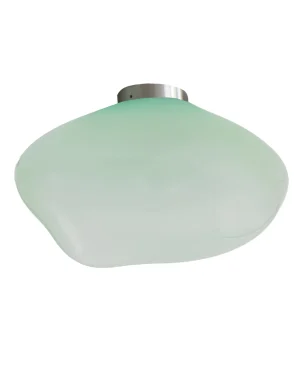
Haumea Convex Ceiling Lamp (Salbei Opaque) in Blown Glass
By ELOA - Unique Lights
€2.330 - €4.085 This product has multiple variants. The options may be chosen on the product page -
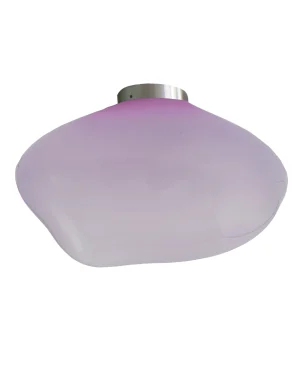
Haumea Convex Ceiling Lamp (Flieder Opaque) in Blown Glass
By ELOA - Unique Lights
€2.330 - €4.085 This product has multiple variants. The options may be chosen on the product page -
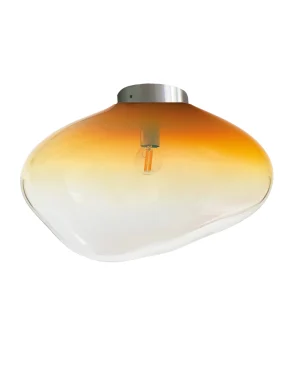
Haumea Convex Ceiling Lamp (Amber Iridescent) in Blown Glass
By ELOA - Unique Lights
€2.330 - €4.085 This product has multiple variants. The options may be chosen on the product page -
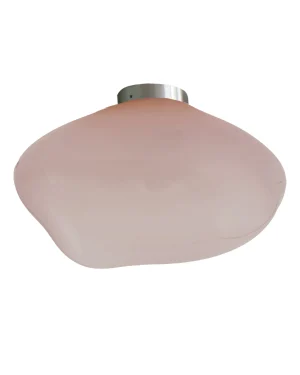
Haumea Convex Ceiling Lamp (Taupe Opaque) in Blown Glass
By ELOA - Unique Lights
€2.330 - €4.085 This product has multiple variants. The options may be chosen on the product page
Designer Flush Mount Ceiling Lights
A flush mount is the least demonstrative fixture in a house and often the hardest to get right. It sits tight against the ceiling, has no drop to give it presence, and is usually the only light in the room — so everything rests on the quality of the diffuser and the light that passes through it.
This is a deliberately small, curated selection rather than a catalogue of low-profile fixtures. The pieces here are made by independent studios in hand-blown glass, where color, opacity and irregularity in the glass do the work that a molded acrylic diffuser cannot: warm, uneven, softly saturated light instead of a flat white disc. Several designs are produced as unique pieces and limited editions, and many are sold as singles specifically so they can be grouped across a ceiling.
For pieces with a drop — pendants, cascading and multi-arm designs — see the wider ceiling lamps collection and our chandeliers.
Flush or Semi-Flush?
The distinction matters more than the names suggest.
- Flush mount: the fixture sits directly against the ceiling with no visible gap. It throws light downward and outward, keeps every centimeter of head height, and disappears when switched off. The right choice below about 2.4 m, in corridors, and anywhere a door, a wardrobe or a fan needs the clearance.
- Semi-flush mount: the fixture hangs a short distance below the ceiling — typically 10–30 cm. That gap lets light wash upward as well as down, which makes a low room feel taller rather than flatter, and gives the piece some of the presence of a pendant. Suitable from roughly 2.4 m upward, and better over a table or in a hallway with height to spare.
If the ceiling cannot be touched at all, a symmetrical pair of wall lamps will light a corridor or bedroom without any fixture overhead.
Where Flush Mounts Work Best
- Low ceilings: the format exists for rooms under 2.4 m, where anything suspended becomes an obstacle.
- Hallways and landings: two or three small fixtures spaced evenly along the run give better coverage than one bright central light.
- Bedrooms: mounted centrally, ideally dimmable, with bedside light handled separately by table lamps.
- Above a bed or a door swing: the only sensible option where head clearance is tight.
- Kitchens and utility rooms: even, shadow-free light across a work surface.
- Sloped and attic ceilings: flush fixtures follow the plane of the ceiling instead of hanging crookedly from it — confirm the canopy suits the pitch before ordering.
- Grouped installations: a cluster of three or five single fixtures at varying spacings reads as one composition and suits a large room better than a single oversized plate.
Light, Wiring and Fit
- Output: as a room's only light, aim for roughly 800–1,500 lumens for a bedroom or hallway; grouped fixtures share that total between them. Glass diffusers spread light broadly, which is why a flush mount can feel brighter than its lumen figure suggests.
- Color temperature: 2700 K for bedrooms, hallways and living spaces; up to 3000–4000 K in kitchens and utility areas.
- Dimming: worth insisting on where the flush mount is the only fixture in the room. Confirm compatibility between fixture, bulb and dimmer.
- Access and re-lamping: check how the diffuser is removed before installation. Glass shades in this category are handmade and should be handled and cleaned with care.
- Installation: hardwired to a ceiling box by a qualified electrician. Pieces ship internationally from designers' studios, so confirm voltage and any wiring requirements for your country.
- Lead times: most pieces are made to order in the studio. Filter for pieces in stock if the timeline is fixed, and note that grouped orders of several units may take longer.
Explore the full collectible lighting collection, or tell our curation team your ceiling height and the number of fixtures you need, and we will search for pieces that suit.
What is a flush mount ceiling light?
A flush mount is a light fixture fitted directly against the ceiling with no suspension cable, chain or rod. Because nothing hangs down, it preserves full head height and is the standard solution for low ceilings, corridors and any position where a pendant would be in the way. It is also called a low-profile or ceiling-mounted fixture.
What is the difference between flush mount and semi-flush mount?
A flush mount sits tight to the ceiling with no visible gap and directs light downward and outward. A semi-flush mount hangs roughly 10–30 cm below the ceiling, which allows light to spill upward as well as down and gives the fixture more visual presence. Flush is for ceilings below about 2.4 m; semi-flush suits 2.4 m and above, and reads better above a dining table.
What ceiling height do I need for a flush mount?
Almost any — that is the point of the format. Flush mounts are usable at 2.2 m and below, where suspended fixtures cannot go. Above 2.7 m, a flush mount can start to look lost, and a semi-flush piece or a pendant will hold the room better.
What size flush mount do I need?
For a hallway, a landing or a small bathroom, 20–30 cm across is usually enough. For a bedroom or a medium living room, 30–45 cm. For larger rooms, either one fixture of 50 cm or more, or — usually better — several smaller pieces distributed across the ceiling. A single oversized plate on a low ceiling tends to read as a feature you did not intend.
How many flush mounts does a room need, and how far apart?
One central fixture is enough for a small room or a short corridor. Beyond about 12 m², or in a long hallway, use two or more spaced roughly 1.5–2 m apart, keeping the end fixtures about 0.7–1 m from the walls. Several of the designs here are sold as singles precisely so they can be repeated or clustered.
Is a flush mount bright enough to be a room's only light?
It can be, if the output is right and the diffuser spreads well. Around 800–1,500 lumens covers a bedroom or hallway. In a living room, a flush mount works better as the general layer, with floor and table lamps carrying the lower, warmer light in the evening — a single ceiling fixture on its own tends to flatten a room.
Can flush mount lights be dimmed?
Many can, but it depends on the individual piece. Fixtures with standard sockets are usually dimmable with a compatible bulb and dimmer. Integrated LED versions are dimmable only where the designer specified it, and may require a particular driver. Since a flush mount is often a room's only light, dimming is worth confirming before you buy.
Can I use a flush mount in a bathroom?
Only with an appropriate IP rating for the zone it is installed in, and the requirements differ by country. The pieces in this collection are handmade decorative fixtures intended for dry interior use, not rated bathroom or shower lighting. If you need something for a bathroom, ask our curation team and we will tell you honestly whether anything currently in the catalogue is suitable.
Can a flush mount be fitted to a sloped or vaulted ceiling?
Often, yes, and it is one of the format's advantages — the fixture follows the plane of the ceiling rather than hanging at an angle. Check the canopy design and the pitch of your ceiling before ordering, since not every mounting plate accommodates a slope. Send us the angle and we will confirm with the studio.
Can I hang a flush mount over a dining table?
A semi-flush piece can work well, mounted so the lowest point sits at least 2 m above the floor and centered on the table. A true flush mount will light the table adequately but gives none of the focal effect people usually want there — for that, a pendant or a chandelier is the better format.
How do I clean a hand-blown glass flush mount?
Switch off the power and let the bulb cool. Dust the glass with a dry microfiber cloth in place, or remove the diffuser only if the fitting is designed for it, supporting it with both hands. Clean with a barely damp cloth and dry immediately; never spray liquid onto the fixture or use abrasives on hand-blown glass. Ask us for the maker's care notes if you are unsure.