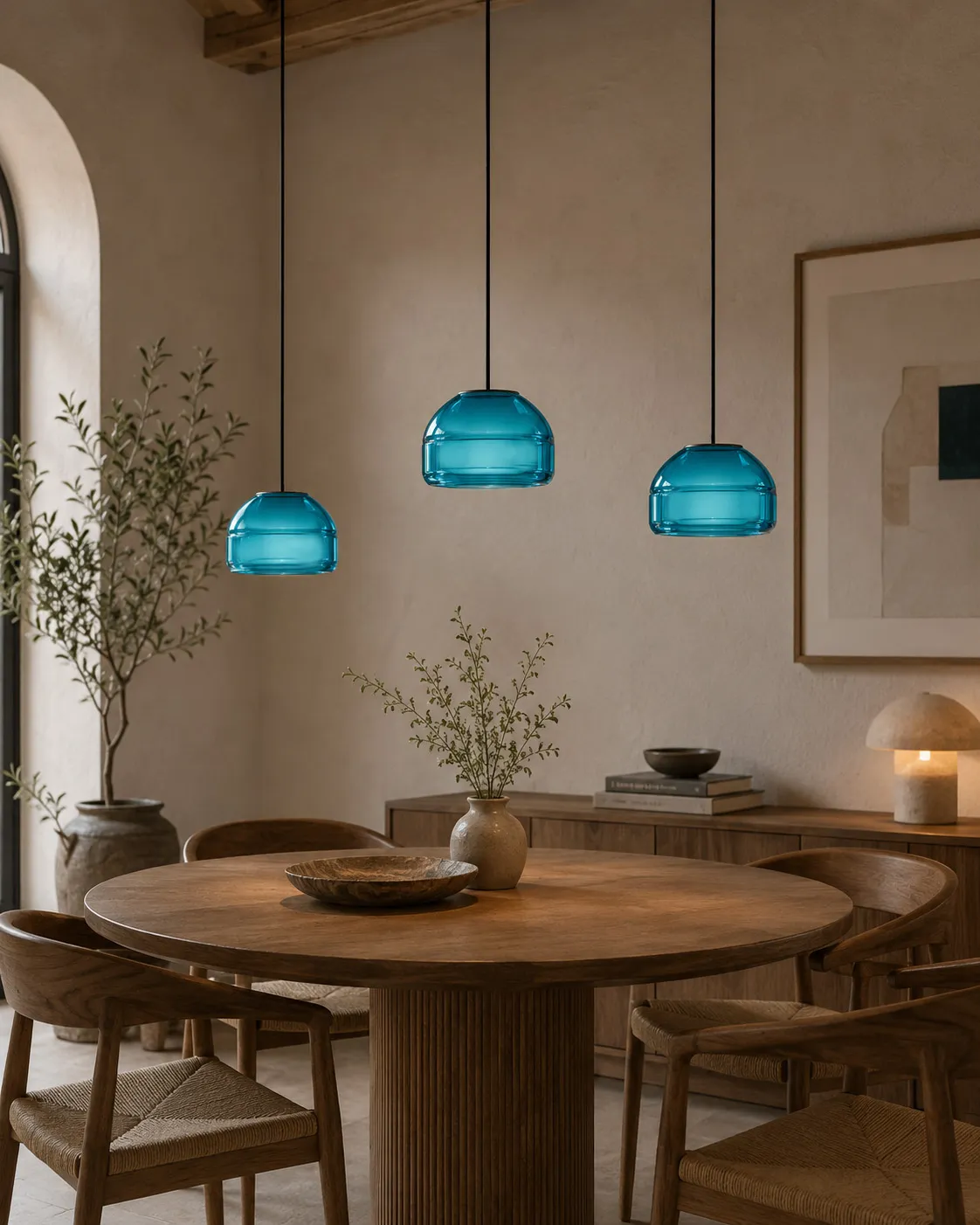
Six inches is the difference between dinner and an interrogation.
A pendant six inches too high stops lighting the table and starts lighting the room. One too low becomes something people lean around. A fixture too small floats over a table like an afterthought, and one too large turns dinner into an interrogation. None of this is a matter of taste — it is three measurements and a dimmer.
What follows covers those numbers first, then how to decide between one fixture and several, how to size them to the table, the two layers most dining rooms skip, and the light quality settings that determine whether food looks appetizing.
The three numbers that decide everything
Get these right and almost any fixture works. Get them wrong and the best fixture in the world will not save the room.
- Hang 30 to 36 inches (75–90 cm) above the tabletop. Not above the floor — above the table. This is low enough to pool light on the surface and high enough to clear sightlines across it. On ceilings above 8 feet (2.4 m), add roughly 3 inches (7.5 cm) of height per additional foot.
- Size the fixture to one-half to two-thirds of the table width. On a 40-inch (100 cm) wide table, that means a fixture 20 to 27 inches (50–68 cm) across. Leave at least 6 inches (15 cm) of clear table on each side of it.
- Put it on a dimmer. A dining room is used for homework at 4pm and dinner at 9pm, and those need different light. This is the cheapest upgrade in the room and the one most often skipped.
One more that catches people out: the fixture centers on the table, not the room. Tables are rarely centered under the ceiling box, and a pendant aligned to the ceiling instead of the furniture is the most common installation error there is.
One fixture, or several?
Table length decides this more than style does.
- Under 6 feet (180 cm): one fixture. A single pendant or chandelier centered over the table. Round tables almost always want one round fixture, since a row of pendants over a circle reads as a mistake.
- 6 to 8 feet (180–240 cm): two. Space them 24 to 30 inches (60–75 cm) apart, centered on the table’s length, with roughly a third of the table length between each pendant and the nearest end.
- Over 8 feet (240 cm): three, or one linear fixture. Three evenly spaced pendants, or a single long fixture running parallel to the table. Consequently a very long table is one of the few places a linear pendant genuinely outperforms a chandelier.
Where multiple pendants are used, keep the outermost ones at least 12 inches (30 cm) in from the table ends so the light does not spill off the surface.
Sizing a chandelier
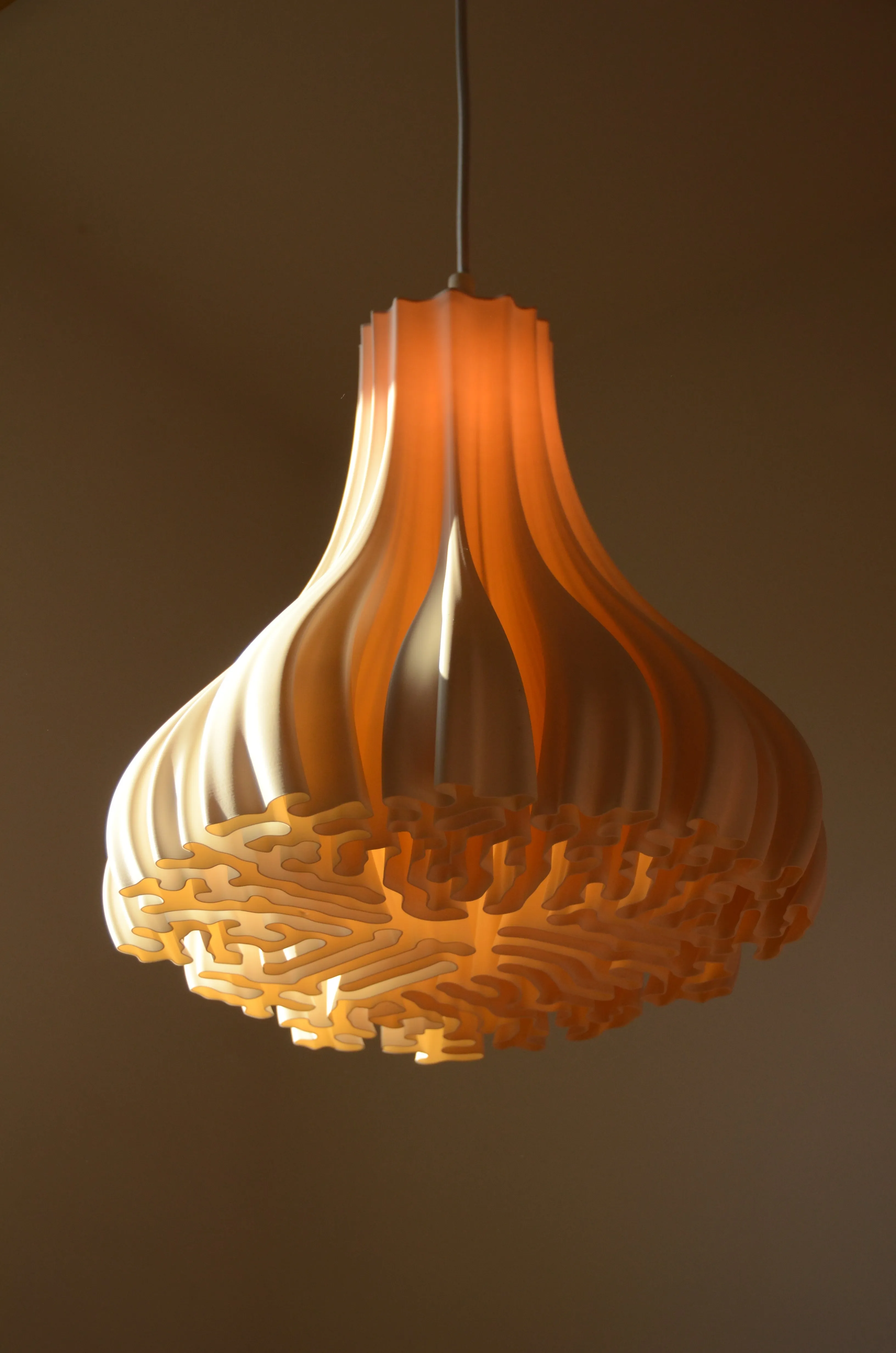
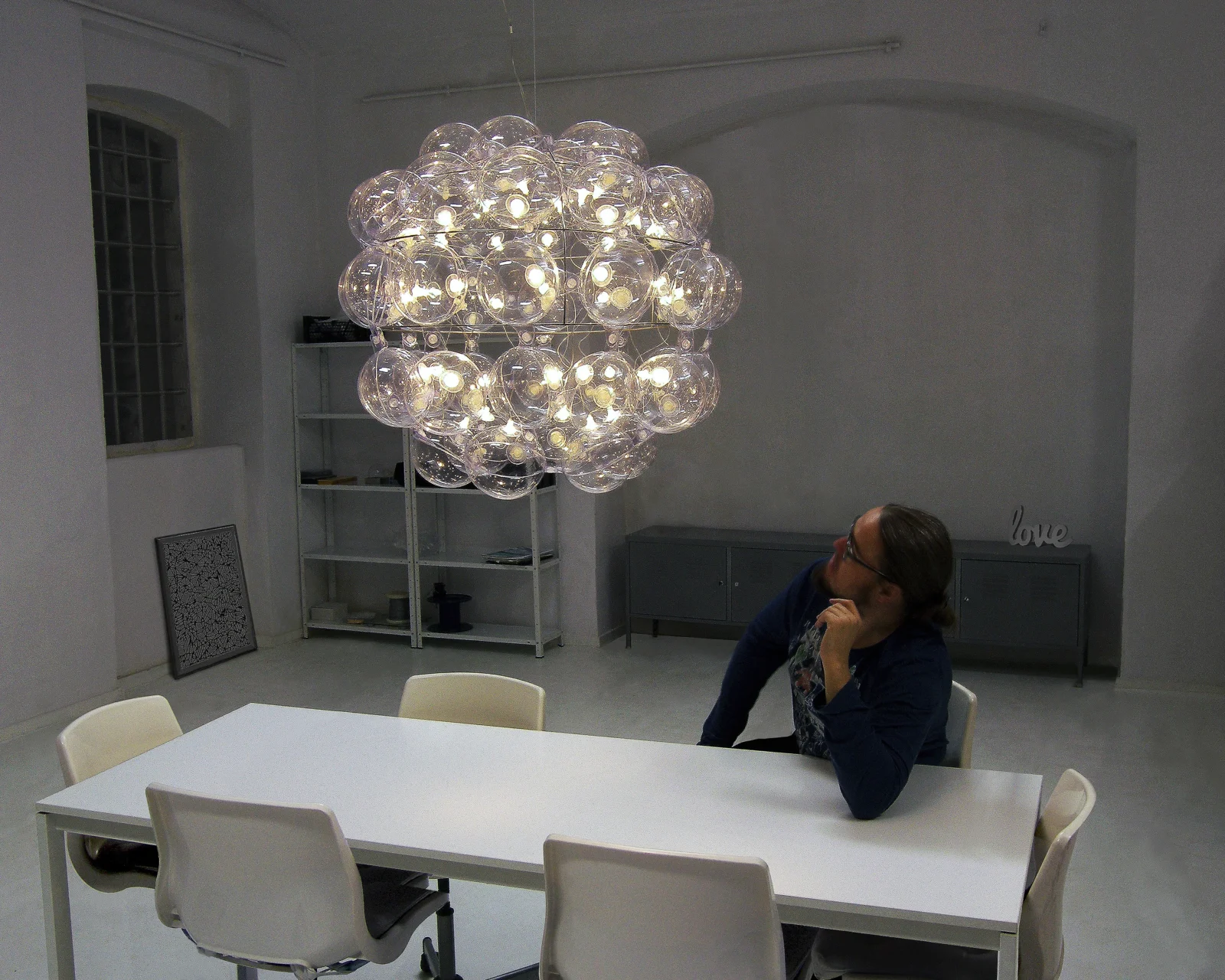
Chandeliers follow the same width rule as pendants, with one extra constraint: the diameter should never exceed the table width minus 12 inches (30 cm). A fixture wider than the table reads as a hazard even when it is hung high enough to clear everyone.
There is a second rule for scaling to the room rather than the table, useful when the dining area is part of a larger space. Add the room’s length and width in feet, and that number in inches is a reasonable fixture diameter — a 12 by 14 foot room suggests roughly a 26-inch (66 cm) fixture.
Where the two rules disagree, follow the table. A dining fixture belongs to the furniture beneath it, and a chandelier sized for the room will dominate a modest table every time.

One fixture is not a lighting scheme
Most dining rooms have exactly one light source, and it is the reason so many of them feel like cafeterias after dark. A single fixture directly overhead casts light straight down, which puts shadows under everyone’s eyes and lets the walls fall away into gloom.
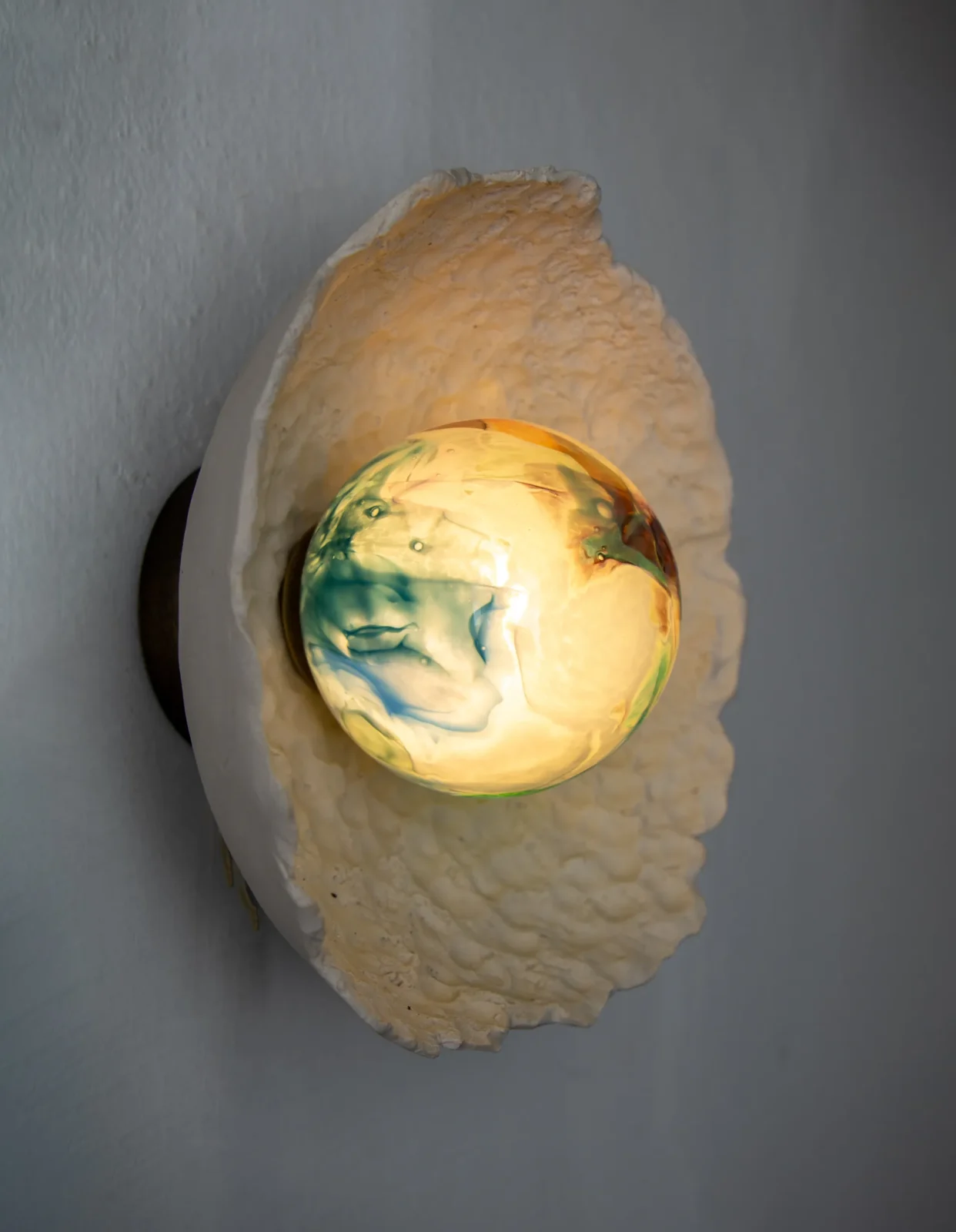
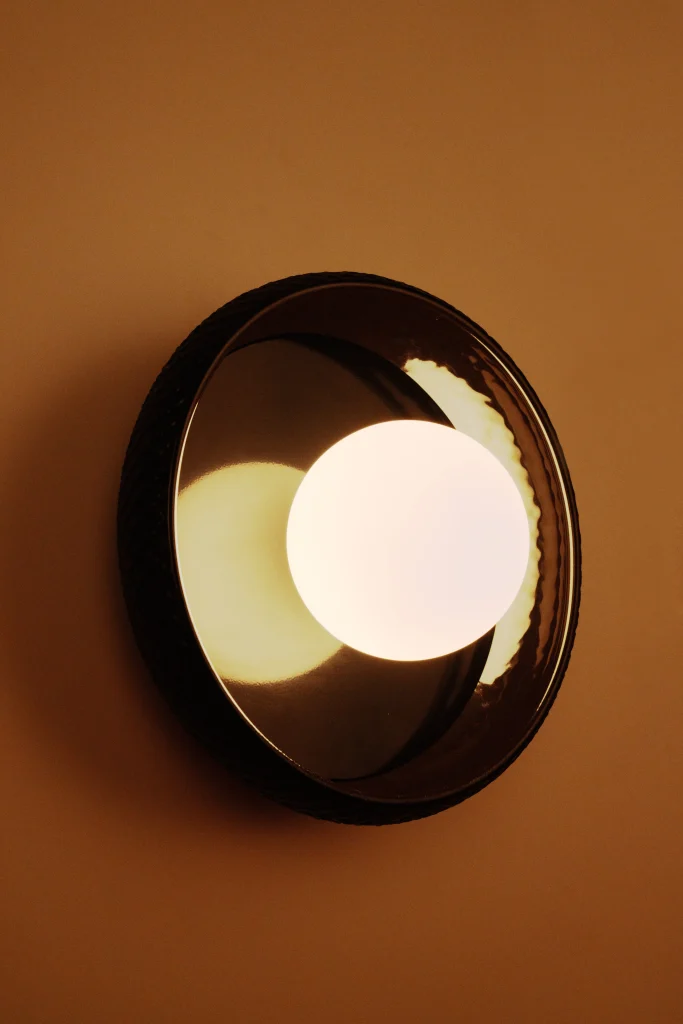
Three layers fix it. The pendant lights the table. Wall light lifts the perimeter so the room has edges. Candlelight gives the table a second, lower source that moves. Consequently a dining room with all three reads as a room rather than a lit surface.
Sconces belong at 60 to 66 inches (150–168 cm) from the floor, which is above seated eye level and below the pendant. Keep the projection under about 8 inches (20 cm) where people walk past, and pair them on a wall rather than using one pushed into a corner.

The third layer: candlelight
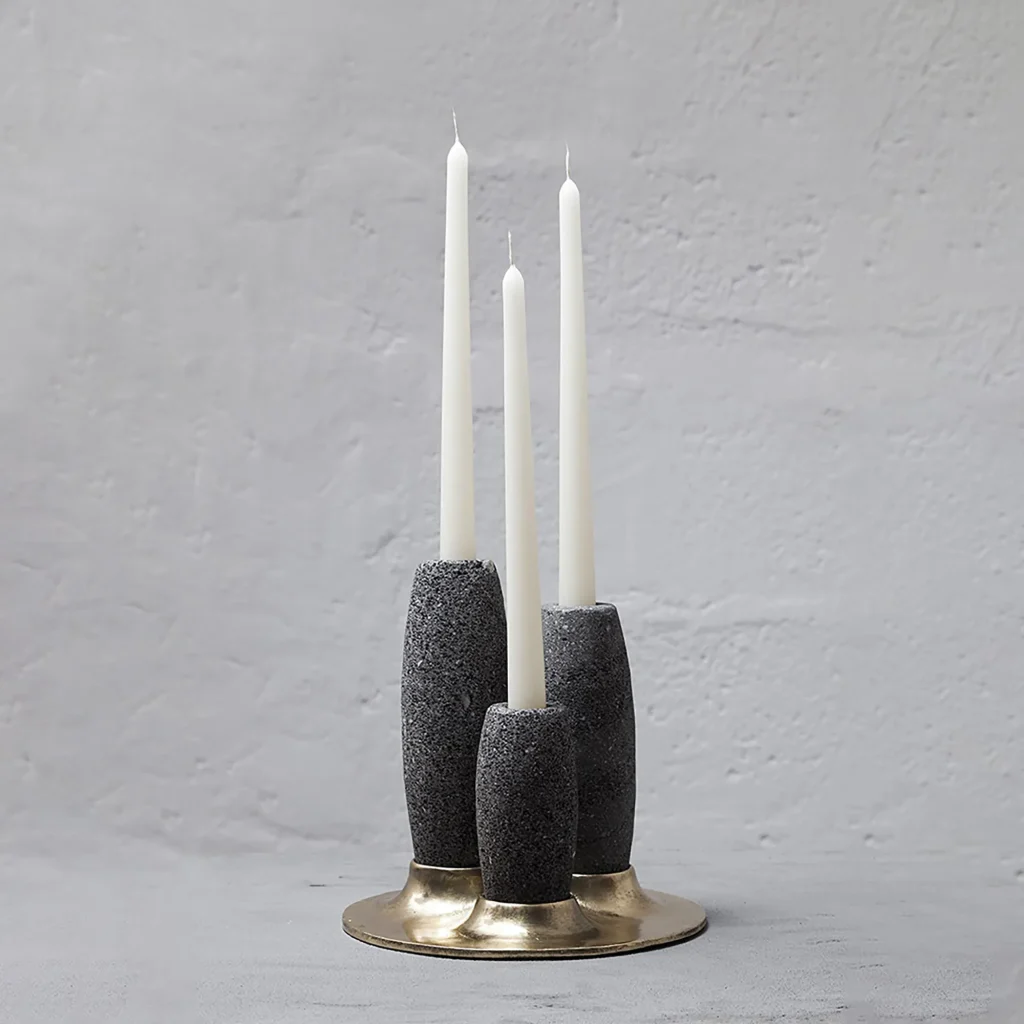
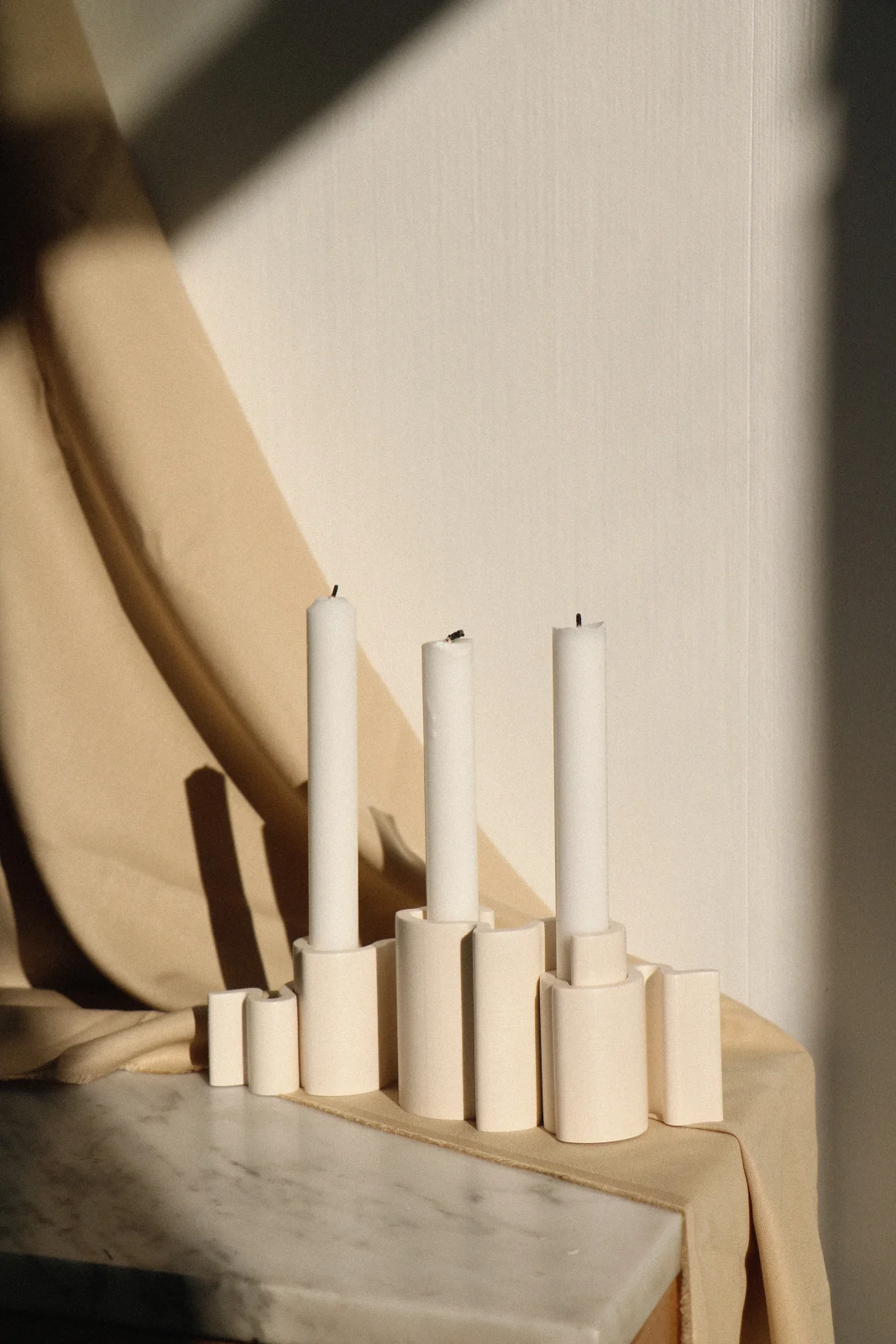
Candles are not decoration on a dining table. They are the only light source at the same level as the food and the faces, and they move, which is what electric light cannot do.
Use more than feels necessary — five to nine small flames down a long table rather than one cluster. Respect the same sightline rule the centerpiece follows: either under 12 inches (30 cm) or above 30 inches (75 cm), since the band between those heights is where faces are. A taper in a slim holder blocks almost nothing because the stem is narrow, which is why candlesticks have survived.
Unscented only. A scented candle competes directly with the food, and at a table where the smell of the meal is half the pleasure that is a genuine mistake.

Light quality, and why food looks wrong under some bulbs
This is the part almost no lighting guide covers, and it matters more in a dining room than anywhere else in a house.
- Color temperature: 2700K. Measured in kelvin, this is the warm end of white light and the closest electric equivalent to candle and incandescent light. At 3000K a room starts to feel commercial; at 4000K and above, food looks grey and skin looks ill. Dining rooms are the one space where nobody should go above 2700K.
- Color rendering: CRI 90 or higher. The Color Rendering Index measures how accurately a light source shows color against daylight, on a scale to 100. Cheap LEDs often sit at 80, which is where reds go flat — and a dining room is full of things whose appeal depends on red reading properly. Meat, wine, tomatoes, fruit. Specifically, CRI 90+ is the single best value upgrade in dining lighting.
- Dimming. Check that both the bulb and the fixture are dimmable, and that the dimmer switch is rated for LED. A trailing-edge dimmer handles LED far better than the older leading-edge type, which is what causes flicker and buzz.
Finally, a shade matters as much as a bulb. An open-bottomed fixture at seated eye level puts a visible filament in everyone’s view. Diffused glass, fabric, paper or a deep shade solves it.
Tables and Ceiling types
- Round tables want one round or square fixture, centered. A row of pendants over a circle fights the geometry. Scale to roughly half the table diameter.
- Rectangular tables want either a linear fixture running parallel to the length or two to three pendants in a row. A single round chandelier over a very long table lights the middle and leaves the ends dim.
- Low ceilings under 8 feet (2.4 m) need a flush or semi-flush fixture, or a pendant with a slim profile. Keep the 30-inch minimum above the table even if that means a shallower shade.
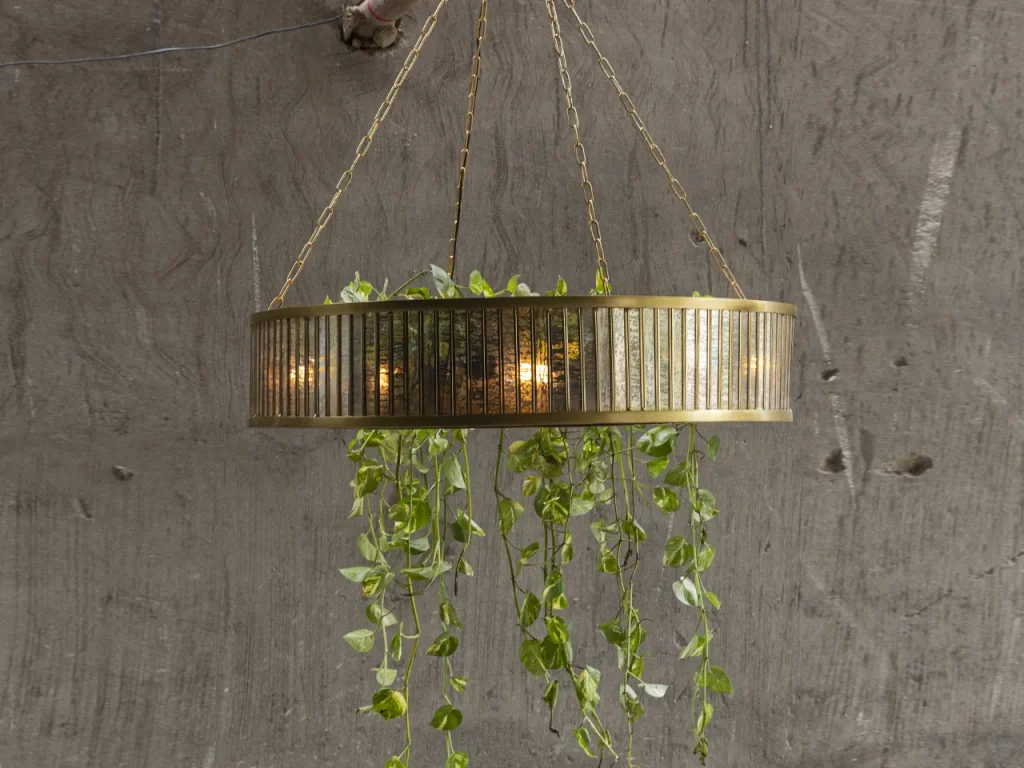
- High ceilings are the opposite problem: a fixture hung at the standard height can look stranded in the volume above it. Either go taller — a multi-tier chandelier or a long linear pendant — or hang a larger fixture and accept a slightly greater drop.
- Sloped ceilings need a sloped-ceiling adapter, and the measurement still runs vertically from the tabletop rather than perpendicular to the ceiling.
Dining areas inside a bigger room
In open-plan apartments the dining fixture does a second job: it marks where the dining area is. That makes it the most useful zoning device in the room, and worth choosing for presence rather than restraint.
Hang it lower than you would in a separate room — closer to 30 inches (75 cm) than 36 — so it reads as belonging to the table rather than floating in shared space. Put it on its own switch and its own dimmer, so the dining zone can be bright while the seating area stays low, or the reverse.
Keep the fixture’s style related to, but not matching, whatever hangs in the adjoining area. Matching pendants across a combined space flatten it into one room; related finishes hold it together without erasing the division. There is more on zoning in our guide to small living rooms.
Common mistakes
- Hung too high. Above 36 inches (90 cm) from the tabletop and the fixture stops lighting the table.
- Centered on the room, not the table. Tables rarely sit under the ceiling box. Move the fixture, not the table.
- Too small. A fixture under half the table width reads as an afterthought.
- Only one light source. Overhead light alone casts shadows under the eyes and lets the walls disappear.
- No dimmer. One brightness cannot serve homework and dinner.
- Cool white bulbs. Anything above 2700K makes food look grey.
- Exposed bulbs at eye level. A visible filament in a seated sightline is glare, not ambience.
- Scented candles on the table. They fight the food.
Frequently asked questions
How high should a dining room light hang above the table?
Between 30 and 36 inches (75–90 cm) above the tabletop, not above the floor. On ceilings higher than 8 feet (2.4 m), add roughly 3 inches (7.5 cm) per additional foot. Hang toward the lower end in open-plan spaces so the fixture clearly belongs to the table.
What size light fixture do I need for my dining table?
One-half to two-thirds of the table width. On a 40-inch (100 cm) table that is a fixture 20 to 27 inches (50–68 cm) across, leaving at least 6 inches (15 cm) of clear table on each side. A chandelier should never exceed the table width minus 12 inches (30 cm).
How many pendants should I hang over a dining table?
One for tables under 6 feet (180 cm), two for 6 to 8 feet (180–240 cm), and three or a single linear fixture beyond that. Space multiple pendants 24 to 30 inches (60–75 cm) apart and keep the outermost ones at least 12 inches (30 cm) in from the table ends.
What color temperature is best for dining room lighting?
2700K, the warm end of white light and the closest electric equivalent to candlelight. Above 3000K a dining room starts to feel commercial, and at 4000K food looks grey. Pair it with a CRI of 90 or higher so reds render properly — meat, wine and fruit all depend on it.
Should a dining room light be centered on the room or the table?
On the table, always. Dining tables are rarely positioned under the existing ceiling box, and a fixture aligned to the ceiling rather than the furniture is the most common installation error. A swag hook or a ceiling medallion can relocate the drop without rewiring.
Can you use a chandelier over a rectangular table?
Over a table under about 6 feet (180 cm), yes. Beyond that a single round fixture lights the middle and leaves the ends dim, so a linear fixture running parallel to the length, or two to three pendants in a row, works better. Round tables are where a single chandelier always wins.
Measure first, then choose
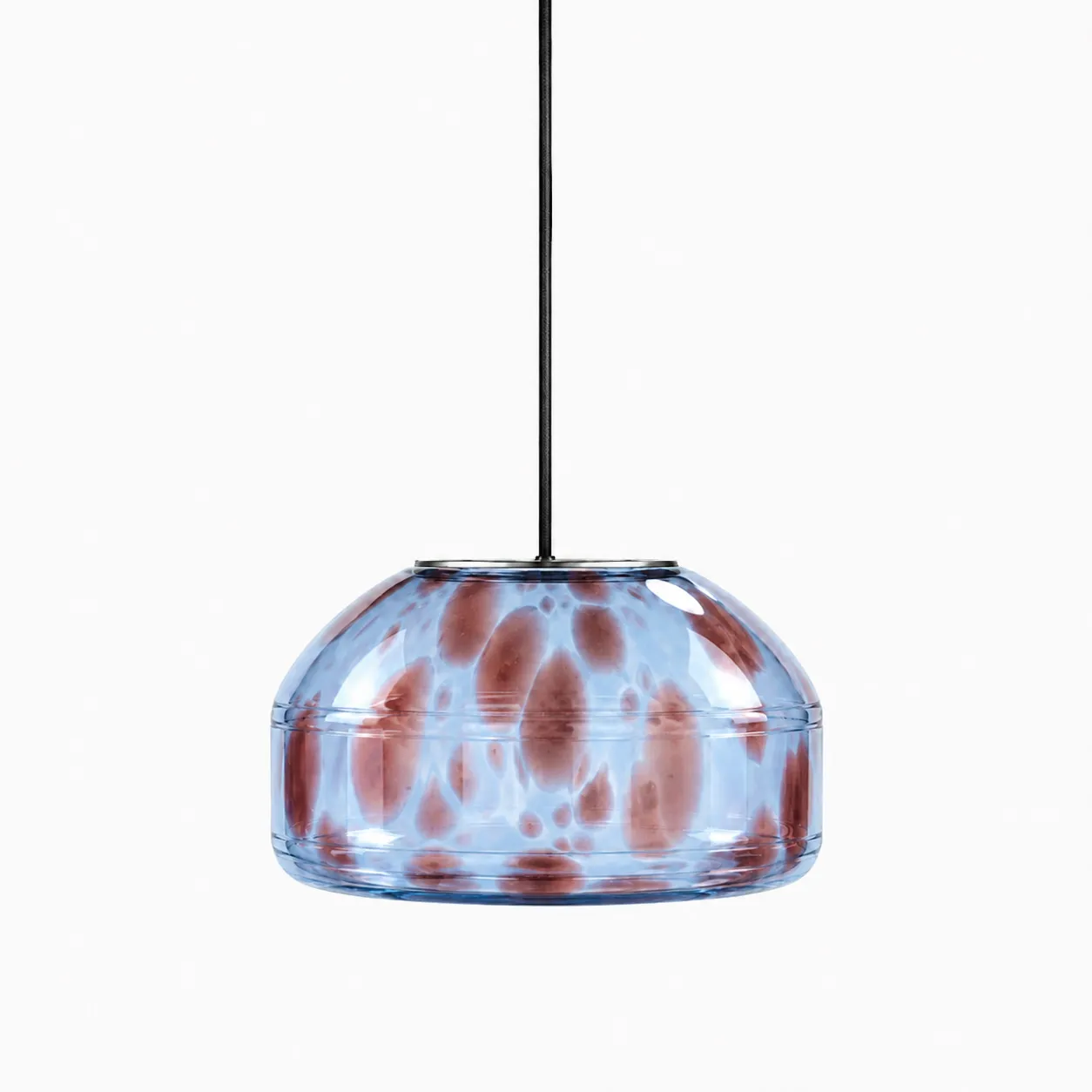
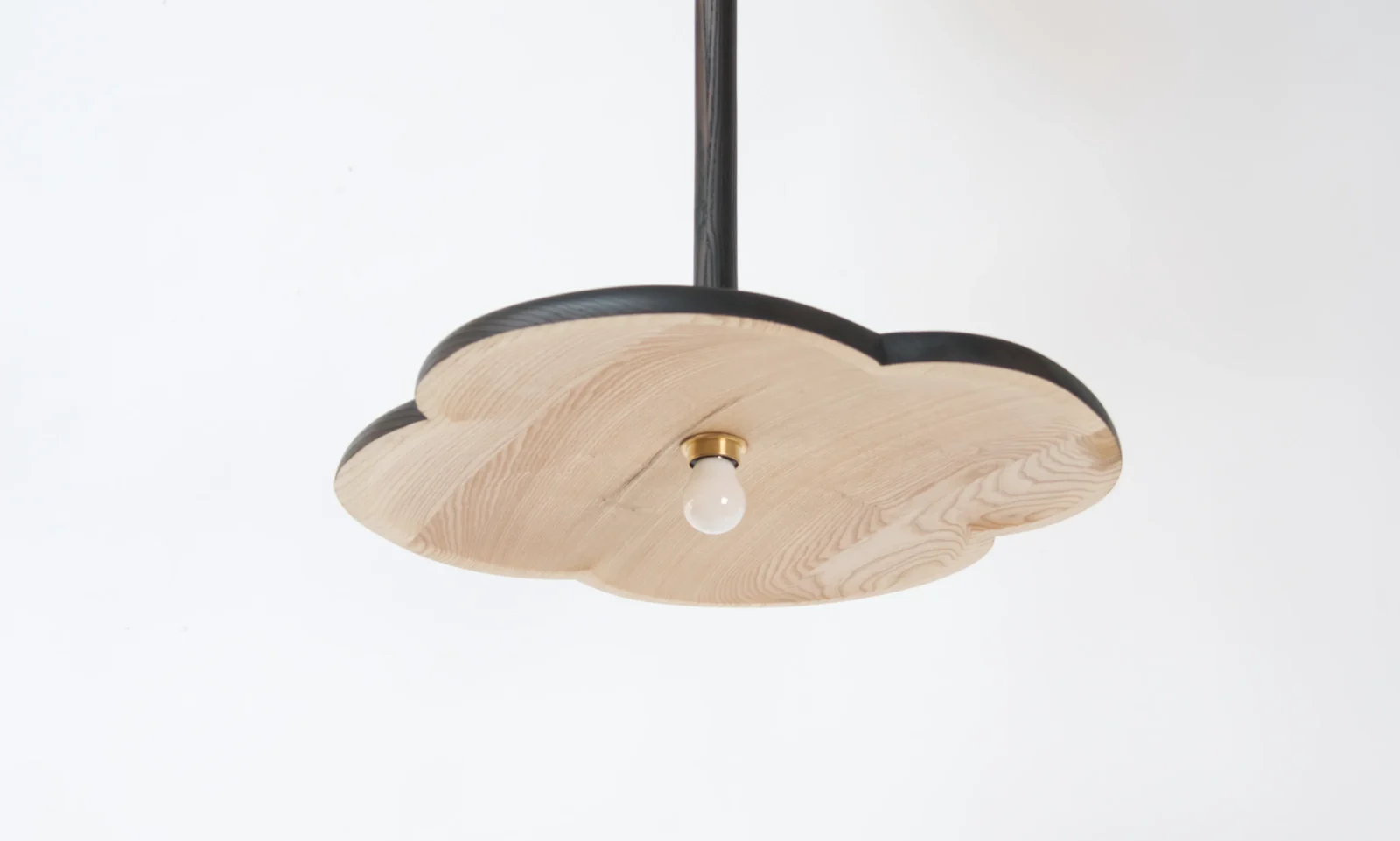
Dining room lighting rewards arithmetic more than taste. Thirty to thirty-six inches above the table, half to two-thirds of its width, centered on the furniture, at 2700K with a high CRI and a dimmer behind it. Settle those and the fixture itself becomes a free choice — blown glass, brass, carved ash, whatever suits the room.
Then add the two layers nobody bothers with. A pair of sconces lifting the walls, and candles on the table at the height of the conversation. A dining room lit from three places at once is the difference between somewhere you eat and somewhere people stay at the table after the plates are cleared.