Updated on: August 14, 2026
Homes are getting smaller and staying that way. A US studio apartment averages around 530 square feet, a one-bedroom about 752, and Tokyo runs closer to 422. Meanwhile remote work has spread the definition of “home” across vans, tiny houses and rented rooms in cities people did not grow up in — and more than fifty countries now issue digital nomad visas.
Space saving furniture is the practical response, and it has a second benefit that gets less attention: one piece doing two jobs is one piece not manufactured, shipped and eventually discarded. That makes it a sustainability decision as much as a spatial one.


What makes furniture genuinely space saving?
Not all multifunctional furniture earns the name. Three things separate the pieces that actually save space from the ones that just claim to.
Both functions have to be good
A sofa bed that is a bad sofa and a bad bed has saved nothing. The test is whether you would choose each function on its own merits. Consequently the strongest multifunctional pieces tend to combine two things that share a form naturally — a bench and a shelf, a table and a tray — rather than forcing a mechanism between them.
Transformation has to be effortless
If changing modes takes more than a few seconds, you will pick one and leave it there. A 90-degree flip works; disassembling and reassembling does not. This is why the reliable convertible pieces have no moving parts at all — the change is in how you orient them.
Fewer mechanisms, longer life
Every hinge, slide and catch is a future failure point, and mass-market convertible furniture usually fails at the mechanism long before the material wears out. Therefore the sustainability argument only holds when the piece is built simply enough to outlast the two objects it replaced.
9 multifunctional pieces from independent studios
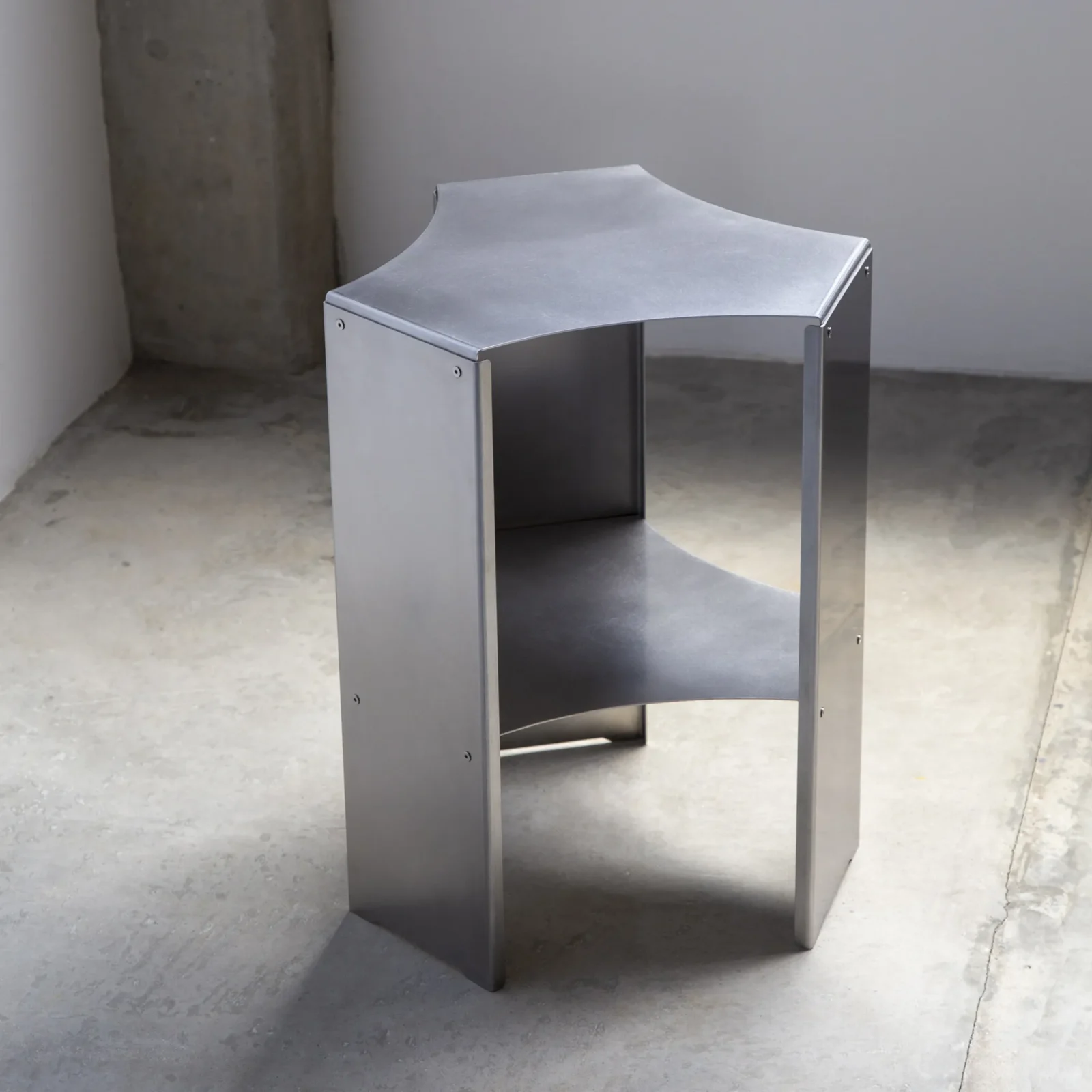
Bnch+ – Multifunctional Shelf or Bench by Esther De Vos
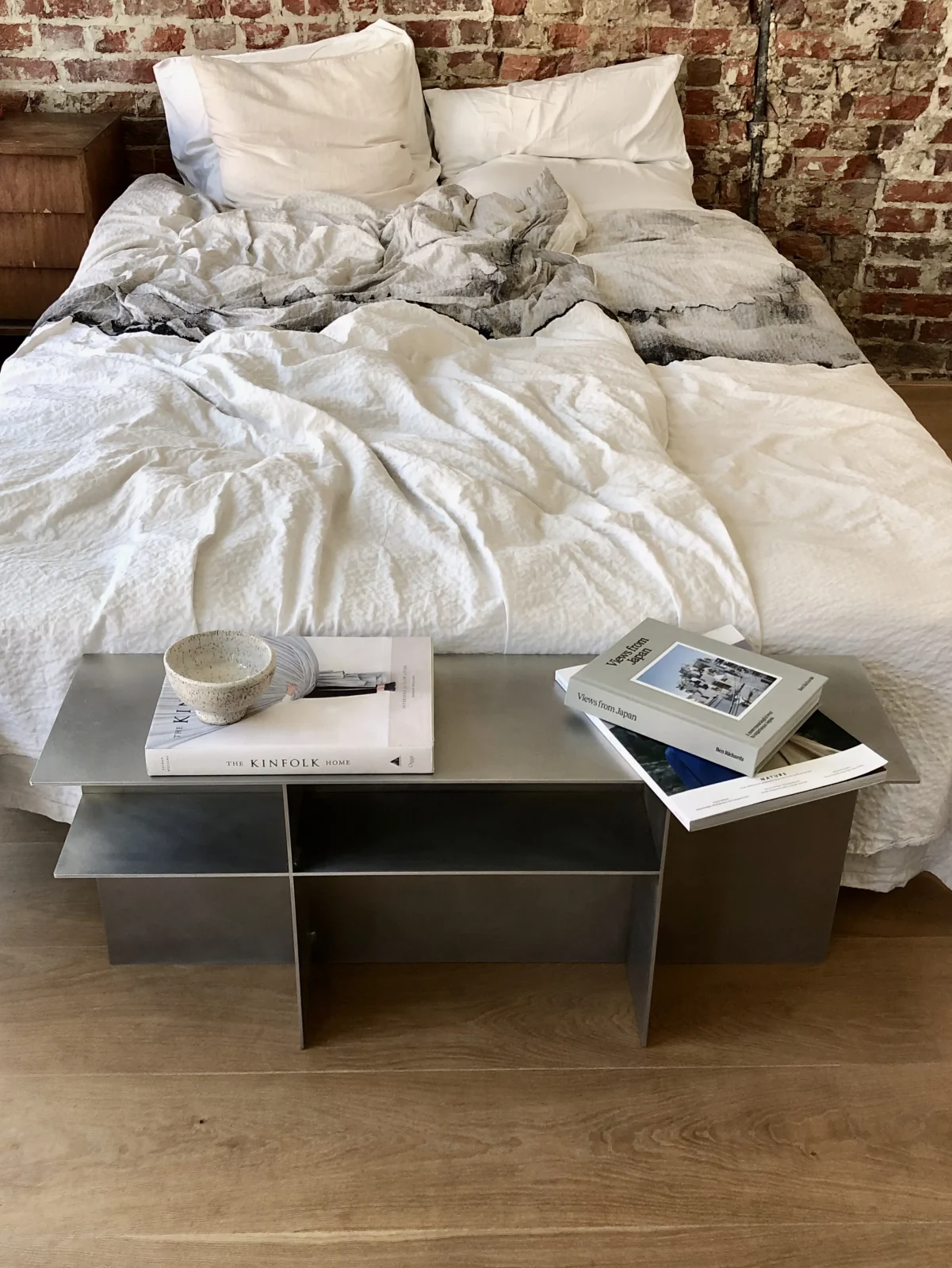
Is it a bench? Is it a shelf? One 90° flip decides, and that is exactly the kind of transformation that actually gets used — no mechanism, no assembly, nothing to fail. Aluminium construction and clean lines put it in neo-industrial territory.
€1.442 incl. tax
Polysemy – Wine Red Multifunctional Table by So Koizumi
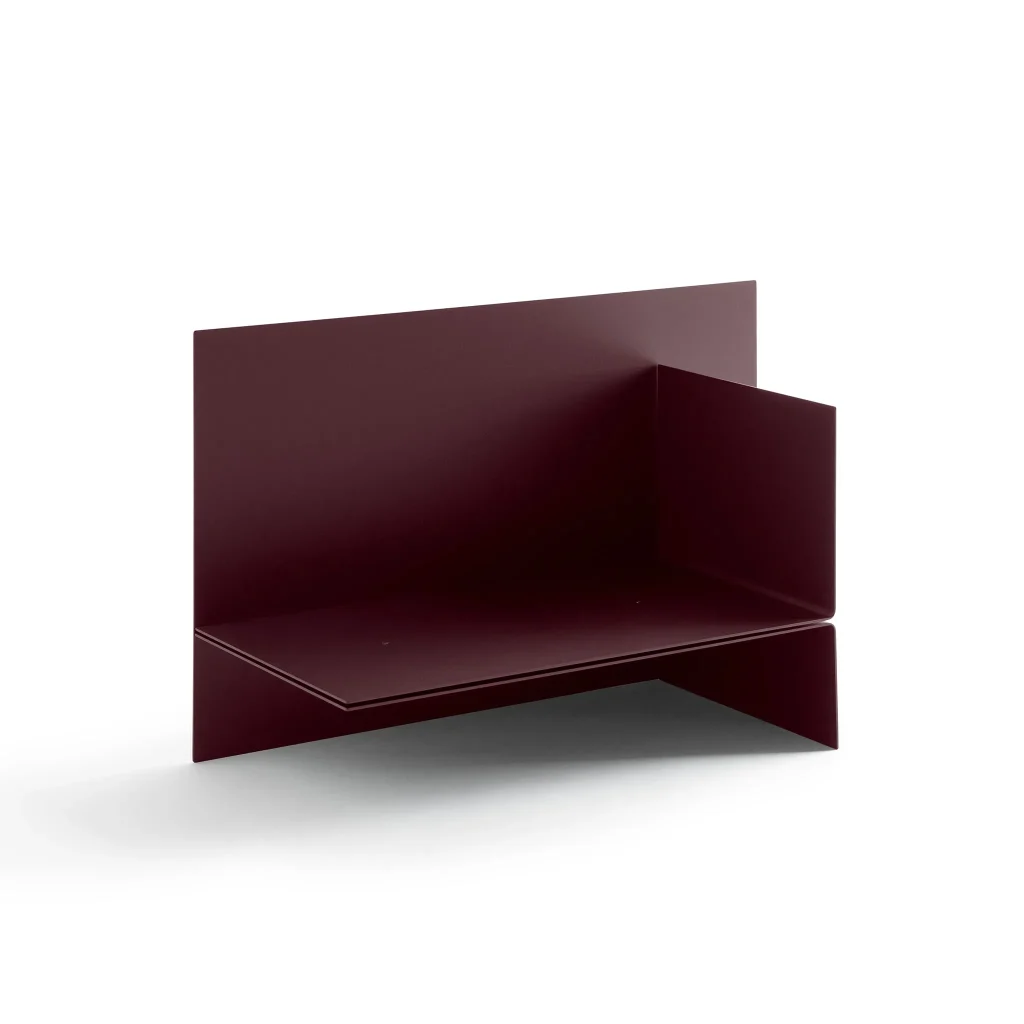
Bookshelf, side table or display shelf — the same object, turned a different way up. Polysemy means having multiple meanings, and So Koizumi’s argument is that the usual relationship, where the designer dictates function and the user accepts it, is unnecessarily one-sided. The construction backs this up better than any mechanism could: three metal plates bolted together, nothing to hinge, nothing to fail. Available in wine red, black and light grey.
By So Koizumi
€1.100 incl. tax
Ariel – The Oven Writing Desk by M’ama edizioni

The most ambitious piece here: a briarwood unit that houses an oven, works as a writing desk, carries an arc-shaped mirror and holds a single long drawer. Wall-mounted rather than floor-standing, which the designer intends literally — love is fragile, so every so often you check the screws are still tight. Part of the Serendipity kitchen collection. Oven not included.
€5.600 incl. tax
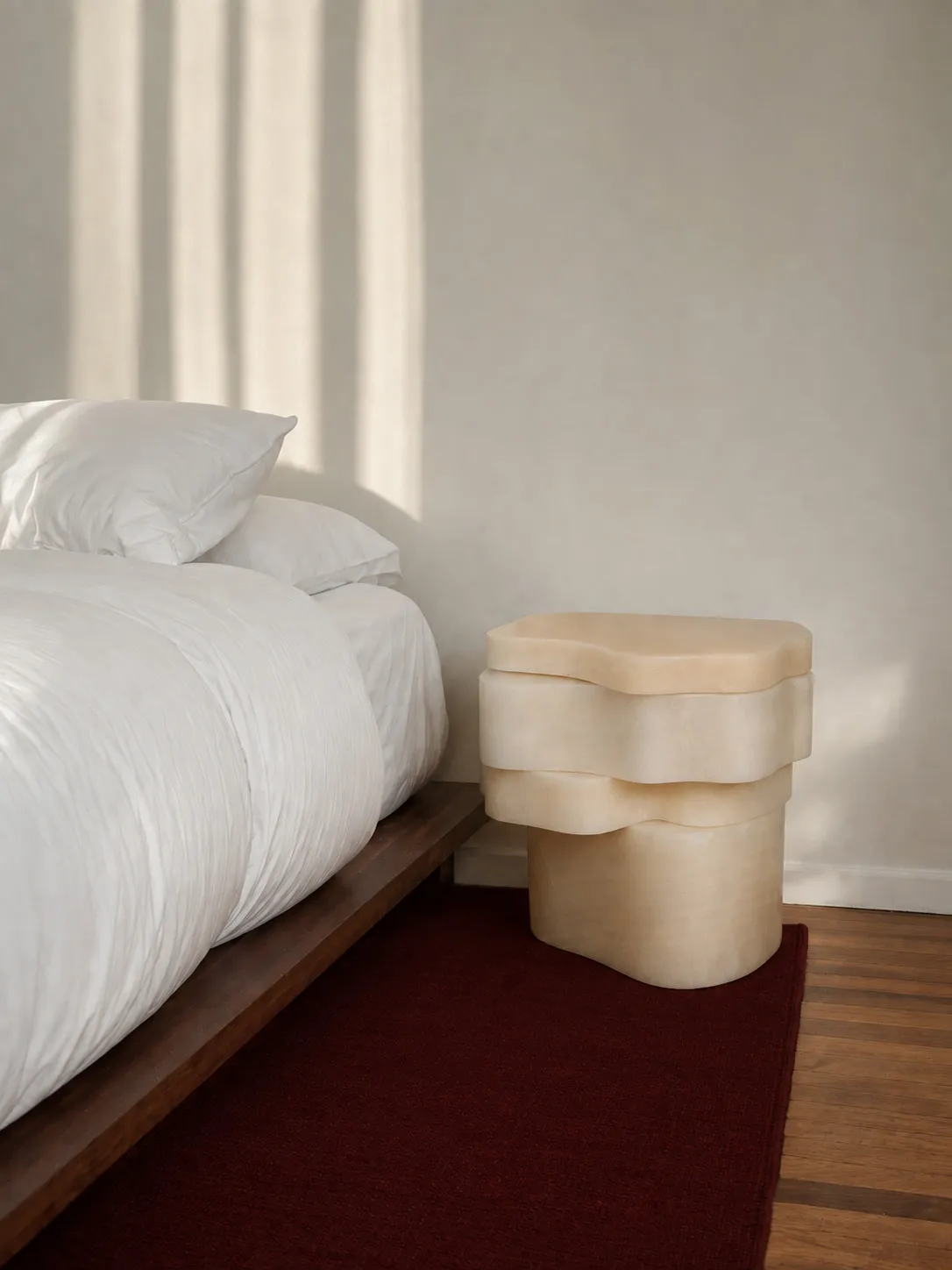
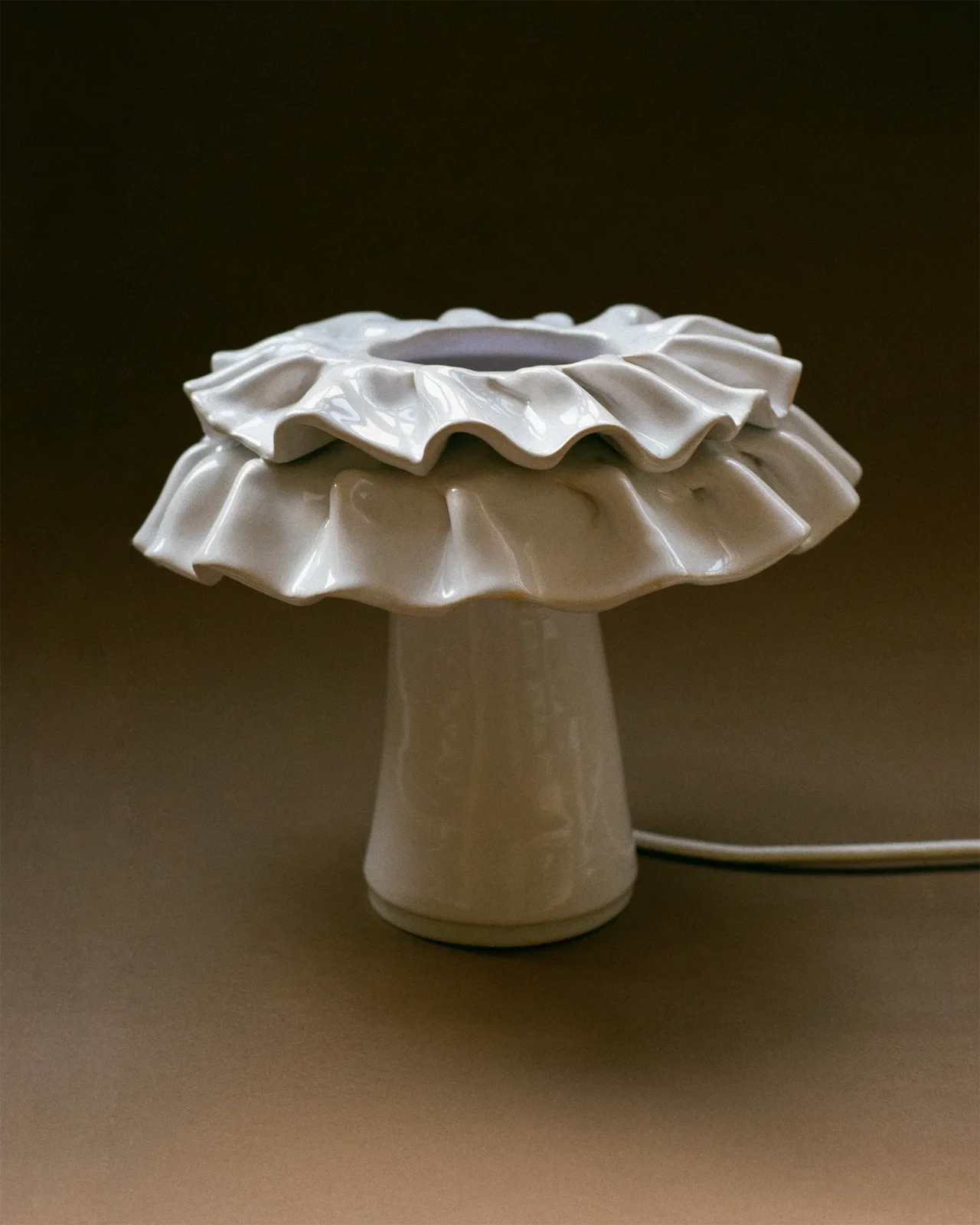
Sugar O’Clock Table Lamp by Alves Ludovico

A clock and a lamp in one object, made from something genuinely strange: a sugar-based bioplastic developed with Aalto University engineers, laser-sintered into a material with the mechanical properties of soft stone. The designer is diabetic, and the series is explicitly about converting a substance that harms him into a constructive one.
€3.500 incl. tax
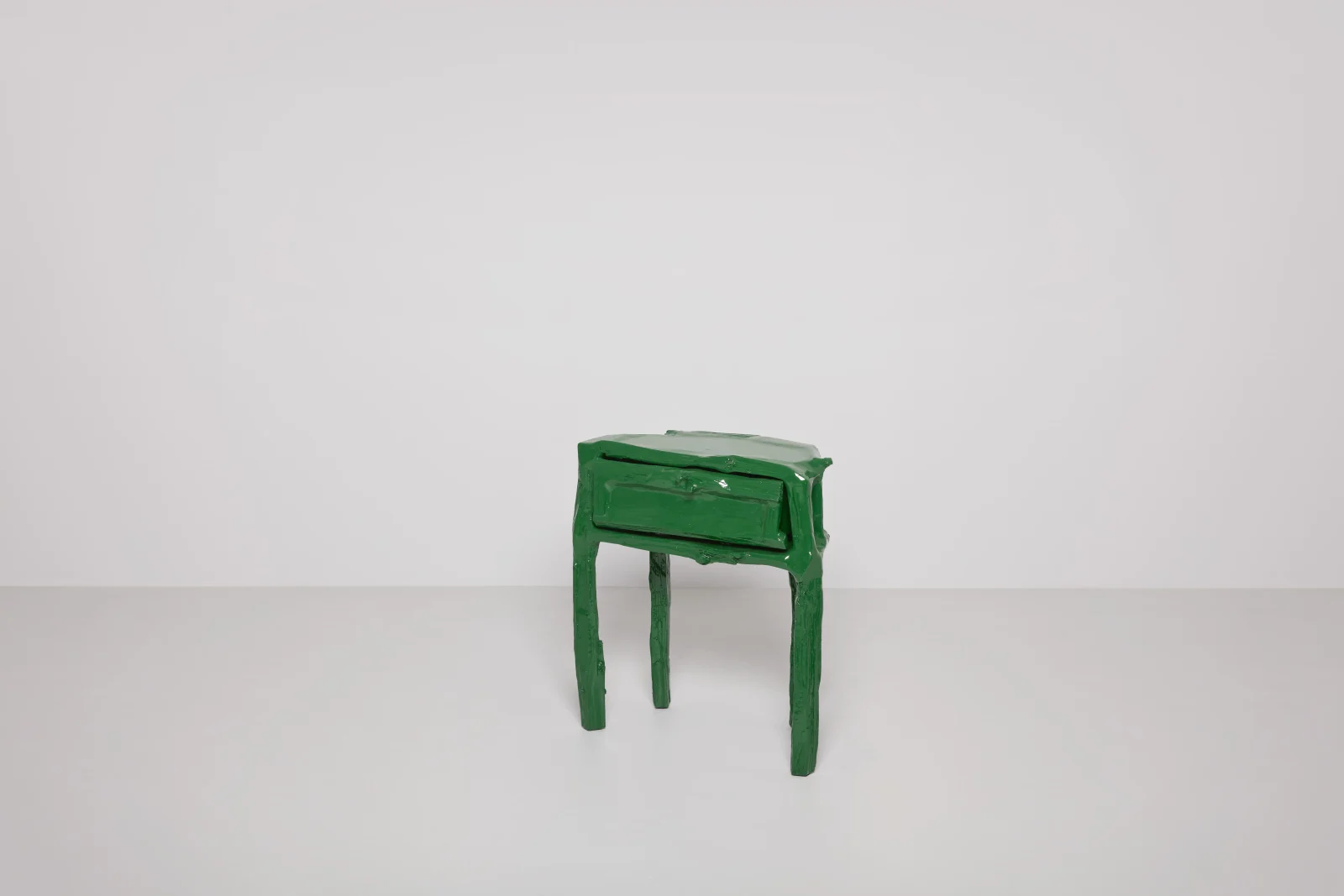
Cat Cave – Ceramic Side Table and Cat Bed by UAU Studio
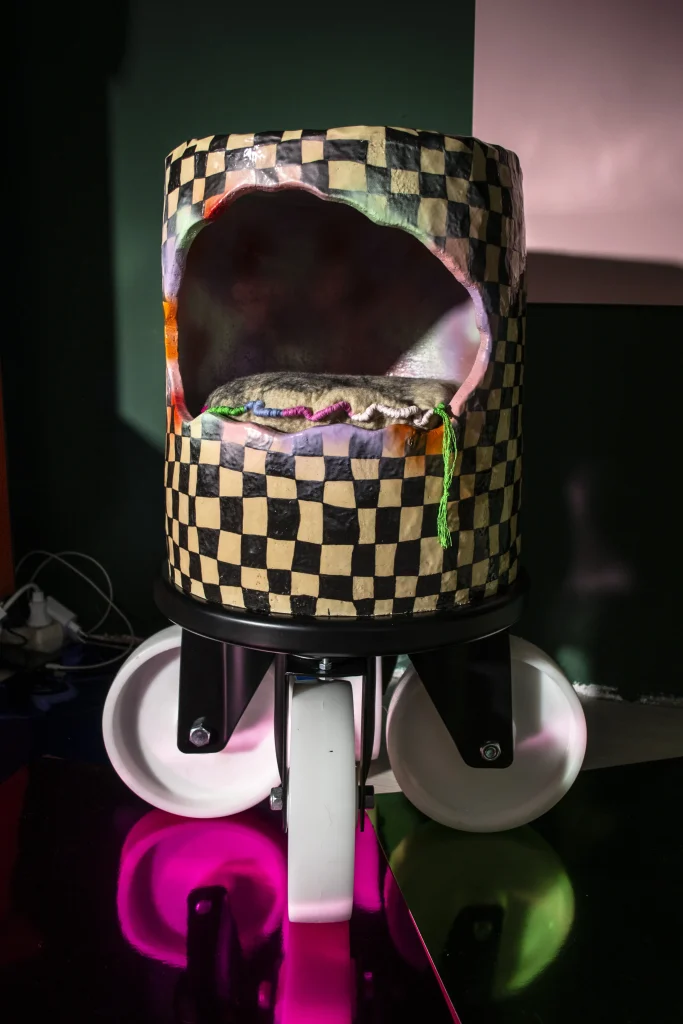
A ceramic side table whose hollow becomes a retreat for a cat — or, if you have no cat, a storage compartment that keeps the surface clear. Romanian studio UAU Studio, working in a register closer to maximalism than most small-space furniture allows itself.
By UAU Studio
€2.000 incl. tax
Memento Side Table by Andreas Anwander
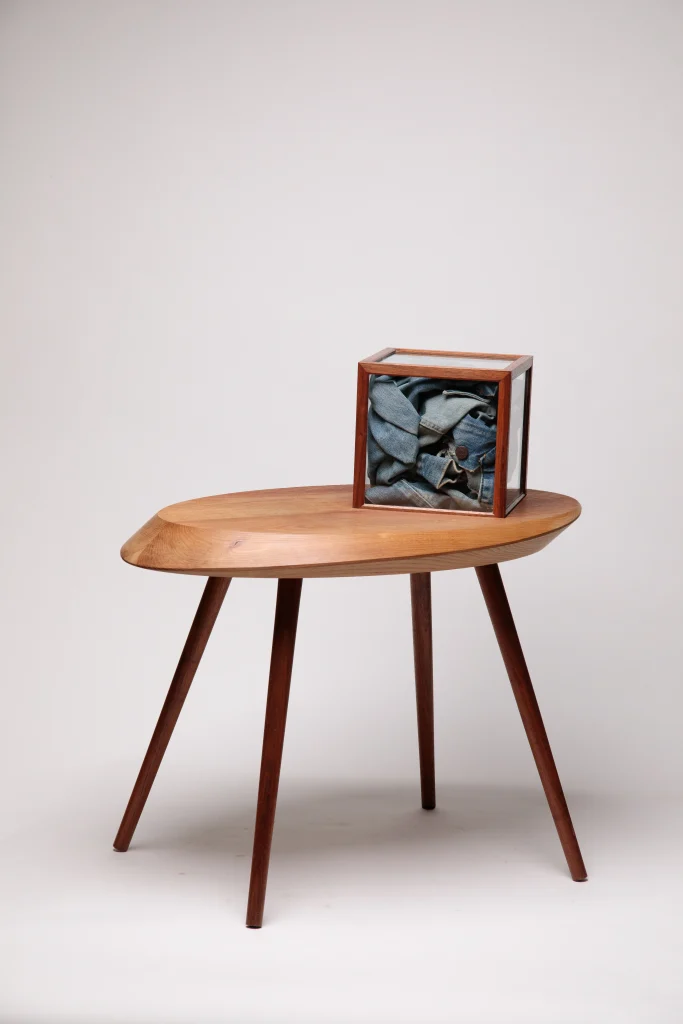
A side table and a display case in one. It came from a specific object: a worn denim jacket the designer’s father had cherished, which the siblings inherited and could neither wear nor bring themselves to store away. Memento is a solution to that — solid Freijo and Imbuia with a wood-framed glass box, so an heirloom stays protected and visible. In a small flat, that removes the need for a separate cabinet.
€2.100 incl. tax
Aster – Parota Wood Side Table by Daniel Couttolenc
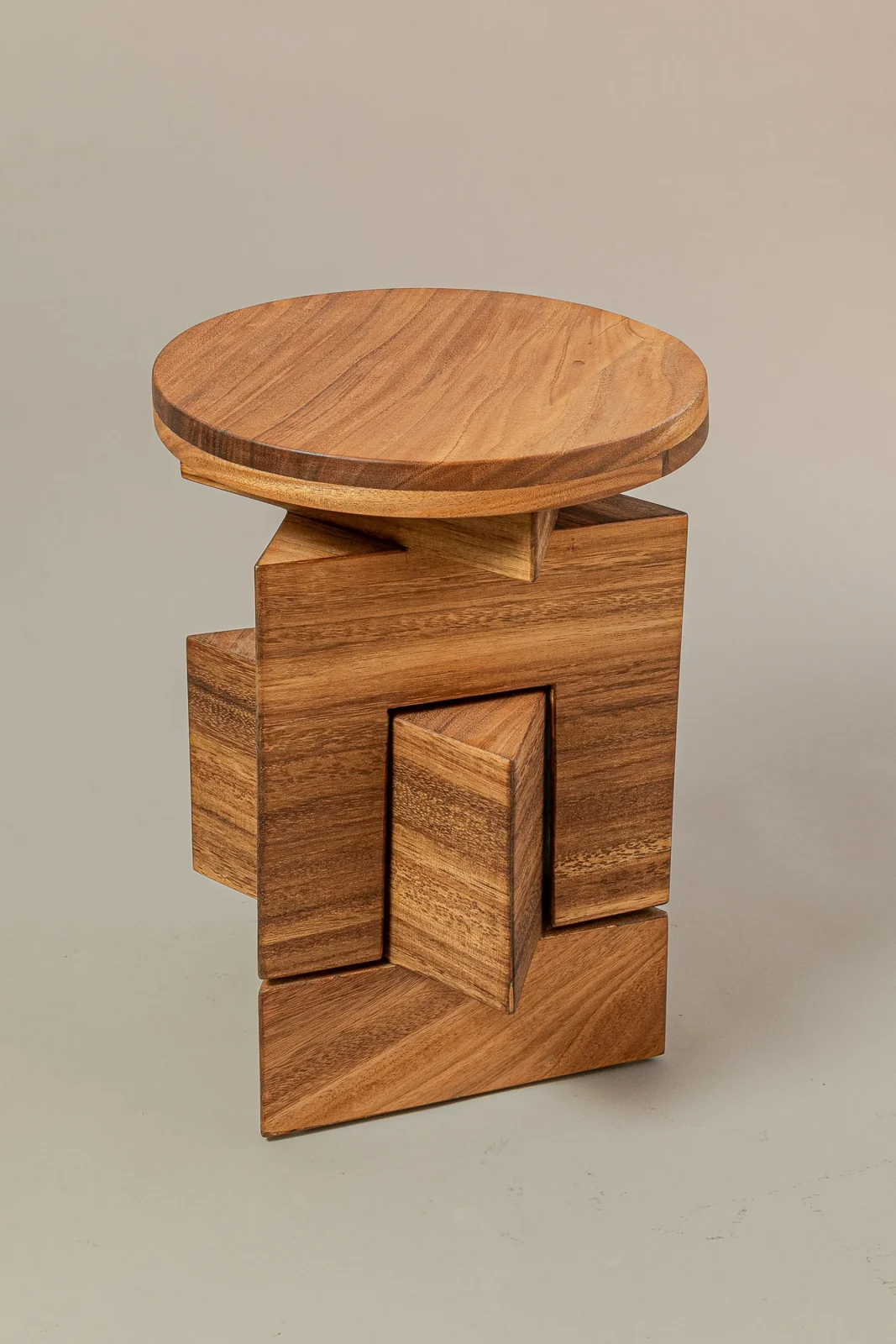
Three components that separate into two auxiliary tables and a tray, or assemble into one side table. The top view forms a hexagram — a figure for the union of opposites, which is a lot to ask of a table and mostly earns it. Made by cabinetmaker Daniel Couttolenc in parota wood.
€1.975 incl. tax
Tronco Coffee Table Set Of 6 by Nitush and Aroosh
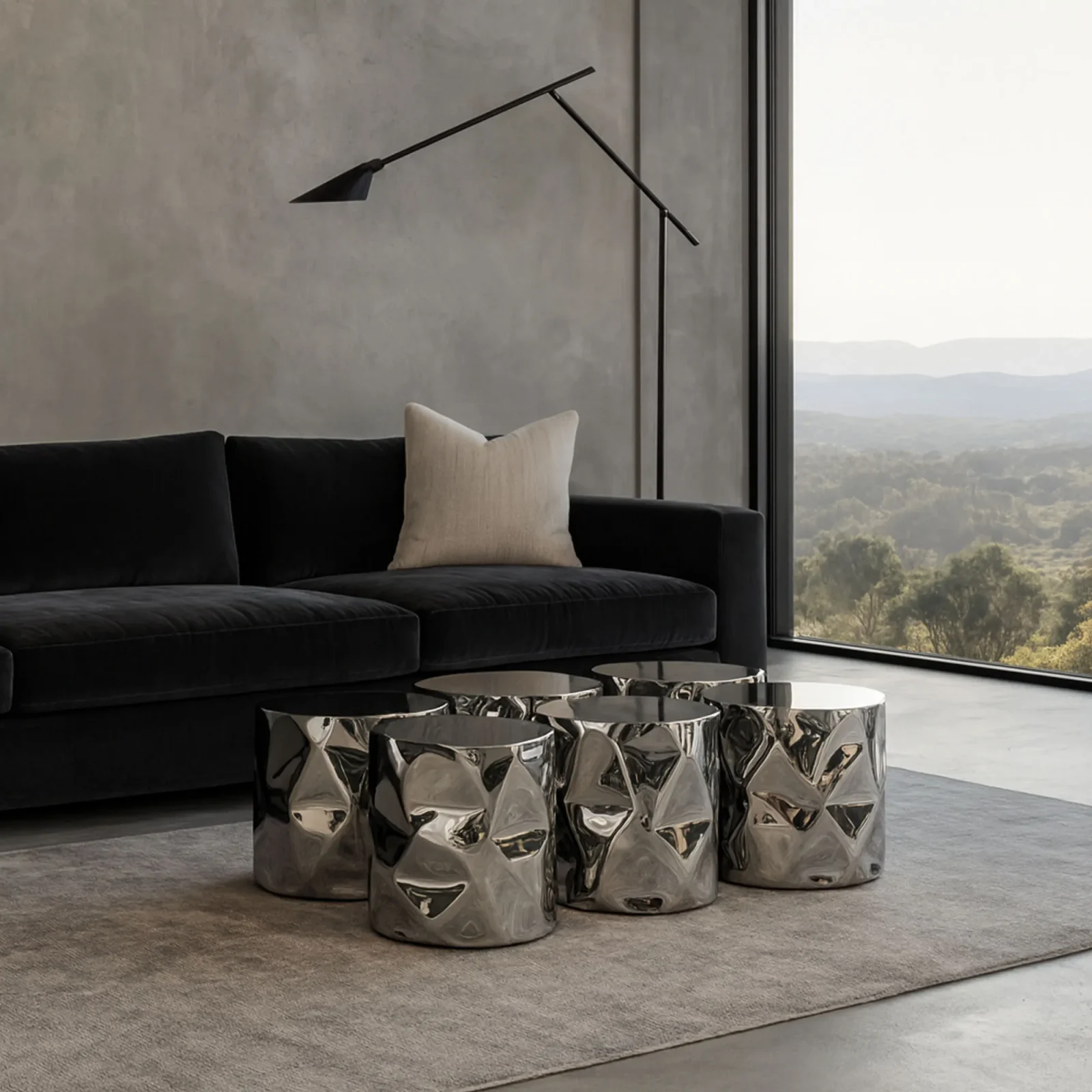
Six separate elements that group into a coffee table or scatter as individual stools and surfaces. The multifunctionality here is in the count rather than a mechanism — nothing folds or converts, so nothing can fail, and the footprint changes with whatever the room needs on a given evening. The most genuinely adaptable piece in this list.
€3.000 incl. tax
Cubo by Edoardo Lietti Studio

A side table whose top extends in height, with the space below given over to books and objects — so it stores and displays while functioning as a surface. Birch plywood stained with natural pigments, made in Italy. Bauhaus logic applied to a genuinely small footprint, and the cheapest thing here by a distance.
By Edoardo Lietti Studio
€740 incl. tax
Frequently asked questions
What is space saving furniture?
Furniture designed so one piece performs the role of two or more — a bench that is also a shelf, a table that separates into trays, a lamp that is also a clock. The aim is to reduce the number of objects a room needs rather than simply to make each object smaller.
Is multifunctional furniture actually more sustainable?
Only if it lasts. One piece replacing two avoids a whole object’s worth of material, manufacturing and shipping — but a convertible piece that fails at the hinge in three years has saved nothing. Simple transformations with few moving parts are the ones where the argument holds.
How do you furnish a very small apartment?
Fewer, larger pieces read as calmer than many small ones, because visual clutter comes from the number of outlines rather than the volume they occupy. Prioritise pieces that do two jobs, keep pathways clear, and use vertical space — wall-mounted furniture returns floor area that nothing else can.
What should you look for in convertible furniture?
Check that both functions are genuinely good on their own terms, that switching between them takes seconds rather than minutes, and that the mechanism is simple or absent. Then check whether it can be repaired — a glued or welded convertible piece cannot be opened when something goes.
Does multifunctional furniture have to look minimal?
No, and the assumption that it does is the main reason small-space furniture is so often dull. A ceramic cat bed, a sugar clock-lamp and a wall-mounted oven desk all solve space problems while being anything but restrained.