



















-
 In stock
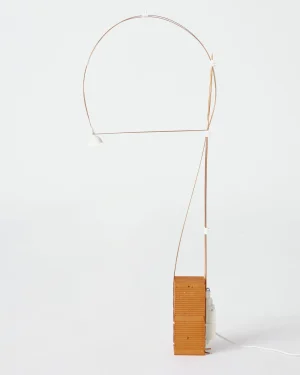
B.A.R.E Series Table Lamp in Brick and Copper
By Lucas Muñoz Muñoz
€250 -
 In stock
Cofit-20 Table Lamp In Coal Concrete
By Atelier Haute Cuisine
€380 -
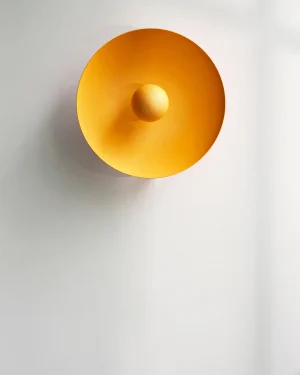 In stock
Sun Wall Lamp in Aluminum
By Anne Nowak
€1.340 -
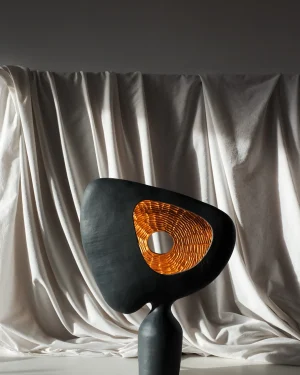
Olethros Table Lamp in Stoneware
By Andrei Clontea STUDIO
€1.000 -
 In stock
L’Été Ceramic Wall Light
By Katia Langeard
€350 This product has multiple variants. The options may be chosen on the product page -
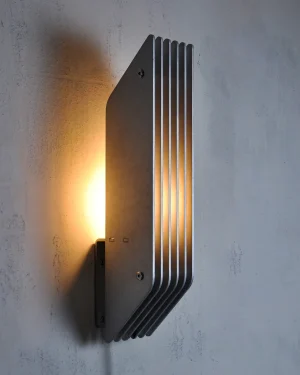 In stock
Rln460 Wall Lamp in Matte Aluminium
By MLK Furniture
€390 -

Original Lamp 1 Floor Lamp in Parota Wood and Textile
By Daniel Orozco Estudio
€1.899 This product has multiple variants. The options may be chosen on the product page -
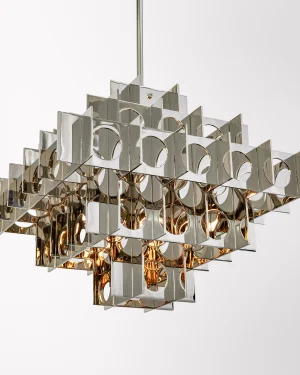
Tenfold 5 T Pendant Lamp in Stainless Steel and Aluminum
By Luft Tanaka Studio
€4.440 - €11.000 This product has multiple variants. The options may be chosen on the product page -

The Queen Double Floor Lamp in Gold-leaf and Rust Steel
By Mammalampa
€1.151 -
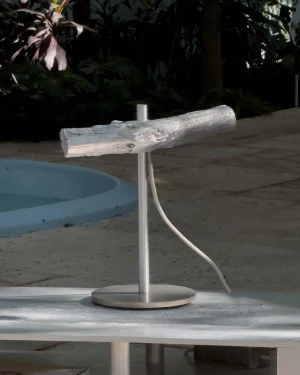 In stock
Aluminum Veneer Table Lamp in Cast Aluminum
By Bureau.parso
€1.400 -

Pill1200 Floor Lamp in Stainless Steel
By MLK Furniture
€1.690 -
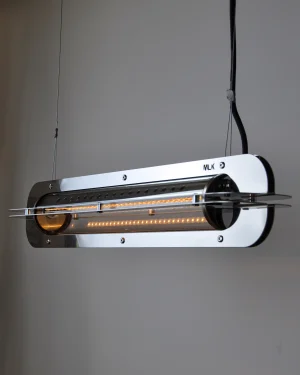
Pill600 Pendant Lamp in Mirror Stainless Steel
By MLK Furniture
€1.090 -
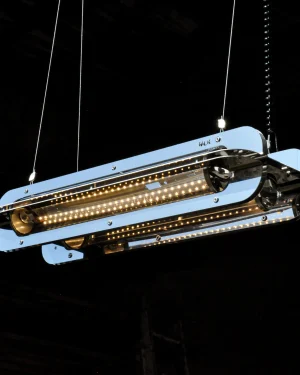
Pill600x2 Pendant Lamp in Mirror Stainless Steel
By MLK Furniture
€1.890 -
 In stock
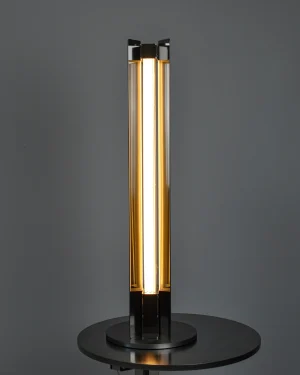
Ne600/145 – Mat Stainless Steel & Acrylic Lamp
By MLK Furniture
€990 -
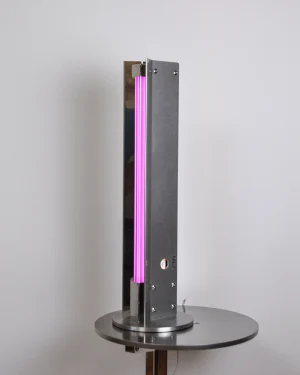
Ne600/145 Floor Lamp in Stainless Steel and Purple Acrylic
By MLK Furniture
€1.090 -
 In stock
Handrail Table Lamp in Stainless Steel
By studio re.d
€440 -

Onda Copper Wall Sconce in Raku Ceramic
By arrived aliens
€2.200 This product has multiple variants. The options may be chosen on the product page -
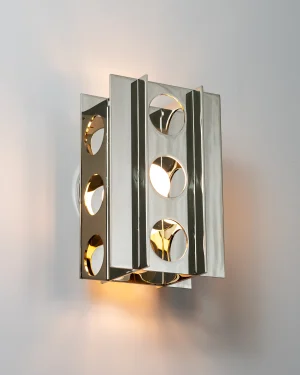
Tenfold 3T Mirror Wall Sconce in Steel and Aluminum
By Luft Tanaka Studio
€1.540 -
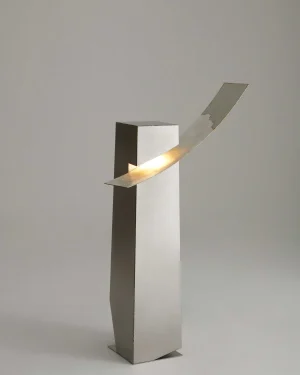
Shining No.2302 Floor Lamp in Stainless Steel
By Park Eunchong Studio
€3.200 -
 In stock
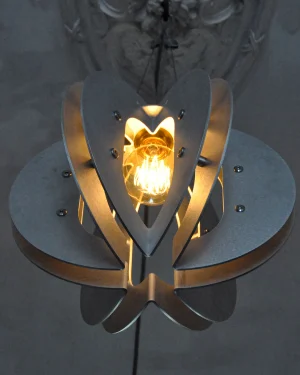
D300 Lampion Pendant Lamp in Matte Aluminum
By MLK Furniture
€390 -
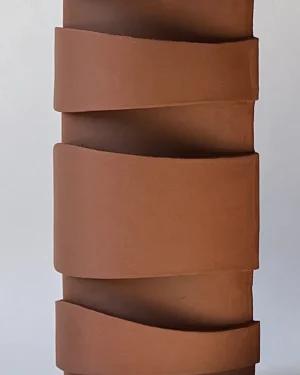
Layered Landscape – Ceramic Wall Lights
By Katia Langeard
€348 -
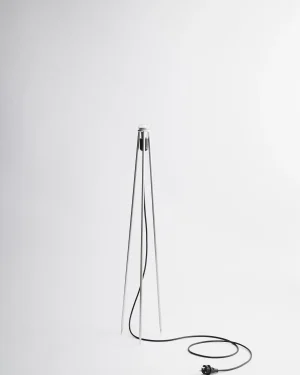
Trilight 100 Floor Lamp in Aluminum
By Obscure Objects
€760 -
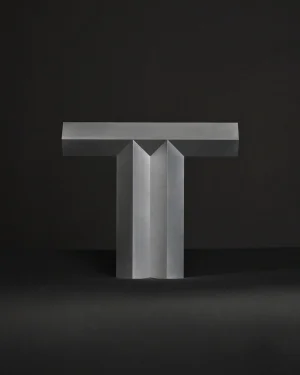
Sculptural Table Lamp in Aluminum
By NOSTUDIO
€620 - €650 This product has multiple variants. The options may be chosen on the product page -

Tenfold Table Lamp in Aluminum and Mahogany Wood
By Luft Tanaka Studio
€3.900 -
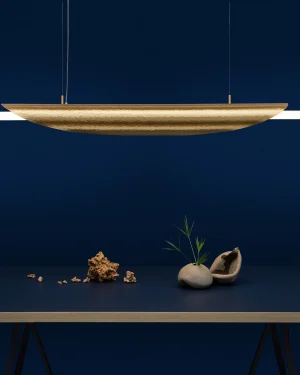 In stock
Taco De Luz Satin Brass Pendant Lamp in Brass
By Studio Aristotelis Barakos
€5.400 -
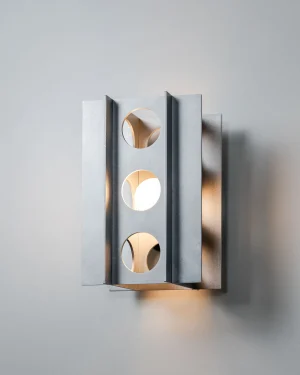
Tenfold 3T Satin Wall Sconce in Steel and Aluminum
By Luft Tanaka Studio
€865 -
![[float] Sculptural Ceiling Lamp in Concrete and Stainless Steel mounted on the ceiling, front view.](https://media.adorno.design/wp-content/uploads/2025/08/07172202/shopcasestudios.com-montiert2_1_-300x375.webp)
[float] Sculptural Ceiling Lamp in Concrete
By case studios
€2.700 -
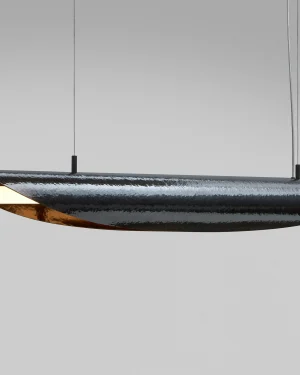
Taco De Luz Black Patinated Brass Pendant Lamp in Brass
By Studio Aristotelis Barakos
€5.900 -
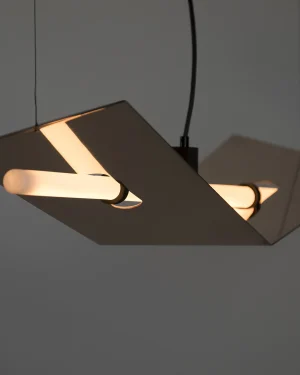
Bird of Prey Ceiling Lamp in Bronze
By Atelier Haute Cuisine
€3.700 -

Curva Floor Lamp in Guarango Wood and Bronze
By Laluz Handcraft
€3.600 -
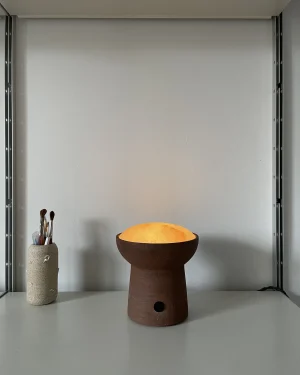 In stock
Stoneware Salt Lamp
By Isabella Artale
€600 -
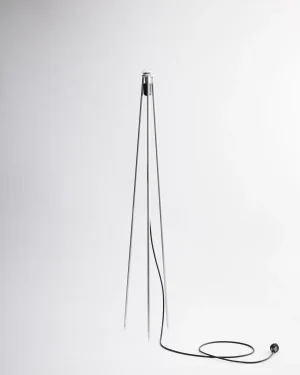
Trilight 130 Floor Lamp in Aluminum
By Obscure Objects
€800 -

Tenfold Low Table Lamp in Aluminum
By Luft Tanaka Studio
€3.000 -

Fos 05 Pendant Lamp in Wood and Marble
By Daniel Orozco Estudio
€1.390 -
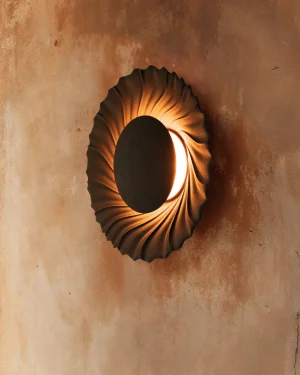 In stock
Sun Vxs 01 — Organic Sand Wall Light By Rollo Studio
By Rollo Studio
€880 -
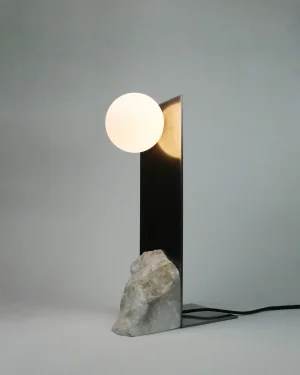 In stock
Himalaya Lunar Vertical Table Lamp in Alabaster
By HEAKO
€3.300 -
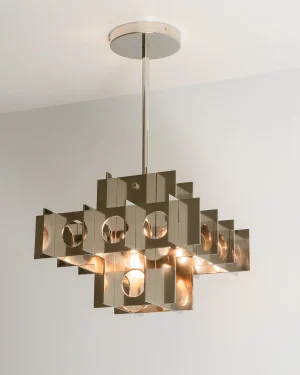
Tenfold 3 T B Pendant Lamp in Stainless Steel and Aluminum
By Luft Tanaka Studio
€2.895 - €8.675 This product has multiple variants. The options may be chosen on the product page -
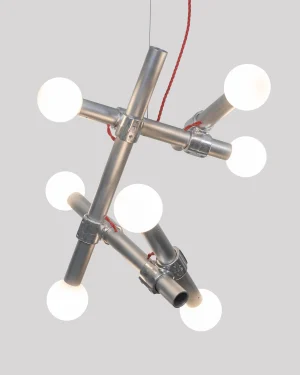
Pipe Dream Chandelier in Aluminum and Glass
By Luft Tanaka Studio
€3.655 This product has multiple variants. The options may be chosen on the product page -
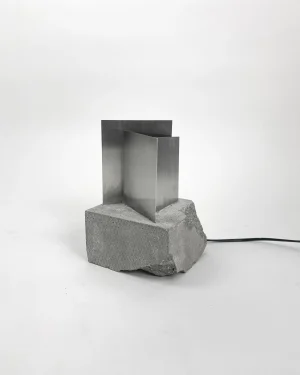
Sculptural Table Lamp in Stainless Steel and Concrete
By case studios
€820 -
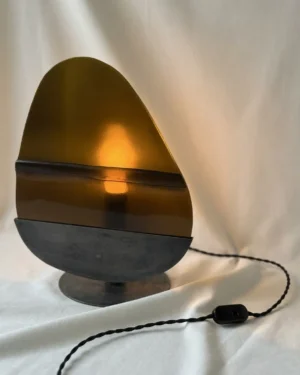 In stock
Veilleur Lp1 Table Lamp In Steel And Glass
By Louise Hurth
€1.600 -
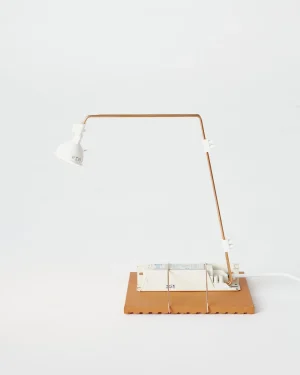 In stock
B.A.R.E Series ‘Small Simple’ Table Lamp in Brick and Copper
By Lucas Muñoz Muñoz
€150 -
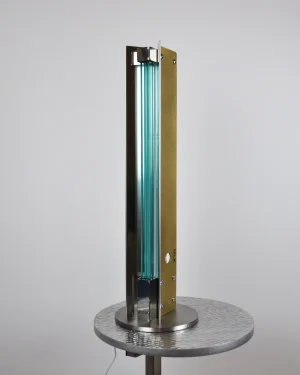 In stock
Ne600/145 Table Lamp in Brass and Blue Acrylic
By MLK Furniture
€1.190 -
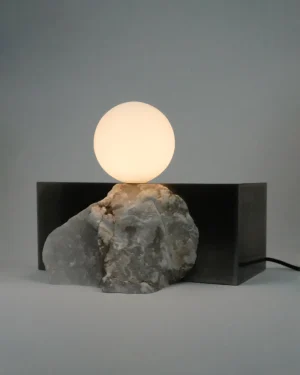 In stock
Himalaya Lunar Horizontal Table Lamp in Alabaster
By HEAKO
€3.200 -
 In stock
Ding Dong 01 Table Lamp in Ceramic
By Luft Tanaka Studio
€1.442 -
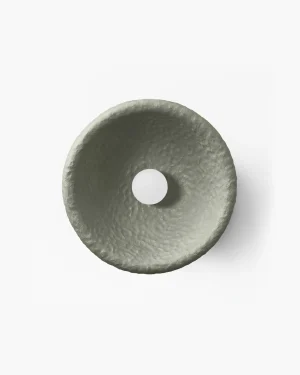 In stock
Soniah Wall Sconce in ZTISTA
By FAINA
€1.050 - €1.250 This product has multiple variants. The options may be chosen on the product page -
 In stock
La Cauna Tesa Table Lamp in Concrete
By Pierre Klein
€800 -
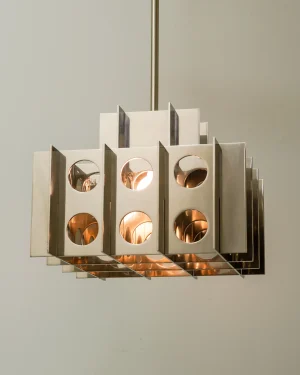
Tenfold 3 T A Pendant Lamp in Stainless Steel and Aluminum
By Luft Tanaka Studio
€2.895 - €8.675 This product has multiple variants. The options may be chosen on the product page -

Ilumina Pendant Lamp in Ceramics
By Popdots Studio
€330 -
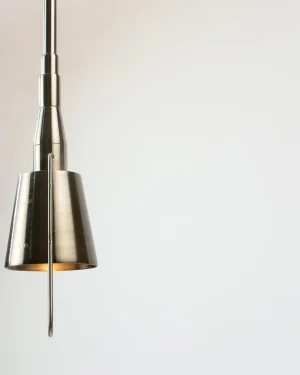
Suspension Pendant Lamp in Stainless Steel
By Szostak Atelier
€1.000 -

Cypress #2 Floor Lamp in Cypress Wood
By Studio Kloak
€4.000 -
 In stock
Peony Floor Lamp in Fiber-cement
By Donatas Žukauskas
€2.450 -
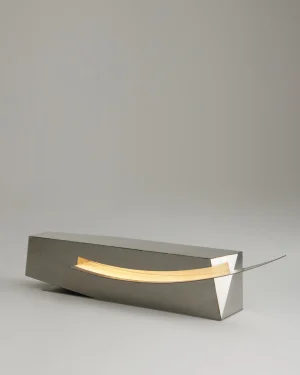 In stock
Shining No.2301 Floor Lamp in Stainless Steel
By Park Eunchong Studio
€3.200 -
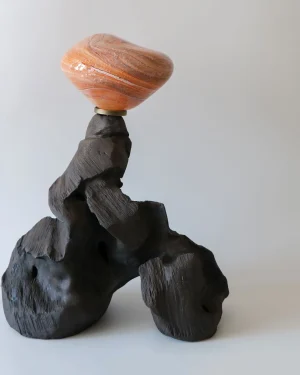 In stock
Abyss No. 27 Table Lamp in Stoneware
By Ceren Gürkan
€1.900 -
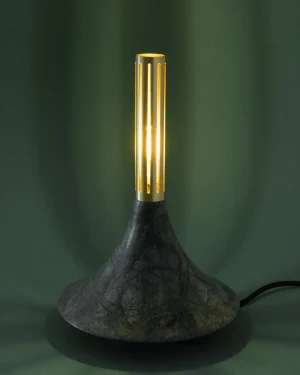 In stock
Dervish Table Lamp in Marble and Brass
By Boo Design Studio
€475
Brutalist lamps carry the raw, weighted logic of brutalist architecture into a single object on a table or a floor: cast and welded metal, textures that recall poured concrete or stacked brick, forms that favor mass over ornament. Studios working in aluminum, steel, copper and dense ceramic build these pieces through metalwork, welding, CNC milling and hand-building, so the surface often keeps the trace of the tool or the mold. The result is a lamp that reads as sculpture in daylight and still does the ordinary work of throwing light after dark.
What defines a brutalist lamp
The style borrows its vocabulary from postwar concrete architecture: blunt volumes, visible seams, a preference for gray, black and brown over bright color. A brutalist lamp usually sits heavy in the hand, its base thick enough to anchor a room rather than perch in it. Where other styles hide the join, brutalist work often leaves the weld, the rivet or the grain of a cast surface exposed.
Materials, finishes and editions found in this style
Across the wider lamp range on ADORNO, brutalist pieces lean on a narrower, harder palette than most other styles:
- Materials: aluminum, steel, copper, ash and mahogany wood, ceramic, brick
- Colors: black, silver, gray, dark gray, brown, cobalt blue
- Techniques: metalwork, welding, CNC milling, wood carving, glazing, hand-building
- Editions: open editions, limited editions and unique, one-off pieces
Metal dominates the style, which is why much of what sits here overlaps with lamps built from steel, brass or aluminum; ceramic and brick-finished pieces bring a rougher, more matte counterpoint to that cold metal surface.
How to choose a brutalist lamp
Scale matters more here than in most lighting: a brutalist base is rarely small, and a piece that looks right on a side table can overwhelm a narrow shelf. Check the finished height against the surface it will sit on, since these lamps are built to be seen at eye level as much as to cast light downward. A matte, oxidized or sandblasted metal finish will read quieter in a room than a polished one, which catches reflections and competes with other objects nearby.
Think about the light itself as well as the body: a brutalist shade in concrete-toned ceramic or solid metal often directs light narrowly, so the piece works better as an accent than as a room's only source of light.
Where a brutalist lamp belongs
These pieces suit rooms built around solid materials and few bright colors: a study with dark wood, a hallway with stone or concrete flooring, a living room already furnished in oak, leather or steel. In a living room setting, a single brutalist lamp on a console or low table can carry the same weight as a larger piece of furniture, standing apart from softer textiles and upholstery.
Because the style reaches beyond lighting, a lamp in this material language often pairs with tables, shelving or seating built with the same rough, weighted finishes, letting one room share a single material logic across several pieces.
Caring for metal, ceramic and brick finishes
Raw or oxidized metal will keep changing color slightly with handling and air exposure; a dry cloth and the occasional light coat of wax keep that patina even rather than patchy. Glazed ceramic wipes clean with a damp cloth, while unglazed or brick-textured surfaces should stay dry to avoid staining. Keep any brutalist piece away from direct, prolonged moisture, and dust metal joins and welded seams with a soft brush rather than an abrasive cleaner.
For a broader view of the style beyond lighting, the full range of brutalist pieces on ADORNO spans furniture, seating and objects built from the same materials and the same unpolished logic.
How do I choose a brutalist lamp?
Look at mass and surface before anything else: cast aluminum, welded steel or brick-like ceramic should feel heavy and deliberate. Let the form suit the room's scale, since these lamps read as sculpture as much as light source.
What materials are brutalist lamps made from?
Most are worked in aluminum, steel, copper or dense ceramic, sometimes combined with concrete-like finishes. These materials take a matte, raw surface that is central to the brutalist look, rather than a polished one.
How do I care for a brutalist lamp?
Wipe metal surfaces with a dry or slightly damp cloth and avoid abrasive cleaners that strip patina. Ceramic bodies should stay dry inside the base to protect the wiring.
What size or height should I choose?
Table versions generally sit between 12 and 24 inches tall, while floor models run from 50 to 65 inches. Check the specific measurements on each piece, since brutalist forms vary widely in footprint and weight.
Which rooms suit a brutalist lamp?
Their weight and raw surfaces suit living rooms, studies and entryways where a single strong object can anchor the space. They pair well with stone, wood and concrete, less so with delicate or highly decorated interiors.
How does buying through ADORNO work, including shipping and returns?
Shipping is insured and worldwide, and every lamp arrives with a certificate of authenticity. Returns are accepted within 14 days, except on made-to-order pieces, and ADORNO offers a lowest-price guarantee.