
-
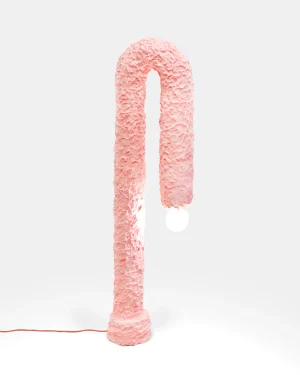 In stock
Lampadulure Pink Floor Lamp in Metal
By BehaghelFoiny Studio
€1.700 -
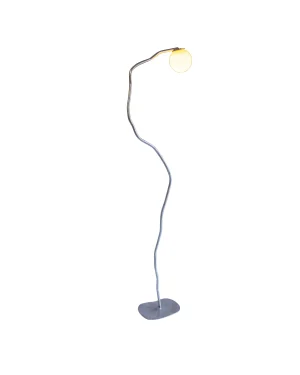
Free Form Floor Lamp in Aluminum
By Six Dots Design
€1.400 -

Fat Op No. 001 Floor Lamp in Ceramic
By Pani Jurek STUDIO
€1.539 -
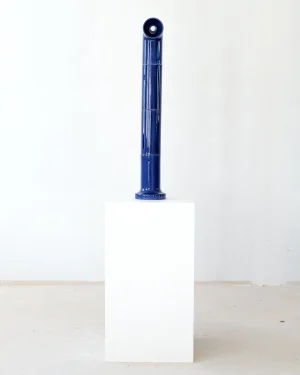
Slim Op Four Piece Floor Lamp in Ceramics and Porcelain
By Pani Jurek STUDIO
€1.045 This product has multiple variants. The options may be chosen on the product page -

Vine Floor Lamp in Epoxy
By Ryan Mercer
€3.805 -

Fat Op No. 001 Four Piece Floor Lamp in Ceramic
By Pani Jurek STUDIO
€2.313 -

Biggest Floor Lamp in Resin and Epoxy Clay
By Ryan Mercer
€3.488 -

Fat Op No. 002 Four Piece Floor Lamp in Ceramic
By Pani Jurek STUDIO
€2.313 -
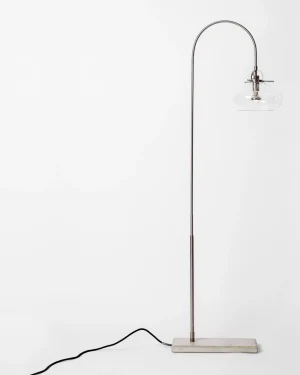
Art Deco Floor Lamp in Glass, Stainless Steel and Concrete
By Szostak Atelier
€2.100 -
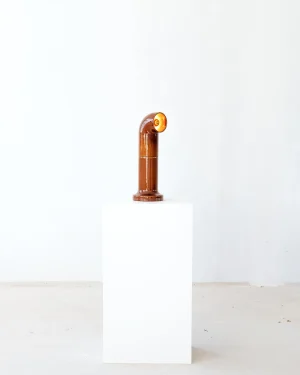
Slim Op Table Lamp in Ceramics and Porcelain
By Pani Jurek STUDIO
€765 This product has multiple variants. The options may be chosen on the product page -

Tentacle Floor Lamp in Resin
By Ryan Mercer
€3.171 -

Fat Op No. 001 Three Piece Floor Lamp in Ceramic
By Pani Jurek STUDIO
€1.926 -
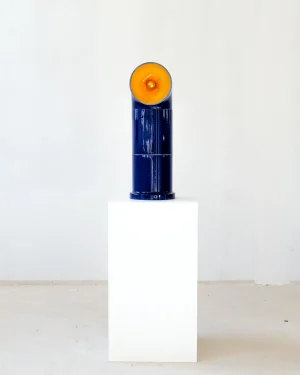
Fat Op No. 002 Three Piece Floor Lamp in Ceramic
By Pani Jurek STUDIO
€1.926 -
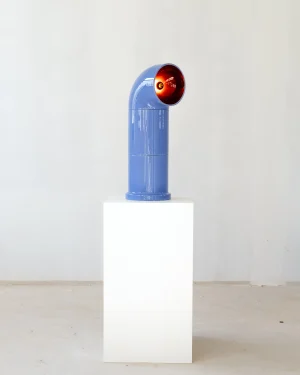
Fat Op No. 004 Three Piece Floor Lamp in Ceramic
By Pani Jurek STUDIO
€1.926 -
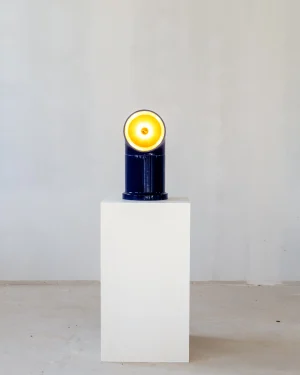
Fat Op No. 002 Two Piece Table Lamp in Ceramic
By Pani Jurek STUDIO
€1.539 -
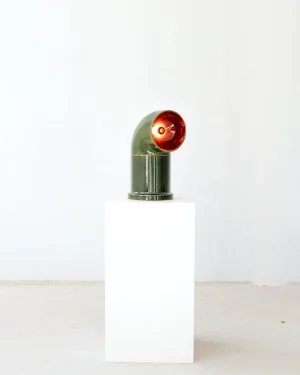
Fat Op No. 003 Two Piece Table Lamp in Ceramic
By Pani Jurek STUDIO
€1.539 -
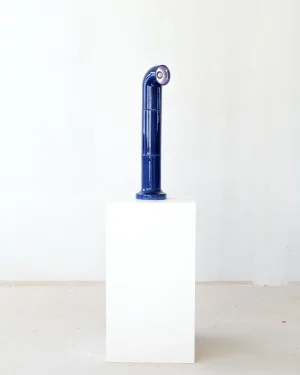
Slim Op Three Piece Table Lamp in Ceramics and Porcelain
By Pani Jurek STUDIO
€910 This product has multiple variants. The options may be chosen on the product page -

Fat Op No. 004 Two Piece Table Lamp in Ceramic
By Pani Jurek STUDIO
€1.539
Designer Arc and Arched Floor Lamps
An arc lamp solves a problem no other lamp can. It carries its light source away from its base on a curved or cantilevered arm, so light arrives over a sofa, a table or a chair without anything mounted overhead and without a side table underneath. In a rented flat, or a room with no ceiling point where you need one, it is the only piece of furniture that will do the job.
The selection here is broader than the polished-metal arc of the mid-century archetype. Independent designers approach the curve as sculpture: aluminum and steel bent into freeform loops, stacked ceramic and porcelain columns that lean rather than bend, paper pulp and wood forms that arc organically, and pieces closer to standing sculpture than to lighting hardware. Many are unique or limited-edition work, and some are ready to ship.
For upright and tripod formats, see the full floor lamps collection; for pieces that combine light with a surface, floor lamps with a table.
Reach, Height and Balance
An arc lamp is bought on two measurements, and neither is the one people check first.
- Reach: how far the light sits horizontally from the base. This decides whether the lamp clears the depth of your sofa or the width of your table. Measure from where the base will stand to where you want the light, and compare it against the listed dimensions before anything else.
- Height under the arm: keep the lowest point of the shade around 130–150 cm from the floor when the lamp arcs over seating, so nobody meets it standing up. Over a dining table, allow 90–100 cm above the tabletop.
- Base weight and footprint: the arm is a lever, and the base is the counterweight that stops it becoming one. Long-reach pieces need real mass — the marble block of the classic 1960s design existed for exactly this reason. Check listed weight and base dimensions, especially on hard floors where a base can slide.
- Where the base stands: 20–30 cm clear of the sofa arm or the chair, out of the walkway, with the cable running along a wall rather than across the route people take.
- Overall scale: an arc lamp reads as one large gesture in a room. In a small space that can be an advantage, since it replaces both a ceiling fixture and a side lamp — but the curve needs air around it to be legible.
Light and Layering
- Reading beneath the arc: 400–800 lumens, with the shade angled down onto the seat rather than into the room.
- Ambient use: 200–500 lumens is enough where the lamp is a sculptural presence more than a working light.
- Color temperature: 2700 K for living rooms; slightly cooler only where the lamp lights a work surface.
- Dimming: worth having, since an arc lamp is often the main light in the seating area. Check lamp, bulb and dimmer compatibility.
- Bulbs: standard E14 or E27 sockets let you choose warmth and re-lamp for the life of the piece; integrated LED allows slimmer arms but cannot be replaced.
Even a large arc lamp works better with company. A table lamp or a pair of wall lamps at lower level will fill in the shadows the arc leaves behind it.
Explore the full collectible lighting collection, or tell our curation team the reach and height you need and we will find pieces that fit.
What is an arc floor lamp?
An arc floor lamp has a curved or cantilevered arm that carries the light source away from the base, so the light hangs over a seat or a table while the lamp stands to one side. The point of the format is reach: it puts light where a pendant would go, without wiring, drilling or a ceiling point.
What is an Arco lamp?
"Arco" refers to the 1962 design by Achille and Pier Giacomo Castiglioni for Flos — a steel arm arcing from a solid marble block, conceived precisely so a table could be lit from a distance without touching the ceiling. It defined the category, which is why the name is still used as a shorthand for the whole format. We do not sell that lamp or reproductions of it; the pieces here are original contemporary designs by independent studios, several of which interpret the same idea in ceramic, paper, wood and cast aluminum rather than steel and marble.
Where should an arc floor lamp go?
Behind or beside a sofa, an armchair or a chaise, with the base 20–30 cm clear of the furniture and the arm reaching over the seat. Also effective over a low coffee table, in a corner where two seats meet, or over a dining table in a room with no central ceiling point. Keep it out of walkways — the arm occupies space at head height, which a normal floor lamp does not.
How much reach do I need?
Measure from where the base can physically stand to the point you want lit. For a standard sofa, expect to need somewhere around 80–120 cm of horizontal reach to bring the light over the middle of the seat; for a dining table, enough to reach the center from beyond the chairs. Reach and height are listed on product pages, and it is the single specification most worth checking before you buy.
Can an arc lamp replace a ceiling light?
Over a specific area, yes — that is its purpose. It will light a sofa, a reading chair or a table as well as a pendant would, with no installation, and it moves with you when you do. What it will not do is light a whole room evenly, so keep a second, lower source for the corners.
Can I use one over a dining table?
Yes, and it is one of the format's best uses in a room with no ceiling point above the table. Allow 90–100 cm between the tabletop and the lowest point of the shade, position the base so it does not interfere with chairs being pulled out, and be sure the base is heavy enough that a knock from a chair leg will not shift it.
Will an arc lamp tip over?
A well-designed one will not, because the base is calculated as a counterweight for the arm. The risk comes from long reach paired with a light base, or a base sliding on a hard floor. Check listed weight and base dimensions, add felt pads on wood or stone floors, and treat any lamp with a long cantilever as furniture rather than an accessory in a home with children or large dogs.
Are the arms adjustable?
Some pivot, rotate or telescope; many do not. In collectible design the curve is usually a fixed, considered form rather than a mechanism, so plan the position around the geometry of the piece. If adjustability matters, a swing-arm floor lamp will serve you better than an arc.
Are arc lamps suitable for small rooms?
Often yes, because one piece does the work of a ceiling fixture and a side lamp, freeing surface space. The caution is visual rather than practical: an arc is a single large gesture, so it needs enough clear wall or floor around it to read as intentional rather than crowded. Measure the swing of the arm against the room, not just the footprint of the base.
Which materials are in this selection?
Cast and bent aluminum and steel for structural curves; stacked ceramic and porcelain for pieces that lean and balance rather than bend; paper pulp for soft, diffused light on a light frame; oak, cedar and tropical hardwoods for organic arcs; plus bio-plastics, epoxy and wool in more experimental work. Weight varies enormously between them, which affects both stability and shipping.