
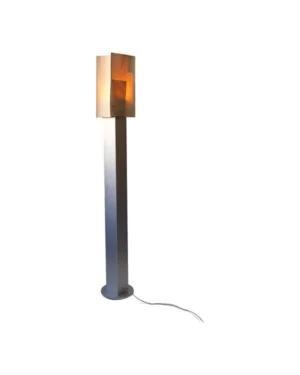
-
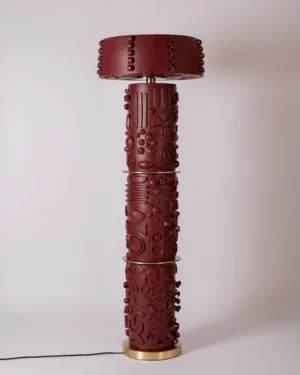
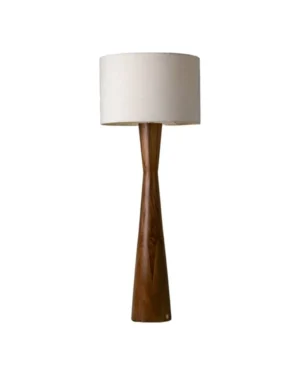
Sculpt Floor Lamp In Hand-built Stoneware
By Harshita Jhamtani Designs
€7.880 -
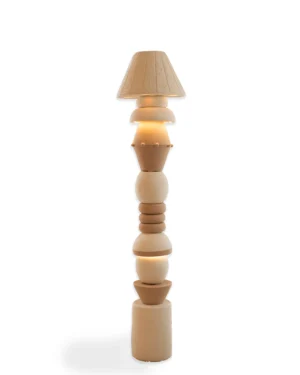
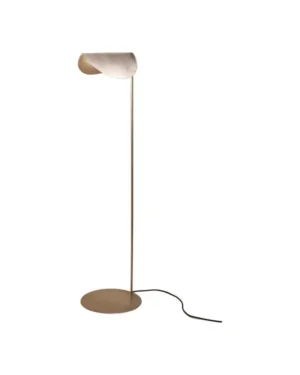
Totem Floor Lamp In Stoneware And Clay Paste
By Harshita Jhamtani Designs
€2.570 -
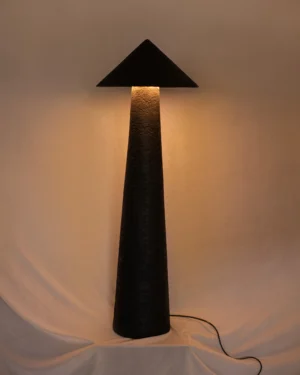
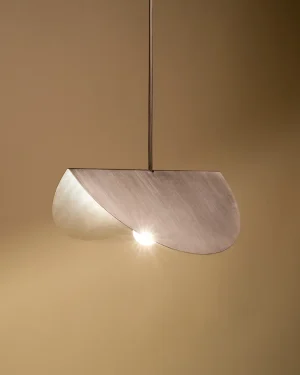
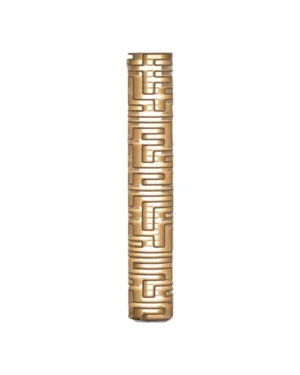
Kasa (m) Lamp In Clay Paste And Mild Steel
By Harshita Jhamtani Designs
€1.460 -
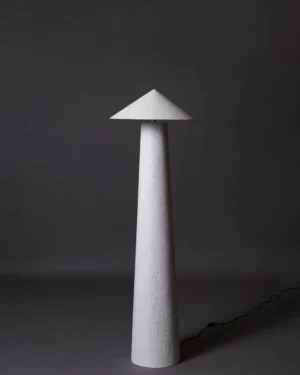
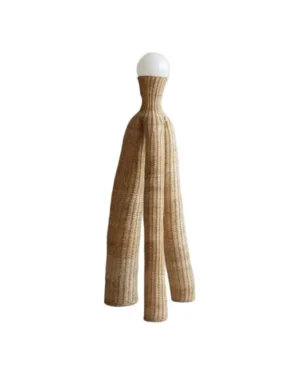
Kasa Floor Lamp In Clay Paste And Mild Steel
By Harshita Jhamtani Designs
€2.130 -
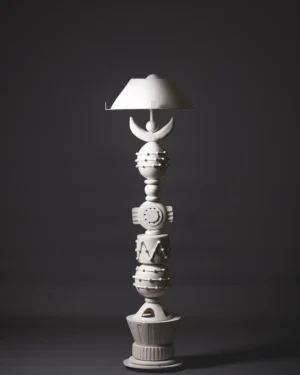
Asteroid Floor Lamp In Stoneware And Mild Steel
By Harshita Jhamtani Designs
€2.570 -
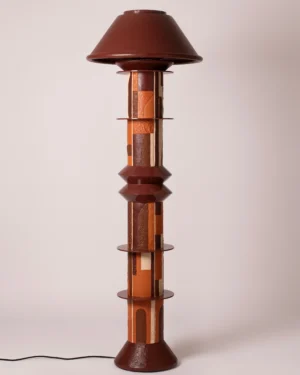
The Rouge Floor Lamp In Clay Paste And Metal
By Harshita Jhamtani Designs
€4.430 -
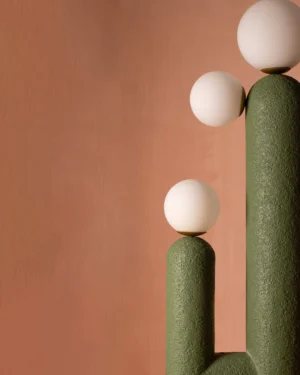
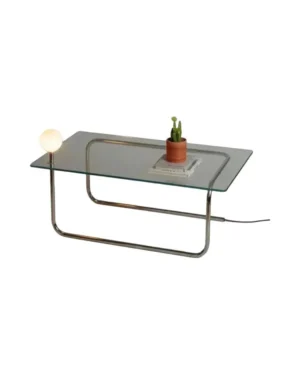
Cactus Floor Lamp In Clay Paste, Mild Steel And Glass
By Harshita Jhamtani Designs
€2.570 -
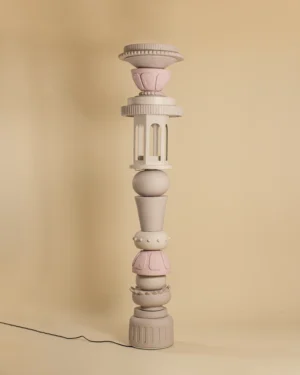
Pillar Of Ties Totem Floor Lamp In Stoneware, Clay Paste And Wood
By Harshita Jhamtani Designs
€3.780 -
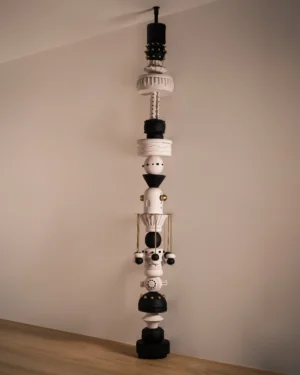
Asteroid Floor-to-ceiling Totem In Stoneware And Brass
By Harshita Jhamtani Designs
€6.900 -
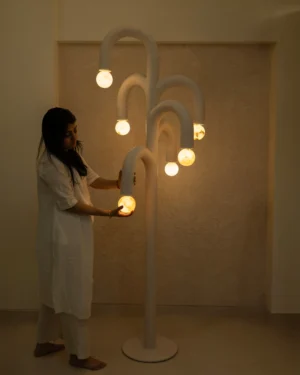
Big Cactus Floor Lamp In Clay Paste, Mild Steel And Alabaster
By Harshita Jhamtani Designs
€3.310 -
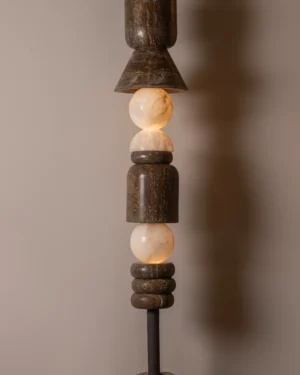
Titan Travertine Totem Floor Lamp In Travertine And Alabaster
By Harshita Jhamtani Designs
€3.070
Japandi floor lamps bring together the restraint of Japanese interiors and the warmth of Scandinavian rooms, standing on a base of mild steel, stoneware or alabaster rather than announcing themselves through ornament. The studios working on japandi floor lamps favor a single material carried through cleanly, letting the stand, the shade and the shadow do the work. Most pieces arrive as open editions, made to a steady specification rather than as one-offs.
What defines the Japandi look in a floor lamp
The style reads through restraint more than through any one material. A steel column left in its raw or blackened state, a stoneware base hand-built and left with a visible seam, an alabaster shade that lets light pass through stone rather than glass: each carries the same instinct toward plain geometry and a muted palette of off-white, charcoal, beige, cream and terracotta.
Surfaces tend to be matte rather than polished, and joins are kept honest rather than hidden. A lamp in this style rarely hides its structure behind a shade; the stand is as much a part of the composition as the light itself.
Materials and techniques you will find
Mild steel is worked by metalworkers into stands and arms, sometimes left to take on a faint patina, sometimes finished flat and matte. Stoneware bases pass through hand-building or wheel throwing before firing, which leaves each one with small variations in wall thickness and weight. Alabaster and travertine are carved from solid stone, so veining and translucency differ from block to block, while plaster composite and acrylic give studios a lighter, more even alternative where stone would be too heavy or costly.
- Metal stands in mild steel, stainless steel or brass, usually left matte
- Stoneware and plaster composite bases, hand-built or cast
- Alabaster and travertine shades, carved for a soft, filtered glow
Choosing the right scale and placement
A floor lamp in this style is chosen the way you would choose a chair: by footprint, height and the space it needs to stand clear of other furniture. Measure the gap beside a sofa arm or reading chair before deciding on a base width, and keep the shade height roughly level with the shoulder when seated, so light falls without glare.
Placement matters as much as material. These pieces suit a living room corner, a reading nook or a bedroom, standing where they can be walked around rather than pushed against a wall. For a room built around japandi floor lamps or lower seating, a single stone or stoneware base does more to ground the space than several smaller lights would.
Living with stone, steel and clay
Each material asks for a different kind of attention. Steel stands want a dry cloth and nothing abrasive, since solvents can strip a matte or blackened finish. Stoneware tolerates a damp wipe but should stay away from direct, prolonged sun, which can fade a glaze over time.
Alabaster and travertine are porous stone, so they mark if liquid sits on the surface and should be dusted rather than scrubbed. Treated this way, a stone or ceramic base ages slowly, taking on a quiet patina rather than wearing out.
For the full range of designer lighting in this style, see every Japandi piece on ADORNO, or narrow by material with metal floor lamps. Japandi floor lamps work well alongside a lower Japandi table lamp on a side table, and both sit within the wider floor lamp range for rooms that need a mix of heights. In a living room, pair one with seating lit by living room floor lamps built to the same quiet scale.
How do I choose a japandi floor lamp?
Look at the base material first: steel reads cooler and more linear, stoneware and alabaster feel warmer and heavier. Let the room's existing materials guide the choice, since japandi pieces are meant to blend in rather than stand out.
What materials are japandi floor lamps made from, and how do I care for them?
Most stand on mild steel, stoneware or alabaster. Wipe steel with a dry cloth to avoid rust, dust stoneware gently, and keep alabaster away from water, since the stone stains and etches easily.
What height should a japandi floor lamp be?
Heights vary by piece and are listed on each product page. As a general rule, a reading lamp sits near shoulder height when seated, while an ambient lamp can stand taller to wash light upward.
Which rooms suit a japandi floor lamp?
Their quiet proportion and muted palette work in living rooms, bedrooms and reading corners alike, anywhere a single steady light is wanted without competing with other furniture.
Are japandi floor lamps handmade or mass-produced?
Many stoneware bases are hand-built or wheel-thrown, and alabaster shades are carved from solid stone, so small variations in weight and surface are normal, even within an open edition.
How does shipping, returns and authenticity work when buying from ADORNO?
Shipping is insured and worldwide. Returns are accepted within 14 days, except on made-to-order pieces, and every lamp arrives with a certificate of authenticity.