-

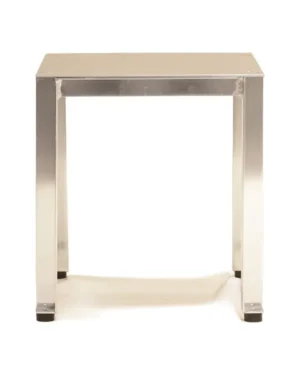
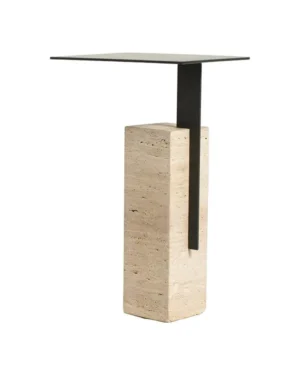
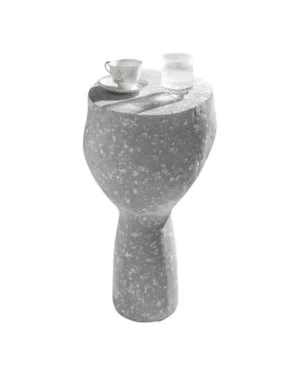
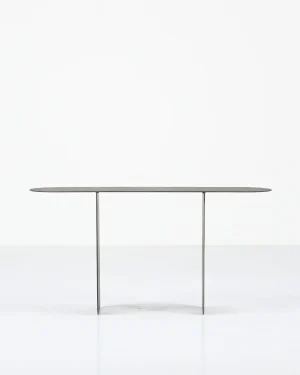
Mono Side Table in Travertine and Metal
By Yet Design Studio
€1.200 - €1.380 -
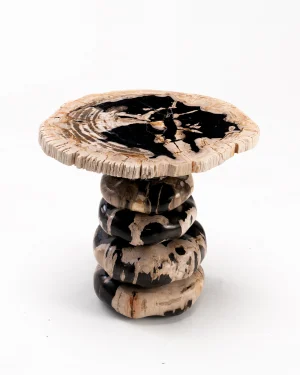
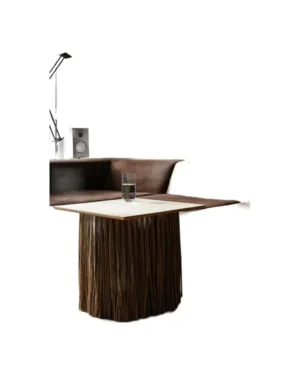
Dwayne Johnson Side Table in Petrified Wood
By Odditi
€1.480 -
 In stock
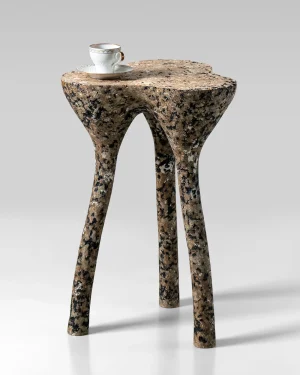
Beige Tripod Low Side Table In Paper Pulp And Cement
By Donatas Žukauskas
€1.150 -
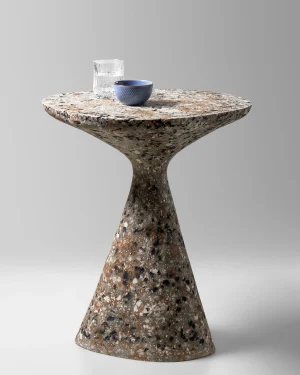
Beige Mottled Side Table In Paper Pulp And Cement
By Donatas Žukauskas
€1.100 -
 In stock
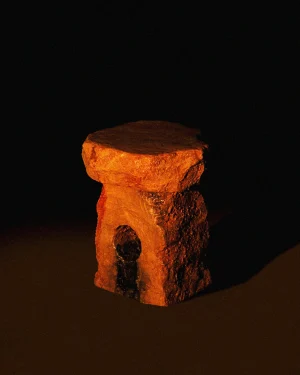
Volcán Side Table in Volcanic Stone
By LØRDAG & SØNDAG
€1.841 -
 In stock
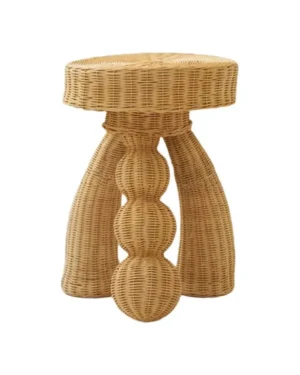
La Cauna – Escabèl 01 Stool
By Pierre Klein
€900 -
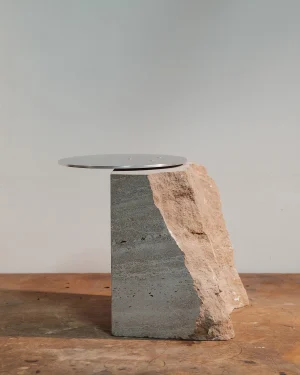
Fragments Side Table in Limestone and Aluminum
By Estudio Material
€3.300 -
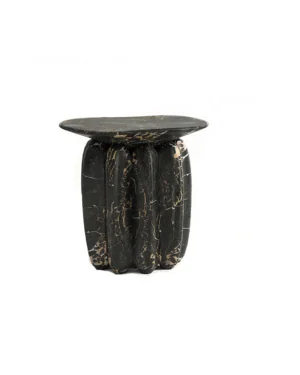
Bolero Side Table in Marble
By Alter Ego Studio
€7.260 - €8.240 -

Match! Studio Edition 001 Side Table in Marble
By please touch studio
€1.900 -

Element Side Table in Calacatta Viola Marble
By Vincent Mazenauer
€5.500 -
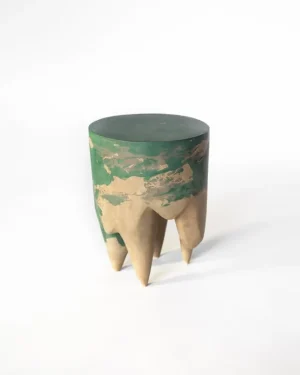
Dark Matter Side Table in Sandstone and Pigmented Gypsum
By Studio S II
€3.688 - €5.823 -
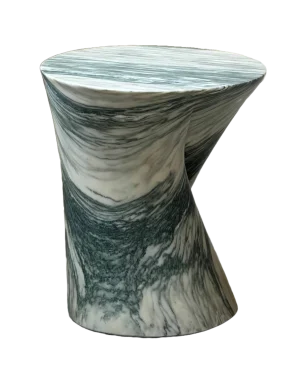 In stock
Departed Side Table in Cipollino Marble
By Studio TOOJ
€12.200 -
 In stock
Strata Low Square Side Table In Marble
By Iyo Hasegawa
€4.500 -
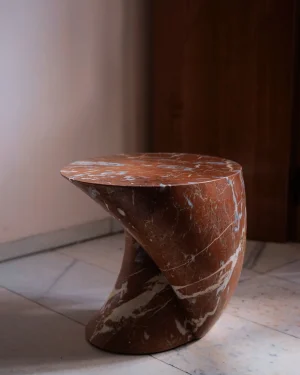 In stock
Departed Side Table in Rosso Francia Marble
By Studio TOOJ
€9.600 -
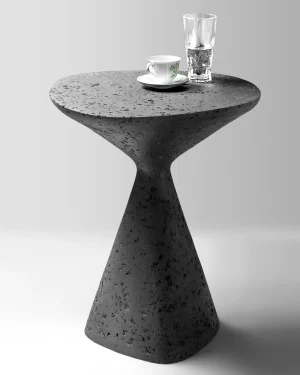
Black Mottled Side Table In Paper Pulp And Cement
By Donatas Žukauskas
€1.100 -
 In stock
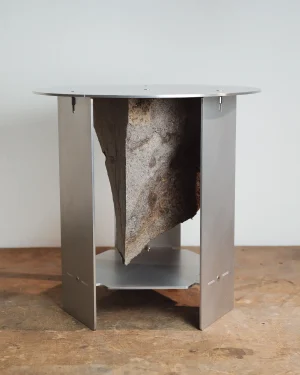
Fuera de Lugar Side Table in Natural Stone and Aluminum
By Estudio Material
€1.900 -

Cadena Side Table in Toros Black Marble and Steel
By Studio Mohs
€1.850 -

Coraza Side Table in Volcanic Stone and Stainless Steel
By Studio Mohs
€2.250 -

Kyushu Side Table in Travertine
By Lebanto
€2.195 - €3.175 -
 In stock
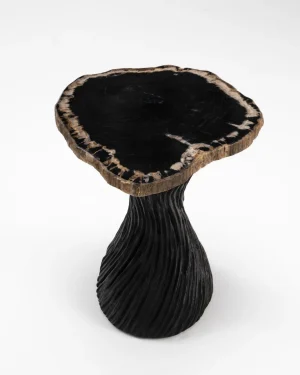
Twisted Fantasy Side Table in Petrified Wood and Acacia
By Odditi
€1.490 -
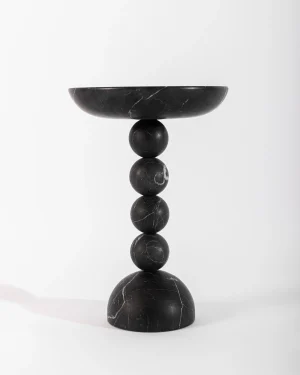
ZM Baby Black Totem Side Table in Black Marble
By Daniel Orozco Estudio
€1.040 -

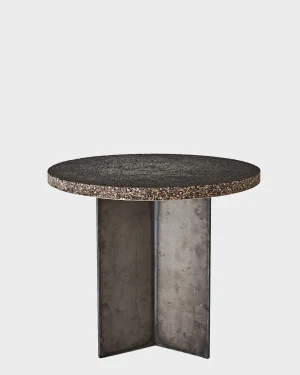
Black Still Column Side Table in Paper Pulp, Cement and Oak
By Donatas Žukauskas
€1.550 -
 In stock
Temporal Tarmac Side Table in Asphalt and Iron
By Lucas Muñoz Muñoz
€20.000 -
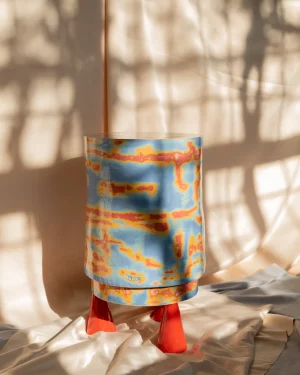 In stock
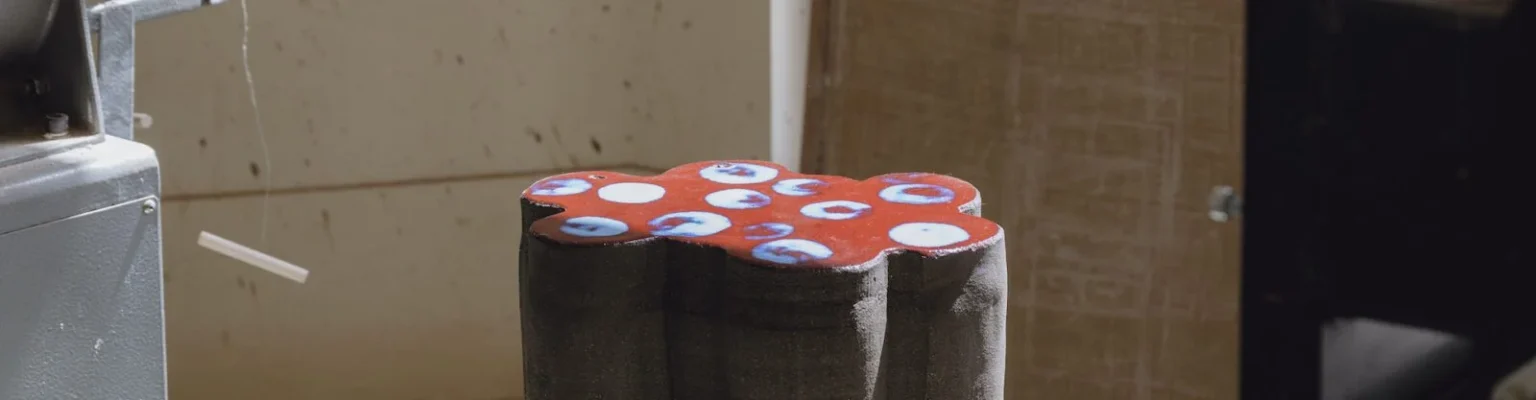
The Oven Side Table in Glazed Stoneware
By UAU Studio
€1.670 -
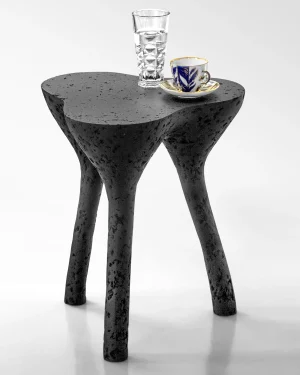
Black Tripod Low Side Table in Paper Pulp and Cement
By Donatas Žukauskas
€960 -
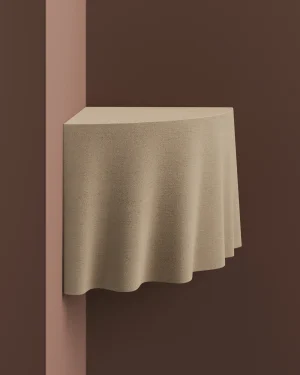
Duk Side Table in Quartz Sand
By Studio TOOJ
€2.800 -
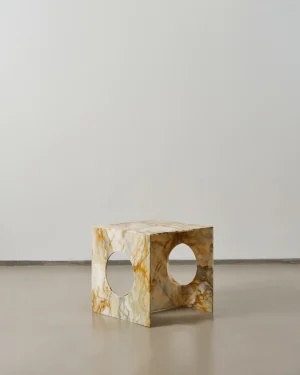
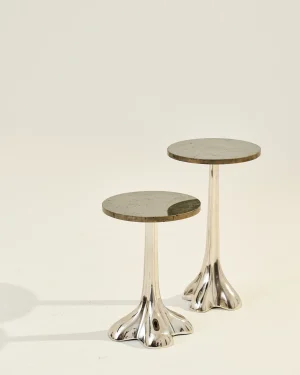
Hera Side Table in Sky Blue Marble
By Studio Mohs
€2.703 -
 In stock
Theia Side Table in Golden Pyrite and Brass
By LMNOH
€2.100 -

Eocene Side Table in Cast Aluminum and Natural Stone
By Epoche Studio
€5.225 -

Liso Side Table in Brushed Diabase Volcanic Stone
By Studio Mohs
€1.000 -
 In stock
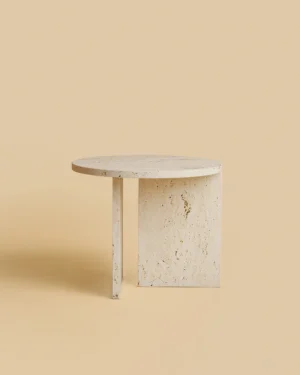
Forma Seconda Side Table in Steel and Onyx
By DFdesignLab
€1.370 -
 In stock
Kyushu Side Table in Travertine
By Lebanto
€2.400 -
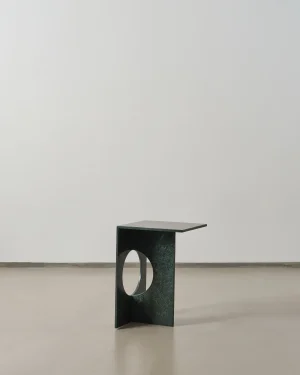
Ola Side Table in Diabase Volcanic Stone
By Studio Mohs
€2.068 -

Black Tripod High Side Table In Paper Pulp And Cement
By Donatas Žukauskas
€1.150 -
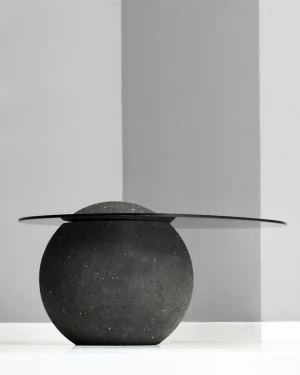
Cuitzeo Side Table in Cantera Stone and Smoked Glass
By Drusch Design
€2.500 -

Sherman Side Table in Roman Travertine and Oak
By Lebanto
€1.650 -
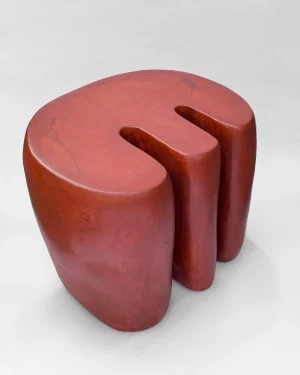
Organic Side Table in Gypsum
By Studio AOAO
€4.000 -
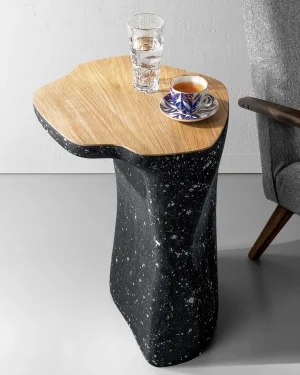
Black Still Form Side Table in Paper Pulp, Cement and Oak
By Donatas Žukauskas
€920 -
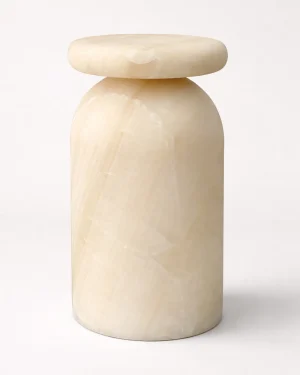
Cult Stool – Sculptural Side Table In White Onyx
By Panorammma Atelier
€2.500 -

Nucleation Side Table in White Veneciano Marble
By Drusch Design
€3.430 -
 In stock
Podium Piece #1 Side Table in Marble and Aluminum
By Cetti Studio ApS
€1.600 -

Kado Side Table in Masahua Marble
By Drusch Design
€2.656 -

Envo Side Table in Diabase Volcanic Stone
By Studio Mohs
€2.258 -
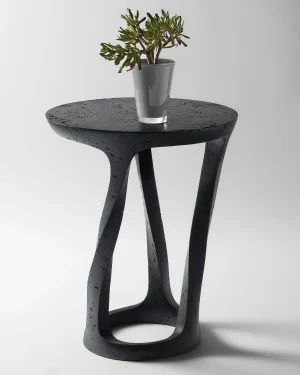
Black Bent Side Table in Paper Pulp and Cement
By Donatas Žukauskas
€2.450 -
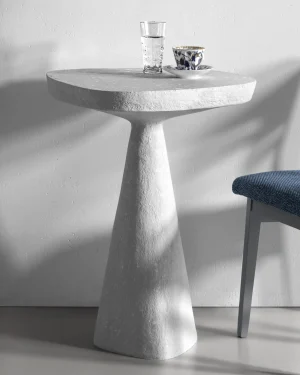
White Plinth High Side Table in Paper Pulp and Cement
By Donatas Žukauskas
€1.350 -
 In stock
Sand in Motion Slim Side Table in Sandstone and Tinted Glass
By Rive Roshan
€4.000 -
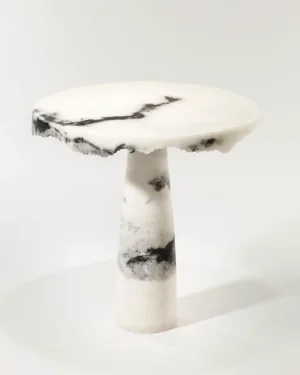
Marbled Salts Side Table in Salt and Resin
By MARBLEDSALTS studio
€4.000 -
 In stock
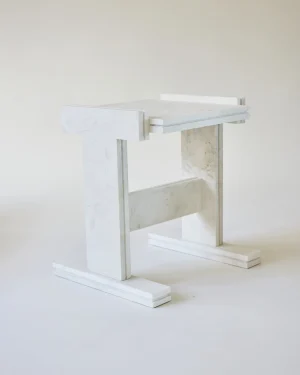
NEAVE Side Table in Limestone and White Marble
By N I S H
€5.000 -
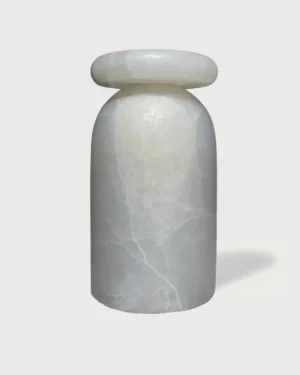
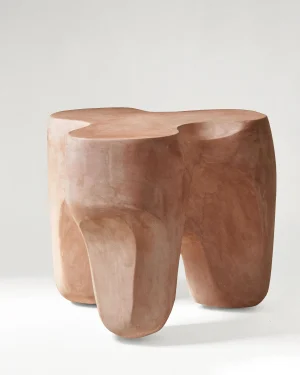
Cult Stool – Sculptural Side Table In Ice Onyx
By Panorammma Atelier
€2.500 -
 In stock
Achi Side Table in Gypsum
By Studio AOAO
€5.000 -

Vendi Side Table in Black Quartz Sand
By Rollo Studio
€4.100 -
 In stock
Marbelicious – Guatemala Marble Bench
By Millim Studio
€2.500 -
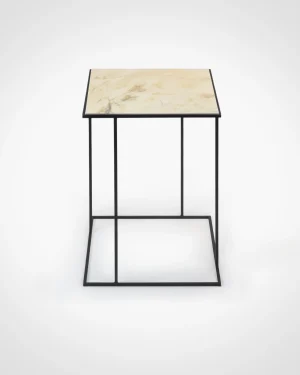
Frame Side Table in Roman Travertine and Steel
By DFdesignLab
€400 -
 In stock
Avior Side Table in Carrara Marble and Steel
By DFdesignLab
€500
Stone side tables bring weight and texture into a room that no other material quite matches, carved, cast, or hand-built by studios working across marble, travertine, volcanic stone, and concrete. Each slab or block carries its own veining, pitting, or sediment, so no two surfaces read exactly alike even within the same quarry. The result sits low and solid, built to carry a lamp, a stack of books, or a drink without shifting.
What defines stone as a material here
Natural stone forms over geological time, which is why marble shows veining, travertine shows its characteristic pitted holes, and volcanic stone carries a rougher, more granular face. Concrete, by contrast, is poured and cured rather than quarried, so its surface stays more even, though studios can texture or pigment it before it sets. Color runs from off-white and beige through gray to near-black, often following the mineral's natural palette rather than an applied finish.
Weight is part of the character. A table in stone holds its position on a rug or a hard floor, resists tipping, and ages by developing a patina rather than wearing thin. Marble and travertine are porous and can stain or etch with liquid contact, so many studios seal the surface before it leaves the workshop.
The range of stone and mineral pieces
Studios working in stone and mineral materials draw on carving, sculpting, hand-building, and concrete casting, each method leaving its own mark on the finished table. Carved stone keeps tool marks or takes a polished face, depending on how far the maker pushes the surface. Cast concrete can mimic a block's heft at a lighter weight, and some studios fold in recycled aggregate for a speckled, varied surface.
- Finishes range from honed and matte to polished and reflective
- Styles span minimalist slabs, rough-hewn brutalist blocks, and neolithic-leaning forms that read almost archaeological
- Editions include open runs, limited editions, and unique pieces where a single stone block determines the result
How to choose a stone side table
Scale matters more with stone side tables than with lighter materials, since a block that reads right in open space can overwhelm a narrow bedroom gap. Measure the space beside the seat or bed and leave enough clearance to move around the table without grazing a corner. Standard side table height sits close to the arm of a sofa or the top of a mattress, so check that figure against the piece before committing.
Finish affects both look and upkeep: a honed surface hides marks better than a high polish, which shows fingerprints and water spots more readily. Think about placement too, since a table set directly in a sunlit window can expose a sealant to repeated cycles of heat and humidity.
Where stone side tables sit well
A table in stone reads naturally beside a sofa in a living room, where its weight balances the softness of upholstery, or at the foot of a bed to support a reading lamp. In an entryway, a compact stone block can hold keys and a bowl without the fragility of glass. Across these rooms, stone side tables hold their position without needing anchoring, which is part of why studios keep returning to the material. For broader material pairings across the home, stone extends into stone furniture, stone lighting, and stone decor, letting a single material run through several rooms rather than one.
Caring for stone surfaces
Caring for stone side tables starts with prompt attention to spills, since acidic liquids like citrus or wine can etch marble and travertine even through a sealant. Clean with a damp cloth and a pH-neutral cleaner rather than household sprays, which can dull a honed or polished face over time. Resealing every year or two keeps porous stone resistant to staining, particularly on pieces used near food, drink, or plants.
For a fuller view of the material across every category, every stone and mineral piece on ADORNO gathers work beyond side tables, while the full range of side tables covers every material side by side. Those drawn to pared-back forms within stone will find a natural overlap with minimalist side tables.
How do I choose a stone side table?
Match the stone to the room's traffic: dense marble or travertine for a living room, volcanic stone or concrete for a hardier entryway. Let the table's weight and tone contrast with surrounding wood or textile pieces.
How do I care for a stone side table?
Wipe with a damp cloth and dry it, keep acidic liquids and oils off marble and travertine since they stain and etch, and use a coaster or tray for daily objects.
What height and size should a stone side table be?
Most sit between 18 and 24 inches, close to the arm height of a sofa or the mattress line of a bed, with a top wide enough to hold a lamp or a cup within reach.
Which rooms suit a stone side table?
Living rooms, bedrooms, and entryways all take well to stone, where its weight grounds a seating group or steadies a narrow hallway surface.
What is ADORNO's shipping and return policy for stone side tables?
Shipping is insured and worldwide. Returns are accepted within 14 days, except for made-to-order pieces, and each table arrives with a certificate of authenticity.
Can I order a custom stone side table through ADORNO?
Some studios take custom requests for stone and finish. Chat with the maker on the piece's page to confirm options, and note ADORNO also offers a lowest-price guarantee.