











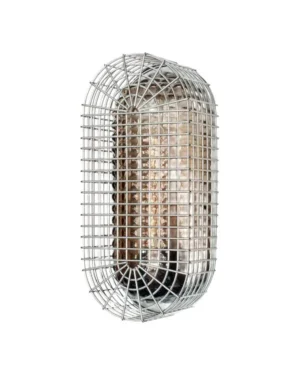
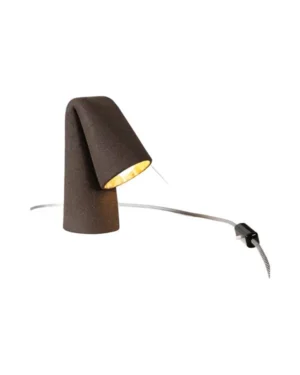

-
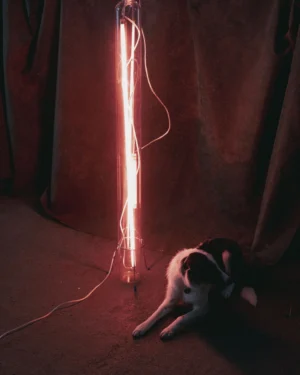 In stock
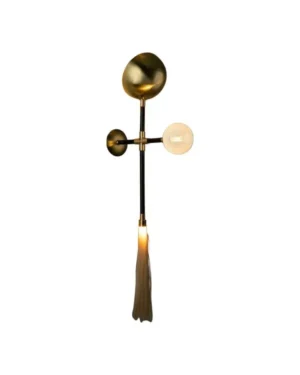
Äther Wall Lamp In Borosilicate Glass
By TUNK I Busra Tunc
€850 -
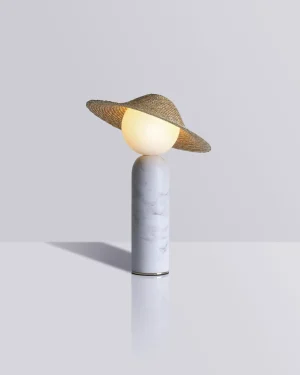 In stock
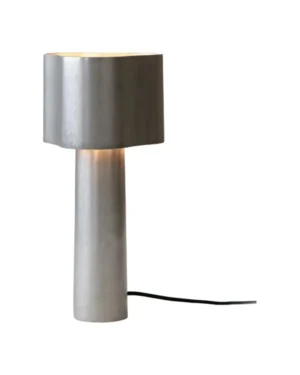
Théros 0.3 Table Lamp In Borosilicate Glass
By Studio Aristotelis Barakos
€1.100 -

Marsha 02 Pendant Lamp in Blown Glass and Steel
By MESEME by Riya Panchal
€810 -
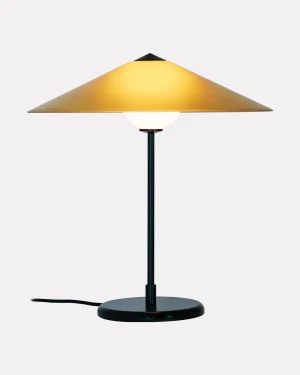
Marsha Table Lamp in Glass and Metal
By MESEME by Riya Panchal
€1.015 -
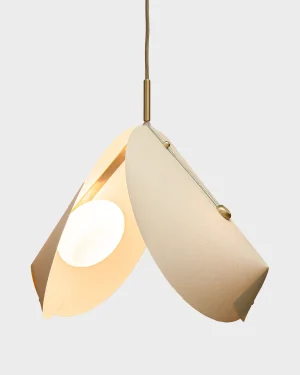 In stock
Concha Model 03 Pendant Lamp in Brass and Blown Glass
By MESEME by Riya Panchal
€434 -
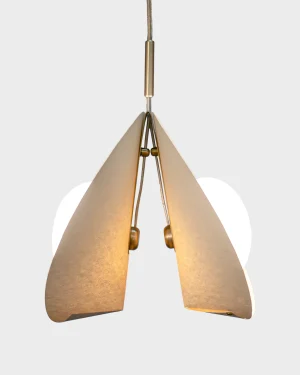 In stock
Concha Model 01 Pendant Lamp in Paper, Metals and Glass
By MESEME by Riya Panchal
€375 -

Marsha 01 Pendant Lamp in Glass and Steel
By MESEME by Riya Panchal
€839 -
 In stock
Root No. 3 Wall Sconce in Steel, Paper and Glass
By Natalie Dubrovska
€1.573 -
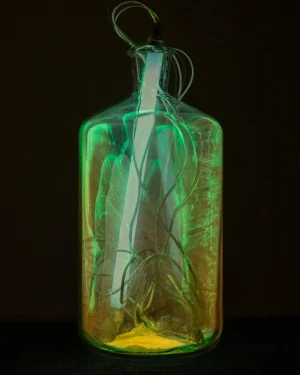 In stock
Äther Lucifer
By TUNK I Busra Tunc
€500 -
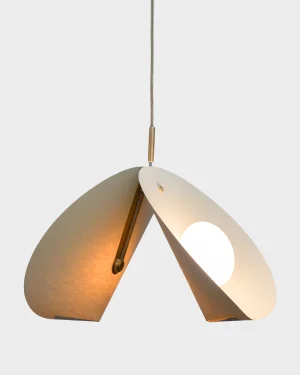
Concha Model 02 (Medium) Pendant Lamp in Paper and Brass
By MESEME by Riya Panchal
€434 -
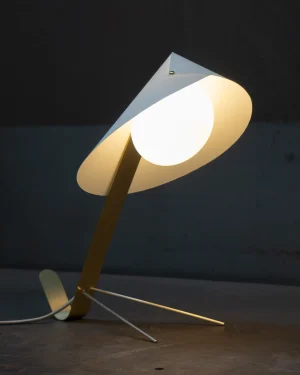
Mantis Table Lamp in Layered Paper and Brass
By MESEME by Riya Panchal
€405 -
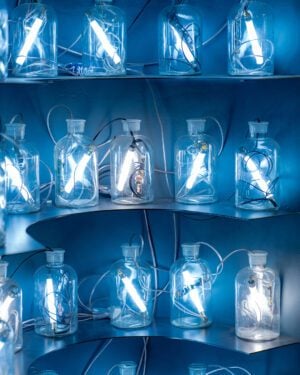 In stock
Äther 16
By TUNK I Busra Tunc
€2.200 -
Mantis Table Lamp in Layered Paper
By MESEME by Riya Panchal
€365 -

Alma Table Lamp in Brass and Perspex
By MESEME by Riya Panchal
€1.215 -
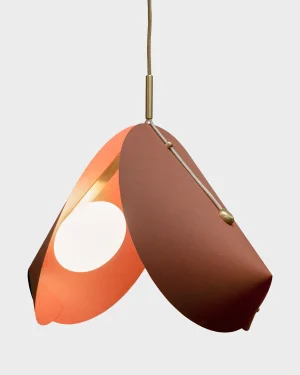
Concha Model 03 (Large) Pendant Lamp in Paper and Brass
By MESEME by Riya Panchal
€521 -

Cypress Table Lamp in Wood
By Studio Kloak
€2.000 -
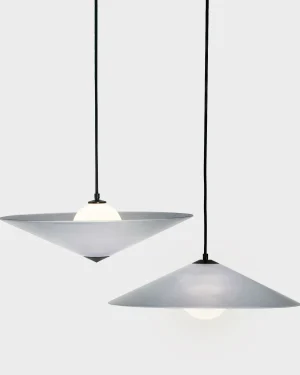
Marsha 01/02 Pendant Light Duo in Glass and Steel
By MESEME by Riya Panchal
€1.649 -
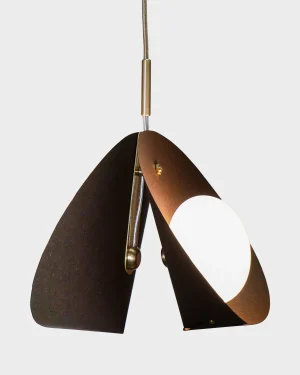
Concha Model 01 (Medium) Pendant Lamp in Paper and Brass
By MESEME by Riya Panchal
€434 -
 In stock
Äther Seul
By TUNK I Busra Tunc
€325 -
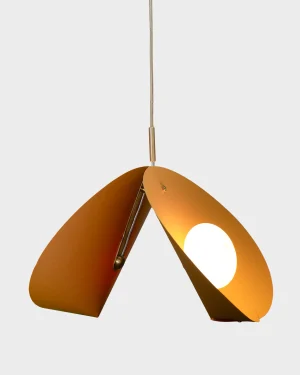
Concha Model 02 (Small) Pendant Lamp in Paper and Brass
By MESEME by Riya Panchal
€375 -
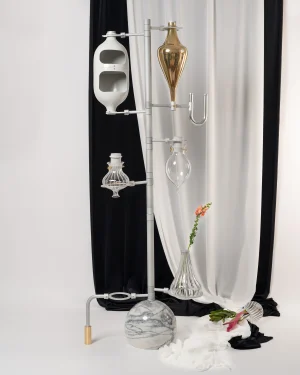 In stock
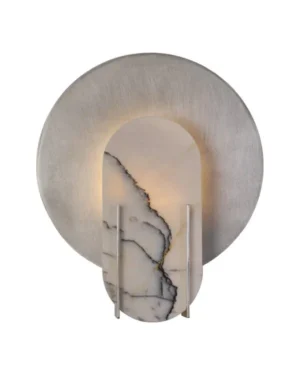
Emotional Lab Grey Floor Lamp In Marble And Aluminum
By Hania Jneid Design Studio
Price Upon Request -
 In stock
Emotional Lab White Floor Lamp In Stainless Steel And Glass
By Hania Jneid Design Studio
Price Upon Request -
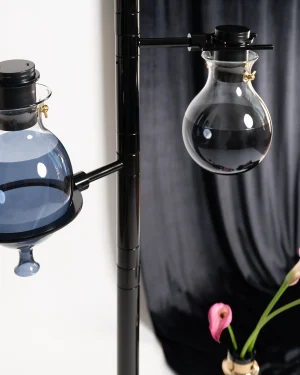 In stock
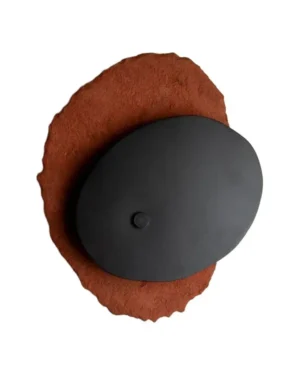
The Emotional Lab Light – Black
By Hania Jneid Design Studio
Price Upon Request
Borosilicate glass lamps are blown rather than cast, which is what gives the material its clarity and its resistance to heat near a bulb or an open flame. The glass contains boron trioxide, a compound that keeps it from cracking when temperature shifts quickly, so a shade can sit close to a hot source without clouding or crazing over time. Studios working in this material shape it at the furnace, turning and blowing each form while the glass is still workable, which is why no two pieces carry identical bubbles or wall thickness.
What borosilicate glass does in a lamp
Glass is judged by what it does to light, and borosilicate behaves with unusual steadiness. It stays optically clear even where other glass yellows or softens near a heat source, so the bulb, filament or glow tube inside stays visible rather than diffused into haze. Walls are often thicker than ordinary soda-lime glass, which gives the material weight in the hand and a slight distortion at the edges that bends reflections rather than erasing them.
Color, where it appears, sits inside the glass rather than on top of it. Amber and dark green read differently once lit than they do by daylight, shifting from solid to translucent as the bulb warms. Royal blue and black versions tend to hold their depth even under direct light, which makes them read heavier on a shelf than a clear piece of the same size.
The range of forms, finishes and editions
- Clear or tinted glass in amber, dark green, royal blue, black, light gray, gray, pink or white
- Bases and fittings in aluminum, brass or steel, sometimes anodized for a matte or colored finish
- Editions ranging from open runs to limited editions and one-off pieces, each noted where it applies
Styles move from contemporary lamps with restrained silhouettes to neo-industrial pieces that expose the metalwork, with boho chic, eclectic and maximalist versions built around stronger color or more visible glassblowing.
Choosing a borosilicate glass lamp
Scale matters more with clear glass than with opaque materials, since a thin stem can look slighter than it is once lit, while a thick-walled form reads heavier than its actual footprint. Table lamps generally sit sixteen to twenty-six inches tall, enough to clear a reading surface without the shade meeting eye level when seated. Pendants hang lower over a table than beside a bed, so check ceiling height and the drop of the cord or rod before choosing one.
Finish affects how a piece sits in a room day to day. A tinted or colored glass holds attention even unlit, working as an object on a shelf, while clear glass recedes until switched on. Pair a borosilicate piece with the metal and wood already in a space, since brass, steel or anodized aluminum fittings will pick up the undertones of nearby furniture.
Where these lamps work
Clear and lightly tinted versions suit living room lamps set beside seating, where the glass catches ambient light through the day and glows after dark without dominating the space. Smaller table versions work well as bedroom lamps, low enough not to glare and steady under extended use. Those who prefer quieter forms can look toward minimalist lamps, where the glassblowing is left plain and the base kept narrow.
Caring for borosilicate glass
The material resists thermal shock but not impact, so it should be handled the way any blown glass is: lifted by the base, not the shade, and kept away from edges where it could be knocked. Clean with a soft cloth and mild soap, avoiding abrasive pads that can dull the polished surface. Anodized metal fittings need only a dry wipe, since moisture can mark the finish over time.
For the wider range of lamps on ADORNO, including other materials and finishes, see all lamps, or look across every piece made from this material at borosilicate glass on ADORNO.
How do I choose a borosilicate glass lamp?
Look at how the glass reads lit and unlit: amber and dark green shift from solid to translucent once warm, while blue and black hold their depth. Pick a color based on which effect suits the room.
How do you care for borosilicate glass lamps?
Wipe the glass with a soft, dry or barely damp cloth and avoid abrasive cleaners that can dull its surface. The material resists heat and sudden temperature shifts, so it will not crack or cloud near a bulb over time.
What size or height lamp should I get?
Table lamps generally sit at eye level when seated, while wall lamps are placed above furniture to avoid glare. Since wall thickness and bubble patterns vary by hand, the maker can confirm exact dimensions through Chat with the maker on the piece's page.
Which rooms suit borosilicate glass lamps?
Their clarity and weight read well in living rooms and bedrooms, where the glass catches daylight and glows steadily after dark. The heat resistance also makes them practical near reading nooks or desks where a bulb sits close to the shade.
Are these lamps handmade or limited editions?
Each is blown and shaped at the furnace, so no two pieces share identical bubbles or wall thickness. Some are open editions, others limited runs or unique pieces; the maker can confirm the specifics through Chat with the maker on the piece's page.
What about shipping, returns and authenticity?
Shipping is insured and worldwide, with a 14-day return policy excluding made-to-order pieces. Each lamp comes with a certificate of authenticity and a lowest-price guarantee.