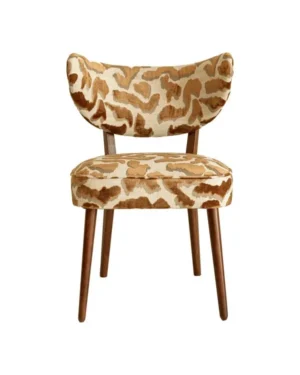
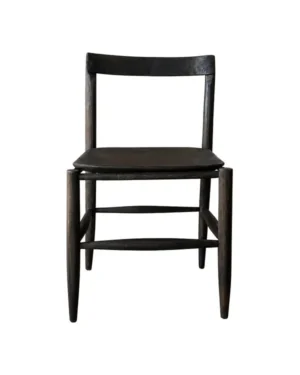
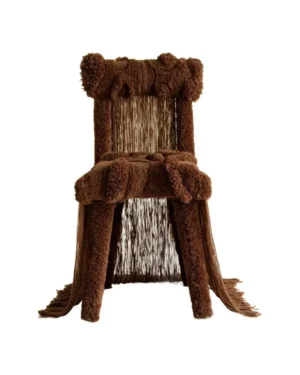
-
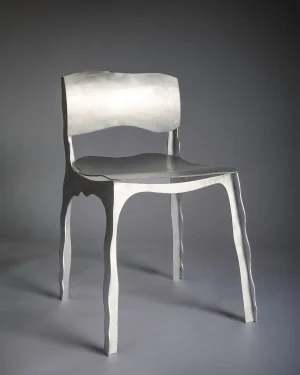
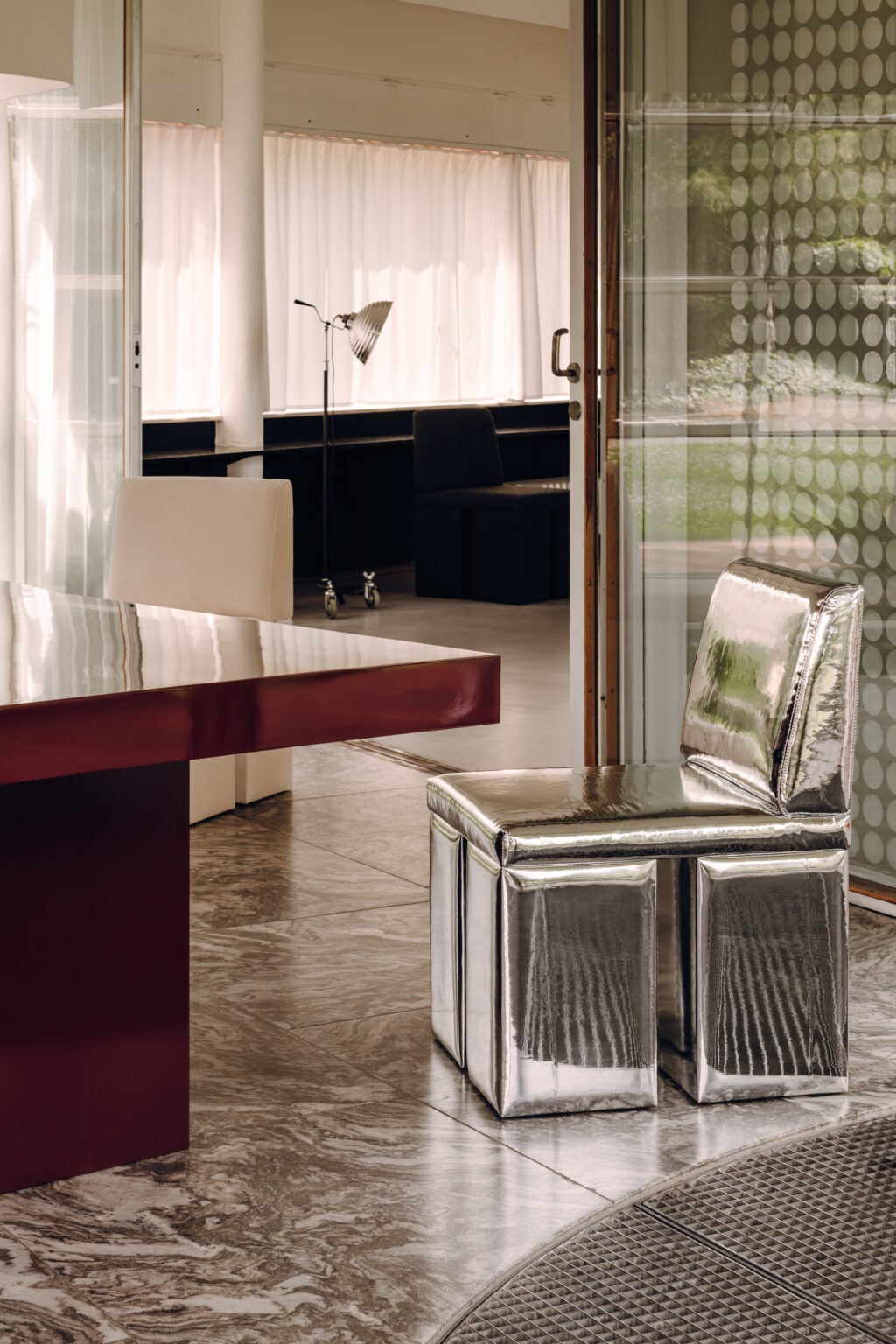
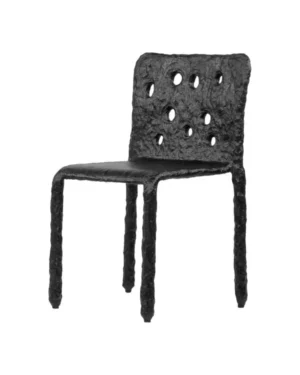
Contemporary Vanity Chair V2
By Six Dots Design
€920 -
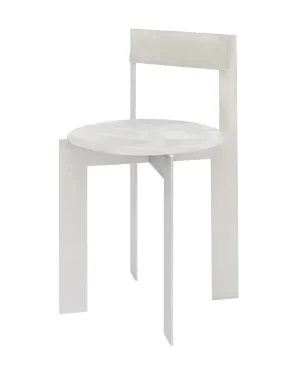
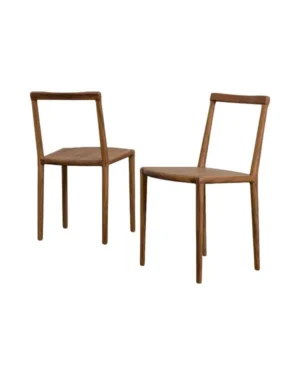
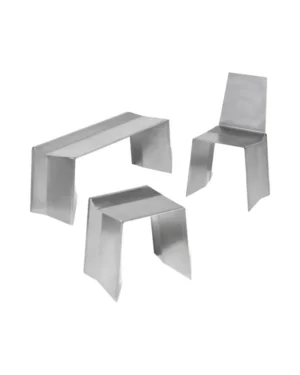
Object111 – Aluminum Chair
By NG DESIGN
€333 -

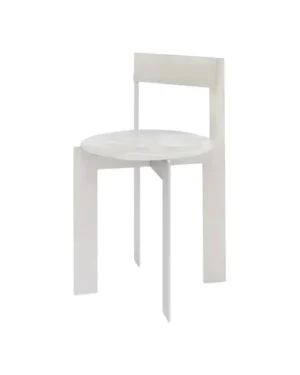
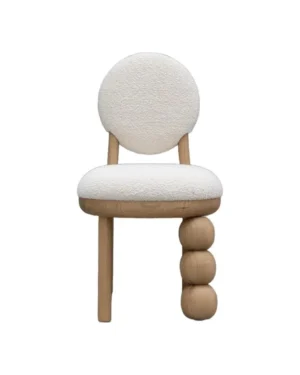
Lumbarchair Accent Chair
By FlatFlat
€429 -
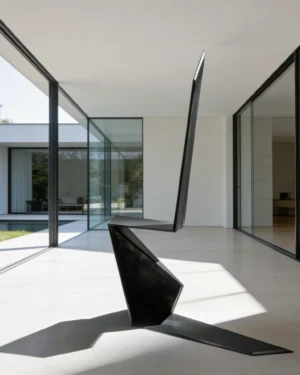
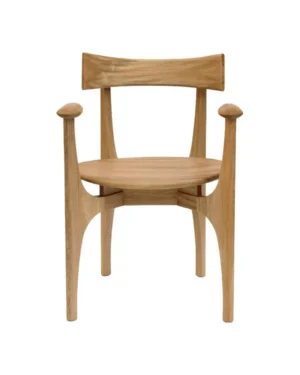
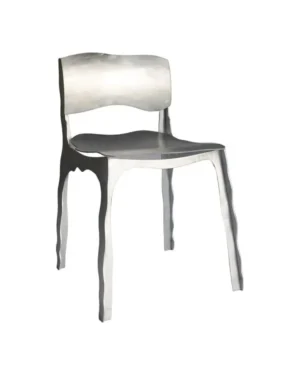
Dark Side – Aluminum Chair
By ORFEO STUDIO
€5.082 -
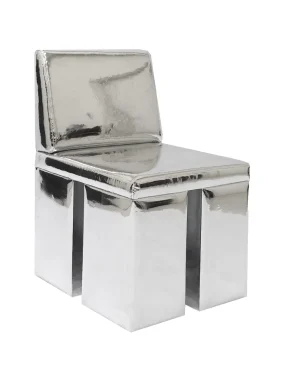
Object106 – Upholstered Chairs
By NG DESIGN
€585 - €1.115 This product has multiple variants. The options may be chosen on the product page -

Xb-70 V Armchair
By Mantas Lesauskas
€2.400 -
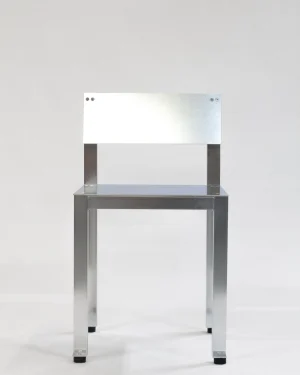 In stock
Canto – Aluminum Dining Chair
By Luiz Solano
€840 -

Arco Massiva — Ebony Wood, Cast Aluminum And Velvet Chair
By DONÓ Design
€2.729 -
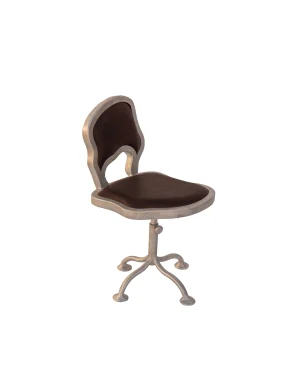
Office Chair
By Six Dots Design
€2.450 -
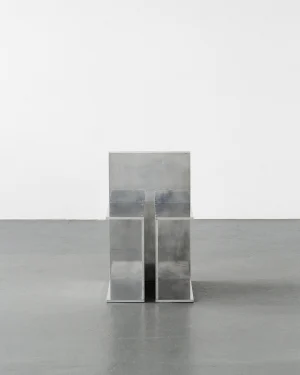 In stock
Lille Split Chair
By Thomas Gayet
€2.300 -
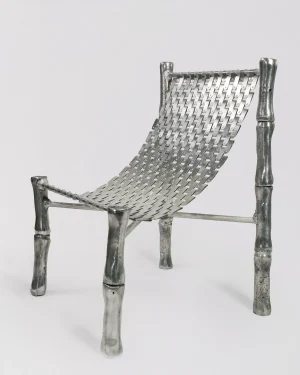 In stock
Bone Chair – Aluminum Lounge Chair
By BY JAMPS
€4.000 -

Ripple Chair
By LMNOH
€1.250 -
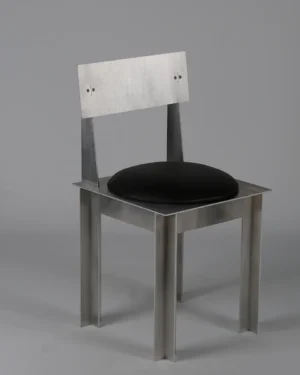 In stock
Plus Chair
By 301 Design Studio
€1.000 -

Rounded Edges Aluminum Chair
By LESORR
€1.273 This product has multiple variants. The options may be chosen on the product page -
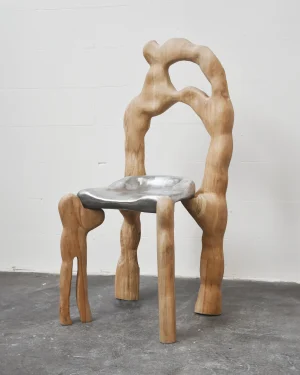 In stock
Tpf Series (the Parasitic Factors) _no.03
By Sai.E Studio
€6.500 -
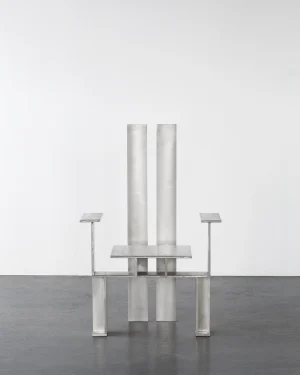 In stock
Relatively Comfy Armchair
By Thomas Gayet
€2.900 -
 In stock
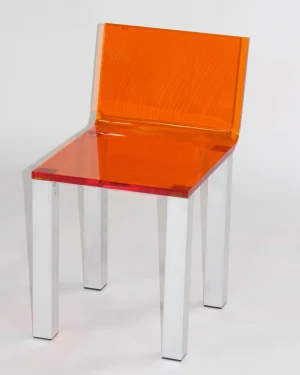
Acrilar – Acrylic Chair I
By Luiz Solano
€840 This product has multiple variants. The options may be chosen on the product page -
 In stock
Tpf Series (the Parasitic Factors) _no.01
By Sai.E Studio
€4.800 -
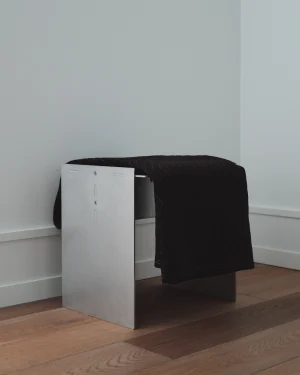
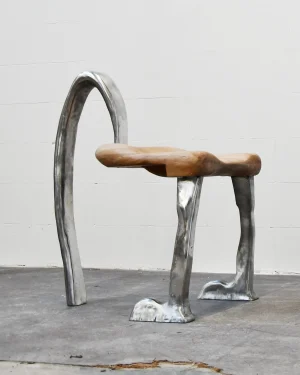
Flat Metals – Seat 01
By Estudio Material
€900 -
 In stock
Tpf Series (the Parasitic Factors) _no.02
By Sai.E Studio
€5.200 -
 In stock
Organ Stool
By andykim.global
€3.100 -
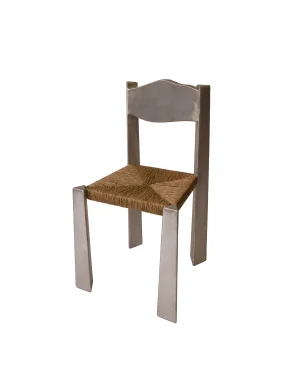
‘woven Chair’ – Aluminum & Paper Cord Chair
By Six Dots Design
€2.375 -
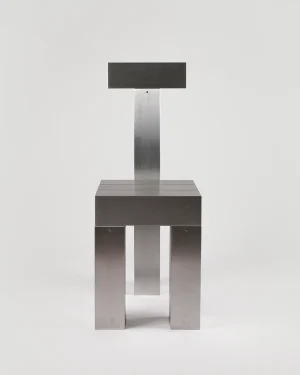
Garriga Chair
By Lucas Cambier
€3.500 -

Harakiri – Aluminum And Damascus Steel Chair
By ORFEO STUDIO
€4.918 -
 In stock
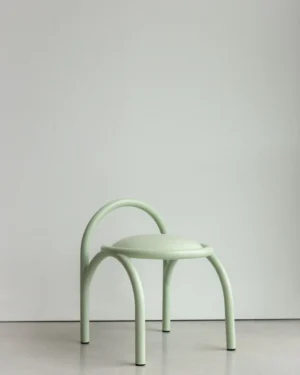
La Chaise — Tubes Collection
By Olive®
€1.100 -
 In stock
Alux Chair
By Spero Furniture
€530 -
 In stock
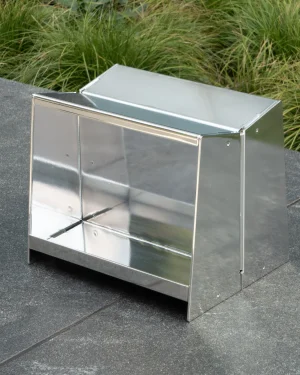
Garden Stool – Chrome Plated Aluminum
By andykim.global
€1.110 -
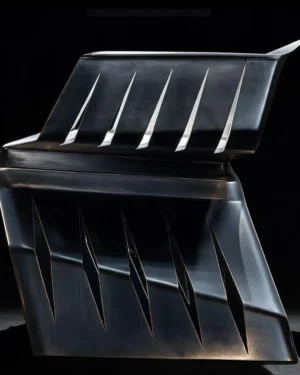
Haereticus Chair
By ORFEO STUDIO
€4.672 -
 Sold
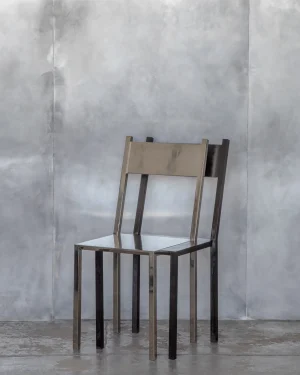
La Linea – Accent Chair
By Mike Wirthensohn
€2.800 -
 In stock
Double Vision (DV) Chair
By Studio S II
Price Upon Request -

The Walky Chair
By Design VA
€3.995 - €5.740 This product has multiple variants. The options may be chosen on the product page -
 In stock
“Lost in Transition”, Urban Chair
By T SAKHI Tessa & Tara Sakhi
Price Upon Request -
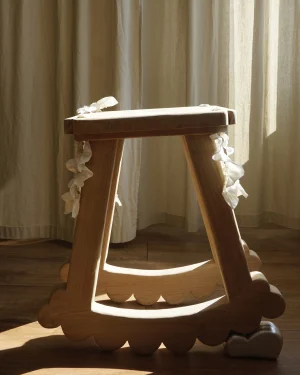
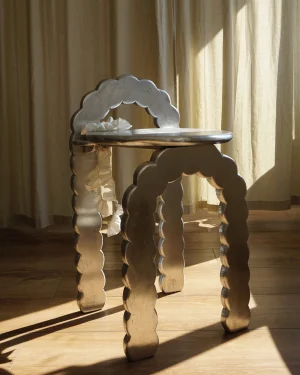
Halinka Stool
By Basia Pruszyńska
Price Upon Request -
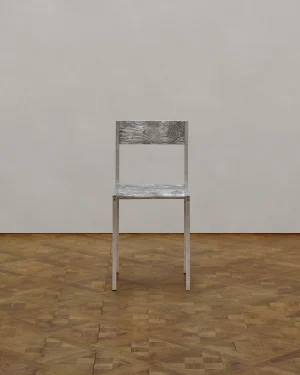
Roman Chair
By Basia Pruszyńska
Price Upon Request -
 In stock
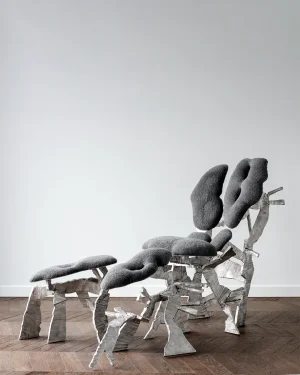
Aluminum Veneer Chair
By Bureau.parso
Price Upon Request -
 In stock
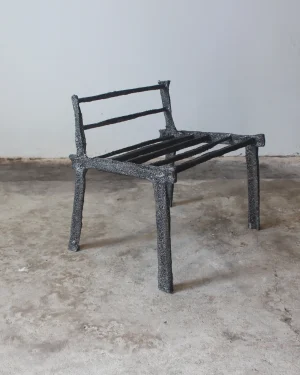
Insect Lounger – Recycled Cast Aluminum
By BY JAMPS
Price Upon Request -
Melancholy Chair – Aluminium
By Saturday Yard Work
Price Upon Request
Aluminum accent chairs bring a material that is light to lift yet stiff enough to hold its shape under load, a quality that lets studios shape it into thin frames, curved shells and sculptural seats without adding bulk. Many begin as sheet or extrusion worked by hand through metalwork or welding, while others are poured as cast aluminum and finished by patination or polishing. The result ranges from a chair that reads as a single continuous line to one built from visibly joined parts.
What makes aluminum distinct in a chair
Aluminum does not rust the way steel or iron does; instead it forms a thin oxide layer that protects the metal underneath, which is why so many outdoor and high-traffic pieces are made from it. The metal takes a wide range of finishes, from a flat matte surface that absorbs light to a reflective polish that throws it back, and from black and bronze tones to the natural silver of bare aluminum. Because it is roughly a third the weight of steel, an aluminum accent chair can be moved across a room or carried between spaces without strain, a practical point for anyone who rearranges seating often.
Techniques, finishes and editions to expect
Aluminum accent chairs come out of a handful of working methods, each leaving its own trace. Sheet or bar aluminum worked through metalwork and welding tends toward sharp edges and visible seams, often paired with a Neo-Industrial or Brutalist reading. Cast aluminum, shaped in a mold and then patinated or polished, allows rounder, more continuous forms and can carry a Surrealism or Art Deco character. Some chairs are made in open runs, others as limited editions or unique pieces, a distinction worth checking if a particular finish is not expected to repeat.
- Finishes: matte black, bronze, silver, reflective polish
- Techniques: metalwork, welding, metal casting, patination
- Styles: Minimalist, Neo-Industrial, Brutalist, Surrealism, Art Deco
How to choose an aluminum accent chair
Scale matters more with a light material than a heavy one, since an aluminum frame can look visually slight if the seat is too small for the room. Check the overall height against the furniture it will sit near, a dining table, a sofa arm, a console, so the chair reads as part of the room rather than an afterthought. A matte or bronze-toned finish tends to settle into a room, while a reflective or silver surface draws the eye and works best where it has a little space around it. For year-round use, confirm whether a finish is intended for interior or outdoor exposure, since some patinated surfaces are left raw for indoor rooms only.
Where these chairs sit in a room
Aluminum accent chairs suit living rooms as a second seat that does not compete for space, dining rooms where a lighter frame balances a heavy wood table, and entryways or reading corners where a chair needs to be moved often. Anyone building out a full living room can look through living room accent chairs, and a table setting calls for dining room accent chairs that are easy to pull in and out. For a broader view across metals, metal accent chairs cover aluminum alongside bronze and other worked metals, and the wider range of seating sits under all accent chairs for comparison.
Care
Aluminum needs little upkeep: wipe with a damp cloth, dry it to avoid water spotting on polished surfaces, and avoid abrasive cleaners on patinated or matte finishes, which can dull or strip the surface. Scratches on a reflective finish will show more readily than on matte or black surfaces, so placement away from sharp-cornered furniture helps keep the surface even over time. Because the metal will not corrode, aluminum accent chairs hold their finish for years with only this basic attention, whether used daily in a living room or kept for occasional seating.
For the fuller range of aluminum pieces, from seating to lighting, every aluminum piece on ADORNO gathers what is made in the material across categories, and aluminum seating narrows that further to chairs, stools and benches alone.
How do I choose an aluminum accent chair?
Look at how the frame is made, cast for a solid, sculptural form or welded sheet for a lighter, more angular one, then match the finish, matte, silver or patinated, to the room around it.
How do you care for an aluminum chair?
Wipe with a damp cloth and dry it, avoid abrasive cleaners that dull the finish, and check felt pads under the feet if the chair sits on a hard floor.
Does aluminum rust or corrode outdoors?
Aluminum does not rust the way steel does; it forms a thin oxide layer that resists corrosion, which is why it holds up well in covered outdoor or humid spaces.
What size is a standard accent chair?
Most sit around seat height of a dining chair or slightly lower, scaled for a corner or alongside a sofa rather than a full-size armchair; the maker can confirm exact dimensions on the piece's page.
Which rooms suit an aluminum accent chair?
The material's light weight and cool, reflective surface suit living rooms, entryways and reading corners, anywhere a chair needs to be moved often or hold its own against softer furnishings.
How does shipping, returns and authenticity work on ADORNO?
Shipping is insured and worldwide, returns are accepted within 14 days except on made-to-order pieces, and every chair arrives with a certificate of authenticity alongside a lowest-price guarantee.