
The Quiet Power of Minimalist Decor: 15 Essentials
Updated on: August 6, 2026
Minimalism gets misread as absence. The rooms that actually work are not empty — they are edited. Fewer objects, but each one carrying enough material interest to hold a surface on its own, and enough space around it to be seen. That is a harder brief than filling a shelf, and it is why a genuinely spare room can feel warm rather than austere.
What follows is a short guide to the principles, then fifteen objects from independent studios — vases, mirrors, candleholders and sculpture — chosen because they do the work a pared-back interior asks of them: quiet form, real material, and something to look at when you look twice.
What is minimalist decor?
Minimalist decor is an approach built on restraint rather than reduction: clean lines, considered materials, and objects selected so that each has room to register. The underlying philosophy is that fewer things, better chosen, produce a calmer space than more things arranged well.
Restraint, not absence
The distinction matters practically. An empty room reads as unfinished; an edited room reads as deliberate. What separates them is usually one or two objects with enough presence to anchor the space — a vessel with real weight, a mirror that changes the light. Consequently minimalism tends to be more expensive per object and cheaper overall, because you are buying three things rather than fifteen.
Warm minimalism
The version people actually want now is warm rather than clinical. Where the 1990s reading of minimalism meant white walls and hard surfaces, warm minimalism keeps the spareness but changes the palette and material: wood, unglazed ceramic, brass with a patina, undyed textile. Therefore the room stays uncluttered while gaining the tactile quality that made hard minimalism uncomfortable to live in.
Japanese and Scandinavian roots
Two traditions inform most contemporary practice, and they arrive at similar restraint from different directions. Japanese minimalism works from wabi-sabi — value placed on irregularity, ageing and visible making, which is why a cracked Raku glaze reads as finished rather than flawed. Scandinavian minimalism is more functionalist, prioritising light, pale wood and utility in rooms that spend half the year short of daylight.
Notably the Japanese lineage gives you permission that the Scandinavian one does not: imperfection is the point, so a hand-formed object with visible variation belongs in a spare room rather than disrupting it.
How to choose objects for a pared-back room
One object per surface
The most useful working rule. A console with one vessel on it reads as composed; the same console with four reads as storage. If you want more than one, group them tightly as a single visual unit rather than spacing them evenly, which produces a row.
Material over pattern
With little competing for attention, surface quality carries the room. A brushed aluminium vase, a charred cedar block and an unglazed stoneware bowl all hold interest without any applied decoration — the texture is the pattern. Meanwhile printed or heavily patterned objects tend to fight a spare setting, because there is nothing else to absorb them.
Negative space is a material
Treat empty surface as something you are choosing, not something waiting to be filled. Practically: leave at least as much clear space around an object as the object occupies. That margin is what makes it read as placed rather than left there.
Minimalism versus maximalism
They are not opposites so much as different strategies for holding attention. Maximalism builds interest through accumulation and juxtaposition; minimalism builds it through isolation. Both fail the same way — by being indecisive. A half-committed spare room looks bare, and a half-committed layered room looks cluttered.
15 minimalist home decor essentials
Round and Round Vase by Atelier von Ehren

Round at the base, square at the rim — the Round and Round series builds its whole effect on that single transition, so the ceramic form appears to change as you walk past it. The blue and brown glaze on grey keeps it tonal rather than decorative. The series takes the cylinder as a figure for cyclical time, which is a lot to ask of a vase, and it mostly earns it.
By Atelier von Ehren
€257 incl. tax
Rodo Sculpture by Daniel Orozco Estudio
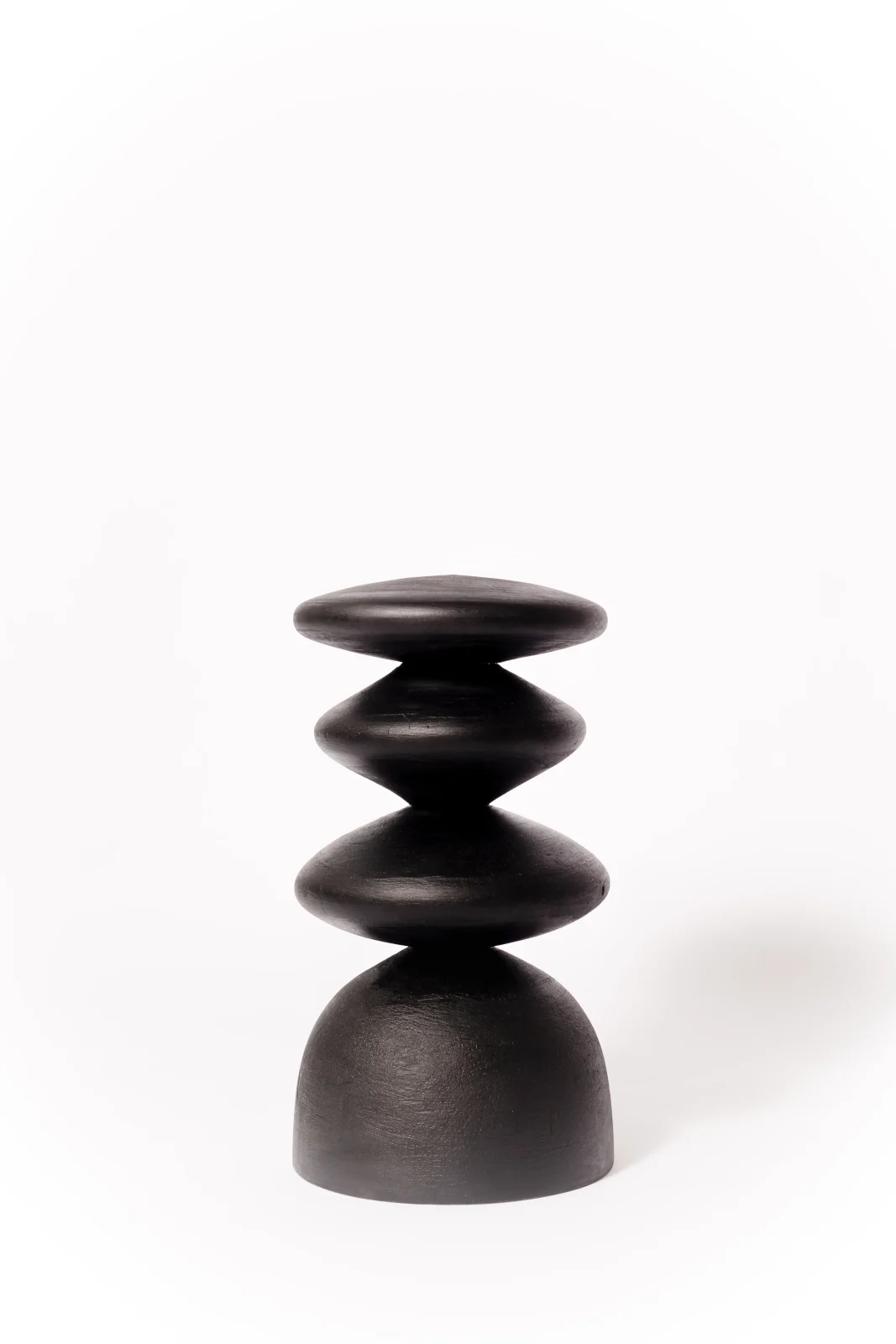
Carved from solid cedar and charred to a textured black finish, Rodo is close to the ideal object for a spare room: one clear form, one material, nothing applied. The charring gives it depth at close range that a painted surface would not have, and it is rated for outdoor use — so it works on a terrace as readily as a hallway.
By Daniel Orozco Estudio
€2.063 incl. tax
Very Even Stillness Mirror by Anna Bera
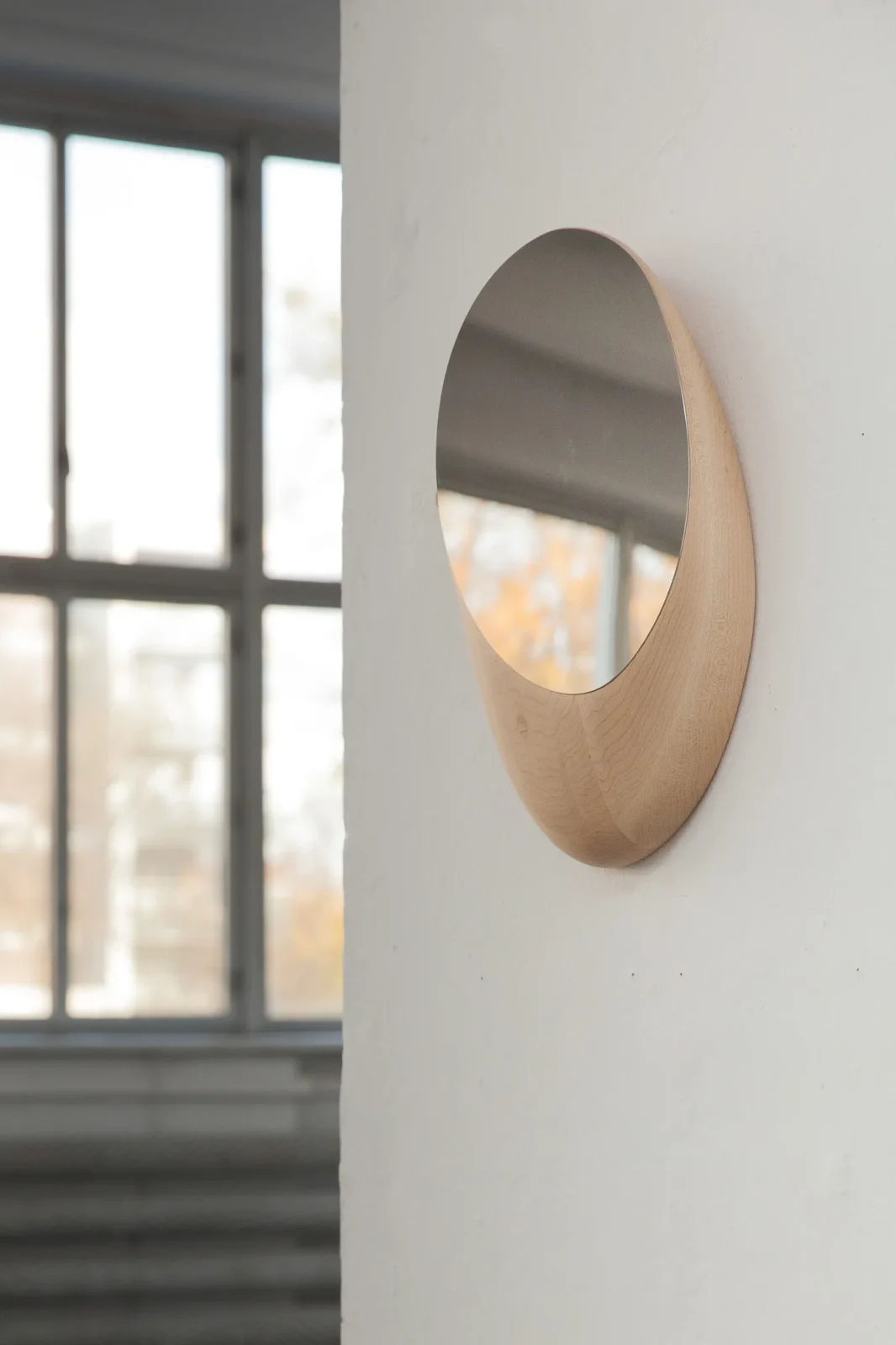
Maple with a mirror-finished steel panel set at a slight angle, which is the whole idea — the tilt means it reflects the room obliquely rather than back at you, producing a spatial illusion instead of a functional mirror. It hangs in six orientations, so the composition can change without buying anything else, and reads as part of a modular wall arrangement or a single statement.
By Anna Bera
€2.118 incl. tax
Abundance Wall Sculpture by Studio Ēeme

Sculpted wood paired with ceramic waves, played off against each other through light and shadow — deep red or black stoneware against softer porcelain and beige. Because the relief is shallow, what you see shifts as you move past, which is more interesting on a wall than a flat piece. A good example of texture carrying a work that has no pattern at all.
By Studio Ēeme
€1.135 incl. tax
Umbra Wall Mirror by Hasik Design Studio
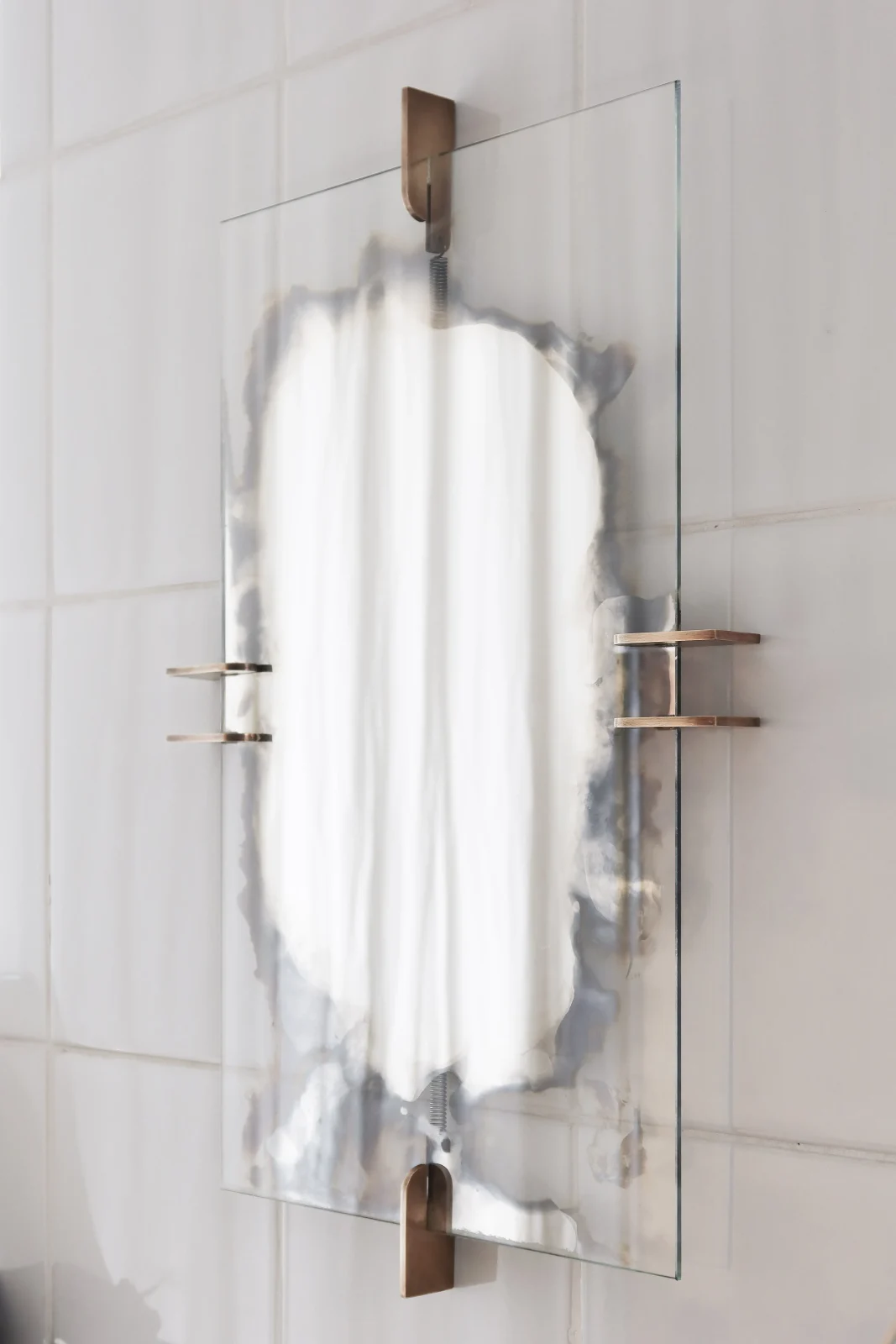
A 4mm mirrored pane held in patinated brass fasteners under tension from steel springs — no frame, no backing, just the glass suspended in its own hardware. Because the pane is worked by hand the edge comes out irregular, which blurs where the object stops and the reflection starts. The brass will keep developing a patina rather than wearing through, so it gets better rather than tired. 300 × 490mm, with larger sizes to order.
By Hasik Design Studio
€1.500 incl. tax
Wool Felt+marble Sculpture by Danik Uderbekov
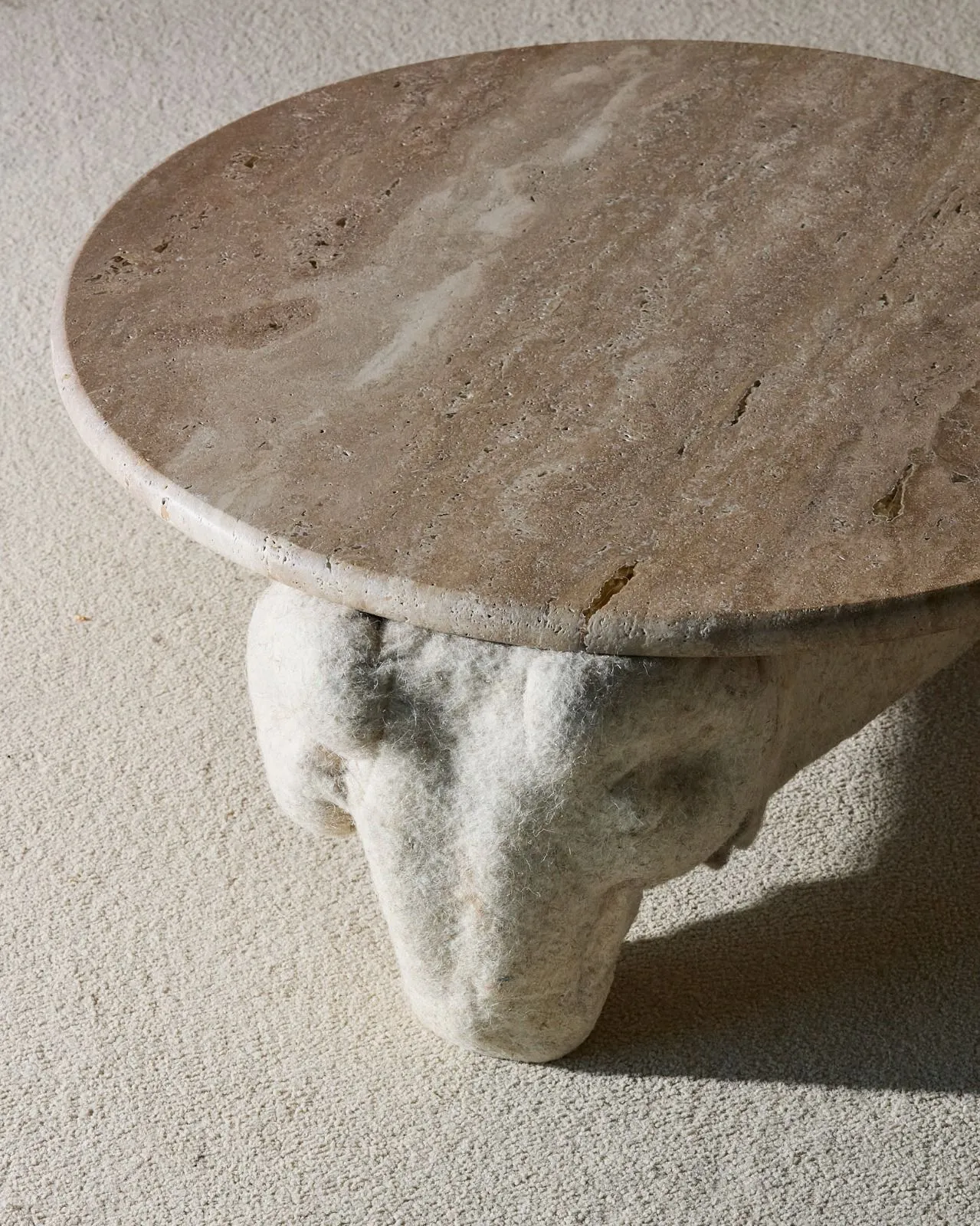
Forty kilos of solid marble resting on a base of dense technical wool felt, 80cm across and 30cm high. There is no glue and no fixing of any kind — the stone is held by its own weight and the friction of the felt, which is the entire idea. Cold geology against warm textile, and a base that will never scratch a floor or catch a toe the way a metal leg does. It does not announce itself; it simply stands there being heavy.
By Danik Uderbekov
€3.000 incl. tax
Cut Medium – Raku Clear by Studionudo
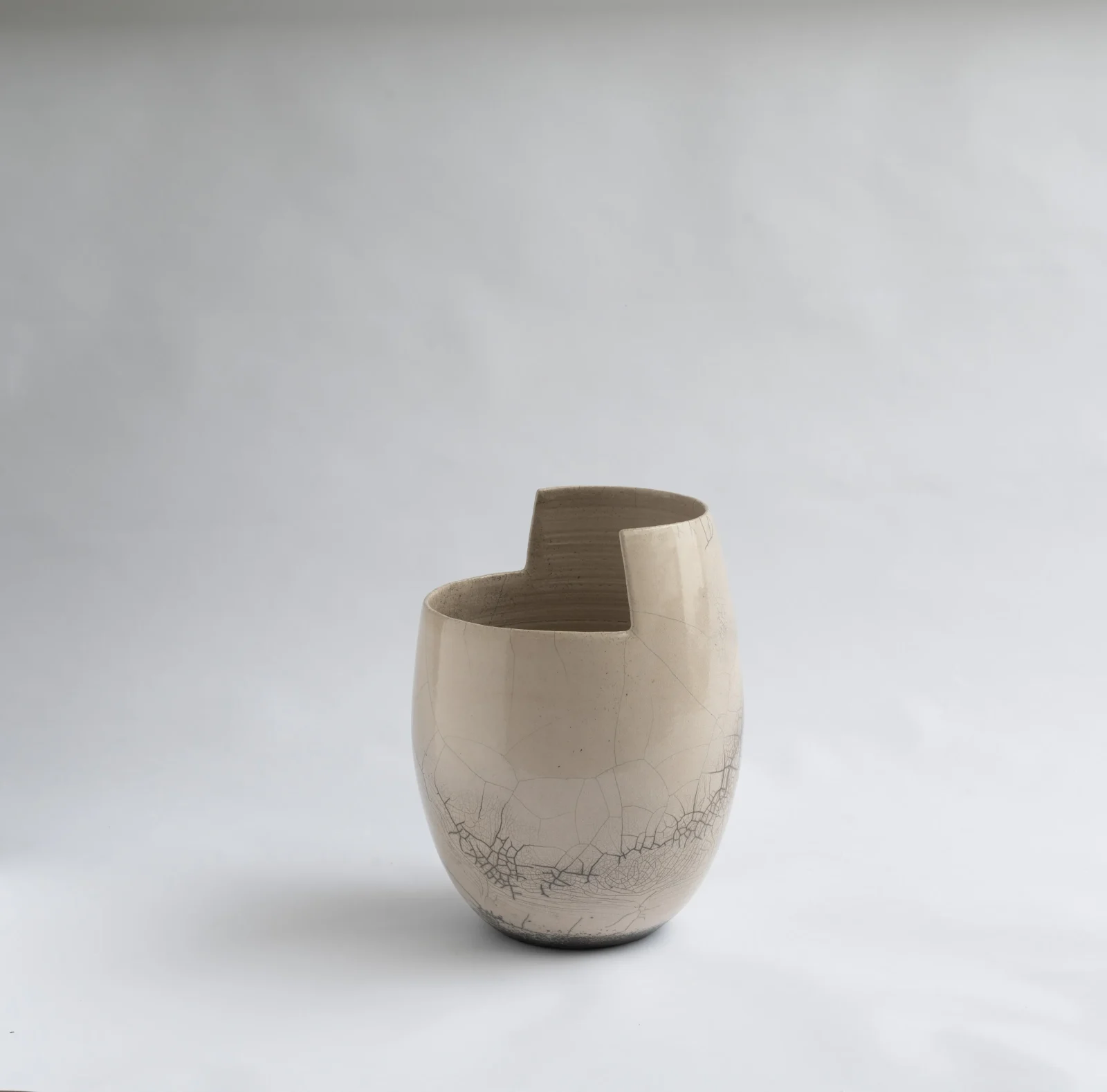
Shaped by hand with clean sliced edges, then fired using the traditional Raku method — which means the cracks, smoke marks and earthy tones are outcomes of the firing rather than decisions. No two are the same, and the variation is the point. This is wabi-sabi working exactly as intended: imperfection reading as completion, in a form spare enough to hold a bare surface. Japanese in method as well as sensibility.
By Studionudo
€810 incl. tax
Astra 30 Table Mirror by Clemence Birot

Three parts, each doing one job: a hand-blown glass base, a cut cork sphere, and a bevelled round mirror. The cork is the clever element — it grips well enough to hold the mirror at any angle you tilt it to, with no hardware. The glass base doubles as a dish for small objects, which means it earns a place on a surface twice over.
By Clemence Birot
€409 incl. tax
Aqua Vase by KANZ
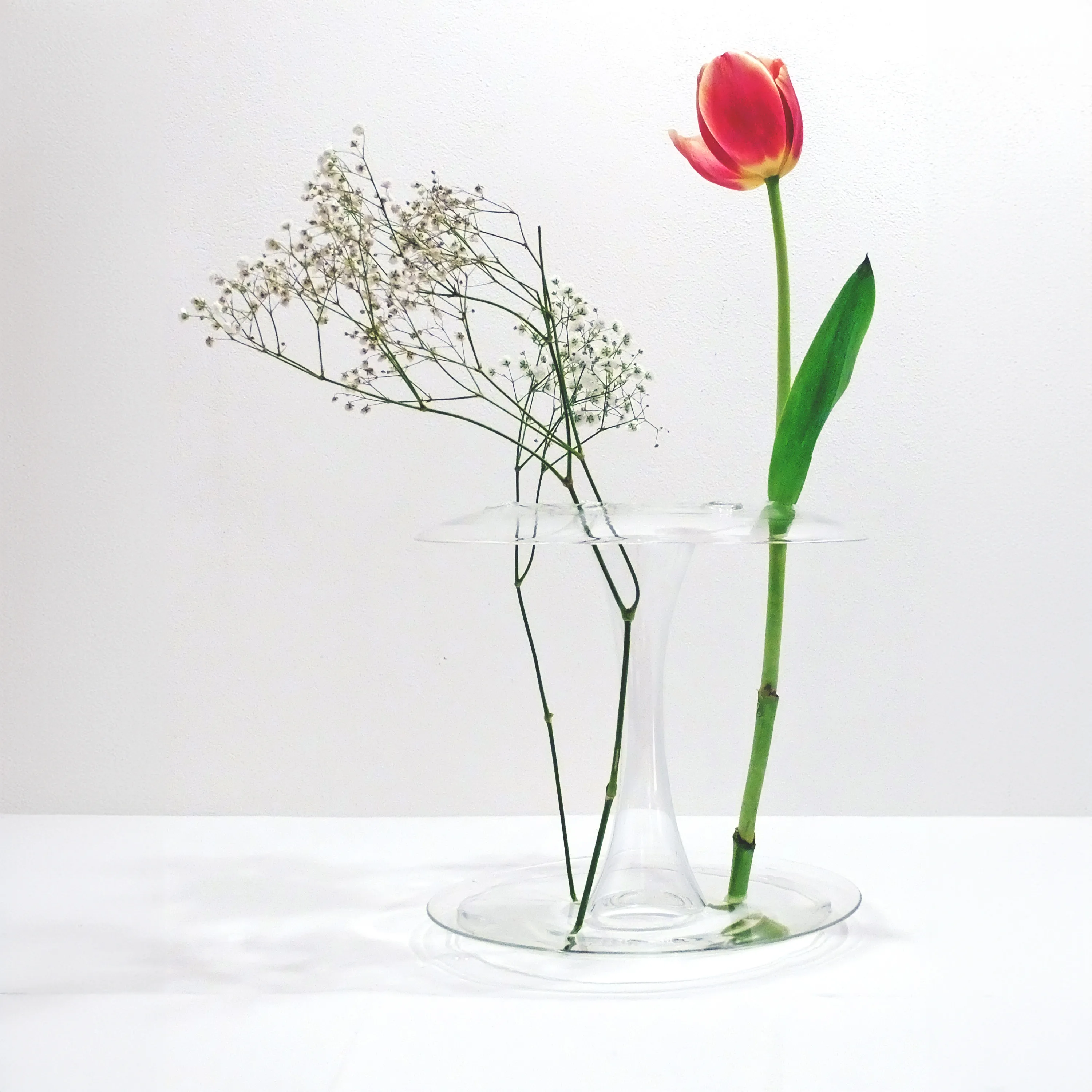
Handmade borosilicate glass with seven precisely placed openings, each supporting a single stem. So it is less a vase than an Ikebana tool — it enforces restraint by making a crowded arrangement physically impossible. Transparent, so it reads as almost nothing until it holds something, which is a useful quality on an otherwise clear surface. A deliberately slow object.
By KANZ
€156 incl. tax
Ferrosecco Ovale Vase in Silver-Lilac by Federica Elmo

An oval vessel in a silver-lilac finish, produced in an edition of five. The colour is the reason it works in a spare room — close to neutral, but not quite, so it registers as a decision rather than a default. Simple in outline, with the finish carrying whatever interest the form does not.
By Federica Elmo
€1.200 incl. tax
Doppia Vessel in Clear by Tom Robinson Studio
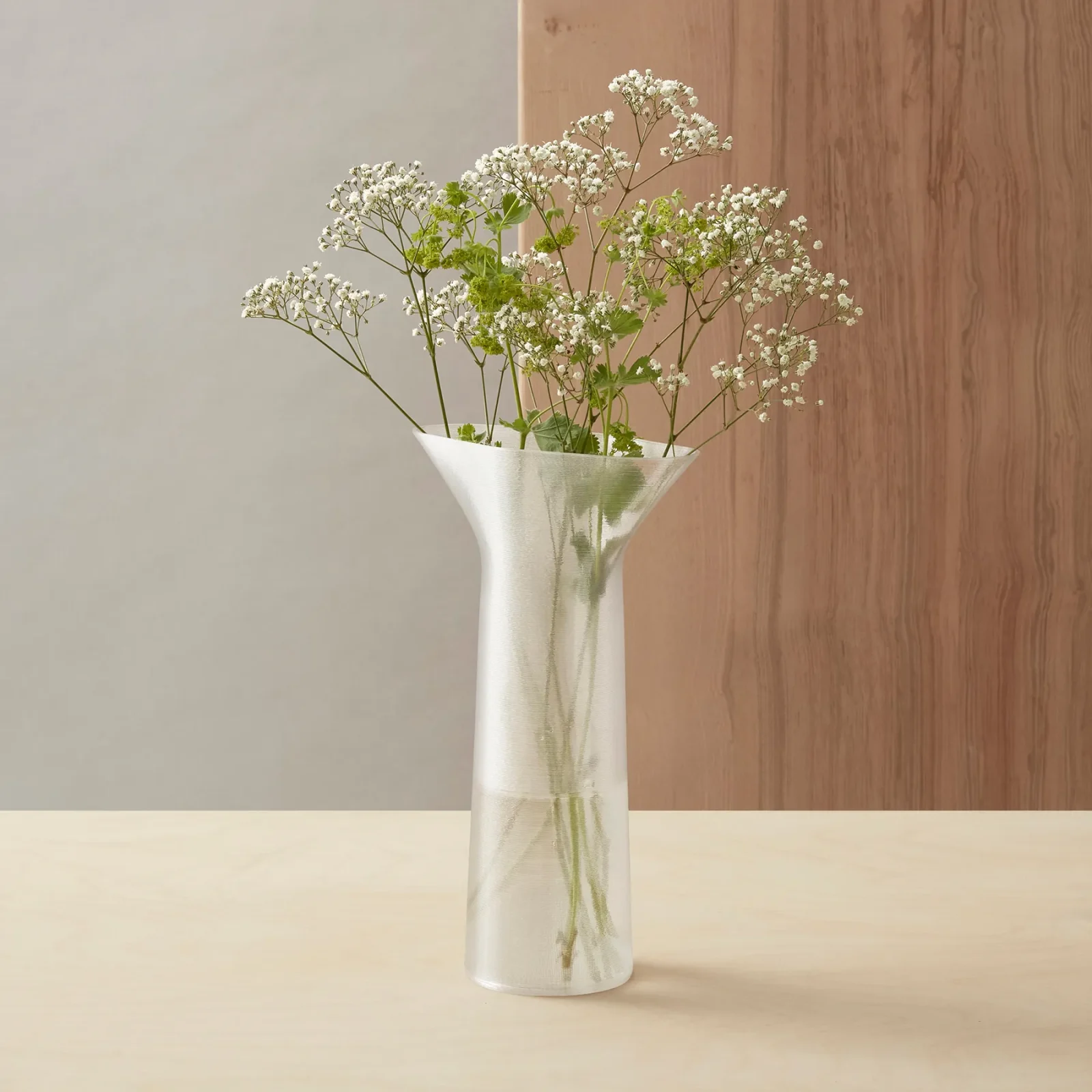
3D-printed from recycled filament in London, and designed to work as vase, carafe or object depending on need — which is the sort of multi-role usefulness that justifies a piece in a room with few of them. The print lines are visible and left that way, so the fabrication method reads as the surface treatment. Available in Clear or Amber Yellow.
By Tom Robinson Studio
€86 incl. tax
Burning Wing Candleholder by Obscure Objects
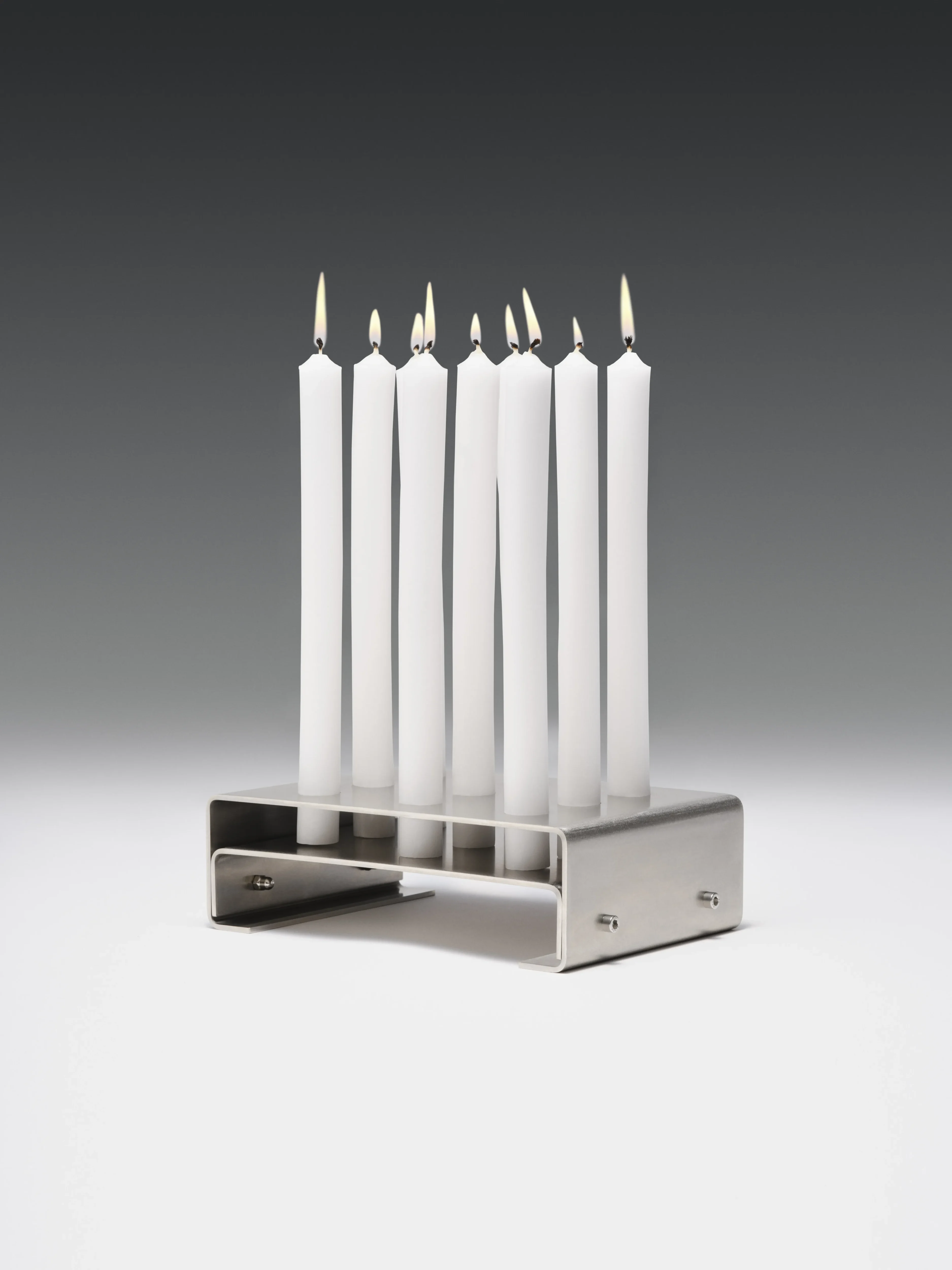
Folded aluminium sheet with a sculptural outer shell and the inner structure left exposed, holding nine candles. Made to order in Germany. The industrial register is the interesting part: it is a ritual object built like a bracket, and lighting all nine turns a restrained piece into the loudest thing in the room.
By Tom Robinson Studio
€86 incl. tax
Kho Sculpture No. 4 by Od Studio

The KHO collection treats balance as a passing internal state rather than a fixed shape, so each piece holds a moment of transition — the pause between one emotional phase and the next — through soft contours and deliberate restraint. The name comes from the final syllable of the ancient Greek psykhē, the exhale as a feeling settles. Abstract enough to sit on a shelf without narrating anything.
By Od Studio
€1.280 incl. tax
Flower & Power Vase by Lucas Cambier
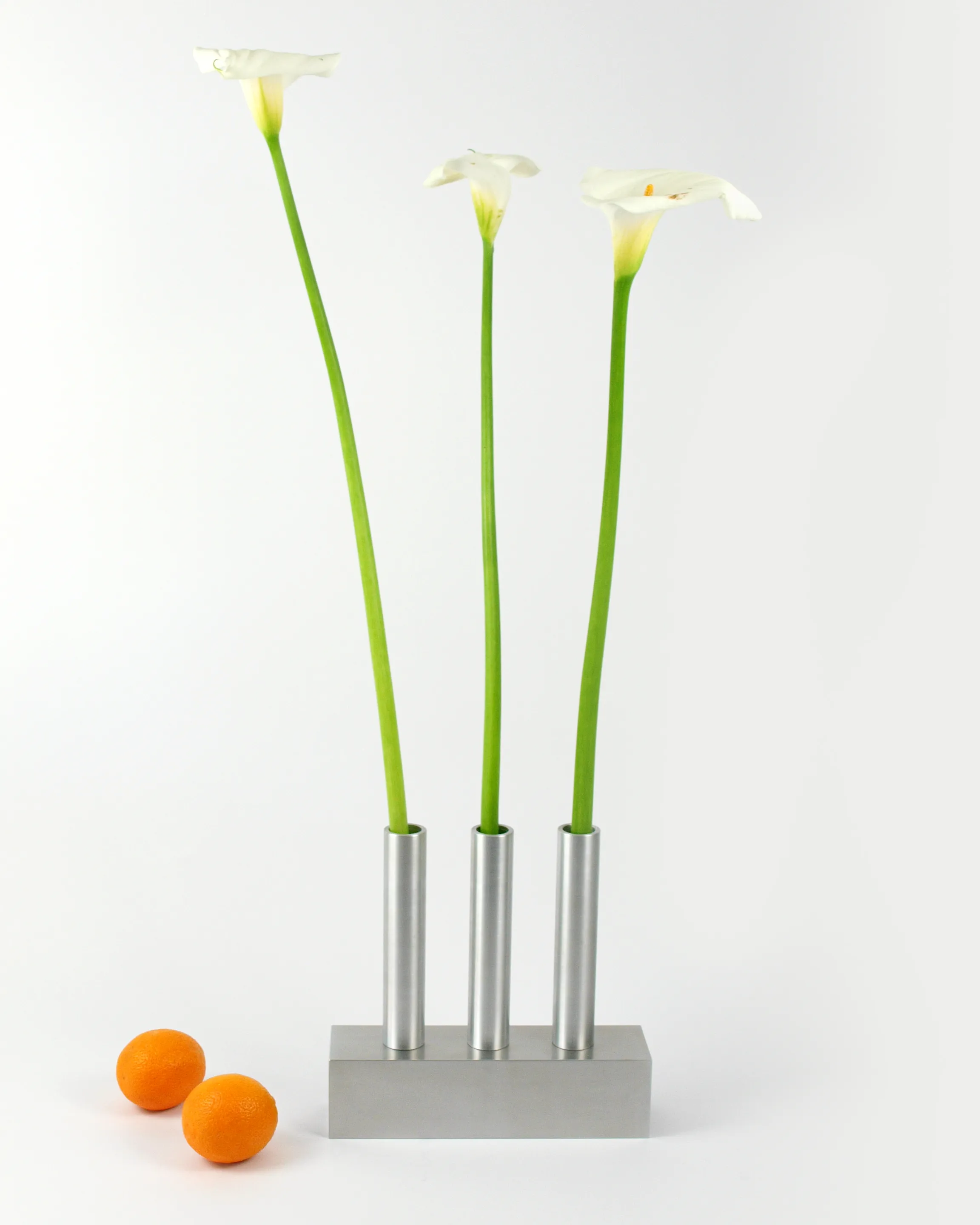
A triple soliflore in hand-brushed aluminium with glass inserts — three single stems, framed rather than arranged. The brutalist handling of the metal against whatever organic thing you put in it is the entire proposition, and it works because neither side softens. Rigid industrial rhythm holding something that will wilt.
By Lucas Cambier
€450 incl. tax
Abbas Aluminium Wall Mirror by Joana Teixeira
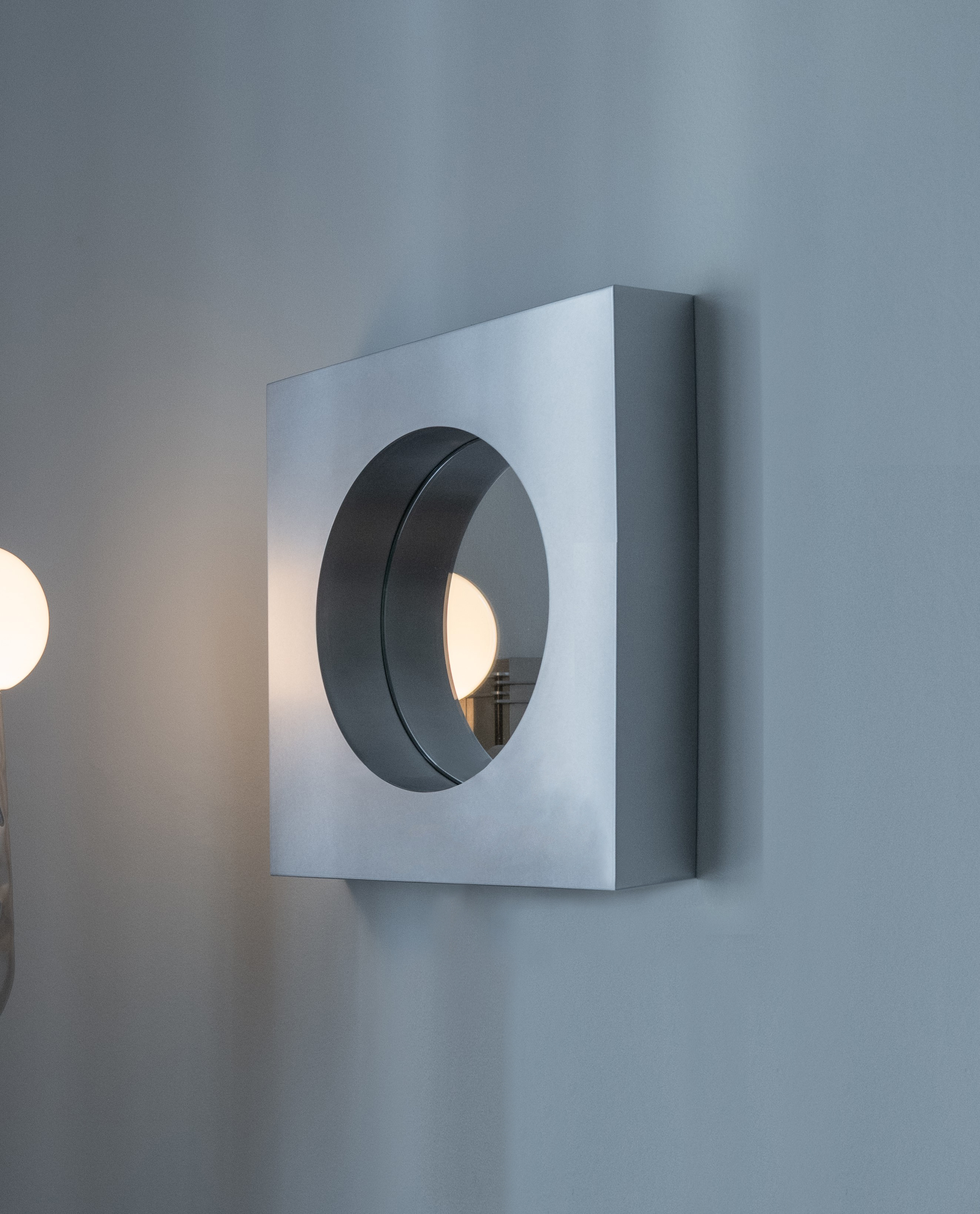
Made in aluminium through a multi-handed process that gathers a temporary group around its production. The 8cm profile is what distinguishes it — deep enough that the frame casts its own shadow and reads as an object on the wall rather than an opening in it. Concerned with the pause of recognition, the moment between before and after, which gives it more conceptual weight than most mirrors carry.
By Joana Teixeira
€1.250 incl. tax
Frequently asked questions
What counts as minimalist decor?
Objects with clear form, honest material and no applied decoration, placed with space around them. It is defined more by editing than by any particular look — a hand-thrown ceramic bowl and a machined aluminium vase both qualify, while a plain object crowded onto a full shelf does not.
How do you decorate a minimalist room without it feeling cold?
Change the materials rather than adding more objects. Wood, unglazed ceramic, patinated brass, undyed wool and cork all read as warm at close range while keeping the room spare. Cold minimalist rooms are usually a material problem — too much white, glass and polished metal — not an emptiness problem.
How many objects should be on a surface?
One, as a default. If more, group them tightly so they read as a single composition rather than spacing them out into a row. Leave at least as much clear surface around the group as it occupies.
What is warm minimalism?
The current dominant reading: spare layouts with warm, tactile materials instead of the white-and-chrome palette of 1990s minimalism. Same restraint, different surfaces — and considerably more comfortable to live with.
What is the difference between minimalism and wabi-sabi?
Minimalism values clarity and often precision. Wabi-sabi values irregularity, ageing and visible making — so a cracked glaze or an uneven rim reads as finished rather than faulty. They overlap in restraint but differ on perfection, which is why a Raku vessel sits comfortably in a spare room while looking nothing like machined minimalism.
Is minimalist decor cheaper?
Usually cheaper overall and more expensive per object. With few pieces on show, each has to hold attention on its own, which means material and making quality matter more than they would in a layered room where things support each other.
Browse the full minimalist collection
ADORNO’s minimalist collection gathers work from independent studios where restraint is a design decision rather than a style filter — clean lines, honest material, and objects made to be looked at more than once.
