










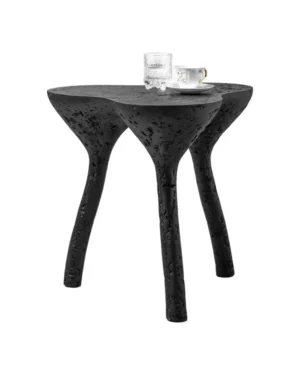

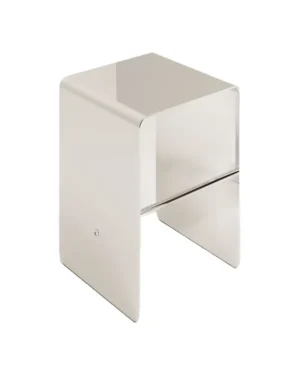

-
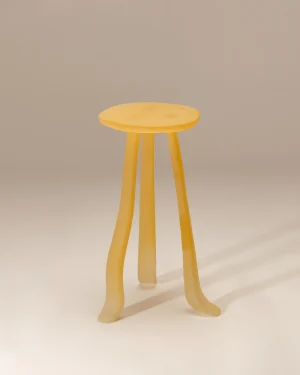
Lung 1.0 Honey Matte Side Table in Resin
By Szymon Keller
€2.200 - €2.400 This product has multiple variants. The options may be chosen on the product page -
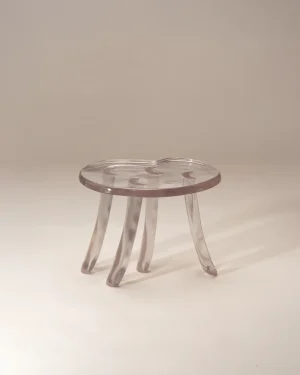
Lung 2.0 Side Table in Resin
By Szymon Keller
€3.180 -

Lung 2.0 Blue Side Table in Resin
By Szymon Keller
€3.180 This product has multiple variants. The options may be chosen on the product page -
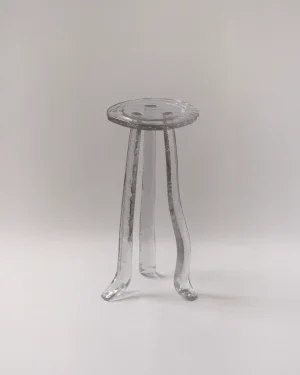
Lung 1.0 Side Table in Resin
By Szymon Keller
€2.000 - €2.400 This product has multiple variants. The options may be chosen on the product page -

Element Coffee Table V – Calacatta Viola
By Vincent Mazenauer
€11.500 -
 In stock
The Space Between Us Side Table in Resin and Volcanic Stone
By Toro Manifesto
€7.400 -

Element Coffee Table – Calacatta Viola
By Vincent Mazenauer
€10.500 -

Ruins Totem
By Szymon Keller
€4.090 -

Element Console – Calacatta Viola
By Vincent Mazenauer
€12.000 -

Hark Side Table in Charred Pine Wood
By Sam Later
€3.607 -
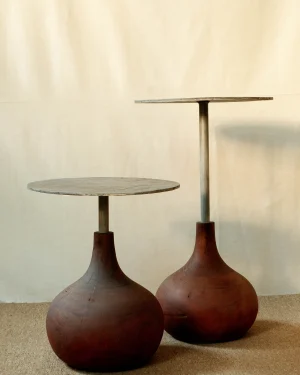
Matka Side Table in Wood and Cast Aluminum
By Spero Furniture
€970 - €1.943 This product has multiple variants. The options may be chosen on the product page -

Element Side Table in Calacatta Viola Marble
By Vincent Mazenauer
€5.500 -
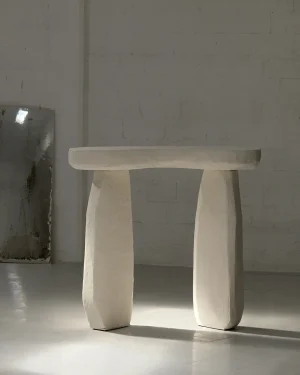
Ruins Console 1.0
By Szymon Keller
€5.528 -
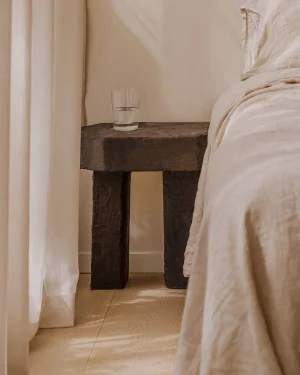
Ruins Side Table
By Szymon Keller
€3.546 -
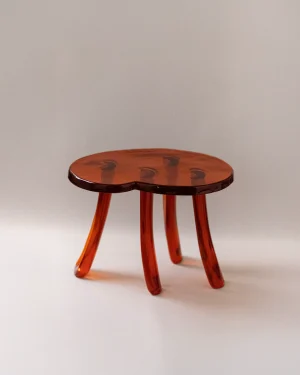
Lung 2.0 Amber Side Table in Resin
By Szymon Keller
€3.180 This product has multiple variants. The options may be chosen on the product page -
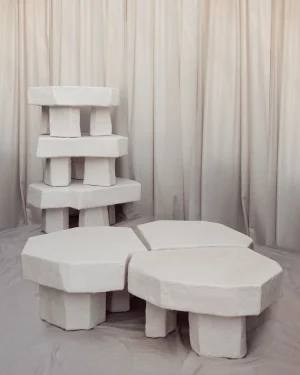
Ruins Coffee Table 3.0
By Szymon Keller
€6.455 -
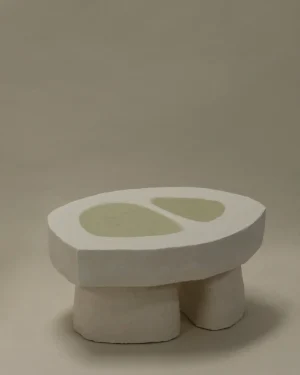
Ruins Coffee Table 2.0
By Szymon Keller
€3.546 -
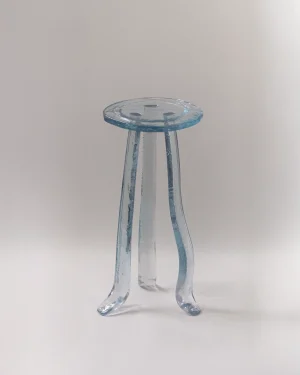
Lung 1.0 Blue Side Table in Resin
By Szymon Keller
€2.000 - €2.400 This product has multiple variants. The options may be chosen on the product page -

Lung 1.0 Amber Side Table in Resin
By Szymon Keller
€2.041 - €2.400 This product has multiple variants. The options may be chosen on the product page
Organic tables take their outline from nature rather than a ruler: a trunk cross-section, a pooled edge, a boulder's silhouette. Studios working in wood, stone and resin shape each top and base to follow grain, vein or mold instead of a straight line, so no two surfaces read quite the same. The result sits closer to a sculpture that happens to hold a cup than to a conventional table.
What defines the organic shape
An organic table resists the right angle. Edges curve, swell or taper the way a branch narrows or a river stone rounds, and tops are often left uneven at the rim rather than trimmed flush. Bases follow the same logic: a single burl, a cluster of carved legs, a poured resin plinth that looks caught mid-flow.
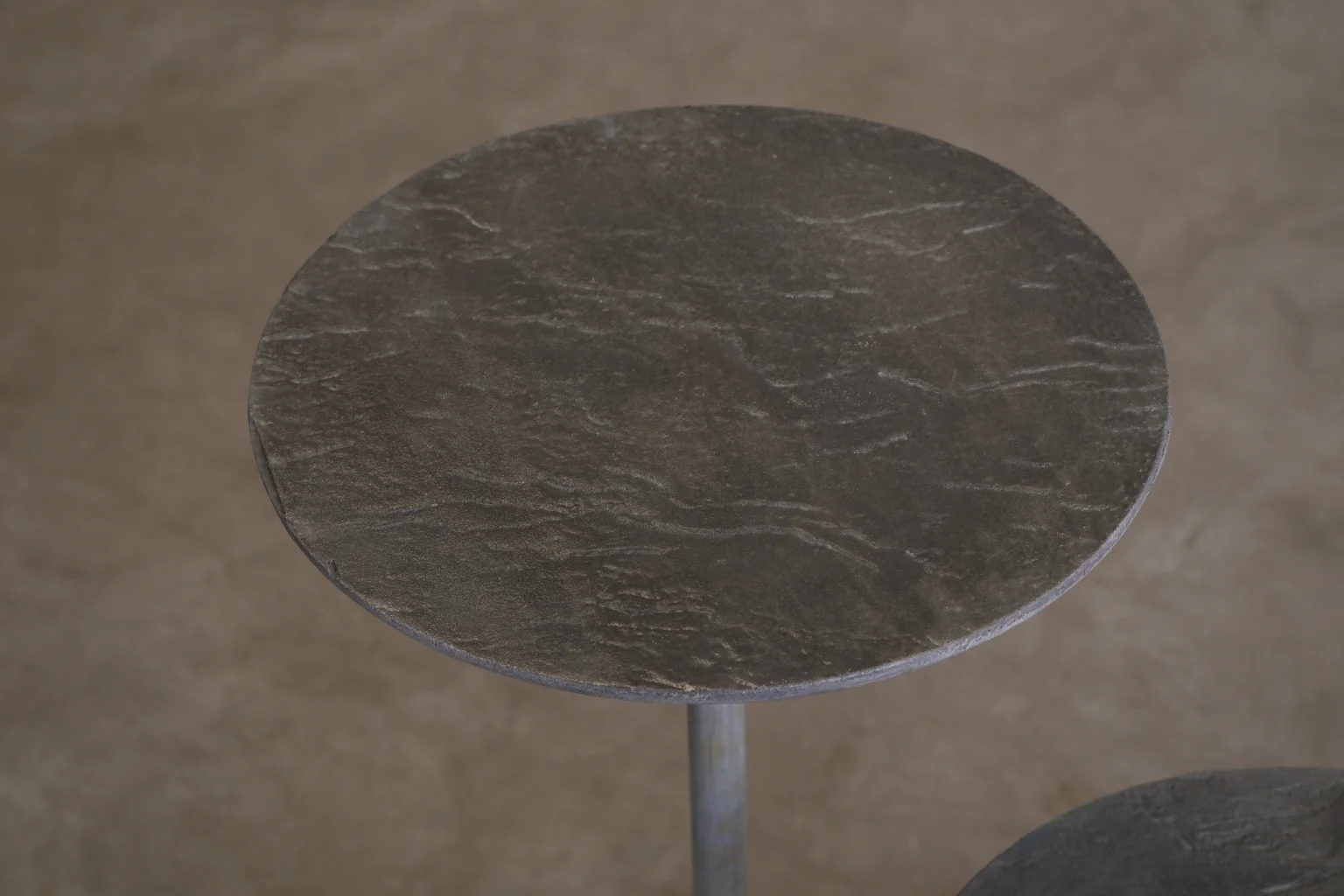
This shape works with materials that already carry irregularity. Wood brings grain and knot, marble brings vein, terracotta brings the slight asymmetry of hand-building, resin brings color that can be poured, layered or left transparent.
Materials, finishes and techniques
Organic tables draw on a wide material range. Solid wood, often pine, appears raw, charred through shou sugi ban or finished to a matte sheen; marble and Calacatta marble arrive carved or sculpted from the block; terracotta and other clay bodies are hand-built and fired; resin is cast, sometimes transparent, sometimes in saturated color such as sky blue, crimson or black.
- Stone carving and sculpting for marble and terracotta tops
- Charring and wood and cabinetmaking for raw, burnt and pine finishes
- Resin casting for transparent, colored or layered surfaces
- Biofabrication and metal casting for bases and supporting structures
Editions range from open runs to limited editions and unique pieces, so the same curved silhouette can exist as a repeatable design or as a one-off shaped entirely by hand.
Choosing scale, height and finish
Organic tables scale unevenly, so measuring the widest curve matters more than the center point when checking a footprint against a sofa or doorway. Standard coffee table height sits around 16 to 18 inches, side tables run higher, and dining heights hold close to 29 to 30 inches regardless of how irregular the outline becomes.
Finish affects how a piece reads day to day. A matte wax on wood softens light and hides fingerprints, a polished marble surface throws reflection and shows oil quickly, and transparent resin lets whatever sits beneath it show through. Choose a finish that matches how much handling and spillage the room invites.
Where organic tables sit in a room
A sculptural coffee or side table carries weight as a living room table, anchoring a seating group without the stiffness of a square or round plan. Smaller organic pieces also work as side or occasional tables wherever a plain geometric form would compete with a curved sofa or an irregular rug. Set beside a minimalist table, an organic piece reads as the room's one deliberate departure from the grid.
Caring for wood, stone and resin surfaces
Wood wants a stable room, away from direct heat and damp, with a wax or oil reapplied as the surface dulls; charred finishes shed a little soot at first and settle once sealed. Marble stains from wine, citrus and oil, so a coaster or trivet protects the vein pattern that makes the stone worth choosing. Resin resists moisture but scratches under abrasive cleaners, so a soft cloth and mild soap keep a cast top clear or bright.
Across all of these, the material does most of the design work. Looking at wooden tables, the full range of tables, or every organic shaped piece on ADORNO shows how differently the same curved logic plays out from one material to the next.
How do I choose an organic table?
Look at the line first: organic tables favor curved, irregular or asymmetric forms over straight edges. Match the material and shape to the room, since these pieces often read as sculpture as much as furniture.
What materials are organic tables made from?
Common choices include resin, terracotta, marble and wood, sometimes charred or burnt for texture and color. Each material carries its own grain, vein or surface, so no two tables look exactly alike.
How do I care for an organic table?
Wood benefits from occasional oiling and protection from direct sun, marble needs sealing against stains, and resin wipes clean with a soft cloth. Avoid harsh chemicals and standing water on any surface.
What size and height should an organic table be?
Dining heights typically run around 28 to 30 inches, coffee tables lower, but organic shapes vary more than standard rectangles. Check the piece's own dimensions, since curves affect usable surface area.
Which rooms suit an organic table?
Dining rooms and living rooms both work well, especially where the table serves as a visual anchor. Smaller organic side tables also suit entryways or reading corners as standalone sculptural objects.
Does ADORNO ship organic tables worldwide, and can I return one?
Shipping is insured and worldwide. Returns are accepted within 14 days, except for made-to-order pieces, and each table arrives with a certificate of authenticity.