












-
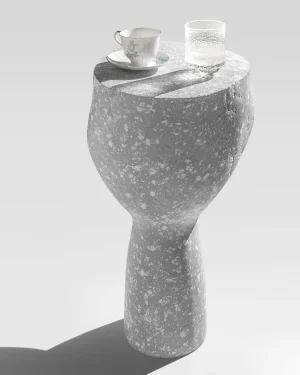
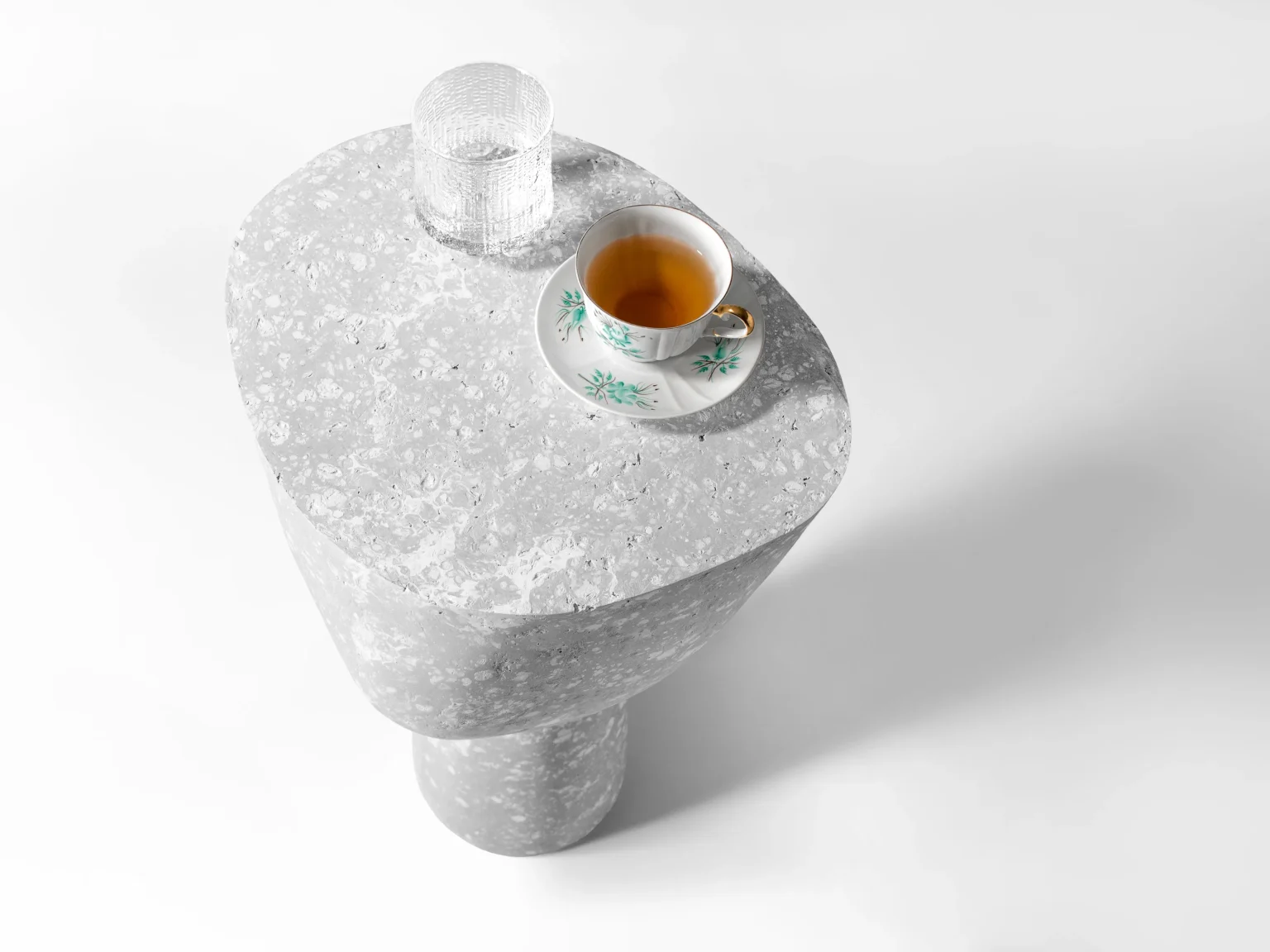
White Plinth Side Table in Paper Pulp and Cement
By Donatas Žukauskas
€1.050 -

Mono Dining Table
By Assimply Studio
€4.920 - €5.450 This product has multiple variants. The options may be chosen on the product page -

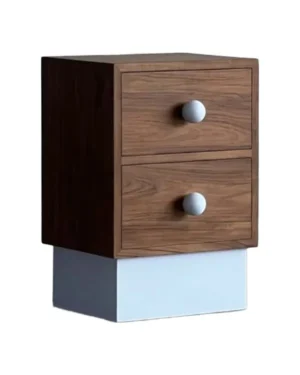
Windows of Bo Bardi Side Table in Tulip Wood
By Linde Freya Tangelder
€1.300 - €1.600 This product has multiple variants. The options may be chosen on the product page -
 In stock
“Ollain” Coffee Table
By Tellurico Design Studio
€5.856 -
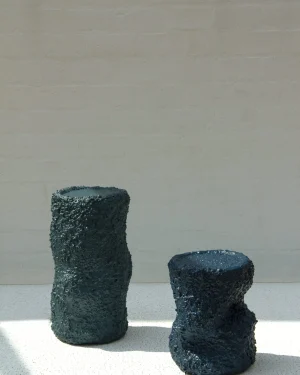
XS + XM Side Table in Special Composite Material
By Tellurico Design Studio
€3.870 -
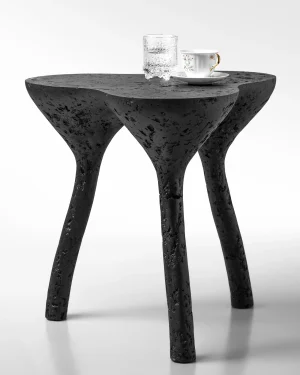
Solid Black Stone Coffee Table in Cast Stone
By Donatas Žukauskas
€1.450 -

Mono – Dining Table Long
By Assimply Studio
€5.820 -
 In stock
Strata Nebula – Stacked Coffee Table
By clasik.studio
€790 This product has multiple variants. The options may be chosen on the product page -
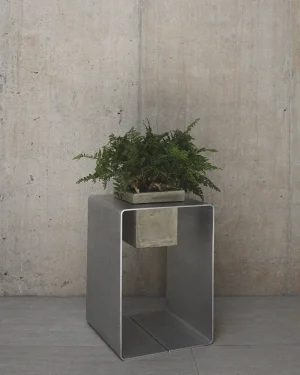
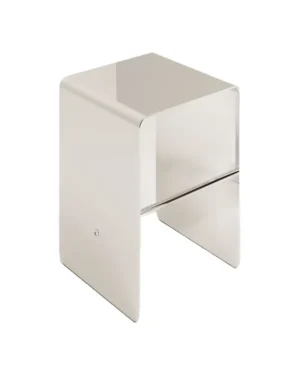
ST001-02 Side Table in Stainless Steel and Concrete
By NAVE
€990 -
 In stock
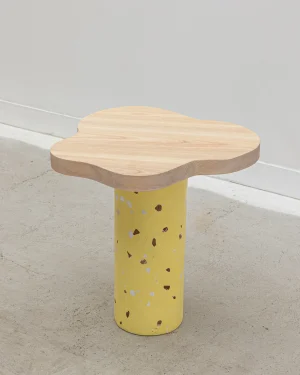
Esposcada 01 Side Table in Terrazzo and Ash Wood
By Pierre Klein
€1.600 -

Domino Dining Table
By Assimply Studio
€8.670 - €23.400 This product has multiple variants. The options may be chosen on the product page -
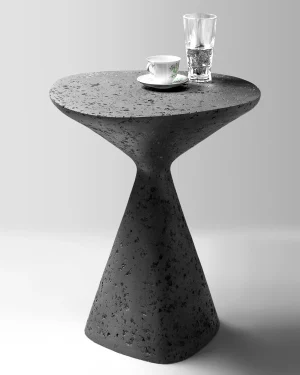
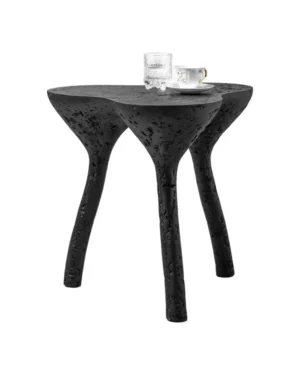
Black Mottled Side Table in Paper Pulp and Cement
By Donatas Žukauskas
€1.100 -

Solid Black Stone Console Table – Toki Series In Cast Stone By Donatas Zukauskas
By Donatas Žukauskas
€2.150 -

Dendê Dining Table
By Assimply Studio
€5.200 -
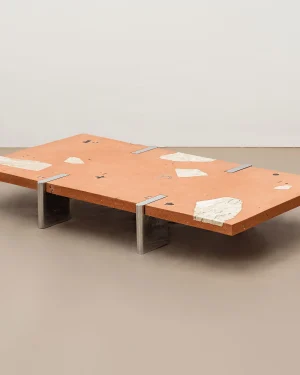
Coffee Table Nu
By Assimply Studio
€3.430 -
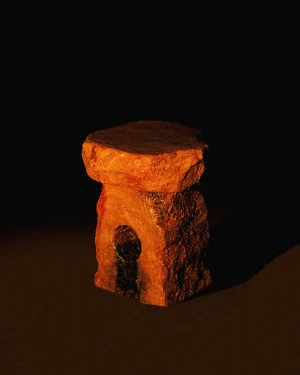 In stock
La Cauna – Escabèl 01 Stool
By Pierre Klein
€900 -
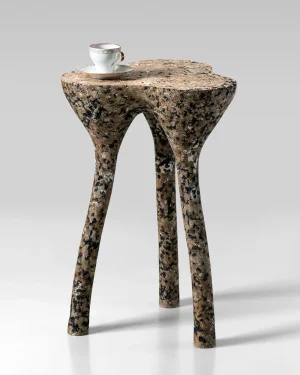
Beige Tripod Low Side Table in Paper Pulp and Cement
By Donatas Žukauskas
€1.100 -
 In stock
Parota Backgammon / Coffee Table
By NO AGE STUDIO
€4.000 -
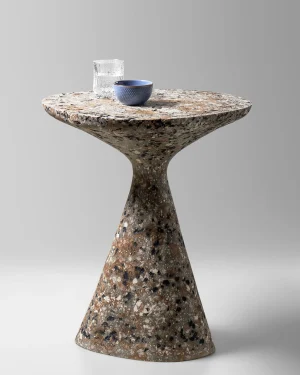
Beige Mottled Side Table in Paper Pulp and Cement
By Donatas Žukauskas
€1.100 -
 In stock
Coral Circle Side Table in Concrete
By clasik.studio
€1.350 -
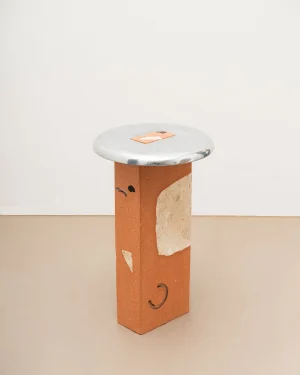
Nu Tall Side Table in Terrazzo and Cast Aluminum
By Assimply Studio
€1.650 -
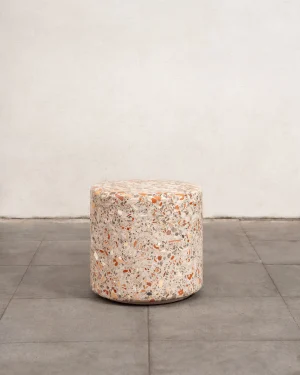
Brut Side Table in Terrazzo
By Assimply Studio
€900 This product has multiple variants. The options may be chosen on the product page -
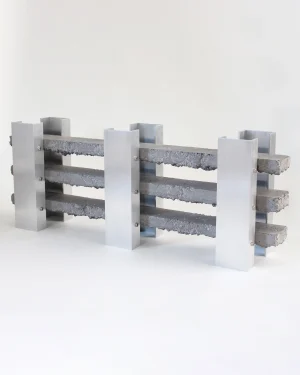
Junction Low Table & Shelves
By Lisanne Meester
€1.399 -
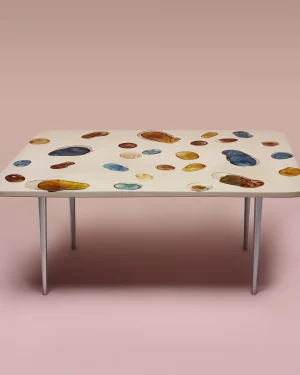
Plano – Terrazzo Dining Table
By Assimply Studio
€8.900 -
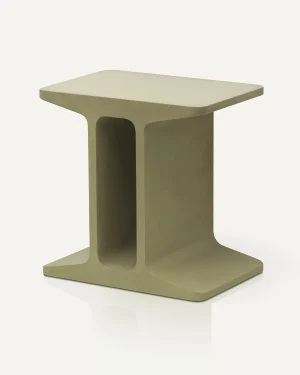 In stock
Intra Side Table in Pigmented Concrete
By Tom Robinson Studio
€1.420 This product has multiple variants. The options may be chosen on the product page -

Solid White Stone Low Coffee Table – Plinth Series In Cast Stone
By Donatas Žukauskas
€1.300 This product has multiple variants. The options may be chosen on the product page -
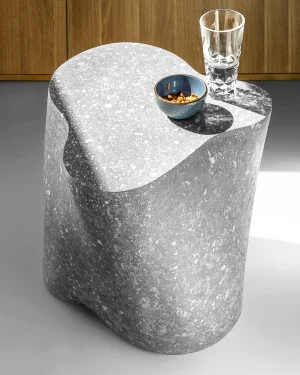
Solid White Stone Low Glass Top Coffee Table – Plinth Series In Cast Stone By Donatas Zukauskas
By Donatas Žukauskas
€1.300 - €1.450 This product has multiple variants. The options may be chosen on the product page -
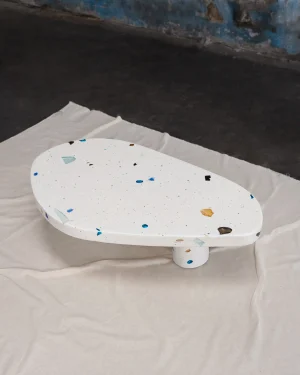
Mono Coffee Table
By Assimply Studio
€1.300 This product has multiple variants. The options may be chosen on the product page -

Black Still Column Side Table in Paper Pulp, Cement and Oak
By Donatas Žukauskas
€1.550 -

“Revolve” – No. 03 (no. 01/03)
By Flensted Mouritzen
€2.548 -
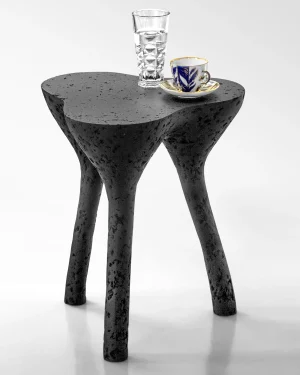
Black Tripod Low Side Table in Paper Pulp and Cement
By Donatas Žukauskas
€960 -
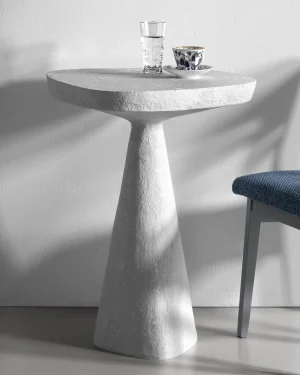
White Plinth High Side Table in Paper Pulp and Cement
By Donatas Žukauskas
€1.350 -
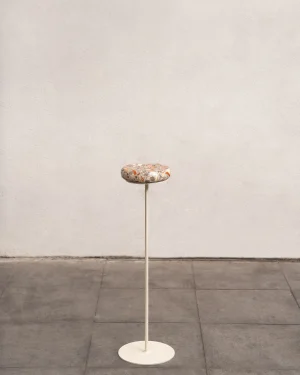
Brut Tall Side Table in Terrazzo
By Assimply Studio
€350 This product has multiple variants. The options may be chosen on the product page -
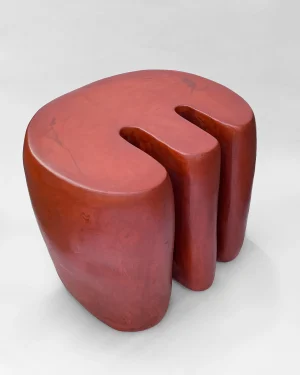
Organic Side Table in Gypsum
By Studio AOAO
€4.000 -
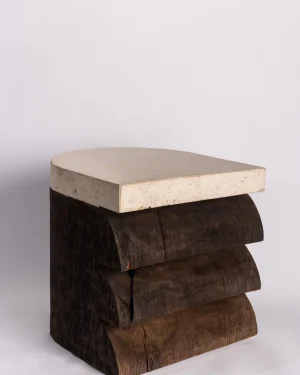
Durmiente Side Table in Reclaimed Wood and Cement
By Daniel Orozco Estudio
€1.218 -
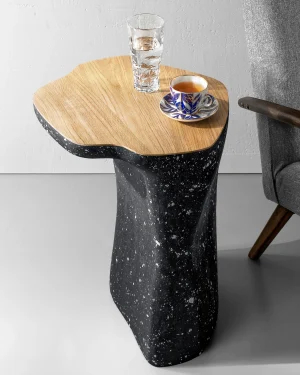
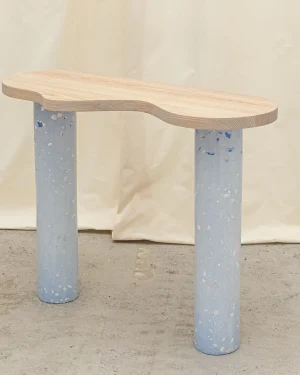
Black Still Form Side Table in Paper Pulp, Cement and Oak
By Donatas Žukauskas
€920 -
 In stock
Esposcada 02 – Console Table
By Pierre Klein
€2.300 -

“Revolve” – No. 01 (no. 01/03)
By Flensted Mouritzen
€2.100 -
 In stock
“Revolve” – No. 04 (no. 01/03)
By Flensted Mouritzen
€2.988 -

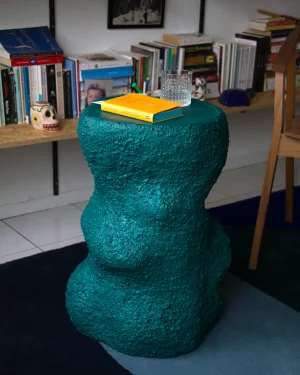
Revolve No. 06 Side Table in Scagliola and Natural Wax
By Flensted Mouritzen
€2.988 -
 In stock
Ollain M Side Table in Special Composite Material
By Tellurico Design Studio
€2.500 -
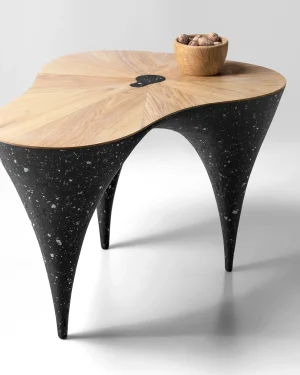
Solid Black Stone & Oak Poise Coffee Table – Still Series In Cast Stone By Donatas Zukauskas
By Donatas Žukauskas
€2.450 -

Mono – Coffee Table Grande
By Assimply Studio
€1.720 -
 In stock
Kokoro-te – Coffee Table
By clasik.studio
€1.163 -
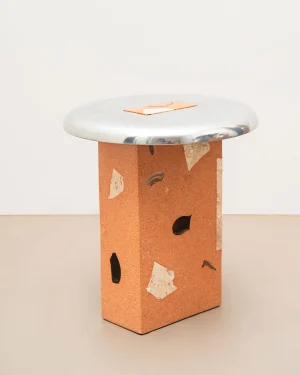
Nu Low Side Table in Terrazzo and Cast Aluminum
By Assimply Studio
€1.320 -
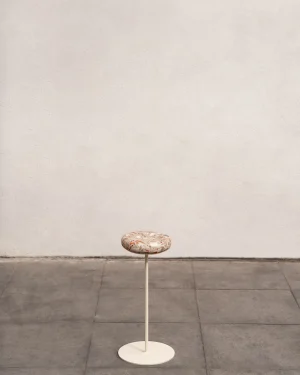
Brut Low Side Table in Terrazzo
By Assimply Studio
€285 This product has multiple variants. The options may be chosen on the product page -
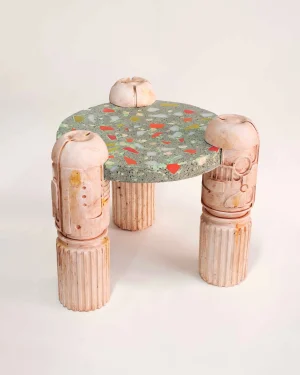
Taula 04 Side Table in Terrazzo and Plaster
By Pierre Klein
€2.600 -
 In stock
Dahou – Coffee Table
By Pirouette
€1.510 -

“Revolve” – No. 02 (no. 01/03)
By Flensted Mouritzen
€3.500 -

Revolve No. 05 Side Table in Scagliola and Natural Wax
By Flensted Mouritzen
€2.548 -
 In stock
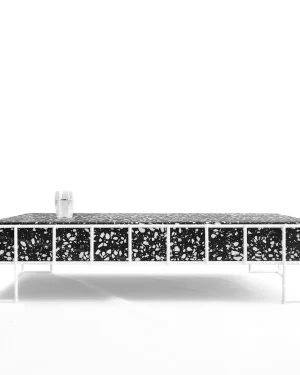
Mock-a 20 – Contemporary Terrazzo Coffee Table
By Adrien Mans
€3.200 -
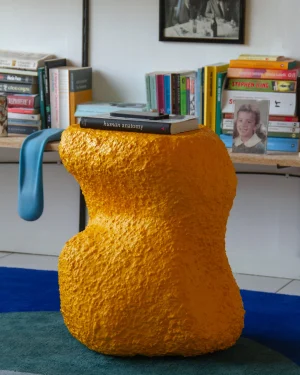 In stock
Ollain S Bright Yellow Side Table in Composite Material
By Tellurico Design Studio
€2.300 -
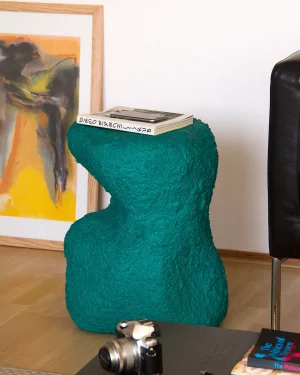
Ollain S Emerald Green Side Table in Composite Material
By Tellurico Design Studio
€2.200 -
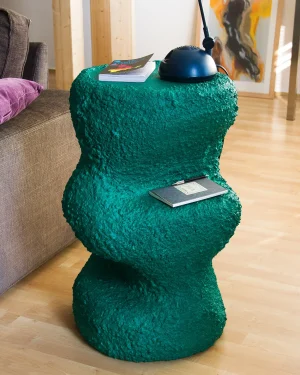
Ollain L Side Table in Special Composite Material
By Tellurico Design Studio
€2.600
Concrete tables are built from one of the heaviest and most unglamorous materials in construction, turned into furniture by studios that pour, cast and finish it by hand. Each top or base starts as a wet mix set into a mold, then cured, sanded and sealed until the surface reads as stone rather than pavement. What defines the category is less a look than a process: weight, density and a cool, matte touch that no veneer can fake.
What defines concrete as a table material
Concrete is poured, not carved or joined, which means a tabletop can take almost any shape a mold allows: thick slab, thin cantilever, rounded edge or sharp one. Air bubbles, fine aggregate and the trace of formwork often stay visible, giving each surface small variations that read as the material's own grain. Left alone, concrete ages slowly, picking up a faint patina rather than wearing out.
Finishes, colors and techniques on ADORNO
Within concrete casting, studios vary the mix and the finish rather than the base material: polished surfaces that catch light like stone, raw ones left with the texture of the mold, and pigmented batches in black, gray, beige and brown, with red, green or blue appearing where a studio pushes the material further. Some pieces pair a concrete top with a base in oak wood, stainless steel or welded metal, setting a heavy surface on a lighter frame. Others sit closer to stone carving or fiber-cement work, drawing on the same brutalist or wabi-sabi sensibility without using concrete at all.
Editions vary too. Because molds can be reused, concrete lends itself to open and limited editions as well as unique pieces where a studio alters the mix, the pigment or the finish each time. Checking the edition note on a given piece will tell you which kind you are looking at.
Choosing a concrete table for scale and height
Concrete is dense, so scale matters more than it would in wood or steel: a slab that looks modest in a photograph can be difficult to move once it arrives. Measure the floor space and any doorways or stairs it needs to pass through before committing to a size.
- Coffee table height generally sits between 16 and 18 inches, low enough to keep a heavy top visually grounded.
- Dining and desk heights run closer to 28 to 30 inches, standard across most tables regardless of material.
- A honed or polished finish shows marks less than a raw, porous one, worth weighing if the table will carry daily use.
For a wider comparison of heights and proportions across materials, the full range of tables on ADORNO is a useful starting point before narrowing to concrete.
Where concrete tables work in a room
The weight and flat tone of concrete suit rooms built around a few solid elements rather than many light ones. A concrete coffee or side table anchors a living room where other pieces are upholstered or made of wood, giving the eye one place to rest. In a dining room, a concrete top can double as a steadying center for a mix of chair styles, while its cool surface tolerates spills better than wood's finish. For a closer look at scale in smaller formats, the concrete side tables group shows how the material behaves at a reduced size, and the living room tables group places it alongside other materials doing the same job.
Caring for a concrete surface
Sealed concrete resists water and everyday wear but is not entirely stain-proof; wine, oil and acidic liquids can mark an unsealed or lightly sealed top if left standing. Wipe spills promptly, clean with a damp cloth rather than harsh solvents, and reseal every few years if the piece sees regular use. Hairline cracks can appear over time as the material settles; on a piece made by hand this is usually part of its character rather than a fault.
To see concrete used across other kinds of furniture, from lighting to accessories, the full concrete material page gathers pieces beyond tables, while concrete furniture covers seating, storage and more made the same way.
How do I choose a concrete table?
Think about weight and placement first, since concrete is dense and often stays where it lands. Match the tone, gray, white or pigmented, to the room, and confirm exact dimensions with the maker before ordering.
How do you care for a concrete table?
Wipe with a damp cloth and mild soap, and seal occasionally to resist stains from oil, wine or water. Avoid harsh acids, and expect small surface marks to appear as the material ages.
Is concrete good for a dining or coffee table?
Yes, concrete holds its shape under daily use and resists scratches better than softer stone. Its weight gives dining and coffee tables a steady, grounded base that will not wobble.
What size and height should a concrete table be?
Standard dining height runs around 28 to 30 inches, coffee tables lower, around 16 to 18 inches. Because concrete pieces are cast individually, check the maker's page for exact measurements.
Which rooms suit a concrete table?
Concrete tables anchor living rooms, dining areas and covered outdoor spaces, standing up to both indoor wear and mild weather exposure. Their weight and texture read well against wood, steel or soft upholstery.
How does buying a concrete table through ADORNO work?
Shipping is insured and worldwide, with a 14-day return policy, excluding made-to-order pieces. Each table arrives with a certificate of authenticity, backed by a lowest-price guarantee.