












-
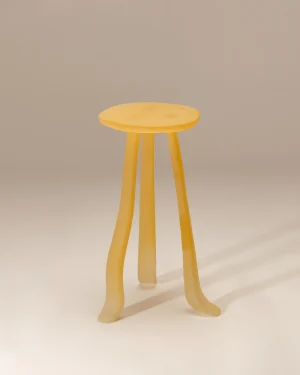
Lung 1.0 Honey Matte Side Table in Resin
By Szymon Keller
€2.200 - €2.400 This product has multiple variants. The options may be chosen on the product page -

Agar Table 02
By STUDIO KALLANG
€2.900 -
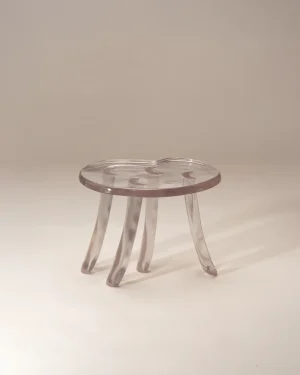
Lung 2.0 Side Table in Resin
By Szymon Keller
€3.180 -

Lung 2.0 Blue Side Table in Resin
By Szymon Keller
€3.180 This product has multiple variants. The options may be chosen on the product page -
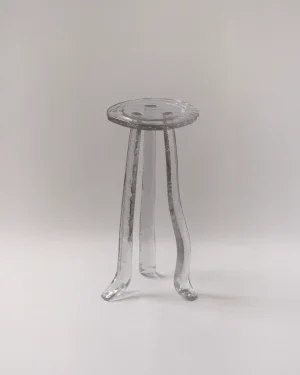
Lung 1.0 Side Table in Resin
By Szymon Keller
€2.000 - €2.400 This product has multiple variants. The options may be chosen on the product page -

Klar Coffee Table in Tempered Glass
By hermhaus
€3.508 -
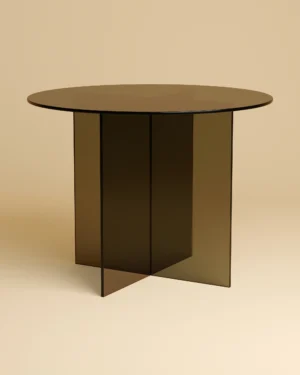
Round Glass Dining Table – Yuri Series
By Lebanto
€3.100 This product has multiple variants. The options may be chosen on the product page -
 In stock
Curve Coffee Table in Thermoformed Glass
By Sophia Taillet
€4.800 -
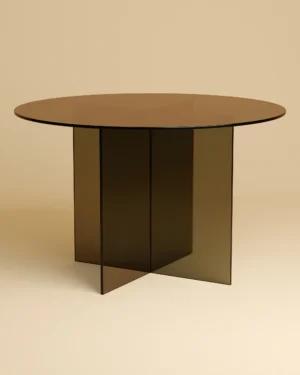
Round Glass Dining Table – Sado Series
By Lebanto
€3.750 This product has multiple variants. The options may be chosen on the product page -
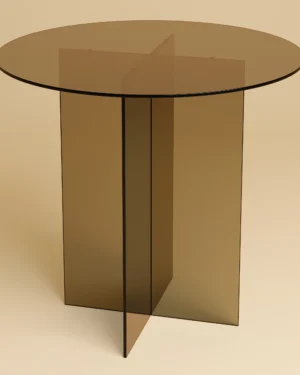
Round Glass Dining Table – Iki Series
By Lebanto
€2.500 This product has multiple variants. The options may be chosen on the product page -
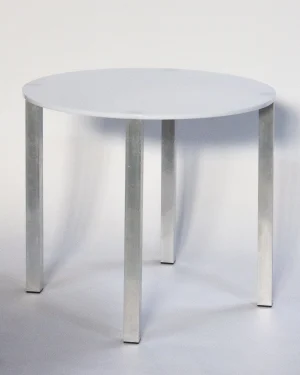
Acrilar – Round Acrylic Table
By Luiz Solano
€1.500 -
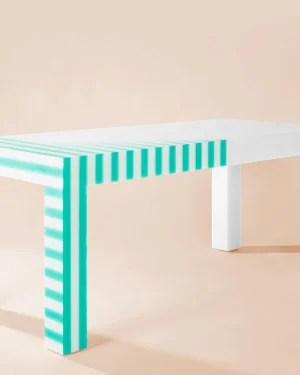
“Siena” Table
By Adrian Cruz
€12.000 -
 In stock
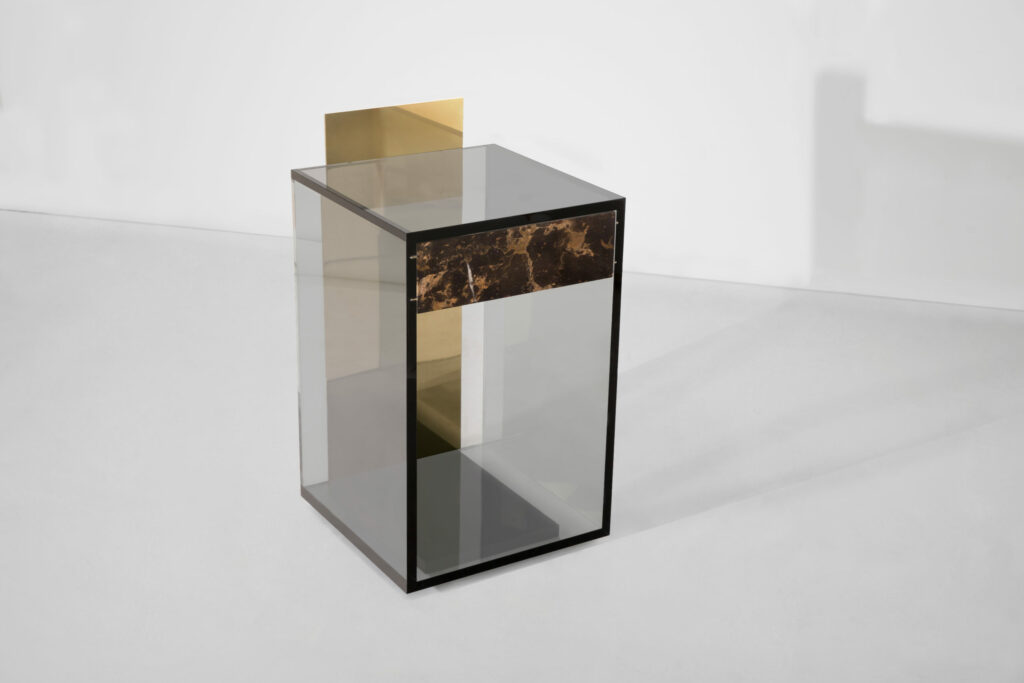
Servant Side Table in Black Marble, Oak, Acrylic and Brass
By VAUST Studio
€7.600 -
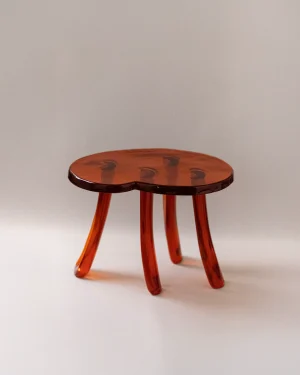
Lung 2.0 Amber Side Table in Resin
By Szymon Keller
€3.180 This product has multiple variants. The options may be chosen on the product page -
 In stock
Table 03.01 ´route´
By SK - Sofia Karnukaeva
€1.800 -

Shrine Side Table in Black Marble, Oak, Acrylic and Brass
By VAUST Studio
€8.200 -
 In stock
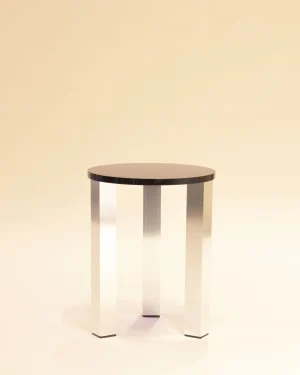
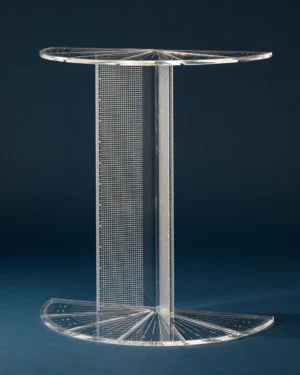
Acrilar Side Table in Acrylic and Aluminum
By Luiz Solano
€650 -
 In stock
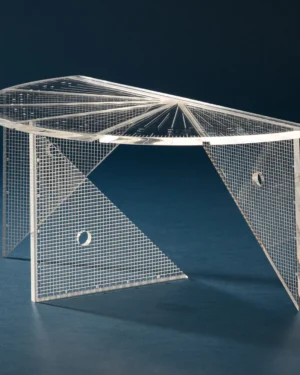
Angle A Side Table in Acrylic
By Iyo Hasegawa
€2.800 -
 In stock
Angle C Side Table in Acrylic
By Iyo Hasegawa
€2.350 -
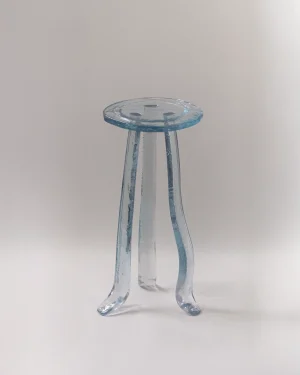
Lung 1.0 Blue Side Table in Resin
By Szymon Keller
€2.000 - €2.400 This product has multiple variants. The options may be chosen on the product page -

Lung 1.0 Amber Side Table in Resin
By Szymon Keller
€2.041 - €2.400 This product has multiple variants. The options may be chosen on the product page
Transparent tables are built so the eye moves through the surface rather than stopping at it, letting a room read as more open than its furniture count would suggest. Studios reach this effect through glass, cast resin and acrylic, sometimes paired with aluminum, bronze or brass for the structure beneath. The material carries the design here more than any applied finish does.
What defines a transparent table
Clarity is a function of process, not just material choice. Glass gets its transparency from cold working and, less often, glassblowing, where the surface is ground, polished or shaped while hot. Cast resin and acrylic resin are poured or molded, then cured and polished until the surface gives no shadow of tooling. Where metal appears, it is usually welded, sand cast or worked cold, often in aluminum, bronze or brass, to hold a glass or resin top rather than compete with it.
The range of transparent tables on ADORNO
Within this material, finish and color vary more than shape. Glass tops run from fully clear to a faint gray or amber cast; resin and acrylic read the same way, sometimes warmed toward amber or cooled toward sky blue, occasionally paired with black marble or off-white bases for contrast. Styles span contemporary, modern and minimalist forms through to Art Deco, Bauhaus and more radical, sculptural bases. Editions vary by studio: some tables are open editions made to standing specifications, others are limited editions or unique pieces where no two surfaces pour or cool quite the same way.
- Materials: glass, resin, acrylic, acrylic resin, aluminum, bronze, brass, with black marble sometimes used for a base or plinth
- Techniques: glass cold working, glassblowing, resin casting, metalwork, sand casting, welding
- Editions: open editions, limited editions, unique pieces
How to choose a transparent table
Scale matters more with a clear surface than a solid one, since the eye tends to underestimate how much space it needs. Measure the footprint as you would for any table, then add a margin, because a clear top can look smaller in a room than it will feel once in use. Standard heights apply, around 28 to 30 inches for dining and 16 to 18 inches for a coffee table, so fit is rarely the problem; finish usually is. A high-gloss resin or glass top will show every fingerprint and water ring, while a sandblasted or acid-etched surface hides daily use at the cost of some clarity.
Where these tables work
Because they hold so little visual weight, transparent tables suit smaller rooms or any room where another piece, a rug, a sculptural chair, a piece of lighting, is meant to carry the attention. They are common as coffee and side tables in the living room, and as console or occasional tables in entryways and studies where floor space is limited. In a dining room, a clear top can seat a group without closing the space in the way a solid wood or stone table would. For a pared-back base and surface together, minimalist tables are worth a look, and bases in steel or aluminum appear among metal tables.
Caring for glass, resin and acrylic
Glass tolerates most household cleaners but scratches under abrasive pads, so a soft cloth and a dedicated glass cleaner are enough. Resin and acrylic scratch more easily than glass and can cloud under harsh solvents, so a damp cloth and mild soap suit them better, with any polish tested on an inconspicuous edge first. All three will show direct, sustained sun exposure over time, so keeping a transparent table out of a south-facing window through the hottest hours will keep its clarity even. For related pieces in the same color family, the full range of transparent design on ADORNO extends beyond tables into lighting, seating and objects.
How do I choose a transparent table?
Consider the room's scale, since glass and acrylic read lighter than wood or stone and suit spaces where a solid table would crowd the eye. Match the base material, cast resin, blown glass or cut acrylic, to how the room already feels.
What material are transparent tables made from?
Most are glass, cast or cold-worked, or acrylic and resin shaped through casting. Some studios combine a clear top with a metal or bronze base for contrast and added weight.
How do I clean and care for a transparent table?
Wipe glass and acrylic with a soft cloth and a mild, non-abrasive cleaner, avoiding ammonia-based products that can cloud the surface over time. Lift rather than drag objects across the top to prevent fine scratches.
What size and height should a transparent table be?
Standard dining heights run around 28 to 30 inches, coffee tables lower at 16 to 18 inches, consistent with tables in any material. Transparent surfaces make a room feel more open, so sizing can lean slightly larger without overwhelming the space.
Which rooms suit a transparent table best?
Living rooms and dining areas benefit most, since the clear surface keeps sightlines open and lets flooring or rugs show through. They also work well in smaller rooms where a solid table would feel heavy.
What are ADORNO's shipping, returns and authenticity policies?
Shipping is insured and worldwide, with a 14-day return policy that excludes made-to-order pieces. Every piece includes a certificate of authenticity, backed by a lowest-price guarantee.