









-

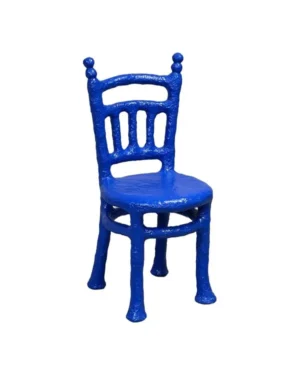
The Three Ball Leg Chair
By Joana Teixeira
€2.200 -
 In stock
The X Chair
By NO AGE STUDIO
€2.500 -
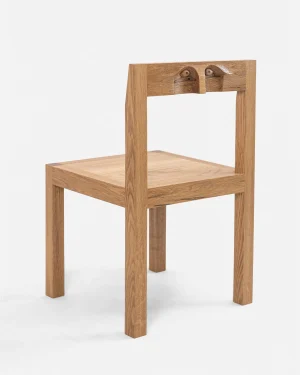
Stele – Oak Wood Chair
By Molor Tumen-Ulzii
€3.000 -
 In stock
Pneumatic Chair 2
By Szostak Atelier
€5.990 This product has multiple variants. The options may be chosen on the product page -
 In stock
Luna Chair
By Arbore x Cezar Moldovan
€1.988 -

Ruva Chair
By AEXIO
€825 -

Poppy – Sculptural Oak Chair
By Deya
€1.640 -

Honey – Squiggle Oak Wood Chair
By Deya
€1.492 -
 In stock
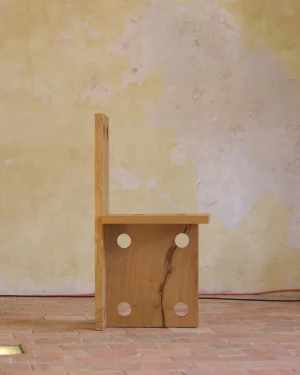
Sensitive Wood – Domino Chair
By Vital Lainé
€1.000 -
 In stock
Post & Rung Chair
By Luke Crouch Studio
€1.550 -

Stoa Chair
By Studio Mohs
€1.322 -
 In stock
Gavrinis – Oak Wood Chair
By Vital Lainé
€1.000 -
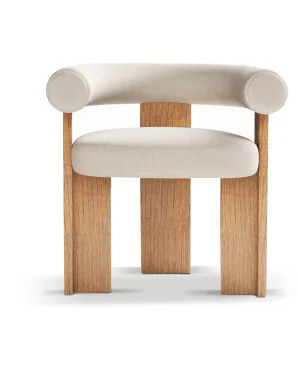
Cassette – Upholstered Armchair
By Alter Ego Studio
€2.215 -
 In stock
O Chair – Oak Dining Chair
By Vital Lainé
€800 -
 In stock
Accueil Armchair
By Vital Lainé
€1.150 -

Split Accent Chair
By ASUL-STUDIO
€1.900 -
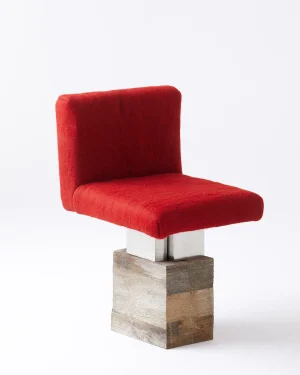
Tbilisi Street Chair – Upcycled Materials
By Around the Studio
€1.500 -
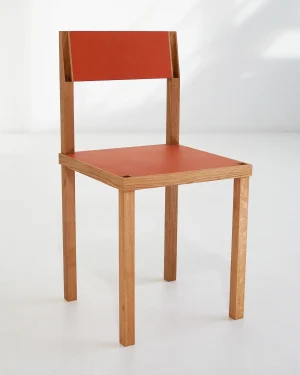
Kan Chair
By Benjamin Nordsmark
€800 -
 In stock
Kidake Bench
By Mike Hausmann
€2.150 -
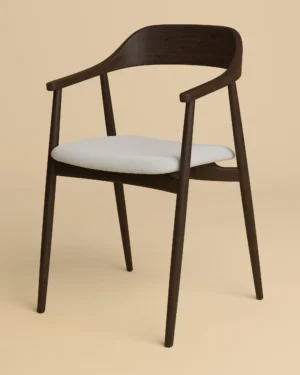
Wooden Dining Chair – Mikura Series In Smoked Oak
By Lebanto
€1.450 -
 In stock
Présence Chair – Oak / Brass
By Vital Lainé
€4.000 -

Random Chair – Upcycled Materials
By Around the Studio
€1.400 -
 In stock
Paroxysm Chair
By Vital Lainé
€1.500 -

Twisted Hand Carved Dining Chair
By Deya
€1.318 -

Twisted Hand Carved Dining Chair
By Deya
€1.562 -
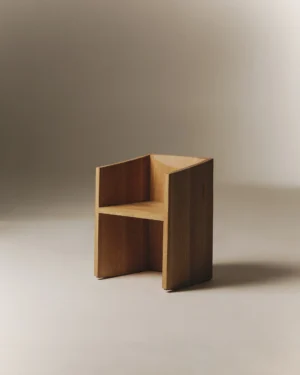 In stock
Castle Chair
By Mike Hausmann
€4.650 -

Wood Chair
By Malvin Gaborit
Price Upon Request -

The Walky Chair
By Design VA
€3.995 - €5.740 This product has multiple variants. The options may be chosen on the product page
Oak wood dining chairs take their character from a dense, open-grained hardwood that studios have relied on for centuries of seating. Independent makers work it through joinery, wood carving, and classic cabinetmaking, pairing solid oak frames with leather or upholstered seats, or leaving the wood bare at the seat and back. The result is a chair that reads straightforward in shape but carries weight in the hand and under the body.
What defines oak as a dining chair material
Oak is prized for density and a visible grain that runs in tight, straight lines or opens into wider figuring depending on how the board was cut. It resists dents and scratches better than softer woods, which matters at a table where chairs get pulled, pushed, and leaned on daily. Left unfinished or oiled, oak ages toward a deeper amber; stained or caramel finishes push it warmer still, while matte lacquers keep the color close to its raw state.
The wood also takes carving and shaping well, which is why studios use it for sculpted backrests and tapered legs as much as for simple rectilinear frames. Joinery methods such as mortise-and-tenon give oak dining chairs structural honesty: the strength sits in the connections, not in hidden brackets or adhesive alone.
The range of finishes and construction on ADORNO
Within oak wood dining chairs, the variation comes from finish and from what meets the body. Some chairs are solid oak throughout, seat included, shaped and sanded until the wood itself provides the only cushioning. Others set an oak frame against a leather or upholstered seat, built through upholstery or leatherwork, for a softer contact point without losing the wood's presence at the legs and spine.
Styles run from mid-century modern silhouettes with splayed legs to minimalist and contemporary frames stripped of ornament, through to more eclectic or carved pieces that lean on oak's workability. Editions vary by studio: some chairs are produced as open editions for everyday replacement, others appear in limited runs or as unique pieces where carving or finish work cannot be repeated exactly.
How to choose an oak dining chair
Start with scale. A chair's seat height should sit close to standard table clearance, generally leaving enough room for knees and armrests to clear the table edge without crowding. Measure the width at the widest point of the backrest or arms against the space between place settings, especially if the set surrounds a smaller table.
Finish is the second decision. A raw or lightly oiled oak will show marks and patina faster than a sealed, matte, or lacquered surface, so match the finish to how the room gets used.
- Dining rooms with heavy daily use suit sealed or stained finishes that resist spills
- Occasional dining spaces can carry a rawer, oil-finished chair that develops character over time
- Mixed material rooms benefit from a chair that repeats a wood tone already present in a table or sideboard
For a broader look at wood species and tones beyond oak, the wooden dining chairs group covers walnut, lighter woods, and mixed finishes side by side.
Where these chairs sit in a room
Oak wood dining chairs anchor dining rooms most directly, but their weight and finish let them move into adjoining living spaces for extra seating, which is covered among living room dining chairs. Paired with an oak table, they read as a single material story; set against stone, steel, or a painted surface, the wood becomes the contrasting element in the room.
For the full set of dining seating in this material, oak wood dining chairs can also be considered alongside other oak pieces built for the dining room, including oak wood tables and oak wood furniture more broadly, for a consistent tone across a space.
Caring for oak dining chairs
Oak responds well to simple maintenance. Dust with a dry or barely damp cloth, and avoid standing water, which can darken or raise the grain if left to sit. Oiled finishes benefit from periodic reapplication to keep the surface even; sealed or lacquered chairs need only occasional cleaning to stay protected.
Keep oak dining chairs out of direct, sustained sunlight where possible, since prolonged exposure can shift color unevenly across a frame. With basic care, the wood is built to hold its structure and grain for long use at the table, within the broader range of oak wood chairs found across dining and other seating.
How do I choose an oak wood dining chair?
Look at the grain and joinery first, since oak ranges from pale and tight-grained to deeper tones with bolder figuring. Match the frame's weight and finish to the table and room it will sit in.
How do you care for oak wood dining chairs?
Wipe with a dry or slightly damp cloth and avoid standing water, which can mark the grain. Keep oak out of direct sun and steady heat so the tone ages evenly rather than fading unevenly.
What is the standard height for an oak dining chair?
Seat heights typically run between 17 and 19 inches, suited to standard dining tables around 28 to 30 inches tall. The maker can confirm exact dimensions with Chat with the maker on the piece's page.
Which rooms suit oak wood dining chairs?
Oak carries weight without feeling heavy, so it anchors formal dining rooms as well as open kitchen and living spaces. Its warm tone pairs with wood, stone and metal alike.
Does oak wood dining chairs darken or change color over time?
Yes, oak tends to deepen slightly with light exposure and age, developing a richer, warmer tone. This is a natural property of the wood, not a defect.
What are ADORNO's shipping and return policies for oak dining chairs?
Shipping is insured and worldwide. Returns are accepted within 14 days, excluding made-to-order pieces, and each piece arrives with a certificate of authenticity under ADORNO's lowest-price guarantee.