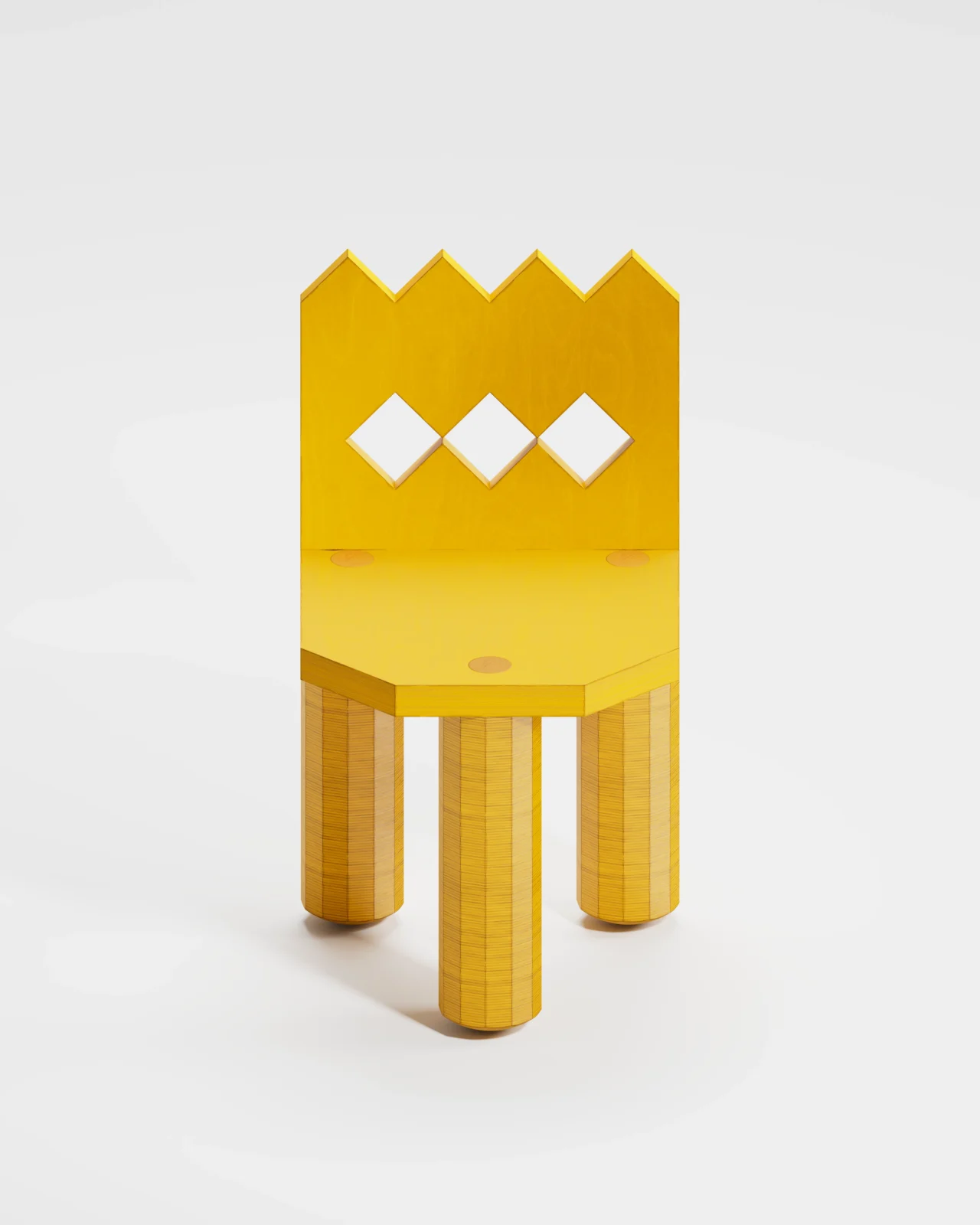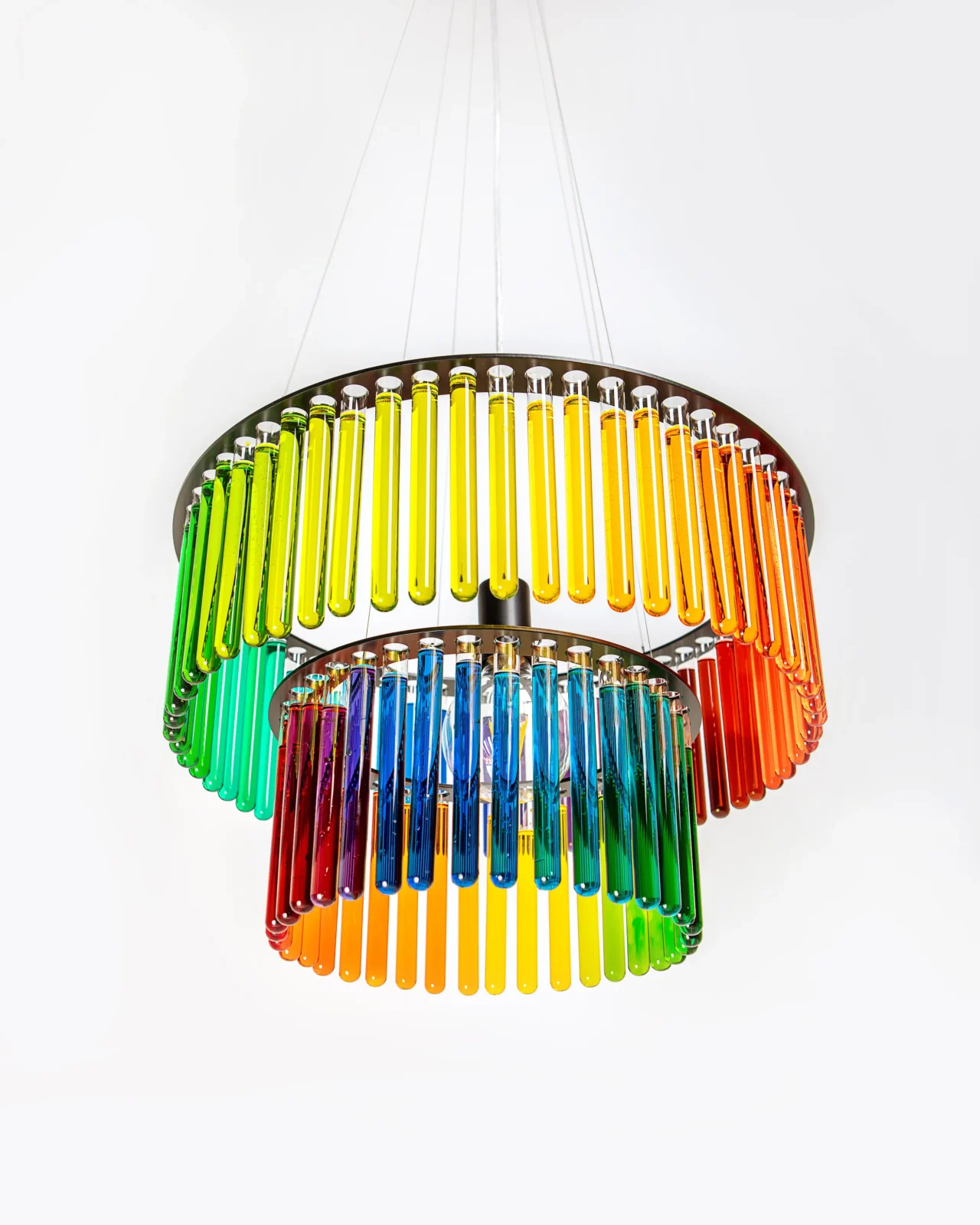
Plastic was the material of the future once. Designers are making the case for it again.
Updated on: October 28, 2026
Few materials carry as much baggage as plastic. It is cheap, it lasts for centuries, and most of it is thrown away. Yet plastic furniture also gave design some of its boldest shapes, from cantilevered chairs molded in one piece to translucent tables that seem to float.
A new generation of studios is changing what plastic furniture means: recycled plastic recovered from waste, bioplastics made from plants, and 3D-printed pieces produced one at a time instead of by the million. This guide covers the types of plastic used in furniture today, how to judge quality, one designer who blew plastic like glass, and nine pieces of plastic furniture and lighting by independent studios.
A short history of plastic furniture
Plastic entered the home after the Second World War. In the 1950s and 1960s, molded fiberglass and injection-molded plastic made it possible to form a seat, back and base in one continuous piece, and designers used that freedom for chairs that could not exist in wood or metal. The optimism did not last: by the 1970s oil crisis, plastic had become a byword for cheap and disposable.
That reputation is what designers are now pushing against. Sight Unseen traced this shifting image of synthetics in design, while Wallpaper* has covered companies turning plastic waste into panels for furniture and interiors.
Learning to love plastic: Dorian Renard’s armchair
French designer Dorian Renard, based in Eindhoven, made the case in a striking way. For The Beauty of Distortion, the collection he showed at his Design Academy Eindhoven graduation in 2019, he treated plastic the way a glassblower treats glass: heating, blowing, stretching, folding and bending it by hand. Where the heat landed, the material either bubbled, leaving a textured surface, or stiffened and gained strength.
The choice was deliberate. Glass is admired as a craft material; plastic, which is almost always shaped by machines, is seen as waste even before it is used. By bringing the maker’s hands back to plastic, Renard’s armchair asks the viewer to reconsider what makes a material valuable. For more on the original technique, see our guide to glass blowing.

Types of plastic used in furniture
- Recycled plastic: made from post-consumer or industrial waste, often shredded and melted into sheets or 3D-printing filament. Every piece keeps material out of landfill.
- Bioplastic: plastics made from plant sources such as corn starch or sugarcane. Some are biodegradable under industrial conditions.
- PLA: polylactic acid, a plant-based plastic and the most common material for 3D-printed furniture and lighting.
- Acrylic: also called PMMA, Plexiglas or Perspex. Clear as glass, about half the weight, and far less likely to shatter.
- Hard plastics: molded ABS, polypropylene and fiberglass, used for classic one-piece chairs that are strong and easy to clean.
How to choose plastic furniture
Good plastic furniture is made to last, which is the most sustainable thing it can do. Look for these signs of quality:
- Thickness: acrylic sheets of 15 mm (0.6 in) or more stay rigid; thin sheets flex and scratch.
- Source: recycled, bio-based or vintage plastic carries a smaller footprint than new, oil-based plastic.
- Finish: sanded and lacquered prints and polished acrylic edges show a maker’s care; visible seams and rough layers do not.
- Repairability: pieces with separable parts, like a shade that lifts off a base, are easier to repair and recycle.
- Indoor or outdoor: PLA and many bioplastics soften in heat and sun; keep them indoors.
If you want to see where the idea goes next, read about Atelier SOHN’s B.S.P. chair, made from plastic offcuts, and our visit to the bioplastics studio of Sabrina Merayo Nuñez.
9 plastic furniture and lighting pieces by independent studios
Each piece comes from a different studio and is available on ADORNO, ordered by demand on ADORNO over the last 90 days. Plastic is especially strong in lighting, where translucency does half the work, so the list mixes furniture and lamps.
Maze Table Lamp in Recycled Plastic by Stijn van Aardenne

Dutch designer Stijn van Aardenne 3D prints the shell of Maze from plastic recovered from discarded refrigerators, extruding each pattern around a rotating tube so no two lamps are alike. Lit, the maze throws a soft pattern of light; off, it still reads as a small sculpture. It stands 27 cm (10.6 in) tall and is the plastic piece with the most demand on ADORNO, with 5 checkouts and 8 carts in the last 90 days.
By Stijn van Aardenne
€227 incl. tax
Pmma Notch – Acrylic Vessel by Nolan Talbot-Kelly

Canadian designer Nolan Talbot-Kelly notches round acrylic tubes with a cutter of the same diameter and welds them into a watertight vase. The joints are the whole design. It is 35 cm (13.8 in) tall, the smallest and most affordable piece here, with 9 checkouts in the last 90 days.
By Nolan Talbot-Kelly
€100 incl. tax
S 2 Table Lamp In Bio Polymer by diploria studio

German studio diploria grows the pattern of S 2 from an algorithm that mimics how brain coral forms, then prints it in a biodegradable, corn starch-based biopolymer. The shade lifts off its base with a magnet, so the parts can be separated at the end of their life. It measures 31 cm (12.2 in) in each direction.
By diploria studio
€245 incl. tax
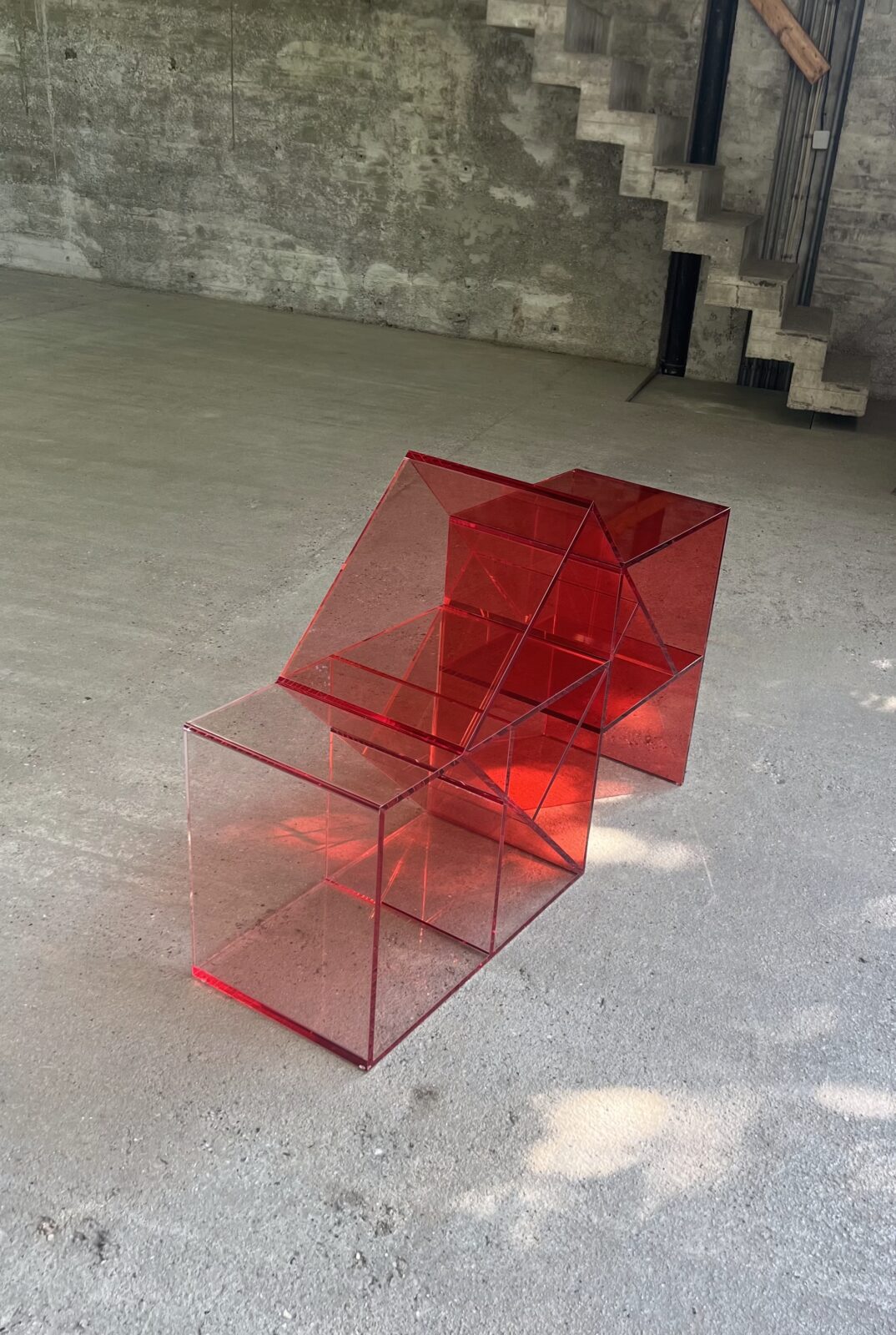
The Shifting Side Table in Acrylic Glass by em ef studio
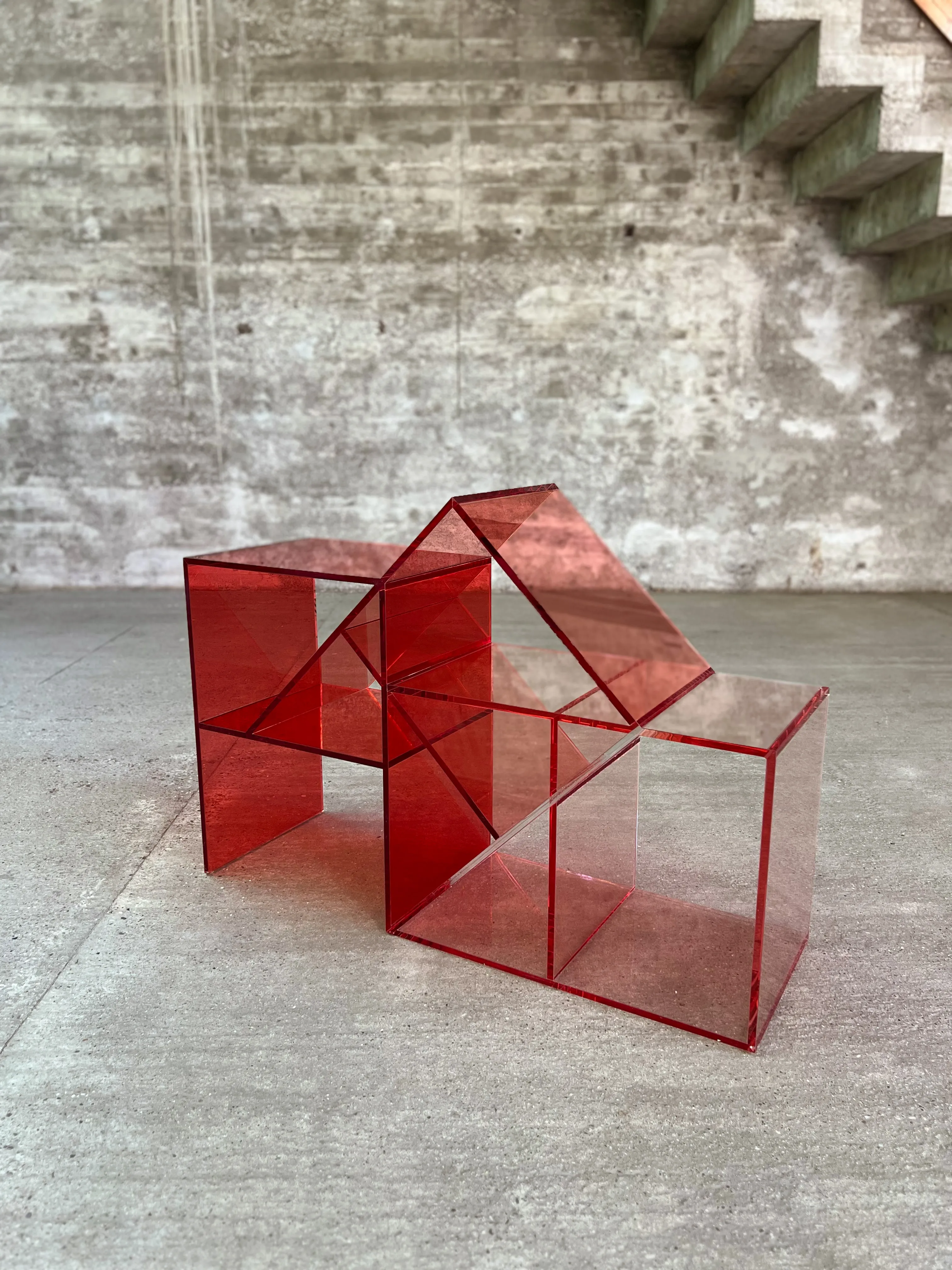
German studio em ef studio builds this side table by hand from three interlocking elements of acrylic glass in graduated shades of red. In three slow steps, the form tilts to one side and opens unexpected spaces between the boxes. At 110 x 37 x 80 cm (43.3 x 14.6 x 31.5 in), it is as much an installation as a table, and it is made to order.
By em ef studio
€11.000 incl. tax
Axile Table Lamp in Bio Plastic by Errance.
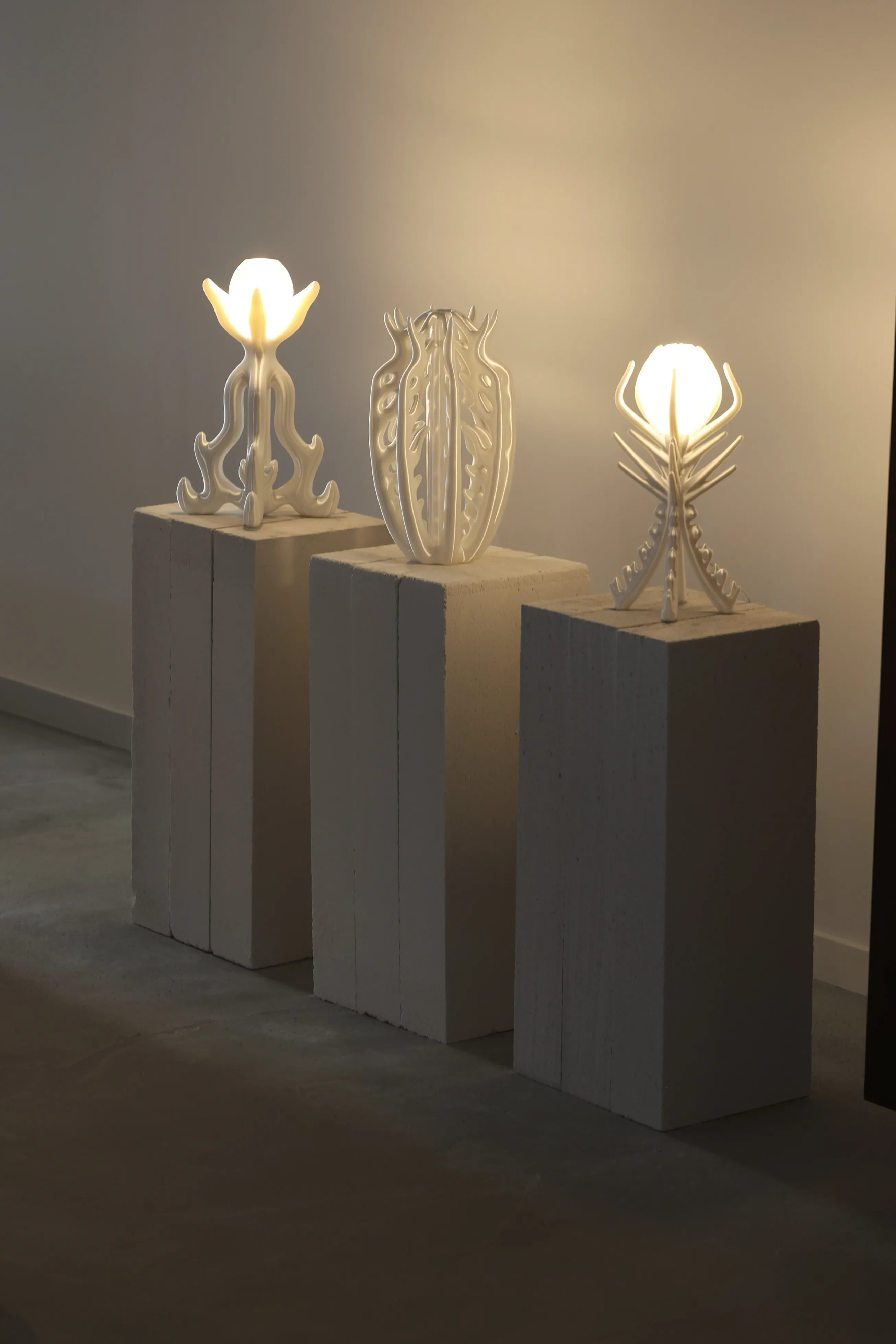
French studio Errance. based Axile on a dried thistle, the kind of flower that looks almost fossilized once preserved. Printed in bio plastic, the 43 cm (16.9 in) lamp holds its light inside a spiky, open structure, somewhere between a plant and an archaeological find. It is new this summer and already has 3 carts.
By Errance.
€335 incl. tax
Drizzle Table Lamp in Acrylic by Kajsa Melchior

Swedish designer Kajsa Melchior shapes the base of Drizzle in sand with pressure and dripping water, then casts it in Acrystal, a water-based acrylic resin colored with Bath stone minerals. The result looks like eroded stone but is far lighter. The base stands 45 cm (17.7 in) tall; the shade is not included.
By Kajsa Melchior
€780 incl. tax
Sea Blue Cado Chair by Vintola Studio

Polish studio Vintola restores Cado 290 chairs, designed by Danish architect Steen Østergaard in 1966 and produced in Poland in the 1970s in hard, glossy plastic. Seat, back and base form one cantilevered curve, the kind of shape only molded plastic could make. Vintola refinishes them in this sea blue or any RAL or Pantone color.
By Vintola Studio
€900 incl. tax
U-001 Cacao Side Table in 3D-Printed PLA by Rollo Studio
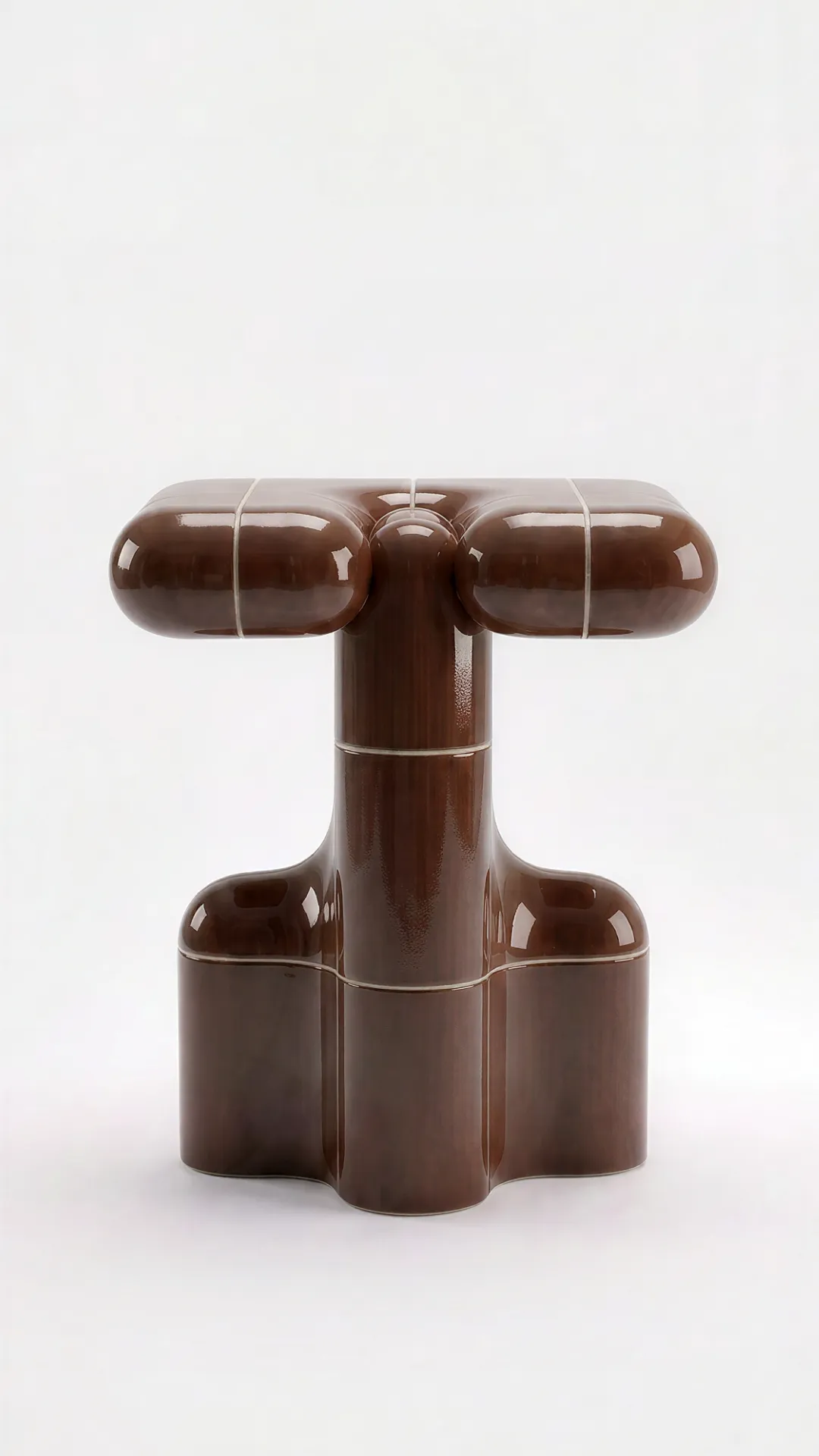
Rollo Studio 3D prints this side table in plant-based PLA at its workshop in Valencia, then sands and paints it to a deep, high-gloss finish. Stacked curved tiles give it a silhouette that changes from every side. It measures 38 x 38 x 46 cm (15 x 15 x 18.1 in) and weighs 8.2 kg (18 lb), light enough to move from sofa to bed.
By Rollo Studio
€1.620 incl. tax
Acrilar – Acrylic Chair I by Luiz Solano

Brazilian designer Luiz Solano folds a single acrylic sheet, at least 15 mm (0.6 in) thick, into the seat and back of this chair and sets it on square aluminum tubes. The color glows where light passes through it. The chair can be made in other colors, opaque or transparent.
By Luiz Solano
€840 incl. tax
Where plastic furniture works best
Translucent acrylic pieces suit small rooms, because they take up space without blocking light or views. A colored acrylic side table or chair adds a strong accent that changes with the daylight. Molded plastic chairs are easy to clean, which makes them good for kitchens and dining rooms. Printed and bioplastic lamps, meanwhile, work best where their texture can be seen up close: on a bedside table, a console or a desk. Browse more plastic table lamps and the whole plastic and polymer collection on ADORNO.
How to care for plastic furniture
Dust plastic with a soft microfiber cloth and clean it with lukewarm water and a drop of mild soap. Avoid paper towels, scouring pads and cleaners with ammonia or alcohol on acrylic, which scratch or cloud it; fine scratches can be buffed out with an acrylic polish. Keep PLA and bioplastic pieces away from radiators, hot cars and strong direct sun, as they can soften and warp above about 50 °C (122 °F). Recycled hard plastics are the most forgiving and can be wiped down like any other surface.
Frequently asked questions about plastic furniture
Is plastic furniture sustainable?
It can be. Recycled, bio-based and vintage plastic furniture that is made to last has a far smaller impact than cheap, disposable pieces.
What is the difference between acrylic and plastic?
Acrylic is a type of plastic, also called PMMA, Plexiglas or Perspex. It is valued for its glass-like clarity and strength.
Is 3D-printed furniture strong?
Yes, when it is printed with thick walls and finished properly. A 3D-printed PLA side table can easily carry books and drinks.
What is bioplastic made from?
Plant sources such as corn starch, sugarcane or cellulose instead of oil.
Can plastic furniture go outside?
Hard plastics and some recycled plastics can. PLA, bioplastic and most acrylic pieces are best kept indoors, away from heat and strong sun.
How do you remove scratches from acrylic furniture?
Buff light scratches with a dedicated acrylic polish and a soft cloth. Deep scratches need professional sanding and polishing.
Why plastic deserves a second look
Plastic will not stop being controversial, and it should not. But in the hands of studios that recycle it, grow it from plants or print it one piece at a time, it becomes a material worth keeping rather than throwing away.