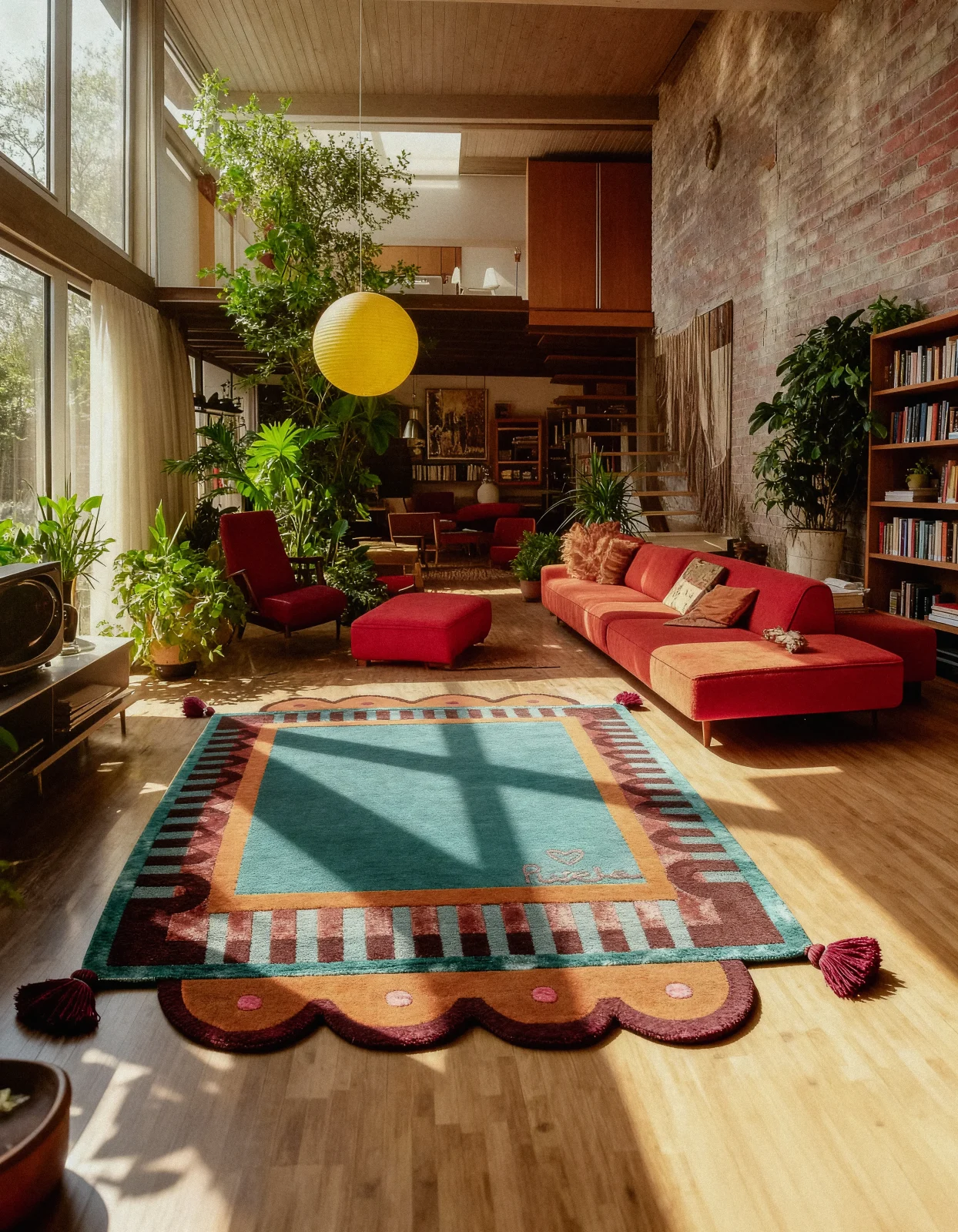
Everything else in a living room sits on the rug. It decides what the room is before anything else gets a say.
A living room is usually assembled in the wrong order. The sofa arrives first, then the coffee table, then the lamps, and the rug turns up last — chosen to match what is already there, and almost always bought a size too small. Consequently the floor stays visible around the edges, the furniture drifts apart, and the room never quite settles. Notably, the fix is rarely more furniture. It is a larger textile underneath the furniture already in place.
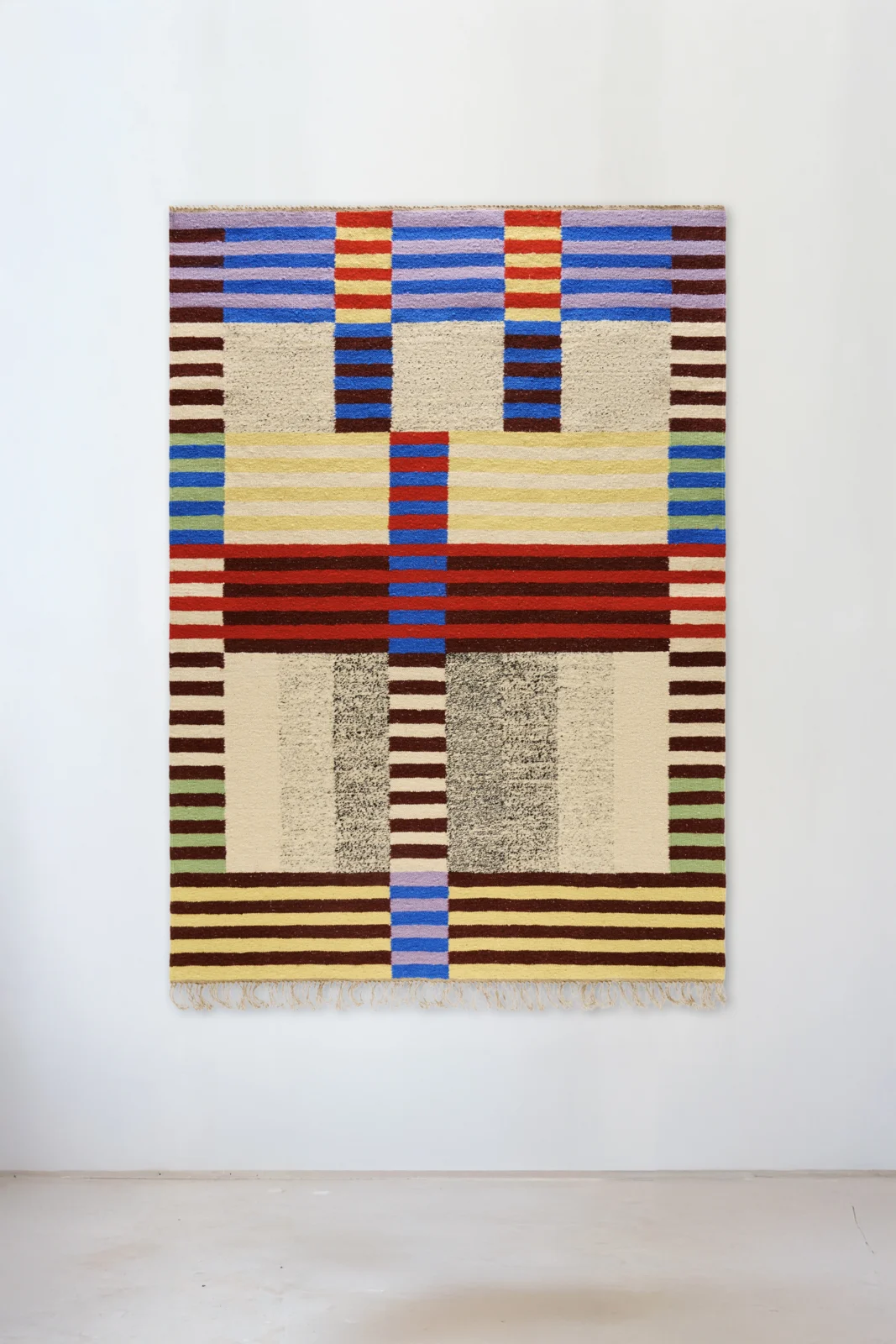
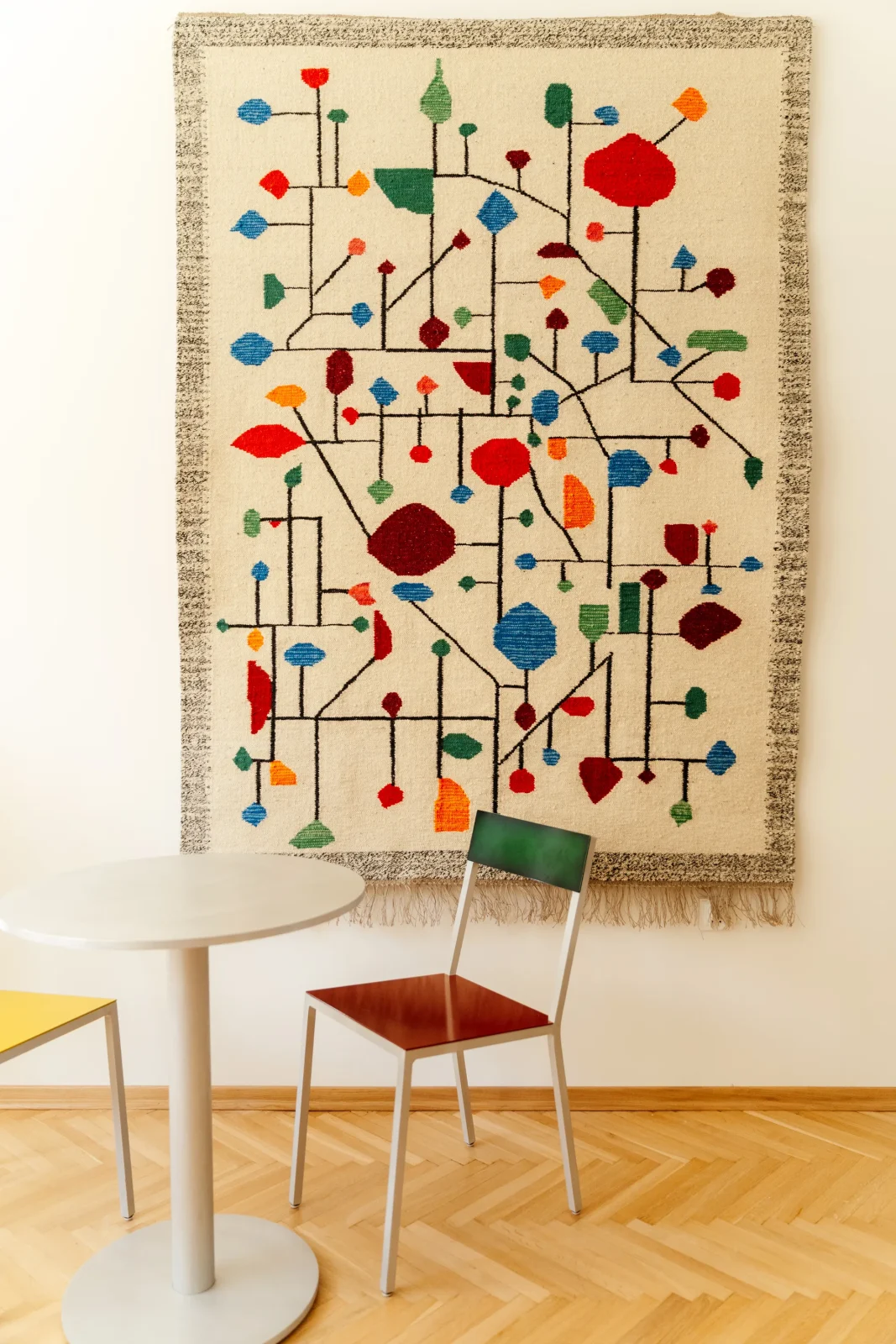
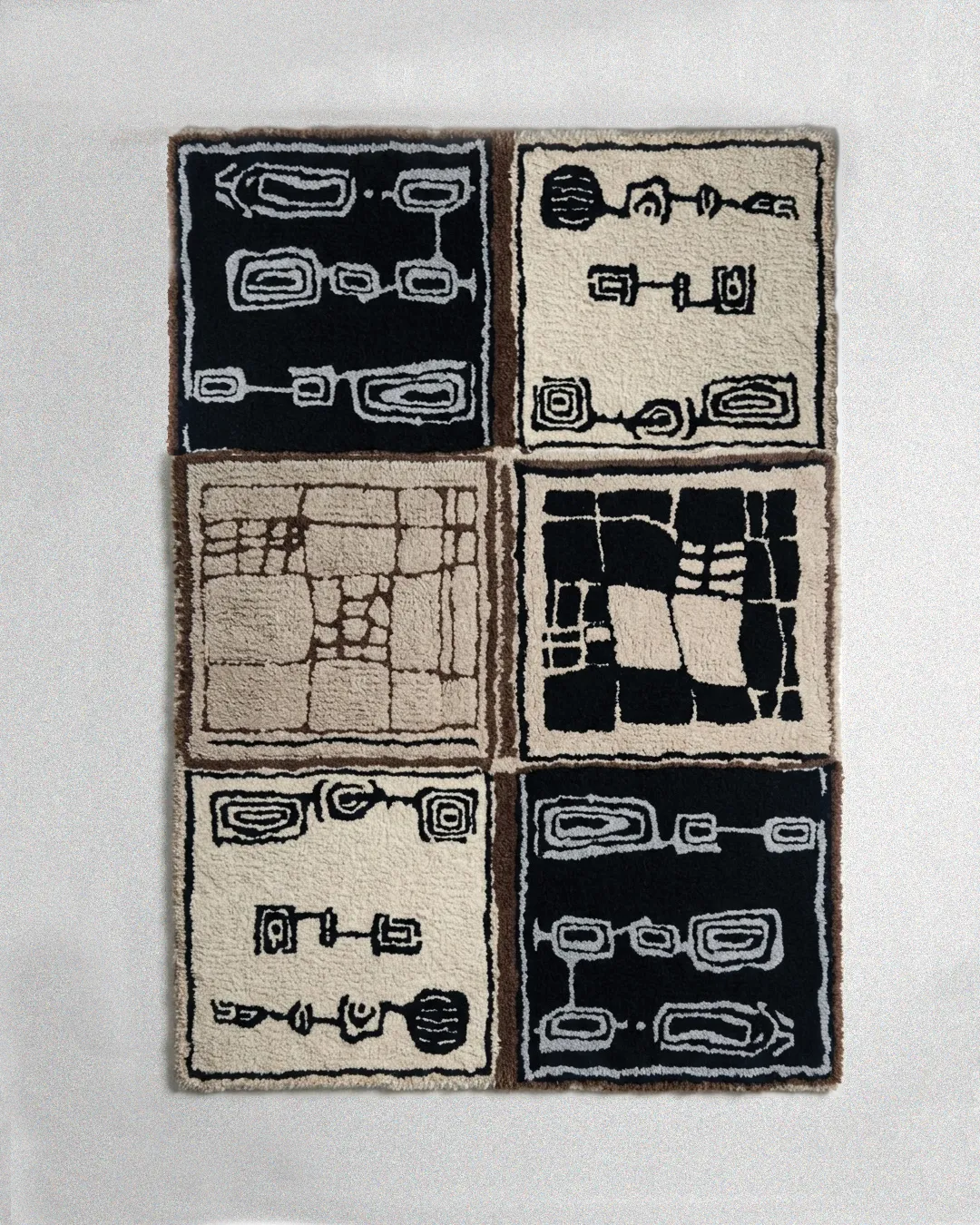
What follows is a working guide rather than a glossary: how to size a rug against your actual floor plan, where the front legs of a sofa should land, which fibers survive a household with a dog in it, and what a hand-woven piece gives you that a machine-made one cannot. Along the way, nine pieces from independent studios on ADORNO — Polish kilims, Argentine tufted wool, Oaxacan handweaving — show what the decisions look like in practice. Indeed, some of them are as much textile art as floor covering, which is precisely why they hold a room together.
Why a rug matters in a living room
A rug does structural work that nothing else in the room can do. Specifically, it draws a boundary. In an open-plan apartment where the sitting area, the dining table and the kitchen share one continuous floor, a rug is what tells you where the living room begins and ends — no walls, no screens, just an edge on the floor that the eye accepts immediately. Furthermore, it pulls scattered furniture into one group: a sofa, two chairs and a table standing on a shared textile read as a composition, while the same pieces on bare boards read as objects that happen to be near each other.
Then there is what you hear and feel. Hard floors bounce sound, and a room with timber or concrete underfoot has a brightness in it that gets tiring by evening. A dense wool pile absorbs that reflection and the room drops in volume. Meanwhile the fiber carries warmth, which matters most in the months when nobody wants to put a bare foot down. Color and pattern arrive through the same piece — a floor is the largest uninterrupted surface in most rooms, so a rug is the cheapest way to introduce a strong color without repainting anything. As a result, a room can look larger too: a rug that runs close to the walls reads as a continuous plane, whereas a small one chops the floor into fragments and makes the whole space feel tighter than it is.
How to choose a rug for a living room
Work from the room outward, not from the rug inward. Measure the seating area first — not the room, the seating area — then decide how much of the floor around it you want covered. Most people should then go one size up from whatever they first thought. Undersizing is the single most common error in living room rugs, and it is expensive to correct later.
After scale, three things decide the rest: the layout of your furniture, the fiber, and how the room actually gets used. Therefore treat pattern and color as the last decision rather than the first. A piece that is right in size, material and pile will work in almost any palette; a piece that is beautifully patterned and 60cm too short will always look wrong.
Start with the room and the furniture layout
Mark the outline on the floor with tape or an old sheet before ordering anything. A sofa against one wall with chairs opposite wants a rectangle that reaches under both. An L-shaped sectional wants a rug wide enough to sit beneath the full length of both arms, which usually means going wider than feels necessary. A floating layout in the middle of a large room wants the rug to extend past every seat by at least 45cm so nobody’s chair leg falls off the edge when they lean back. In compact rooms, by contrast, leaving a consistent 20–30cm of visible floor around the rug reads as deliberate, while an uneven gap reads as a mistake.
Choose the pile height for the traffic
Pile height is a practical decision disguised as an aesthetic one. Low pile and flatweaves — kilims, hand-knotted wool, tight tufting under about 1cm — hold their shape under furniture, let doors clear them, and take a vacuum without argument. Consequently they suit high-traffic rooms and any layout where a sofa or heavy table sits on top. High pile, from roughly 2cm upward, gives the softness underfoot that people actually want in a living room, but it crushes where weight sits and traps more dust. A two-height pile, as on the B J O R N rug, splits the difference by using depth as pattern rather than as plush.
Be honest about pets, children and traffic
Wool is the quiet winner here, and not for sentimental reasons: the fiber’s natural lanolin resists water-based spills long enough to blot them, and its crimped structure hides soil and springs back from compression. Moreover, a mid-tone or patterned ground forgives daily life in a way that a pale plain field never will. Households with a shedding dog or a toddler should skip long shag and loose loops — claws catch loops, and long fibers hold everything. Flatweaves and low-pile hand-knotted pieces are the sane choice, and a good pad underneath extends the life of any of them.
Living room rug size guide
Rug sizes are quoted in feet almost everywhere, in centimetres almost everywhere else, and the conversions are approximate because weaving is not a precise industry. What follows is the practical version: which room dimensions each size actually suits, and what the rug is doing in that room.
| Size | Approx. cm | Suits a room around | What it does |
|---|---|---|---|
| 4×6 | 120 x 180 | Under 3 x 3 m | Accent only — in front of a small sofa, or under a single chair. Too small to anchor a seating group. |
| 5×8 | 150 x 240 | 3 x 3.5 m | The smallest size that works with a two-seat sofa. Front legs on, coffee table fully on. |
| 6×9 | 180 x 270 | 3.5 x 4.5 m | Apartment living rooms. Front legs of a three-seat sofa on, table centred. |
| 8×10 | 240 x 300 | 4 x 5 m | The default for most living rooms. Sofa and side chairs at least front-legs-on. |
| 9×12 | 275 x 365 | 4.5 x 6 m | Larger rooms and open plan. All legs on for a standard three-piece arrangement. |
| 10×14 | 300 x 425 | 5 x 6.5 m | Big living rooms and sectionals. Full furniture group floats comfortably inside. |
| 12×15 | 365 x 455 | 6 x 7 m and up | Loft and open-plan zoning. Defines a whole seating area with generous margin. |
The three layouts, and when each applies
- All legs on. Every piece of furniture sits entirely on the rug, with 45–60cm of textile still visible beyond the outermost legs. This is the most generous option and it reads as intentional at a glance. Consequently it needs size — usually 9×12 or larger for a full three-piece group — and it is the right answer in a big room or a loft where the seating area has to define itself.
- Front legs on. The front legs of the sofa and chairs rest on the rug while the back legs stay on the floor. This is the most useful layout in ordinary rooms, because it visually ties the furniture to the rug at a fraction of the size and cost. Specifically, an 8×10 will do the work of a 10×14 this way. The rule that matters: the rug must reach at least 20cm under the front of each seat, or the effect collapses and it simply looks as though the rug has slid.
- Floating. The rug sits in the middle of the seating group with no furniture on it, or only the coffee table. It is the layout people fall into by accident with an undersized piece, and it works on purpose in exactly two situations: a small room where the seating is against the walls and the rug fills the centre, or a room where the rug is genuinely a work of art you do not want to bury. Otherwise, avoid it. A rug floating in isolation between distant furniture is the clearest sign the piece is too small.
Rug placement in a living room
Once the size is right, placement is mostly a set of distances. Keep the rug parallel to the dominant line of the room — usually the longest wall or the sofa — and centre it on the seating group rather than on the room, since the two are rarely the same thing.
Under the coffee table
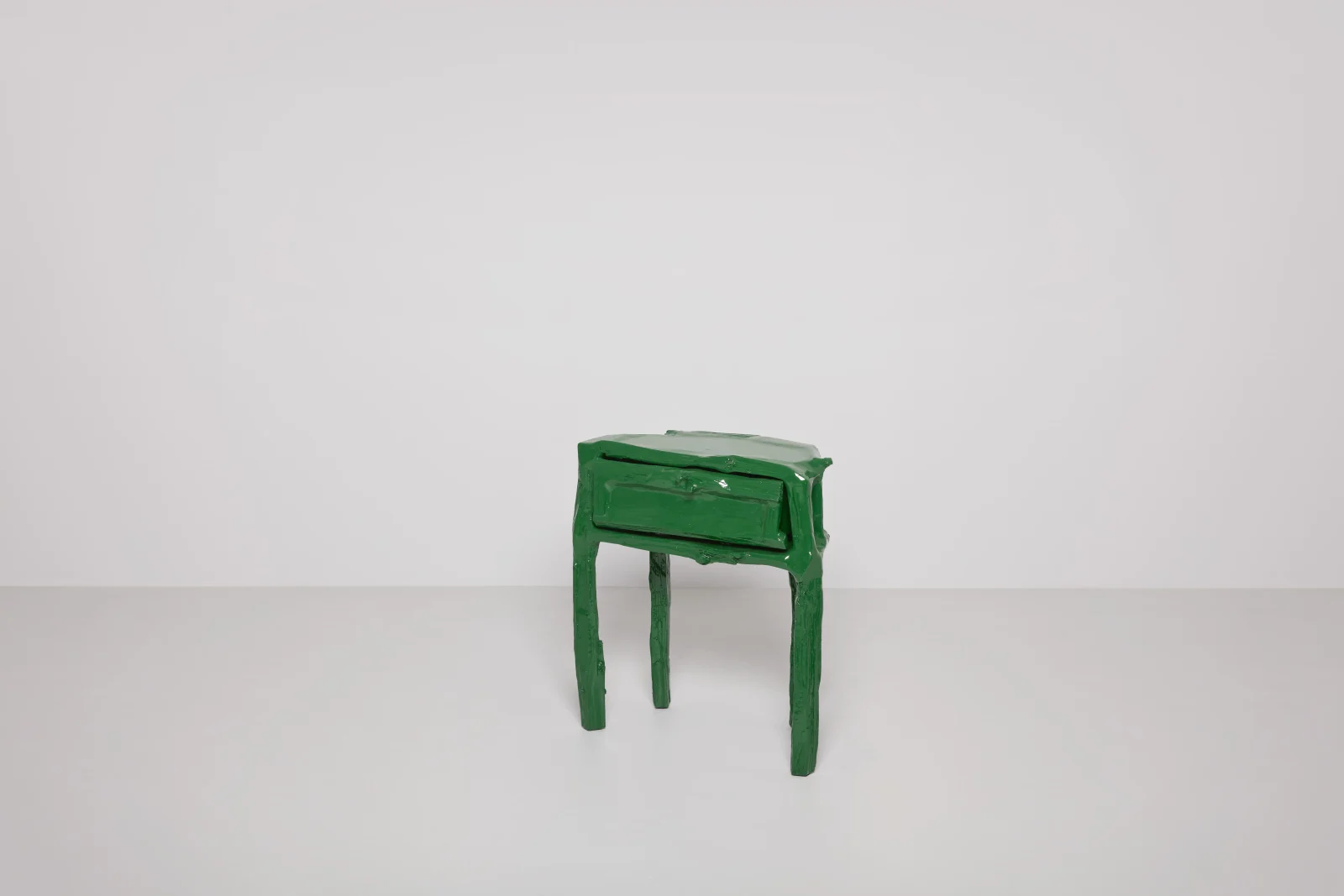
The coffee table should sit entirely on the rug, with clear textile on all four sides — 40cm of margin is comfortable, and anything under 20cm looks cramped. Notably, a low pile matters here: a table with slim legs on a deep pile will rock, and a tray of glasses will find out. Sculptural tables benefit most from a plain or low-contrast ground, so that a piece like the Trama coffee table stays legible instead of competing with pattern underneath.
Under the sofa
A rug should extend beyond the ends of the sofa, not stop level with its arms. Aim for at least 15–20cm past each arm, and ideally enough that a side table falls on the rug too. Furthermore, the rug should be wider than the sofa in every case; a rug narrower than the sofa above it is the visual equivalent of a short tie.
Sectionals and L-shaped seating
Sectionals defeat most rugs because the footprint is deeper than people expect. Measure the outer edge of both arms and treat that rectangle as the minimum. Therefore 9×12 is usually the floor, not the ceiling, and 10×14 is common. If the chaise runs into the room, the rug needs to pass under its full depth — a rug that stops halfway along a chaise creates a hard line across the floor that no styling will hide.
Open-plan rooms and small living rooms
In open plan, the rug is a zoning device: one per function, with bare floor between them, and enough size difference that the seating rug reads as the primary one. Modular pieces such as the Step Rug are useful here, since two halves can sit together as one field or separate to mark two areas. Small living rooms want the opposite instinct to the one most people have — go larger, keep the margin to the walls even, and let the rug run under the furniture rather than hiding in the middle. A single large piece makes a small room read as one space; two small ones make it read as a corridor. Room dividers and a rug edge can do complementary work, as covered in our guide to room dividers.
TV rooms and circulation
Where a television anchors the room, the seating usually faces one wall and the rug should align to the sofa rather than to the media unit. Leave the console off the rug so cables and feet stay accessible. Meanwhile, walkways matter more than they look: allow 75–90cm of clear route around the seating group, and either bring the rug fully into that path or keep it clear of it. A rug edge that lands mid-stride in a walkway is the one people trip on, and a runner such as the Duck Butt paw runner handles that circulation edge better than a rectangle with a badly placed corner.
Materials and construction
Fiber determines how a rug ages, how it cleans, and how it feels — which is to say almost everything you will notice after the first week. Construction matters nearly as much: hand-knotted, hand-tufted, flatwoven and machine-made pieces behave differently under the same foot.
Wool
Wool is the default for a reason. The fiber is naturally elastic, so it recovers from the compression of furniture; it is naturally soil- and flame-resistant; and it takes dye with a depth that synthetics approximate but do not match. Hand-spun wool goes further, since slight irregularity in the yarn gives a woven surface visible depth. Expect some shedding for the first months, which is normal and stops. Our longer look at wool in design covers the fiber in more detail, and the wool rug selection shows the range.
Cotton
Cotton is lighter, cheaper and more washable than wool, and it is often the base cloth beneath a tufted pile rather than the pile itself. As a flatweave it suits lower-traffic corners and layering over a larger natural-fiber piece. By contrast it flattens sooner than wool and holds stains more readily, so it is a poor single choice directly under a heavy sofa. Its history in textile design is longer than its reputation suggests.
Jute, sisal and natural fibers
Jute and sisal bring texture and a warm neutral ground at a low price, and they are hard-wearing underfoot. Sisal is the tougher of the two and the scratchier; jute is softer and sheds more. Both dislike water — they stain and can mark permanently, so neither belongs where drinks get spilled or where damp comes up through a floor. In practice their best use in a living room is as a base layer, with a smaller wool or hand-knotted piece laid over the top.
Silk and bamboo silk blends
Silk and bamboo silk are used in small percentages for sheen: they catch light where wool absorbs it, so a pattern can shift as you cross the room. Consequently a blend of roughly 60–70% wool with 30% bamboo silk gives you the resilience of wool and the lustre of silk without the fragility of a pure silk pile. Hand-knotted wool-and-silk pieces such as Trace and Oblique show what the combination does at low pile. Pure silk, on the other hand, belongs on a wall or in a bedroom, not under a coffee table.
Synthetic fibers
Polypropylene, polyester, nylon and acrylic wool are where stain-resistant rugs mostly live: the fibers are solution-dyed and non-absorbent, so most spills sit on the surface and lift with water. Nylon is the most resilient of them and acrylic the softest. Furthermore, a wool-dominant blend with a small synthetic percentage — the construction behind the Circuit Black X rug — buys durability without giving up the hand of wool. What synthetics do not do is age well; they flatten permanently and they do not develop the patina that keeps a wool piece worth owning in twenty years.
How it is made: knotted, tufted, flatwoven
Hand-knotted pieces are built knot by knot on a warp and are the most durable of all — decades of use, and repairable. Hand-tufted pieces are punched into a backing cloth and finished with adhesive and a secondary backing: far quicker to make, softer, and good for fifteen years rather than fifty. Flatweaves and kilims have no pile at all, just interlaced warp and weft, which makes them reversible, thin enough for a door to clear, and ideal under furniture. The technical history of weaving explains why these methods diverged.
Best rug shapes for a living room
Rectangles suit rectangular rooms and rectangular furniture, which is why they account for most living room rugs and why they are usually correct. A rectangle aligns with sofa lines, sits cleanly under a sectional, and gives the even margins that make a room look composed.
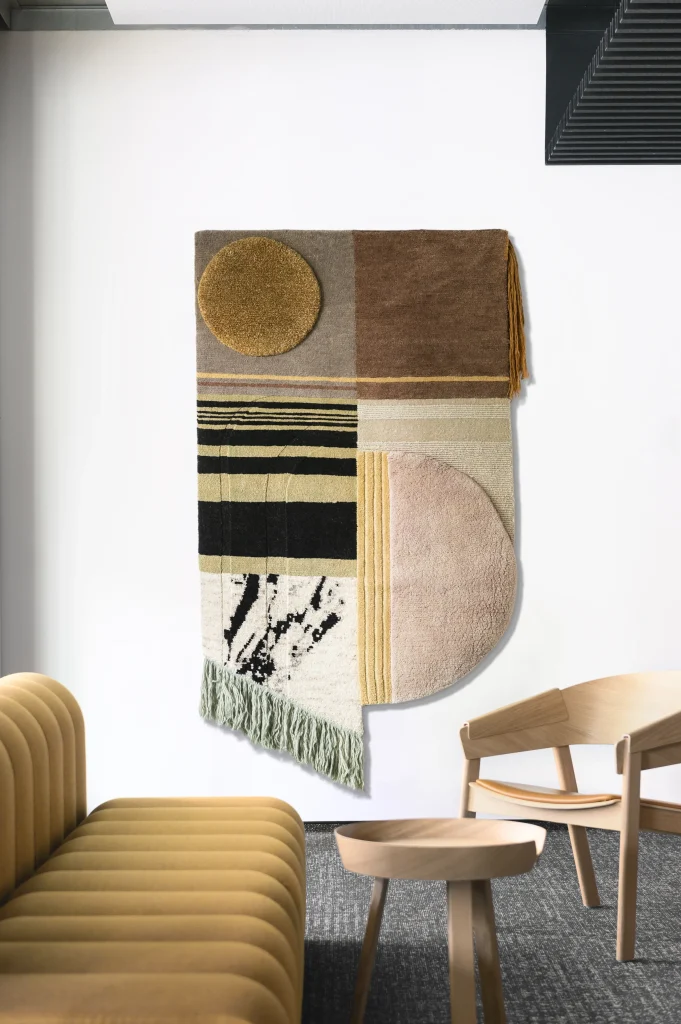
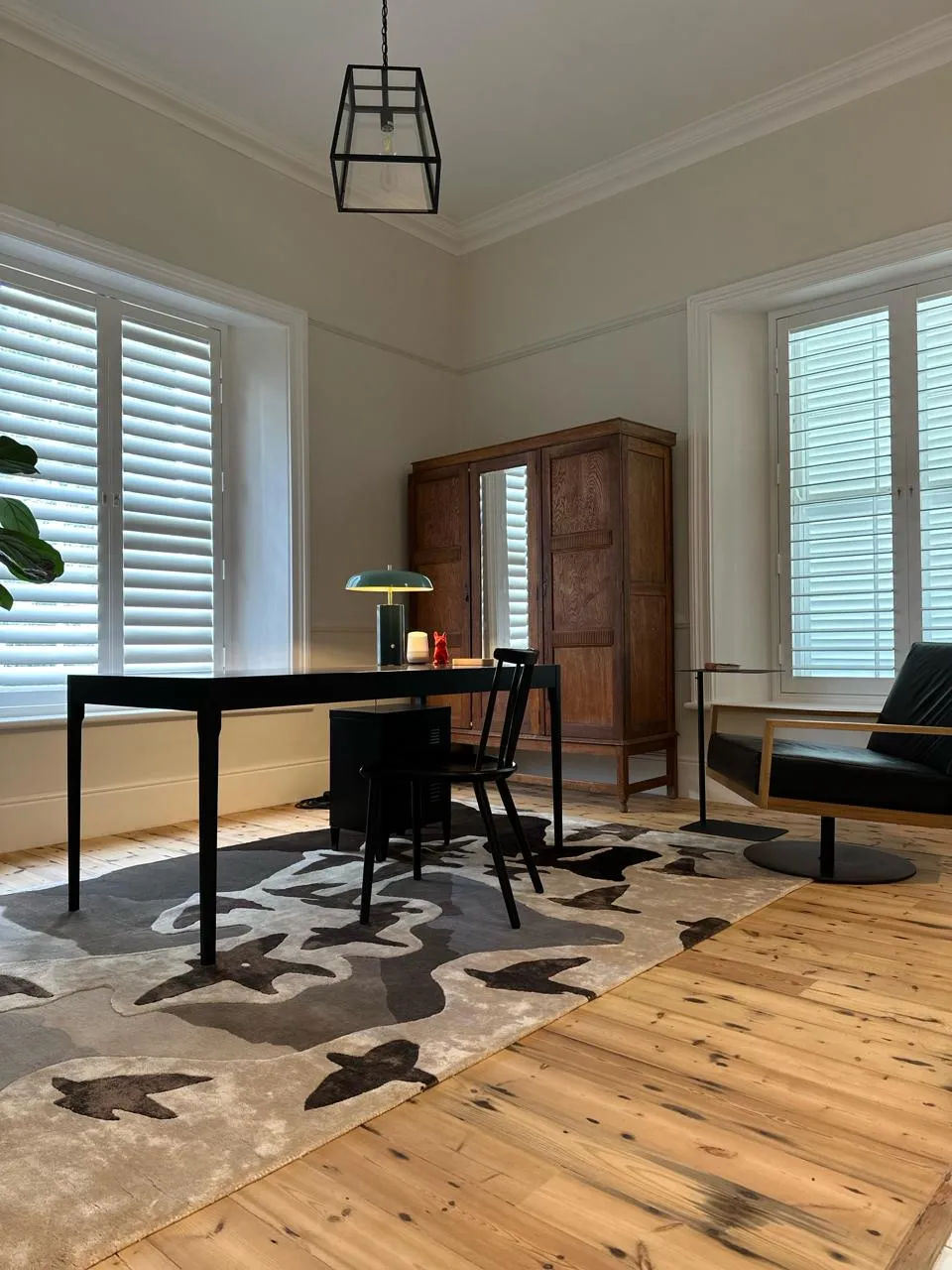
Round rugs work where there is no strong rectangle to answer to: a square room, a bay window, a reading corner with a single chair, or a floor plan where you want to soften a hard grid of furniture. Notably, round pieces also relieve rooms full of angular built-in joinery. An oval such as the Eclipse oval rug splits the difference, holding a long axis while losing the corners. Runners handle circulation — behind a sofa, along a hallway edge, or across the walkway side of an open-plan room. Organic and irregular shapes, finally, are best treated as art placed on a floor: give them clear space, keep furniture off them or barely on, and let the outline do the work rather than fighting it with a coffee table.

Living room rug ideas by aesthetic
Small living rooms
Go larger than instinct suggests, keep to one piece, and choose a low pile so the floor plane stays continuous. A light or mid-tone ground with quiet pattern recedes; a dark border draws the eye to the edge and shrinks the room. Layering a small graphic piece over a larger natural-fiber base also works, provided the top piece stays clear of walkways. There is more on making tight rooms feel generous in our cosy living room guide.
Large and open-plan rooms
Large rooms can take an all-legs-on layout and reward it. Where one big piece is not available or affordable, two rugs of clearly different sizes zone the space better than two of the same. Furthermore, a modular piece or a pair of related flatweaves lets you adjust as the furniture moves. Keep the seating rug dominant so the room has an obvious centre.
Pared-back and Scandinavian interiors
In rooms built on restraint, the rug carries texture instead of pattern: undyed wool, a subtle tonal weave, a flatweave with visible hand-spun irregularity. Consequently the interest lives in the surface rather than the graphic, which is the logic behind much Scandinavian design and the Japandi rooms that borrow from it. Natural fibers and a low pile suit this reading; high-contrast geometry usually does not.
Colorful and pattern-led rooms
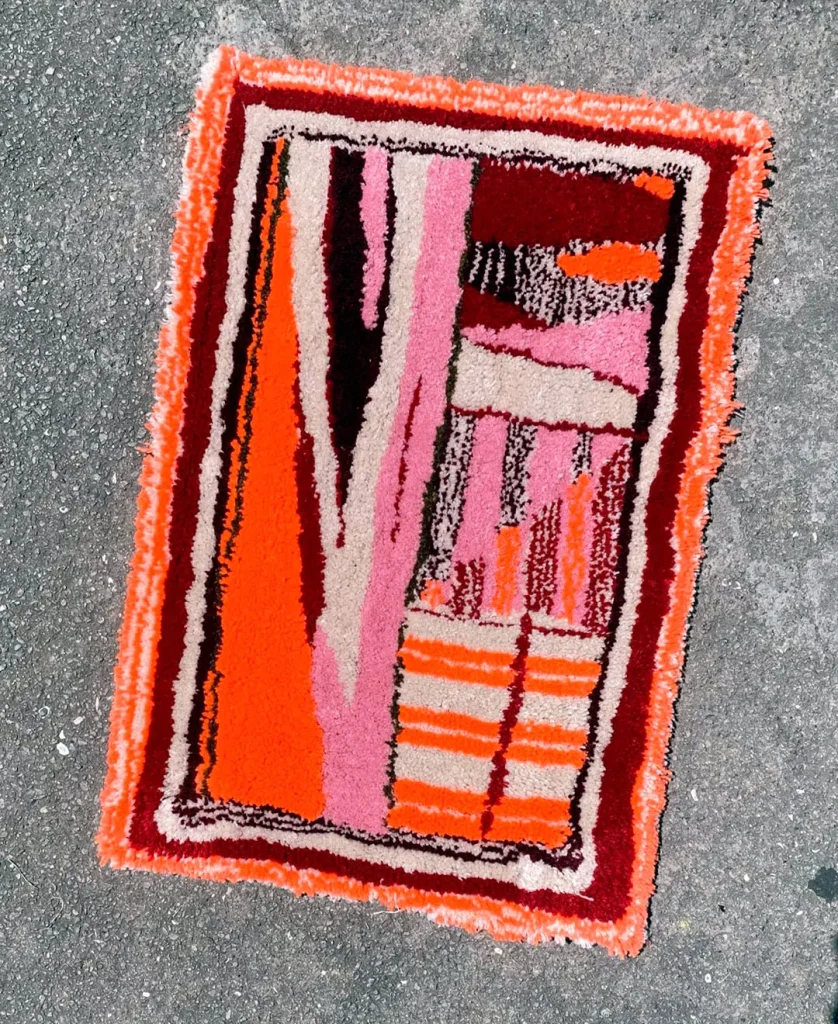
Where color leads, let the rug be either the loudest thing in the room or the calmest — the trouble comes from a middle position that competes with everything. A strong field of pattern reads best against plain upholstery and plain walls. Meanwhile, an eclectic or boho-leaning room holds a busier rug easily, since the eye is already moving; our look at boho design covers that balance.
Contemporary and design-led rooms
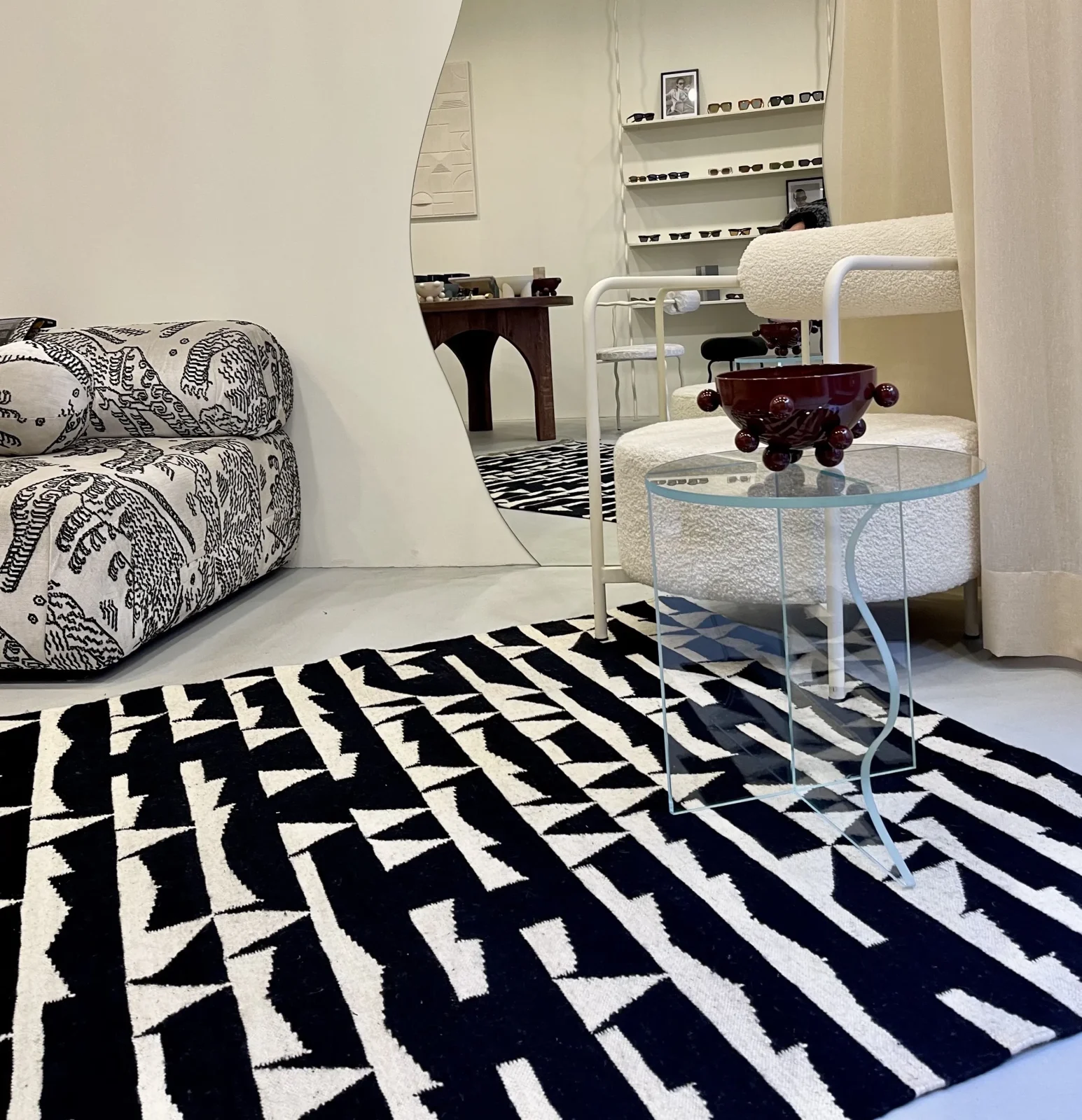
Where the furniture is sculptural, the rug should hold the floor without arguing: a plain or low-contrast ground, generous size, low pile. Modern living room rugs in this register work as a base plane for statement pieces above — a carved coffee table, a floor lamp with real presence, a lounge chair with an unusual profile. Our editorials on modern rugs and designer rugs go further into this territory.
Collected and high-end interiors
At the top of the market the question stops being decorative. A hand-knotted piece is an object with a maker, a technique and a lifespan measured in decades, and it should be chosen the way you would choose a painting — for the work in it, not for how it matches a cushion. Nepal, Oaxaca and Bobowa each produce at that level in different traditions, as our piece on Nepalese rug making sets out. Notably, pieces at this level also hold value in a way that machine-made rugs never will.
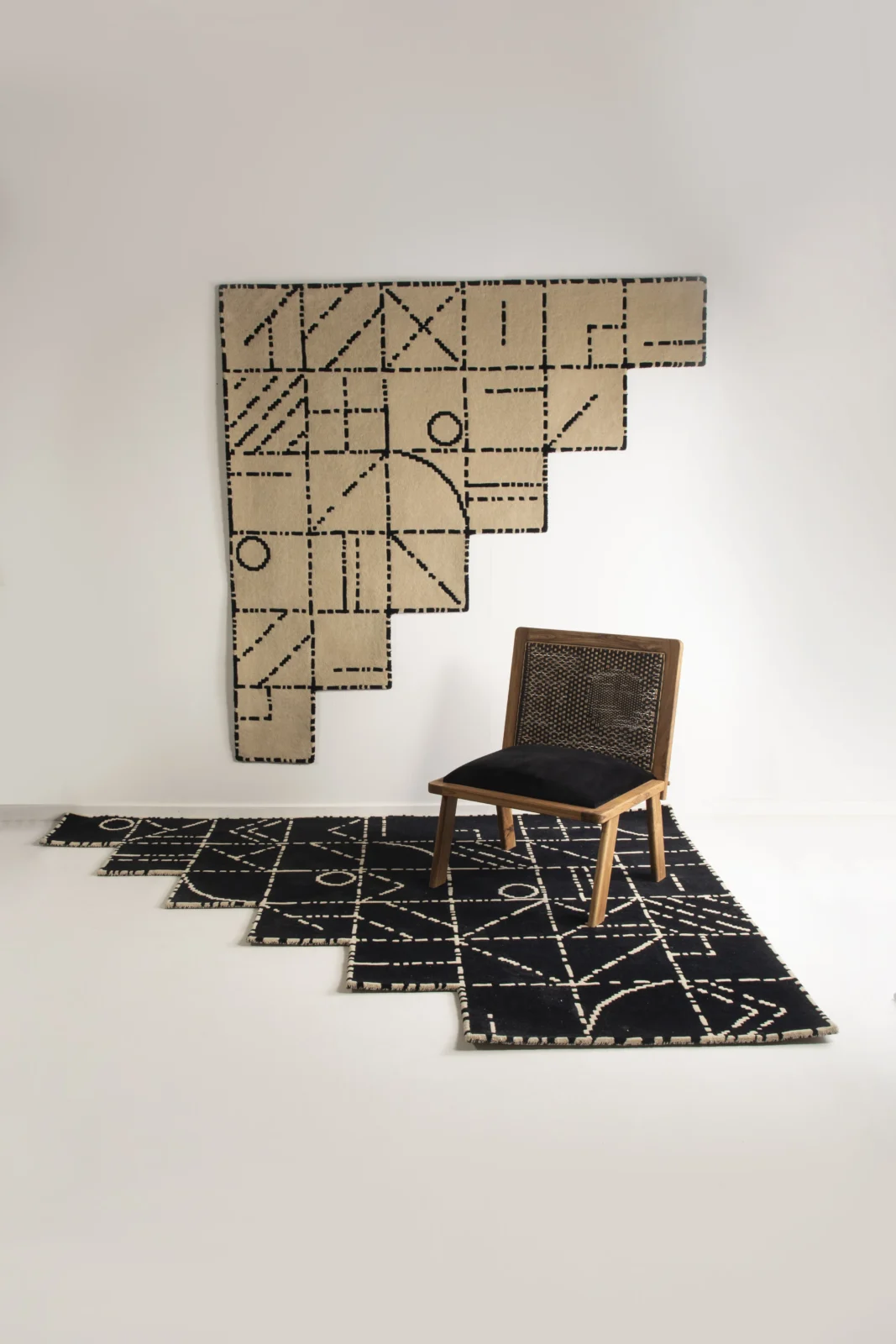
Common rug mistakes to avoid
Buying too small. By far the most common and the most damaging. A rug that does not reach the furniture makes a room look unfinished no matter how good the piece is. Measure, tape the outline, then size up.
Leaving the rug floating. Furniture and rug should touch. If the sofa’s front legs cannot reach, the rug is in the wrong room.
Uneven margins. The gap between rug and wall should be consistent on opposite sides. An inconsistent border makes a straight room look crooked.
The wrong pile for the job. Deep pile under a rocking coffee table, or a thick rug where a door needs to clear. Both are solved before purchase, not after.
Skipping the underlay. A pad stops slipping, reduces wear, adds acoustic absorption and keeps the piece flat. It is the cheapest thing you will buy and the one that extends the rug’s life most.
Choosing color before scale. Color is easy to live with and easy to change around. Proportion is not. Get the size right and the palette will follow.
Caring for a living room rug
Vacuuming without damaging the pile
Vacuum weekly in the direction of the pile, using suction rather than a rotating beater bar — beaters tear tufted loops and pull fringes. Flatweaves and kilims can be vacuumed on both sides and benefit from it. Turn the machine’s power down at the edges, and never run it over fringe.
Rotating and relieving pressure
Rotate the rug 180 degrees every six months so that sun and traffic fall differently. Furniture leaves dents in any pile; felt cups under heavy legs spread the load, and the marks that remain will usually lift with a light misting of water and a slow pass of a soft brush. Consequently a rug under a sofa can be kept even for years rather than developing permanent tracks.
Spills and stain removal
Blot immediately from the outside of the spill inward, never rub, and use cold water first. Wool’s lanolin buys you a few minutes on most liquids, which is why speed matters more than product. Avoid alkaline cleaners and anything containing bleach on wool or silk, since both strip the fiber and the dye. On synthetic and stain-resistant rugs, water and a mild detergent handle almost everything.
Protecting natural fibers
Jute and sisal should be kept dry: blot spills, never soak them, and keep them away from ground-floor damp. Wool needs air and occasional light, but strong direct sun fades natural dyes, so a sheer at the window does real work. Meanwhile, wool moth is the genuine risk in a stored or rarely moved rug — vacuum under furniture as well as around it, since that is where larvae go undisturbed.
When to call a professional
Hand-knotted and hand-woven pieces want specialist washing every three to five years, more often in a busy household. Specifically, look for a cleaner who hand-washes rather than one who uses hot-water extraction on wool, and mention natural dyes if the piece has them. A good repairer can also reweave a damaged edge or replace a fringe, which is worth doing on a knotted rug and rarely worth doing on a tufted one.
A checklist before you buy
- Measured the seating area, not just the room
- Taped the outline on the floor and lived with it for a day
- Decided the layout: all legs on, front legs on, or floating
- Confirmed the rug is wider than the sofa and passes its arms by 15–20cm
- Coffee table sits fully on the rug with margin on all sides
- Checked the margin to the walls is even on opposite sides
- Chosen a pile height that suits the traffic, the doors and the furniture
- Matched the fiber to the household — pets, children, spills, direct sun
- Checked walkways: 75–90cm clear, no rug edge landing mid-stride
- Budgeted for an underlay
- Read the construction: hand-knotted, hand-tufted, flatwoven or machine-made
- Asked whether custom dimensions are possible, since many studio pieces can be rewoven to size
Frequently asked questions
What size rug should I buy for my living room?
For most living rooms, 8×10 (roughly 240 x 300cm) is the right starting point. Rooms around 3.5 x 4.5m suit 6×9; rooms of 4.5 x 6m and larger suit 9×12, 10×14 or 12×15. Measure the seating group rather than the room, then choose the size that lets the front legs of every seat rest on the rug.
Should a rug go under the sofa?
Yes — at minimum under the front legs, by 20cm or more. A rug that stops short of the sofa breaks the connection between the furniture and the floor, and the room reads as unresolved. In larger spaces the whole sofa can sit on the rug, which is the more generous option where the size allows it.
Is wool the best material for a living room rug?
For most households, yes. Wool recovers from compression, resists soil and water-based spills, takes dye with depth, and lasts decades in a hand-knotted construction. The exceptions are households needing maximum stain resistance, where solution-dyed synthetics perform better, and rooms wanting hard texture at low cost, where jute or sisal make more sense as a base layer.
Can a rug make a room look bigger?
A large rug with even margins to the walls reads as one continuous plane and makes a room feel larger. A small rug does the reverse: it divides the floor into fragments and draws attention to how little space there is. Low pile, light-to-mid tones and quiet pattern all help; heavy borders and dark edges work against it.
Should all the furniture sit on the rug?
Only if the room allows it comfortably, with 45–60cm of rug still showing beyond the outermost legs. Otherwise front-legs-on achieves the same visual effect for considerably less. What should not happen is a mix — some pieces fully on, others entirely off — which reads as accidental.
How far should a rug extend beyond a sofa?
At least 15–20cm past each arm, and ideally far enough to catch a side table. The rug should always be wider than the sofa. In an all-legs-on layout, extend 45–60cm beyond the furniture on every side so the margin looks deliberate rather than tight.
Key takeaways
- Size is the decision that matters most. 8×10 suits the majority of living rooms; 9×12 and up suit large or open-plan spaces.
- Furniture and rug must connect. Front-legs-on is the most efficient layout; a floating rug is usually a rug that is too small.
- Wool is the best all-round fiber for a living room — resilient, soil-resistant and it ages well. Synthetics win on stain resistance alone.
- Low pile and flatweaves suit traffic, doors and furniture. High pile suits comfort and pays for it in maintenance.
- Rectangles suit most rooms; round and oval pieces relieve angular plans; runners solve circulation.
- Buy the underlay, vacuum weekly, rotate twice a year, and have hand-made pieces professionally washed every few years.
- Decide scale, material and pile before color and pattern. The first three are hard to fix, the last two are easy to live with.