Updated on: August 14, 2026
Cotton is the fibre people assume they understand, and the assumptions are mostly wrong. It is not especially soft by nature, it has almost no elasticity, and it gets stronger when wet — which is the opposite of wool. Those properties determine what it is good for, and they explain why cotton turns up as a rug backing, a tablecloth or a lampshade rather than as upholstery on a curved chair.
What follows covers what cotton actually does, how it compares with linen and wool — the two fibres it is most often confused with or blended into — and eight pieces from independent studios where cotton is doing specific work.
What cotton does well, and badly
No crimp, no memory
Cotton fibres are relatively straight, so cotton has very little natural spring. Practically that means a cotton textile drapes heavily and stays where you put it, rather than recovering its shape. Consequently a cotton knit grows under its own weight over time, and cotton upholstery on a compound curve will bag rather than snap back. It is the reason a little wool is often blended in.
Strength and washability
Cotton is one of the few natural fibres that gains tensile strength when wet, which is why it washes hard and survives repeated laundering where wool would felt. It also tolerates heat. That combination is why cotton dominates anything handled daily — table linen, cushion covers, bedding — and why a cotton-backed rug can be cleaned in ways an all-wool one cannot.
How cotton takes dye
Evenly, and that is its quiet advantage. Cotton is a cellulose fibre that absorbs dye uniformly along its length, so a cotton textile reads as flat, consistent colour. Wool dyes unevenly by comparison, which produces the tonal variation called abrash — desirable in a rug, unhelpful when you want a clean block of colour. Therefore graphic, hard-edged pattern is easier to achieve in cotton than in wool.
Cotton vs linen
Both are cellulose fibres from plants, both get stronger wet, and both are frequently used interchangeably. They are not interchangeable.
- Linen is stronger and stiffer. Flax fibres are longer and less flexible than cotton, giving linen roughly two to three times the tensile strength and a characteristic crispness. That crispness is why linen creases sharply and cotton creases softly — the same reason linen holds a structured shape and cotton drapes.
- Linen is more breathable, cotton is softer initially. Linen’s hollow fibre and looser weave move air better, which is why it feels cool. Cotton starts softer but linen overtakes it — flax softens with every wash and keeps improving for years, while cotton reaches its best fairly early and then slowly wears.
- Cost and use. Linen costs more because flax processing is labour-intensive and the fibre yield is lower. For interiors, choose linen where crispness and longevity matter — upholstery, curtains, table linen that will last decades. Choose cotton where you want soft drape, saturated even colour and hard washing.
Cotton vs wool
These two are opposites on almost every axis, which is why they blend well. Wool has crimp, memory and lanolin: it springs back, resists soiling and insulates. Cotton has none of those, but it is stronger wet, washes hot, takes dye evenly and does not felt.
Consequently the division of labour in a blended piece is usually predictable. Wool goes where resilience and warmth are needed — the pile of a rug, the face of a blanket. Cotton goes into the structure: the warp, the backing, the parts that must hold dimension and take tension. Several pieces below are exactly this arrangement, which is why “a cotton rug” often means a wool rug on a cotton foundation.
8 cotton designs from independent studios
Graphic Blanket In Blue/grey – Boi X Leigh Bagley by BOI

A knitted cotton throw from a collaboration between Berlin studio BOI and Leigh Bagley. The hard-edged graphic is exactly what cotton is good at — it absorbs dye evenly enough to hold a clean colour boundary, where wool would blur it. Knitted using the fully-fashion method, which shapes each panel to size and keeps cutting waste close to zero.
By BOI
€170 incl. tax
Organic Cotton / Hemp Table Mat by BOI
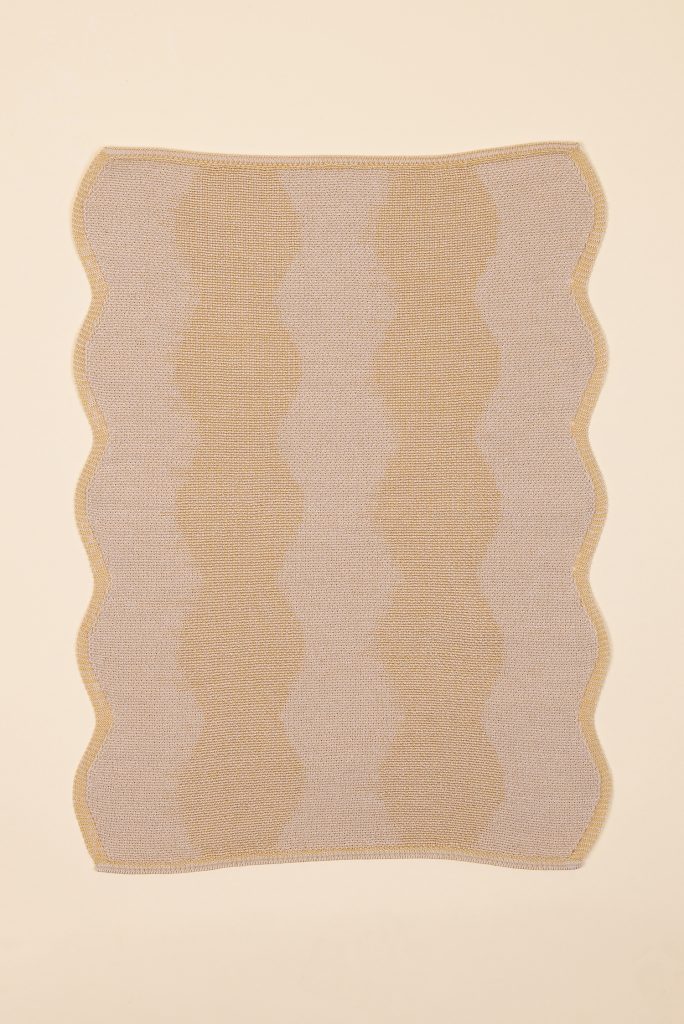
Organic cotton blended with hemp — a useful pairing to understand, because hemp behaves much like linen. Both are bast fibres, both are stiffer and stronger than cotton, and both soften with washing rather than wearing out. So the cotton brings the soft handle and even colour while the hemp holds the mat flat on a table instead of letting it curl. Exactly the kind of everyday object cotton’s wet strength and hot-wash tolerance were made for.
By BOI
€50 incl. tax
Organic Cotton / Viscose Tablecloth by BOI
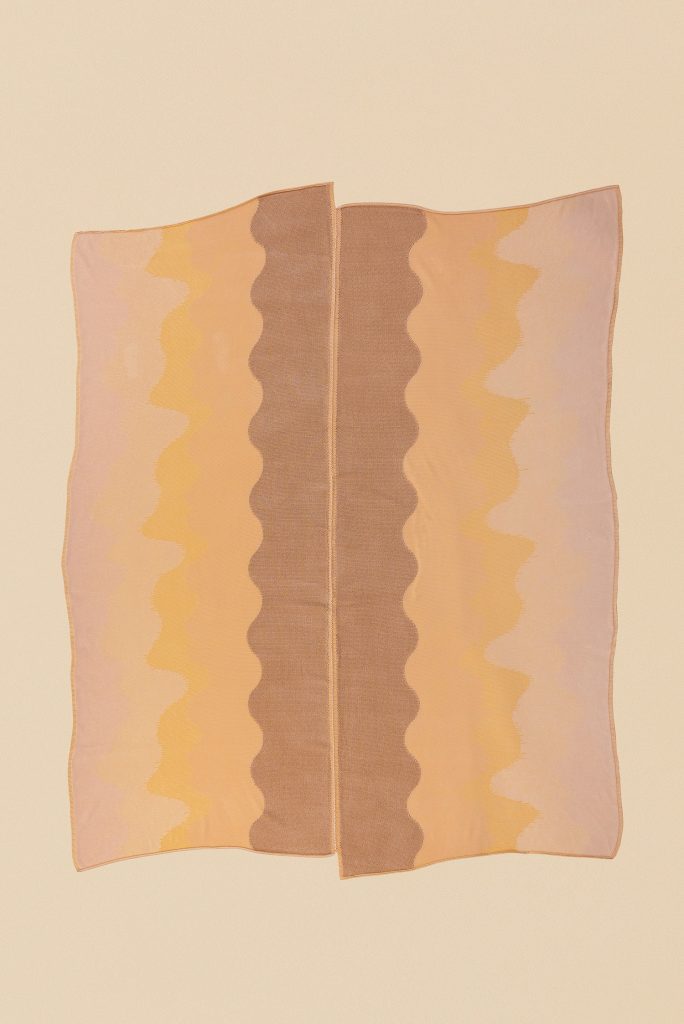
Here the blend runs the other way. Viscose is regenerated cellulose — made from wood pulp, so chemically close to cotton but extruded as a smooth continuous filament rather than grown as a short staple. That smoothness gives drape and a slight sheen cotton alone does not have, while the cotton supplies the strength viscose lacks when wet. A tablecloth is the honest test of both: it has to fall well and survive washing.
By BOI
€168 incl. tax
The Dune Rug by Mush Studios

An eclectic rug built entirely from varied pile heights, so the pattern comes from relief rather than colour. Made in India from 100% New Zealand wool on a cotton backing — the division of labour described above, with cotton providing the stable foundation the wool pile is worked into.
By Mush Studios
€278 – €1.650 incl. tax
Jade – Wool & Cotton Wall Hanging by Tine Otto
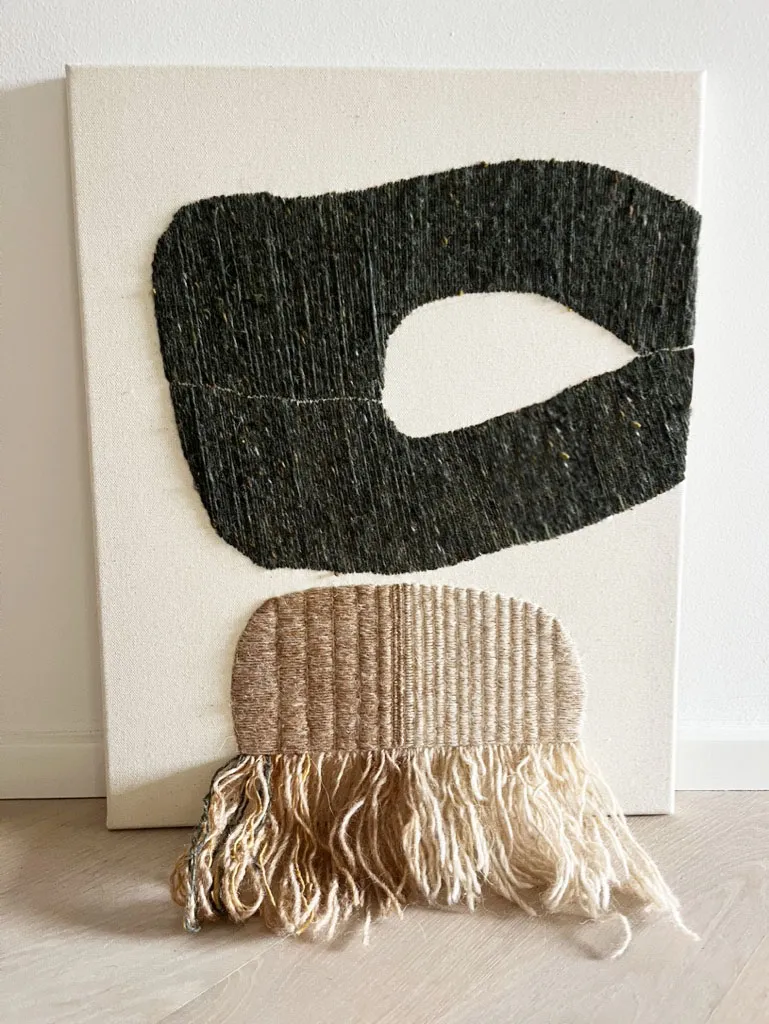
A small wall piece in jade green, its organic form recalling mossy stone or moving water, with loose threads extending the sculpture out into the room. The wool and cotton combination is doing the visual work: wool holds the dense body of the form, cotton the hanging threads that need to fall straight and stay straight rather than curling. Cotton’s lack of memory is usually a drawback — here it is the point.
By Tine Otto
€1.100 incl. tax
Palermo – Wool & Cotton Wall Hanging by Tine Otto
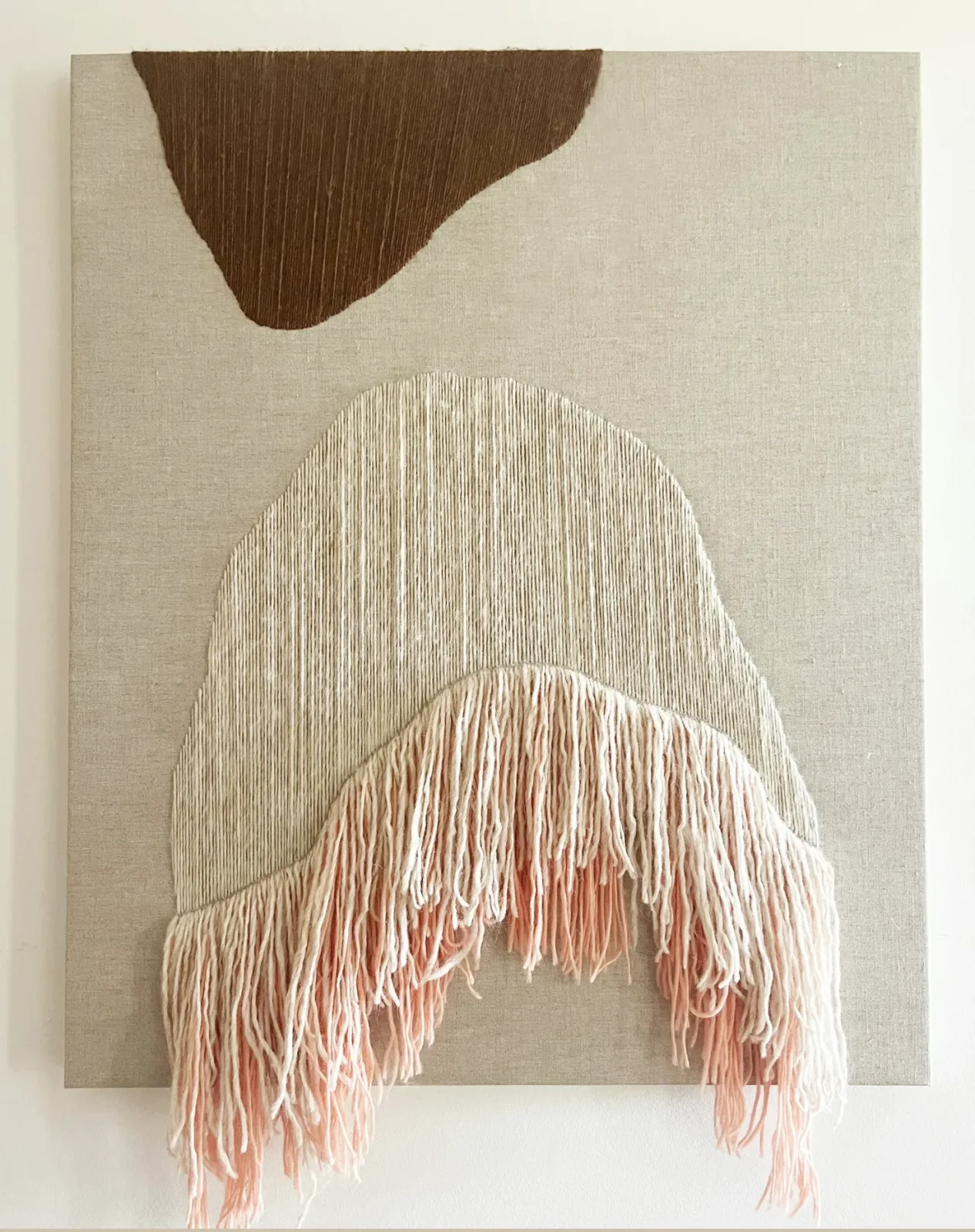
The larger piece from the same body of work, again pairing wool with cotton across a single composition. On a wall the fibre choice becomes visible rather than tactile — wool absorbs light and reads matte, cotton reflects slightly more and reads flatter and cleaner. Set next to each other in one work, the two produce contrast without any change in colour.
By Tine Otto
€3.300 incl. tax
Abrigo Credenza – Handwoven Cotton Threads by YANKATU
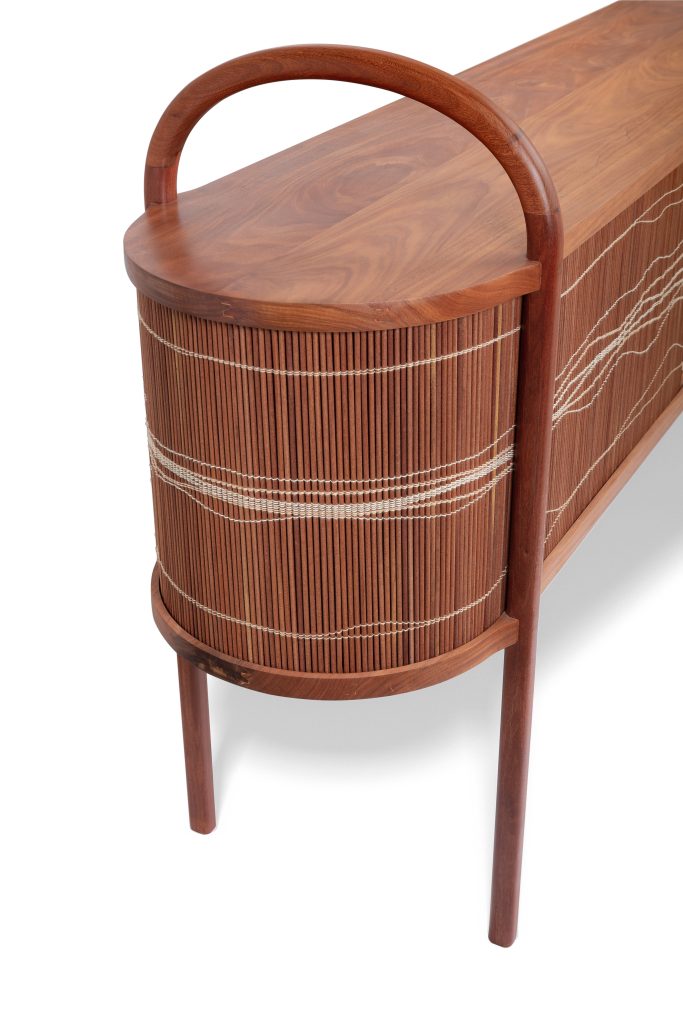
Wood cylinders handwoven together with cotton threads, made with artisans in Brazil. This is cotton used as a joining and structural element rather than as a surface — the threads hold the timber, so the textile is doing the work a mechanical fixing normally would. Notable because it relies on cotton’s wet strength and low stretch rather than on its softness.
By YANKATU
INQUIRE
Floats Woven Tapestry by Emma Terweduwe

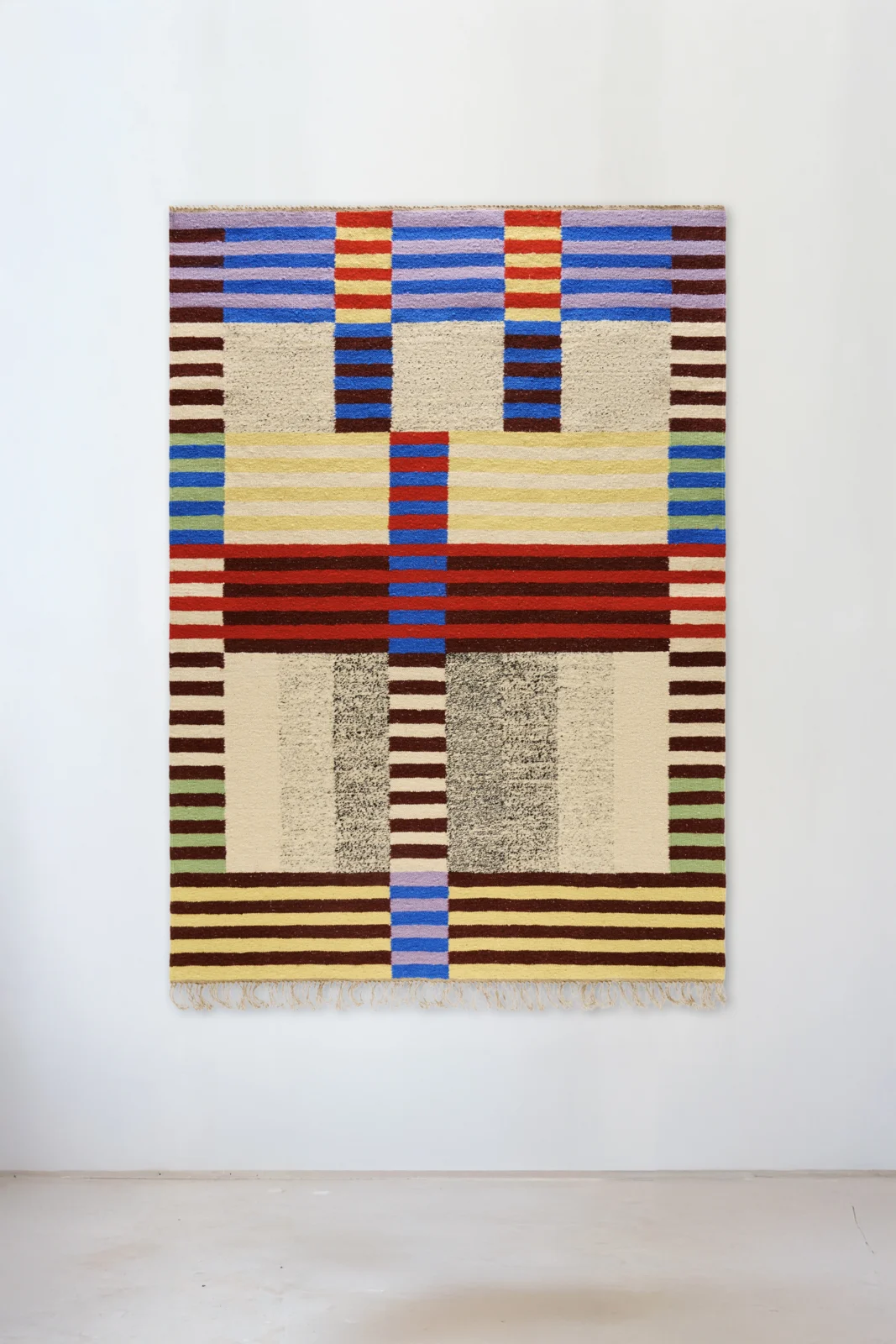
FLOATS 01 is jacquard woven from merino wool, linen and cotton. Because each fibre reflects light and takes dye differently, a three-fibre jacquard produces depth that a single-fibre weave cannot — the pattern carries texture as well as tone. The name refers to the floating threads the technique leaves across the surface.
INQUIRE
Frequently asked questions
What is the difference between cotton and linen?
Linen is made from flax and is stronger, stiffer and more breathable; cotton is softer initially and drapes more heavily. Linen creases sharply, cotton softly. Linen keeps improving with washing for years, while cotton peaks early. Linen costs more because flax processing is labour-intensive and yields less fibre.
Is linen or cotton better for interiors?
Linen where crispness and longevity matter — curtains, structured upholstery, table linen meant to last decades. Cotton where you want soft drape, flat saturated colour and the ability to wash hard. For anything that will be handled daily and laundered often, cotton is the practical answer.
How is hemp different from cotton?
Hemp is a bast fibre like flax, so it behaves much more like linen than like cotton — stiffer, considerably stronger, and it softens with every wash rather than wearing thin. It also needs far less water and no pesticide to grow. Blended with cotton it adds body and keeps a flat textile lying flat.
Why do wool rugs have cotton backings?
Because the two fibres do different jobs. Wool has the resilience and soil resistance a pile surface needs; cotton has the wet strength, low stretch and dimensional stability a foundation needs. A cotton warp or backing holds its measurement under tension in a way wool would not.
Does cotton get stronger when wet?
Yes — roughly 20 to 30% stronger, which is unusual among natural fibres and the opposite of wool. It is why cotton tolerates repeated hot washing and why cotton rope holds load. It is also why a wet cotton textile should be handled carefully in shape terms, since it will dry however you leave it.
Why does cotton hold colour better than wool?
Cotton is a cellulose fibre that absorbs dye uniformly along its length, so colour reads as flat and consistent. Wool takes dye less evenly, producing the tonal variation called abrash. That makes cotton the better choice for hard-edged graphic pattern and wool the better one where you want depth and movement.
What does organic cotton actually mean?
Cotton grown without synthetic pesticides or fertilizers, from non-genetically-modified seed. It matters more than with most fibers, since conventional cotton is among the most pesticide-intensive crops grown. Look for GOTS certification rather than the unqualified word, which carries no legal definition on its own.
Browse the cotton collection
Cotton earns its place in design through structure, washability and even colour rather than through softness. ADORNO works with independent studios across rugs, furniture and throws where the fibre choice is deliberate — often blended with wool, linen, hemp or viscose precisely because each does something the others cannot.