Updated on: August 5, 2026
Most wool rugs on the market are variations on the same few safe patterns. The fifteen below are not: they come from independent studios working in hand-knotting, handweaving, jacquard and tufting, and several are limited editions or one-offs. Materials run from Himalayan and New Zealand wool to Oaxacan and Mexican wool, merino, mohair and linen blends.
Whether you are drawn to the looser vocabulary of Boho Chic or the density of Maximalism, the rugs category covers both. Before the list, a short guide to what actually differs between one wool rug and another — because construction matters far more than pattern to how long a rug lasts.
How to choose a wool rug
Construction: hand-knotted, handwoven or tufted
This is the decision that determines lifespan. A hand-knotted rug is built knot by knot on a loom, so the pile is structural and there is no backing to fail — these last generations and take months to make. A handwoven flatweave or kilim has no pile at all; the pattern is the structure, and it is lighter, reversible and quicker to produce. A tufted rug is punched through a canvas with a tufting gun and held by a glued secondary backing, which is why it costs less and why the adhesive eventually degrades.
Consequently the test is simple: turn the rug over. Visible knots mirroring the pattern means hand-knotted. A plain glued canvas means tufted. Our guide to Nepalese hand-knotted rugs goes into the technique in detail.
Wool type and quality
Not all wool behaves alike. Himalayan and Tibetan highland wool carries high lanolin content and long staple, which resists soiling and springs back underfoot. New Zealand wool is finer, paler and takes dye cleanly, making it the standard for bright, saturated colour. Merino is softer and finer still but less hard-wearing, so it suits low-traffic rooms and wall pieces better than hallways. Above all, judge staple length over knot count — good wool at 60 knots outlasts poor wool at 100.
Size and placement
In a living room, the rug should sit under the front legs of all seating at minimum — an 8×10 covers most standard arrangements, a 9×12 lets the full furniture group sit on it. Under a dining table, add roughly 60cm beyond the table edge on every side so chairs stay on the rug when pulled out. Runners want about 10cm of visible floor on either side. Notably an irregular or freeform rug breaks these rules deliberately, and works best where the room has no clean rectangle to align to.
Colour, pattern and pile height
Naturally dyed wool ages toward a warmer tone rather than fading abruptly, and shows abrash — the subtle striation left by hand-spun yarn and batch dye variation. Varying pile height creates relief and shadow without adding a second colour, which is how several of the rugs below build pattern. Consider texture before print: a single-colour rug with structural relief reads as calmer and dates more slowly than a graphic one.
Medley — Eclectic Textured Rug by Lyk Carpet
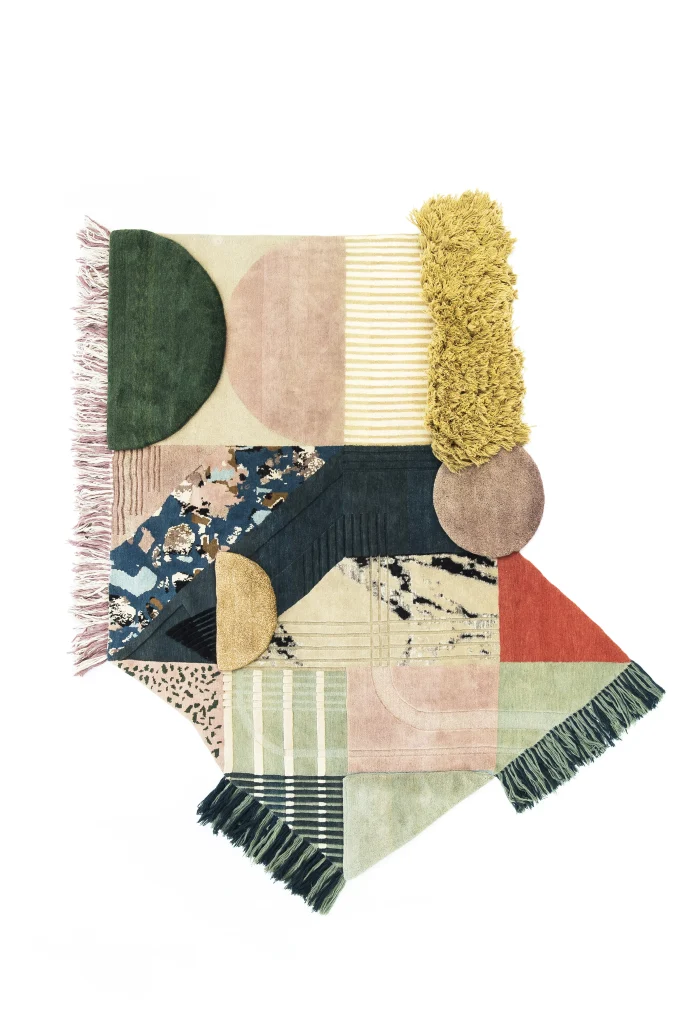
Medley is a colourful geometric composition with a fringed textured surface, drawing on eclectic influences. The asymmetry is deliberate: nothing lines up, and the result works as readily on a wall as on a floor. Hand-knotted in Nepal by Mareike Lienau’s partner workshop.
By Lyk Carpet
€9.378 incl. tax
The Valley — Eclectic Cut-Out Rug by Mush Studios
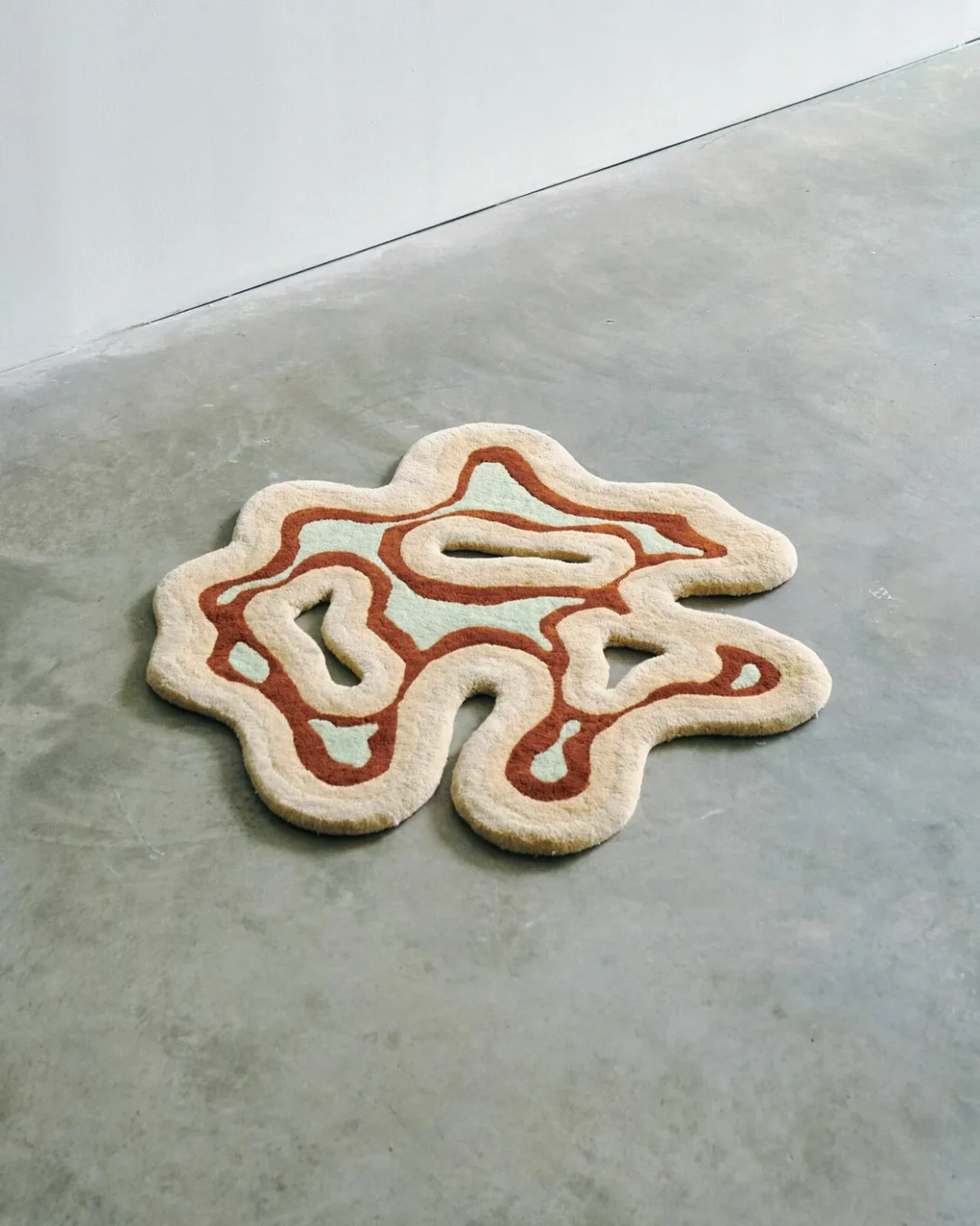
Valley takes the classic circular rug and cuts three holes through it, breaking the outline so the floor becomes part of the composition. Made from 100% New Zealand wool with a 100% cotton backing, produced by artisans in India. The cut-outs make it a good fit for rooms where a full circle would feel too resolved.
€1.940 incl. tax
Sombra de Zebu — Handwoven Oaxacan Wool Rug by Toro Manifesto
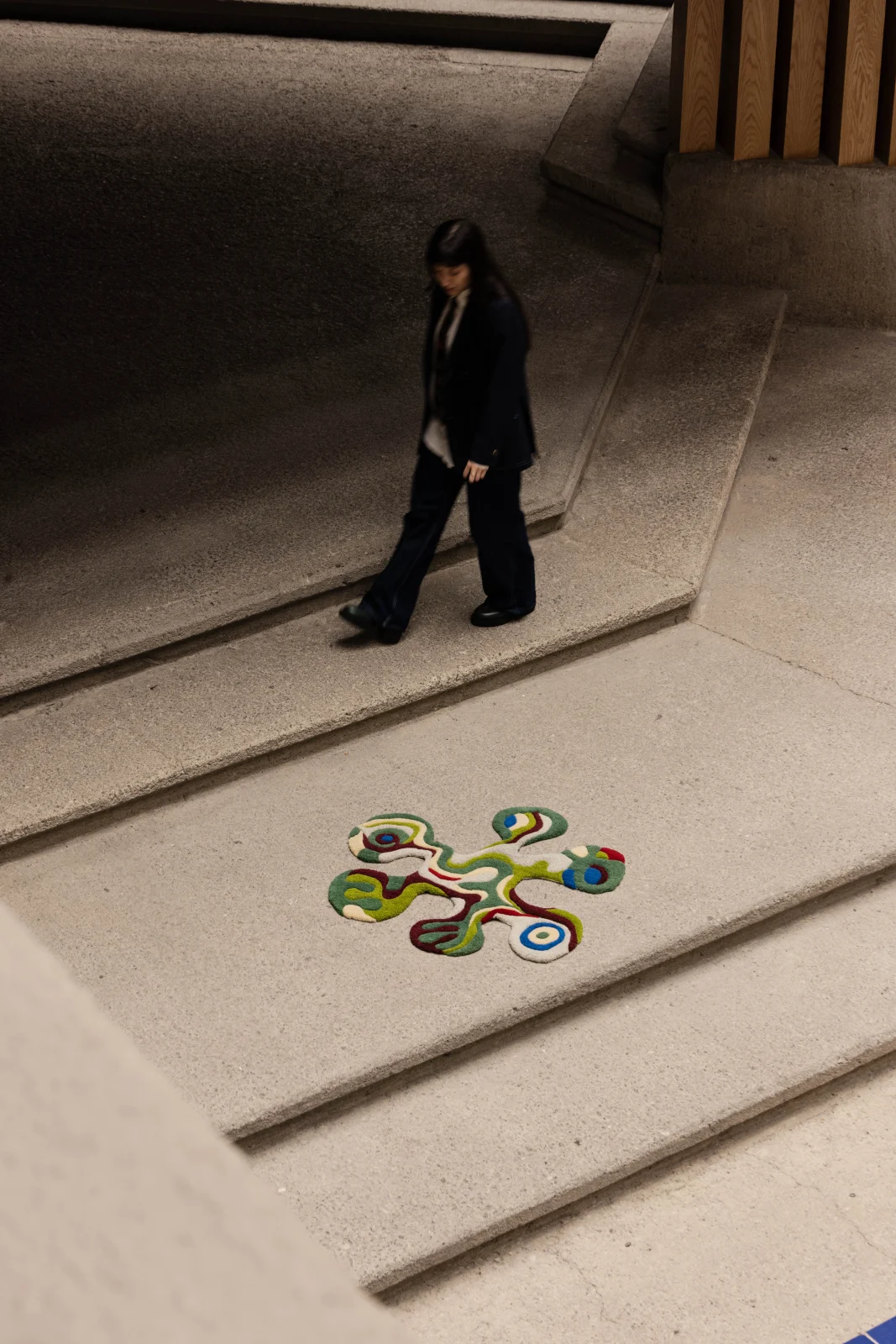
Draped over steps rather than laid flat, Sombra de Zebu is built to read as shifting shadow — the play between light and dark, presence and absence, form rippling the way sunlight moves through leaves. Handwoven in Oaxacan wool dyed with natural pigments, produced collaboratively with artisans from communities in Oaxaca. A one-of-a-kind piece, though dimensions can be adapted using this design and palette as the starting point.
€2.075 incl. tax
Dead Dunes — Wool Landscape Rug by Viktorija Kuliavaitė
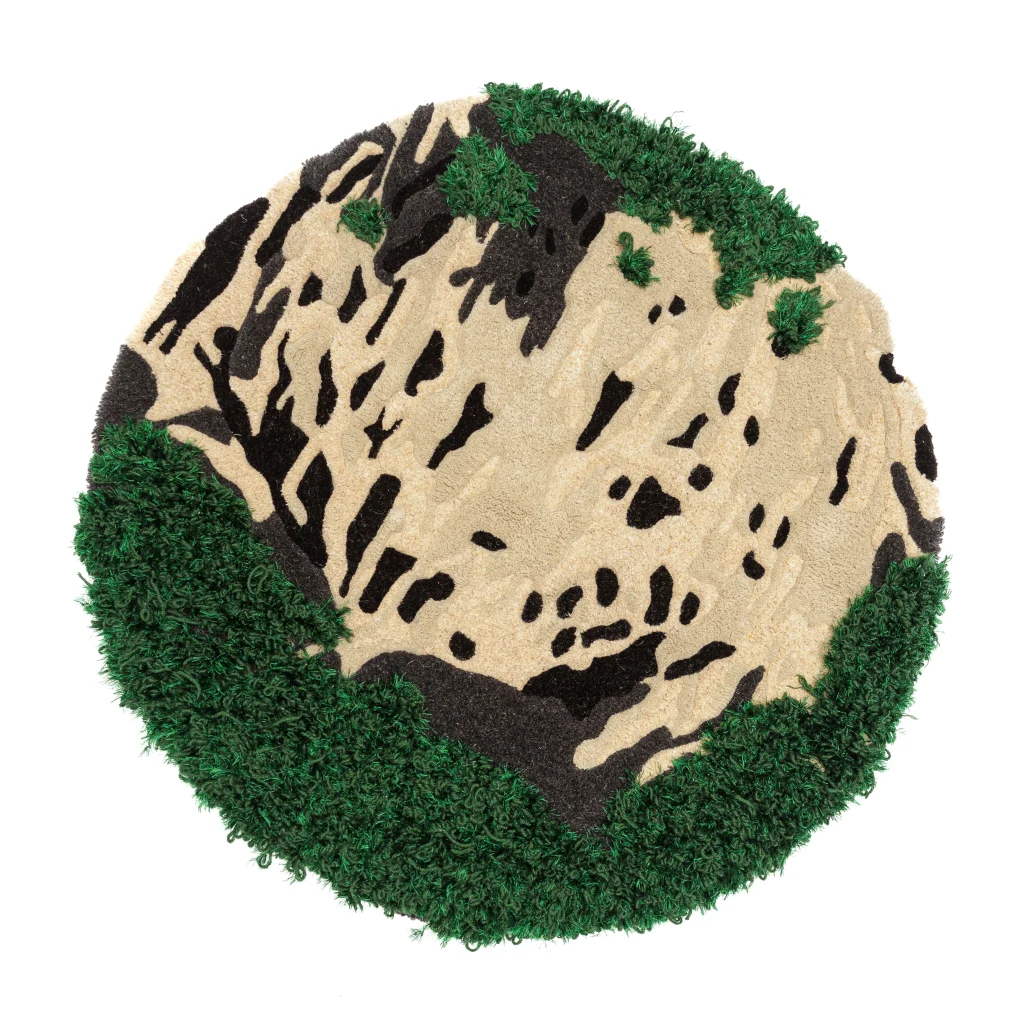
The Grey — or Dead — Dunes are Europe’s largest moving dunes, on the Lithuanian side of the Curonian Spit: vast sand formations broken by occasional vegetation. This oval tufted rug translates that landscape into organic shapes and earthy tones running from deep green to several shades of sand. It separates into five individual pieces, which gives it a three-dimensional quality and lets the footprint change with the room. Handmade in Lithuania by the designer, in a limited edition.
€1.500 incl. tax
Bloossom — Radical Wool Rug by Maria Zakioso

Made by hand in the artist’s London studio, Bloossom sets a dragon’s skeleton against a blooming field — decay and growth in the same frame. Worked in high-quality wool, and available in alternative colour schemes on request, which makes it easier to place than the imagery suggests. One for a bolder interior.
€2.750 incl. tax
Non Flying Carpet — Modular Wool Rug by Sergio Mannino

Six separate pieces that combine into one rug, or don’t — the modularity means the footprint can change with the room. Made in Nepal from 100% natural wool using the Tibetan hand-knotting technique, in an edition of only ten. Undyed and naturally dyed wool keeps the material honest against the wit of the concept.
€11.400 incl. tax
The Dune — Sculpted Pile Wool Rug by Mush Studios
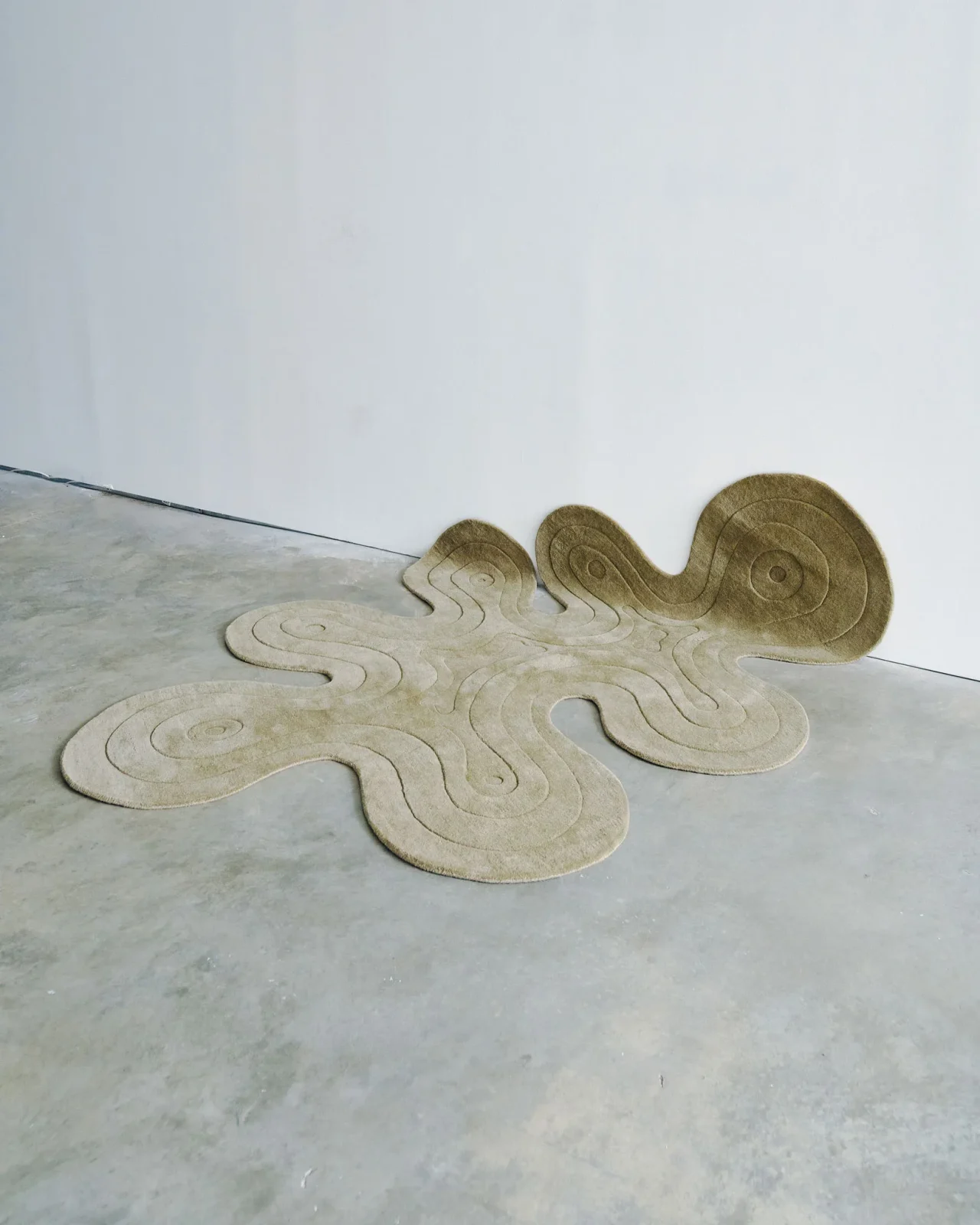
Dune builds its pattern entirely from pile height rather than colour, so the surface appears to move as you cross the room and the light changes. Made from 100% New Zealand wool with a cotton backing, designed in Brooklyn and made by hand in India. A good example of texture doing the work a print usually does.
€278 – €1.650 incl. tax
Gradient — Jacquard Woven Rug by Emma Terweduwe

Gradient is jacquard woven from merino wool, mohair, linen and cotton. Because jacquard addresses each warp thread individually, the colour transition is woven rather than printed — and the four fibres each take dye differently, so the gradient carries texture as well as tone. Produced at TextielLab.
€3.500 incl. tax
Op Kilim No. 1 – Rug by Pani Jurek STUDIO
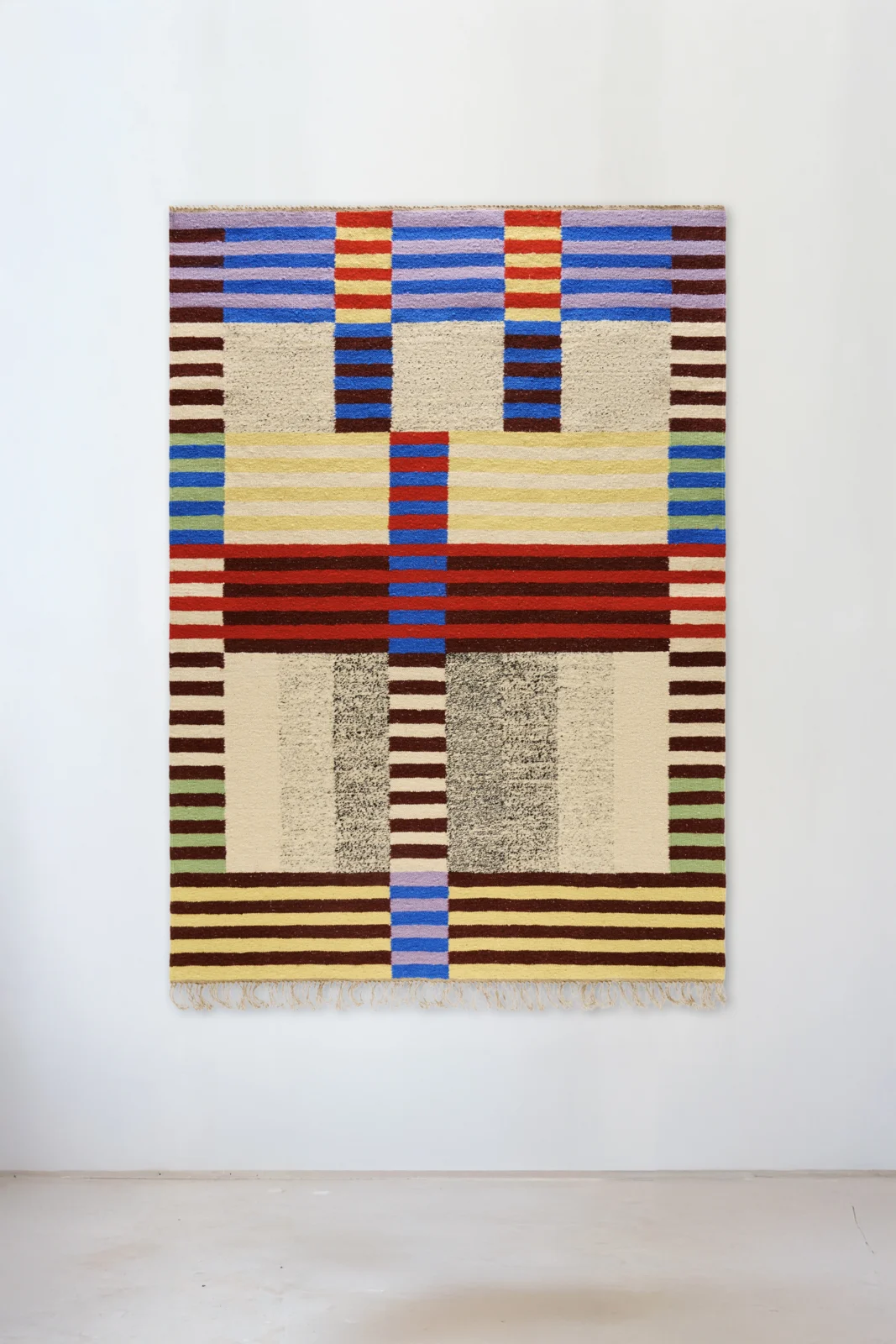
OP Kilims is a series of woven compositions by Magda Jurek in which the geometry comes from somewhere unexpected: the OP ceramic tile system developed by Pani Jurek Studio. That interactive tile system became a pattern generator, so each kilim is one output of an open series and exists as a single one-of-one piece. Woven in wool and linen at 150 × 210 cm, produced as Splot × Pani Jurek. Works on the floor or the wall.
€4.879 incl. tax
Heeralal — Kaarigari Rug by Rashmi Bidasaria
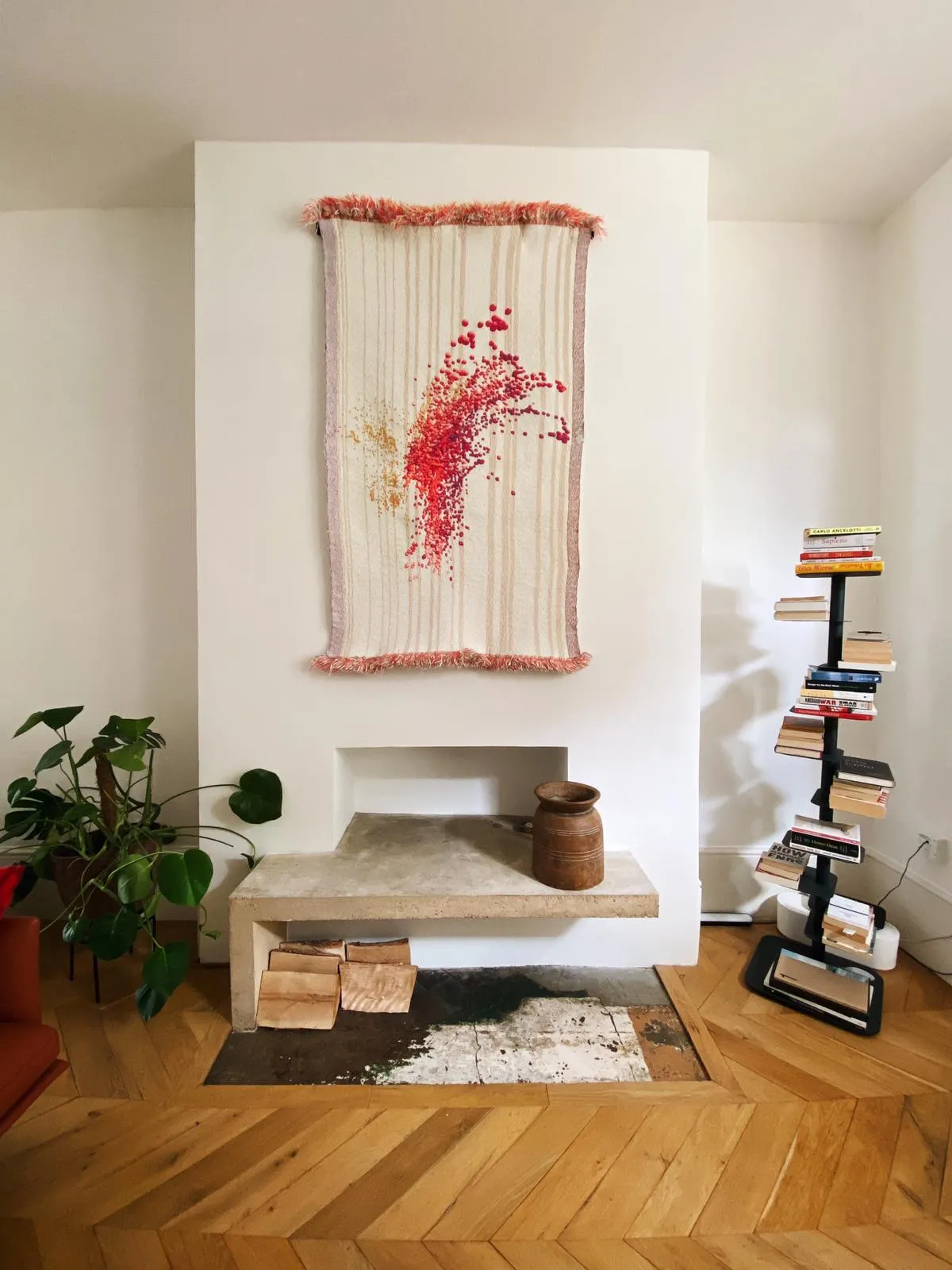
The Kaarigari rugs record the signature hand movements of block-printing artisans and translate them into pattern, so each rug carries the trace of one specific maker. That makes the design a portrait rather than a motif. Scandinavian Modern in restraint, Indian in origin and technique.
€3.500 incl. tax
B J O R N | Rug by N I S H
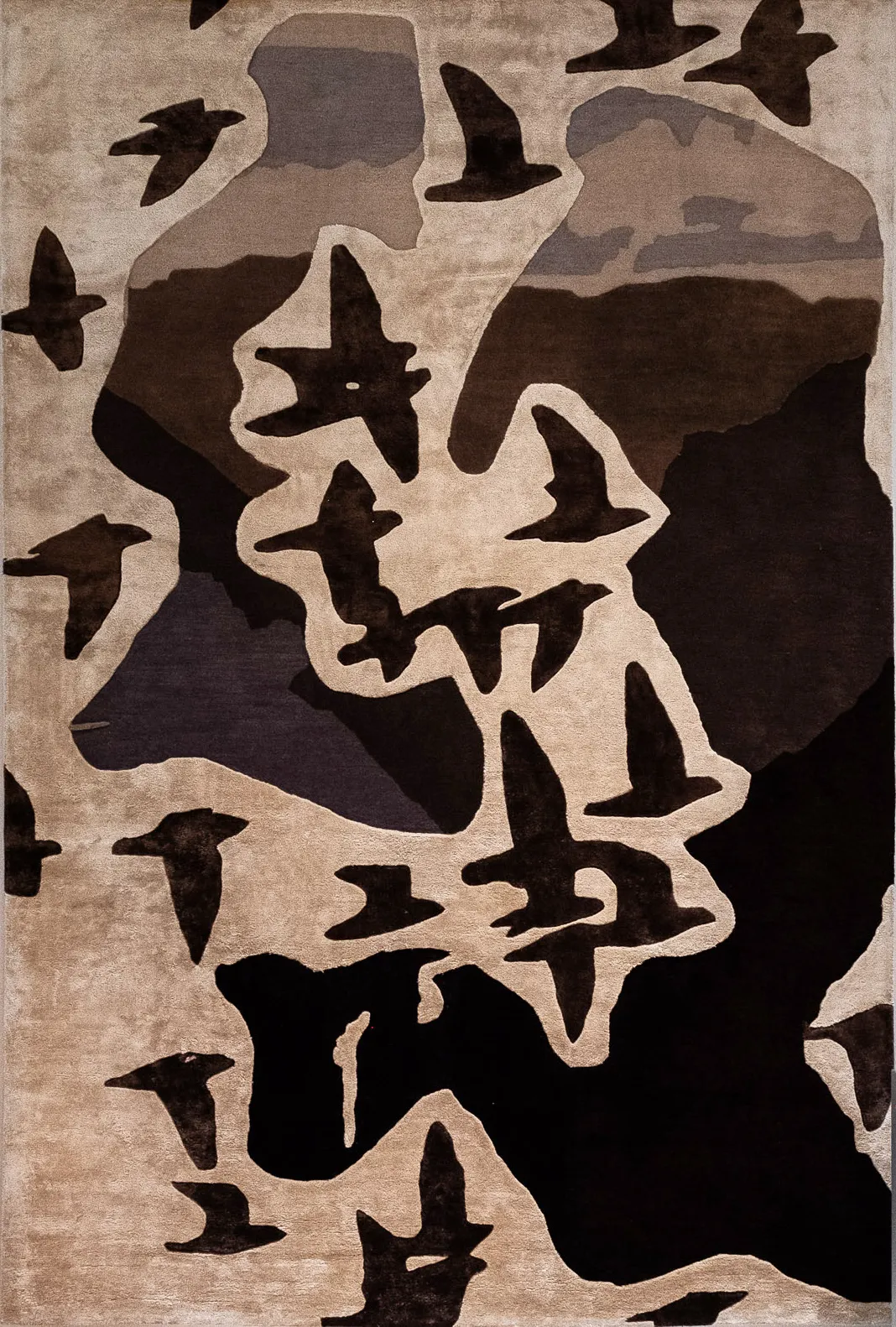
Made in collaboration with tactile collage artist Britt Appelgryn, B J O R N is hand tufted at two pile heights in nu silk and wool. The two heights do the compositional work: the silk sits at one level and catches light, the wool at another and absorbs it, so the pattern reads differently depending on where you stand. Closer to a collage translated into pile than to a conventional rug design.
€6.300 incl. tax
Ravenna — Hand-Knotted Tibetan Wool Rug by Sergio Mannino
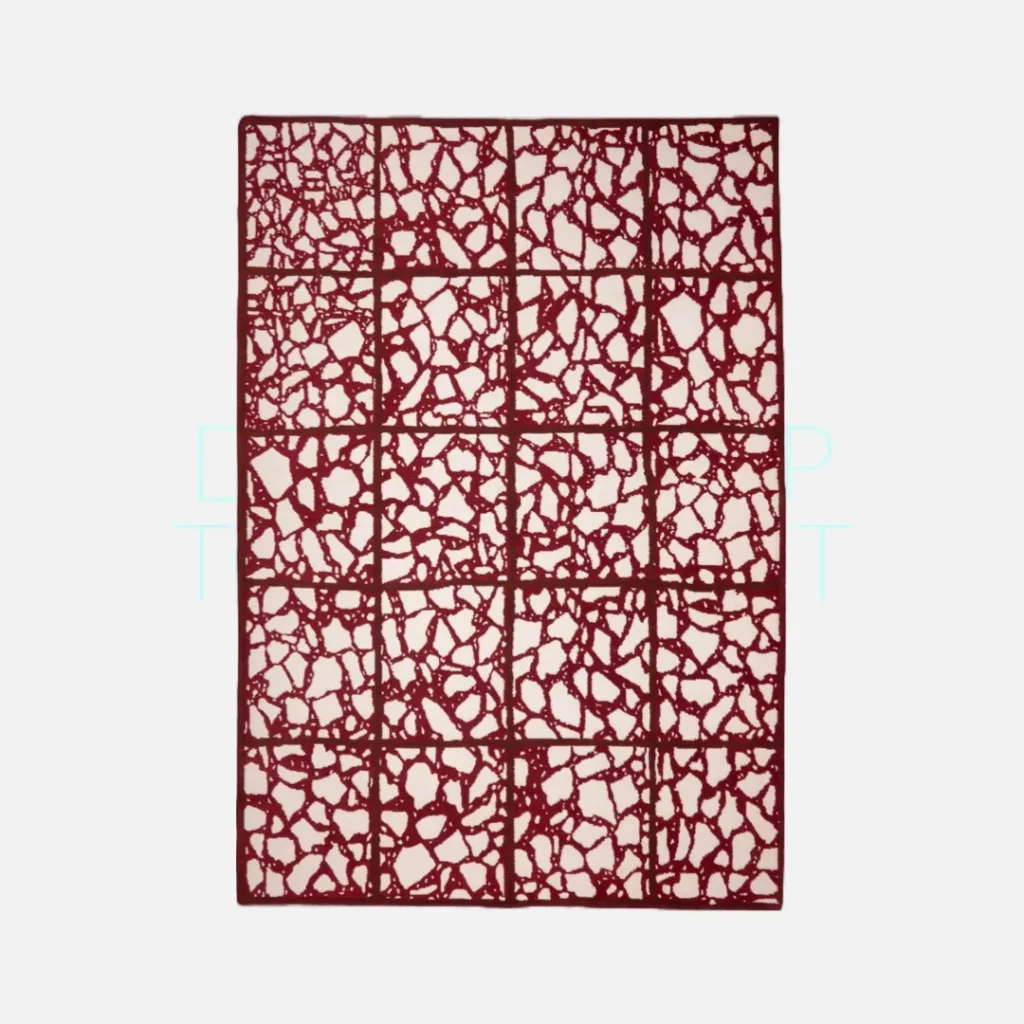
From the Mediterraneo series, which takes traditional Italian terrazzo flooring as its source. Every pattern is drawn by hand in Sergio Mannino’s New York studio rather than traced from a photograph, which is why the scatter reads as composed rather than random. Hand-knotted in Nepal in Himalayan wool with natural dyes, so the rug is 100% natural fibre and fully recyclable. This listing is the red and white colourway; dimensions and colour combinations can be adapted.
€3.700 incl. tax
Eclipse Oval Rug With Geometric Pattern by Toro Manifesto
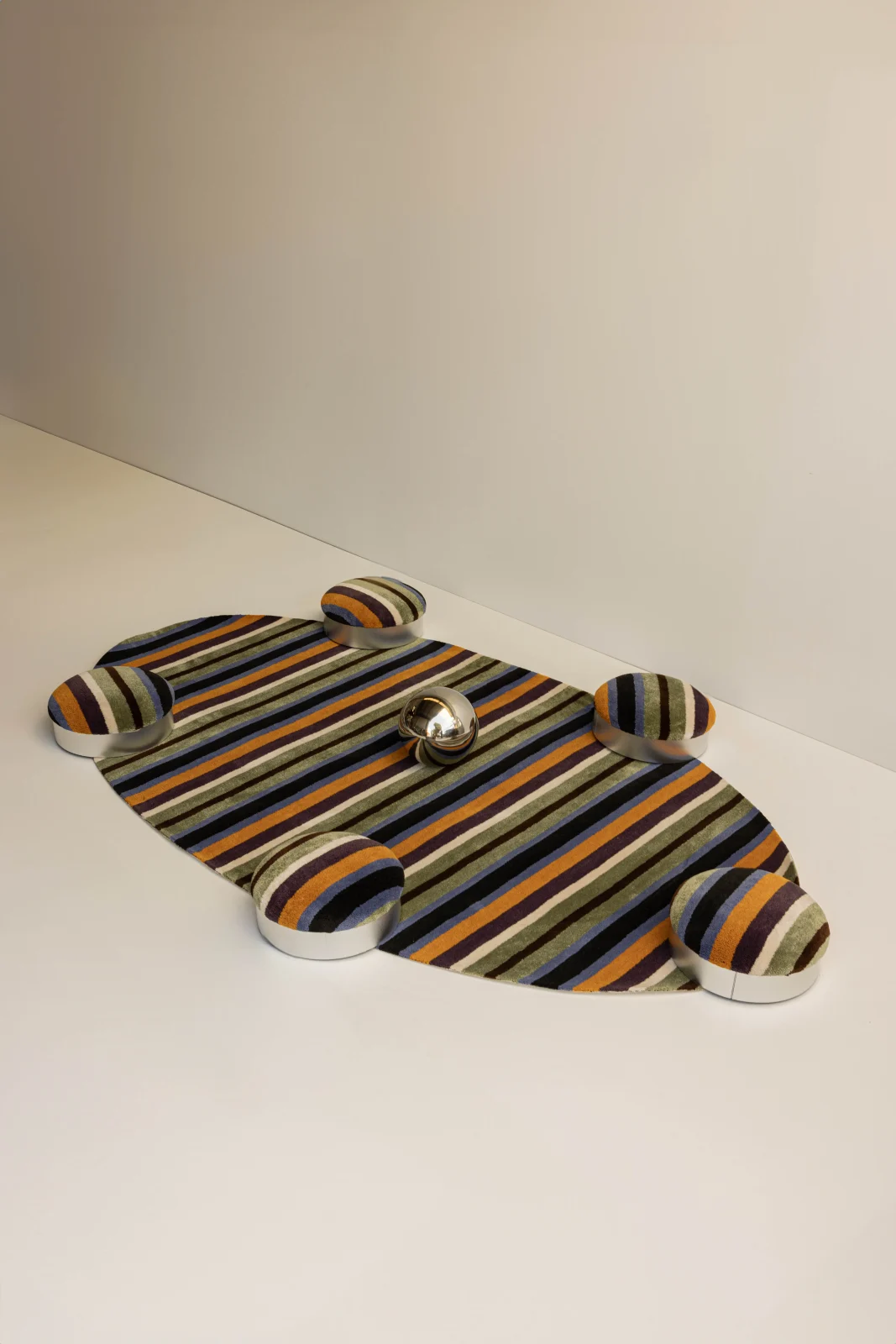
Eclipse draws on the retrofuturism of the 1960s and 1970s — space age reference points handled in warm rather than clinical material. Horizontal line motifs in vibrant tones give a surface that shifts depending on light and what sits around it. The oval outline is the practical argument for it: with no corners to align, it anchors a room without needing to square up to the walls. Made in Mexican tinted wool, and customisable in size and colour.
€4.320 incl. tax
Repeated II by Severija Inčirauskaitė-Kriaunevičienė

Repeated II was produced at Neaustima, UAB in Šiauliai, one of the largest non-wovens manufacturers in the Baltic States — so unlike everything else here it is neither woven nor knotted, but bonded. Using an industrial process for an art edition is the deliberate move, and it gives the surface a flatness no loom would produce.
By Severija Inčirauskaitė-Kriaunevičienė
€3.500 incl. tax
The Calendar — Hand-Knotted Wool Rug by A* alittlemore studio
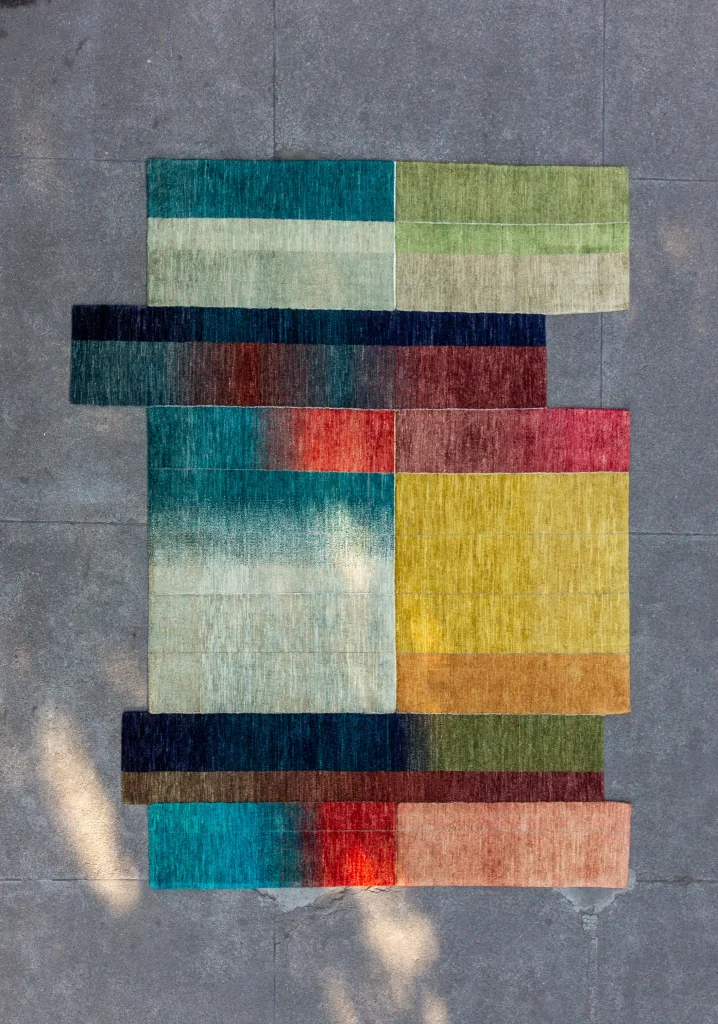
The Calendar, from The Smog Collection, maps a year of farming cycles for wheat, rice and cotton onto a single rug. Shifting hues and textures track the landscape from spring through winter, including the atmospheric effect of crop burning — so the colour changes are documentary rather than decorative. Hand-knotted by local weavers, which embeds regional technique into the piece alongside its subject.
By A* alittlemore studio
INQUIRE
Frequently asked questions
Are wool rugs worth the cost?
For anywhere that gets used, generally yes. Wool’s natural crimp means the pile recovers instead of crushing flat, and its lanolin content repels dirt and liquid before either penetrates. A hand-knotted wool rug can outlast several synthetic replacements, which changes the arithmetic considerably over a decade.
Is 100% wool better than a wool blend?
Not automatically. 100% wool gives the best resilience and flame resistance, but blends are sometimes the better choice: silk or mohair adds sheen and highlight, linen adds crispness, and a small synthetic content can improve stain resistance. What matters more is staple length — long-staple wool in a blend beats short-staple wool on its own.
What size wool rug do I need?
In a living room, an 8×10 suits most standard seating arrangements with the front legs on the rug; a 9×12 lets the whole furniture group sit on it. For dining, allow about 60cm past the table edge on all sides. Runners want roughly 10cm of floor showing either side. Oval and round rugs work best anchoring a circular table or a reading corner rather than a full seating group.
Are wool rugs good for high-traffic areas?
Among the best, provided the construction matches. Hand-knotted and flatweave wool handle hallways and living rooms well. Tufted rugs and high-pile shag wear faster in traffic, and fine merino is better kept to bedrooms and low-use rooms.
Are wool rugs washable?
Not machine washable — heat and agitation felt wool irreversibly. Spot-clean with cool water and a wool-safe detergent, and avoid steam cleaners, enzyme cleaners and bleach entirely, since wool is a protein fibre.
Do wool rugs work with underfloor heating?
Yes, though thermal resistance matters. A low-pile flatweave lets heat through efficiently; a thick high-pile rug over a large area will insulate the floor and reduce output. Check the system’s maximum tog rating, and avoid a rubber or latex backing, which can degrade with sustained heat.
Browse the full selection of rug designs
ADORNO works with independent studios making rugs that sit closer to commissioned textile art than to floor covering — hand-knotted, handwoven and limited edition, sourced directly from the makers.