Updated on: August 14, 2026
Wool is not one material. Merino, alpaca, Himalayan highland and felted wool behave so differently that treating them as interchangeable is the main reason people end up disappointed by a wool purchase. Fineness, crimp, lanolin content and staple length vary enormously, and each governs something practical — whether a chair holds its shape, whether a rug survives a hallway.
What follows is a short guide to what actually separates the main types, then twelve pieces from independent studios: sofas, chairs, rugs and wall pieces, each in a specific wool chosen for a reason.
Wool in design: what actually differs between types
Merino wool
Merino is the finest of the common wools, with a fibre diameter low enough that it does not trigger the prickle response coarser wool does. That is why merino is the answer to “is wool itchy” — itch is a function of fibre diameter rather than of wool as such, and merino sits below the threshold. It also has high crimp, so it springs back well.
The trade-off is durability: fine fibre abrades faster. Merino suits upholstery, throws and anything touching skin, and is a poor choice for a hallway rug.
Alpaca wool
Alpaca is technically a hair rather than a wool, and the difference matters. It contains no lanolin, which makes it hypoallergenic for people who react to sheep’s wool, and its fibres are hollow — so it insulates better than sheep’s wool at the same weight while feeling lighter. It also has less crimp, meaning it drapes rather than springs, which is why alpaca suits scarves and throws more than structured upholstery.
Himalayan and highland wool
Himalayan and Tibetan highland wool is the opposite end of the range: coarse, long-staple and high in lanolin because the sheep endure hard winters at altitude. Consequently it resists soiling, springs back underfoot and sheds less once settled. It is the standard for hand-knotted rugs for exactly these reasons — see our guide to Nepalese hand-knotted rugs.
Wool felt
Felt is not woven or knitted at all — the fibres are matted together with heat, moisture and agitation until they interlock permanently. That gives a material with no grain, no fraying edge and no need for hemming, which is why it can be cut into structural shapes. Dense technical felt is stiff enough to carry load, and it absorbs sound in a way woven wool does not. It is also the only wool here that behaves like a sheet material rather than a textile.
12 wool designs from independent studios
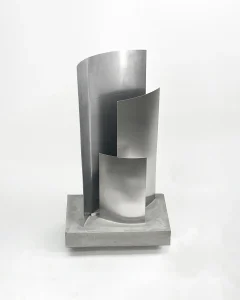
Wool Felt+marble Sculpture by Danik Uderbekov
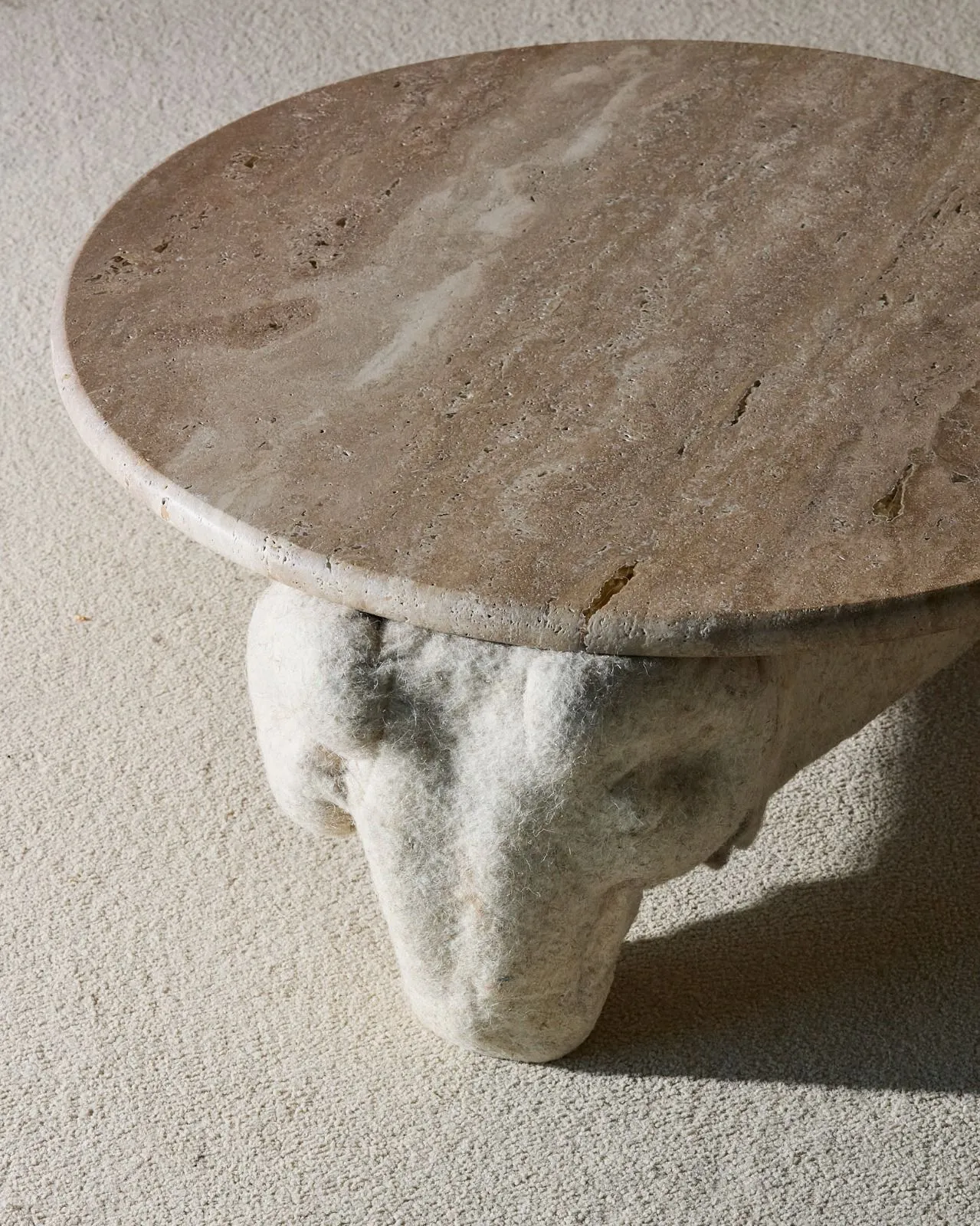
Forty kilos of solid marble resting on a base of dense technical wool felt, 80cm across. No glue and no fixings — the stone is held by its own weight and the friction of the felt. This is felt used structurally rather than decoratively, and it demonstrates the property that makes felt unusual: enough compressive strength to carry a stone slab, while still being soft enough to never mark a floor.
€3.000 incl. tax
‘Woolwalls’ in Sustainable Wool – Rusty and Off-White by jeanett knipschildt
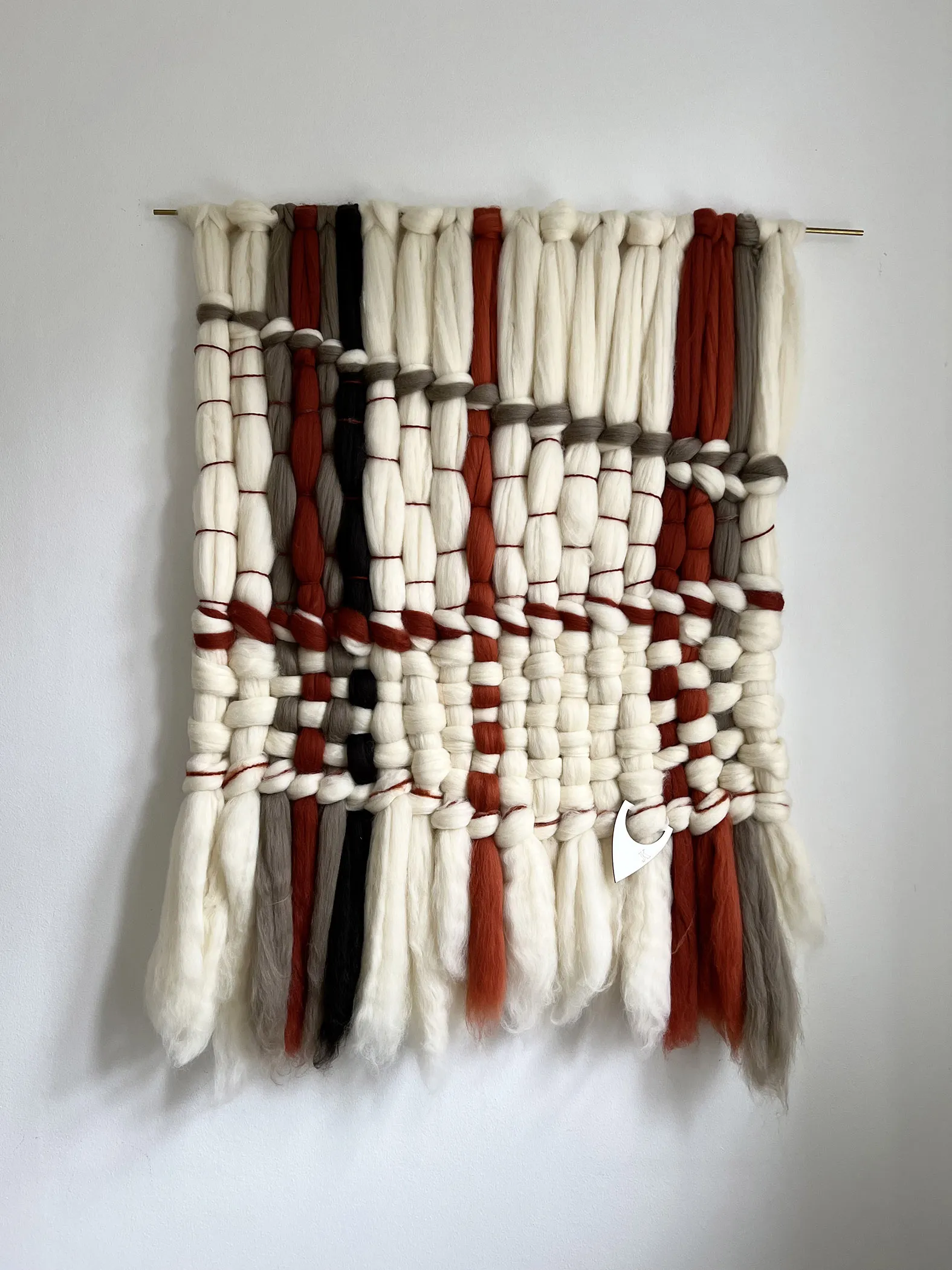
A handwoven wall piece in 100% European Merino wool. The loft is doing acoustic work as well as visual — a thick woven wool panel absorbs mid-range frequencies, which is why it changes how a hard-surfaced room sounds rather than only how it looks. Boho chic in register, functional in effect.
€850 incl. tax
Hilana Wool Chair by Diego Olivero
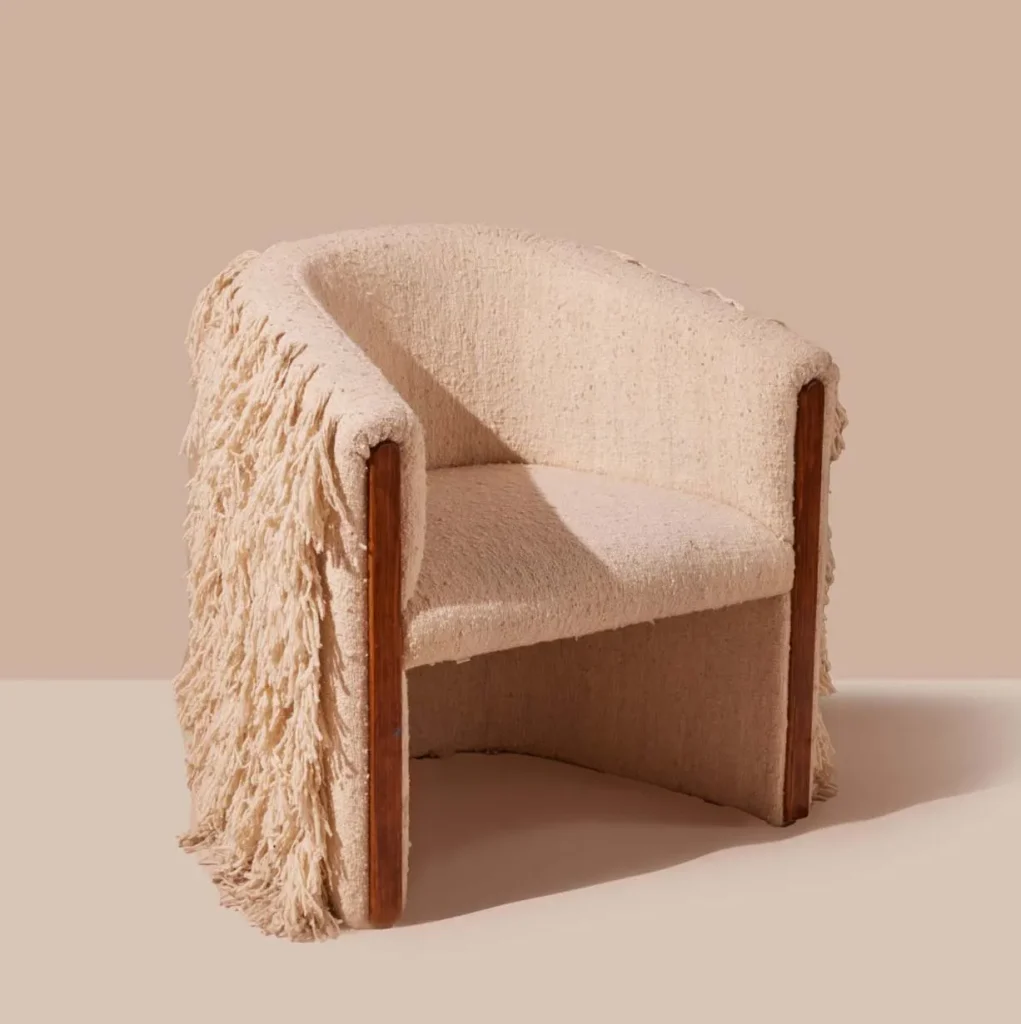
Woven on a pedal loom by artisans in Momostenango, Guatemala, using hand-spun wool, then upholstered in Guatemala City over a pinewood frame. Hand-spinning is why the surface has the irregularity it does — the yarn varies in thickness along its length, so the weave carries texture no mill-spun equivalent would. That also sets the limits: the chair wants spot cleaning rather than anything wetter, and it is explicitly not built for high traffic. A reading chair rather than a hallway one. Purchases support ongoing income for the Guatemalan artisans who weave it.
€3.999 incl. tax
Tufting Dark Brown Chair by Vintola Studio
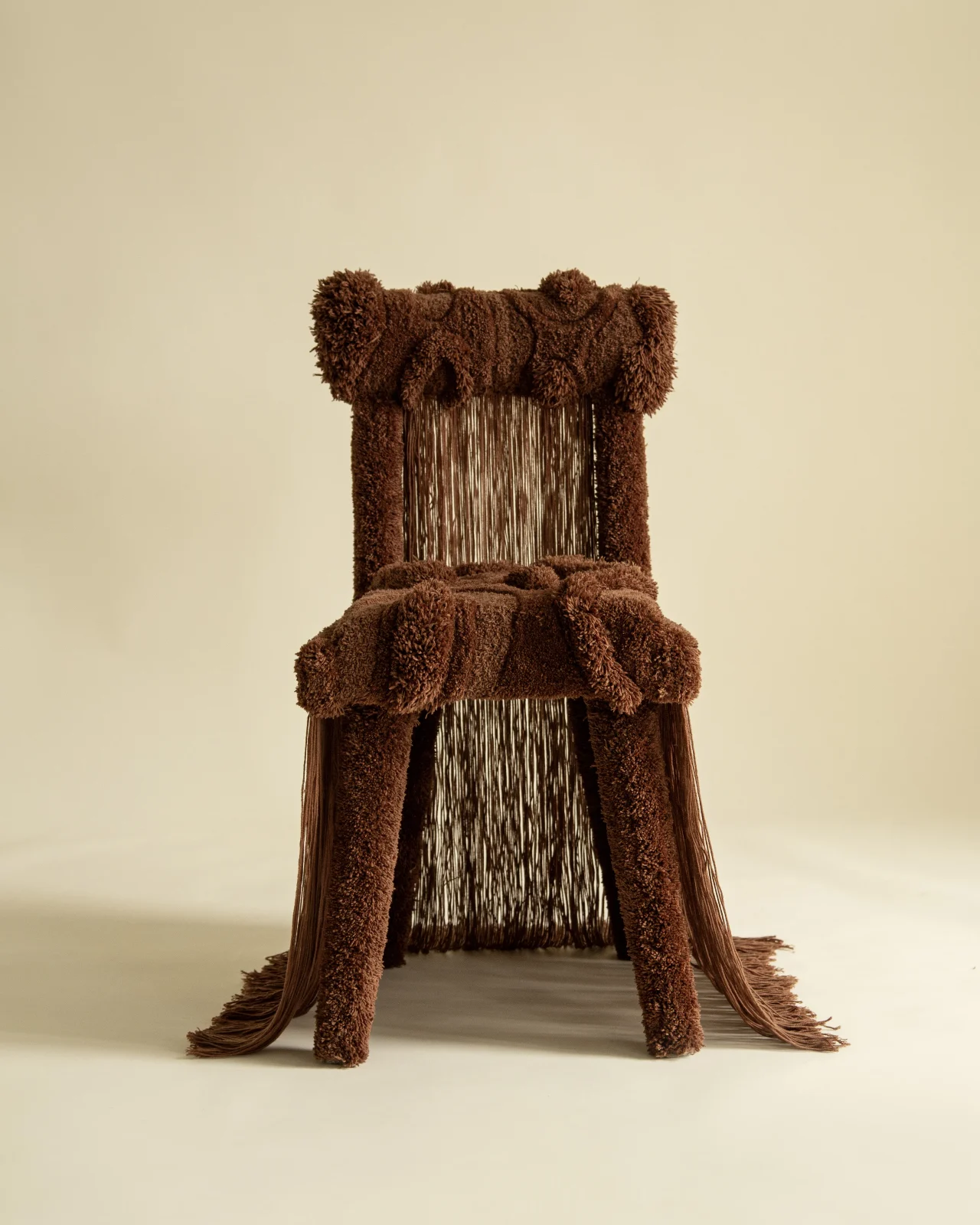
Hand-tufted wool over a sculptural frame, finished with loose fringes that move as you pass. Tufting punches yarn through a backing rather than weaving it, which is what allows the dense, high-relief pile — and why the surface reads as drawn rather than woven. Made in Poland by Vintola Studio. Worth knowing that tufted work relies on a backing rather than structural weave, so it belongs in a low-traffic setting.
€2.500 incl. tax
Lime Tufted Chair by Vintola Studio
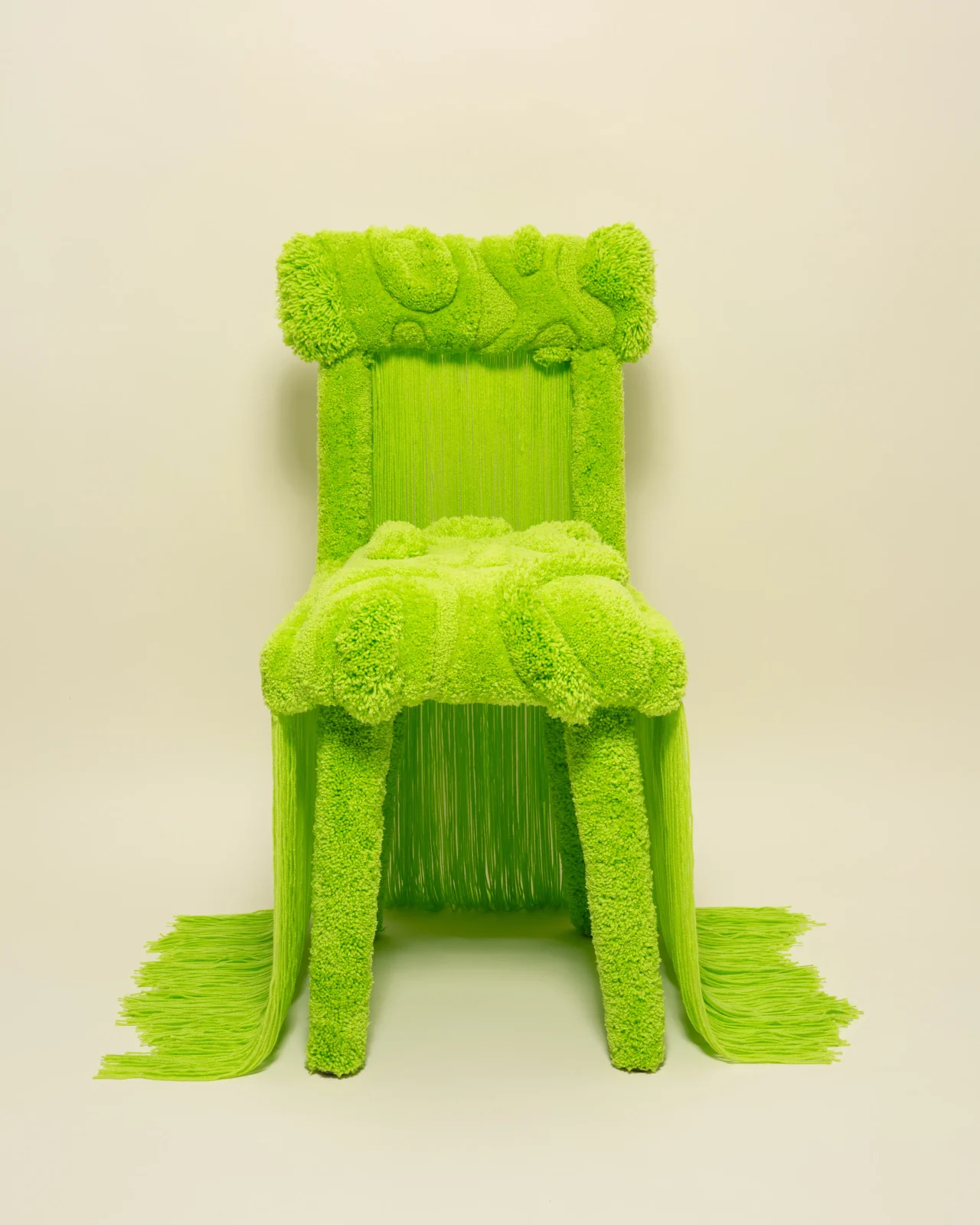
The same hand-tufted construction in vivid lime, which is where wool’s dye behaviour becomes the point. Wool takes saturated colour with slight unevenness along each fibre, so a bright tone reads as having depth rather than sitting flat the way a synthetic would. Against the muted palette most wool interiors default to, it works as the single loud object in a room.
By Vintola Studio
€2.500 incl. tax
Glove Couch by thehighkey
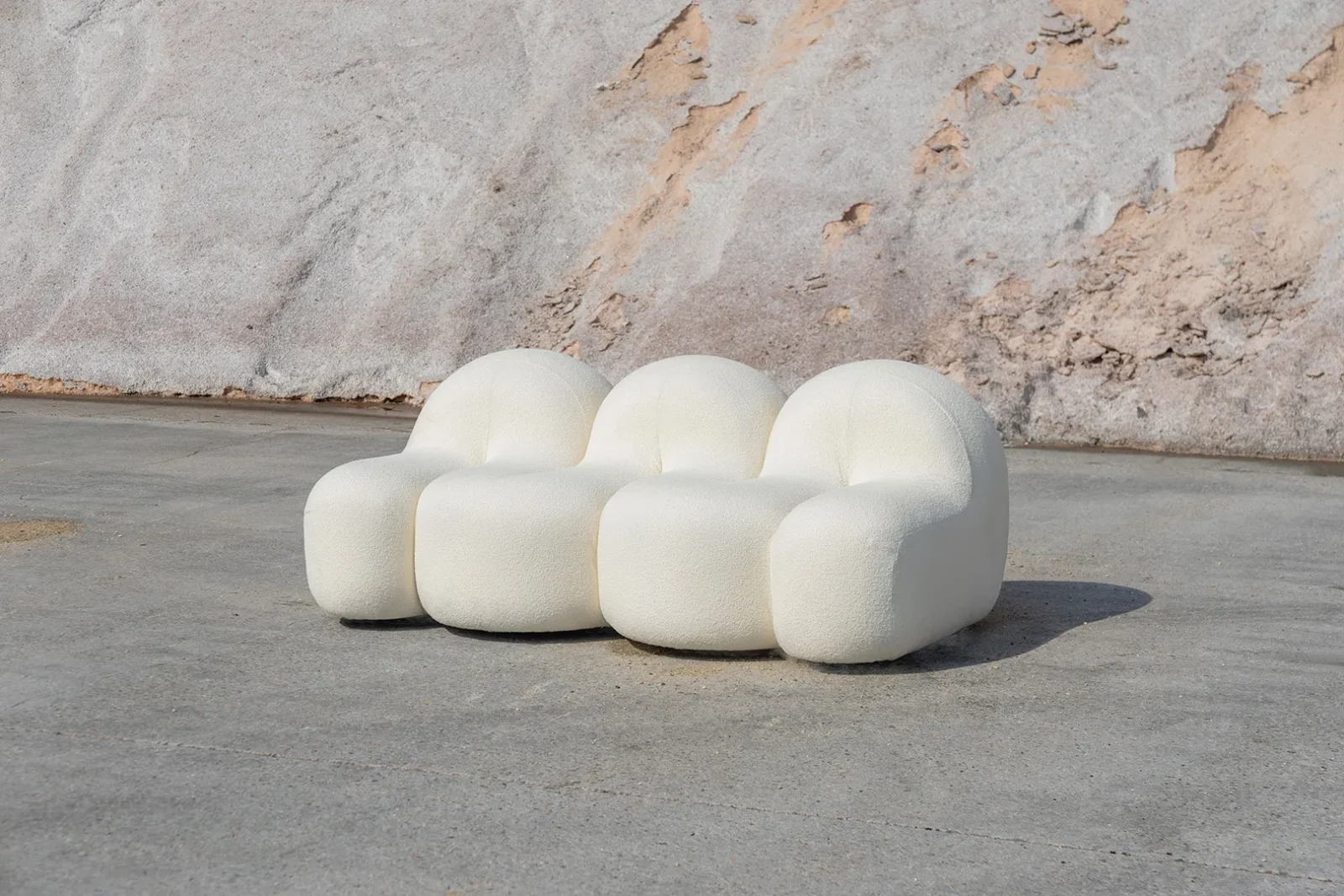
A coastal sofa wrapped entirely in wool, built from merged 3D curves so there is almost no straight line in it. Wool is the right upholstery choice for a form like this — it has enough give to follow a compound curve without puckering, which a stiffer fabric would not.
By thehighkey
INQUIRE
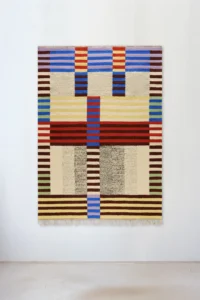
Bandiera N° 26 – Hand-woven Wall Art by Susanna Costantini
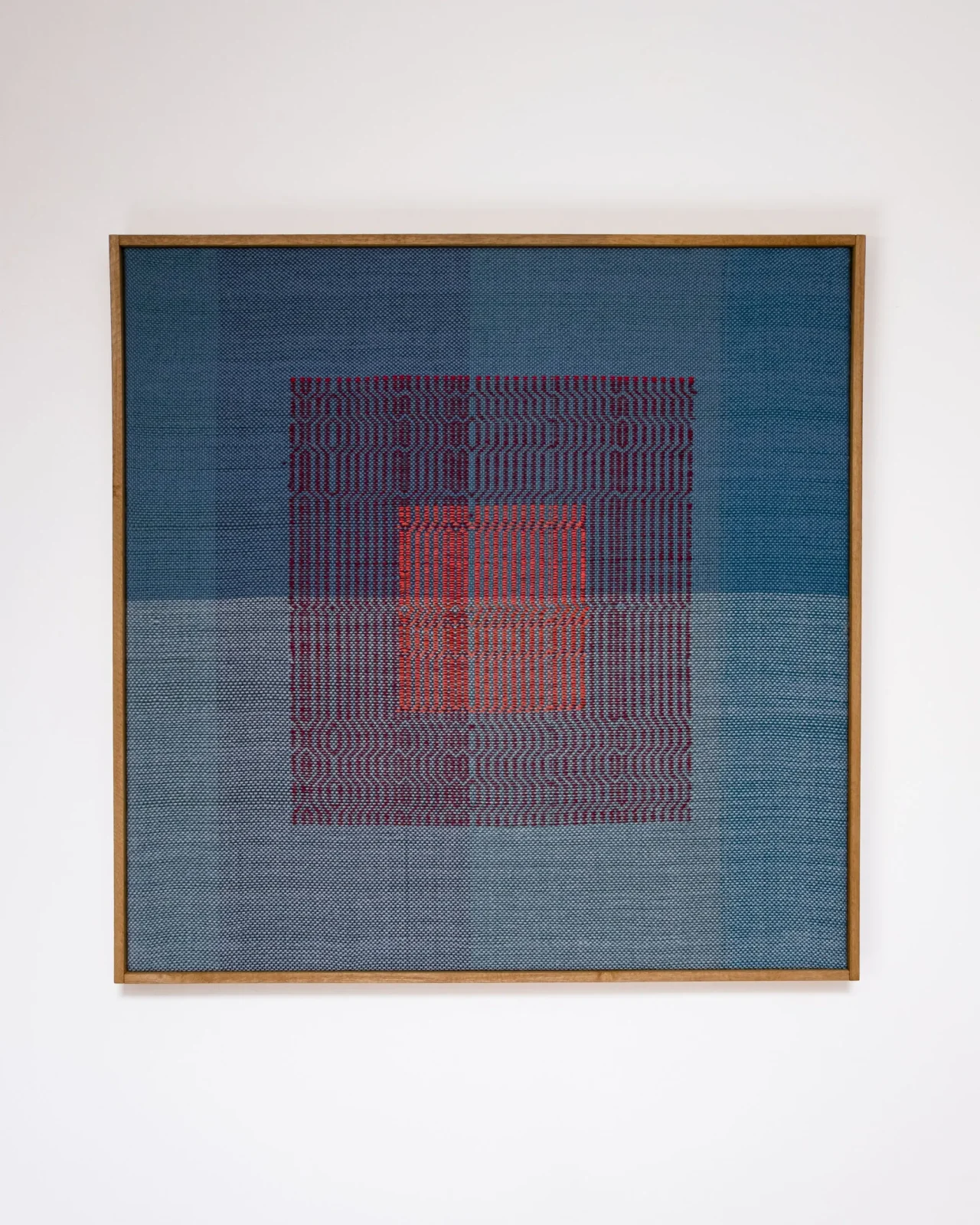
From the Flags series, handwoven by Susanna Costantini in cotton, linen, wool and silk — four fibres in one piece, which is why the surface shifts as light moves across it. Wool carries the loft, linen the crispness, silk the highlight. Large fields of flat colour keep the composition open to interpretation rather than declaring anything. The irregularities in the weave are a consequence of an entirely hand process, and can be customised in size and colour.
€1.100 incl. tax
Sombra De Zebu Rug – Umaguma by Toro Manifesto
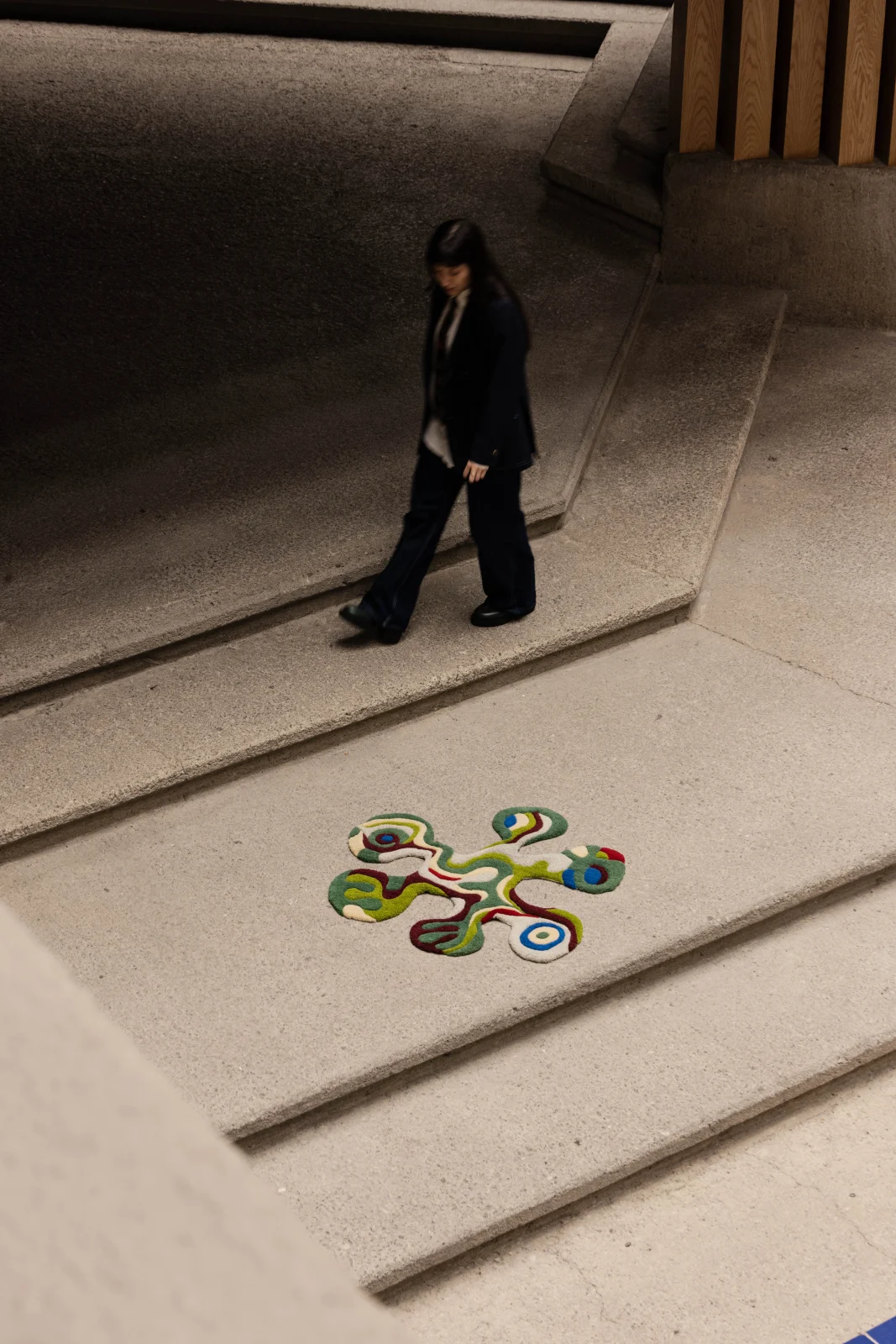
Handwoven in Oaxacan wool dyed with natural pigments, produced with artisans from communities in Oaxaca. Built to read as shifting shadow — the form ripples the way light moves through leaves. Naturally dyed wool ages toward a warmer tone rather than fading abruptly, which is the practical argument for plant and insect dyes over synthetic. A one-of-a-kind piece, though dimensions can be adapted.
€2.075 incl. tax
Dead Dunes – Wool Landscape Rug by Viktorija Kuliavaitė
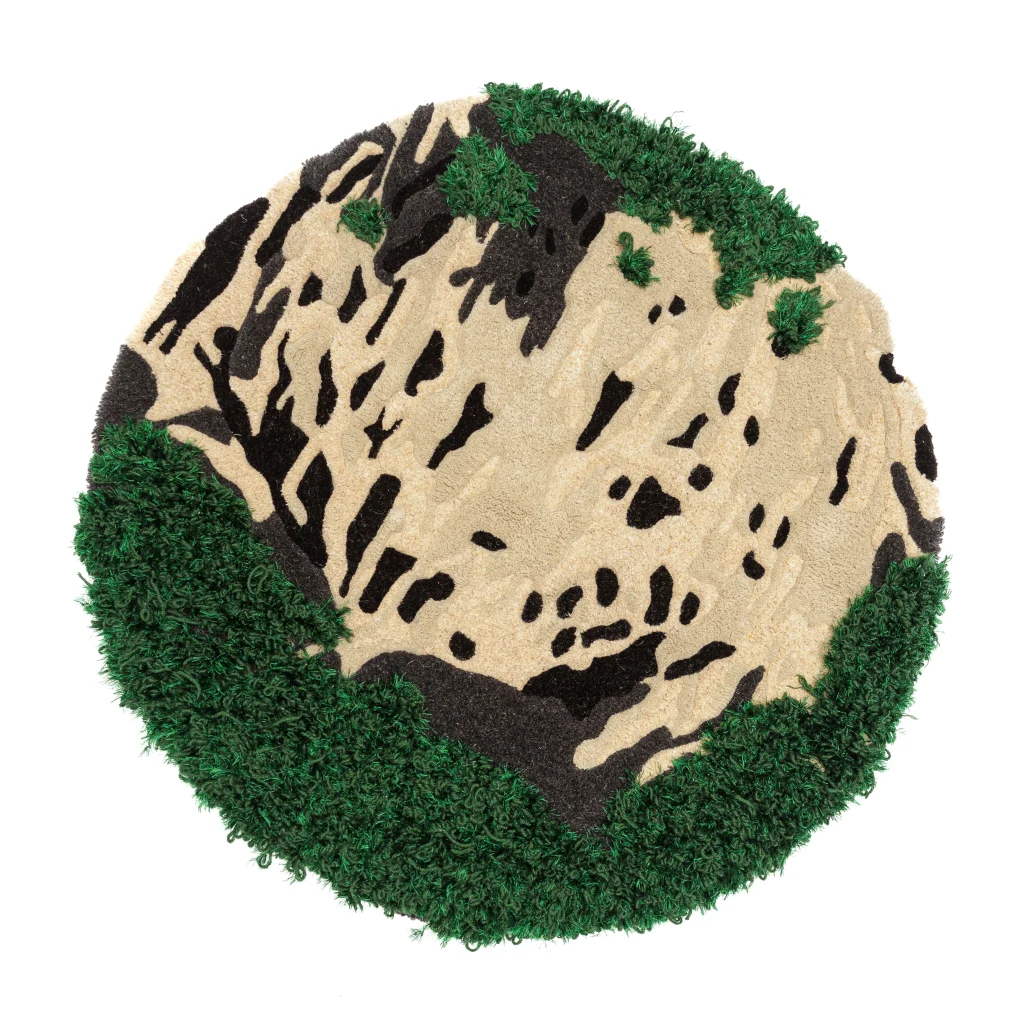
The Grey — or Dead — Dunes are Europe’s largest moving dunes, on the Lithuanian side of the Curonian Spit. This oval tufted rug translates that landscape into organic shapes and earthy tones running from deep green through several shades of sand. It separates into five pieces, so the footprint changes with the room. Handmade in Lithuania by the designer, in a limited edition.
€1.500 incl. tax
Knotting Knitting – Merino Wool Throw Blanket by Ana María Gómez

Built from filled bands, all knitted rather than woven — which gives it the loft and give that knit has and weave does not. The result is a rhythmic arrangement of colour and deliberately uneven lines, where the irregularity is the composition rather than a tolerance.
€465 incl. tax
The Valley Wool Rug by Mush Studios

A circular rug with three holes cut through it, so the floor becomes part of the composition. Made in India from 100% New Zealand wool with a cotton backing. New Zealand wool is finer and paler than highland wool, which is why it takes saturated dye cleanly — the reason it dominates colour-led rug production.
By Mush Studios
€1.940 incl. tax
Op Kilim No. 1 – Rug by Pani Jurek STUDIO
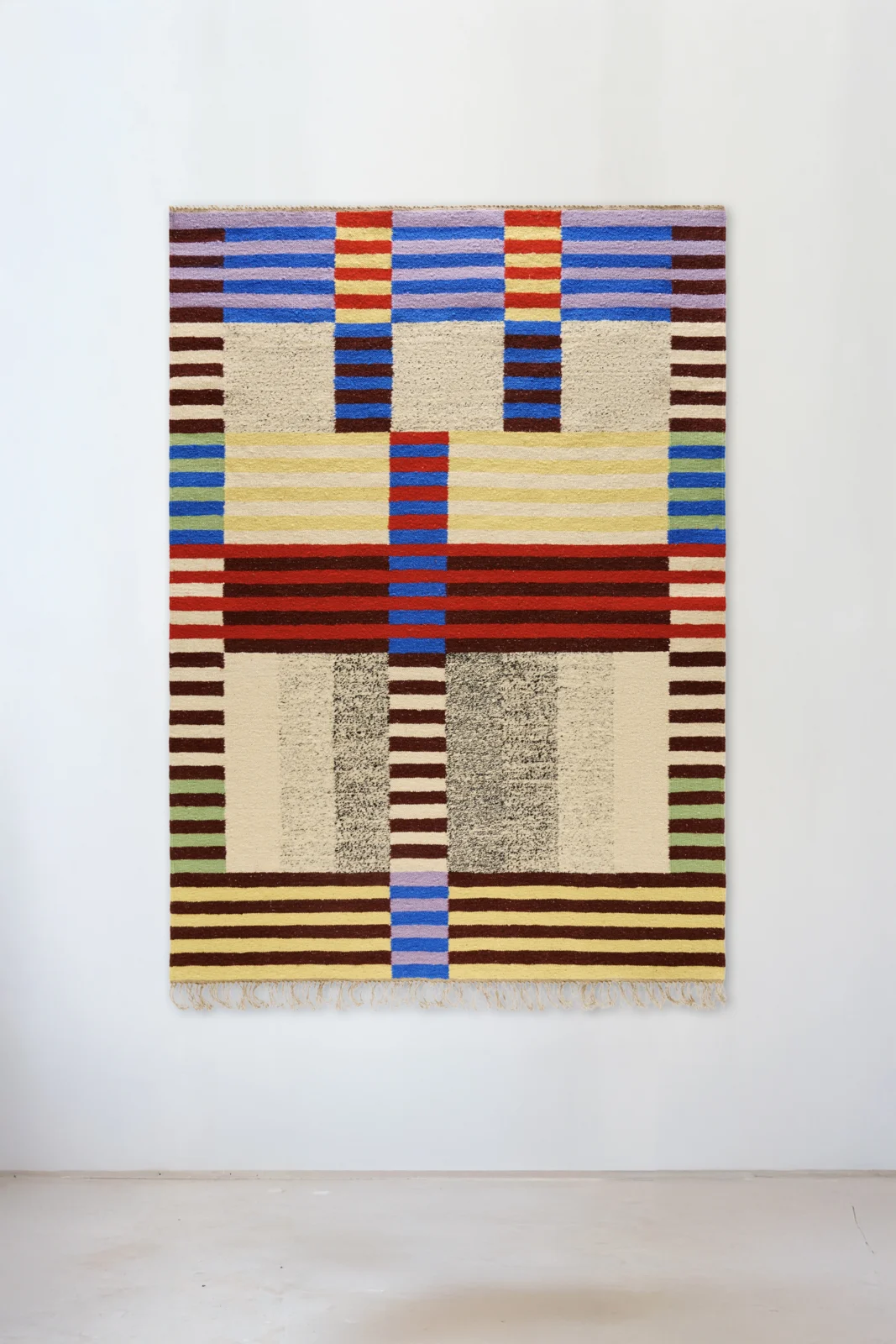
A handwoven flatweave in wool and linen at 150 × 210cm, its geometry generated from the OP ceramic tile system developed by Pani Jurek Studio. Mixing wool with linen is a deliberate structural choice — linen adds crispness and dimensional stability where wool alone would be softer and more prone to movement. Produced as Splot × Pani Jurek, one of one.
€4.879 incl. tax
Frequently asked questions
Is merino wool itchy?
Generally no. Itch is caused by fibre diameter rather than by wool itself — coarse fibres are stiff enough to press into the skin and trigger a prickle response, and merino sits below that threshold. If a wool garment itches, it is almost certainly not merino, or it is a blend with coarser fibre in it.
What is the difference between alpaca and sheep’s wool?
Alpaca is a hair, not a wool. It contains no lanolin, which makes it suitable for people who react to sheep’s wool, and its fibres are hollow, so it insulates better at the same weight. It has less crimp, so it drapes rather than springing back — better for scarves and throws than for structured upholstery.
What is wool felt and how is it different?
Felt is made by matting fibres together with heat, moisture and agitation rather than weaving or knitting them. It has no grain, does not fray, needs no hemmed edge, and in dense technical grades is stiff enough to be structural. It also absorbs sound better than woven wool of the same thickness.
What is the difference between tufted and woven wool?
Tufting punches yarn through a backing fabric, so the pile is held by the backing rather than by the structure of the cloth. Weaving interlaces the yarn into the fabric itself. Tufting is faster and allows dense high-relief surfaces; woven and hand-knotted work lasts longer because there is no backing to fail.
Which wool is best for a rug?
Himalayan or highland wool for durability — long staple and high lanolin means it resists soiling and springs back underfoot. New Zealand wool where saturated colour matters, since it is paler and takes dye more cleanly. Merino is the wrong choice for anything high-traffic, however soft it feels in the showroom.
Why does wool resist stains?
Lanolin. The natural wax coating on the fibre repels water and soil before either penetrates, which buys time to blot a spill. That is why coarse high-lanolin wools stay cleaner than finer ones, and why aggressive washing — which strips lanolin — makes wool dirtier over time.
How do you care for wool pieces?
Air rather than wash where possible, and spot-clean with cool water and a wool-safe detergent. Never wring, tumble or steam — heat and agitation felt the fibres irreversibly, which cannot be undone. Full detail in our guide to caring for hand-knotted wool.
Browse the wool collection
The pieces above cover merino, New Zealand, Guatemalan and Oaxacan wool plus felt — materials that share a name and little else. ADORNO works with independent studios across sofas, chairs and rugs, where the choice of wool is a design decision rather than a default.