



















-

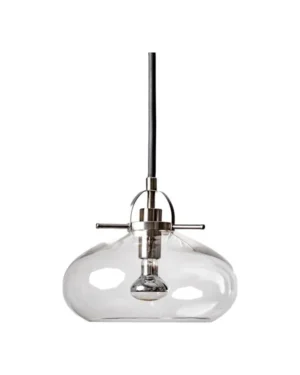
Kalia Table Lamp in Glass and Resin
By Justyna Poplawska
€536 -

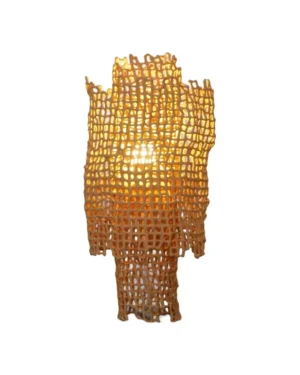
Black Wool Table Lamp in Biocomposite
By PletoStudio
€700 -
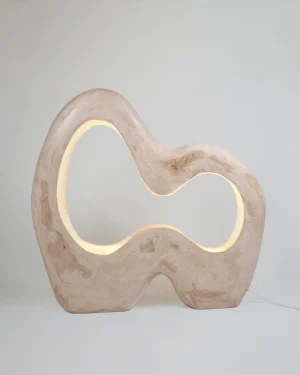
Infinite Floor Lamp in Pigmented Gypsum
By Studio AOAO
€6.000 -
 In stock
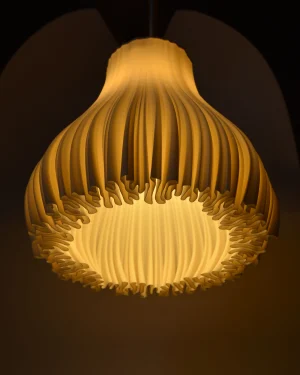
H 2 Pendant Lamp in Bio Polymer
By diploria studio
€255 - €335 This product has multiple variants. The options may be chosen on the product page -
 In stock
H 1 Pendant Lamp in Bio Polymer
By diploria studio
€255 - €425 This product has multiple variants. The options may be chosen on the product page -
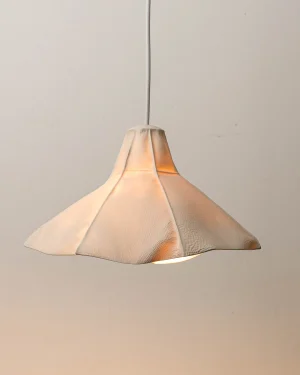
Kawa Series 04 – Ceramic Pendant Lamp
By Luft Tanaka Studio
€1.375 -
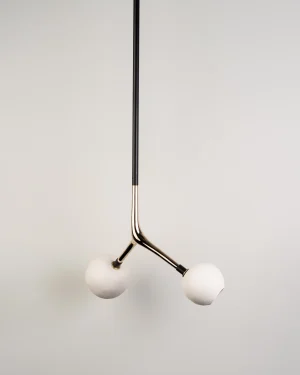
Dupla Pendant Lamp in Bronze, Brass and Glass
By Isabel Moncada
€3.217 - €3.744 This product has multiple variants. The options may be chosen on the product page -
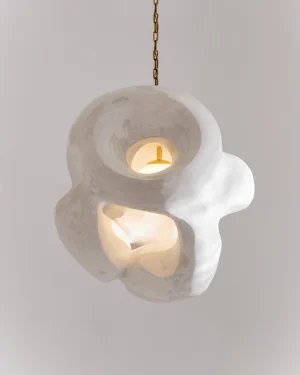
Ikigai Ceiling Lamp in Alabaster Gypsum
By Studio AOAO
€22.000 -
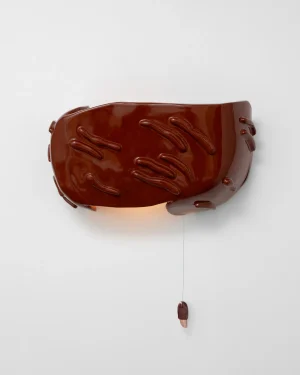
Killing the Mood Wall Sconce in Ceramic
By Studio AOAO
€2.200 -
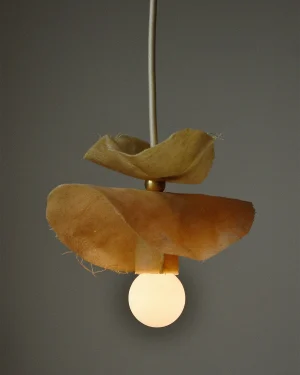
Judie Pendant Lamp in Cotton
By Atelier Alz
€200 -
 In stock
H 3 Pendant Lamp in Bio Polymer
By diploria studio
€335 -
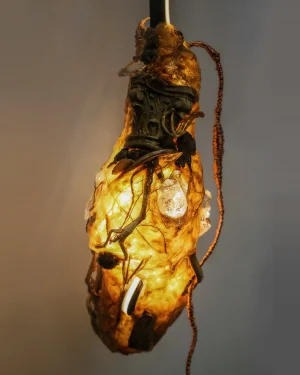
Weaver Nest Pendant Lamp in Bio Plastic
By Sabrina Merayo Nuñez
€3.500 -

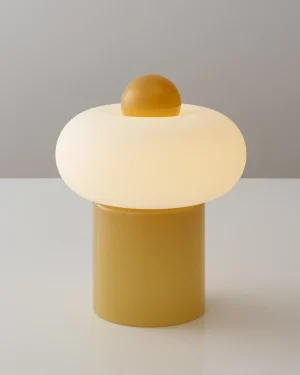
Wool Smola Table Lamp in Biocomposite
By PletoStudio
€800 -
 In stock
Capsula 05 Table Lamp in Blown Glass
By Noiro Studio
€880 -
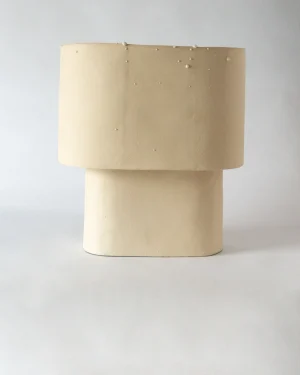 In stock
Lampe Beige Large Table Lamp in Glazed Stoneware
By Huillet Lucas
€1.900 -

Llar Table Lamp in Alabaster
By Luis Gimeno Design
€1.600 -
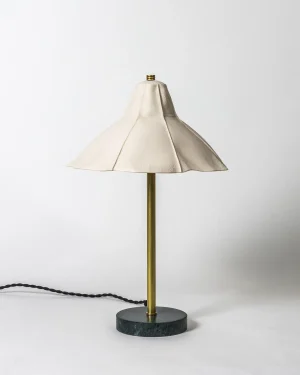
Kawa Table Lamp in Porcelain, Brass and Marble
By Luft Tanaka Studio
€1.874 -
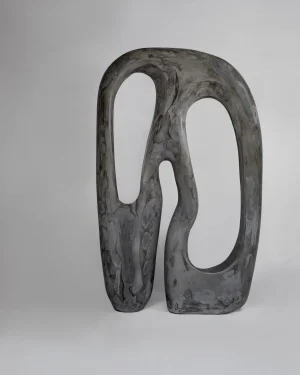
Longing Floor Lamp in Pigmented Gypsum
By Studio AOAO
€8.000 -
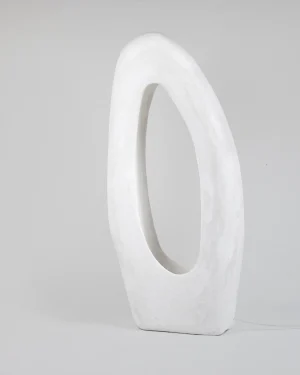
Lacuna Floor Lamp in Natural Stone
By Studio AOAO
€4.500 - €8.500 This product has multiple variants. The options may be chosen on the product page -
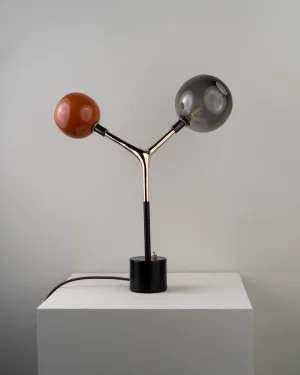
Mácula Table Lamp in Bronze and Glass
By Isabel Moncada
€3.217 -
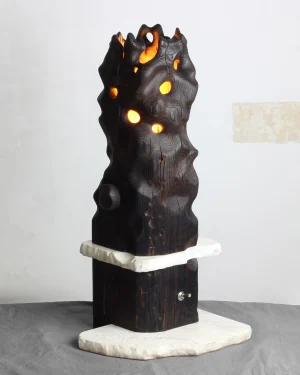
Volcano Table Lamp
By Gábor Góbi
€3.290 -

Soniah Pendant Lamp in Clay
By FAINA
€2.990 -
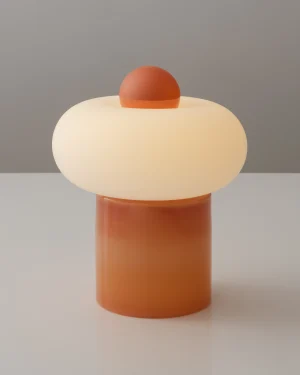 In stock
Capsula 04 Table Lamp in Blown Glass
By Noiro Studio
€880
Organic lamps are built around a shape that refuses the straight line: a bulge, a fold, a curve that follows the way a material wants to move rather than a ruler. Studios working this way choose materials that are shaped by hand or by process rather than cut to a drawing: blown glass, plaster, clay, natural stone, hemp and bioplastic among them. The result is a lamp whose silhouette reads as grown or formed rather than assembled.
What makes a shape organic
An organic lamp carries no straight edges or sharp corners by design. Its body might swell like a bubble of blown glass, settle like a poured plaster form, or taper the way a hand-thrown clay vessel does on a wheel. The asymmetry is not a flaw to correct; it is the point, and it is why no two pieces in this shape look quite alike even when they come from the same mould.
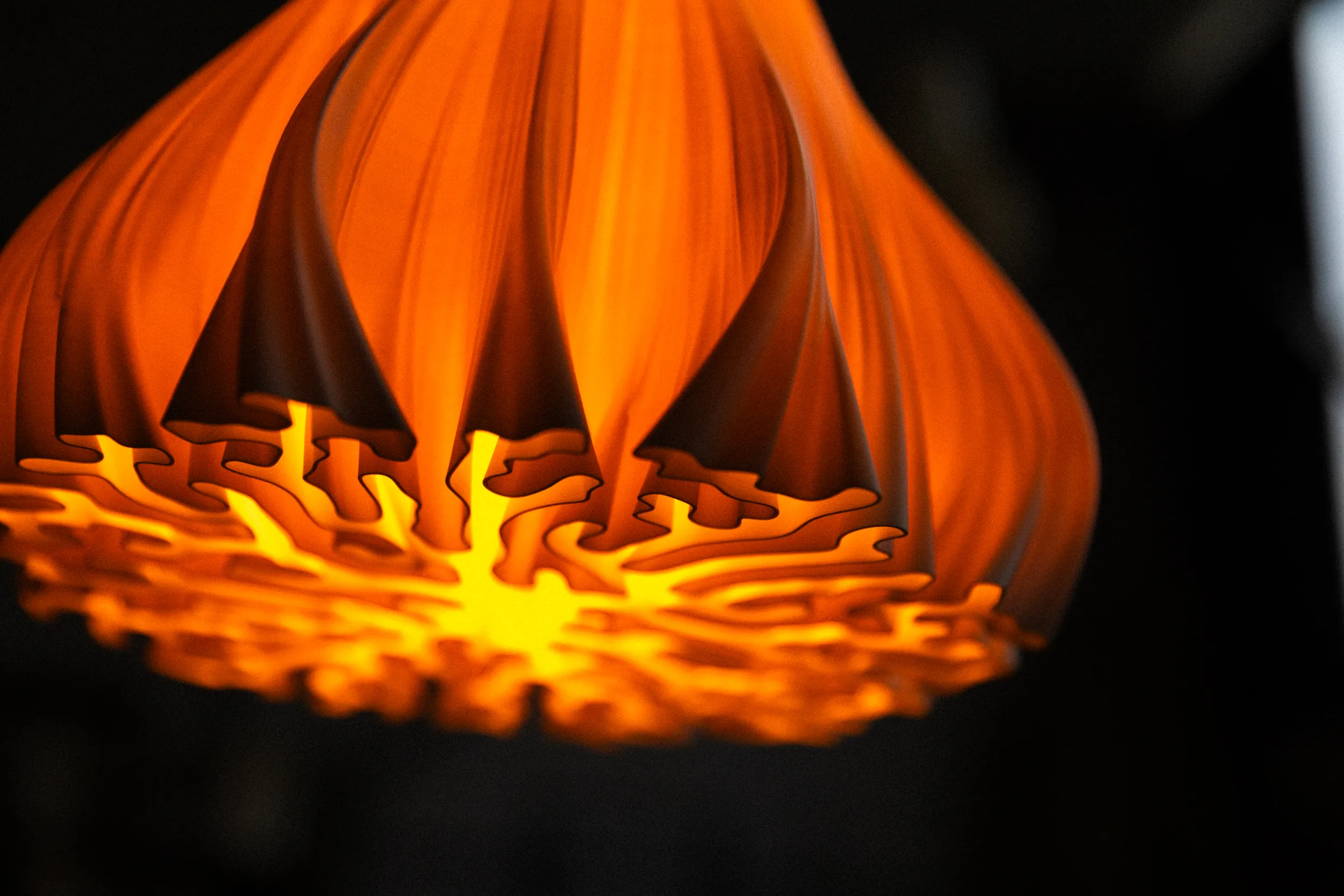
Daylight shows the texture, the irregular rim, the matte or chalky surface a material like plaster or mineral powder tends to have. After dark, the same lamp throws light unevenly through its own thickness, so a curved glass body glows brighter where it is thin and quieter where it is dense. That shift between lit and unlit is part of what a lamp is for, and organic shapes make the shift more visible than a straight-sided one would.
The materials and techniques behind organic lamps
The range changes as pieces sell and new ones are added, but certain materials and processes recur because they suit a free-form shape:
- Blown glass, shaped by glassblowing while the material is still molten, so the body of the lamp keeps the trapped air bubbles and slight thickness variations of the process.
- Plaster and mineral powder, often cast through mould making into soft, rounded forms with a matte, stone-like surface.
- Natural stone, worked by stone carving into a base or body that keeps the material's veining and weight.
- Clay, hand-thrown or built and then fired, carrying the marks of the hand across its glaze.
- Bioplastic and cellulose, grown or formed through biofabrication or digital fabrication, with 3D printing increasingly used to produce a shape that would be difficult to cast or carve.
- Hemp and other fibers, felted into a body that diffuses light rather than letting it pass clean through.
Most of these pieces sit in white, ivory, beige or amber, colors that come from the material itself rather than an added pigment, though matte burgundy and dark gray surfaces appear where a studio has glazed or coated the base. Editions range from open runs to limited editions and one-off pieces, depending on how the studio works; a hand-thrown or hand-blown lamp is less likely to repeat exactly than one formed in a reusable mould.
Choosing an organic lamp for a room
Scale matters before anything else. A lamp with a wide, rounded base needs enough table or floor space around it to read as a form, not a crowded object; a narrow, tall shape works better on a side table or shelf where its silhouette stands against a wall. Check the height against what sits near it: a table lamp should generally clear a seated eye line without glaring, and a floor lamp should sit low enough relative to the seating around it to cast light down rather than across a room.
Finish affects where a piece belongs. A chalky plaster or stone surface reads as quiet and sits well in a bedroom or a reading corner, while a glossy blown-glass body catches more reflected light and can hold its own as a focal point in a living room. Placement near a window lets daylight show the texture of the material during the day, while an evening setting near a sofa or headboard lets the lit form do the work after dark.
Care for organic materials
Hand-blown glass and ceramics should be dusted rather than scrubbed, and kept away from sudden temperature changes that can stress the material. Plaster and mineral-powder surfaces stain easily, so keep them away from damp cloths, oil and direct spills, and wipe with a dry or barely damp cloth only. Stone bases can be cleaned with a soft cloth and should avoid acidic cleaners, which etch the surface over time. Bioplastic and fiber bodies are best kept out of direct sun for long stretches, since UV exposure can shift their color and texture faster than it would a mineral or metal lamp.
For the full range of shapes and materials in this type of lighting, see all lamps or step across to organic lighting more broadly. Every organic-shaped piece across categories, not only lamps, is gathered under organic pieces on ADORNO, and anyone drawn to hand-thrown surfaces specifically can look through ceramic lamps as well.
How do I choose an organic lamp?
Look at the material first: blown glass reads light differently than carved stone or hand-built ceramic. Match the base shape and glow to the room, then check scale against the surface it will sit on.
How do you care for an organic-shaped lamp?
Dust ceramic, stone and plaster shades with a dry or barely damp cloth, since moisture can mark unglazed or porous surfaces. Keep blown glass away from sudden temperature changes and clean metal fittings with a soft, dry cloth.
What size organic lamp do I need for my space?
A table lamp generally sits between 20 and 30 inches tall, a floor lamp between 55 and 65 inches. Measure the surface or corner first, then weigh the base and shade against nearby furniture.
Which rooms suit organic lamps?
Their rounded, hand-formed shapes soften living rooms, bedrooms and reading corners, anywhere a sculptural form earns a second look in daylight. A single organic lamp also works well as a counterpoint to rooms built from straighter lines.
Are organic lamps handmade or one of a kind?
Many are hand-thrown, hand-blown or carved in small batches, and some are unique pieces, though not every piece is one-off. The maker can confirm a specific piece's edition and technique through Chat with the maker on its page.
How does shipping, returns and authenticity work on ADORNO?
Shipping is insured and worldwide, with a 14-day return policy, excluding made-to-order pieces. Every lamp arrives with a certificate of authenticity, backed by a lowest-price guarantee.