


-
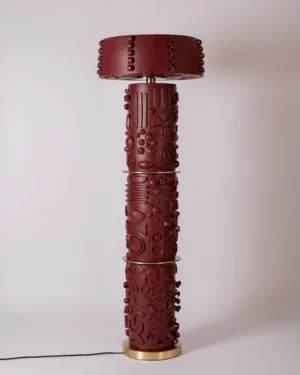
Sculpt Floor Lamp In Hand-built Stoneware
By Harshita Jhamtani Designs
€7.880 -

Laco Floor Lamp in Biocomposite and Linen
By PletoStudio
€3.600 -

Shadow Wool Floor Lamp in Biocomposite and Carpathian Wool
By PletoStudio
€2.200 -
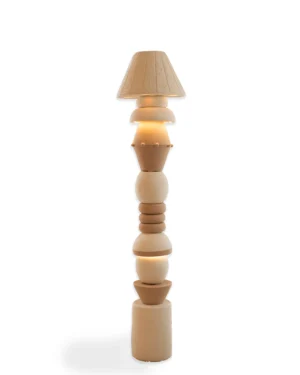
Totem Floor Lamp In Stoneware And Clay Paste
By Harshita Jhamtani Designs
€2.570 -

Bavo Floor Lamp in Biocomposite and Cotton
By PletoStudio
€1.400 -

Sea Star Floor Lamp in Biocomposite and Cotton
By PletoStudio
€3.600 -
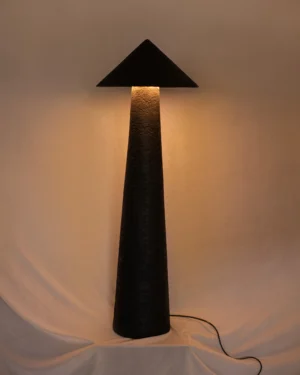
Kasa (m) Lamp In Clay Paste And Mild Steel
By Harshita Jhamtani Designs
€1.460 -
 In stock
Tundra Floor Lamp
By Gábor Góbi
€4.990 -
 In stock
Totem Floor Lamp
By Gábor Góbi
€2.390 -

Ember Floor Lamp in Biocomposite and Raffia
By PletoStudio
€3.200 -
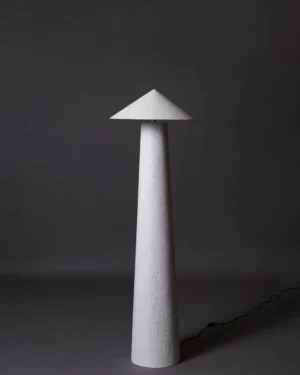
Kasa Floor Lamp In Clay Paste And Mild Steel
By Harshita Jhamtani Designs
€2.130 -
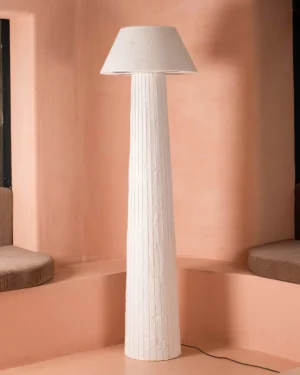
Rio Floor Lamp In Clay Paste And Mild Steel
By Harshita Jhamtani Designs
€2.270 -
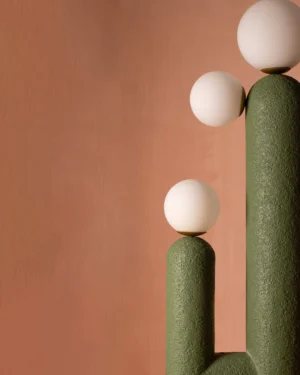
Cactus Floor Lamp In Clay Paste, Mild Steel And Glass
By Harshita Jhamtani Designs
€2.570 -
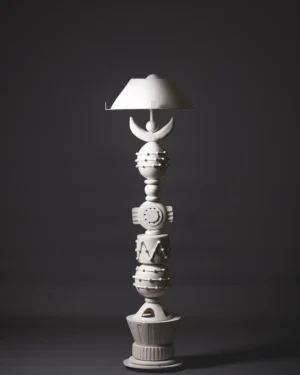
Asteroid Floor Lamp In Stoneware And Mild Steel
By Harshita Jhamtani Designs
€2.570 -
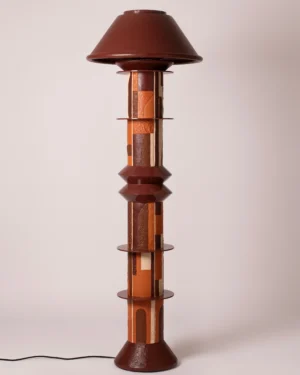
The Rouge Floor Lamp In Clay Paste And Metal
By Harshita Jhamtani Designs
€4.430 -
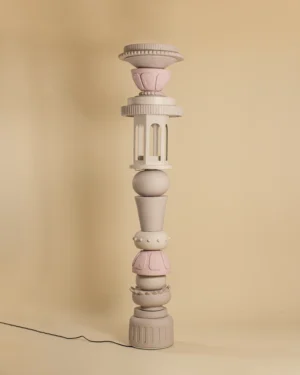
Pillar Of Ties Totem Floor Lamp In Stoneware, Clay Paste And Wood
By Harshita Jhamtani Designs
€3.780 -
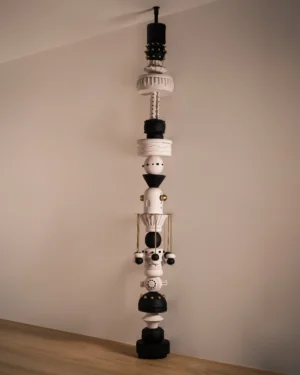
Asteroid Floor-to-ceiling Totem In Stoneware And Brass
By Harshita Jhamtani Designs
€6.900 -
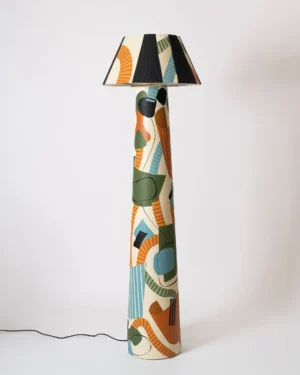
Hand Painted Rio Floor Lamp In Clay Paste And Mild Steel
By Harshita Jhamtani Designs
€3.940 -
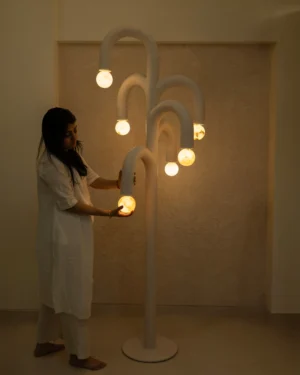
Big Cactus Floor Lamp In Clay Paste, Mild Steel And Alabaster
By Harshita Jhamtani Designs
€3.310 -
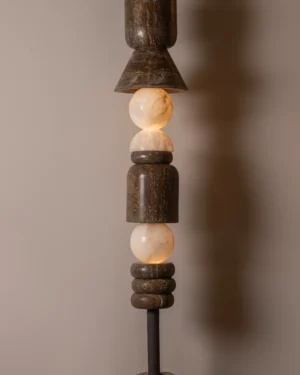
Titan Travertine Totem Floor Lamp In Travertine And Alabaster
By Harshita Jhamtani Designs
€3.070 -
 In stock
Untitled Ii Floor Lamp In Steel And Bronze
By aeny studio
Price Upon Request -
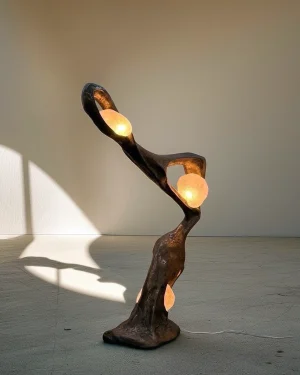
Untitled Iii Floor Lamp In Steel And Bronze
By aeny studio
Price Upon Request -
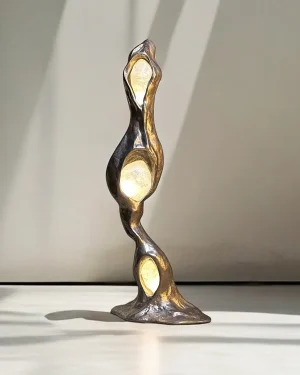
Untitled I Floor Lamp In Steel And Bronze
By aeny studio
Price Upon Request
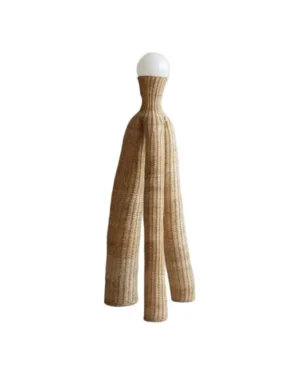
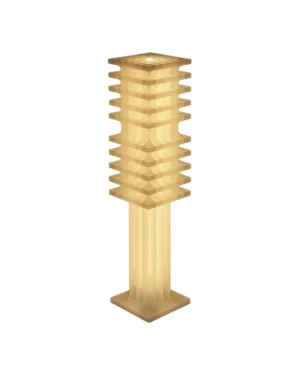
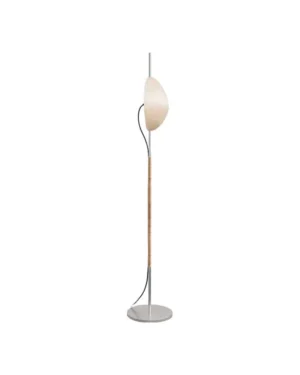
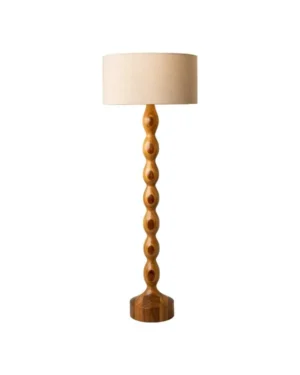
Wabi-sabi floor lamps gather the irregularities that other styles sand away: a glaze that pools thicker on one side, a plaster surface left slightly uneven, a steel rod that still carries the tool marks of its shaping. Independent studios build them from stoneware, plaster composite, mild steel, hemp and other raw or reclaimed materials, using hand-building, wheel throwing, plastering and metalwork rather than molds made to erase variation. Each lamp stands as its own object, open-edition but never identical to the next.
What makes a floor lamp wabi-sabi
The style rests on the idea that age, asymmetry and the trace of a hand are not flaws to correct but qualities to keep. A stoneware base will show small warps and uneven glaze; a plaster shade cured by hand will hold faint tool lines across its surface. These are not decorative additions, they come from the process itself, which is why no two lamps in this group look quite the same even when they share a form.
Materials, finishes and the range on ADORNO
Within wabi-sabi floor lamps, the material does most of the talking. Stoneware and clay bases carry weight low to the ground and take glazes in off-white, terracotta, bronze or burgundy, often left thin enough to show the clay body beneath. Plaster composite and mineral powder forms read as soft, chalky and matte, usually in cream, olive or black, and they soften light rather than throwing it sharp. Mild steel appears bare or waxed, left to darken slowly, while cellulose and hemp are worked into shades through biofabrication or textilework, giving a fibrous, uneven surface closer to paper or bark than to plastic.
- Hand-building and wheel throwing for stoneware and clay bases
- Plastering for mineral and composite shades
- Metalwork for mild steel stems and frames
- Textilework and biofabrication for hemp, cellulose and wood-shaving shades
Choosing a wabi-sabi floor lamp for a room
Scale matters before finish does. A floor lamp is seen whole, from across a room, so its height and footprint need to sit against the furniture already there: low, heavy stoneware bases suit a reading chair or the end of a sofa, while taller steel or plaster forms can stand alone near a window or in a corner that needs weight without bulk. Place it where the shade's texture catches side light, since plaster and stoneware both change character under a raking glow compared to light from directly above.
Color follows the same logic as any other finish choice: bronze and black read quietly against pale walls, while terracotta or burgundy can anchor a room with more contrast. These lamps work well in living rooms built around natural materials, and just as easily in a study or bedroom where a single imperfect object is meant to draw the eye.
Living with raw and hand-finished surfaces
Unglazed stoneware and plaster are porous, so they mark more easily than a sealed ceramic and should be dusted rather than wiped with a wet cloth. Mild steel left unlacquered will continue to darken or spot with handling and humidity, which is expected rather than a defect, though a light wax can slow the change if a more stable surface is wanted. Keep all of these lamps away from direct, sustained damp, and treat small chips or shifts in color as part of how the piece continues to age.
For a wider view of the style across lighting, the wabi-sabi lighting grouping covers sconces and pendants in the same materials, while the full run of floor lamps shows how these pieces compare to brass, oak or woven forms in other styles. Anyone drawn mainly to the metalwork can look at metal floor lamps on their own, and the broader wabi-sabi style extends into vases, trays and seating built on the same principle: the mark of the maker, left visible.
How do I choose a wabi-sabi floor lamp?
Start with the material underfoot: stoneware and plaster sit low and heavy, steel reads lighter and taller. Let the glaze or surface variation guide you, since no two lamps share the same marks.
What material are wabi-sabi floor lamps made from?
Most are stoneware, plaster composite or mild steel, with some in clay, hemp or mineral powder. Each material is left to show its own process, from uneven glaze to tool lines.
How do I care for a wabi-sabi floor lamp?
Dust stoneware and plaster with a dry or barely damp cloth, since both can absorb moisture. Wipe bare or waxed steel occasionally to slow natural darkening, and keep any piece away from direct, sustained damp.
What size floor lamp do I need and how tall should it be?
Floor lamps typically stand between knee and shoulder height, enough to light a reading chair or soften a corner without competing with ceiling fixtures. For exact dimensions, chat with the maker on the piece's page.
Which rooms suit a wabi-sabi floor lamp?
Living rooms and bedrooms both take well to the soft, uneven light these lamps give, especially beside a chair or in an empty corner that needs weight. Entryways work too, where the base is seen in full.
What is ADORNO's shipping and return policy?
Shipping is insured and worldwide. Returns are accepted within 14 days, except on made-to-order pieces, and each lamp arrives with a certificate of authenticity.