






-

Imaginary Object – Steel Stool
By Joana Teixeira
€1.600 -
Trace Side Table in Epoxy Resin and Vellum
By Calen Knauf Studio
€340 - €380 This product has multiple variants. The options may be chosen on the product page -

The Altar Side Table in Steel
By COSEINCORSO
€910 -

Mono Side Table in Travertine and Metal
By Yet Design Studio
€1.200 - €1.380 This product has multiple variants. The options may be chosen on the product page -

Twist Stool
By Yet Design Studio
€1.200 This product has multiple variants. The options may be chosen on the product page -
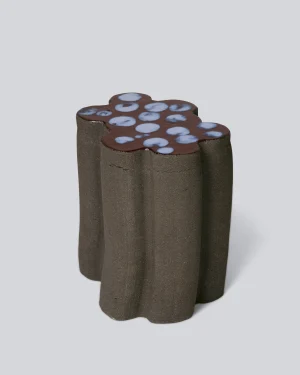 In stock
Trunk Ice and Red Poison Frog Side Table in Stoneware
By Slō
€1.495 -
 In stock
Orange With Green Tape Wowtable Side Table in Epoxy Resin
By Calen Knauf Studio
€273 -
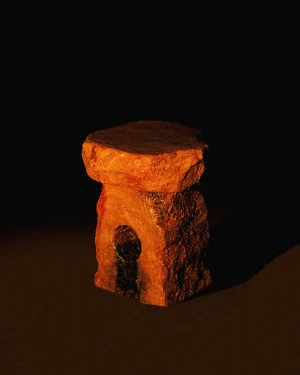 In stock
La Cauna – Escabèl 01 Stool
By Pierre Klein
€900 -
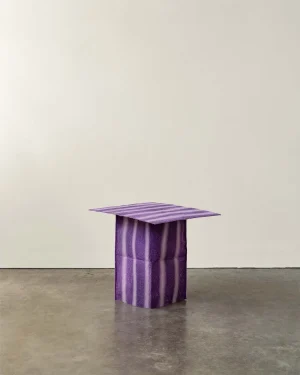 In stock
Purple-Striped Wowtable Side Table in Epoxy Resin
By Calen Knauf Studio
€277 -
 In stock
Coral Circle Side Table in Concrete
By clasik.studio
€1.350 -
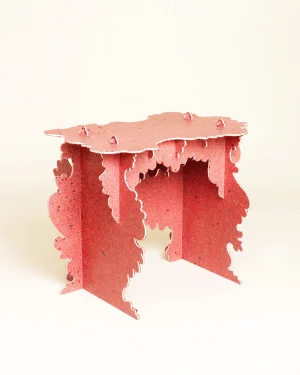 In stock
Really Rococo II Side Table in Recycled Textile
By Studio Ebba Lindgren
€2.000 -
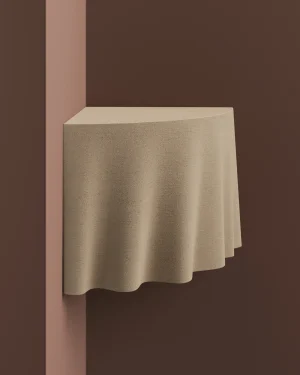
Duk Side Table in Quartz Sand
By Studio TOOJ
€2.800 -
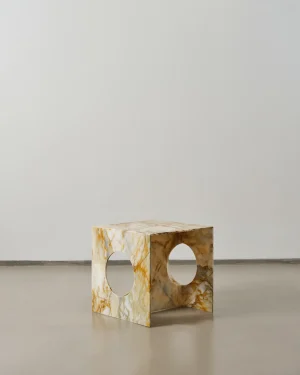
Hera Side Table in Sky Blue Marble
By Studio Mohs
€2.703 -
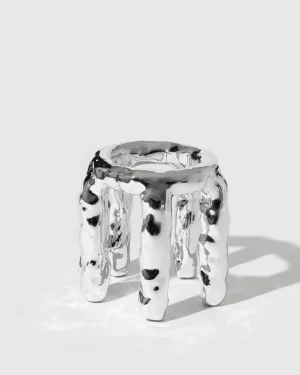
Crest And Trough Series – Chrome Stool / Side Table
By Dongwook Choi
€2.600 -

Bleo Side Table in Oak Wood
By Daniel Couttolenc
€1.150 -
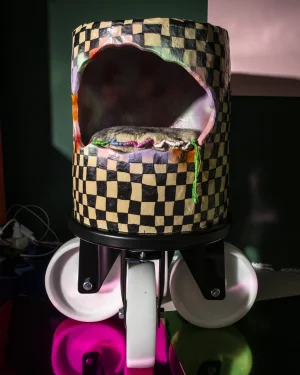 In stock
Cat Cave Side Table in Glazed Ceramic
By UAU Studio
€2.000 -
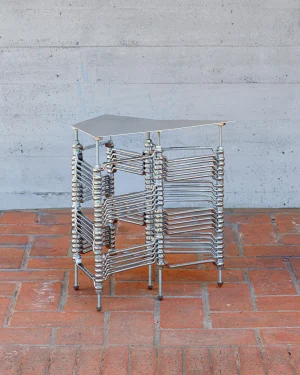 In stock
Wrench B Side Table in Aluminum and Iron
By Iyo Hasegawa
€1.700 -
 In stock
Pisa Side Table in Iron and Marble
By Nama Home
€1.600 This product has multiple variants. The options may be chosen on the product page -

String 01 Side Table in Aluminum
By Robert Megel
€499 -
 In stock
Yellow Dotted Cube Wowtable Side Table in Epoxy Resin
By Calen Knauf Studio
€273 -
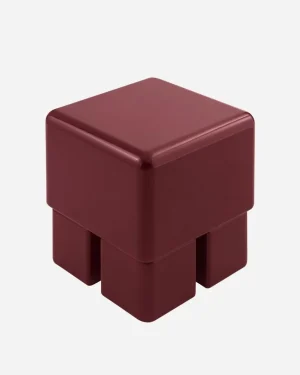 In stock
Paffuto Side Table in Lacquered MDF
By Studio Monsoleil
€1.100 This product has multiple variants. The options may be chosen on the product page -
 In stock
Red Candy Side Table in Blown Glass
By STUDIO BERG
€1.328 - €1.471 This product has multiple variants. The options may be chosen on the product page -
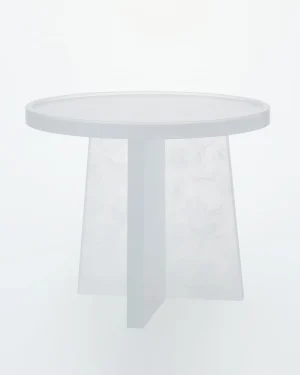 In stock
Kiri Side Table in Korean Paper and Resin
By Sangwoo Son
€900 This product has multiple variants. The options may be chosen on the product page -
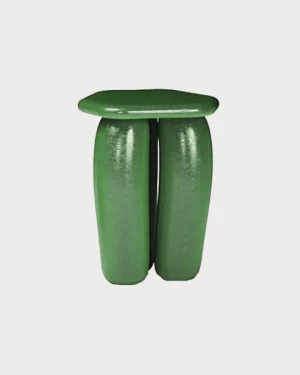
Trio Side Table in Ceramic
By Alter Ego Studio
€2.520 - €5.200 This product has multiple variants. The options may be chosen on the product page -
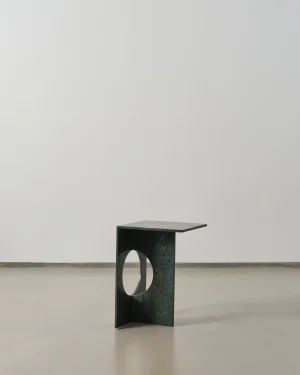
Ola Side Table in Diabase Volcanic Stone
By Studio Mohs
€2.068 -
 In stock
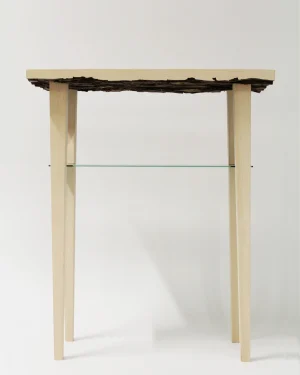
Reflecting Side Table in Birch Wood
By Olle Sahlqvist
€2.850 -
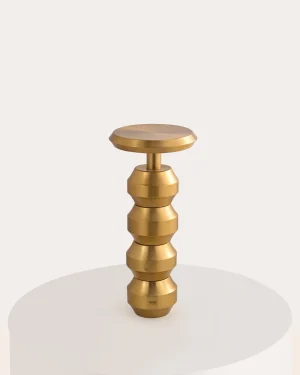
Bail Side Table in Steel
By Nama Home
€1.840 -
 In stock
Yellow Candy Side Table in Blown Glass
By STUDIO BERG
€1.328 - €1.471 This product has multiple variants. The options may be chosen on the product page -
 In stock
Blue Candy Side Table in Blown Glass
By STUDIO BERG
€1.328 - €1.471 This product has multiple variants. The options may be chosen on the product page -
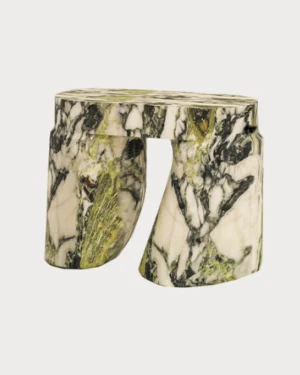
Fossil Side Table in Marble
By Alter Ego Studio
€7.550 - €8.770 This product has multiple variants. The options may be chosen on the product page -
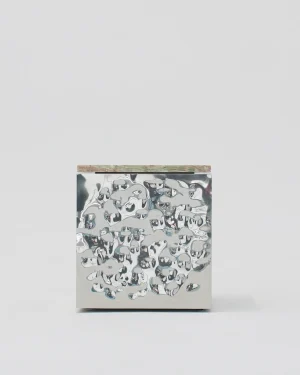 Sold
SoldDisordine Prototype Side Table in Steel and Onyx
By Joana Teixeira
€3.850 -
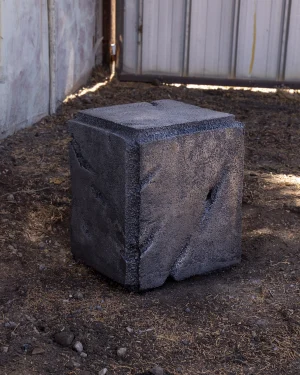 Sold
SoldMelancholy Side Table in Cast Aluminum
By Saturday Yard Work
Price Upon Request -
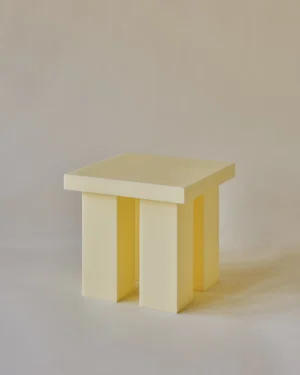 Sold
SoldMiter Side Table in Frosted Acrylic
By Mock Studio
€750 -
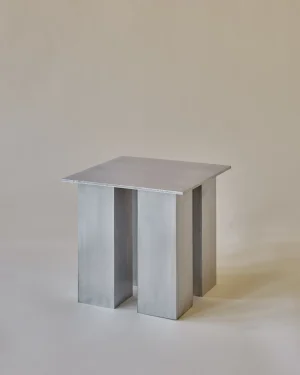 Sold
SoldMiter Side Table in Brushed Aluminum
By Mock Studio
€1.200 -
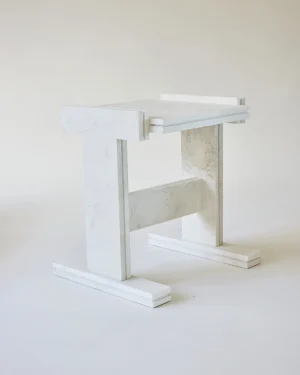 In stock
NEAVE Side Table in Limestone and White Marble
By N I S H
€5.000 This product has multiple variants. The options may be chosen on the product page -
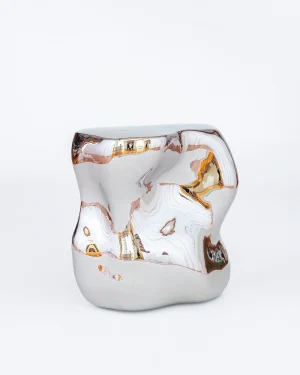 In stock
Surface Stand Side Table in Mirror-Polished Stainless Steel
By studio NAWA
Price Upon Request -
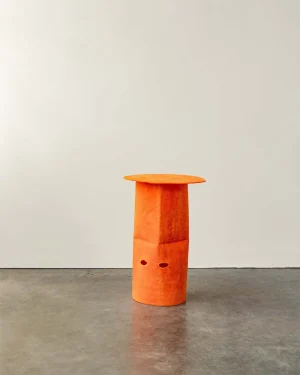 Sold
SoldOrange Mask Wowtable Side Table in Epoxy Resin
By Calen Knauf Studio
€277 -
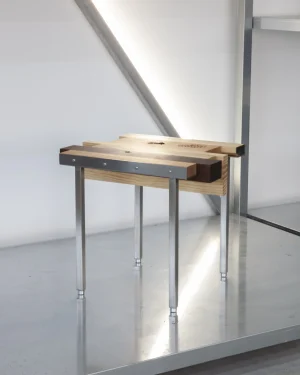 Sold
SoldNonstandard 1 Side Table in Oak, Ash and Cedar Wood
By PRACTICE
€681 -
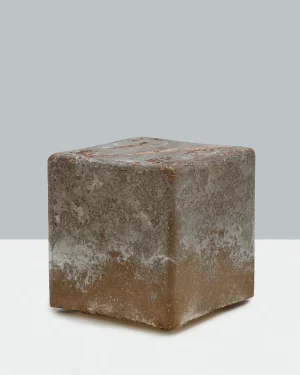
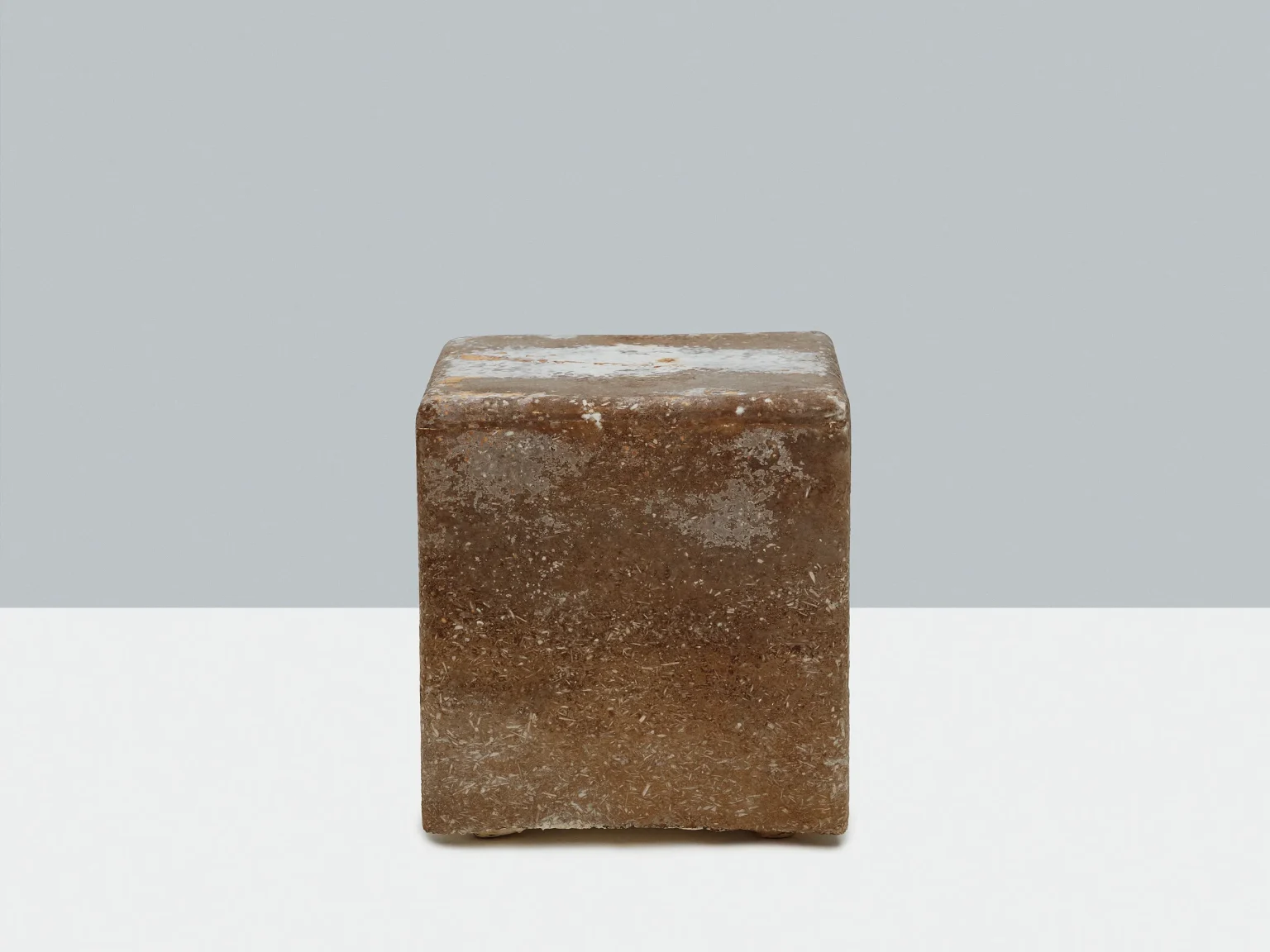
Lo Blox Side Table in Mycelium and Birch Wood
By Myceen
Price Upon Request
Radical side tables take their cue from the design movement that challenged function-first furniture in the 1970s and 80s, pairing unexpected materials, exaggerated shapes and color choices that refuse to blend into a room. Studios working in this style combine metal, glass, resin and stone in ways that put sculpture before convenience, so a table reads as object first and surface second. The result sits apart from quieter neighbors in the side table category, built to be noticed rather than overlooked.
What Defines a Radical Side Table
The style traces back to a reaction against restraint: sharp angles meeting rounded curves, industrial metal set beside cast resin, color applied in blocks rather than gradients. A radical side table might balance on an asymmetric base, cantilever past its own footprint, or stack geometric volumes that look unstable yet carry real weight. Nothing about the shape explains itself quietly; the table asks a room to stop and look.
Materials and Techniques Among Radical Side Tables
Metal and stainless steel appear often, welded or bent into forms that favor expression over symmetry. Glass and chrome bring reflective surfaces that multiply a room's light, while stone carving produces tables heavy enough to anchor a space on mass alone. Epoxy and resin casting let color run through a piece rather than sit on top of it, producing blocks of red, yellow or off-white that stay saturated for years. Across editions, radical side tables range from one-off cast forms to small limited runs and open editions, so a piece can be reproduced or impossible to repeat depending on how a studio chooses to work.
How to Choose a Radical Side Table
Start with height: a side table should sit close to the arm of a sofa or the edge of a mattress, within a couple of inches either way, so a hand can reach a glass or a lamp without looking down. Scale matters more with radical forms, since an oversized sculptural base can crowd a narrow room while a small one gets lost beside a heavy sofa. Consider finish against the materials already in a room; chrome and glass answer hard surfaces, while stone or resin forms can soften a space dominated by fabric and wood.
- Measure the gap beside seating or bedding before choosing a footprint, since radical bases often extend wider than the tabletop.
- Match or contrast metal finishes with existing lighting and hardware.
- Choose resin or glass color to repeat or offset an accent already in the room.
Where Radical Side Tables Work
A radical form reads best where it has room to be seen: beside a reading chair, at the end of a sofa run, or in an entryway where a single object sets the tone for a space not yet entered. One striking table can do the work of several smaller ones, so pair it with plain walls and simple lighting, and let the geometry stand without competition from other shapes nearby.
Caring for Metal, Stone and Resin
Metal and stainless steel wipe clean with a dry or lightly damp cloth; avoid abrasives that dull a polished finish. Stone resists daily wear but can stain from oil or acidic liquids, so a coaster under glasses protects a carved surface over time. Resin and epoxy hold color well but can scratch, so lifting rather than dragging objects across the top keeps a cast surface looking as it did when it left the studio.
For pieces across the wider style, see every Radical piece on ADORNO, or look at metal side tables for a narrower material focus. Those drawn to quieter lines might compare wooden side tables instead.
How do I choose a radical side table?
Look for a piece that breaks from straight lines and expected proportions, favoring sculptural form over pure function. Let it stand as a counterpoint to quieter furniture nearby, and choose a material and color that hold their own in the room.
What are radical side tables made from, and how do I care for them?
Many combine metal, stone, resin or glass, each with its own upkeep: wipe metal and glass with a soft cloth, seal porous stone against stains, and keep resin out of direct sun to prevent yellowing.
What height and size should a side table be?
Most side tables sit close to seat height, between 20 and 26 inches, so a hand can reach a drink or a lamp without stretching. Radical designs sometimes depart from this for sculptural effect, so check the listed dimensions.
Which rooms suit a radical side table?
They work beside a sofa, armchair or bed, anywhere a bold, sculptural form can hold its own. Use one as a quiet contrast in a minimalist room or to intensify an already eclectic space.
Can I order a custom radical side table?
Some makers take commissions in different sizes, finishes or colors. Chat with the maker on the piece's page to ask about custom options.
What is ADORNO's shipping and return policy?
Shipping is insured and worldwide. Pieces can be returned within 14 days, except made-to-order pieces, and every order includes a certificate of authenticity.