









-
 In stock
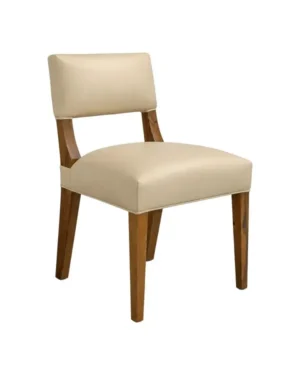
Camber – Stainless Steel Chair
By Paul Coenen
€1.121 -
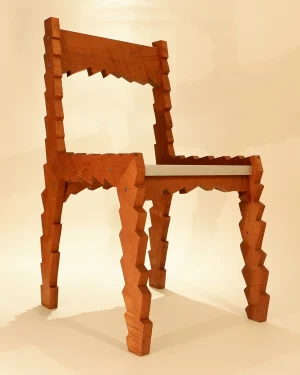
Shocking Chair – Stained Oak Wood Dining Chair
By Josh Page Studio
€940 -
 In stock
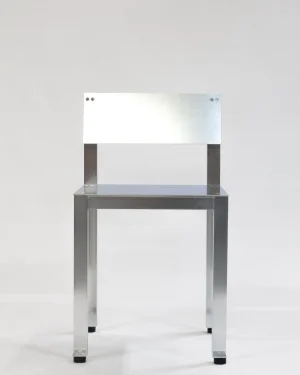
Canto – Aluminum Dining Chair
By Luiz Solano
€840 -
 In stock
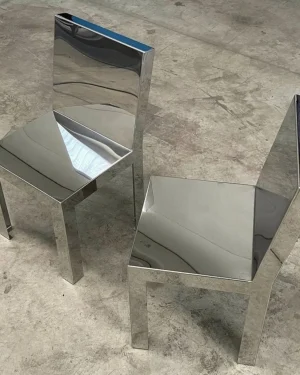
Sedia 1 – Mirror Polished Stainless Steel Chair
By Julia Chiaramonti
€5.500 -

J O H N | Chair | Stainless Steel
By N I S H
€1.250 - €1.500 This product has multiple variants. The options may be chosen on the product page -
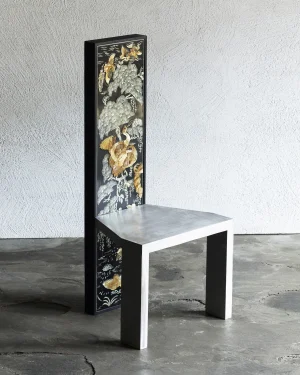 In stock
Narrative 001 – Stainless Steel / Wood Chair
By STUDIO KIMBYUNGSUB
€8.000 -
 In stock
Pneumatic Chair 2
By Szostak Atelier
€5.990 This product has multiple variants. The options may be chosen on the product page -
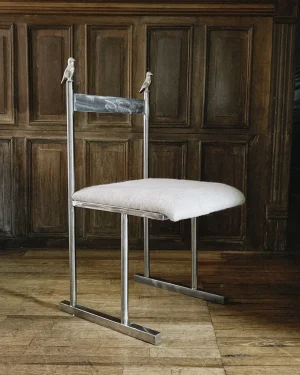
School Chair – Upcycled Materials
By Around the Studio
€1.500 -
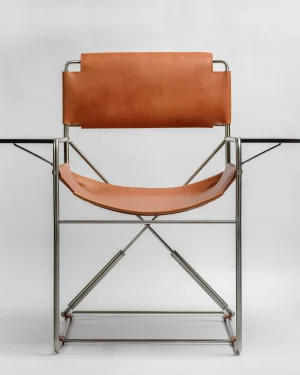 In stock
Pneumatic Chair – Unique Piece
By Szostak Atelier
€9.000 -
 In stock
Church Chair – Dining Chair
By Kari Kadak
€5.000 -

Finepianta 02 – Dining Chair
By FINEPIANTA
€1.785 -
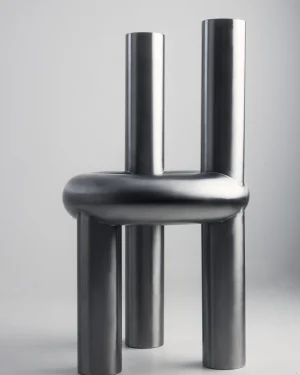
Chunk Chair – Stainless Steel
By Obscure Objects
€6.303 -
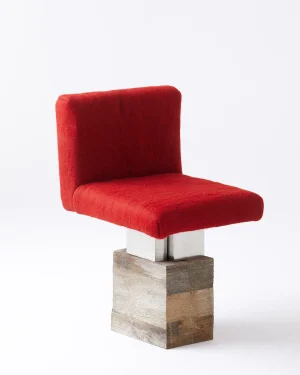
Tbilisi Street Chair – Upcycled Materials
By Around the Studio
€1.500 -

Random Chair – Upcycled Materials
By Around the Studio
€1.400 -

Tube Chair
By hakankemal studio
€960 -
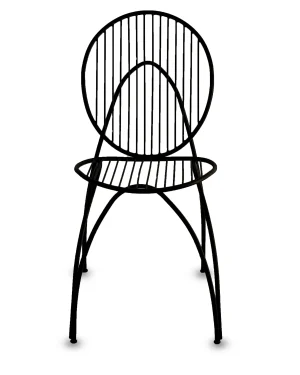
Petalo Dining Chair
By Pablo Sinan Design
€1.700 -
 Sold
SoldRest Chair
By Obscure Objects
€5.800 -
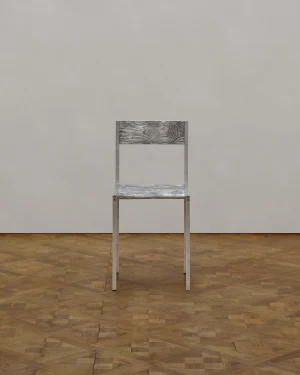 In stock
Aluminum Veneer Chair
By Bureau.parso
Price Upon Request -

Surface Chair – Mirror Polished Stainless Steel
By studio NAWA
Price Upon Request
Stainless steel dining chairs bring a cool, reflective weight to the table, built by studios working in metalwork and welding who shape sheet or tube steel into seats that hold a line without softening it. The alloy resists rust and tarnish on its own, so a chair can stand bare at the joints or take on a brushed, polished or painted surface depending on how the maker finishes it. Many of these chairs sit alongside pieces in chrome, raw steel or recycled metal, each read through a related but distinct process.
What defines a stainless steel dining chair
Stainless steel earns its place in the dining room because it carries weight without flexing and because it does not need the oiling or waxing that wood asks for. A seat welded from steel plate or bent from tube keeps a cleaner silhouette than an upholstered equivalent, and its surface reflects light rather than absorbing it, which changes how a chair reads against a table and a floor. Studios working in metal often pair the frame with a seat pan in the same steel, or set it against leatherwork or felting for a softer touch where the body meets the chair.
Finishes, colors and styles found here
Stainless steel dining chairs on ADORNO run from a raw silver finish that shows the grain of the polish to painted versions in black, cognac or beige, where the steel disappears under a matte or lacquered coat. Some studios leave welds visible as part of a neo-industrial or brutalist reading, while others grind every seam flat for a result closer to minimalist or futuristic design. A smaller number of pieces come as unique pieces or limited editions, the steel worked by hand rather than pressed on a line, and these carry the marks of that process in their welds and surface.
The wider range sits close to other metal seating, including chairs in chrome and in painted or recycled steel, so a dining set can mix finishes within the same material family rather than matching one exactly. Anyone building a room around a single material story can look across the full range of metal dining chairs to see how steel, chrome and painted finishes sit next to each other.
How to choose a stainless steel dining chair
Scale matters first: a chair seat should sit close to standard dining height, generally between 17 and 19 inches, so it clears the table's apron without forcing the knees up or down. Check the finish next, since a mirror-polished chair will show fingerprints and water spots faster than a brushed or matte one, which makes brushed steel a steadier choice for a table used daily.
- Match the chair's visual weight to the table: a heavy stone or thick-topped table can carry a bulkier welded frame, while a slender glass or wood top asks for a lighter gauge of steel.
- Consider how many chairs will sit around the table and whether a uniform finish or a mix of painted and raw steel reads better in the room.
- Look at the base and feet, since steel can mark soft flooring, and a chair meant for a stone or tile floor behaves differently from one destined for wood.
For a broader set of starting points beyond steel, minimalist dining chairs and the full range of dining chairs on ADORNO show how the same questions of scale and finish play out across other materials.
Where these chairs sit well
A set of stainless steel dining chairs holds its own in a room with concrete, stone or dark wood, where the steel's reflectiveness breaks up a heavier palette. The same chairs can soften an all-white kitchen or dining room by adding a cool, moving highlight rather than another flat surface. Pairing them with a steel table, such as those found among stainless steel tables, keeps the material consistent from frame to top.
Caring for stainless steel
Stainless steel resists corrosion on its own, so care is mostly about keeping the surface clear of fingerprints and grit rather than protecting it from damage. A soft cloth and mild soap and water lift most marks, and drying the surface afterward stops water spotting on polished finishes. Abrasive pads and chlorine-based cleaners should stay away from the steel, since they can scratch or dull a finish that otherwise holds its look for years. For a sense of how the material carries across other rooms, the full range of stainless steel pieces on ADORNO extends from seating into lighting and tables.
How do I choose a stainless steel dining chair?
Consider the finish, brushed reads quieter and hides fingerprints, polished reflects light and shows more. Match the frame weight and leg shape to your table base, and check seat depth against your other chairs for comfort.
Does stainless steel rust or need special care?
Stainless steel resists rust under normal household conditions due to its chromium content. Wipe with a damp cloth, dry to avoid water spots, and avoid abrasive cleaners or chloride-based products that can mark the surface over time.
What is the standard height for stainless steel dining chairs?
Most dining chairs sit between 17 and 19 inches at the seat, suited to standard dining tables around 28 to 30 inches tall. Confirm exact measurements with the maker through Chat with the maker on the piece's page.
Which rooms suit stainless steel dining chairs?
Stainless steel chairs suit dining rooms, kitchens and open-plan living areas, holding their own against wood, stone or concrete surfaces. Their reflective or brushed finish reads equally well in minimalist, industrial and contemporary interiors.
Can I order a custom stainless steel dining chair?
Some makers accept custom requests for finish, upholstery or dimensions. Chat with the maker on the piece's page to confirm what is possible.
What are ADORNO's shipping and return policies?
Shipping is insured and worldwide. Returns are accepted within 14 days, excluding made-to-order pieces. Every piece comes with a certificate of authenticity, and ADORNO offers a lowest-price guarantee.