








-
Contemporary Vanity Chair V2
By Six Dots Design
€920 -
 In stock
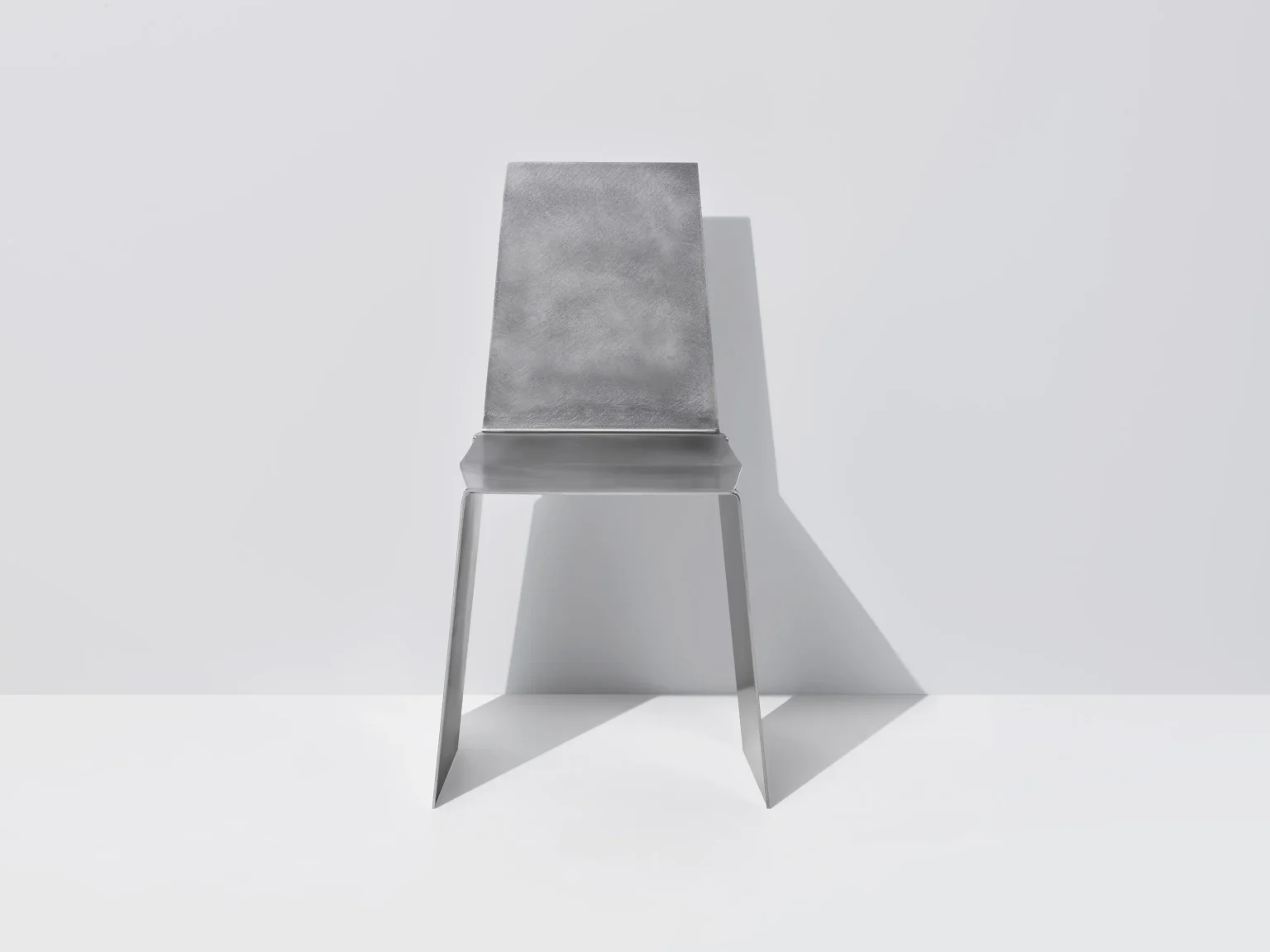
Camber – Stainless Steel Chair
By Paul Coenen
€1.121 -
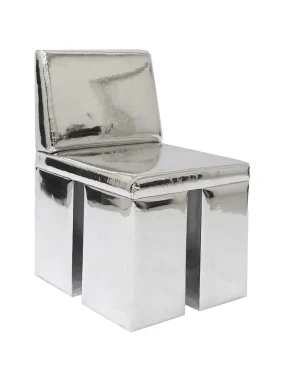
Object106 – Upholstered Chairs
By NG DESIGN
€585 - €1.115 This product has multiple variants. The options may be chosen on the product page -
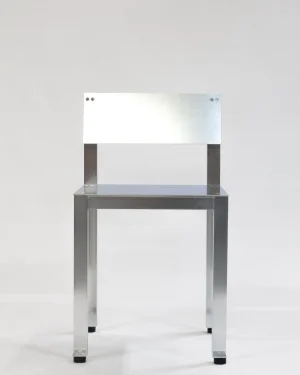 In stock
Canto – Aluminum Dining Chair
By Luiz Solano
€840 -
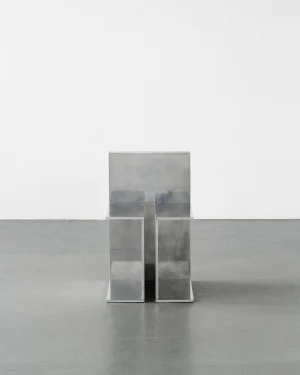 In stock
Lille Split Chair
By Thomas Gayet
€2.300 -
 In stock
Pneumatic Chair 2
By Szostak Atelier
€5.990 This product has multiple variants. The options may be chosen on the product page -
 In stock
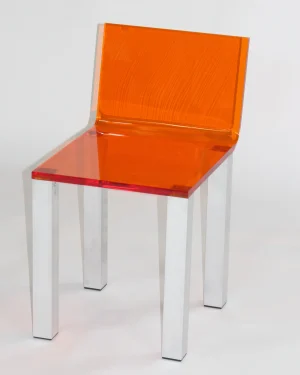
Acrilar – Acrylic Chair I
By Luiz Solano
€840 This product has multiple variants. The options may be chosen on the product page -
 In stock
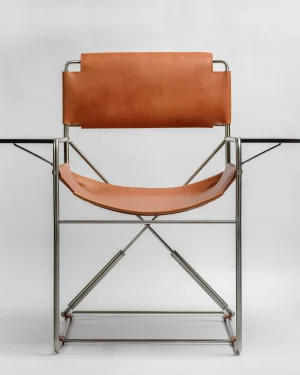
Pneumatic Chair – Unique Piece
By Szostak Atelier
€9.000 -

Finepianta 02 – Dining Chair
By FINEPIANTA
€1.785 -
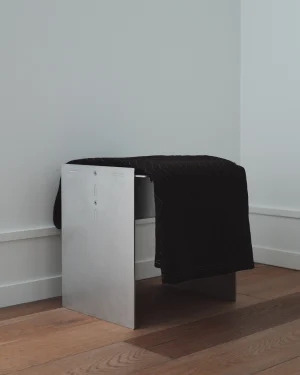
Flat Metals – Seat 01
By Estudio Material
€900 -
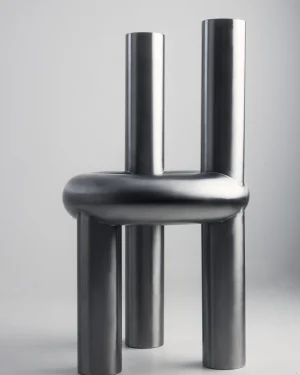
Chunk Chair – Stainless Steel
By Obscure Objects
€6.303 -
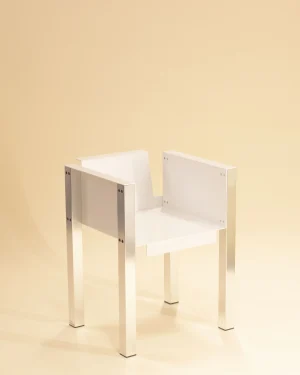
A2 – Aluminum Armchair
By Luiz Solano
€1.250 -
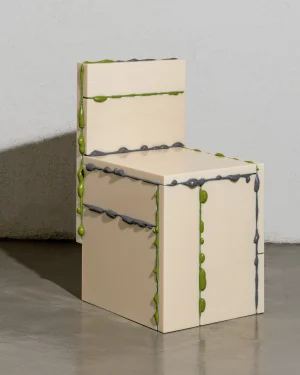 In stock
B. S. P Series – Recycled Plastic Chair
By Atelier SOHN
Price Upon Request -
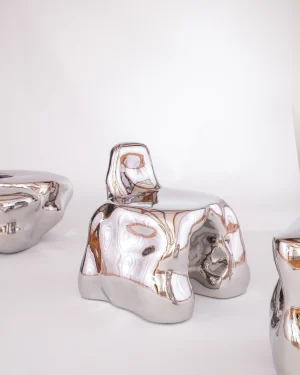
Surface Chair – Mirror Polished Stainless Steel
By studio NAWA
Price Upon Request -
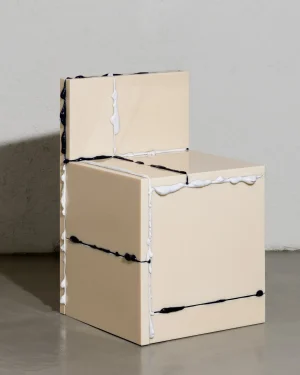 In stock
B. S. P Series – Recycled Plastic Chair
By Atelier SOHN
Price Upon Request
Futuristic dining chairs are built around the idea that a seat can look like it arrived from somewhere ahead of now: polished aluminum, laser-cut steel, chrome that throws back the room, recycled plastic shaped into a single curved shell. Studios working in these materials favor welding, 3D printing and powder coating over joinery, so the chairs read as one continuous form rather than a frame with parts added on. The result sits closer to sculpture than to the dining sets most people grew up with, without giving up the seat height and back support a chair needs to work at a table.
What defines a futuristic dining chair
The style leans on cold, reflective or synthetic materials and on shapes that would have been hard to produce before computer-aided cutting and printing. A single sheet of steel bent into a seat and back, a shell of recycled plastic pressed in one piece, a chrome frame welded into a loop: these are the moves that signal the style, more than any color or upholstery choice on top of them.
Surface finish carries as much weight as form. Reflective chrome and polished stainless steel bounce light around a room and change with it through the day, while powder-coated steel in gray, off-white or amber holds a flat, even color that resists scratching. Leather or polyester upholstery, worked in through traditional leatherwork and textilework, softens the hard edges of a metal or plastic shell and makes the chair usable for a full dinner rather than a quick perch.
Materials and finishes in this range
Aluminum and steel lead, chosen for their strength relative to weight and for how cleanly they take a weld or a laser-cut edge. Chrome and reflective finishes sit alongside them for studios after maximum shine, while recycled plastic offers a lighter, more matte alternative for anyone moving away from metal entirely. Color stays restrained: white, off-white, ivory, beige, cognac, amber and gray, chosen to let the form do the talking rather than the hue.
- Open editions, for studios producing a steady run of a single design
- Limited editions, numbered and produced in a fixed, smaller run
- Unique pieces, each one the only example made
All three exist within this style, so an edition is worth checking alongside material and finish before deciding on a chair, in the same way you would for any piece on dining chairs generally.
How to choose one for your table
Start with seat height and depth against your table: most dining chairs sit between 17 and 19 inches at the seat, and a futuristic shell chair, often without arms, tends to run narrower than an upholstered one. Measure the gap under your table top to confirm the chair's arm height, if it has arms, will clear it. Then weigh finish against light: a chrome or reflective chair will pick up every window and fixture nearby, which can read as a feature in a bright room and as glare in a dim one.
Weight matters too. Welded steel and cast aluminum chairs carry real heft and stay put once positioned, while recycled plastic shells are light enough to move daily, useful around a table that gets rearranged often. If you already own pieces from the broader style, pairing a chair from futuristic furniture keeps the material language consistent across a room.
Where these chairs work
A set of futuristic dining chairs tends to anchor a dining room that already leans toward hard surfaces: poured concrete floors, stone tops, glass tables. The same chairs can soften that effect when paired with warmer materials nearby, since a chrome or steel frame throws light differently against wood or plaster than against more glass and metal. They also work as accent seating at the ends of a table set mostly in wood, giving a long table two distinct silhouettes without losing a shared seat height.
Outside the dining room, a single chair from this style holds its own as a reading seat or a desk chair, since the sculptural shells read as objects even without a table around them. For lighting that matches the same material language, studios working across futuristic lighting often use the same metals and reflective surfaces.
Caring for metal, leather and polyester seating
Polished aluminum, stainless steel and chrome all benefit from a soft cloth and a mild, non-abrasive cleaner; avoid anything acidic, which can dull a chrome finish over time, and dry the surface fully to prevent water spotting. Powder-coated steel is more forgiving and wipes clean with soap and water, though chips in the coating should be touched up before moisture reaches the bare metal underneath. Leather upholstery wants an occasional conditioner to keep it from drying and cracking, kept out of direct sun where possible, while polyester covers generally tolerate a damp cloth and the odd spot clean without special treatment.
How do I choose a futuristic dining chair?
Look at the material first: polished aluminum or chrome reads sharp and reflective, powder-coated steel feels more matte and grounded. Match the finish to your table and lighting, since reflective surfaces pick up color and glare from the room.
What are futuristic dining chairs made of?
Most are built from aluminum, steel or stainless steel, sometimes finished in chrome for a reflective surface, with leather, polyester or recycled plastic used for seats and upholstery. Metalwork, welding and powder coating are common techniques behind the forms.
How do I care for a metal or chrome dining chair?
Wipe metal and chrome frames with a soft, dry cloth, avoiding abrasive cleaners that dull the finish. Leather or polyester seats need occasional conditioning or a damp wipe, and should stay out of direct sun to prevent fading.
What size and seat height should a dining chair be?
Standard dining chairs sit with a seat height around 18 inches, suited to tables roughly 28 to 30 inches tall. Leave about 12 inches between seat and tabletop for comfortable knee clearance.
Which rooms suit futuristic dining chairs?
Their reflective and sculptural forms carry weight in open-plan dining areas, loft spaces and rooms with contemporary or industrial furnishings. They also read well against plain walls, where the material and silhouette stand out without competition.
How does shipping, returns and authenticity work at ADORNO?
Shipping is insured and worldwide. Returns are accepted within 14 days, excluding made-to-order pieces, and each piece comes with a certificate of authenticity. ADORNO also offers a lowest-price guarantee.