









-
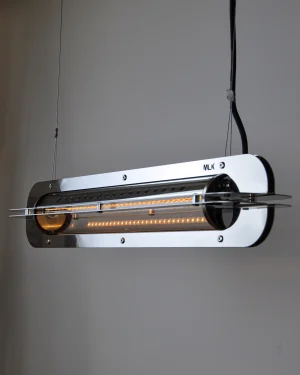
Pill600 Pendant Lamp In Mirror Stainless Steel
By MLK Furniture
€1.090 -

Pill1200 Floor Lamp In Stainless Steel
By MLK Furniture
€1.690 -
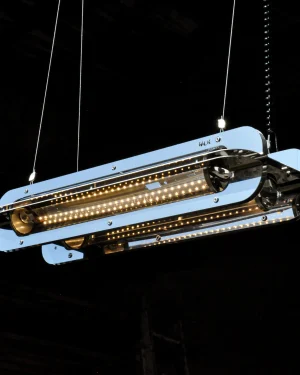
Pill600x2 Pendant Lamp In Mirror Stainless Steel
By MLK Furniture
€1.890 -
 In stock
Cave Table Lamp In Glass
By Dace Sūna
€1.500 -

Fractical Neon Table Lamp In Glass
By Dace Sūna
€1.000€850 -
 In stock
Helium Sconce
By Dace Sūna
€1.500 -
 In stock
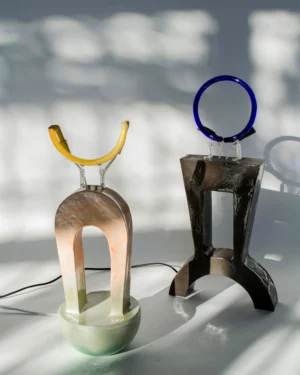
AnKa Colors of Dawn Table Lamp in Ceramic
By UAU Studio
€1.500 -
 In stock
Synkro Table Lamp in Stoneware
By UAU Studio
€1.500 -
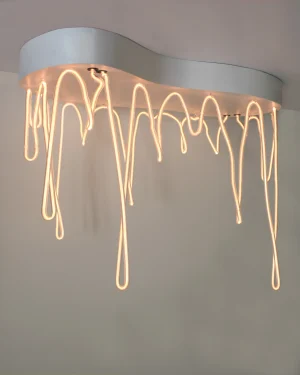
Vertical Fractal Helium Chandelier In Glass And Metal
By Dace Sūna
Price Upon Request -

Follow The Deer Table Lamp In Neon Glass
By Dace Sūna
Price Upon Request
Neon lamps bring the language of sign-making indoors: glass tubing bent over flame, filled with gas and sealed by hand until it glows in a single steady color. Studios working in neon pair that tubing with stainless steel, stoneware or painted metal bases, so the light reads as both object and glow. The making is slow and specific, which is why most runs stay small or one-off.
What makes neon different from other glass lighting
Ordinary glass lamps rely on a bulb hidden inside a shade; neon is the light source itself. A glassblower heats a straight tube, bends it into letters, loops or outlines, then a lampworking specialist fills it with neon or argon gas and seals the ends. Fusing and cold working come in for the base or the frame that holds the tube in place, while powder coating protects any metal stand from scratches and fingerprints.
Because the glow comes from excited gas rather than a filament, color is fixed into the tube itself: a clear tube reads as classic red-orange neon, while a coated or colored tube shifts the glow toward blue, yellow or pink. That is why neon lamps are chosen by hue first and form second, in a way few other lamps are.
The range of color and finish found in neon lamps
On ADORNO, neon lamps run from multicolor pieces that mix several tube colors in one fixture to single-tone work in light pink, light yellow, red, yellow or blue. Bases and mounts add a second material: polished stainless steel and other reflective metals bounce the glow back into a room, stoneware grounds it, and glaze or hand-painted finishes bring in matte color that reads differently in daylight than after dark.
Styles range just as widely, from futuristic and neo-industrial pieces built around exposed tubing and visible wiring, to maximalist and surrealist forms that bend neon into unexpected shapes, to quieter contemporary and neo-artesanal designs where the tube sits flush against a flat panel.
How to choose a neon lamp
Start with where the piece will sit: wall-mounted neon work needs a run of blank wall and reads best from across a room, while tabletop neon lamps sit lower and ask to be seen up close, next to a sofa or on a console. Scale matters more with neon than with most lighting, since a tube that is too small for its wall disappears, and one that is too large can overpower a small bedroom.
- Check whether the piece is wired for a plug, a transformer box or hardwiring, and plan the socket before hanging it.
- Match the glow to the room's other light sources; a single bold color works harder in a room with dimmed or warm lighting than one lit by daylight.
- Look at the edition: neon lamps sold as unique pieces or limited editions will not be replaced once gone, so note the exact tube color and finish before buying.
Where neon lamps work in a home
Living rooms take neon lamps well as a second light source, set beside or above seating rather than as the only illumination. Bedrooms suit smaller, single-color tubes used as night lighting rather than reading light, since neon's even glow is gentler than a directed bulb. Home bars, studios and hallways also carry neon easily, anywhere a flash of color reads as a fixture rather than wall art.
Caring for a neon lamp
Glass tubing is sealed and should never be opened or re-bent at home; any repair belongs with a specialist in lampworking. Dust the tube and base with a dry, soft cloth, since damp cleaning risks the electrical seals at each end. Keep neon lamps away from spots where they might be knocked, and turn them off at the transformer rather than leaving them lit around the clock, which extends the life of the gas fill and electrodes.
For a wider view of glowing glass and tube lighting beyond lamps, see neon lighting and every neon piece on ADORNO. Neon lamps sit within the broader world of designer lamps, alongside metal lamps and contemporary lamps for rooms that mix materials.
How do I choose a neon lamp?
Start with color, since the tube's hue is fixed when the glass is filled and sealed, then consider the base material, from polished steel to stoneware, for how it sits in the room.
How do you care for a neon lamp?
Wipe the glass tube and base with a dry or barely damp cloth, keep the piece away from moisture, and avoid knocking the tube, since the glass is thin and holds the gas under low pressure.
What size is a neon lamp and where does it go?
Sizes range from compact tabletop forms to larger wall-mounted pieces, so check the maker's listed dimensions, or chat with the maker on the piece's page to confirm fit.
Which rooms suit a neon lamp?
Living rooms and bedrooms take neon well as accent light, while entryways and home bars benefit from its graphic glow; it works best alongside other light sources rather than as the only one.
Can I get a neon lamp in a custom color or size?
Some studios take custom requests, since tube color and shape are set by hand during glassblowing and lampworking; chat with the maker on the piece's page to ask directly.
How does shipping, returns and authenticity work on ADORNO?
Shipping is insured and worldwide, returns are accepted within 14 days except on made-to-order pieces, and every lamp arrives with a certificate of authenticity.