


-
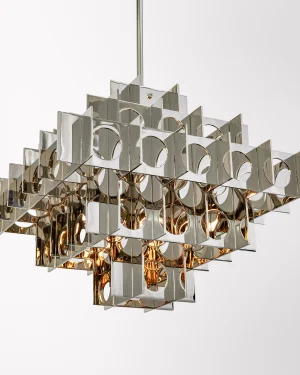
Tenfold 5 T Pendant Lamp in Stainless Steel and Aluminum
By Luft Tanaka Studio
€4.440 - €11.000 This product has multiple variants. The options may be chosen on the product page -
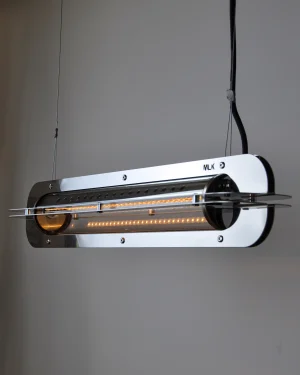
Pill600 Pendant Lamp in Mirror Stainless Steel
By MLK Furniture
€1.090 -
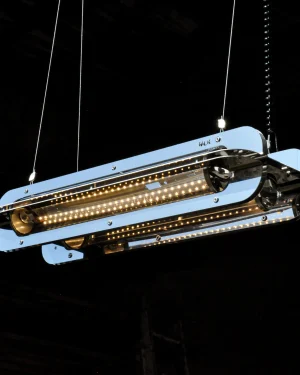
Pill600x2 Pendant Lamp in Mirror Stainless Steel
By MLK Furniture
€1.890 -
 In stock
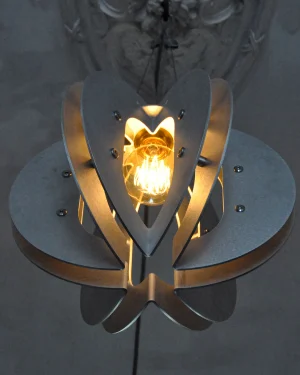
D300 Lampion Pendant Lamp in Matte Aluminum
By MLK Furniture
€390 -
 In stock
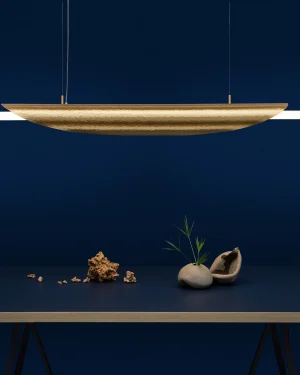
Taco De Luz Satin Brass Pendant Lamp in Brass
By Studio Aristotelis Barakos
€5.400 -
![[float] Sculptural Ceiling Lamp in Concrete and Stainless Steel mounted on the ceiling, front view.](https://media.adorno.design/wp-content/uploads/2025/08/07172202/shopcasestudios.com-montiert2_1_-300x375.webp)
[float] Sculptural Ceiling Lamp in Concrete
By case studios
€2.700 -
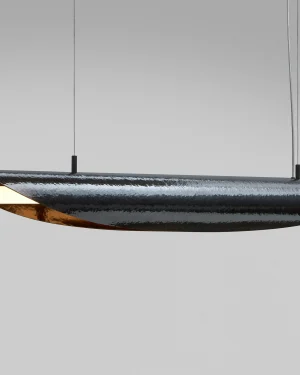
Taco De Luz Black Patinated Brass Pendant Lamp in Brass
By Studio Aristotelis Barakos
€5.900 -
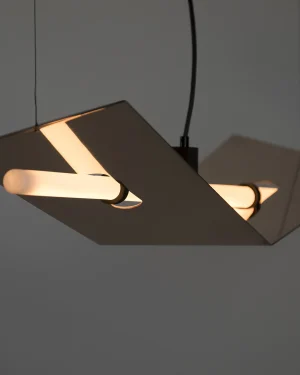
Bird of Prey Ceiling Lamp in Bronze
By Atelier Haute Cuisine
€3.700 -

Fos 05 Pendant Lamp in Wood and Marble
By Daniel Orozco Estudio
€1.390 -
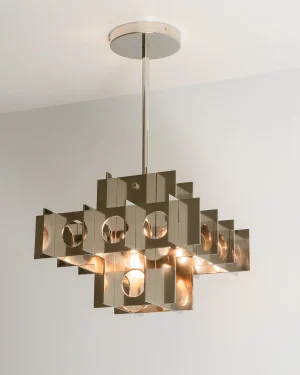
Tenfold 3 T B Pendant Lamp in Stainless Steel and Aluminum
By Luft Tanaka Studio
€2.895 - €8.675 This product has multiple variants. The options may be chosen on the product page -
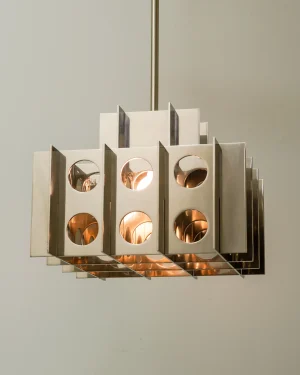
Tenfold 3 T A Pendant Lamp in Stainless Steel and Aluminum
By Luft Tanaka Studio
€2.895 - €8.675 This product has multiple variants. The options may be chosen on the product page -

Ilumina Pendant Lamp in Ceramics
By Popdots Studio
€330 -
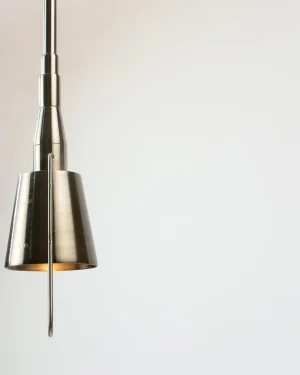
Suspension Pendant Lamp in Stainless Steel
By Szostak Atelier
€1.000 -
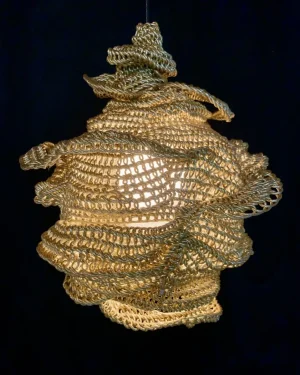
Auræ Pendant Lamp in Glass and Textiles
By Annie Legault
Price Upon Request -

Ms Eclipse M (25cm) Pendant Lamp in Marbled Salts
By MARBLEDSALTS studio
Price Upon Request -
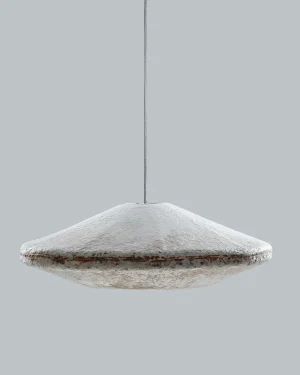 In stock
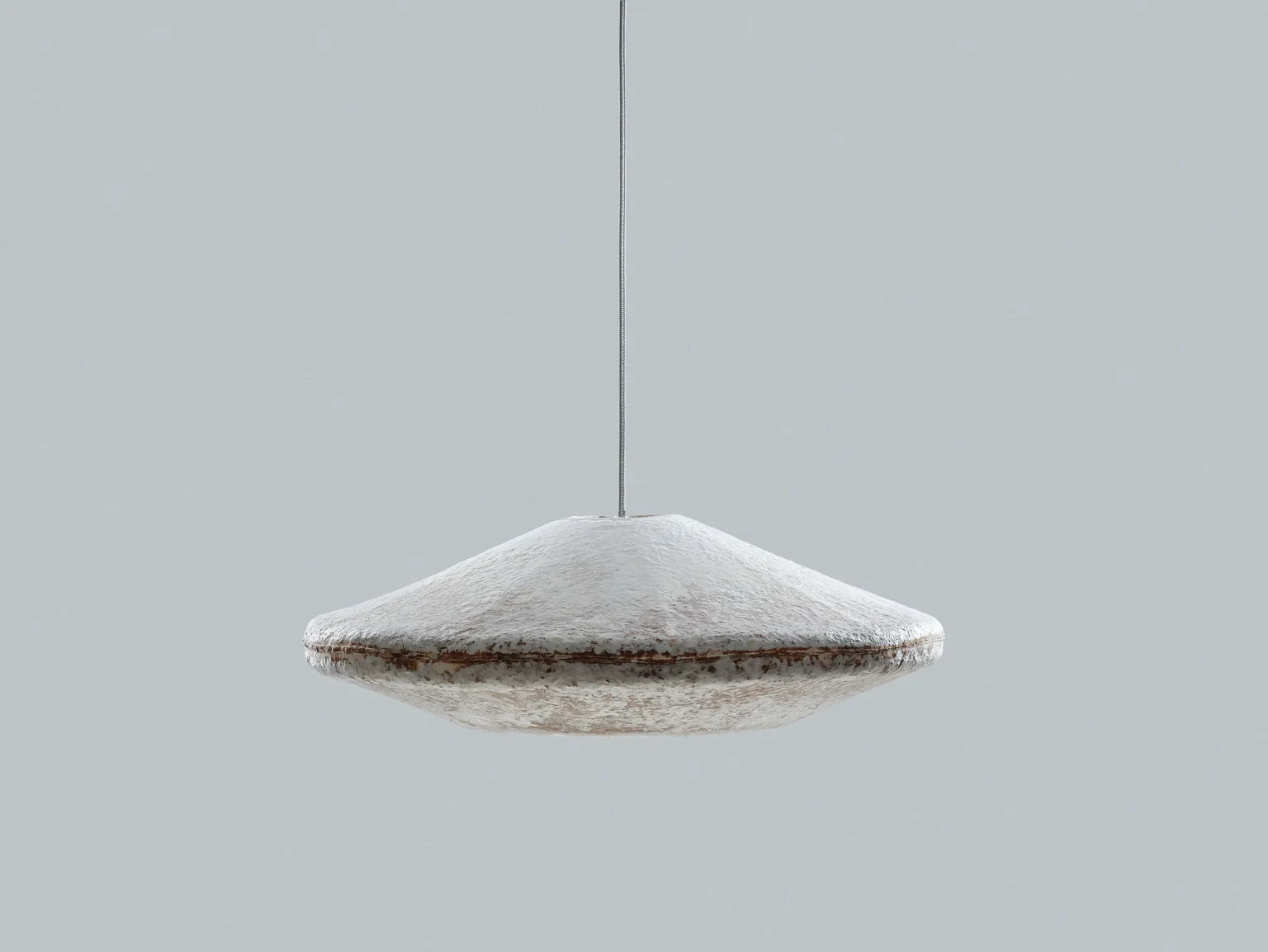
B Wise Pendant Lamp in Mycelium
By Myceen
Price Upon Request -
 Sold
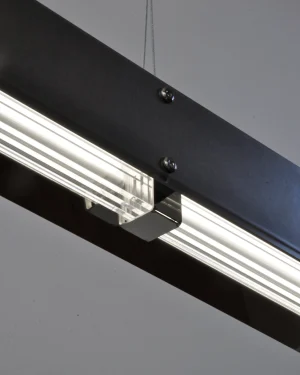
SoldNe1200/145 Pendant Lamp in Stainless Steel
By MLK Furniture
€1.390 -
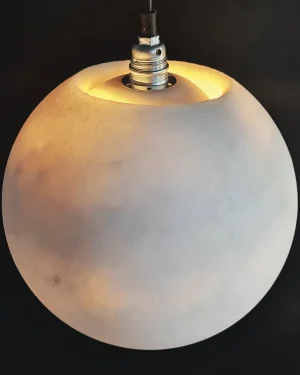
Marbled Salts Ceiling Lamp in Marbled Salts
By MARBLEDSALTS studio
Price Upon Request
Brutalist pendant lamps carry the weight of the material they are made from, rather than hiding it. Studios working in this style favor raw or lightly finished steel, chrome, aluminum and sometimes marble, built into blocky, geometric forms that show their welds, bolts and casting lines instead of smoothing them away. The result reads as mass hung from a cord: a fixture that holds the eye by being heavy, not by being decorative.
What defines the brutalist style in a ceiling lamp
Brutalism in lighting borrows its logic from the architecture it is named for: function stated plainly, surfaces left close to their raw state, and form built from repeated geometric blocks or slabs rather than curves. A pendant in this style often looks like a fragment of a larger structure, cut down to the scale of a room. Chrome and reflective metal finishes catch and scatter light across a blocky shade, while matte steel or stone absorbs it, so the same silhouette can read as sharp or somber depending on the finish chosen.
The materials, finishes and editions found here
The pendants gathered under this style draw mainly from stainless steel, aluminum and other metalwork, with chrome and silver finishes appearing more often than painted color, and black, gray and beige covering most of what is not left raw metal. Marble turns up as a counterweight to steel, its veining softening an otherwise hard form, though it stains and etches if exposed to oil or acid and is worth wiping promptly rather than left to sit. Making methods lean on metalwork, laser cutting and mold making, and depending on the maker a piece may sit in an open edition or stand as a unique, one-off casting. For a broader look at the same material language, metal pendant lamps and steel pendant lamps outside the brutalist label show how far the finish and form can range.
How to choose a brutalist pendant lamp
Scale matters more here than in most lighting styles, since the whole point of a brutalist piece is to read as mass. A shade sized for a hallway will look lost over a long table, while one built for an island can overwhelm a reading corner, so measure the surface it will hang over before the lamp itself.
- Hang height: low enough over a table or island to anchor it, high enough elsewhere to clear sightlines and door swings.
- Finish: chrome and polished steel throw more light and visual weight than matte or blackened metal.
- Placement: a single fixture reads as sculpture; a row repeats the same block form along a surface.
Rooms that suit this kind of weight
Because these pendants are built to be looked at as much as lit by, they tend to work best where there is enough negative space around them to carry their bulk: over a dining table, along a kitchen island, or as the single fixture in a stairwell or entry. In a seating area, a brutalist pendant can stand in for a sculptural object the way raw-finished brutalist seating or a brutalist table might, reinforcing the same vocabulary of raw material and blunt geometry across the room. For a softer version of the same brief, living room pendant lamps built for lower ceilings and closer seating offer a related, less assertive option.
Living with raw metal and stone
Unlacquered steel and aluminum develop a patina over years of handling and ambient moisture; a dry cloth and occasional light oil on exposed metal slows this without erasing the surface character that drew the piece in the first place. Marble elements should be dusted rather than wiped with household cleaners, which can dull or etch the stone over time. For the wider range of the style beyond lighting, the full set of brutalist pieces on ADORNO spans furniture, seating and decor built from the same raw, weighty logic.
How do I choose a brutalist pendant lamp?
Look for raw or oxidized metal, poured concrete or heavy stone, shapes that stay geometric rather than decorative. Choose a finish that holds weight visually, since these lamps are meant to be seen, not hidden.
How do I care for a brutalist pendant lamp?
Wipe metal, concrete or stone with a dry or barely damp cloth, avoiding harsh chemicals that strip patina. Concrete can stain if left wet, and raw steel may darken or rust slightly over time, which is normal.
What size pendant lamp do I need, and how low should it hang?
Over a table, hang the bottom of the shade about 30 to 36 inches above the surface. For hallways or entries, allow at least 7 feet of clearance from the floor.
Which rooms suit a brutalist pendant lamp?
Their weight and raw materials suit kitchens, dining rooms and entryways where the fixture can anchor the space. Staircases and double-height rooms also give heavier shades room to hang without crowding.
Can I get a brutalist pendant lamp made to a custom size or finish?
Some makers offer this. Chat with the maker on the piece's page to confirm custom sizing, finish or wiring options before ordering.
How does shipping, returns and authenticity work on ADORNO?
Shipping is insured and worldwide. Returns are accepted within 14 days, excluding made-to-order pieces, and every lamp arrives with a certificate of authenticity. ADORNO also offers a lowest-price guarantee.