









-
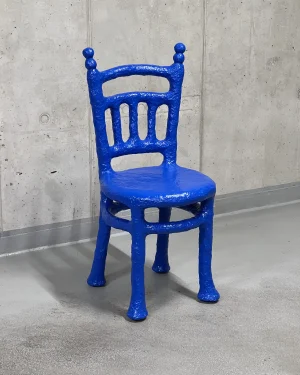
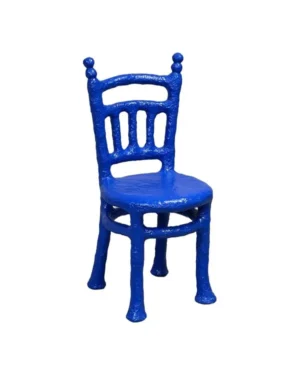
Blue Papier-mâché Chess Chair
By David Čáp
€1.000 -

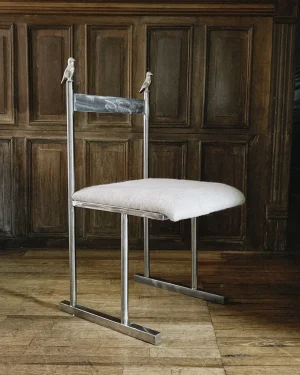
Dessert – Steel Chair
By SALAK Studio
€790 -
School Chair – Upcycled Materials
By Around the Studio
€1.500 -

Bold Shkam Chair – Blue
By SHAPE & SHADE
€333 -
 In stock
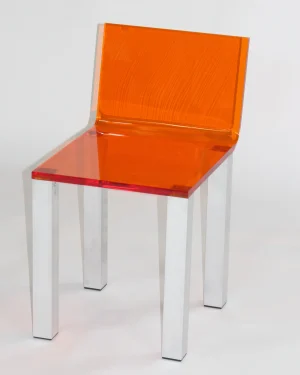
Acrilar – Acrylic Chair I
By Luiz Solano
€840 This product has multiple variants. The options may be chosen on the product page -
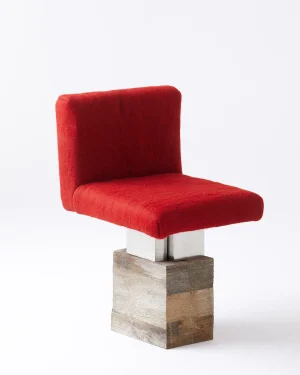
Tbilisi Street Chair – Upcycled Materials
By Around the Studio
€1.500 -
 In stock
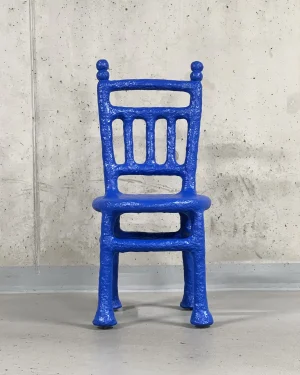
Chess Chair 2 Blue
By David Čáp
€1.000 -
 In stock
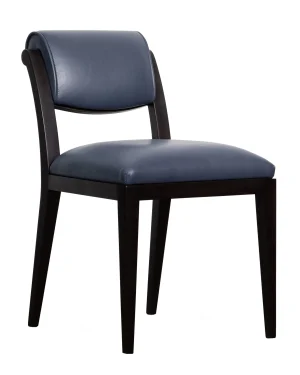
Gianni – Contemporary Art Deco Style Leather Dining Chair
By Costantini Design
€1.970 -
 In stock
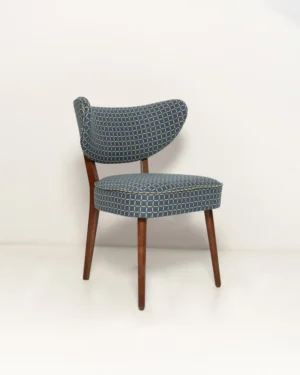
Vintola Dining Chair, Blue Jacquard, Walnut Wood
By Vintola Studio
€1.250 -

Random Chair – Upcycled Materials
By Around the Studio
€1.400 -
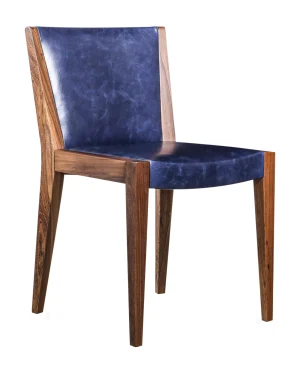
Giovanni – Wood And Wrapped Leather Dining Chair
By Costantini Design
€1.720 This product has multiple variants. The options may be chosen on the product page -
 Sold
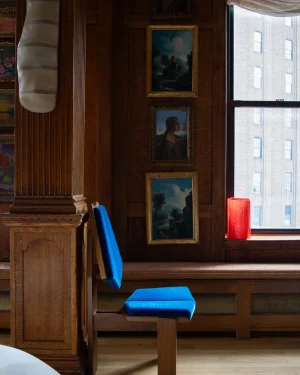
SoldBrutalist Chair – Blue Velvet Upholstery
By Crina Arghirescu Rogard
Price Upon Request
Blue dining chairs bring a single strong color decision to a room built mostly from wood tones and neutrals. Studios reach this shade through painted or lacquered wood, powder-coated steel, dyed leather and upholstery, or felting, so the same cobalt or denim blue can arrive hard-edged or soft to the touch. What holds the group together is not one material but the choice to make the chair, not the table, carry the color.
What defines blue in a dining chair
Blue behaves differently depending on what it sits on. A lacquered wood frame holds a flat, even color and shows light scratches as the finish wears thin at the edges. Powder-coated steel takes the color into the metal itself, so chips reveal gray undercoat rather than bare wood. Dyed leather and woven textile carry blue unevenly on purpose, lighter where light falls and darker in the folds, which is part of why upholstered and felted chairs read as warmer than painted ones.
Cobalt blue sits at the deep, saturated end of the range and reads almost as a neutral once a room has enough white or oak around it. Paler, grayed blues behave more like a stand-in for black, grounding a table without competing with it. Both move with daylight: blue shifts cooler under north light and holds more of its depth under warm bulbs in the evening.
How the range is made
Wood and cabinetmaking account for a large share of what shows up here, with hardwood frames painted or lacquered rather than left bare. Steel chairs come from metalwork, bent or welded into a frame and then powder-coated, which is why they tend to feel lighter and colder than wood under the hand. Softer seats use leatherwork, textilework and upholstery over a padded shell, and some studios work in felt or recycled material, pressing or needling fiber into a seat shell that holds color through its surface rather than a coating.
- Open editions, produced to a standing design and restocked as needed
- Unique pieces, each one the only example of its kind
Styles range from minimalist dining chairs with a single plane of color and no ornament, through mid-century silhouettes, to eclectic and maximalist pieces that pair blue with contrasting trim or mixed materials.
Choosing a blue dining chair
Start from the table height: most dining tables stand around 28 to 30 inches, so a chair seat should land roughly 17 to 19 inches from the floor, with clearance for the legs and any apron underneath. Measure seat width and depth against how close you like to sit, and check arm height against the table edge if the chair has arms.
Finish matters as much as shade. A matte lacquer or powder coat reads quieter in a small room, while a gloss lacquer or a sheen leather catches light and makes the color more present. If the table and floor are already pale, a deeper cobalt or navy chair anchors the setting; if the room already carries strong color elsewhere, a softer, grayed blue keeps the chairs from competing.
Where these chairs work
Blue dining chairs suit dining rooms directly, set around a table on their own or mixed with a second color at the head of the table. They also work pulled into a living room as extra seating, or used singly as an accent chair where a plain wood or upholstered seat would disappear. For a fuller view of the category, the dining chairs on ADORNO span every material and color this one narrows down, and the full run of blue pieces extends well past seating into tables, lighting and objects.
Care by material
Lacquered and painted wood should be dusted and kept from standing water, which clouds the finish and can lift paint at the edges over time. Powder-coated steel wipes clean easily and resists fading, though chips should be touched up to stop rust reaching the metal underneath. Leather and textile seats benefit from a dry brush and an occasional conditioner suited to the specific dye, since some blue dyes are more prone to sun fading than others; keep upholstered chairs out of direct, constant sunlight where possible. For wood-framed options specifically, the wooden dining chairs on ADORNO show the range of finishes this care routine applies to, and the metal dining chairs cover the steel side of the same question.
How do I choose a blue dining chair?
Start with the material underneath the color: wood and leather carry warmth and age well, steel and stainless steel hold a cooler, sharper tone. Match the shade, from cobalt to muted blue, to the wood tones or metals already in the room.
What are blue dining chairs made of and how do I care for them?
Most are built in wood, steel or leather, colored through paint, dye or powder coating. Wipe wood and metal with a dry or lightly damp cloth, and condition leather occasionally to stop it drying out; avoid direct sun, which fades any pigment over time.
What height and size should a dining chair be?
Standard seat height runs 17 to 19 inches, matched to tables around 28 to 30 inches tall, leaving about 10 to 12 inches of clearance. Check seat width and depth against your table setting so chairs tuck in without crowding.
Do blue dining chairs suit every dining room?
Blue reads calm against white or cream walls, and sharper against black or terracotta tones. Lighter blues suit small or naturally lit rooms, while deeper cobalt or navy anchor larger spaces with more contrast.
Can I order a blue dining chair in a custom color or as a set?
Some makers offer alternate finishes or multiples on request. Chat with the maker on the piece's page to confirm options, materials and timing before ordering.
What is ADORNO's policy on shipping, returns and authenticity?
Shipping is insured and worldwide, with a 14-day return policy excluding made-to-order pieces. Every piece comes with a certificate of authenticity, and ADORNO offers a lowest-price guarantee.