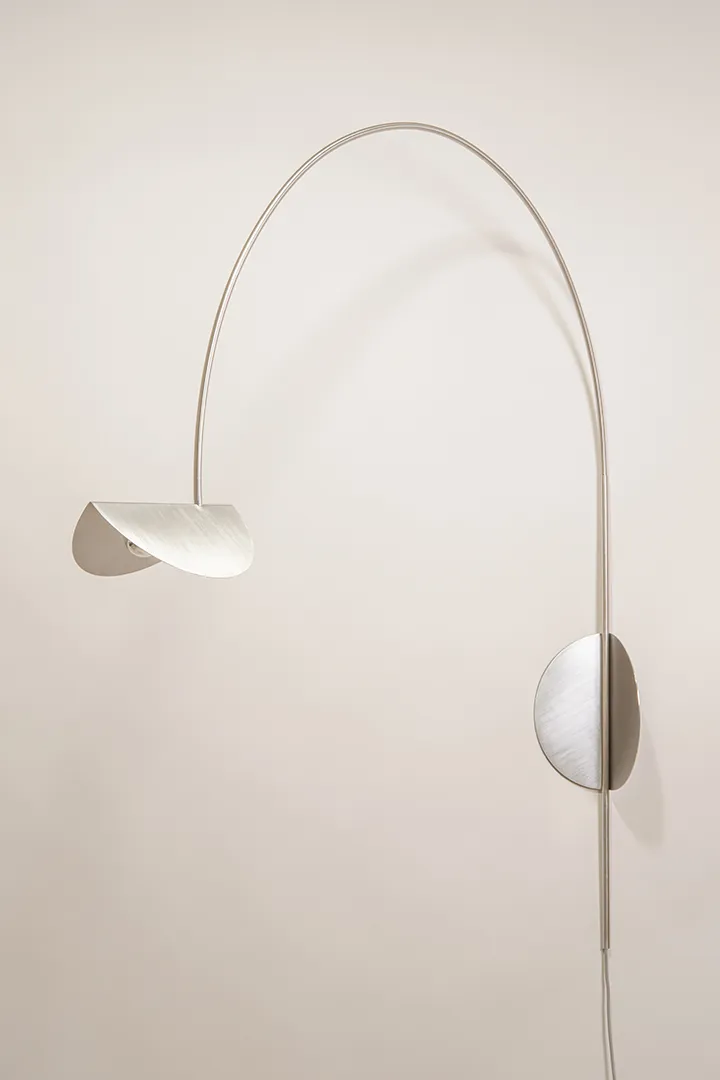
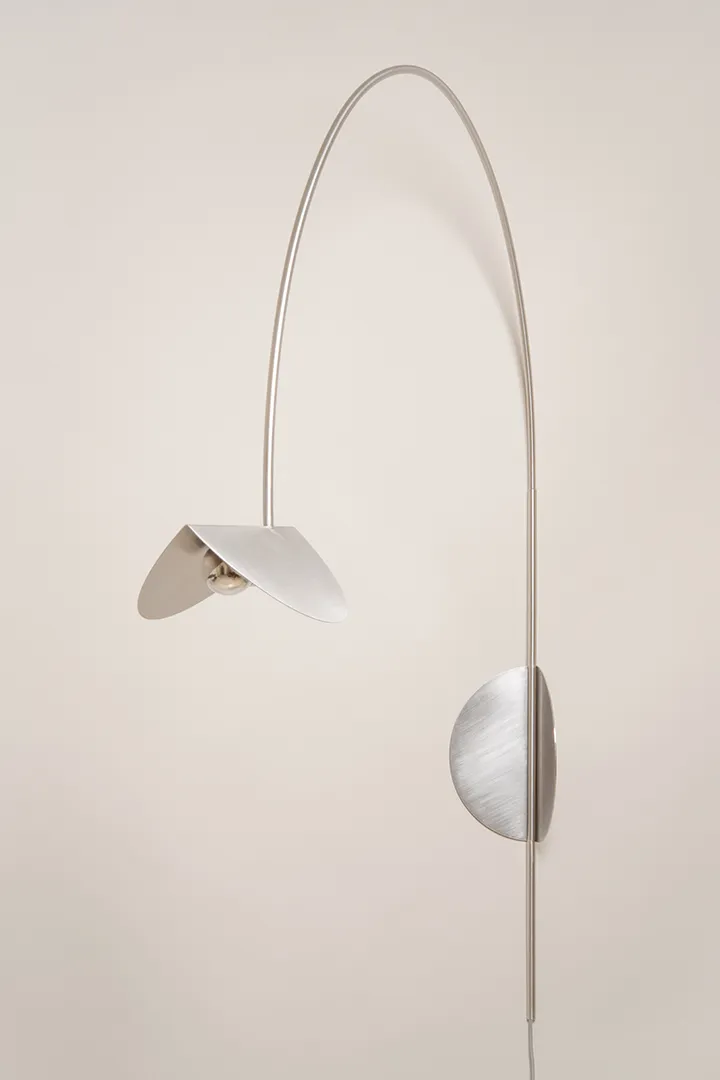
Does this lamp come with a bulb?
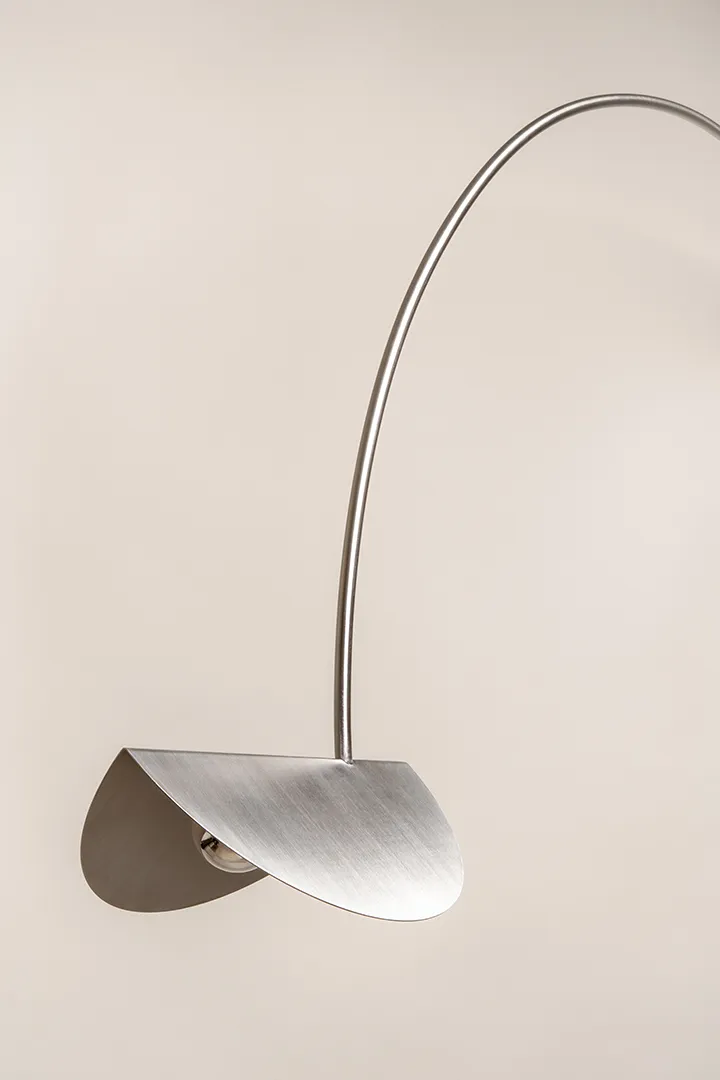
Yes, a bulb is included. It takes an E27 bulb, max 40W, and an LED is recommended for the best lighting experience.
Can the wiring be adapted for my country?
UK and US wiring are available on request — use Chat with the maker on this page to arrange this.
Is this lamp dimmable?
This isn't specified — the maker can confirm, use Chat with the maker on this page.
How long does it take to receive this piece?
This is a made-to-order piece, usually shipping within 2 weeks.
Can I customize this lamp?
Yes, this piece can be customized upon request — reach out via Chat with the maker to discuss options.
What is the lamp made of and how do I care for it?
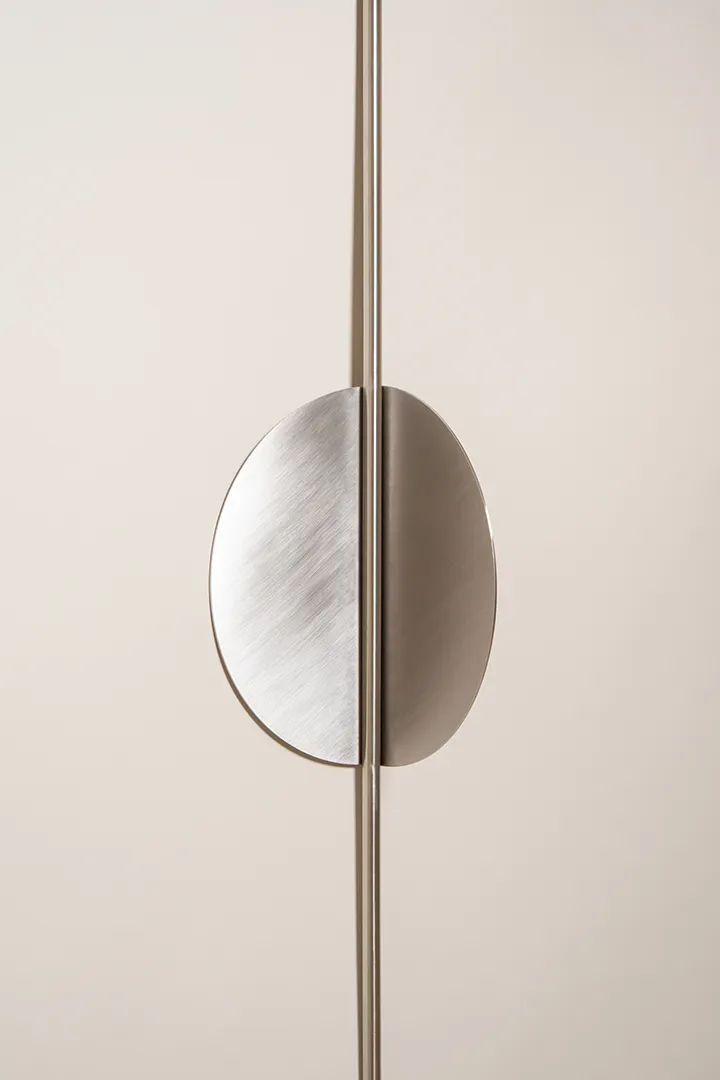
It is hand-crafted from stainless steel with a brushed finish. Specific care instructions aren't listed — the maker can confirm, use Chat with the maker on this page.
Can I return this piece if I change my mind?
Made-to-order pieces like this one are excluded from the standard 14-day return policy.
Is this a unique or limited piece?
This is an open edition, so it isn't numbered or limited in quantity.
What is a wall lamp?
A wall lamp is any light fixture mounted on a wall rather than standing on the floor or a surface, or hanging from the ceiling. The category covers several formats with different purposes: decorative sconces, adjustable swing-arm reading lights, uplights that wash a wall, and small low-level pieces for stairs and corridors.
What is the difference between a wall lamp and a sconce?
A sconce is one type of wall lamp — typically a decorative fixture sitting close to the wall. "Wall lamp" is the broader term, and also takes in swing-arm reading lights and projecting fixtures that a sconce would not normally describe. In everyday use the two words overlap heavily, and most makers use whichever fits the piece.
Which type of wall lamp is best for reading in bed?
A swing-arm or adjustable piece, mounted so the arm reaches over the pillow and the light falls on the page rather than across the room. Around 300–500 lumens is enough. A fixed sconce can work if the shade directs light downward, but it will not adapt to how you sit, and it is worth checking whether the piece has its own switch before committing.
Can wall lamps replace bedside lamps?
Yes, and in a small bedroom they usually improve it — a pair of wall lamps frees both nightstands completely and removes two cables from the surface. The trade-offs are that the position is fixed once wired, and that you need to decide the height in advance rather than moving a lamp around until it feels right.
Can I put a wall lamp over a kitchen sink or worktop?
Yes, and a directional wall-mounted piece often lights a sink better than the ceiling fixture above it, since your body does not block the light. Choose a wipeable material — glazed ceramic, glass or metal — and keep paper, textile and untreated wood away from steam and cooking grease.
Do you have plug-in wall lamps for a rented flat?
Some pieces are supplied with a visible cord intended to run to a socket, which avoids any wiring work. Most are designed to be hardwired. The product page states which, and it is worth asking us before buying if a corded version is essential for your situation — not every studio offers one.
Are there battery-operated, rechargeable or stick-on wall lights?
Not meaningfully. Cordless and adhesive wall lighting is the territory of mass-produced fixtures, whereas these pieces are handmade in stoneware, glass, brass and wood, and need both a wired light source and a fixing suited to their weight. A rechargeable table lamp on a shelf is a better solution if wiring is genuinely impossible.
Can a wall lamp be used in a bathroom?
Only with an appropriate IP rating for the zone, and requirements vary by country — the area near a bath or shower is far stricter than a well-ventilated wall beside a mirror. These are handmade pieces intended for dry interior use, so ask our curation team before specifying anything for a bathroom.
Are wall lamps dimmable, and do they have their own switch?
Dimming depends on the piece: standard-socket fixtures usually dim with a compatible bulb and dimmer, while integrated LED designs dim only where the designer built it in. Switching depends on how the piece is fitted — hardwired lamps normally run from the room's wall switch, and only some designs include an integrated or corded inline switch.