Updated on: August 5, 2026
Room dividers are not something you see in every home. They sit slightly outside the usual furniture rotation — harder to place, harder to find, and for that reason more interesting when they appear. They also carry a longer history, which aligns with the renewed interest in design that feels connected to the past, or at least not entirely of the present. Screens, folding panels and textile partitions were once common ways of shaping a room without building walls, and that logic feels relevant again as spaces get used more loosely, with less interest in fixed layouts.
Lately there has been a clear move toward interiors that feel more personal. Boho, eclectic, layered — collected rather than composed all at once. The renewed interest in thrifting and antiquing points the same way: a preference for pieces with character, with some sense of having come from somewhere. Room dividers fit that mindset, interrupting the expected layout and adding a different rhythm to a space.
Below are sixteen contemporary dividers from independent studios, preceded by a short guide to what actually differs between them — because a folding screen and a hanging panel solve different problems.


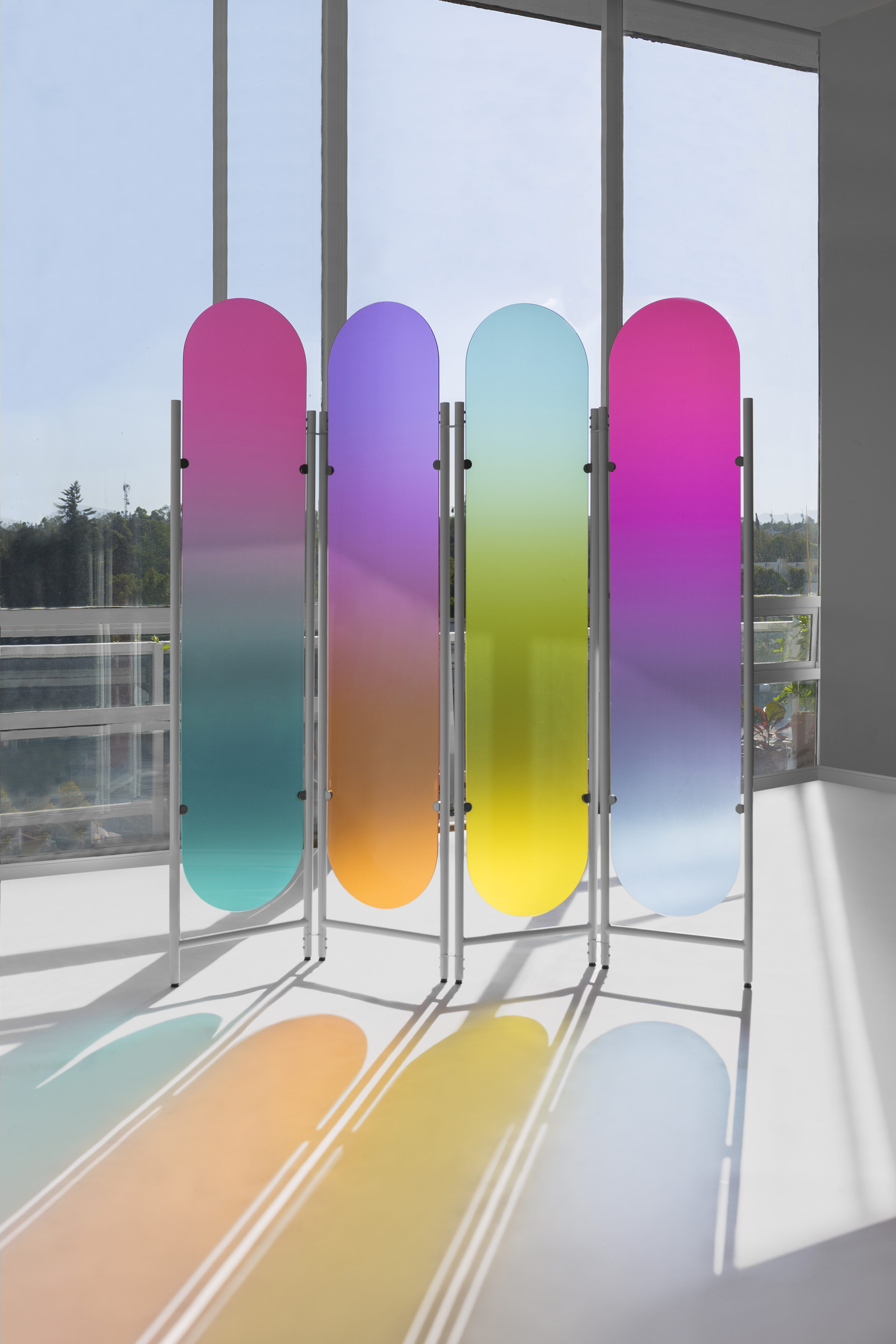
How to choose a room divider
Types of room divider
Four formats cover most of the field. A folding screen — the paravent — hinges into three or more panels, stands unaided and folds flat for storage, which makes it the most flexible option and the easiest to move. Freestanding panels are single planes on a base or foot, heavier and more architectural, better where the divider stays put. A room divider curtain hangs from track or rod and disappears entirely when drawn back, which suits rentals and narrow rooms. Modular systems connect repeating elements so the length adjusts to the opening.
Consequently the choice is mostly about whether the division is permanent. If you want the room back, choose a folding screen or a curtain. If the divider is defining a layout you intend to keep, a freestanding panel or modular run holds better.
Size and coverage
Measure the opening before anything else, then decide how much of it you actually want closed. Full-height division needs roughly 180cm or more to read as a wall; below about 150cm a divider screens a seated sightline but not a standing one, which is often enough. For width, a three-panel screen typically covers 120–180cm when opened at an angle — note that a screen only stands up when it is folded, so its footprint is always narrower than its flat width.
Light and privacy
These pull against each other, and most of the pieces below sit deliberately in between. A solid panel gives real privacy and blocks light; perforated metal, cane, slats or open weave filter it, so the space reads as separated without going dark. Therefore in an interior room with one window, a perforated or woven divider is usually the better call — a solid one will cut the daylight to whatever sits behind it.
Placement, stability and acoustics
A folding screen is stable through geometry rather than weight, so it needs an angle to stand — set it dead straight and it will fall. Check the base against your floor: thin metal feet mark soft wood, and anything tall wants care around children and pets. Meanwhile expect little acoustic benefit from a hard surface. If sound is the actual problem, a textile-faced divider or one backed with wool absorbs mid-range frequencies in a way steel or aluminium cannot.
16 room divider ideas from independent studios
Nolastar – Room Divider and Curtain by Pablo Octavio

The Nolastar divider, available in wood or aluminium, works more like a system than a single piece. Panels connect into a flexible structure that expands, contracts and shifts with the space, moving in a rhythmic zigzag that folds away almost entirely when not in use. Light passes through, movement stays fluid, and the layout adjusts as needed. More than a fixed partition, it behaves like a tool for shaping space in real time.
By Pablo Octavio
€220 – €330 incl. tax
Practice Room Divider – Upcycled Wood by Studio Fabius Clovis
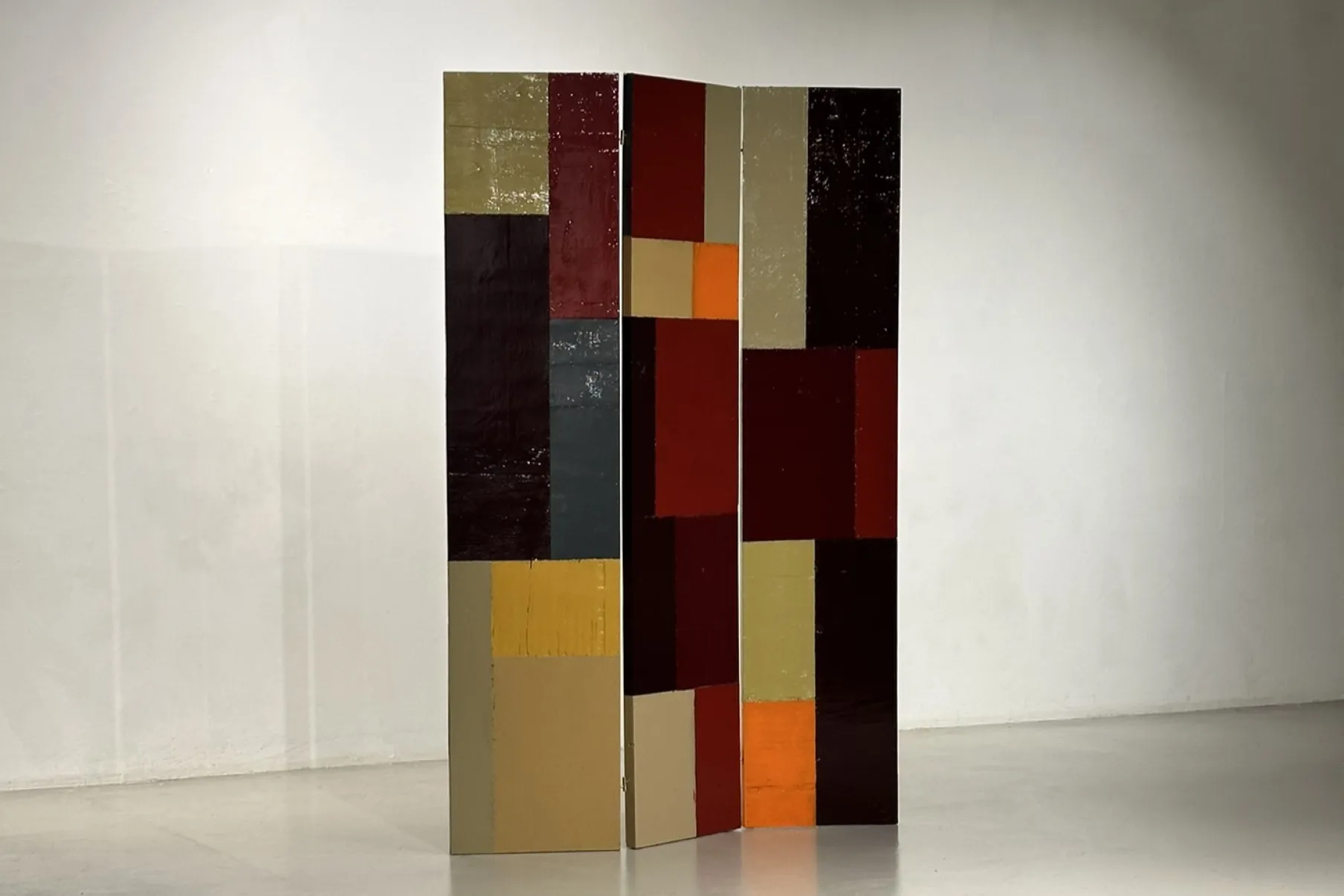
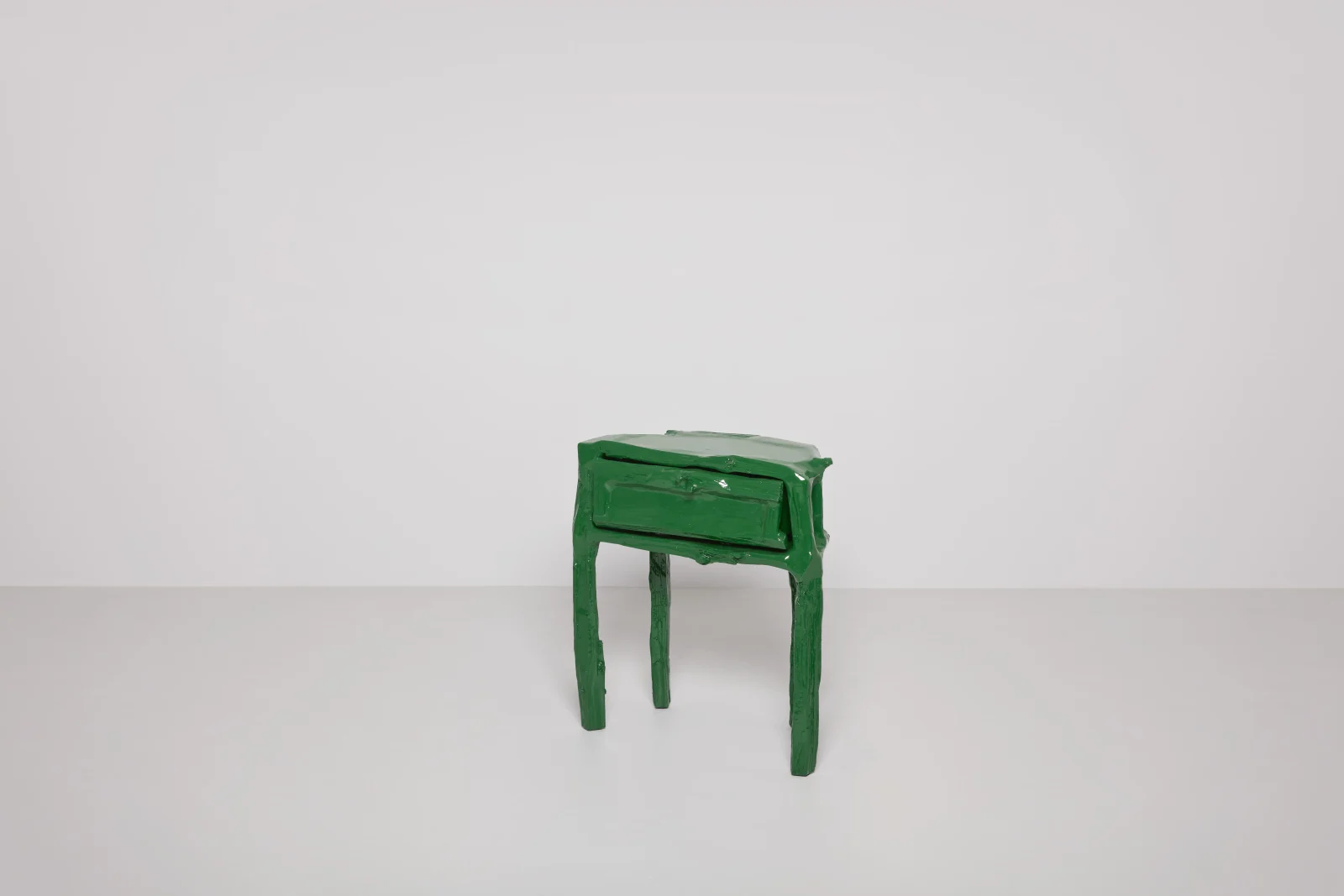
The Practice Room Divider takes a familiar three-panel format and pushes it into something more sculptural. Hinged and functional, but clearly designed to stand out rather than blend in. Worked in upcycled wood, so the material carries its own history. The balance between structure and expression gives it a strong visual role without losing practical use.
By Studio Fabius Clovis
€2.800 incl. tax
Echo by FURN OBJECT
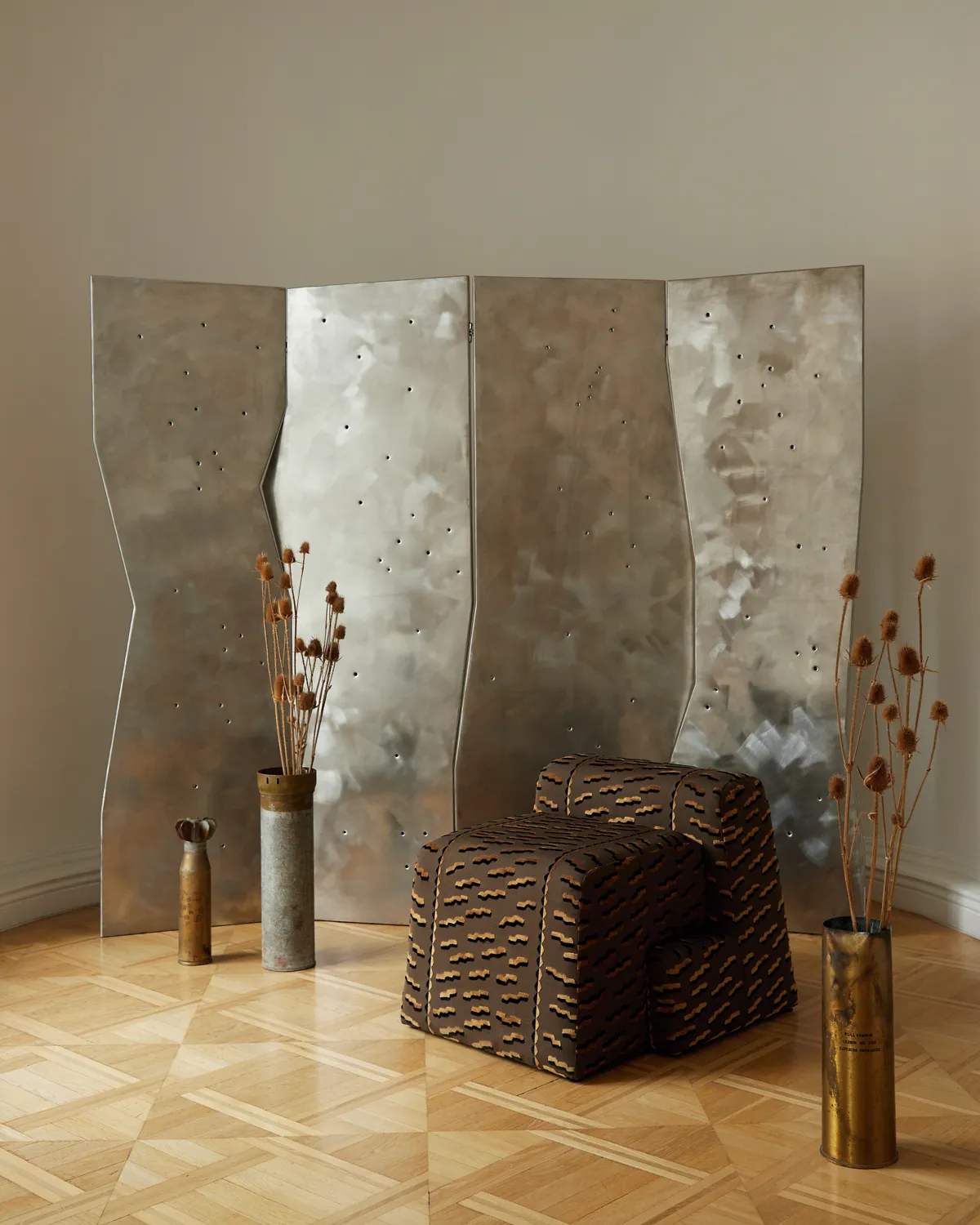
Echo carries a strong narrative through its stainless steel surface. Small perforations resembling impact marks break through the structure, letting light pass in a way that shifts through the day. It divides a space while holding attention — less about full separation and more about what is revealed through it. A good example of a screen that filters rather than blocks.
By FURN OBJECT
INQUIRE
Folding Screen Paravent by Zoé Wolker Studio
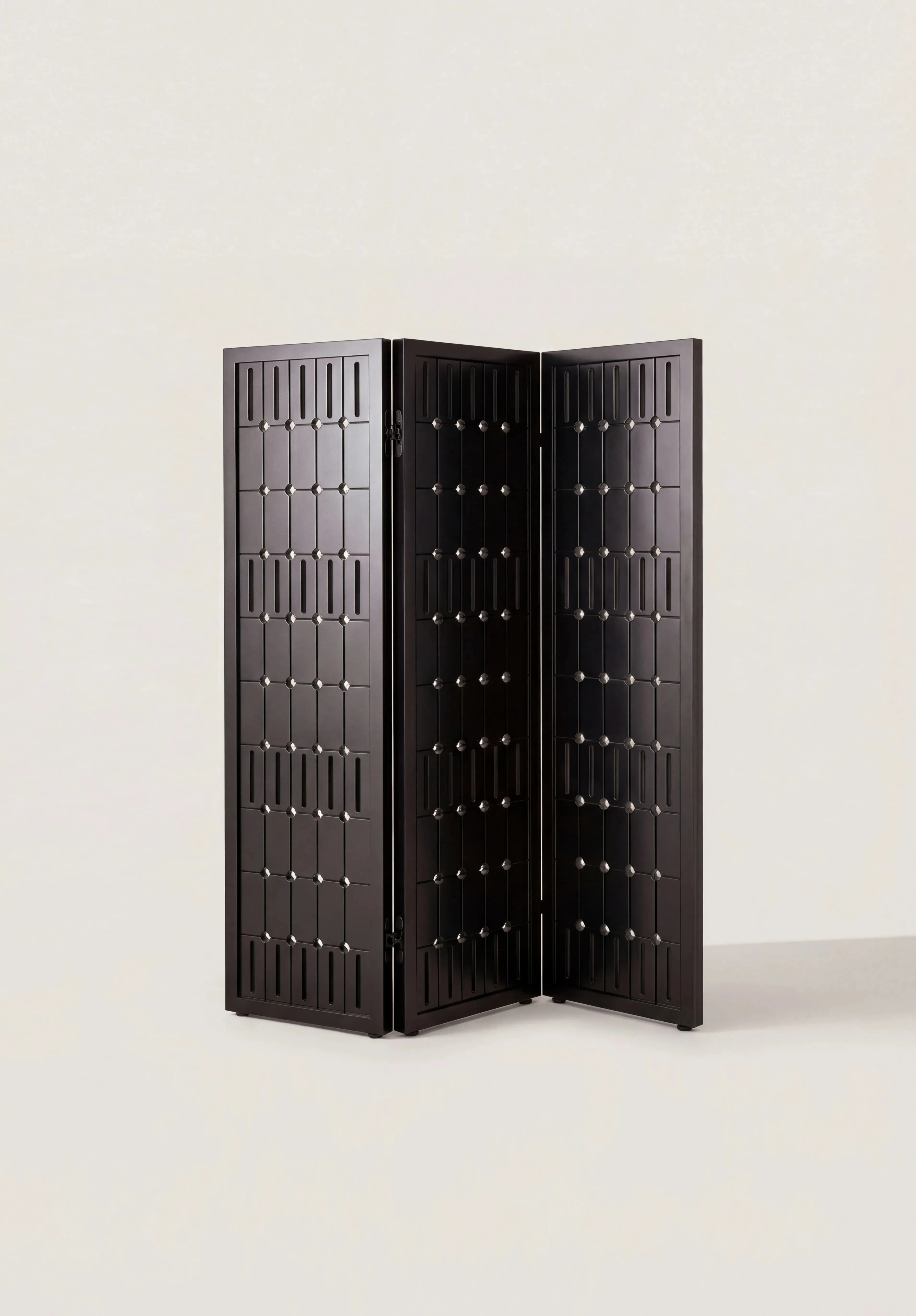
This paravent treats division lightly. A vertical rhythm sets the structure, while circular perforations interrupt it, loosening the grid and introducing movement. Light passes through in uneven intervals — sometimes as a line, sometimes as a soft glow. It shapes a boundary without fully closing it, and changes through the day as light and position shift.
By Zoé Wolker Studio
€6.300 incl. tax
Crumbled Screen by Nitush and Aroosh

The Crumbled Screen treats stainless steel as something responsive. Planes fold and shift, holding traces of pressure while catching light from different angles. It separates a space without staying still: reflections move across the surface, pulling the surrounding room into the piece rather than keeping it apart.
By Nitush and Aroosh
€10.500 incl. tax
Paravent, Objects of Service by Haritini Gritzali

This paravent builds its structure through repetition and vertical rhythm. Brushed aluminium frames hold panels of cotton weave, each sourced from defunct Greek textile workshops and carrying subtle variation in tone. The fabric softens the structure while the grid holds it in place — and being textile-faced, it is one of the few here that will do anything useful for sound.
By Haritini Gritzali
INQUIRE
S1a Room Divider by Cristina Roman Diaz

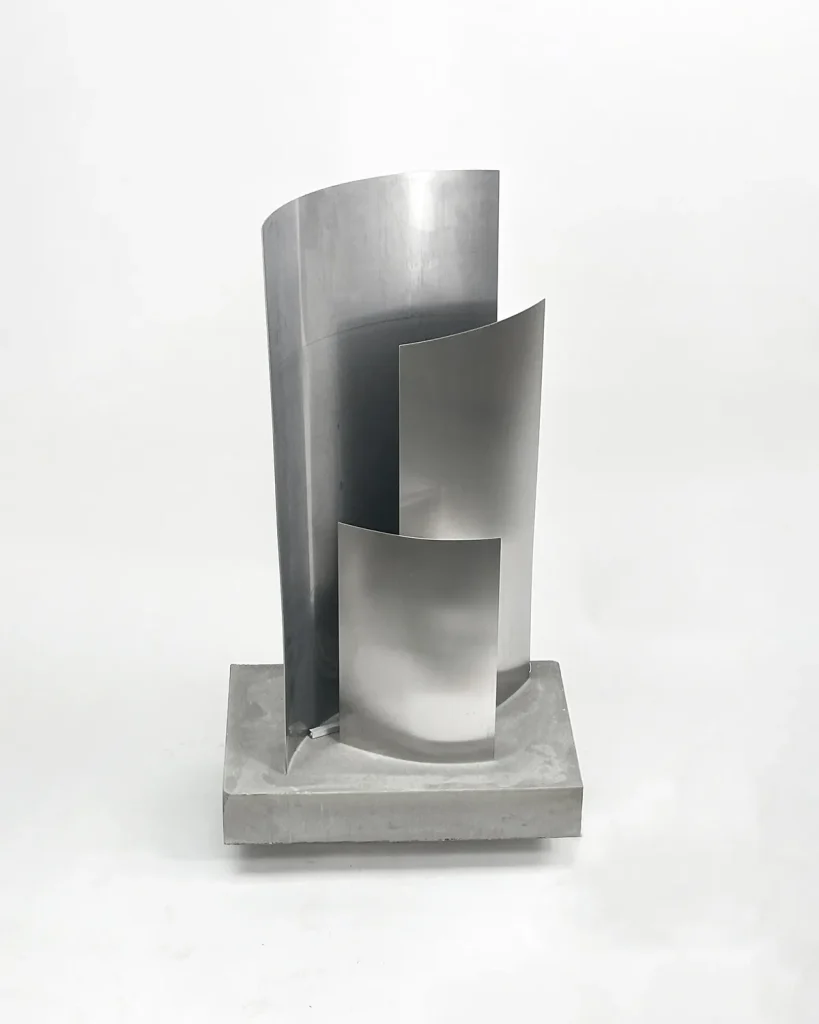
Cut from a single 5mm aluminium sheet, this piece from the Hard Bending series carries a continuous, uninterrupted line. The material holds its shape with precision. It shifts between roles — divider, surface, or table — depending on how it is positioned, and the scale gives it real weight in a room.
By Cristina Roman Diaz
€2.350 incl. tax
Duck Butt Room Divider by Pupcha

A divider that doesn’t take itself too seriously. Ash wood frames and carpet inserts come together with a detail you don’t expect — duck tails, turned outward. It leans into humour without losing its function. Something between a partition and a conversation piece, with just enough irony to shift the mood of a room.
By Pupcha
€3.950 incl. tax
Gonfalon Paravent by Panorammma Atelier
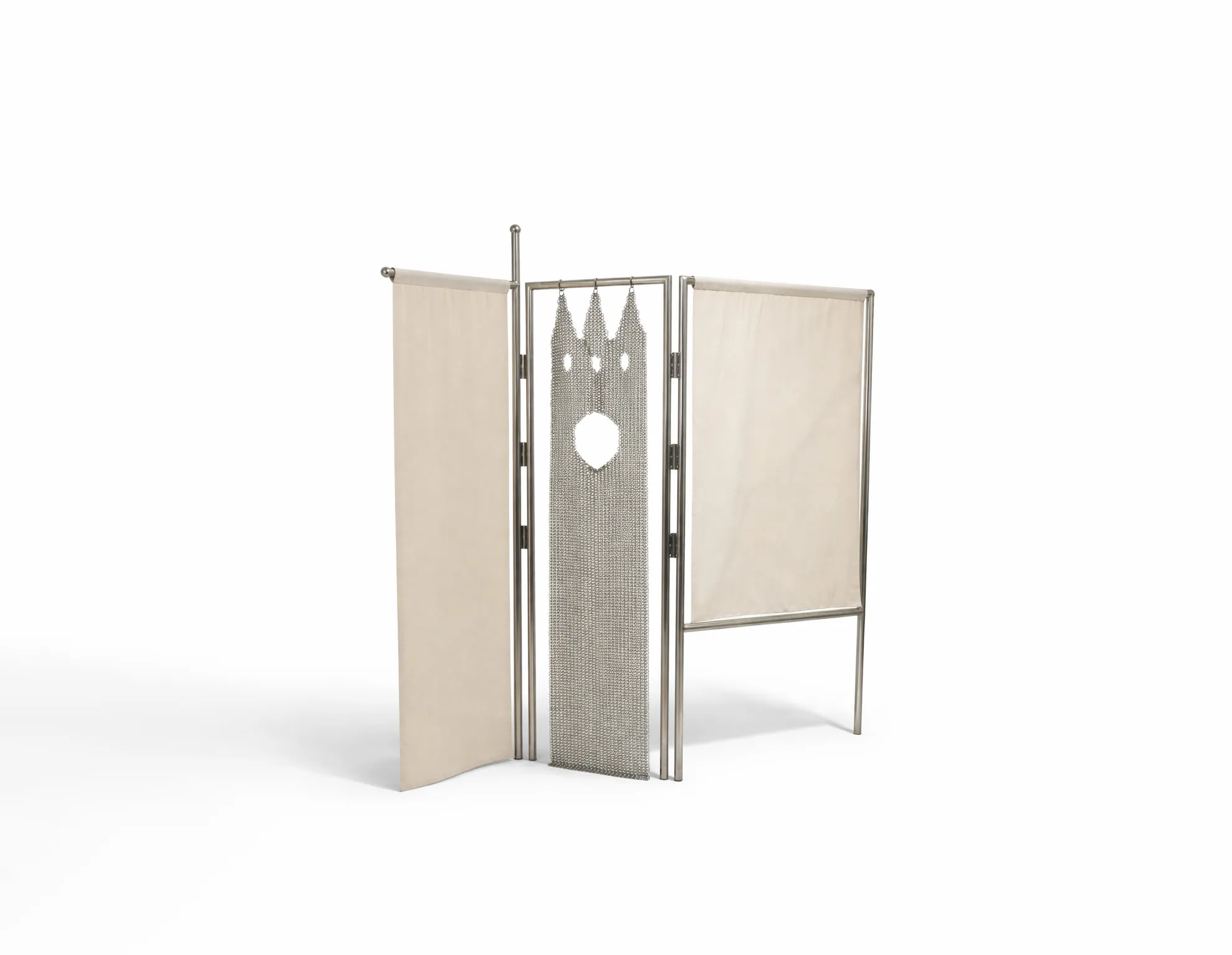
Gonfalon moves between structure and drape. Chainmail and fabric fall in layers within a metal frame, shifting slightly with air and movement. The surface stays active, catching light and revealing what sits beyond it in fragments. A divider that feels less fixed and more responsive to its surroundings.
By Panorammma Atelier
€7.400 incl. tax
Bubbles Lighting Divider by PUFF-BUFF
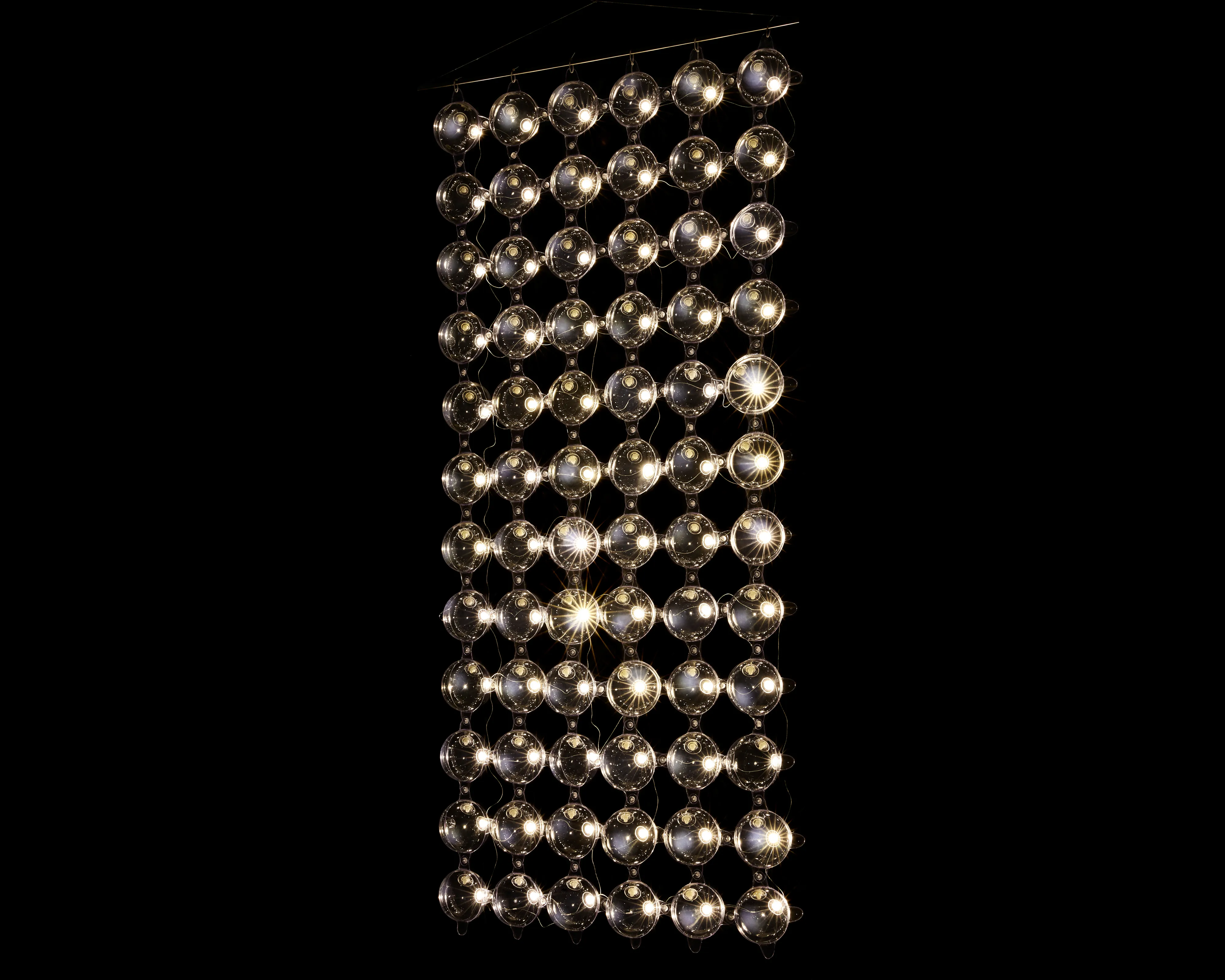
Bubbles builds its structure from illuminated spheres linked into a flexible, net-like surface. Each module holds its own light point, creating a soft, distributed glow across the form. It shifts depending on installation — suspended freely or placed against a wall — with the option to scale. The result reads more like a field of light than a fixed object, which makes it the one piece here that divides a room by adding rather than blocking.
By PUFF-BUFF
€1.190 incl. tax
Artistica Collection – Tinta Unita #1 by STUDIO FP

Tinta Unita treats colour as structure. Each panel holds a single tone, turning hue into something spatial rather than decorative. Freestanding elements connect through a simple system, allowing the composition to shift. The result is pared-back in form but defined by the presence and weight of colour.
By STUDIO FP
€3.700 incl. tax
Shape N.1 Room Screen by Anna Bera
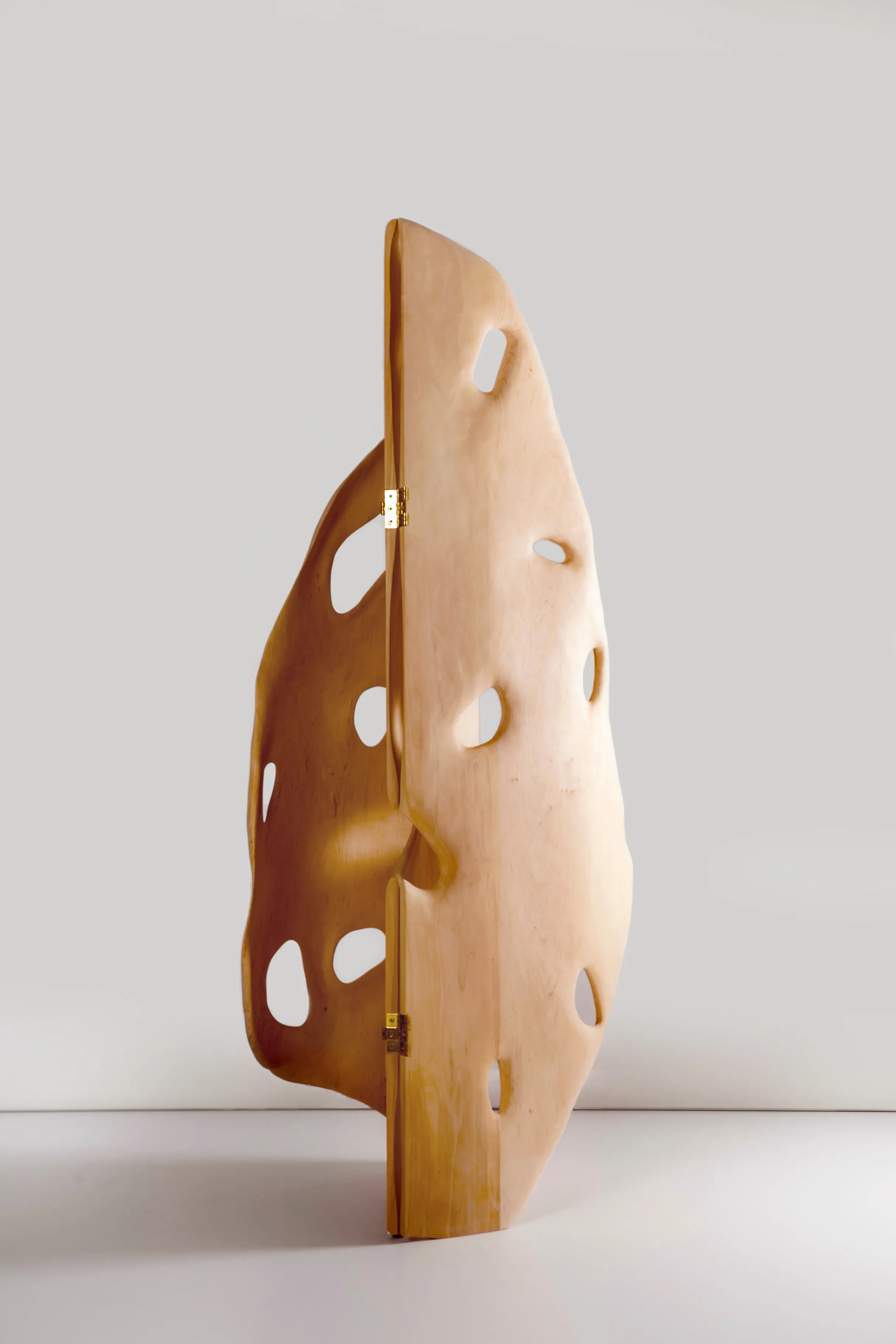
Shape N.1 begins with a child’s model, then follows that same instinctive process into the final form. The structure carries a sense of immediacy — decisions made in the moment, without a fixed plan. It reads less like a designed object and more like a record of making, where adjustments, corrections and shifts stay visible in the finished piece.
By Anna Bera
INQUIRE
Plīco – Folded Divider by Atelier Nuanda
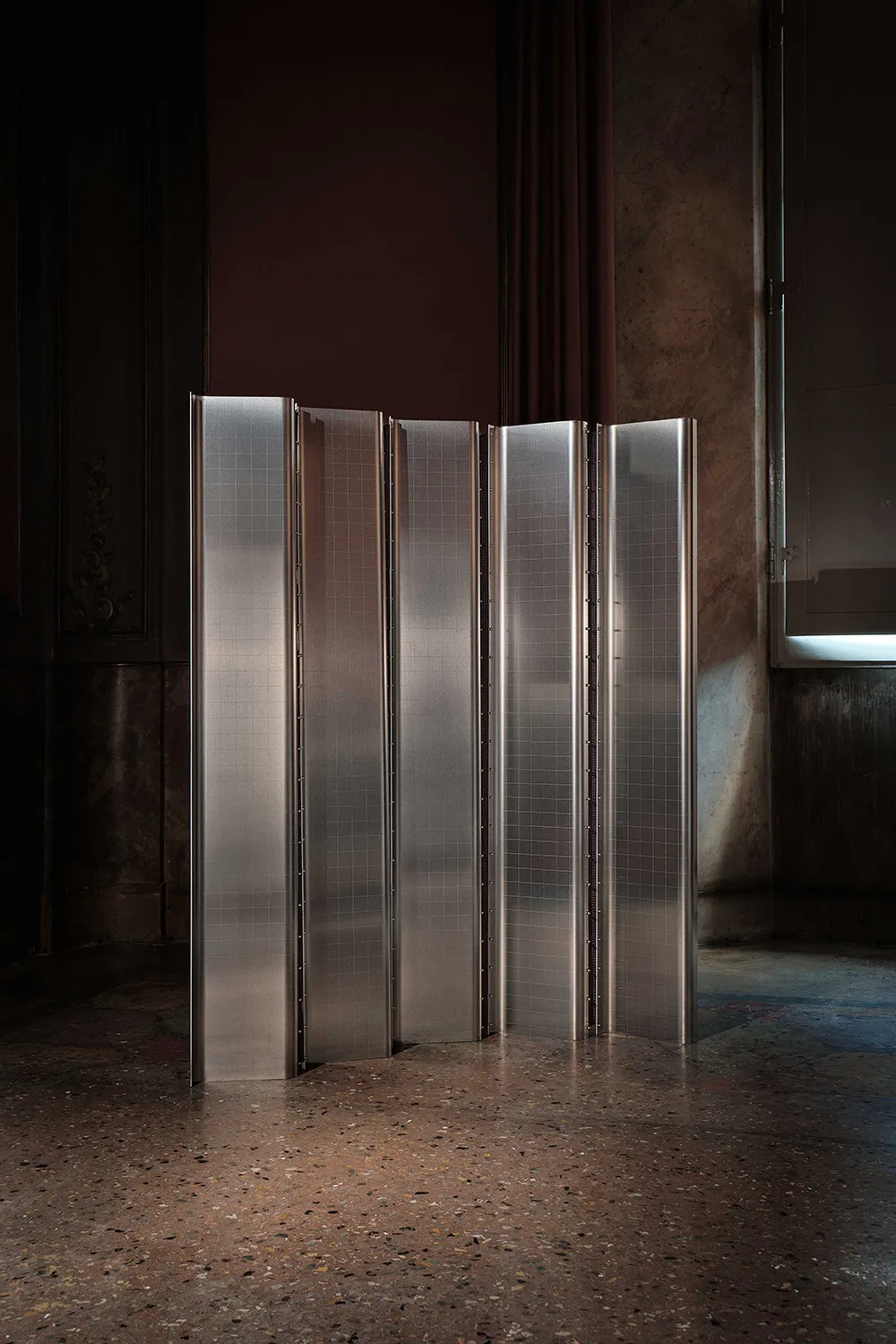
Plīco builds its structure through contrast. Aluminium brings lightness and reflection, while the woven leather holds the form together, acting as both surface and connection. The flexibility of the materials lets the screen fold and compress, shifting between open and compact. The vertical rhythm stays consistent, with small spherical details marking each segment.
By Atelier Nuanda
€10.588 incl. tax
Quattro – Removable Textile and Steel Divider by Daniela Pinotti
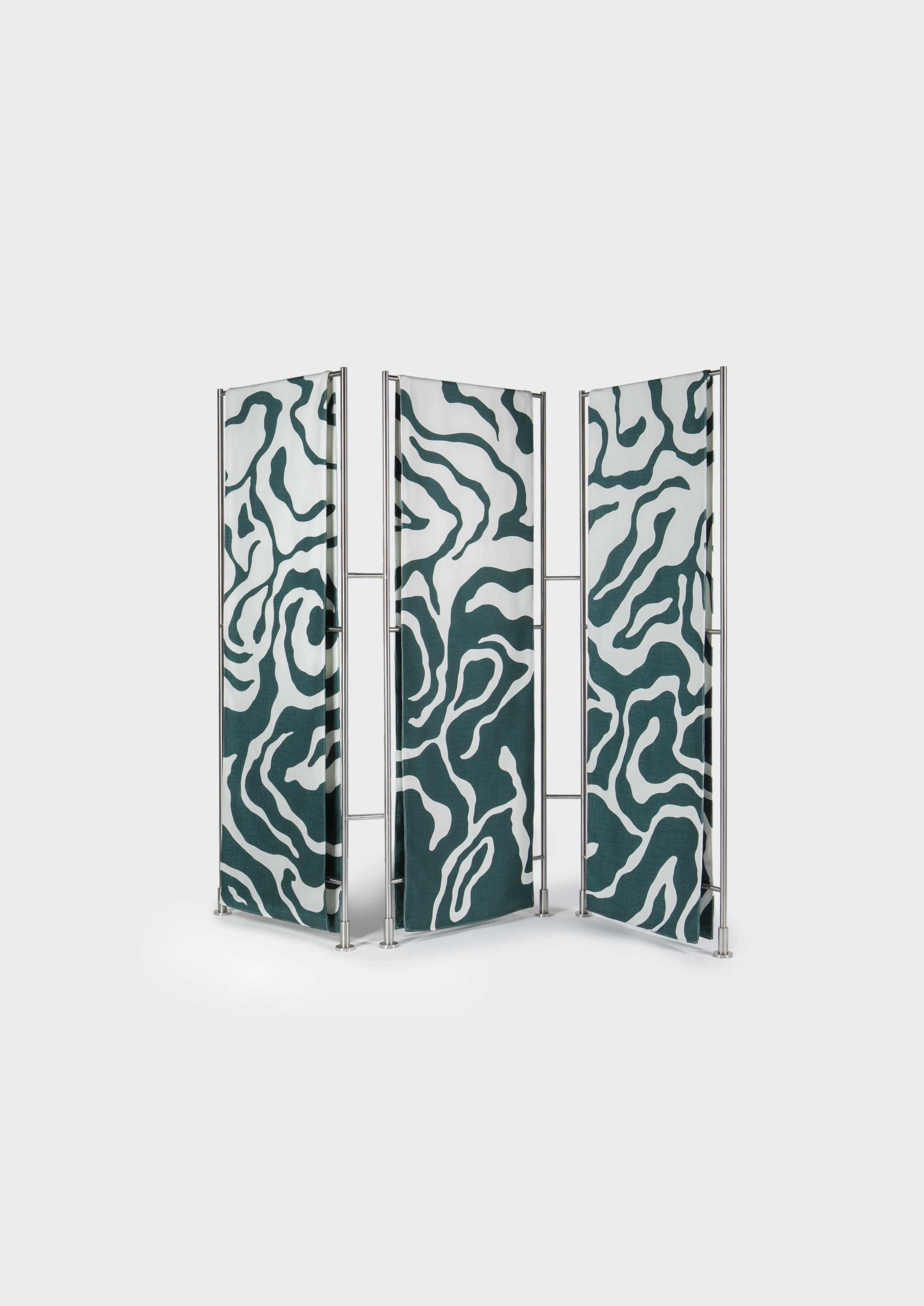
Quattro treats fabric as structure rather than surface. The printed textile drapes across a slim steel frame, shifting slightly and giving the piece a sense of movement. The panels fold and adjust easily, while the degradé pattern adds depth without overwhelming the form. Notably the textile is removable, which means it can be cleaned or replaced rather than the whole piece being retired.
By Daniela Pinotti
€6.760 incl. tax
Angkha Divider by Aku Zeliang
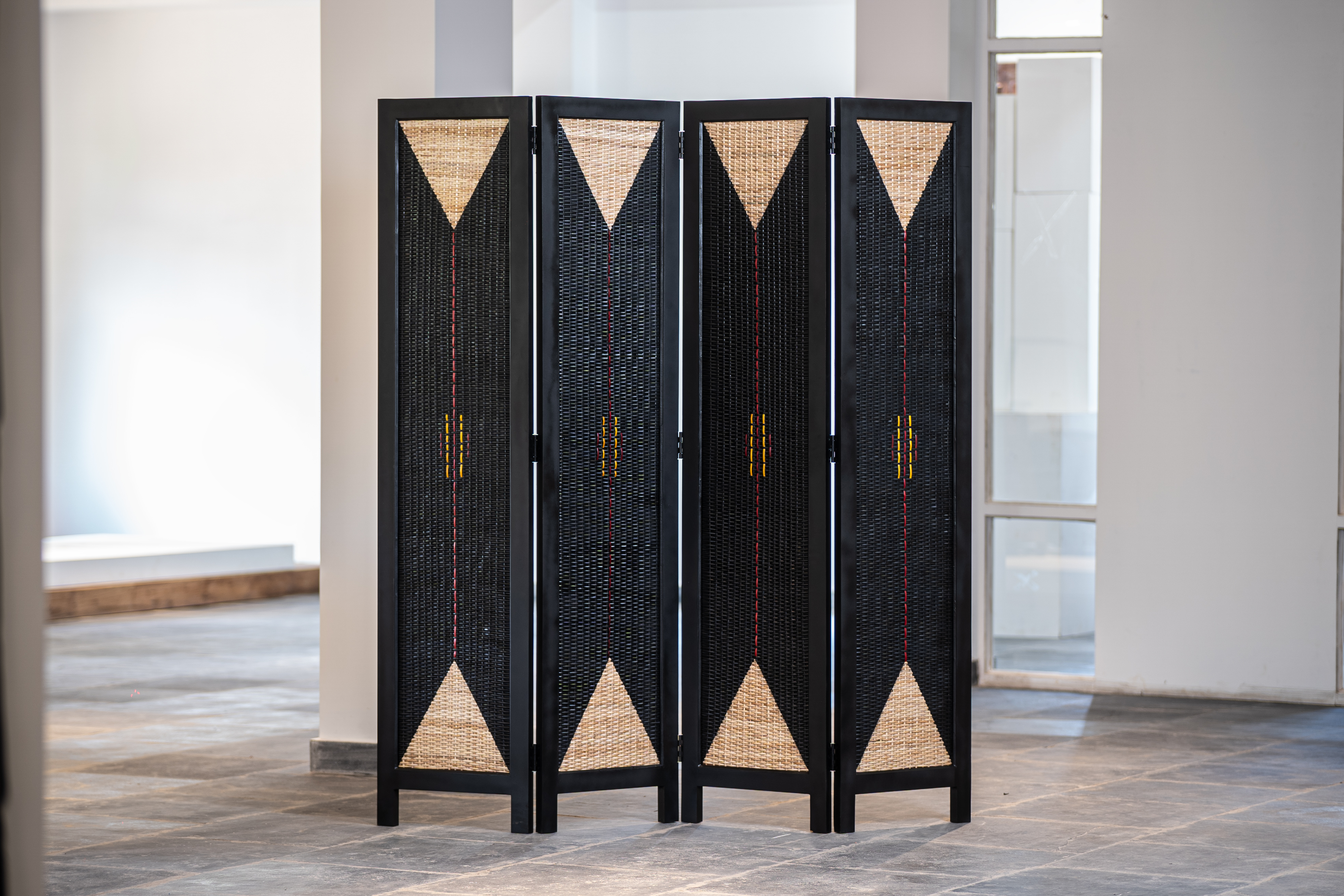
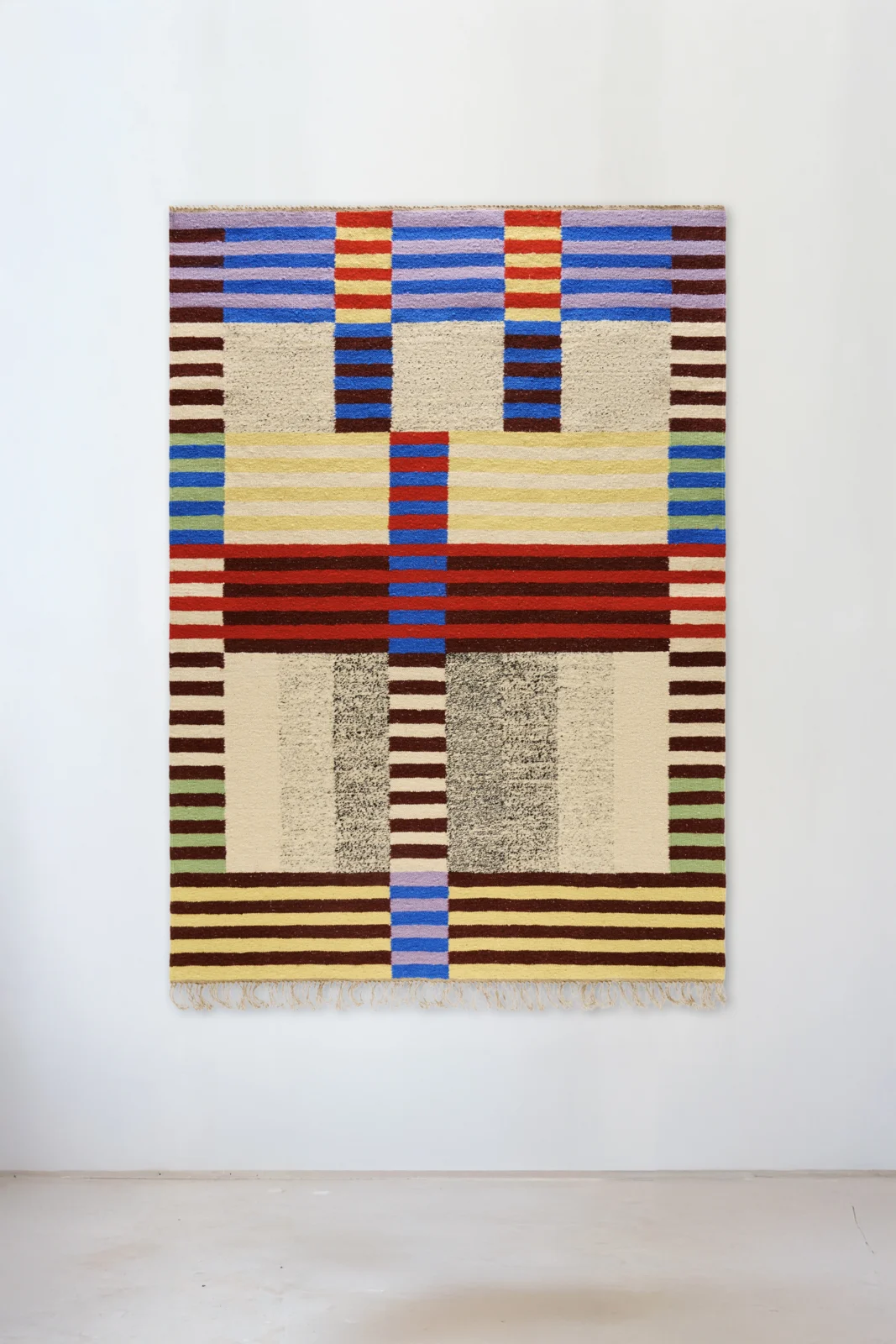
Angkha draws from the colour and pattern of Naga jewellery, translating that detail into a more restrained, linear form. The reference stays visible without becoming overt decoration. The structure keeps things spare, letting pattern and colour carry the piece and bringing a sense of origin into a contemporary setting.
By Aku Zeliang
€2.350 incl. tax
Riot Shield – Stainless Steel Screen by Around the Studio
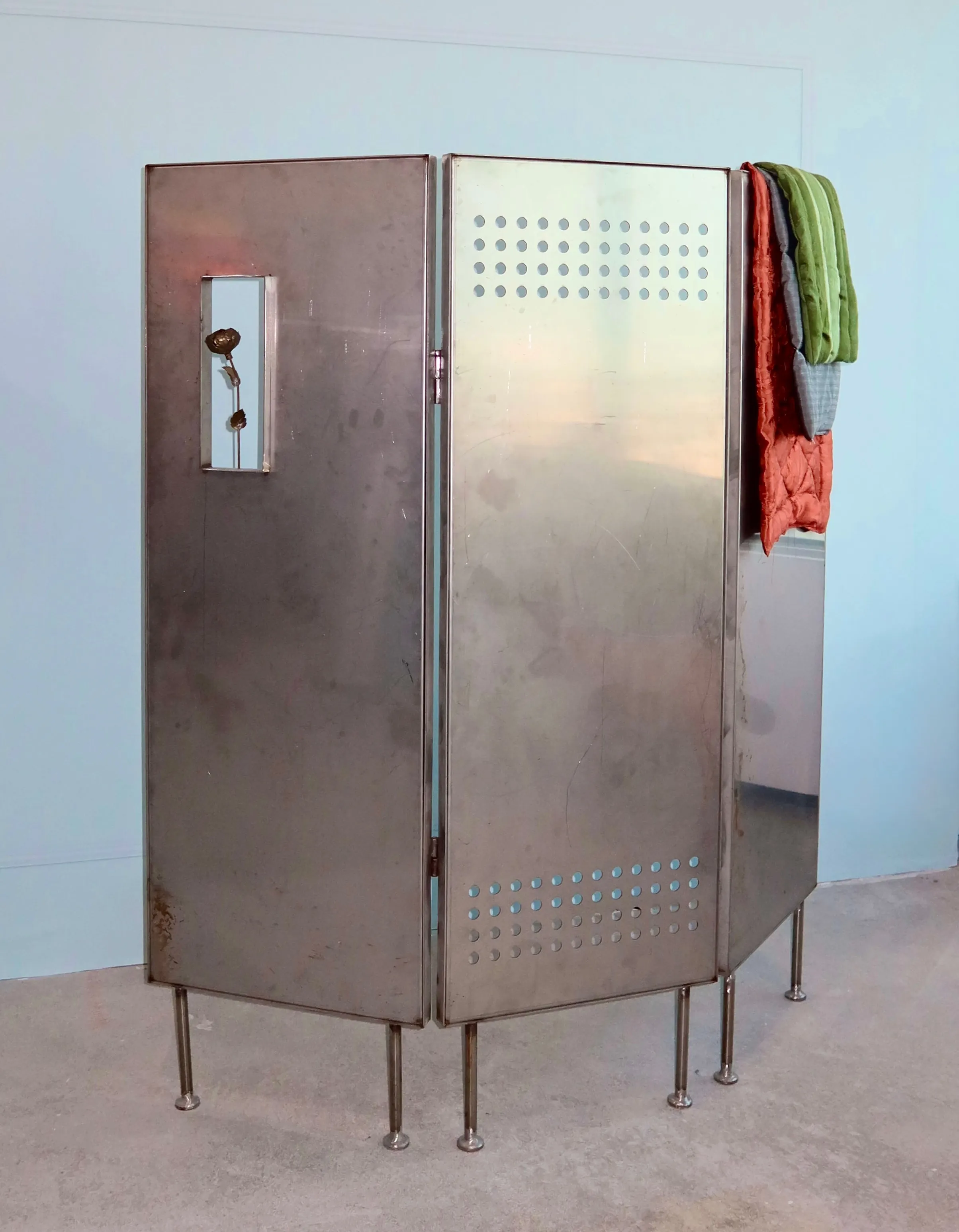
Riot takes its cues from protective barriers, translating the language of shields and street structures into a domestic object. The surface feels direct, almost confrontational, with a cut-out window interrupting the plane. At its centre, a vintage brass rose shifts the reading — a symbol placed inside a defensive form, introducing a quiet tension between resistance and memory.
By Around the Studio
€4.400 incl. tax
Frequently asked questions
What is a room divider called?
Several things, depending on format. A hinged multi-panel version is a folding screen or paravent — the French term, still standard in design. Japanese equivalents include the byōbu, a folding screen, and the shōji, a sliding translucent panel. Single freestanding planes are usually called screens or partitions.
How tall should a room divider be?
Around 180cm or more to read as a wall and give standing privacy. Between 150 and 170cm blocks a seated sightline while keeping the room feeling open, which is often the better compromise. Below 120cm a divider zones a space visually rather than screening it.
Do room dividers block sound?
Barely, and hard surfaces can make a room sound worse by adding another reflective plane. A textile-faced or wool-backed divider absorbs some mid-range frequency and genuinely helps. If sound is the main problem, treat the divider as partial help rather than a solution.
How do you stop a folding screen from falling over?
Keep it folded at an angle — a zigzag or shallow V is what makes it stable, and a screen opened flat has almost no resistance to being pushed. On hard floors, felt pads add grip as well as protecting the surface. For anything tall in a household with children or pets, anchor it or choose a weighted freestanding panel instead.
Can a room divider work in a small room?
Yes, provided it lets light through. In a small or single-aspect space, a perforated, slatted or open-weave divider separates function without darkening the area behind it. A solid panel in a small room tends to produce two cramped spaces instead of one workable one.
Are room dividers suitable for rentals?
Among the best options, since a freestanding screen needs no fixing and leaves nothing behind. A tension-rod curtain is the other reversible route. Both avoid the drilling that ceiling track or fixed partition walls require.