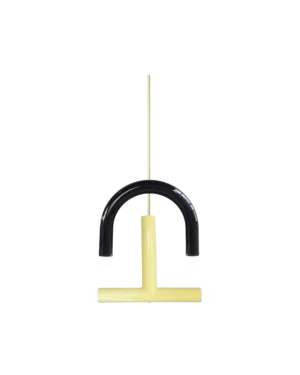
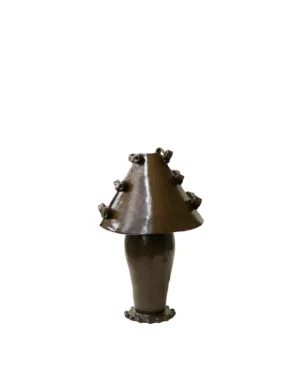
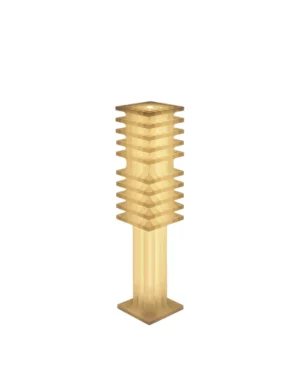
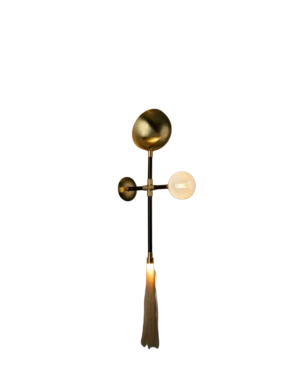

-
 In stock
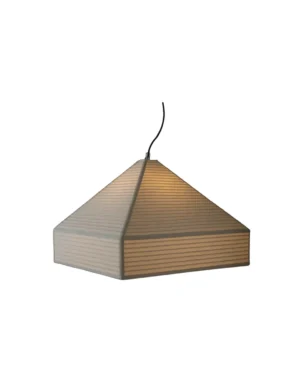
Acesa Luminária Em Papel Machê
By Sandro Vieira studio
€550 -
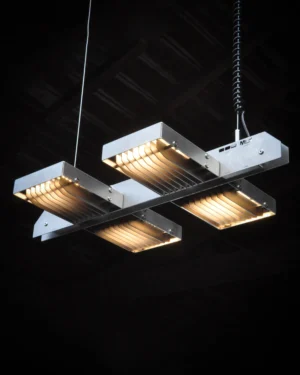
Ads200x04 Suspension – Mat Stainless Steel
By MLK Furniture
€2.400 -
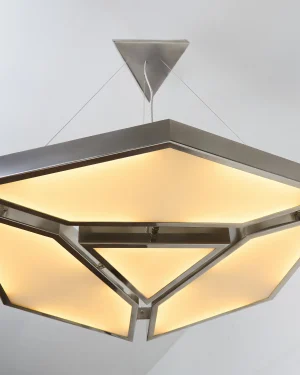
Alban Pendant Light
By Nathan Chintala
€5.066 -

Alcove Wall Lamp
By Violaine d'Harcourt Lighting Design
€380 This product has multiple variants. The options may be chosen on the product page -

Amar Table Lamp in Wenge Wood and Pau Ferro
By Brett Paulin
€2.267 -

Arcy Floor Lamp In Lava Stone
By MERCOEUR EDITION
€11.663 -
Arcy Floor Lamp In Lava Stone
By MERCOEUR EDITION
€11.663 -
 In stock
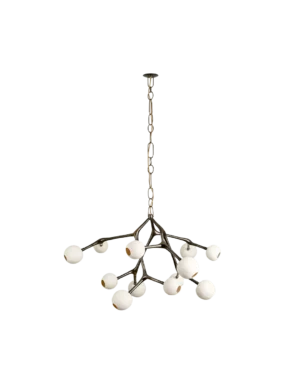
Arinna Pendant Light
By MARAU
€15.000 -

Arrow Applique Wall Light
By Violaine d'Harcourt Lighting Design
€1.250 - €1.500 This product has multiple variants. The options may be chosen on the product page -
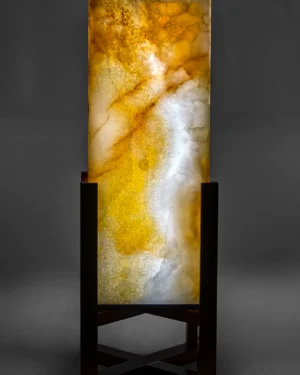 Sold
SoldAurean Table Lamp in Onyx
By Markos Vasilakis
-

Aurora Floor Lamp
By PROSA
€1.800 -
 In stock
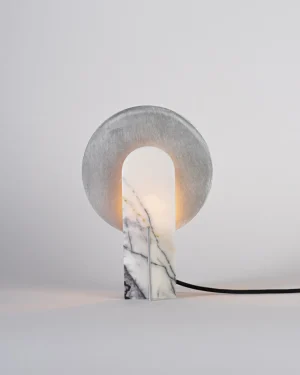
Aurora Medium Table Lamp in Marble and Aluminum
By Hasik Design Studio
€975 -

Aurora Wall Lamp
By PROSA
€750 - €900 This product has multiple variants. The options may be chosen on the product page -
 In stock
Axile Table Lamp in Bio Plastic
By Errance.
€335 -

Basalte Table Lamp in Glazed Lava Stone
By Clemence Birot
€3.370 -

Basalte Table Lamp in Lava Stone
By Clemence Birot
€2.170 -

Bells and Whistles Table Lamp in Aluminum
By Toro Manifesto
€2.100 -
 In stock
Bells And Whistles Wall Lamp
By Toro Manifesto
€1.300 -
 In stock
Biiit 001 Table Lamp in Paper and Brass
By manodesignstudio.com
€2.100 -
 In stock
Biiit 002 Table Lamp in Paper and Brass
By manodesignstudio.com
€1.500 -
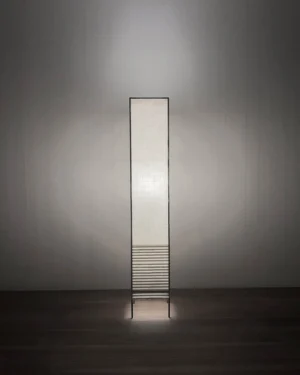
Biiit 003 Floor Lamp in Paper and Brass
By manodesignstudio.com
€1.900 -
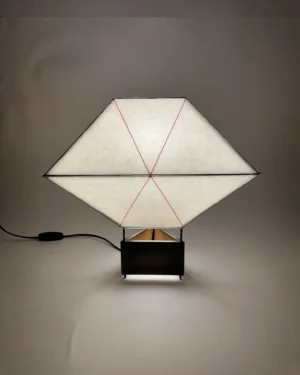
Biiit 005 Table Lamp in Paper and Brass
By manodesignstudio.com
€1.750 -

Biiit 010 Sconce in Paper and Brass
By manodesignstudio.com
€1.400 -

Biiit 011 Sconce in Paper and Brass
By manodesignstudio.com
€2.100 -
 In stock
Biiit004 Table Lamp in Paper and Brass
By manodesignstudio.com
€1.750 -

Black Wool Table Lamp in Biocomposite
By PletoStudio
€700 -
 In stock
Bloom Lamp
By Ryan Mercer
€652 -

Blown Glass Wall Lamp – Large
By Naama Hofman
€850 This product has multiple variants. The options may be chosen on the product page -
 In stock
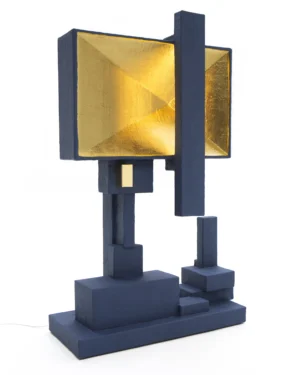
Box-2 Floor Lamp in Blue Cardboard
By Studio Josha
€8.995 -

Brass Pendant Light _ Tube Pendant 01
By Naama Hofman
€2.600 -

Brass Pendant Light _light Object 018
By Naama Hofman
€2.100 -

Brass Pendant Light _light Object 019
By Naama Hofman
€1.850 -

Bright Side Table
By Ziroru Studio
€1.485 This product has multiple variants. The options may be chosen on the product page -
 In stock
Cacao Blossom Glass Wall Lamp – Ehécatl
By Toro Manifesto
€2.000 -

Caldera Table Lamp in Lava Stone
By Clemence Birot
€2.730 -

Chimney Table Lamp in Aluminum and Painted Steel
By BOTHI
€210 -

Chloé Table Lamp in Reflective Fabric
By Atelier Alz
€300 -
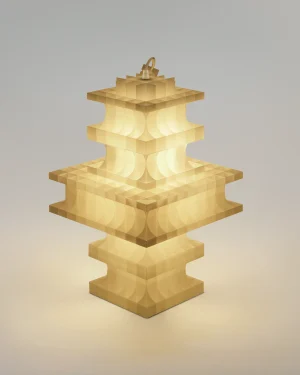
Citadel Large Lantern Light Sculpture
By Ultramar Studio
€1.125 -

Citiez 0.1
By Niels Stoeltie
€3.050 - €3.350 This product has multiple variants. The options may be chosen on the product page -
 In stock
Citiez 0.3 Pendant Lamp in Brass and Steel
By Niels Stoeltie
€7.500 -

Collier P2 – Ceiling Lamp
By Darka
€1.950 -
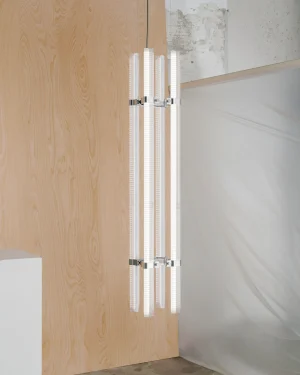
Collier P4 – Pendant Lamp
By Darka
€3.500 -

Collier S1 – Wall Lamp
By Darka
€1.050 -
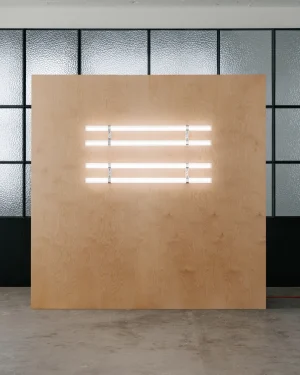
Collier S2 – Pendant Lamp
By Darka
€1.700 -

Conic 01 – Wall Or Table Light
By Hanna Fastrich
€1.390 -

Coralight Table Lamp in Bio Plastic
By Cornu Design
€129 -

Coralight Table Lamp in High Density Bio Polymer
By Cornu Design
€129 -
 In stock
Dahlia Blossom Glass Wall Lamp – Ehécatl
By Toro Manifesto
€1.500
Collectible Designer Lamps
A lamp is unusual among household objects: it is looked at in daylight and looked through after dark, so it has to work as a form and as a light source. That double demand is why lamps attract designers who work with their hands. A glaze, a fold in paper, a bubble caught in blown glass or the grain of a turned block of walnut behaves one way lit and another way unlit, and a lamp is the only object that reveals both.
Every lamp on ADORNO is made by an independent designer, studio or gallery — limited editions, small-batch runs and unique pieces in hand-thrown ceramic and stoneware, hand-blown glass, brass, copper, steel and aluminum, oak, walnut and other solid woods, washi and pulp paper, alabaster, marble and travertine, woven natural fiber, concrete and grown biomaterials. Prices begin a little above €100 and reach five figures for large commissioned work, so it is worth seeing both the lamps under €500 and the unique and limited-edition pieces.
The Four Kinds of Lamp
Where a lamp goes determines almost everything else about it.
- Table lamps stand on any surface and need no installation — the most adaptable format, and the easiest to move between rooms. Within it, desk lamps give directed light for work, and bedside lamps give low, warm light on a nightstand.
- Floor lamps occupy the room rather than a surface, and are chosen the way furniture is chosen. Arc and arched pieces reach out over a sofa or table, and floor lamps with a table combine light and surface in one footprint.
- Wall lamps cost nothing in floor or tabletop space and lift light to eye level, including sconces for bedrooms, hallways and mirrors.
- Ceiling lamps are the fixture a room cannot hide, divided into pendant lamps, chandeliers and flush mounts.
Beyond these sit outdoor lights for terraces and covered loggias, and battery operated lights for positions with no socket at all.
How a Lamp Is Put Together
Knowing the parts makes the differences between pieces legible.
- Base or body — the structural element and usually the material statement: thrown, cast, turned, blown, carved or woven.
- Socket and switch — E14 and E27 are the common European sockets. Switches vary more than people expect: on the base, inline on the cord, a pull chain, a rotary dimmer, or a touch-sensitive body.
- Harp and finial — on conventional constructions, the frame that carries a shade above the bulb and the fitting that holds it in place.
- Shade or diffuser — fabric, paper, glass, metal, stone or ceramic. Opaque shades throw a defined pool downward and suit reading; translucent ones glow and suit ambient light.
- Cord and plug — sometimes deliberately visible, in textile or colored flex, as part of the design.
In much contemporary work the base and diffuser are one continuous form, with the source concealed inside and nothing to disassemble. That is a design decision rather than a shortcut, and it does mean the shade is not interchangeable, it is worth knowing before you buy.
Getting the Right Lamp Size
Scale is the most common mistake and the easiest to avoid. A quick guide across the formats, with fuller detail on each subcategory page:
- Beside a sofa or chair (table lamp): 60–70 cm overall, with the bottom of the shade at seated eye level.
- On a nightstand: 40–60 cm, lower for a platform bed.
- On a console or sideboard: 60–80 cm, often better as a pair.
- Floor lamp: 150–180 cm overall, with the shade bottom around 100–130 cm when used for reading.
- Wall lamp: center at 150–165 cm generally; 100–120 cm beside a bed.
- Over a table or island: 75–90 cm between the surface and the lowest point of the fixture.
- Shade proportion: roughly a third of the lamp's total height, and wide enough that the socket is hidden from every normal angle — usually one and a half to two times the width of the base.
Materials, Styles and Color
Material is the shortest route into this catalogue. Ceramic and stoneware for matte, tactile surfaces; blown glass for uneven, warm diffusion; alabaster and marble for stone that glows from within; brass and copper for a patina that develops with use; wood for warmth and visible joinery; paper and woven fiber for broad, screen-like light. If a direction matters more than a material, browse minimalist, mid-century modern and brutalist pieces, or the artisanal collections where the making is the subject.
Most pieces are made to order in small studios, with lead times on each product page, and unique works exist in one example only. For everything else in the collection, including candlelight and outdoor pieces, see collectible lighting — or tell our curation team the room, the position and the budget, and we will search with you.
What are the different types of lamps?
Lamps are grouped by where they sit. Table lamps stand on a surface, including desk lamps for task light and bedside lamps for low, warm light. Floor lamps stand on the floor and include arc, tripod, torchiere and column forms. Wall lamps mount to a wall, sconces among them. Ceiling lamps hang or fix overhead as pendants, chandeliers or flush mounts. Everything else — cordless, outdoor, candle-lit — is a variation on one of those four positions.
What are the parts of a lamp?
A base or body, a socket that holds the bulb, a switch, a shade or diffuser, and the cord and plug. Traditional constructions add a harp — the wire frame arching over the bulb — and a finial that screws down to hold the shade on it. Contemporary and sculptural designs often merge base and diffuser into one form with the socket hidden inside, in which case there is no harp, no finial, and no removable shade.
What kinds of lamp shades are there?
By shape: drum, cylinder, empire, cone, coolie, globe and bell, plus irregular forms in handmade work. By material: fabric and linen for soft diffusion, paper for an even glow, glass for brightness with sparkle, metal and ceramic for directed light downward, and stone or alabaster for light that appears to come from within the material. Shape decides where the light goes; material decides how it feels.
How do I measure a lamp shade?
Four figures: the diameter across the top, the diameter across the bottom, the slant height down the side, and the fitting type. Measure the widest point for the bottom diameter and measure slant rather than vertical height on any sloping shade. If you are replacing a shade, measure the old one and check the fitting — a shade that fits the dimensions but not the fitting is no use.
How do I choose the right shade size for a lamp?
Two proportions work reliably. The shade should be roughly one third of the lamp's total height, and its width one and a half to two times the width of the base. It must also be deep enough to conceal the socket and bulb from anyone standing or sitting nearby. A shade narrower than the base looks top-heavy; one much wider swallows the lamp.
What is the best lamp for reading?
One that puts 400–800 lumens onto the page from beside or slightly behind your shoulder, with a shade deep or opaque enough that you never see the bulb. Position matters more than power: light coming over your shoulder onto the page beats a brighter lamp facing you. Add a second, dimmer source in the room to reduce the contrast between page and surroundings, which is what actually causes eye fatigue. Adjustable table and floor lamps suit reading best; translucent sculptural pieces are for atmosphere.
How do you clean a lamp shade?
Dry first, and gently. Dust fabric and paper shades with a soft brush or a lint roller, working from top to bottom, and never wet paper. Fabric shades tolerate a barely damp cloth on a small mark, tested somewhere hidden. Glass, ceramic and metal shades can be wiped with a damp cloth and dried at once. Always switch off and let the bulb cool first, and support the shade rather than pressing against it — handmade frames are not as rigid as they look.
How do I look after a brass or copper lamp?
Decide first whether you want patina, because most designers do. Unlacquered brass and copper darken over months into the finish the piece was designed to reach, and that process is not damage. If you prefer it bright, polish occasionally with a product made for the metal and dry thoroughly. If a piece is lacquered, do not polish it at all — dust it, since polish removes the lacquer unevenly. Ask us which finish a specific piece has.
How should I care for handmade ceramic, glass and paper lamps?
Dust dry, and often, since dust dulls a glaze faster than anything else. Use a barely damp cloth on glazed ceramic, stone and glass, drying immediately, and never spray liquid onto a fixture. Keep paper, textile and untreated wood dry, and out of direct sun where fading is a risk. On unglazed or raw surfaces, avoid solvents entirely. We can supply the maker's own care notes for any piece.
Do you sell lamp shades, bases or parts separately?
No. Everything here is sold as a complete designed object, because the shade and base are conceived together and are frequently one piece. If you need a replacement shade for a lamp you already own, an established shade maker is the right supplier — and if something on a piece bought from us needs attention, contact us and we will approach the studio.
Can I rewire an old lamp, or convert a vase into one?
Both are common projects, and neither is something we supply parts for. Rewiring is straightforward work for an electrician and legally restricted to one in some countries; conversion kits for vessels exist but require careful drilling and strain relief, and a poorly made conversion is a genuine fire risk. If the appeal is a one-off object with real material character, buying a finished piece from a maker gets you there without the risk.
Which lamp should I choose for which room?
Living rooms want several: a floor lamp beside the seating, one or two table lamps, and something overhead on a dimmer. Bedrooms want low, warm light at bedside height and little else. Home offices want directed task light plus a second source to soften screen contrast. Hallways want wall lamps, which take no floor space. Dining rooms want one considered piece over the table rather than several small ones.
Are the lamps dimmable, and what switches do they use?
It varies by piece, and switching is worth checking as carefully as the light itself. Lamps with standard E14 or E27 sockets can usually be dimmed with a compatible bulb and an inline or plug-in dimmer, even where the lamp itself has a simple on/off switch. You will also find pull chains, rotary dimmers, touch-sensitive bases and inline cord switches — a detail that matters most on a bedside or a hard-to-reach piece.
Are the lamps unique, and are they made to order?
Many are unique or produced in limited editions, and most are made after you order in the designer's studio, with lead times stated on the product page. A unique piece exists in one example, so once it sells it is not repeated. If you want a pair or a set, order in one batch so glazes, glass color and grain match, and tell us any fixed deadline before you buy.