




-
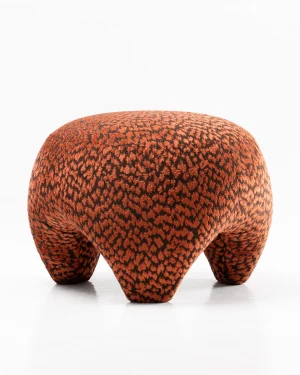
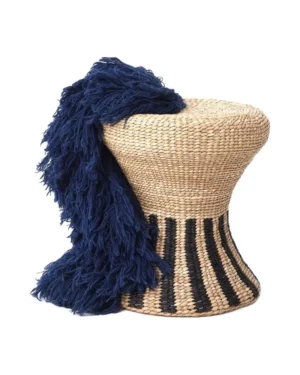
Django Velvet Ottoman in Textile
By Odditi
€990 -

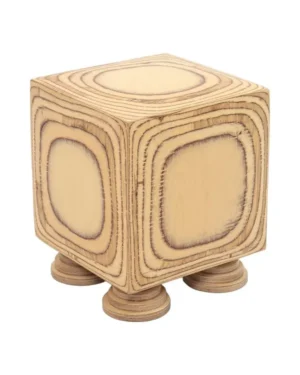
“Potro” Stool
By piedrafuego
€270 -

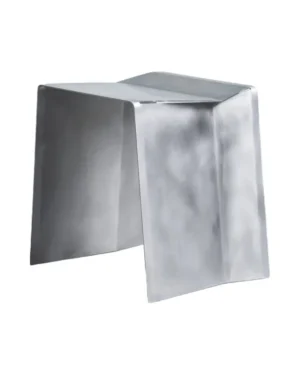
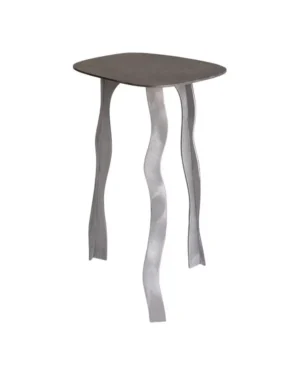
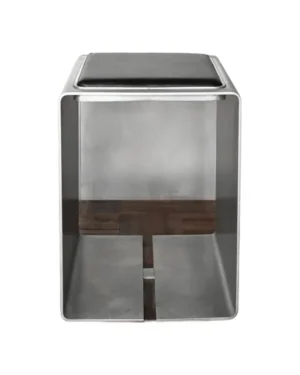
Camber – stainless Steel Stool
By Paul Coenen
€539 -

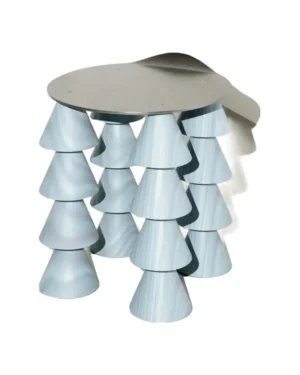
Elements Set (fire, Earth, Water And Air)
By Daniel Couttolenc
€6.150 -
 In stock
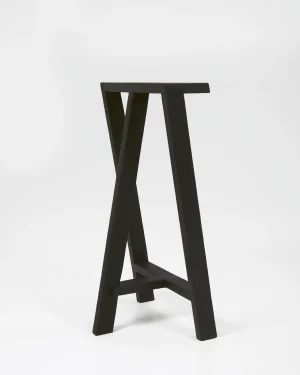
Pausa – Minimalistic Wooden Bar Stool
By Pierre-Emmanuel Vandeputte
€179 - €319 This product has multiple variants. The options may be chosen on the product page -
 In stock
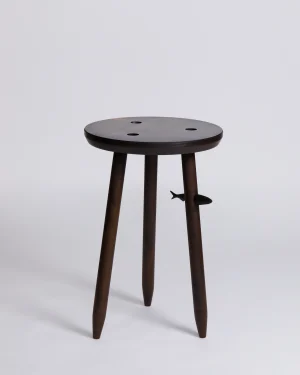
Cardume Low Stool
By Andreas Anwander
€500 This product has multiple variants. The options may be chosen on the product page -
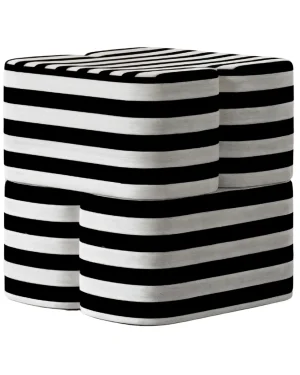
Ori Pouf
By hermhaus
€726 This product has multiple variants. The options may be chosen on the product page -

Bombs Pouf
By hermhaus
€1.060 - €1.140 This product has multiple variants. The options may be chosen on the product page -
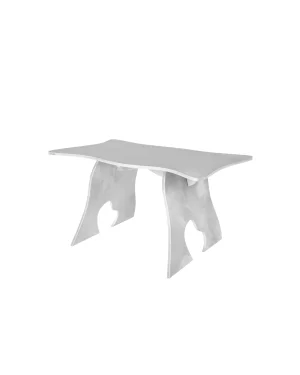
Aluminum Step Stool
By Six Dots Design
€205 -
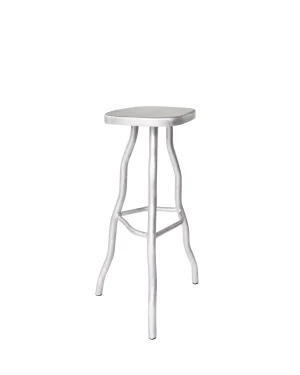
Aluminum Squiggle Bar Stool
By Six Dots Design
€595 -
 In stock
Knot Low Stool / Side Table In Solid Ash Wood
By Luis Gimeno Design
€800 -
 In stock
Pressure Stool in Aluminum
By TIM TEVEN
€484 -

Broken Wing Stool
By Obscure Objects
€290 -
 In stock
Knot – Stool / Side Table – Solid Ash Wood
By Luis Gimeno Design
€800 -
 In stock
Knot – Stool / Side Table – Solid Ash Wood
By Luis Gimeno Design
€890 -

Bd15 Stool
By EQUILIBRI-FURNITURE
€300 -
 In stock
Stool No:01
By Od Studio
€1.800 -

S001-10.2 Aluminum Stool
By NAVE
€500 -
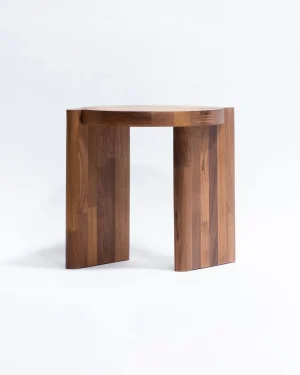
Shift Stool – Walnut
By Studio Yann Gandon
€690 -
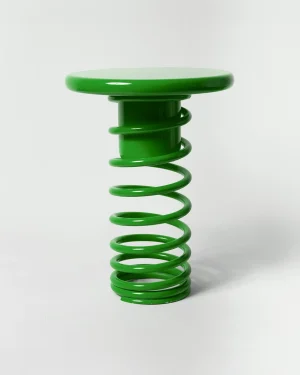
Twist Stool
By Yet Design Studio
€1.200 This product has multiple variants. The options may be chosen on the product page -
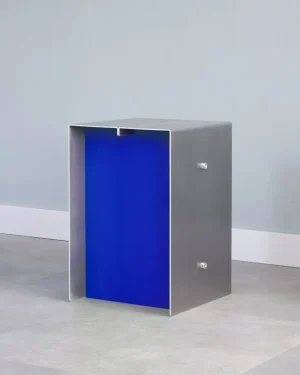
Core Aluminum Side Table / Stool
By Lisanne Meester
€399 This product has multiple variants. The options may be chosen on the product page -

Cork X | Chair 01 – Cork / Metal Stool
By Robert Megel
€699 -
 In stock
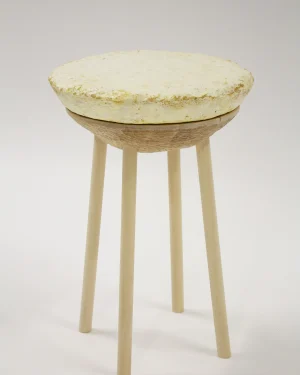
Mystool – Mycelium Stool
By Olle Sahlqvist
€1.900 -

L4 Stool – Aluminum / Rope
By Lucas Cambier
€1.500 -

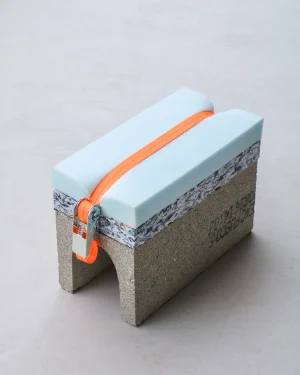
Trama – Stool in Cast Aluminum
By Joana Teixeira
€1.680 - €1.980 This product has multiple variants. The options may be chosen on the product page -
 In stock
Le Rebond / Low Stool // Reimagined Textile
By FabBRICK
€672 -
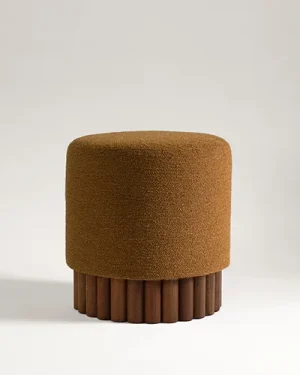
Loto Pouf In Boucle
By Peca Mobiliario
€1.553 - €1.627 This product has multiple variants. The options may be chosen on the product page -
 In stock
Wrp-003 Stainless Steel / Cowhide Stool
By NAVE
€1.200 -

St-003 Stainless Steel Counter Stool
By NAVE
€450 -

Column No.1 – Low Stool
By Haritini Gritzali
€1.700 -
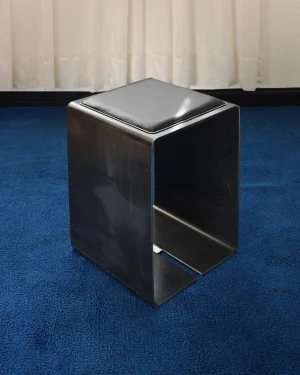
S001-10 Raw Steel Stool
By NAVE
€450 -

Origo Low Stool
By ASUL-STUDIO
€1.250 -
 In stock
Bruna Low Stool
By Heaps & Woods
€1.344 -

Fret Silver Steel Metal & Brown Genuine Leather Stool
By Triqis
€840 -
 In stock
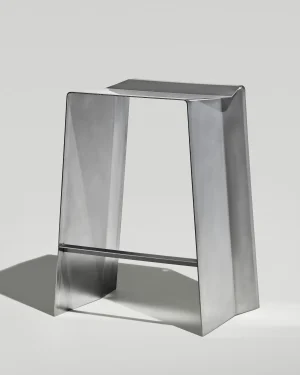
Camber – Bar Stool
By Paul Coenen
€685 -
 In stock
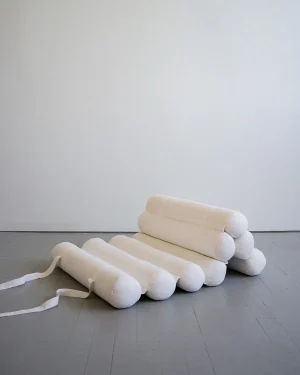
Camille – Versatile Pouf
By Atelier Alz
€1.000 -
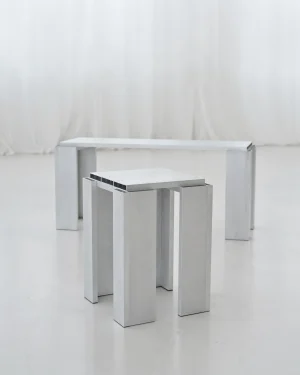
Al01 Aluminum Stool
By NOSTUDIO
€750 -
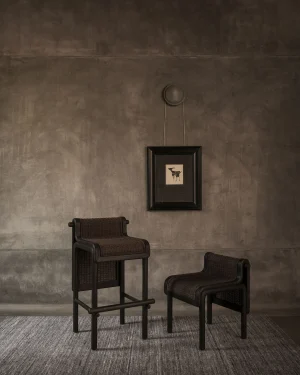
Rahi Stools
By Project 810
€1.200 - €1.500 This product has multiple variants. The options may be chosen on the product page -
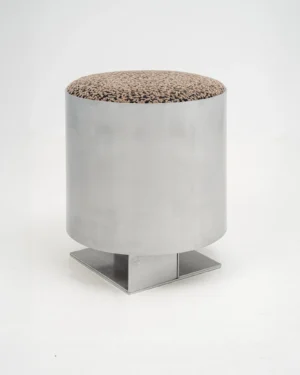
Strut Aluminum Handcrafted Pouf With Fabric Seating
By Yet Design Studio
€1.250 This product has multiple variants. The options may be chosen on the product page -

Windows of Bo Bardi – Butter
By Linde Freya Tangelder
€1.300 -
 In stock
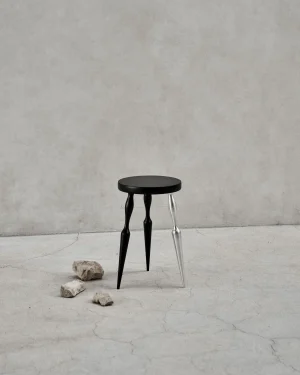
One Silver Legged Stool – Black / White
By Undress House
€800 This product has multiple variants. The options may be chosen on the product page -

Junco Stool
By Daniel Couttolenc
€1.500 This product has multiple variants. The options may be chosen on the product page -
 In stock
Nala Stool
By Heaps & Woods
€1.343 -
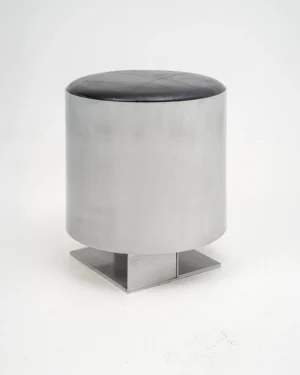
Strut Aluminum Handcrafted Pouf With Genuine Leather Seating
By Yet Design Studio
€1.250 This product has multiple variants. The options may be chosen on the product page -
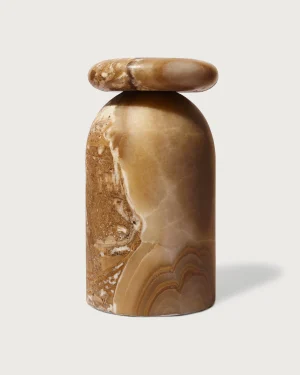 In stock
Cult Stool – Sculptural Side Table In Honey Onyx Marble Conglomerate
By Panorammma Atelier
€2.300 -
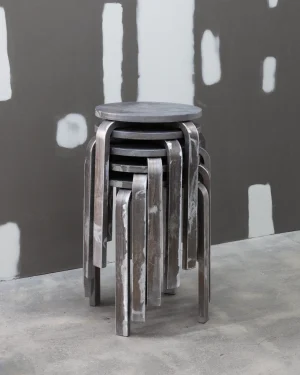
Stackable Stool 2 – Ikea-inspired Aluminum Stool
By PRACTICE
€644 -
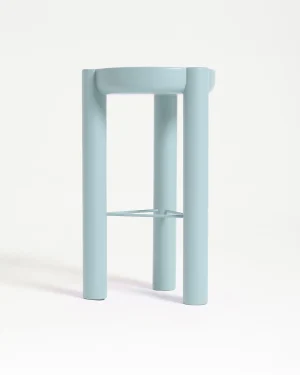
Pillar Bar Stool 3 Legged Wood
By Yet Design Studio
€830 This product has multiple variants. The options may be chosen on the product page -

Slide Stool / Chair
By Ziroru Studio
€1.360 -
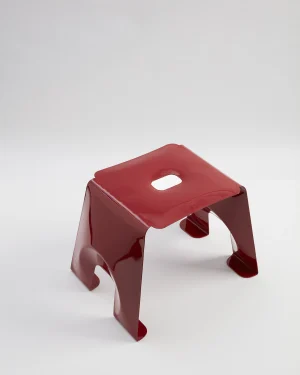 In stock
A Stool – Metal Inflated Stool
By Jaclyn Pappalardo
€1.300 - €1.700 This product has multiple variants. The options may be chosen on the product page -
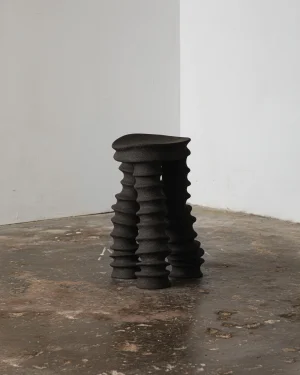
Taburet – Sculptural Ceramic Low Stool
By Catalin Filip
€1.100 -
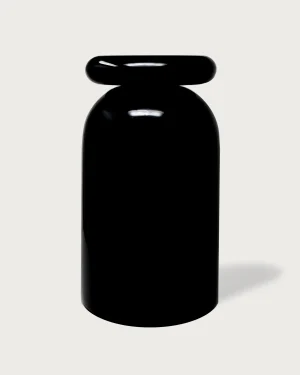
Cult Stool – Sculptural Side Table In Black Laquer
By Panorammma Atelier
€1.200 -
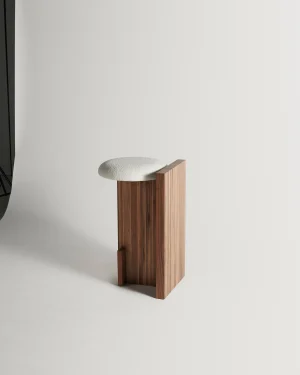
Arquivo Counter Stool
By Rosana Sousa
€2.005 -
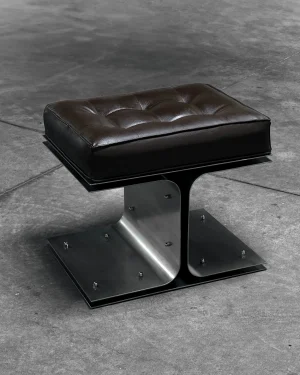 In stock
Wrp-001 Stainless Steel And Vegan Leather Ottoman / Stool
By NAVE
€1.990 -
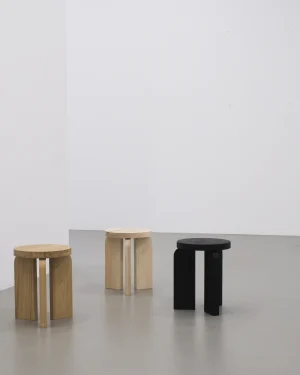
Lou Stool
By René Otto
€1.000 - €1.100 This product has multiple variants. The options may be chosen on the product page
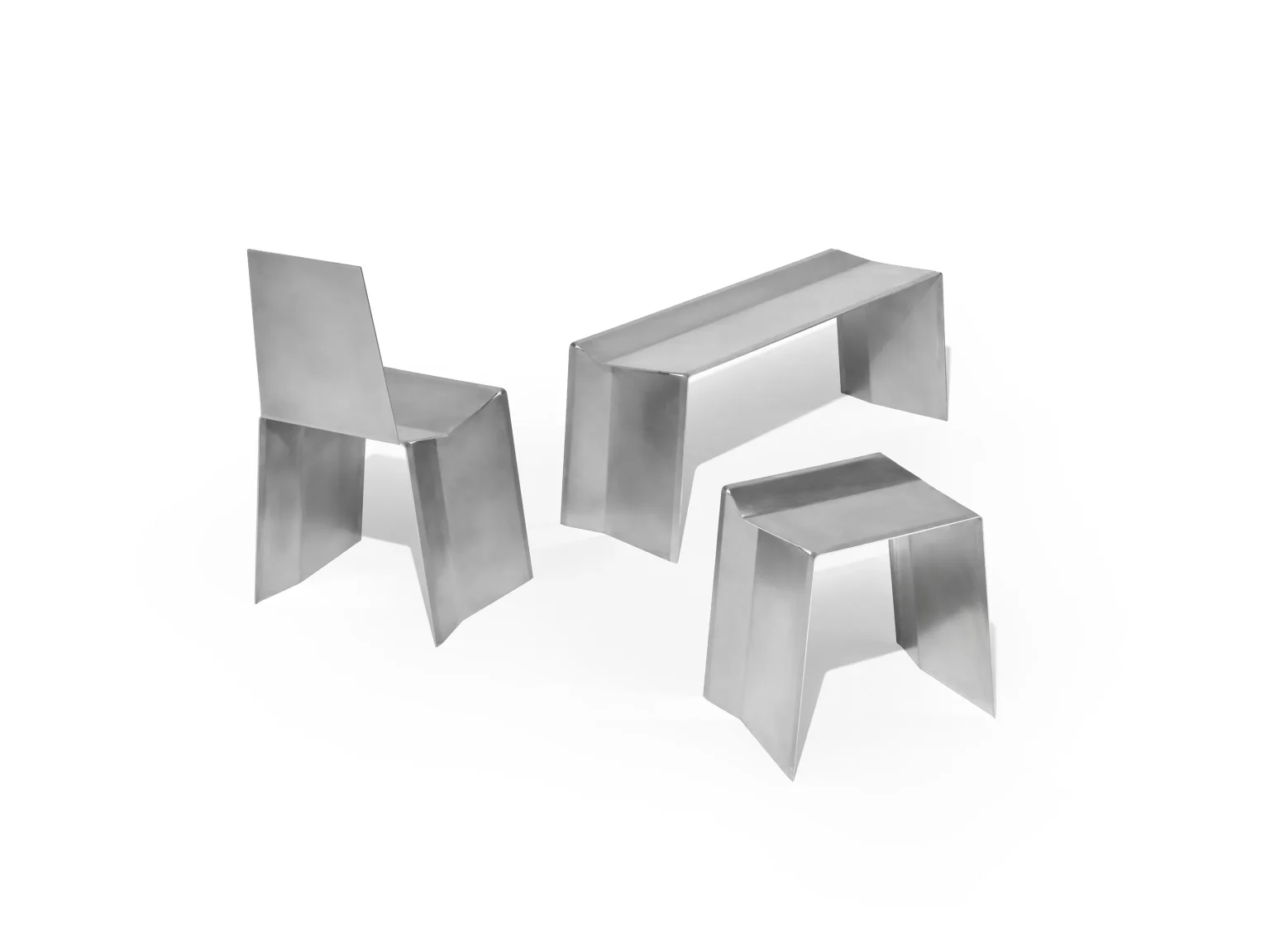
Minimalist stools reduce seating to its essential parts: a seat, a support and as few joins as possible. Studios working in this style favor straight lines and flat planes over ornament, choosing stainless steel, aluminum, maple wood or MDF and letting the weld, the grain or the turned surface carry the design. Nothing is added that does not hold weight or keep the piece standing.
What defines a minimalist stool
A minimalist stool is read first by its outline: a disc or square seat set on three or four slim legs, sometimes a single pedestal base. Color stays close to the material itself, in black, white, off-white, beige or bare metal, so the form reads clearly from across a room. Where a studio adds textile, it is usually a flat seat pad rather than a padded, upholstered shape, keeping the silhouette intact.
Materials, finishes and the ways they are made
Wood pieces, often in maple or parota, are shaped through cabinetmaking, woodturning or wood carving, with joints cut tight enough to stand without visible fixings. Metal stools in stainless steel or aluminum rely on metalwork, bent or welded into a seat and base that can be wiped down daily. Some studios char wood surfaces using the shou sugi ban technique, which darkens and seals the grain against moisture, while others work textile into the seat through weaving or upholstery for a softer touch against bare metal or wood.
- Open editions, for stools made in ongoing runs
- Limited editions, produced in a fixed, smaller number
- Unique pieces, made once and not repeated
Editions matter less for how a stool looks than for how it is sourced: an open edition can be reordered, while a limited run or a unique piece will not return once it sells. For a broader look at how these materials and editions apply across seating, the full range of stools on ADORNO shows the same logic across other styles.
Choosing the right scale, height and finish
Start with height: counter stools typically sit lower than bar stools, and a stool should leave several inches of clearance under a counter or island edge so knees are not pressed against the surface. Seat diameter matters more than it first appears, since a narrow disc can look sculptural but feel unstable for daily use. Match the finish to its surroundings rather than to a single trend: a pale maple stool reads differently against dark cabinetry than against a light oak floor, and a stainless steel or aluminum frame will pick up the room's other metal tones, from faucets to light fixtures.
Where minimalist stools sit well
These stools suit kitchen islands and home bars, where their small footprint and bare material let them double as occasional seating without crowding a counter. In a living room, a wood or metal stool often works as a side table as easily as a seat, a flexibility worth considering before buying a piece meant only for sitting. For rooms built around other minimalist furniture, a stool in matching wood or metal keeps the palette consistent rather than introducing a new material; the stools suited to living rooms show how this plays out beyond the kitchen.
Caring for wood, metal and textile surfaces
Wood stools should stay away from direct heat and standing water, which can warp or stain unsealed grain; an occasional wipe with a dry or barely damp cloth is usually enough. Stainless steel and aluminum resist rust but show fingerprints and water spots, so a soft cloth and mild soap keep the surface even rather than patchy. Textile seats benefit from regular brushing and should be kept out of direct sun, which fades color unevenly over time. Those drawn to wood grain specifically can look through the wooden stools made with these same cabinetmaking and turning techniques, while anyone set on bare metal will find more options among the metal stools built through welding and metalwork. For the style applied across other rooms and furniture types, the full range of minimalist pieces on ADORNO extends the same restraint from stools to tables, lighting and storage.
How do I choose a minimalist stool?
Look at the line first: a single curved plane, a straight leg, a form with no extra detail. Match the material to the room's palette and let the stool's proportions, not ornament, carry the design.
What materials are minimalist stools made from?
Stainless steel, aluminum, and wood such as maple or parota are common, often paired with simple textile seats. Metalwork and wood and cabinetmaking techniques keep the forms clean and the joints nearly invisible.
How do I care for a minimalist stool?
Wood stools need occasional oiling and protection from direct sun and damp. Metal stools wipe clean with a dry or lightly damp cloth; avoid abrasive cleaners that dull brushed or polished finishes.
What height stool should I get for a counter or island?
Standard counters run about 36 inches high and call for a stool around 24 to 26 inches; bar height, near 42 inches, needs a 28 to 30 inch stool. Leave 10 to 12 inches of legroom underneath.
Which rooms suit minimalist stools?
Kitchens, home bars, and entryways benefit from their small footprint, while a single stool can serve as side seating or a plant stand in a living room or bedroom with a pared-back scheme.
Does ADORNO offer worldwide shipping and returns on minimalist stools?
Shipping is insured and worldwide. Pieces can be returned within 14 days, except made-to-order stools, and each arrives with a certificate of authenticity; for piece-specific questions, chat with the maker on its page.