









-
 In stock
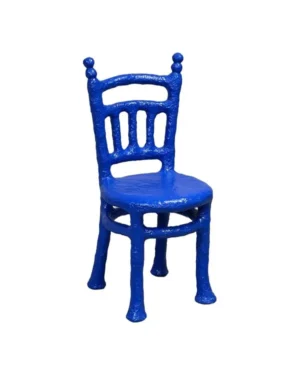
The X Chair
By NO AGE STUDIO
€2.500 -
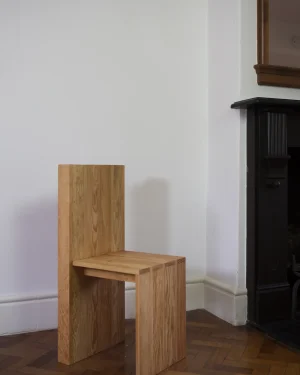
La Curva – Minimalist Wood Chair
By Jaclyn Pappalardo
€940 -
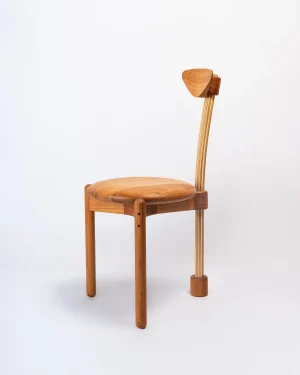
Pipa – Peroba Do Campo Wood Chair
By Estúdio Simbiose
€1.450 -
 In stock
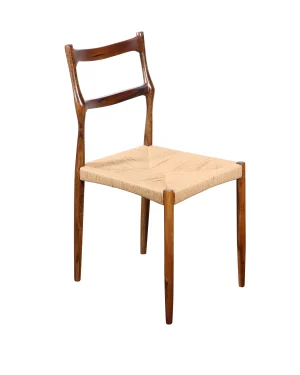
Liviana – Carved Wood Slatted Dining Chair With Woven Rush Seat
By Costantini Design
€2.450 -

T Wood Chair
By NO AGE STUDIO
€950 -
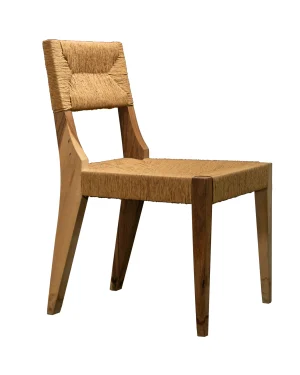 In stock
Bruno Intreccio – Modern Woven Dining Chair In Solid Wood
By Costantini Design
€1.490 -

Florist Chair
By Calen Knauf Studio
€1.196 This product has multiple variants. The options may be chosen on the product page -
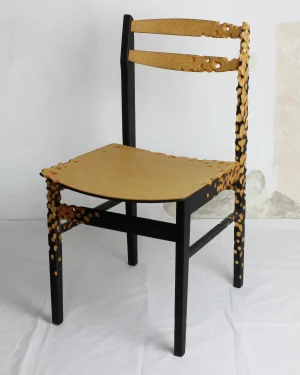
N1 Chair
By Gábor Góbi
€1.990 -
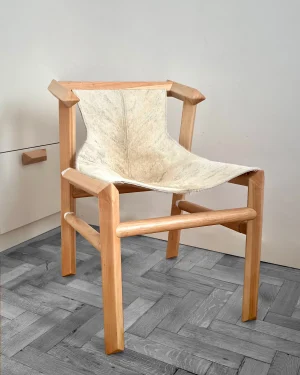 In stock
Hairy Leather Dining Chair
By espina corona
€990 -
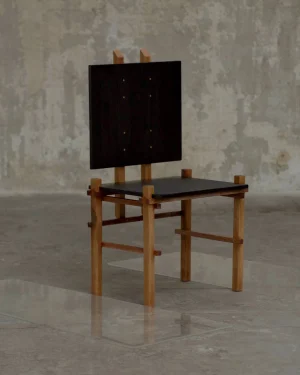 In stock
Lava – Symmetrical Wooden Chair
By Jaclyn Pappalardo
€1.285 -
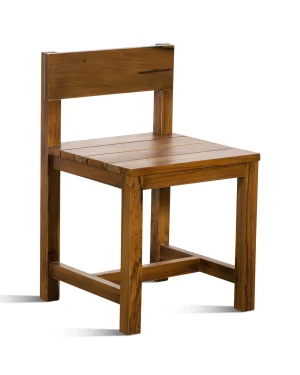
Serrano – Rosewood Dining Chair
By Costantini Design
€1.030
Rustic dining chairs are built from solid wood and natural fiber, worked by hand or machine into forms that favor visible grain, honest joinery and finishes that let the material show its age. Studios working this way choose oak, walnut, rattan and bamboo for the way each ages rather than hides wear, and they lean on techniques like wood carving, woodturning and weaving to give a chair weight without bulk. The result sits close to its raw material: a seat that reads as timber or cane first, furniture second.
What makes a chair rustic
Rustic style starts with the material left legible. Oak and walnut frames are often left with open grain or a matte oil finish instead of a high-gloss lacquer, so knots, rings and small color shifts stay visible. Hand-woven rattan and bamboo seats add texture through the weave itself, and leather upholstery is usually left in natural tans and cognacs rather than dyed to a flat, uniform tone.
Color follows the same logic: beige, brown, black and brown, and cognac dominate, because these are the tones wood and hide take on without heavy staining. Where black appears, it tends to sit on a frame rather than a seat, keeping the natural material as the visual anchor.
The materials and techniques you will find
Across the pieces in this style, a few approaches repeat. Solid oak and walnut are shaped through wood and cabinetmaking or joinery, with mortise-and-tenon or dowelled joints that carry weight without metal fixings. Woodturning gives legs and spindles their rounded, slightly irregular profile, while wood carving can shape backrests or armrests by hand.
- Hand-woven rattan and bamboo seats, built through weaving techniques that leave the fiber visible
- Leatherwork seats and slings in natural or cognac hide, often left undyed
- Solid oak or walnut frames joined by traditional cabinetmaking methods
Editions vary by studio: some pieces are produced as open editions, made to a standing design whenever ordered, while others are unique pieces, each one carrying small variations from the hand or the material itself. Where a studio works in unique pieces, no two chairs are quite identical, even if the design is the same.
How to choose a rustic dining chair
Start with scale. A dining chair should sit with its seat roughly eighteen inches from the floor, with enough clearance under the tabletop apron for knees and thighs; rustic frames in solid wood tend to run slightly heavier than molded or metal chairs, so measure the gap at your table before committing to a wide woven or upholstered seat.
Finish matters as much as wood species. A raw or lightly oiled oak chair will darken and show marks faster than one sealed with several coats of hardwax oil, so match the finish to how the room gets used. For a table that sees daily meals and spills, a sealed finish and a wipeable leather or woven seat will hold up better than a bare, open-grain surface.
Placement follows from material. Rattan and bamboo chairs suit rooms with good airflow and moderate humidity; in very dry, heated interiors, natural fiber can turn brittle over years, while in damp rooms it can swell. Solid oak and walnut tolerate a wider range of conditions but still expand and contract slightly with the seasons, which is part of why their joints are built to flex rather than lock rigid.
Where these chairs work
Rustic dining chairs read naturally in kitchens and dining rooms built around wood tables, stone counters or exposed brick, where their texture echoes other raw materials in the room. They also work at a kitchen island or a smaller eating nook, paired in a set or mixed with a bench for a looser, less matched look. For a dining room with painted walls and smoother furniture, one or two rustic chairs can introduce texture without pulling the whole room toward a rougher finish; see the broader range of rustic furniture for pieces that extend the same material language into tables and storage.
Caring for wood, cane and leather seating
Solid wood frames need little beyond an occasional wipe with a dry or barely damp cloth and, for oiled finishes, a fresh coat of oil every year or two to keep the surface from drying out. Woven rattan and bamboo seats benefit from being kept out of direct sun, which can bleach and dry the fiber, and from an occasional light misting in very dry climates. Leather seats should be wiped clean promptly after spills and conditioned occasionally to keep the hide supple rather than stiff.
For a fuller view of the category, the full range of dining chairs spans far more finishes and structures than wood and cane alone, including pieces built for dining rooms specifically and others suited to a living room table or reading corner. Anyone drawn to the same raw, grain-forward material elsewhere in the home can also look through rustic furniture and rustic decor for pieces that carry the same worked-wood and woven character beyond the dining chair itself.
How do I choose a rustic dining chair?
Look for solid wood, visible grain, and joinery that shows how the chair was put together. Let the finish and tone echo your table rather than match it exactly, since rustic pairs well with contrast.
What materials are rustic dining chairs made from?
Oak, walnut, and other solid woods dominate, often paired with rattan, bamboo, or hand-woven seats. Many rely on wood carving, woodturning, or joinery rather than metal fixings.
How do I care for a rustic wood dining chair?
Wipe with a dry or slightly damp cloth, keep it from direct heat and standing water, and oil or wax solid wood occasionally to maintain its tone and resistance to cracking.
What size and seat height should a dining chair be?
Most dining chairs sit between 17 and 19 inches at the seat, suited to tables around 28 to 30 inches tall, leaving room for knees and easy movement.
Which rooms suit rustic dining chairs?
They anchor dining rooms and kitchens, and work equally in open-plan living spaces where wood tones and woven textures carry warmth into the surrounding furniture.
How does shipping, returns, and authenticity work at ADORNO?
Shipping is insured and worldwide. Returns are accepted within 14 days, excluding made-to-order pieces, and every piece comes with a certificate of authenticity plus a lowest-price guarantee.