





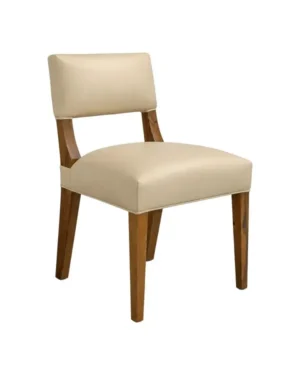




-
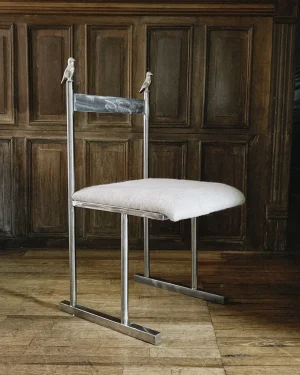
School Chair – Upcycled Materials
By Around the Studio
€1.500 -
 In stock
Boni Dining Chair
By Heaps & Woods
€2.750 - €2.937 This product has multiple variants. The options may be chosen on the product page -
 In stock
Chess Chair 2 Blue
By David Čáp
€1.000 -
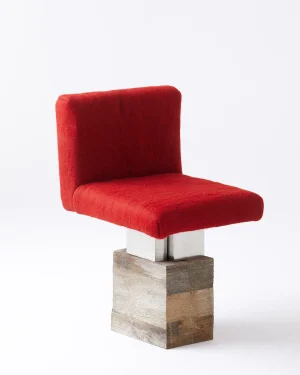
Tbilisi Street Chair – Upcycled Materials
By Around the Studio
€1.500 -
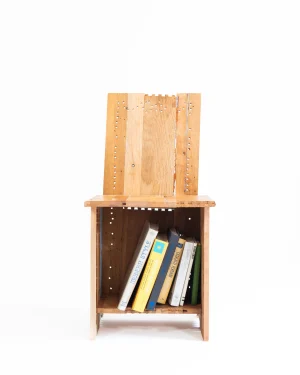
Chair 1 – Deconstructed Wood
By Yuxuan Huang Studio
€2.470 -
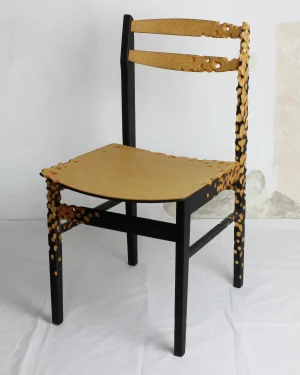
N1 Chair
By Gábor Góbi
€1.990 -

Random Chair – Upcycled Materials
By Around the Studio
€1.400 -
 Sold
SoldFrog Chair – Orange Matte
By David Čáp
€1.000 -
 In stock
B. S. P Series – Recycled Plastic Chair
By Atelier SOHN
Price Upon Request -
 In stock
Aluminum Veneer Chair
By Bureau.parso
Price Upon Request
Recycled material dining chairs take their form from what would otherwise be discarded: post-consumer plastics, reclaimed fibers, offcuts of wood and metal, textile waste pressed or woven back into something load-bearing. Studios working this way sort, clean, shred or melt the source material before casting, molding, felting or weaving it into a seat, so no two batches behave quite the same. The result sits closer to sustainable design than to a fixed look, since the raw input dictates color, grain and weight as much as any drawing does.
What defines the material
Recycled plastic can be ground down and compression-molded into a seat shell that reads almost like stone, flecked with the original colors of its source bottles or packaging. Reclaimed wood keeps the marks of its first life, old joinery holes, nail stains, uneven tone, and ages the way any oak or pine does, darkening slightly and taking a patina with handling. Felted or woven textile waste behaves more like fabric than furniture, softening the sharp geometry of a frame and adding warmth underfoot in bare dining rooms.
Because the source material varies, finishes on recycled material dining chairs range wider than on single-origin pieces. Some are left raw, showing fleck, fiber or grain as proof of origin. Others are sanded, sealed or dyed to a flatter, more even surface, closer to what a buyer expects from a painted or lacquered chair.
The range of materials and techniques
Alongside recycled plastics and reclaimed wood, the category includes chairs where metalwork and metal casting turn scrap steel or aluminum into frames and legs, and others where papier-mâché or sculpting methods build up a seat from pulped paper and fiber. Weaving and textilework account for chairs made from reclaimed cord, rope or fabric offcuts, often stretched over a cast or welded frame. Styles span contemporary and neo-industrial through to more eclectic or maximalist statements, and most pieces are made as open editions, with occasional unique pieces where a studio works directly from salvaged stock rather than a repeatable mold.
For a broader view of what else is being made from reclaimed and biobased stock, the full range of recycled material pieces on ADORNO extends well past seating into lighting and tables.
How to choose one
Start with scale. A dining chair should sit with its seat roughly eighteen inches from the floor and leave enough clearance to tuck fully under the table when not in use. Measure arm height against the table edge if the chair has arms, since recycled plastic and cast forms are sometimes bulkier through the frame than a slim wood or steel chair.
- Check whether the finish is sealed or raw, since raw surfaces may need a protective coat before regular use near food
- Match the weight of the chair to how often it will be moved, pulled out and pushed back daily versus kept in place
- Look at how the material reads under your light, cast plastics can shift tone between daylight and lamp light
For context on scale and proportion, it can help to compare against wooden dining chairs or against the full spread of dining chairs, since proportions that work for reclaimed wood often translate directly to recycled plastic or cast forms.
Where they sit well
Recycled material dining chairs carry weight visually as well as physically, so they tend to anchor a room rather than disappear into it. Flecked or dyed plastic seats pair easily with plain tables in a dining room set for daily use, while a woven or felted version can move into a living room as extra seating around a low table.
Care
Wipe cast or molded plastic surfaces with a damp cloth; avoid solvents that can dull or craze the surface over time. Reclaimed wood benefits from the same care as any solid wood chair, kept away from direct heat and recoated with oil or wax if the surface starts to dry out. Woven or felted seats should be vacuumed gently and kept clear of standing liquid, since reclaimed fiber does not always take moisture as well as new textile.
How do I choose a recycled material dining chair?
Look at what the material was before: reclaimed wood, reworked plastics or pressed fiber each carry a different texture, weight and finish. Pick based on how the chair will be used and cleaned, since recycled materials vary more than new stock.
How do you care for a recycled material dining chair?
Wipe with a damp cloth and mild soap, avoiding harsh solvents that strip reworked surfaces. Keep away from direct heat and prolonged damp, since recycled composites can behave differently from virgin material.
What size and seat height should a dining chair be?
Most dining chairs sit between 17 and 19 inches at the seat, matched to standard table heights around 29 to 30 inches. Leave roughly 10 to 12 inches between seat and tabletop for comfortable knee room.
Which rooms suit recycled material dining chairs?
They anchor dining rooms and open kitchen areas well, and work equally in living spaces used for eating or gathering. Their textures often read as sustainable and contemporary, so they sit comfortably in eclectic or neo-industrial interiors.
Is a recycled material chair as durable as one made from new material?
Durability depends on how the material was processed rather than its origin, so a well-made recycled chair can hold up as well as new stock. For specifics on a particular piece, chat with the maker on the piece's page.
How does shipping, returns and authenticity work on ADORNO?
Shipping is insured and worldwide. Returns are accepted within 14 days, excluding made-to-order pieces, and every piece comes with a certificate of authenticity plus a lowest-price guarantee.