




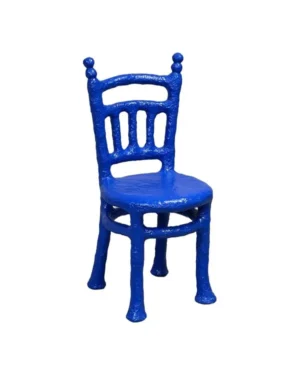





-
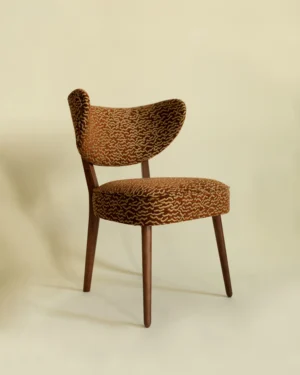 In stock
Dining Chair, Le Chant Des Dunes Pierre Frey, Walnut Wood, Vintola Studio
By Vintola Studio
€1.400 -
 In stock
Mid Century Heart Chair
By Vintola Studio
€1.050 -
 In stock
Toptun Chair
By FAINA
€1.980 This product has multiple variants. The options may be chosen on the product page -
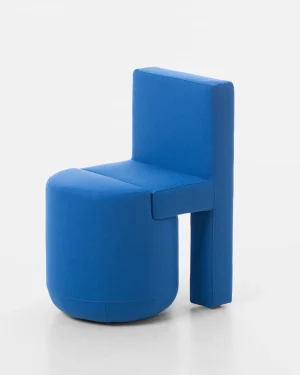 In stock
Fossil Dining Chair
By oitoproducts
€1.534 -
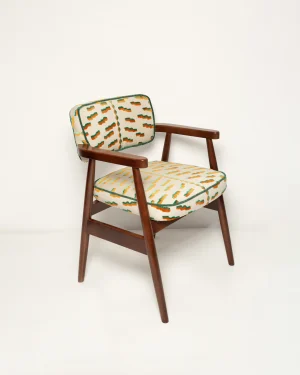 In stock
Classic Dining Chair
By Vintola Studio
€1.250 -
 In stock
Mid Century Mushroom Chair, Nouvelles Vagues Rubins Velvet, Dedar, By J. Kedziorek, 1960s
By Vintola Studio
€1.050 -
 In stock
Vintola Dining Chair, Schwarzwald Linen – Dedar, Walnut Wood
By Vintola Studio
€1.400 -
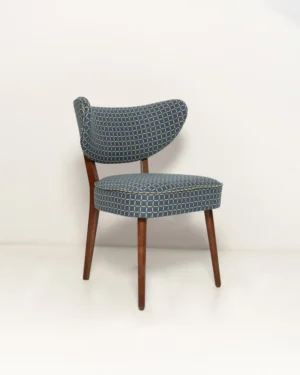 In stock
Vintola Dining Chair, Blue Jacquard, Walnut Wood
By Vintola Studio
€1.250 -
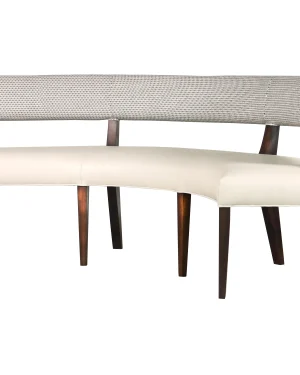 In stock
Bruno – Modern Exotic Wood Booth Seating
By Costantini Design
€14.276 -
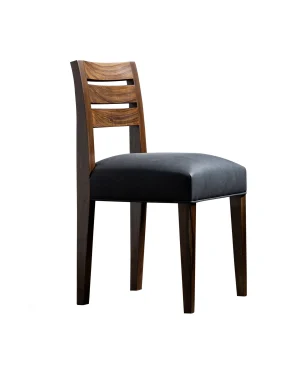 In stock
Renzo – Contemporary Exotic Wood And Leather Side Chair
By Costantini Design
€1.456 -
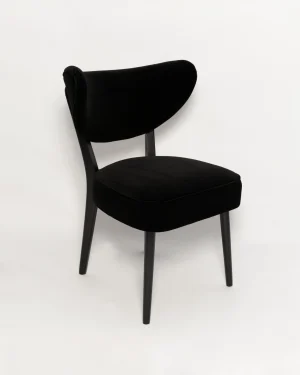 In stock
Retro Dining Chair
By Vintola Studio
€1.160 - €1.200 This product has multiple variants. The options may be chosen on the product page -
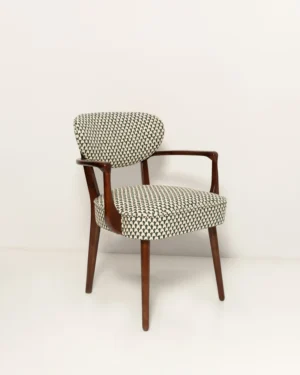 In stock
Vintola Studio Hug Chair In Jacquard Fabric
By Vintola Studio
€1.850 -
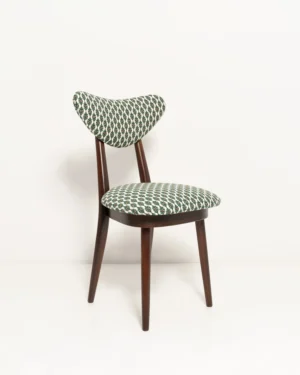 In stock
Mid Century Heart Chair, White And Green Art Deco Jacquard
By Vintola Studio
€900 -
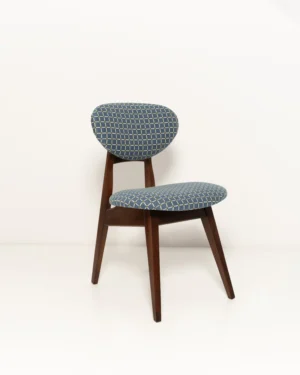 In stock
Mid Century Mushroom Chair, Blue Jacquard
By Vintola Studio
€900 -
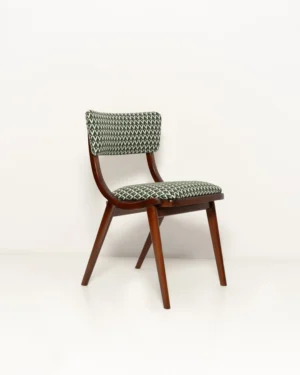 In stock
Mid Century Modern Boomerang Chair, White And Green Jacquard
By Vintola Studio
€950
Cotton dining chairs bring a woven or upholstered seat to the dining table, the fiber spun, dyed and either stretched over a frame or worked into a cover that softens wood, plywood or metal structures. Studios working with this fiber favor it for its breathability and its readiness to take color, from beige and caramel through to deeper blue or burgundy. Some pieces pair cotton with wool or textile blends for added density, while others let the weave stand alone.
What defines cotton as a seating material
Cotton is a plant fiber, spun into yarn and woven or knitted into cloth of varying weight. On a dining chair it appears as a woven seat panel, a padded upholstery cover, or a cord wrapped tightly around a frame. Unlike leather, it will not stretch or crack with age, but it does take on the shape of whoever sits in it over time, softening slightly at the point of contact.
Left undyed, cotton carries warm, neutral tones; dyed, it holds color evenly and resists the fading that some synthetic fibers show under direct sun, though prolonged exposure will still dull any pigment gradually. It takes well to both tight weaves, which resist wear, and looser ones, which breathe more and suit chairs used for shorter periods, such as in a dining room used mainly in the evening.
The range of cotton dining chairs on ADORNO
Across cotton dining chairs, the fiber shows up worked in a few consistent ways. Textilework and weaving produce seats where the cotton itself is structural, stretched across a frame in place of a solid panel. Upholstery techniques instead use cotton as a cover over foam or webbing, stitched to a wood and cabinetmaking frame or a plywood shell underneath.
- Finishes range from beige and brown neutrals to saturated amber, green or blue.
- Styles span Scandinavian and mid-century modern frames through to more minimalist or contemporary silhouettes.
- Editions include open runs alongside unique pieces, where the weave or dye lot will not repeat.
Frames beneath the cotton are usually wood, plywood or occasionally metal, each changing how the chair carries weight and how it reads in a room. A plywood shell gives a lighter, more pared-back base; a solid wood frame, often in a mid-century modern or Scandinavian style, adds visible grain and a heavier stance.
How to choose one for a dining table
Start with scale: a cotton dining chair should sit with its seat roughly sixteen to eighteen inches from the floor, low enough to tuck under a standard dining table without crowding the knees. Check the arm height against the tabletop if the chair has arms, since a cotton-wrapped armrest that sits too high will catch on the table edge.
Weave density matters as much as color. A tighter weave holds its shape under daily use and resists pilling, while a looser or more textured weave reads softer but may need more frequent cleaning. For a room used often, choose a denser cotton or one blended with wool or polyester for added resilience; for occasional seating, a lighter, more open weave is enough.
Where cotton seating fits in the home
Cotton dining chairs suit the dining room as their primary setting, paired around a table of wood, stone or glass. The same chairs move easily into a living room as extra seating, since the fiber reads as approachable rather than formal, and a neutral or earth-toned weave sits comfortably beside upholstered sofas.
Caring for cotton seating
Cotton resists static and holds up to regular vacuuming, which lifts dust from the weave without flattening it. Spot clean spills quickly with a damp cloth rather than letting liquid sit, since cotton absorbs moisture readily and can water-stain if left wet. Keep chairs out of direct, constant sun where possible, as UV exposure will gradually fade dyed fibers faster than it does wood or metal frames.
For a broader view of the fiber across other rooms, the full range of cotton furniture and cotton seating on ADORNO shows how the same weaves and techniques carry into sofas, stools and lounge chairs, alongside every cotton piece listed by material.
Are cotton dining chairs comfortable for everyday use?
Yes, cotton upholstery breathes and softens with use, so seats stay comfortable through long meals and warm rooms without trapping heat like synthetic covers do.
How do you clean and care for cotton dining chairs?
Vacuum regularly and blot spills immediately, since cotton absorbs liquid fast. Spot clean with mild soap and water, and keep chairs out of direct sun to prevent fading.
What is the standard height for a cotton dining chair?
Most dining chairs sit between 18 and 20 inches from floor to seat, matching standard table heights of around 29 to 30 inches.
Which rooms suit cotton dining chairs best?
Cotton seating works well in dining rooms, kitchens and open-plan living spaces where chairs see daily use and benefit from a washable, natural fabric.
Does cotton upholstery hold up to daily wear?
Tightly woven cotton resists pilling and holds its shape well, though it can crease and show wear over years faster than leather or wool blends.
What is ADORNO's shipping and return policy for dining chairs?
Shipping is insured and worldwide. Returns are accepted within 14 days, except for made-to-order pieces. Each chair arrives with a certificate of authenticity, backed by a lowest-price guarantee.