
Turkish Furniture: Gökhan Karakuş on the Potential of Design
“The past is not directly quoted but rather serves as a material and social layer from which contemporary designers in Turkey work.” – Gökhan Karakuş
Updated on: November 9, 2026
In December 2017, ADORNO’s Istanbul curator Gökhan Karakuş went live on TRT World to talk about the potential of design from a Turkish angle. The interview came weeks after his exhibition Discovering Design Communities at Design Week Turkey, and it touched on a question he has returned to throughout his writing for ADORNO: what makes design from Turkey its own, and how a young profession can build on a craft culture thousands of years old.
Here is who Karakuş is, how he reads Turkish design and furniture, the three collections he built for ADORNO, and three Turkish pieces to collect today.
Who Is Gökhan Karakuş?

Gökhan Karakuş is an Istanbul-based designer, curator, business strategist, historian, architecture critic and theorist whose work focuses on the indigenous in modern architecture and design. He studied architectural history and theory at Columbia University and Vassar College in New York, and he founded and directs Emedya Design, a studio working across environmental graphic design, architecture, computational design, craft and design history, with a particular focus on natural stone.
As a critic, he has written for The Architect’s Journal, Architectural Record, Dwell and Wallpaper*, and from 2011 to 2015 he was editorial director of Natura, Stone Architecture and Interiors. That double view, as a maker and as a historian, shapes every collection he puts together.
The Potential of Design, From a Turkish Angle
In the TRT World interview, Karakuş speaks about the potential of design as seen from Turkey. His written work for ADORNO gives the background to that view.
For Karakuş, Istanbul’s designers work in a modernist idiom that is quietly shaped by Turkey’s traditions of making. As he puts it, the past is not quoted directly; instead, it is a layer of materials and social habits that designers build on. Consequently, Turkish design reads as an adaptation of modernism to local culture rather than a revival of old forms.
“Craft has been central to the material culture of Turkey and Istanbul for thousands of years… Intriguingly, though, despite these changes, the culture of the handmade continues, especially in the cities, albeit in a different way.”
Gökhan Karakuş
That handmade culture lives on in the workshops of Turkish cities, which produce furniture and objects for homes and businesses. Their materials are bronze, textile, brass, ceramics and stone, and their language is abstract geometry and pattern. In a 2016 essay, Karakuş traced that geometric approach from early Turkic and Ottoman architecture through the ceramicists and furniture designers of the 1950s onward, who applied modern art to traditional production. Read his full argument in On Contemporary Turkish Design.
Discovering Design Communities: Design Week Turkey 2017
The TRT interview followed Discovering Design Communities, an ADORNO exhibition at Design Week Turkey, held from November 8 to 12, 2017, at the Lütfi Kırdar Congress Center in Istanbul. Karakuş selected the pieces, bringing together designers from eleven cities, including São Paulo, Istanbul, Copenhagen, Amsterdam, Brussels, Milan, Barcelona, Mexico City, Madrid, Berlin and London.
“Each of the objects here are examples of the dynamics of local design communities. We have selected these collectible design objects to show examples of groundbreaking design that is being created around the world.”
Gökhan Karakuş
The idea behind the show matched the one behind ADORNO itself: that designers rooted in a local network of makers can reach collectors around the world directly.
Three Collections for ADORNO
Karakuş has put together three Turkish collections for ADORNO, each building on the last. The first, The Istanbul Collection, grew out of his research into modernism in non-Western contexts, with a focus on geometry, pattern and craft. Next came The Hidden Hand in 2019, shown at the London Design Fair, which looked at the artisan behind Turkish design. Finally, Craft & Symbol in 2021 followed a younger generation bringing symbols back into their work.
Together they map how Turkish designers have moved from quiet references to open experiment, while keeping close to the workshop and the hand.
Turkish Furniture and Objects to Collect Today
The studios below carry that thinking into pieces available on ADORNO now: folded steel and volcanic stone, lacquered plywood and colored mirror glass, each made in close work with Turkish workshops. For more, see our guide to Turkish designers.
Coraza Side Table in Volcanic Stone and Stainless Steel by Studio Mohs
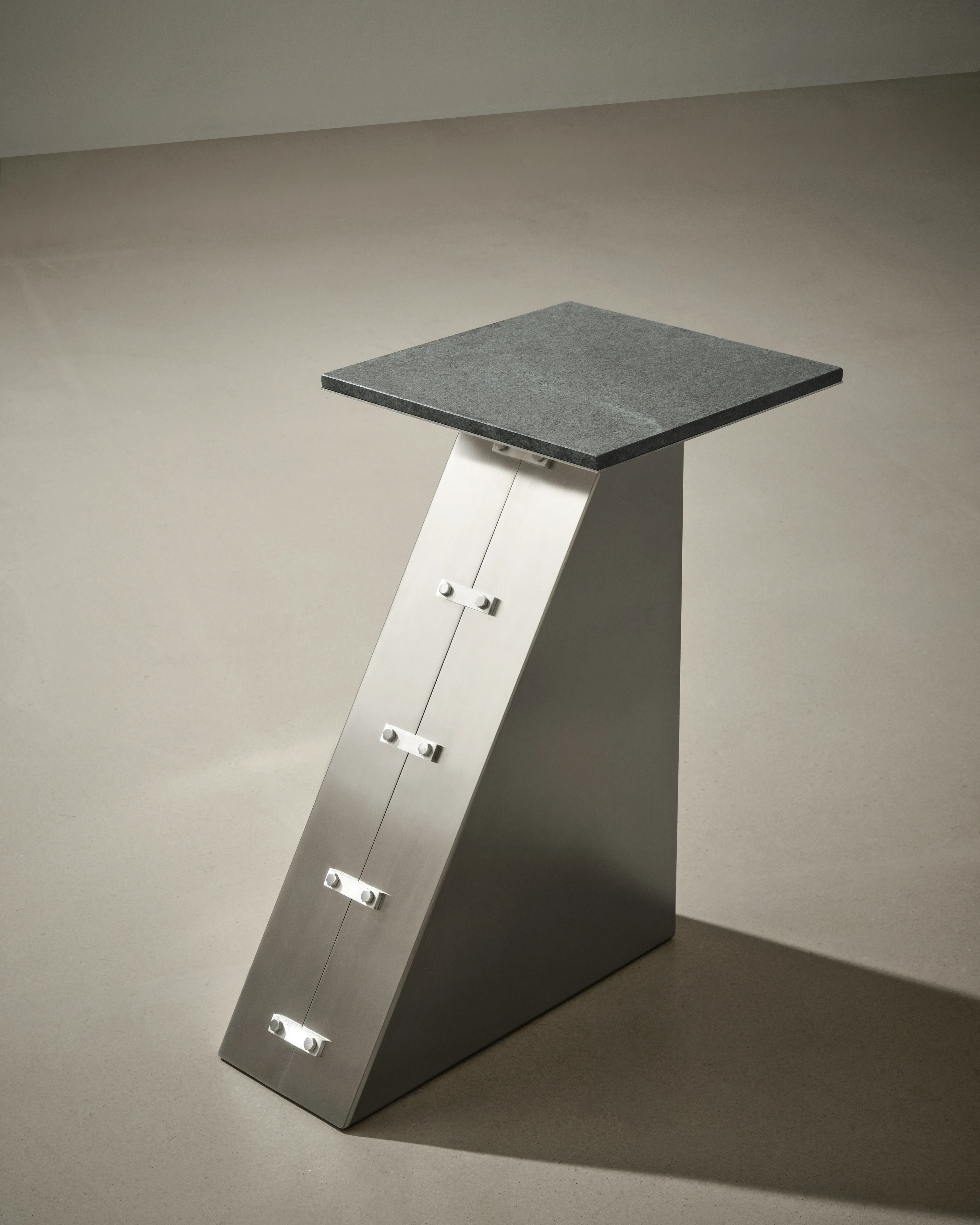
Studio Mohs folds stainless steel into a leaning base and sets a solid top of diabase, a dark volcanic stone, slightly off center. Notably, the bolts that hold the steel in place stay visible, so the forces in the structure become part of the design. At 51 x 30 x 52 cm (20 x 12 x 20 in), it sits beside a sofa or a reading chair.
By Studio Mohs
€2,250 incl. tax
A_forma Chair by AROUND

AROUND, the studio of Öykü Üner, builds the A_forma chair from plywood finished in high-gloss lacquer. Its round seat, arched back and ring-shaped base give it a calm, upright posture, more sculpture than seating at first glance. At 44 x 44 x 75 cm (17 x 17 x 30 in), it works at a desk, a dressing table or as a single accent chair.
By AROUND
€900 incl. tax
Baggaga Claim-m Table Mirror by Living Cult
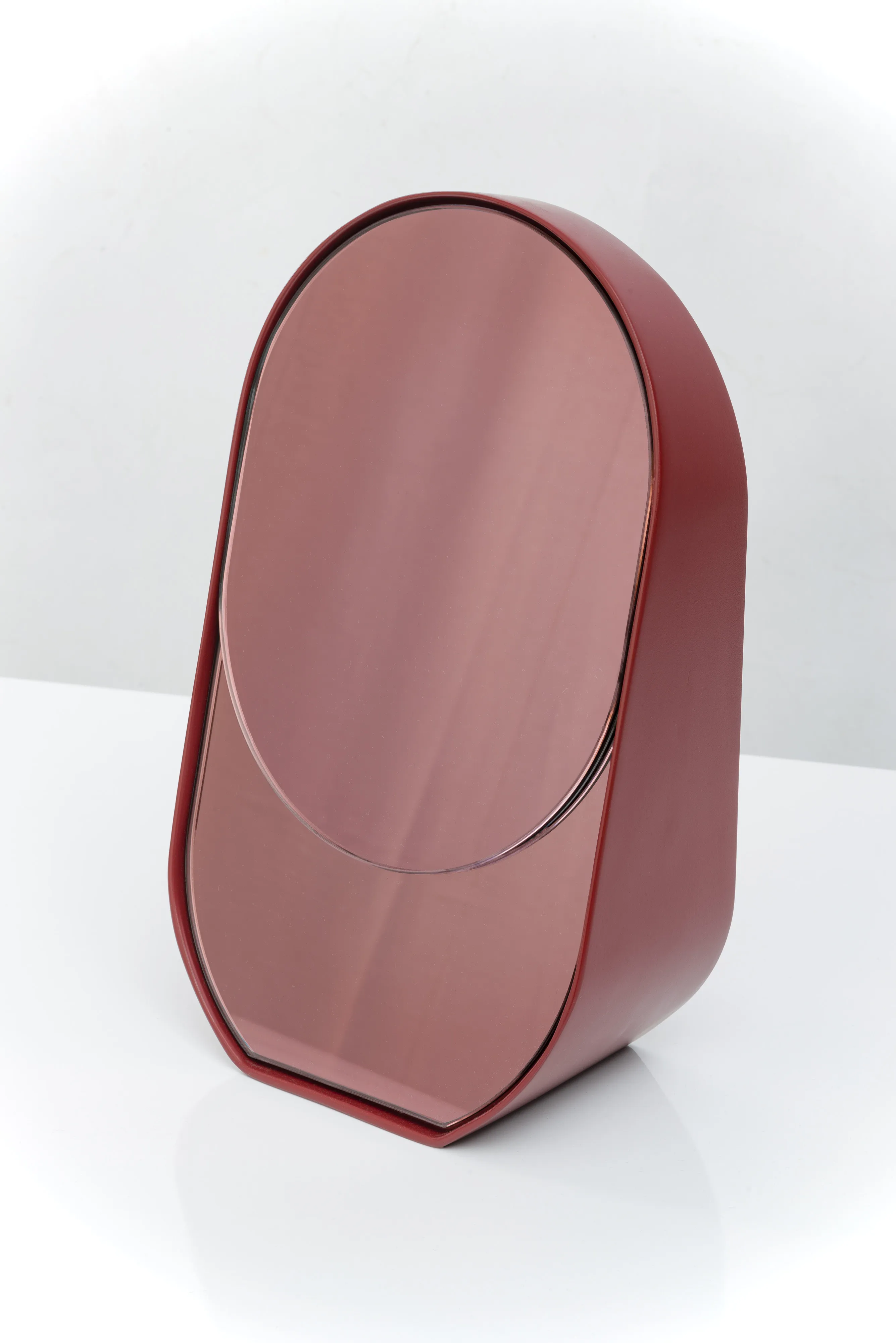
Living Cult frames a round makeup mirror in colored MDF and adds slices of tinted mirror glass, part of a series inspired by watching suitcases circle an airport carousel. As a result, an everyday object turns into a small, colorful centerpiece. At 35 x 21 x 12 cm (14 x 8 x 5 in), it stands on a dressing table or a bathroom shelf.
By Living Cult
€1,200 incl. tax
Frequently Asked Questions
Who is Gökhan Karakuş?
An Istanbul-based designer, curator, historian and architecture critic, educated at Columbia University and Vassar College. He founded Emedya Design and has put together three Turkish collections for ADORNO: The Istanbul Collection, The Hidden Hand and Craft & Symbol.
What defines Turkish furniture design today?
In Karakuş’s view, a modernist idiom shaped by Turkey’s craft traditions: workshops working in stone, brass, bronze, ceramics, textile and wood, and a long interest in abstract geometry and pattern.
What is Emedya Design?
Emedya Design is the Istanbul studio Karakuş founded and directs. It works across environmental graphic design, architecture, computational design, craft and design history, and has a particular focus on natural stone, producing marble mosaic panels and tables. The studio also produces exhibitions, publications and research.
Where can I watch the TRT World interview?
The interview, Gökhan Karakuş on the concept of the potential of design, is embedded above and available on TRT World’s YouTube channel.





Responses