Behind much of Turkish design stands a craftsman whose name is rarely on the label.
Updated on: October 31, 2026
In 2019, designer and historian Gökhan Karakuş wrote the essay below for The Hidden Hand, an exhibition of eight Turkish designers shown with ADORNO at the London Design Fair. His argument was simple and still holds: in Turkey, the workshop and the artisan shape design as much as the academy does, and the craftsman’s understanding of material sets the limits within which Turkish designers work.
Seven years on, the designers in that show have moved on, but the idea has not. Below, Karakuş’s essay is kept as it was written, followed by six Turkish designers on ADORNO today whose work in stoneware, steel, walnut and silver-plated brass still depends on that hidden hand.
The Hidden Hand: Gökhan Karakuş on Craft in Turkish Design
Existing in a geographic zone that has historically been an interface between many cultures since prehistory, Turkey is one of the few areas of the world where the traditional and the modern continue to mix in contemporary culture to produce original results. Turkey is at once home to different indigenous, local cultures that still retain their identities in our contemporary world. Artisanal and industrial modes, along with digital production, exist side by side in contemporary Turkey, resulting in the original qualities we see today in design emanating from Turkey.
It is here that we must focus on the artisan, the craftsman, and handicrafts in Turkey. Outside of the circle of formally educated designers and mass production, Turkey, like many other regions in the East and South, has been involved in a long process of industrialization. As such, in Turkey today we see the continuing presence of preindustrial means of production, where some objects for everyday use are made by hand in workshops rather than factories, by non-designers, craftsmen and artisans. In fact, if we look back at the production of everyday objects in Turkey, whether in cities or in rural areas, we see a long history of artisanal production by individual craftsmen or guilds, which in some instances were tied to particular ethnic minorities in Ottoman times.

Whether in the country or the city, the workshop, the artisan and the craftsman are the other major resilient force in the production of design in Turkey. Alongside the cadres of designers emerging out of the academies, the reality of the artisans and their connections to archaic modes of production is a powerful force in the formulation of Turkish design. In fact, many of those with design education are confronted with the reality of the artisan once they start to produce objects, especially in the furniture sector. Some formally trained designers consciously, and others indirectly, integrate the artisans’ understanding of material and technique into their work, increasing the influence of the artisan on the overall design concept of these objects.
This is one of the key features of design in Turkey today: the “hidden hand” of the artisan that sets limits on the salient points of design. The class of artisans working in furniture and interior design in Turkey, some skilled but mostly semi-skilled, deeply influences the nature of design. For example, we can see the influence of the craftsmen in Turkish design through the importance of the exterior shell and its surface treatment as a driving principle in design. The notion of design as “decoration” is important here. In Eastern cultures, surfaces have always mattered, especially in the Islamic decorative arts. Partly based on craft traditions, and partly due to the restrictions on figurative imagery in Islamic culture, pattern and geometry on the surface became an area where Turkish craftsmen exhibit their creativity in a hidden way.
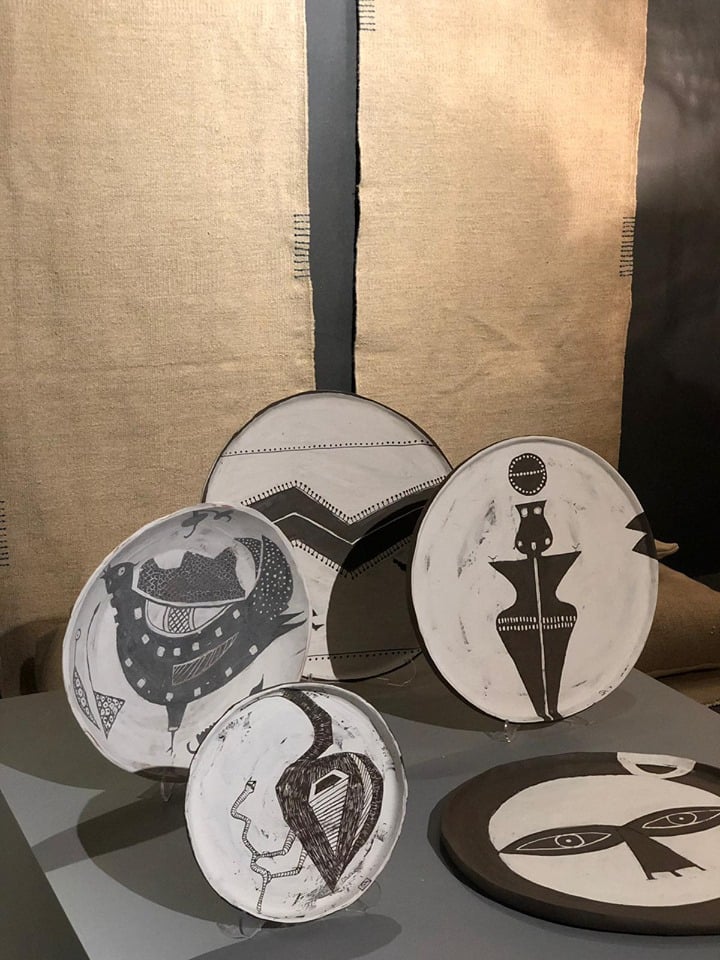
With an understanding of these dynamics, this exhibition addresses the role that a group of designers from Turkey, Aslı Şarman, Buket Hoşcan Bazman, Dila Gökalp, Elif Gönensay, Feyza Köksal Kemahlıoğlu, Nilüfer Kozikoğlu, Seray Asker and Sema Topaloğlu, has assigned to traditional craft. What is the influence of Turkish artisans on the design language of contemporary design in Turkey? The answer lies in the material and artisanal base of furniture and interior design in Turkey, especially in carpentry and woodworking, ceramics, stonecraft, home textiles, glassware and metalworking, with an emphasis on separating the surface from the underlying structure.
Gökhan Karakuş is an Istanbul-based designer, curator and writer, and the founder and director of the design office Emedya Design. He lectures on architecture in non-Western contexts, design and craft. The exhibition was supported by Turkish Airlines and the Turkish Ministry of Foreign Affairs, with additional assistance from the Turkish Exporters’ Assembly and the Turkish Trade Center London. His 2021 follow-up, Craft & Symbol, turned from the artisan to the return of symbols in Turkish design.
How Turkish Designers Work With Craft Today
Karakuş’s point about the surface still holds. Turkish designers on ADORNO tend to start with a material and a maker rather than a drawing: a stoneware workshop, a metal shop that folds and welds by hand, an oud maker’s bench in Istanbul. Furthermore, the symbols he saw hidden in pattern have come back into the open. Some studios now draw directly on Anatolian history, as Sight Unseen noted early on of Istanbul studios that merge Turkish crafts with contemporary design.
The six pieces below cover the crafts Karakuş named: stoneware and glass, stainless steel, walnut and brass. Meanwhile, they range from a wall sconce and two lamps to a stool, a chair and a book holder, so each one shows a different way the artisan’s hand still sets the terms.
6 Turkish Designers to Know on ADORNO
Asea No.40 Wall Sconce In Stoneware And Blown Glass by Ceren Gürkan
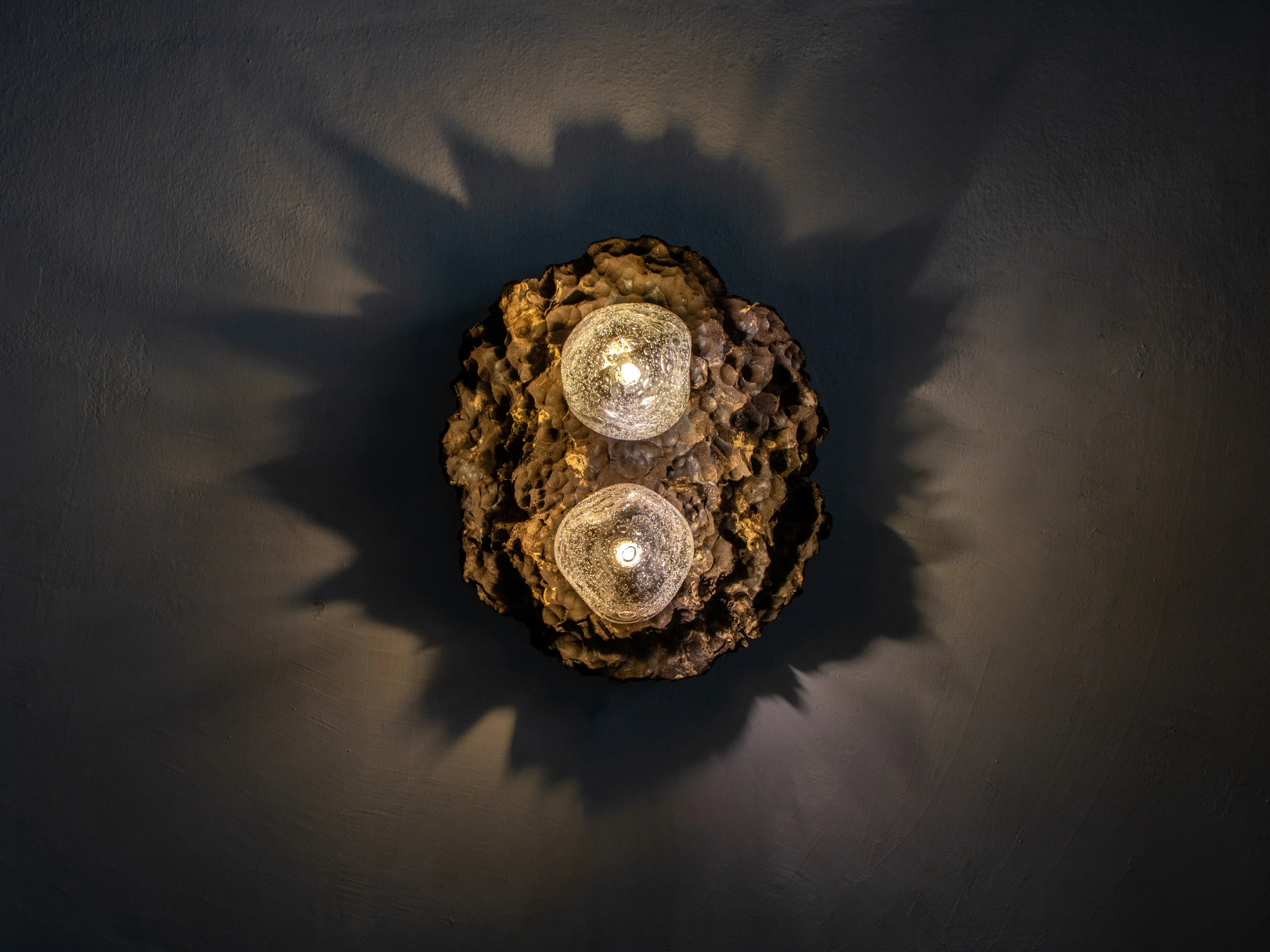
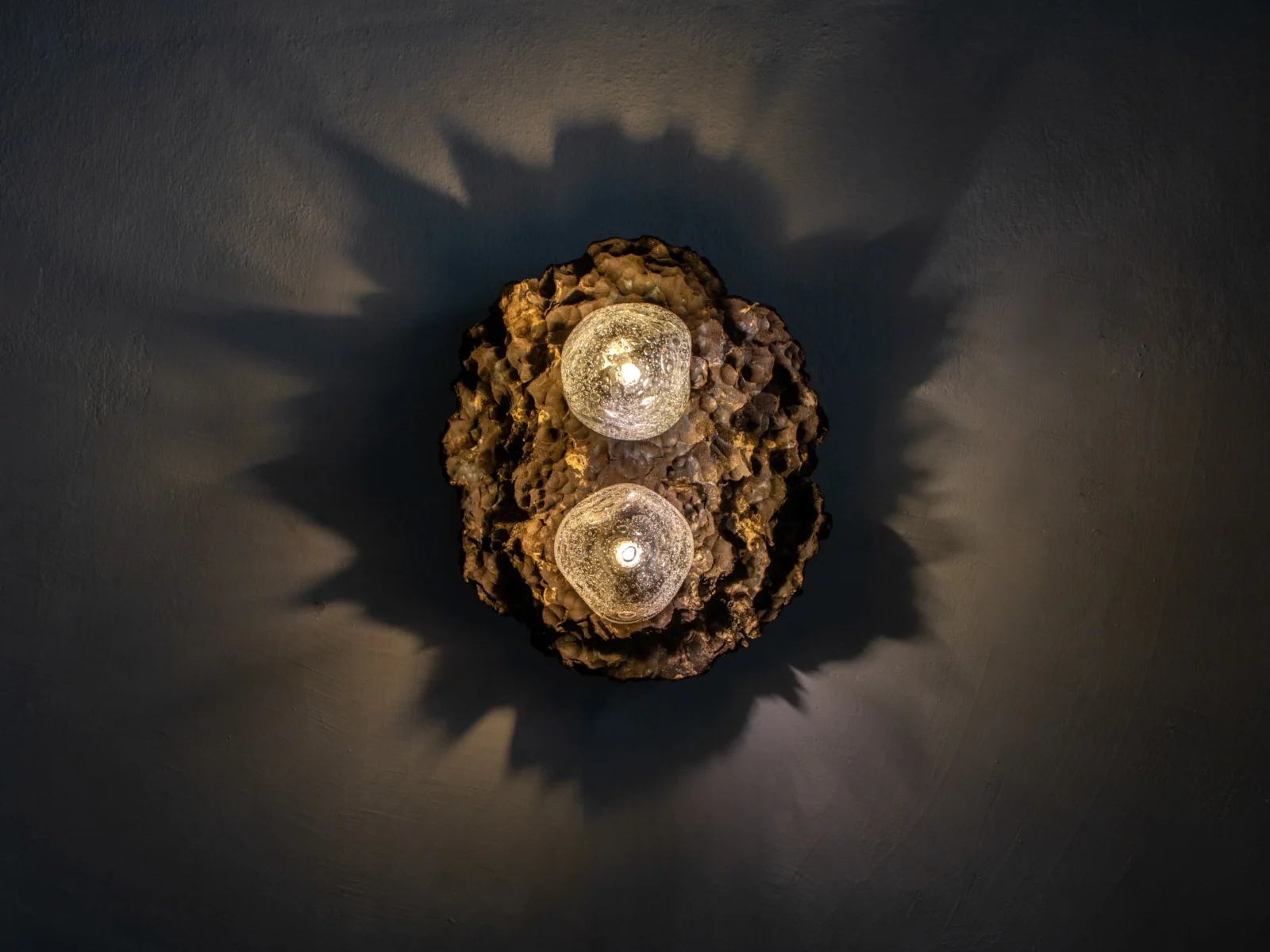
Ceren Gürkan shapes the wavy stoneware by hand and pairs it with two hand-blown glass globes, so no two sconces in the series are alike. Indeed, the surface reads like a rock pool at low tide, and lit from within it throws a ragged halo onto the wall. At 33 x 36 x 15 cm (13 x 14 x 6 in), it brings texture to a hallway or sits in pairs either side of a bed.
By Ceren Gürkan
€1,200 incl. tax
Fold Table Lamp In Stainless Steel by Akademie
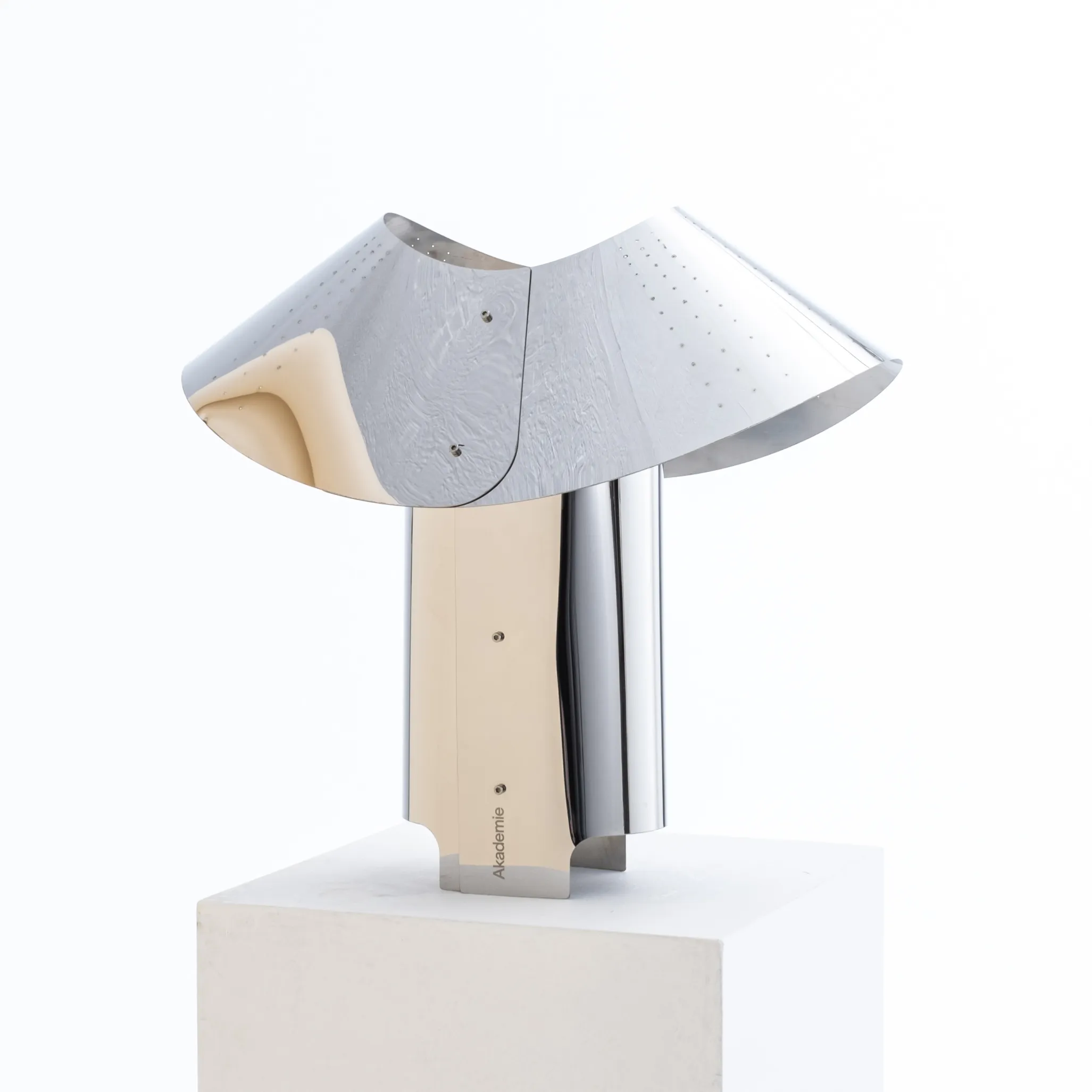
Akademie, the Istanbul studio of Yunus Emre Uzun, developed Fold through physical models rather than drawings, bending stainless steel until light and reflection found their form. Notably, the lamp lights both from within and through its own polished surfaces. Signed and numbered, it measures 30 x 45 x 40 cm (12 x 18 x 16 in) and anchors a sideboard or a desk.
By Akademie
€1,200 incl. tax
Stool No:01 by Od Studio
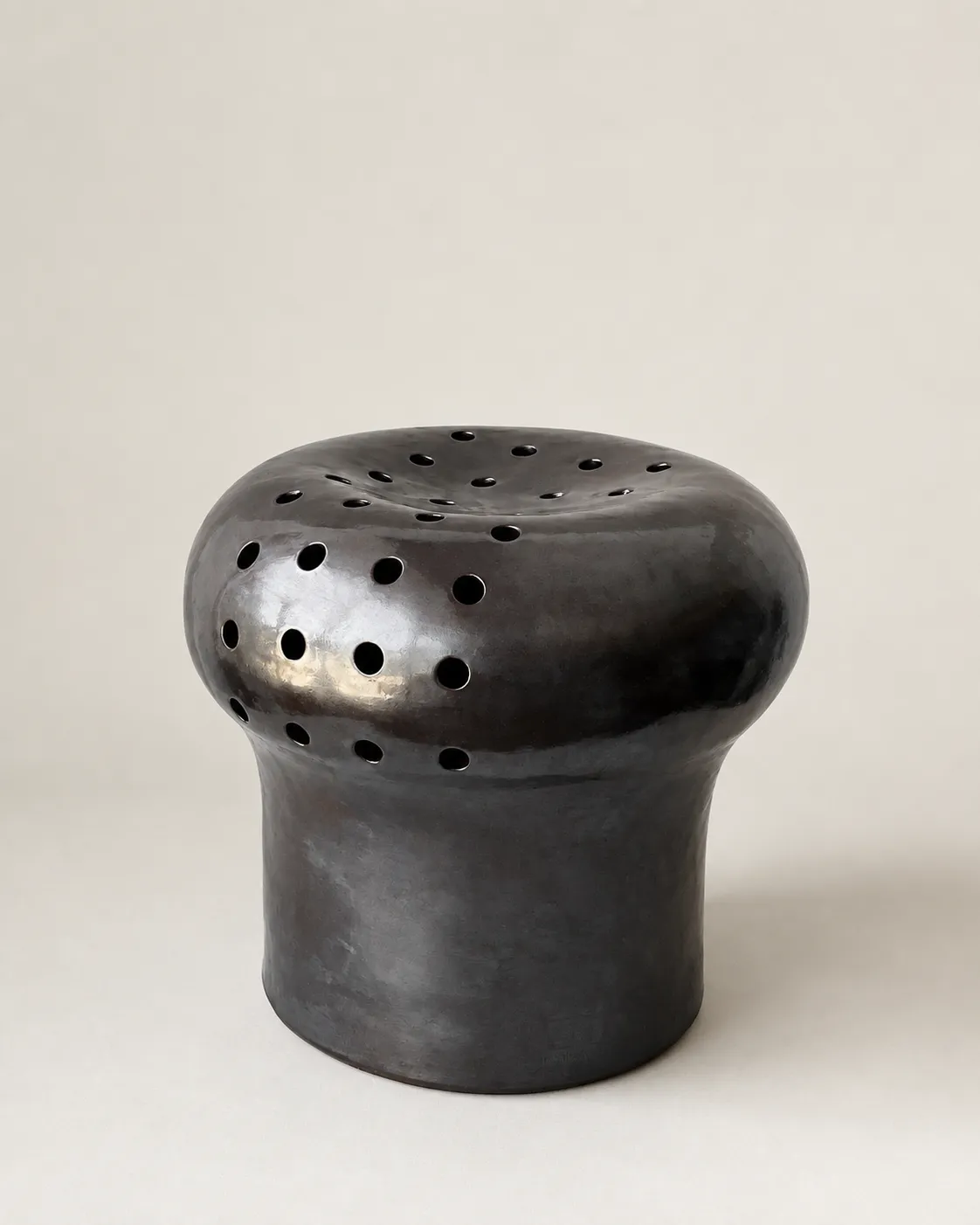
Od Studio throws ceramics at furniture scale, and Stool No:01 is glazed stoneware made to live indoors or out. Moreover, the rounded seat and its rhythmic perforations make a hard material surprisingly comfortable. At 48 x 48 x 42 cm (19 x 19 x 17 in), it works as a stool on a terrace or a side table beside a sofa.
By Od Studio
€1,800 incl. tax
Lumix Table Lamp in Walnut Wood by Pablo Sinan Design

The walnut root of Lumix is hand-treated in an oud instrument workshop in Istanbul, which gives the wood its warm, glossy surface. Specifically, two laser-cut legs interlock to form the base, and a recyclable polycarbonate cylinder diffuses the light. At 20 x 20 x 40 cm (8 x 8 x 16 in), it suits a bedside table or a reading corner.
By Pablo Sinan Design
€550 incl. tax
Kut – Accent Chair by SABAN FURKAN
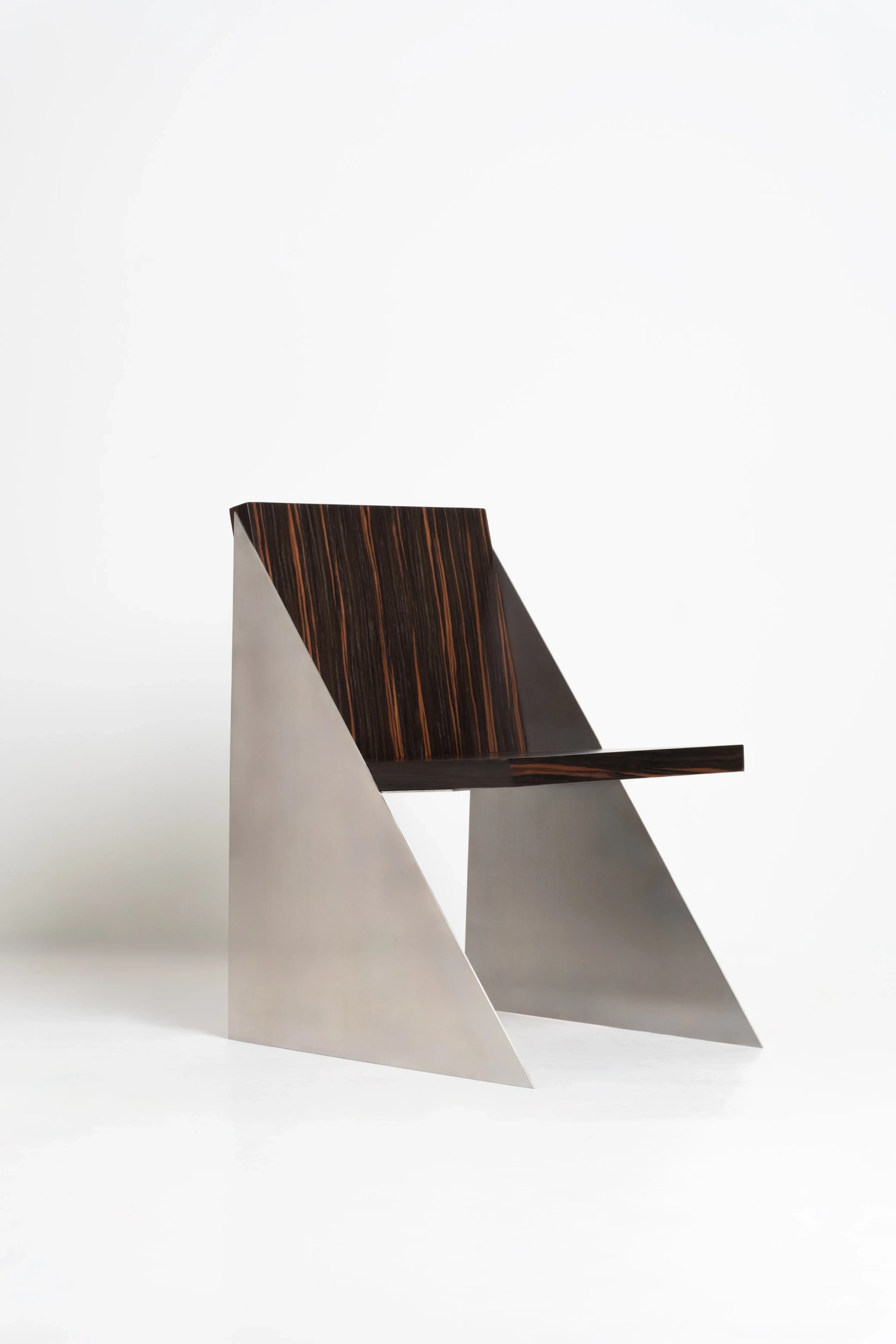
Two triangular sheets of brushed stainless steel carry a seat and back in dark wood veneer, with nothing more than the structure needs. As a result, Kut looks almost weightless while staying solid in use. Made to order and measuring 50 x 50 x 74 cm (20 x 20 x 29 in), it holds its own in an entryway or beside a fireplace.
By SABAN FURKAN
€3,400 incl. tax
Marri Book Holder by MARAU
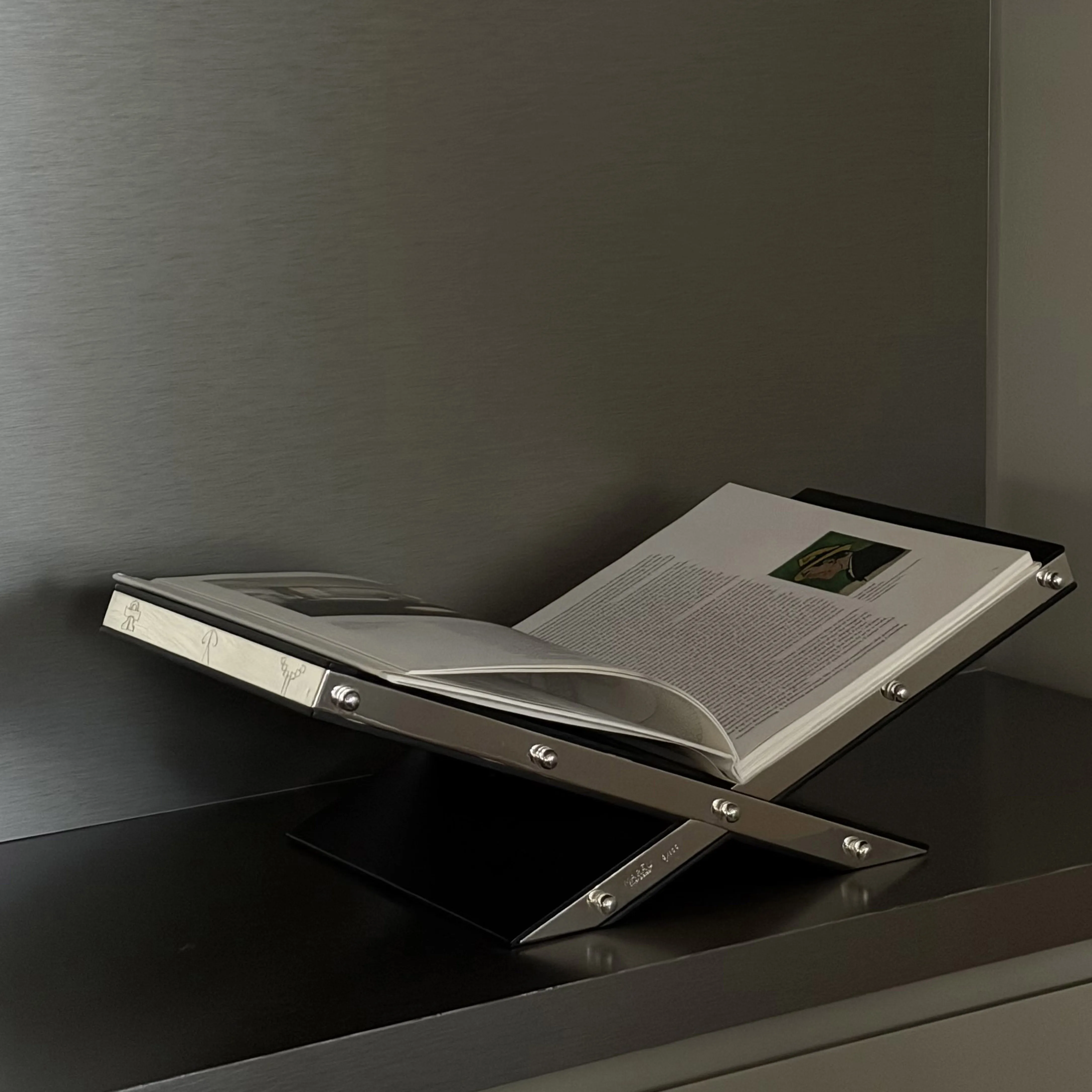
MARAU reads the Hittite civilization through a contemporary lens, and the Marri collection borrows its circles and spirals from Anatolian symbols of cosmic order. The book holder is made of brass plated in fine silver over wood veneer, opening like a lectern for a single volume. At 48 x 22 x 16 cm (19 x 9 x 6 in), it turns a favorite book into an object on a shelf or a console.
By MARAU
€3,500 incl. tax
Frequently Asked Questions
What is the “hidden hand” in Turkish design?
It is Gökhan Karakuş’s term for the artisan behind much Turkish design. Furniture and interiors in Turkey are often made in small workshops, so the craftsman’s skill with wood, stone, ceramics or metal quietly shapes the final form, even when a trained designer signs the piece.
What materials are Turkish designers known for?
Woodworking, ceramics and stoneware, stone, textiles, glass and metalwork all have long traditions in Turkey. Today, Turkish designers often pair them, for example stoneware with blown glass, or steel with wood veneer.
Who are some Turkish designers to know today?
On ADORNO, studios such as Ceren Gürkan, Akademie, Od Studio, Pablo Sinan Design, SABAN FURKAN and MARAU work across lighting, ceramics and furniture, each with a close tie to Turkish craft.
What happened to The Hidden Hand exhibition?
The Hidden Hand was shown with ADORNO at the London Design Fair in 2019. The designers in it are no longer on ADORNO, so this article keeps the essay as a record and points to Turkish studios working in the same spirit today.



Responses