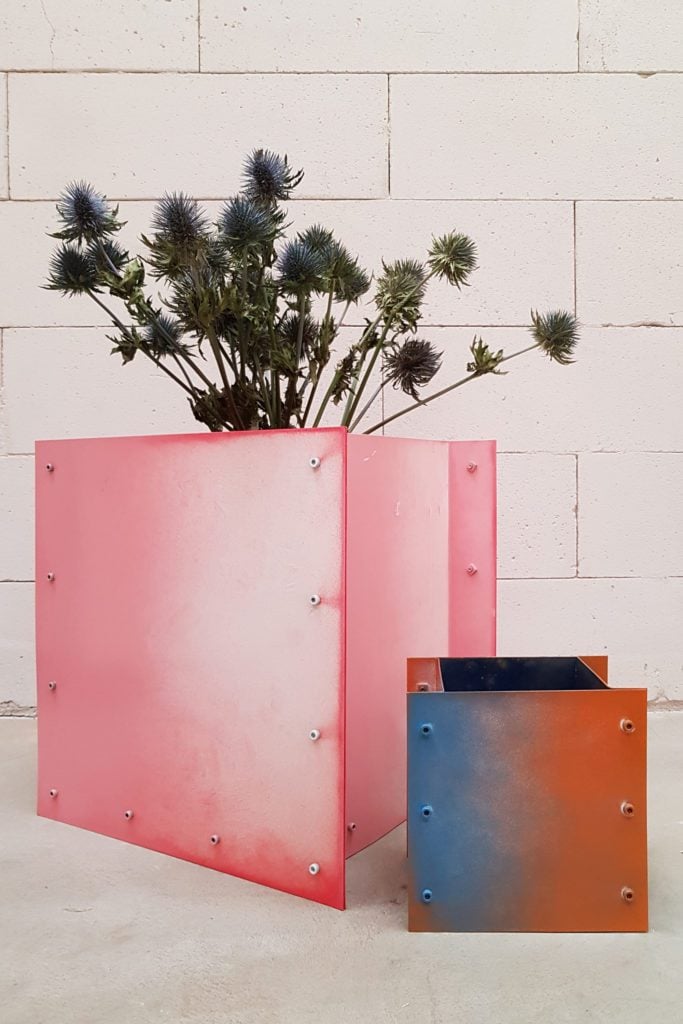
In 2021, Gökhan Karakuş asked eleven Turkish studios a quiet question: what does the hand leave behind when it shapes an object?
Updated on: October 31, 2026
Turkish design has a long craft memory, from carpet weaving and ceramics to stone and metalwork, yet as a profession it is barely sixty years old. Craft & Symbol, a collection first shown on ADORNO in October 2021, sits exactly in that gap. Istanbul-based designer, historian, curator and architecture critic Gökhan Karakuş brought together eleven contemporary Turkish designers who work hand in hand with craftspeople, and who let symbols return to their work after decades in which they were treated as taboo.
This article is kept as a record of that collection and of Karakuş’s interview. Most of its studios have since left ADORNO; Buşra Tunç, whose steel vases, glass lamps and aluminum table appear below, still shows her work here.
Craft & Symbol: Contemporary Turkish Design in One Room
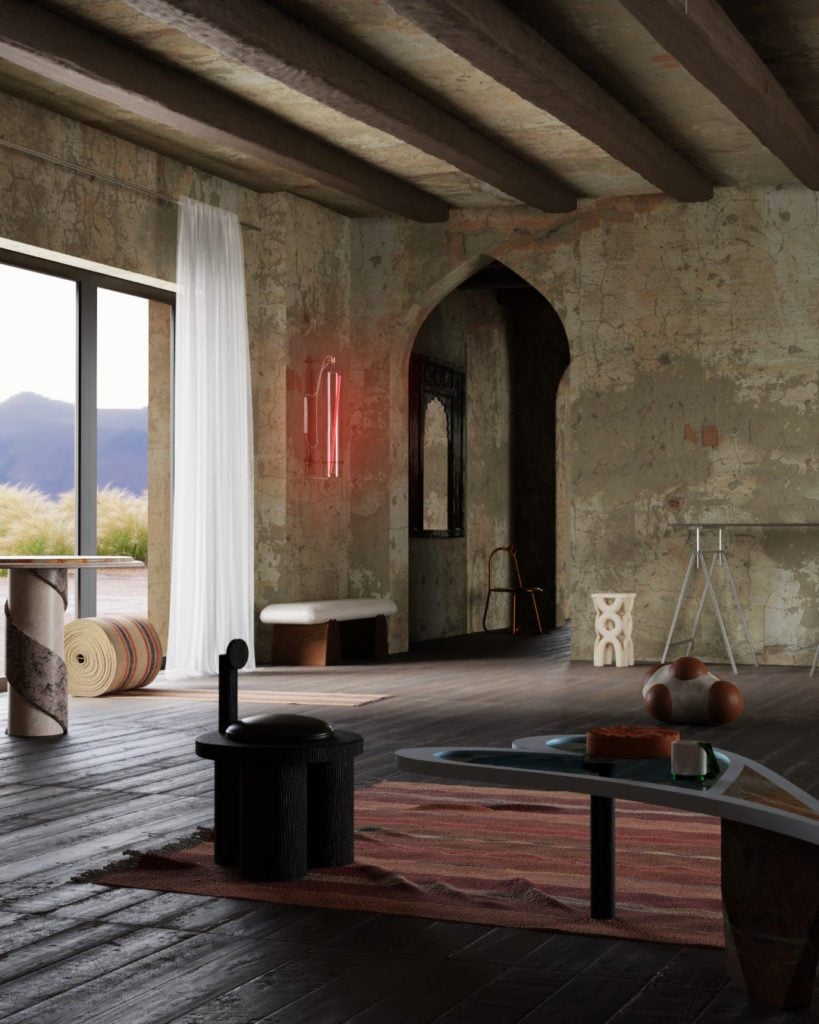
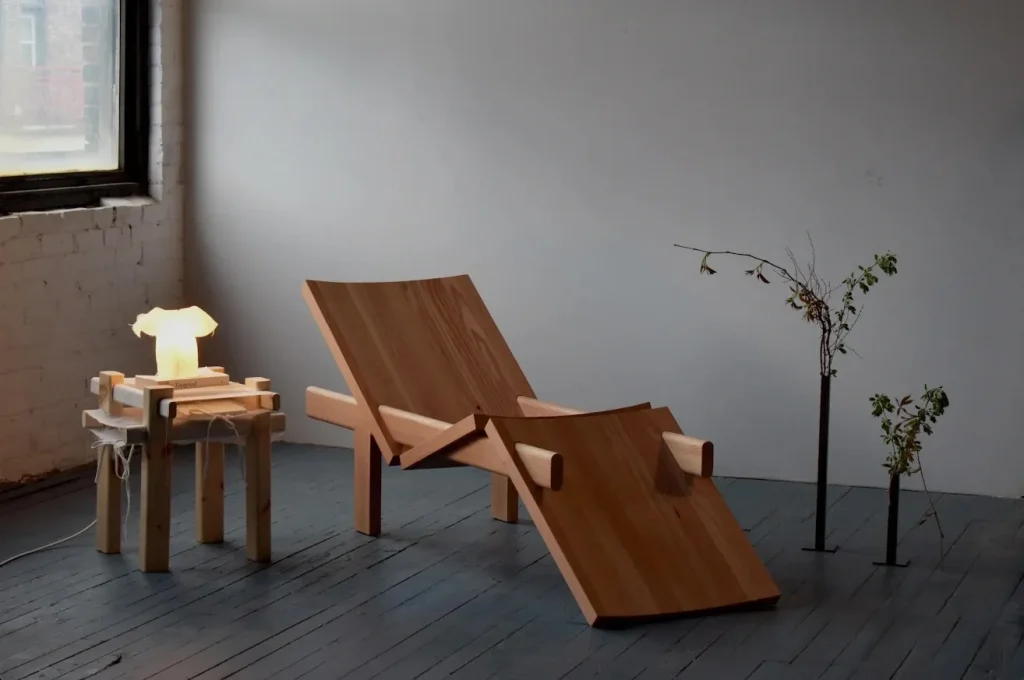
Set against the wood and stone of a traditional apartment, Craft & Symbol focuses on the vitality of craft and the presence of the imperfect gesture in contemporary Turkish design. Process takes center stage, and the collaboration between designer and craftspeople is foregrounded to show the physical and symbolic acts of making. In his third collection for ADORNO, Gökhan Karakuş builds on The Hidden Hand and The Istanbul Collection. Specifically, his interest here lies in a new generation of designers, whose work led him to “reassess the role of symbol, representation, and iconography in design from Turkey.”
“Gestures ranging from the perfect to the imperfect are an important factor in the final form of an object. They determine the shape and contours of objects in their realization, and have an underlying iconic potency. For thousands of years, the performance of the hand in cutting, shaping, molding, and chiseling materials was the key factor in the final form of many objects. The hand’s capabilities and limitations guided the process in which function was realized, and also resulted in the aesthetics and stylization of the object, generating what can be described as ‘latent symbolic force’.”
Through the work of eleven designers, the collection shows how craft techniques continue and how symbolism enters an object through process. Bright color, local materials and unexpected forms acknowledge the scene’s craft heritage while leaving room for each designer’s own identity in collectible design. Moreover, collaboration with craftspeople, artisans and other designers runs through every piece, merging several skills in a single object.
Craft & Symbol featured Antrepo Istanbul, Buket Hoşcan Bazman, Buşra Tunç, Errin Kancal, Ethnicloom, Mesut Öztürk, Sema Topaloğlu, StudioFER, Studio TimTim, Urban Atölye and Zoya. For the background to this group, see Karakuş’s earlier collection The Hidden Hand and our first look at contemporary design in Turkey.
Interview With Curator Gökhan Karakuş
Which three words would you use to describe the contemporary design scene in Turkey?
Fractured. Vibrant. Hands-on.

With your background as a designer, historian, and curator, which aspects of a designer’s practice draw your attention? Why?
As a curator, I use my background in the history of design to assess the value of a designer’s work. Many designers, especially in Turkey, have the idea that their work exists outside of cultural and historical continuums, in a sort of vacuum, but this is not the case. Design, like architecture, comes out of many, many years of developments in social taste, economic reality, and cultural views. That is why I try to select and work with designers who are aware of where and how their work arises. With some of them, like Sema Topaloğlu and Nilüfer Kozikoğlu, these relationships now span almost a decade.
Design in Turkey is a relatively new activity and profession, dating back about 50 to 60 years. I think we are still trying to understand what “design from Turkey” is about. As a designer, I have focused on pattern, geometry, materiality, and craft, which I see as central to design in Turkey, and I have applied them in my own studio, Emedya Design, where we have a particular focus on natural stone, creating marble mosaic panels and tables.
In parallel, I have looked for these same features in other designers: Elif Gönensay of Ethnicloom and, most recently, Özge Çağlayan of Antrepo Istanbul and Hülya Öz of Zoya. Craft is still central to the material culture of everyday life in Turkey, and its dynamics in form and style are what these designers have adopted and worked with. That has drawn my attention, because these are the aspects of contemporary culture in Turkey that make their work “Turkish design.”

How have you approached the curation of Craft & Symbol?
This process started about two years ago with my collection for ADORNO at the London Design Fair. There, I introduced designers, especially younger maker-designers, who were overtly using symbols and icons. It made me reassess the role of symbol, representation, and iconography in design from Turkey.
As the historian of post-war design in Turkey, I knew that the use of symbols of the past, especially from the Ottoman past, was taboo, which made symbols overall largely taboo in most design from the 1960s on. Designers graduating from the newly formed industrial design departments were discouraged from using overt symbols of Turkishness in favor of more abstract modernist forms. This was largely the case until the 2000s, when more direct references to Turkish culture, history, and craft appeared in design.
But now, we have a younger generation of designers with a more global view of design who are using local culture to their advantage to create original designs. They work with craft and craftsmen from Turkey in a way that allows them to be more experimental, and they are now freer in their use of symbols and icons. I started to see this in the work of Studio TimTim, Errin Kancal, and Buket Hoşcan Bazman, and felt that I needed to take this desire for a more “latent symbolism” into account.
I want to be clear that this use of symbols is not intended as a direct reference to the historic past or other cultural contexts. Rather, symbolism has a loose and latent presence, interwoven with materials and processes. These younger designers are clearly expressing a desire for meaning in their work.

The collection ranges from the detailed stonework of Errin Kancal to the playful vision of Studio TimTim and the atmospheric approach of Buşra Tunç. What does this range say about the design scene in Turkey?
Contemporary design in Turkey is fractured along lines determined by where the revenue for design practice comes from. On one side is the established interior design sector, where most designers work, following global interior trends and clients’ tastes; it is not an area of high-minded ideas. On the other is the academic world, where universities and institutions support idea-driven design based on research and experimentation. The Istanbul Design Biennial, for example, has given many academy-based designers room for experimental work in parallel to global themes. However, this work tends to reach a small audience of students and enthusiasts in cities such as Istanbul. You wouldn’t see much of it in people’s homes or offices.
The designers in this collection exist between these two economies. Each is pursuing experiments in process, material, and symbolism, but with the goal of placing these designs in spaces for living in Turkey today. As a result, they create a middle ground, where they can sell objects with high-minded concepts to clients who want these ideas in their daily lives. I think this is an extremely important development, showing that our designers can pursue interesting ideas and sell them to local Turkish society as a grassroots effort.
I have worked with many of these designers over many years to fine-tune their ideas with this goal in mind: commercially viable, high-minded design grown out of Turkey’s material reality and cultural context. Craft & Symbol is the culmination of my efforts over the last decade to “grow” this kind of design in a sustainable way.

Both Craft & Symbol and The Hidden Hand highlight the continuation of craft traditions. How do contemporary designers adapt these techniques?
Each of the designers respects the time and effort that goes into making a fine object by hand, and they are all very hands-on. Some work directly with craftspeople, co-creating designs, while others make the pieces themselves using craft traditions. In each case, technique, craft, and design are developed together to make something new, yet with respect to tradition.
In Turkey, we have many traditional handcrafts, such as carpet weaving or ceramics. Unfortunately, most of these traditions have not developed and are mired in kitsch or static forms of bygone eras. The challenge these designers have taken on is to update them in design and form, to make them living traditions. Özge Çağlayan’s woodworking and Buşra Tunç’s handwork in steel and industrial materials take each practice beyond craft while keeping the hand as an aesthetic. Mesut Öztürk takes the long tradition of Turkish ceramics in a completely different direction, as ceramic furniture. Elif Gönensay’s hemp rugs emphasize the texture of the weave over the symbols and geometries normally found in Turkish rugs. And StudioFER’s leather textures, set by hand into a wooden stool, carry Turkey’s leather craft into furniture.

What do you see beginning, changing, or continuing in the future of contemporary Turkish design?
The change I see is a vibrancy in making and designing within a sustainable economic process. Through social media and the digital realm, designers can now sell their self-produced work to a wider world, which makes it possible to create interesting objects at small scales. ADORNO is very much at the center of giving designers access to a global perspective.
For contemporary Turkish design, this is an important step toward a global market. Our designers will be on the international market by their own means and under their own names. There will be an identity for Turkish design where previously there was almost none. Interestingly, I think the local market will see these designers getting international attention and take them more seriously. Right now, the market in Turkey for the kind of collectible design shown in Craft & Symbol is nonexistent.
I think this will be a two-pronged dynamic: first, the development of a local market and collector base for collectible Turkish design, and second, contemporary Turkish design collectively on the international stage, reshaping design in Turkey. Many of these designers cannot yet be found at international biennials and events, and I will be working to place Turkish design there, as well as in exhibitions and museums. Consequently, I hope there will be a larger, more sustainable economy around Turkish design, and more opportunities for all of us who design in Turkey.
Buşra Tunç on ADORNO Today
Of the eleven studios in Craft & Symbol, Istanbul designer Buşra Tunç, who works as TUNK, still shows her work on ADORNO. Her practice turns industrial materials into collected objects: bolted steel in the Life Cabin Vase D, folding aluminum in the T1: Span Table and laboratory glass in the Äther lamps. For more glass lighting, see our wall lamps.
Äther Wall Lamp In Borosilicate Glass by Buşra Tunç

Custom laboratory glass encloses a tinted fluorescent tube, held in place by laboratory clamps like a specimen in a bell jar. Notably, Tunç treats the disappearing fluorescent tube as something worth keeping, so the lamp reads as much as a collected object as a light. At 25 x 12 x 130 cm (10 x 5 x 51 in), it draws a tall line of red light along a hallway or a bare wall.
By Buşra Tunç
€850 incl. tax



Responses