Rustic is not a finish you add. It is what is left when the wood is allowed to show what it did.
Updated on: November 12, 2026
Rustic furniture is often mistaken for distressed furniture, and the difference matters when you are spending five figures. Distressing is a finish applied to new material to imitate age. Rustic, properly, means the material’s own irregularity is left visible: the grain, the knots, the color variation the tree actually had.
Below are five rustic cabinets and sideboards in solid parota, walnut, cabreúva and wenge, from studios in Mexico, Brazil, the UK and the US. Each is priced, and most are made to order. First, how to tell rustic from distressed, which woods to look for, and how to size a sideboard for your room.
What Makes Furniture Rustic Rather Than Distressed?
Three things separate the two, and all are visible on inspection.
The irregularity is in the material, not the finish. A rustic piece shows what the timber did: knots left in place, sapwood not cut away, color running unevenly across a panel. A distressed piece shows what a tool did to it afterward, and the marks tend to repeat because they were applied in batches.
Joinery is visible on purpose. Exposed tenons, pegged joints and hand-turned metal parts are all part of the language. If the construction is hidden, the piece is usually referencing rustic rather than being it.
No two pieces match. This is the practical consequence, and the thing to be ready for: order two of the same rustic sideboard and they will differ, sometimes considerably. That is the point, but it does mean photographs are indicative rather than exact. For the wider style, see our guide to rustic design.
Which Woods Make the Best Rustic Cabinets?
Rustic cabinets depend on solid, characterful timber. These are the woods behind the pieces below, and what each brings.
Parota (huanacaxtle). A Mexican tropical hardwood, honey-brown with bold, wavy grain. It is lighter than most exotic hardwoods, which makes large carved pieces practical. Indeed, Oaxaca studio Comité de Proyectos uses it widely, including in furniture for the Ennea Hotel that Wallpaper* reviewed.
Walnut. Dark, dense and even-textured, with grain that deepens as it ages. Reclaimed walnut carries its earlier life in small marks and offcut sizes.
Cabreúva. A Brazilian hardwood with a reddish tone and a natural, slightly spicy scent, prized for durability.
Wenge and Rosa Morada. Wenge is almost black, with strong straight grain; Rosa Morada, another Mexican hardwood, is unusually variable from board to board.
How to Size a Rustic Sideboard
A sideboard should feel related to the room, not squeezed into it. As a rule of thumb, choose a length about two-thirds of the wall it stands against, and leave at least 90 cm (35 in) of clearance in front so doors and drawers open comfortably.
Depth usually runs from 40 to 50 cm (16 to 20 in); anything deeper starts to crowd a dining room. Height matters too: around 75 to 90 cm (30 to 35 in) keeps the top at a useful serving height and leaves room for art above. Furthermore, a rustic piece already carries visual weight, so give it a little more space around it than a lacquered one. For the differences between storage types, read credenza vs sideboard vs cabinet.
5 Rustic Cabinets and Sideboards
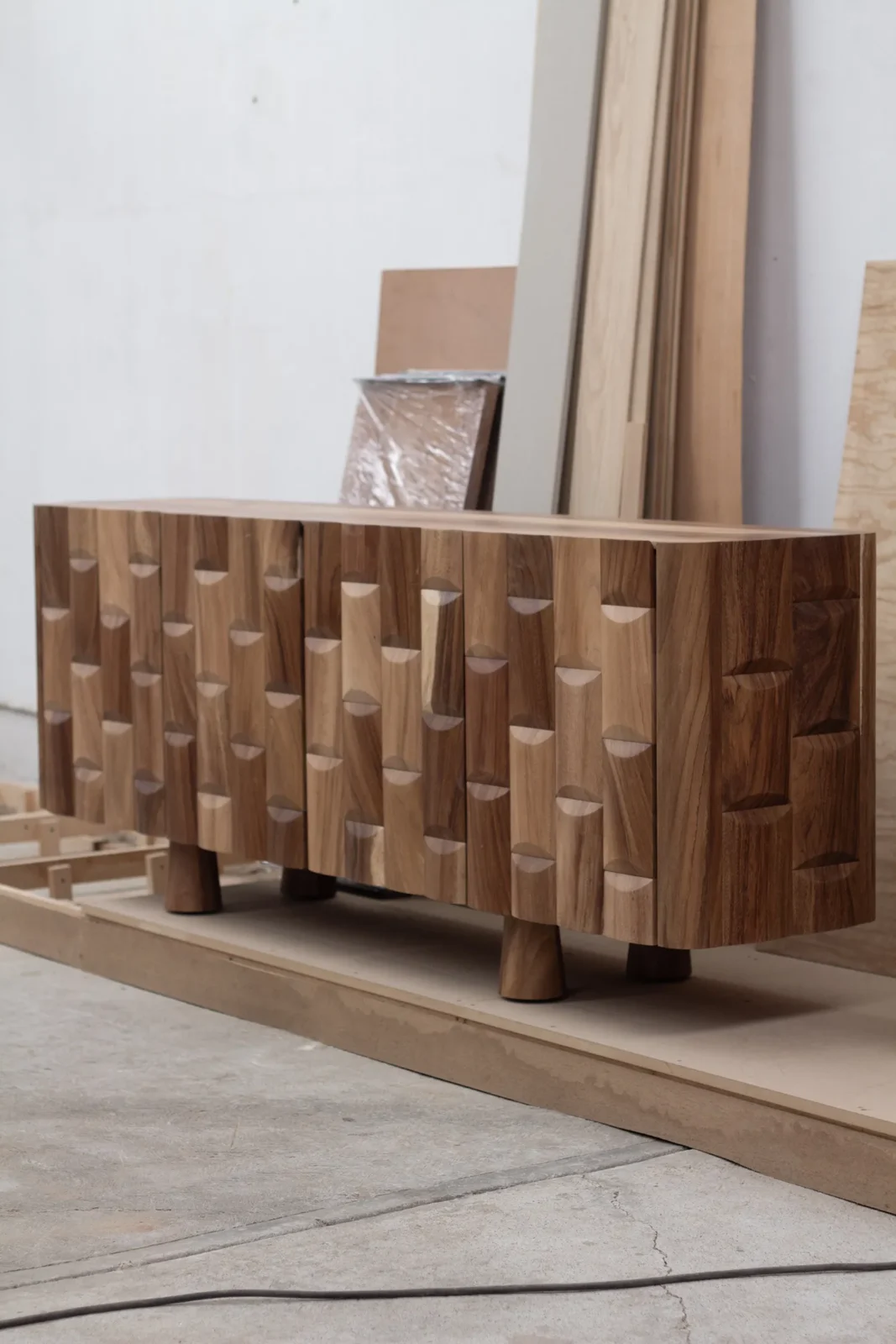
Phloem, Parota Wood Carved Credenza – Cabinet by CMX | Furniture
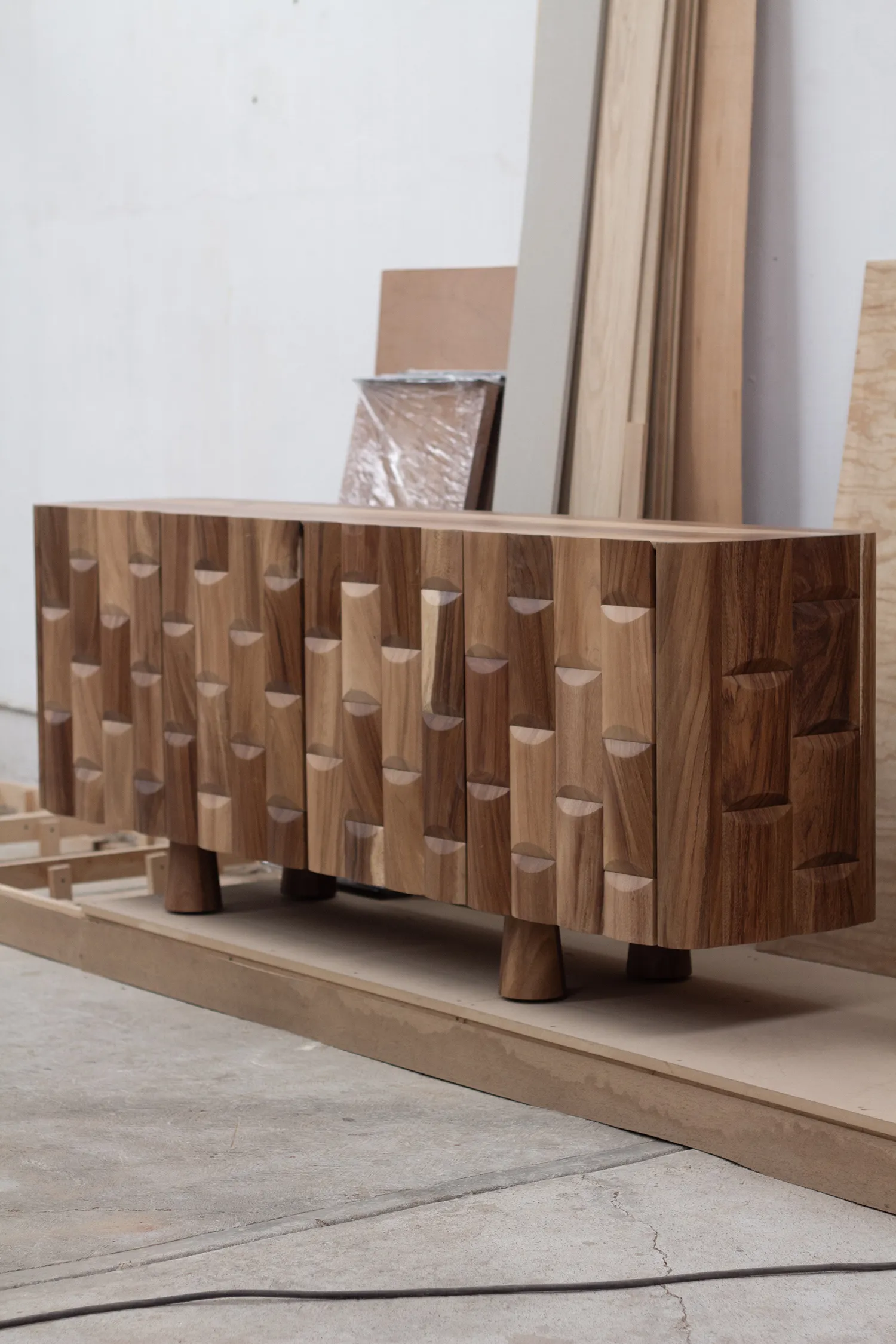
Mexico City studio CMX carves the front of Phloem from solid parota, a honey-brown tropical hardwood, into a rhythm of deep geometric blocks taken from the structure of plants. As a result, the façade shifts through the day as light moves across the cuts. At 200 x 42 x 75 cm (79 x 17 x 30 in), it anchors a dining room or a long living room wall.
By CMX | Furniture
€15,086 incl. tax
Rosomak – Garage Unit Wood Cabinet by StorqueStudios

StorqueStudios built Rosomak from walnut panels found in a skip around the corner from its London studio, offcuts discarded by high-end furniture makers. Notably, that makes it rustic in the truest sense: the wood’s history is part of the piece, not a finish. At 78 x 45 x 90 cm (31 x 18 x 35 in), it fits a hallway, a bedroom or a small living room.
By StorqueStudios
€1,794 incl. tax
Brocado Cabinet – Cabreúva Wood / Embroidered Glass by YANKATU
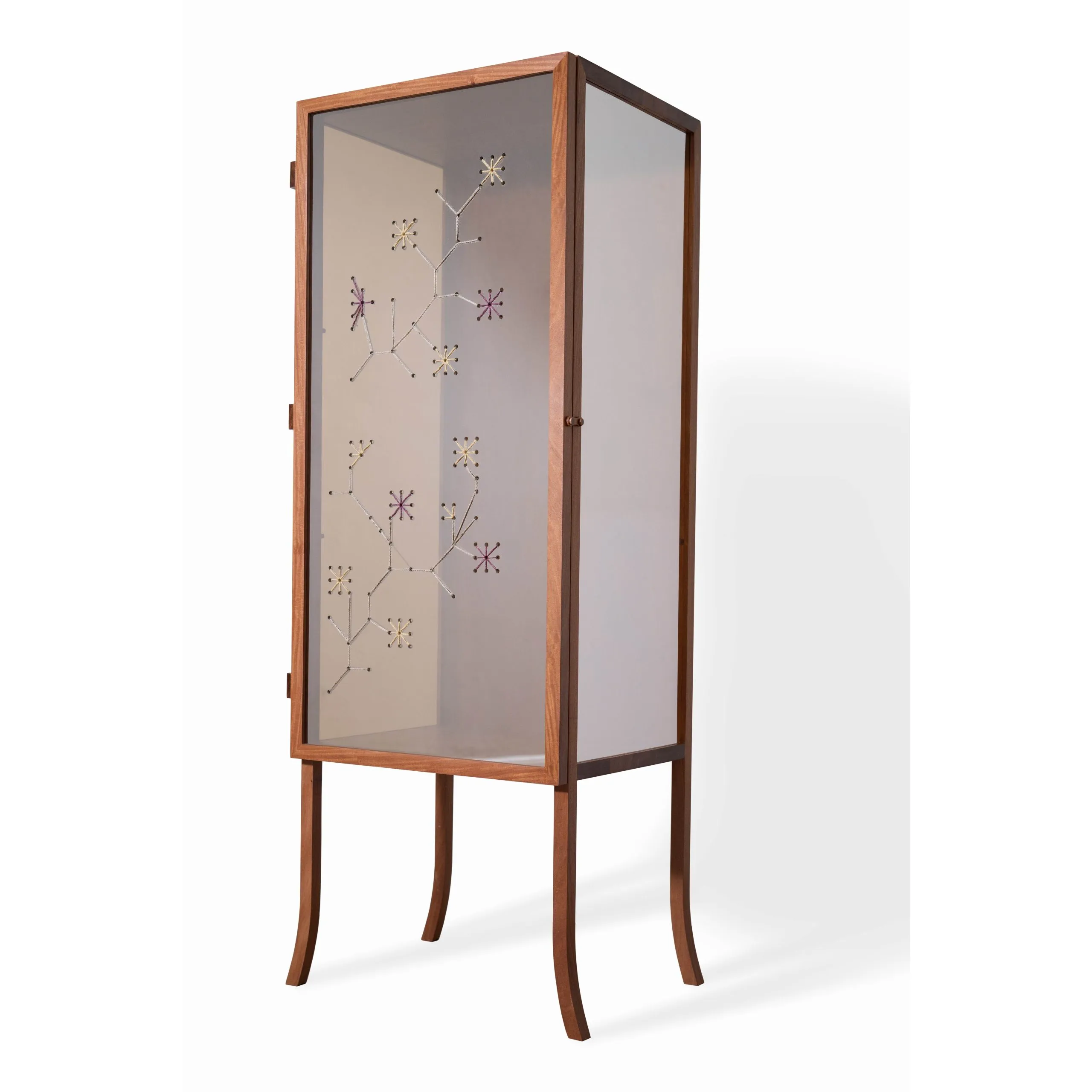
YANKATU builds Brocado in solid cabreúva and works traditional embroidery directly onto its bronze glass, so the pattern spills from fabric onto the door. The naturally dyed yarns take their tones from church paintings in Tiradentes, Minas Gerais, and the embroidery is by the artisan D. Maria Conceição de Paula. At 43 x 57 x 145 cm (17 x 22 x 57 in), it works as a display cabinet in a living room or a hallway.
By YANKATU
€5,100 incl. tax
Vilma Display Cabinet by Comité de Proyectos

Vilma is one of three sentinels in Comité de Proyectos’ Centinelas collection, a series about care as a way of holding and organizing what surrounds us. An arched parota vitrine sits on a drawer base wrapped in woven natural fiber, with carved wood and hand-turned metal details. At 95 x 60 x 182 cm (37 x 24 x 72 in), it is a statement display cabinet for a dining or living room.
By Comité de Proyectos
€15,800 incl. tax
Timujin Wenge Wood Cabinet by Brett Paulin

Brett Paulin handcrafts Timujin from solid wenge, a dark, strongly grained African hardwood, and cuts its surface into an intricate checkerboard. Moreover, the raised squares catch light and shadow, so a plain box becomes a field of texture. At 81 x 38 x 76 cm (32 x 15 x 30 in), it is compact enough for a bedroom or a study.
By Brett Paulin
€11,366 incl. tax
Frequently Asked Questions
What is rustic furniture?
Furniture where the material’s own irregularity is left visible: grain, knots, color variation and often the joinery. It differs from distressed furniture, where a finish is applied to new material to imitate age.
What is the difference between rustic and distressed furniture?
Where the irregularity comes from. Rustic shows what the timber did; distressed shows what a tool did to it afterward. The practical tell is repetition: applied marks tend to recur in patterns, because they were made in batches.
Does rustic furniture work in a modern interior?
Yes, and usually better as one piece than several. A single solid-timber sideboard against otherwise restrained furniture reads as deliberate, while a room of rustic pieces tips into theme. Keep the surrounding palette quiet and let the grain be the only pattern.
Will two rustic pieces match?
No, and you should plan for that. Solid timber varies board to board, so ordering a pair means accepting two different objects. If a close match matters, ask the studio whether both can be cut from the same log.
How do you care for a solid wood sideboard?
Keep it away from radiators and direct sun, both of which dry timber unevenly and open joints. Wipe spills rather than letting them sit, and re-oil an oiled finish every year or two. Unlike veneer, a solid piece can be sanded and refinished indefinitely.
For more, see sideboard cabinets, wooden storage and wooden credenzas, or browse all rustic design on ADORNO →