Storage used to be the furniture you tried not to notice. The best of it now asks to be looked at.
Updated on: October 30, 2026
Credenza, sideboard, buffet, cabinet: the words are used almost interchangeably in shops, yet each began as a different piece of furniture with a different job. Knowing which is which makes it easier to choose the right one for a dining room, a living room or a hallway.
This guide explains what a credenza is, the difference between a credenza vs sideboard, buffets and cabinets, how to choose designer storage for your space and how to care for it, with nine storage pieces by independent studios: cabinets, credenzas, sideboards and open shelving.
What is a credenza?
A credenza is a long, low storage cabinet, usually with doors rather than drawers, and short legs or none at all. The word is Italian for belief or trust. In Renaissance Italy, the credenza was a side table where a servant tasted food and drink before it was served, to show it was not poisoned. Over time the table gained doors and became a place to store and display tableware.
Today a credenza is the most flexible piece of storage: a media unit in the living room, a long surface in a hallway, or a filing cabinet behind an office desk. It is typically 60 to 80 cm (24 to 32 in) tall, low enough to sit under a window or a large artwork without blocking it.
Credenza vs sideboard vs buffet vs cabinet
- Sideboard: a dining-room piece for serving and storing tableware, usually on legs and about 80 to 95 cm (32 to 37 in) tall, often with drawers above and cupboards below. The top is used to set out dishes during a meal.
- Buffet: nearly the same as a sideboard. In the US the two words are used for the same thing; traditionally a buffet is larger, sometimes with shorter legs, and stands in the dining room.
- Credenza: lower and often longer than a sideboard, with doors instead of drawers, sometimes sliding. It works in any room, not only the dining room.
- Cabinet: any piece with shelves behind doors, but in practice the vertical one, taller than it is wide. Display cabinets have glass doors; bar cabinets have fittings for bottles and glasses; wall cabinets hang above the floor.
In short: a sideboard is for the dining room, a credenza can go anywhere, and a cabinet goes up rather than along. Open shelving and bookcases are the alternative when you want to see what you store rather than hide it.
How to choose designer storage
- Measure the wall and the walkway: leave at least 90 cm (35 in) of clear space in front for doors and people to pass.
- Match the height to the room: a low credenza keeps sightlines open in a living room; a taller sideboard gives a better serving height in a dining room.
- Decide what you will store: plates and glasses need deep shelves, records need 33 cm (13 in) of height, files need drawers.
- Doors or open shelves: doors hide clutter, open shelves show what you love. Many rooms need both.
- Think about the material: solid wood ages and can be repaired; metal is precise, durable and easy to clean; rattan and woven fronts let air through and soften a room.
Storage has also become a place for designers to experiment. Wallpaper* followed Roman and Williams as they made a sapele credenza with shelves sized for porcelain, and Kelly Wearstler’s collection includes a sculptural credenza in hand-formed resin over walnut.
9 designer storage pieces by independent studios
Each piece comes from a different studio and is available on ADORNO, ordered by demand on ADORNO over the last 90 days.
Medicine Cabinet by BOTHI

Amsterdam studio BOTHI folds this wall cabinet from raw aluminum, closes it with a stainless steel door and gives it a hand-carved mahogany knob, different on every piece. It is the smallest kind of cabinet, made for a bathroom, hallway or kitchen wall, and the most affordable piece here. It is made in the Netherlands and ships in four to six weeks.
By BOTHI
€330 incl. tax
Rosomak – Garage Unit Wood Cabinet by StorqueStudios

British studio StorqueStudios built Rosomak from walnut panels found in a skip outside a furniture workshop, discarded after a measuring mistake. The front is a row of vertical slats with a carved handle hooked over the top. It is named after the wolverine, rosomak in Polish, for the stubborn pile of wood that waited two winters to become a cabinet. It measures 88 x 52 x 99 cm (34.6 x 20.5 x 39 in).
By StorqueStudios
€1.794 incl. tax
Bells And Whistles Cabinet by Toro Manifesto
Designed by Kiki Goti for Toro Manifesto, this long cabinet stands on bell-shaped legs of cast aluminum, drawn from the craft of bell-making. Its doors are curved like pillows and seem pressed in by the aluminum knobs. At 220 x 70 x 90 cm (86.6 x 27.6 x 35.4 in), it has the height of a sideboard and the presence of a sculpture, and the dimensions can be adjusted.
By Toro Manifesto
€18.260 incl. tax
Forma Apta Shelving by studiolehn
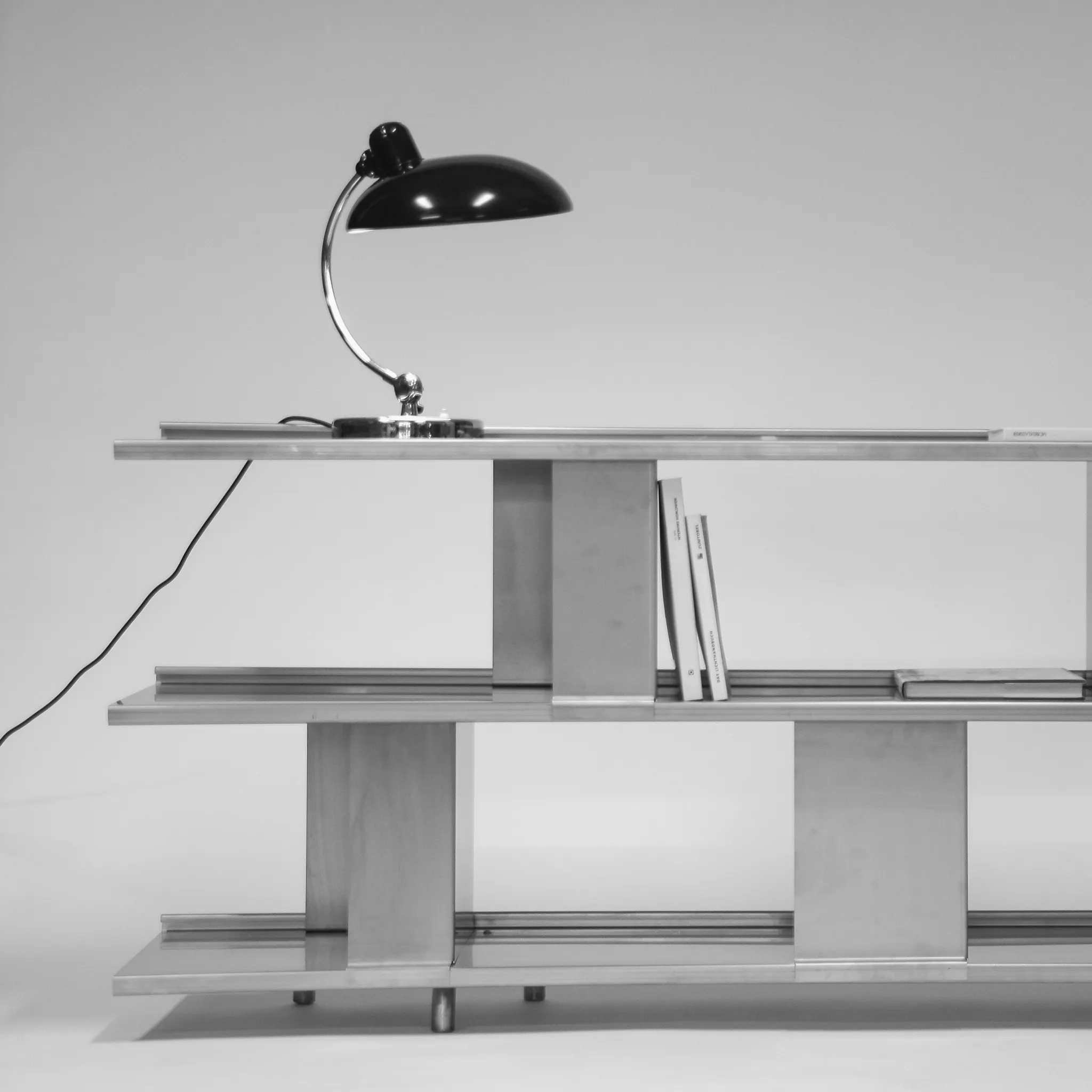
Berlin studio Studio Lehn folds forma apta from 2 mm (0.08 in) sheet metal and reduces it to two components that lock together without screws or tools. The system can be taken apart, extended and rebuilt as needs change. Open shelving like this suits books and objects you want to see, the opposite of a closed credenza.
By studiolehn
€1.592 incl. tax
Stack 086 by studio MOTO
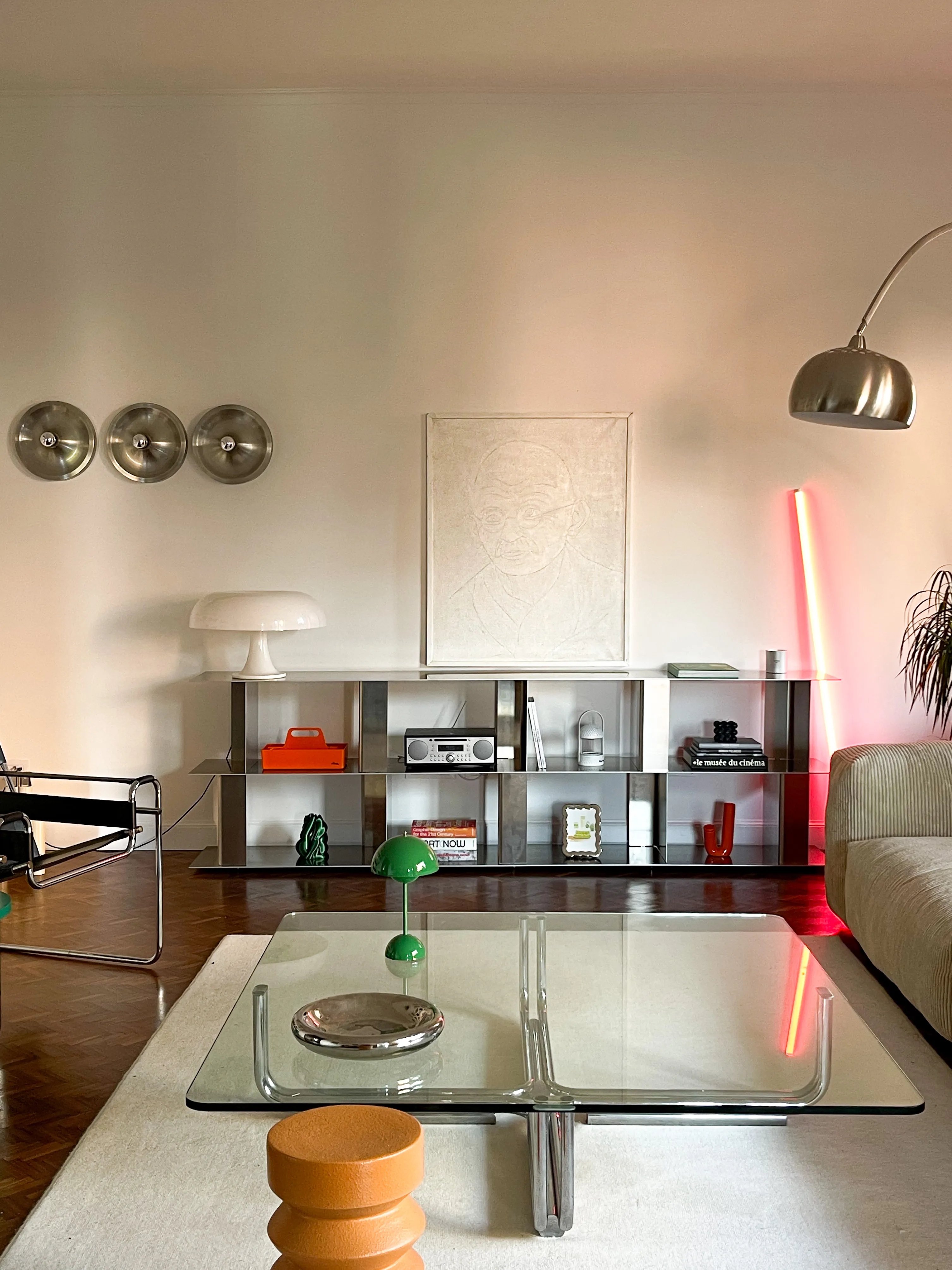
Belgian studio MOTO stacks raw, untreated industrial aluminum into open, low shelving that does the job of a credenza without doors. The metal keeps its marks and patinates over time. Long and low, it sits under a window or a large artwork and holds records, books and a turntable.
By studio MOTO
€2.930 incl. tax
Ventura Cabinet by Joyful Objects, Yes!

Mexican studio Joyful Objects, Yes! wraps the Ventura cabinet in woven rattan with a wavy outline and sets it on stepped wooden legs. Two blue ring handles look back at you like eyes. It is a cabinet that refuses to be serious, and custom colors are possible for special projects.
By Joyful Objects, Yes!
€6.900 incl. tax
Sonar System by form & eisen
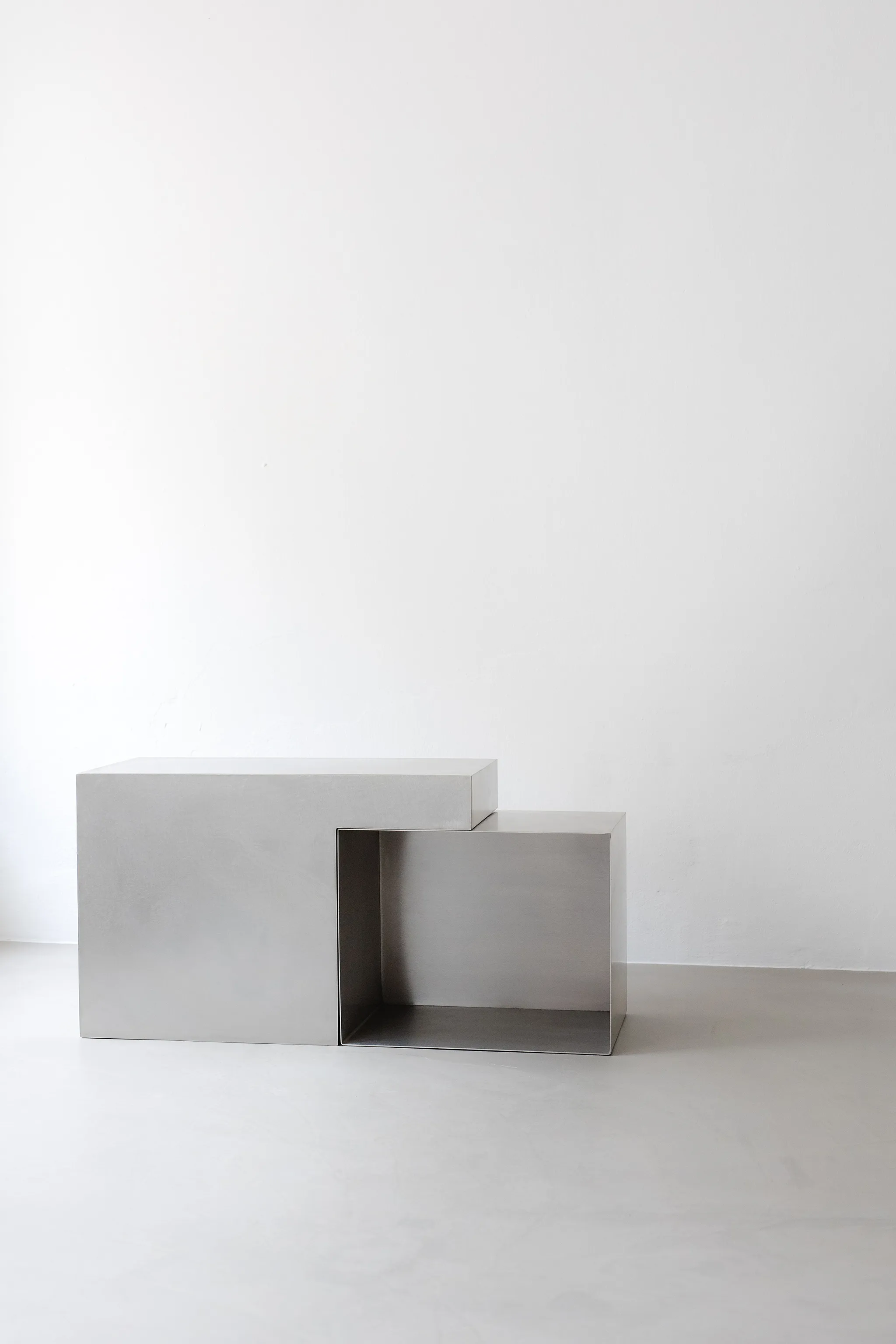
Austrian studio form & eisen builds Sonar from 2 mm (0.08 in) brushed stainless steel cubes, each open on one side and closed at the back. Combined, they form anything from a side table to a low sideboard for vinyl records and books. The outside is brushed by hand and the inside has a softer finish that calms reflections. It is new on ADORNO this fall.
By form & eisen
€1.000 – €2.667 incl. tax
Chain Mail (two-door Cabinet) by ZEMNA

Ukrainian studio ZEMNA cuts the doors of this cabinet by CNC into a pattern of openings that recalls chain mail. The holes let air move through, which helps whatever is stored inside, and the rounded corners hide the construction like oval armor. The wood is tinted with water-based paint and finished with an eco-friendly varnish.
By ZEMNA
€6.000 incl. tax
Salomón Credenza – Solid Rosa Morada Wood by Kresta Studio

Mexican studio Kresta builds the Salomón credenza from solid Rosa Morada, a warm Mexican hardwood, finished with a natural matte oil. Grooves machined into the fronts act as handles, and the doors close slowly on soft hinges. At 220 x 50 x 60 cm (86.6 x 19.7 x 23.6 in), it is the classic credenza: long, low and quiet.
By Kresta Studio
€2.500 incl. tax
Where to use each type of storage
In a dining room, a sideboard keeps plates, linens and glasses close to the table and gives you a surface for serving. In a living room, a low credenza works as a media unit and a base for lamps and art. In a hallway, a slim credenza or cabinet catches keys and mail; for more ideas, see our guide to entryway tables. In a home office, open shelves or bookcases keep books in reach while a closed cabinet hides paperwork.
How to care for storage furniture
Dust with a soft, dry cloth and wipe spills at once. Oiled wood such as walnut or Rosa Morada needs a fresh coat of oil once or twice a year; lacquered and painted wood only needs a damp cloth. Raw aluminum and stainless steel can be cleaned with mild soap and water; raw aluminum will slowly develop a patina, which is part of its character. Do not overload shelves beyond what the maker recommends, and anchor tall cabinets and shelving to the wall, especially in homes with children.
FAQ
What is the difference between a credenza and a sideboard?
A sideboard is a dining-room piece, usually on legs and about 80 to 95 cm (32 to 37 in) tall, often with drawers. A credenza is lower and often longer, usually with doors instead of drawers, and it can be used in any room.
What is a credenza used for?
A credenza stores and displays things in a living room, hallway, dining room or office. It is often used as a media unit, a filing cabinet behind a desk or a surface for lamps and art.
Is a buffet the same as a sideboard?
Mostly. In everyday use the words mean the same thing. Traditionally, a buffet is the larger of the two and stays in the dining room.
How tall should a credenza be?
Most credenzas are 60 to 80 cm (24 to 32 in) tall. Choose a lower one under a window or wall-mounted TV, and a taller one if it will be used for serving.
Can a credenza be used as a TV stand?
Yes. Its low height and closed storage make it one of the best media units. Check that it is deep enough for your equipment and has openings for cables.
What is the difference between a cabinet and a credenza?
A cabinet is usually vertical, taller than it is wide, while a credenza is horizontal, long and low. Both store things behind doors.
Browse all designer storage on ADORNO, or read our edit of wooden credenzas and cabinets.