Glass furniture does something no other material can: it takes up space without taking up the view. A glass table or a glass mirror lets light travel through a room and makes even a small space feel open.
Updated on: November 26, 2026
For a long time, glass in the home meant a sheet of clear tempered glass on a metal frame. Independent designers have changed that. Today glass furniture is blown, cast, thermoformed and hand-silvered, colored or rippled, and it is as likely to be sculptural as it is to be invisible.
Here is a short guide to the main types of glass used in furniture, how to use glass pieces at home and how to care for them, followed by 8 glass furniture designs from independent studios, from coffee tables and side tables to wall mirrors.
Glass Furniture: A Short History
Glass has been used in interiors for centuries, in windows, mirrors and lighting, but furniture made entirely of glass is surprisingly recent. In 1971 the Italian company Gallotti & Radice launched the Adam table, a transparent slab on curved glass legs that is widely considered the first table made entirely from glass, as Wallpaper* reports. Since then, advances in tempering, bending and casting have made glass strong enough for tables, chairs and shelves, and studios now push it in far more expressive directions.
Types of Glass Used in Furniture
Tempered glass is heat-treated to be about four to five times stronger than ordinary glass. If it does break, it shatters into small, blunt pieces, which is why it is the standard for glass tabletops and shelves.
Cast glass is poured into a mold. It can be thick, textured and rippled, with a depth that looks almost liquid.
Blown glass is shaped from a molten gather with breath and tools, giving soft, rounded volumes. Read more in our guide to glass blowing techniques.
Thermoformed or bent glass is a flat sheet heated until it slumps over a mold, which allows a whole table to be made from a single curved piece.
Acrylic glass, also known as Plexiglas or Perspex, is a lighter plastic alternative that can be colored, glued into boxes and cut into precise shapes.
Mirror glass is glass with a reflective silver or aluminum coating on the back. When the coating is applied by hand, the edges can be left irregular and expressive.
How to Use Glass Furniture at Home
Start where light and space are scarce. A glass coffee table or glass side table keeps the floor visible, so a small living room feels larger and a rug or a wooden floor stays on show. In a dining room, a glass top over a wooden or patterned base lets you enjoy both.
Use glass to balance heavier pieces. A clear table next to a deep velvet sofa or a chunky wooden sideboard lightens the composition. Colored or tinted glass adds a glow when the sun moves across it, and our edit of colored glass decor shows how to layer it with smaller objects.
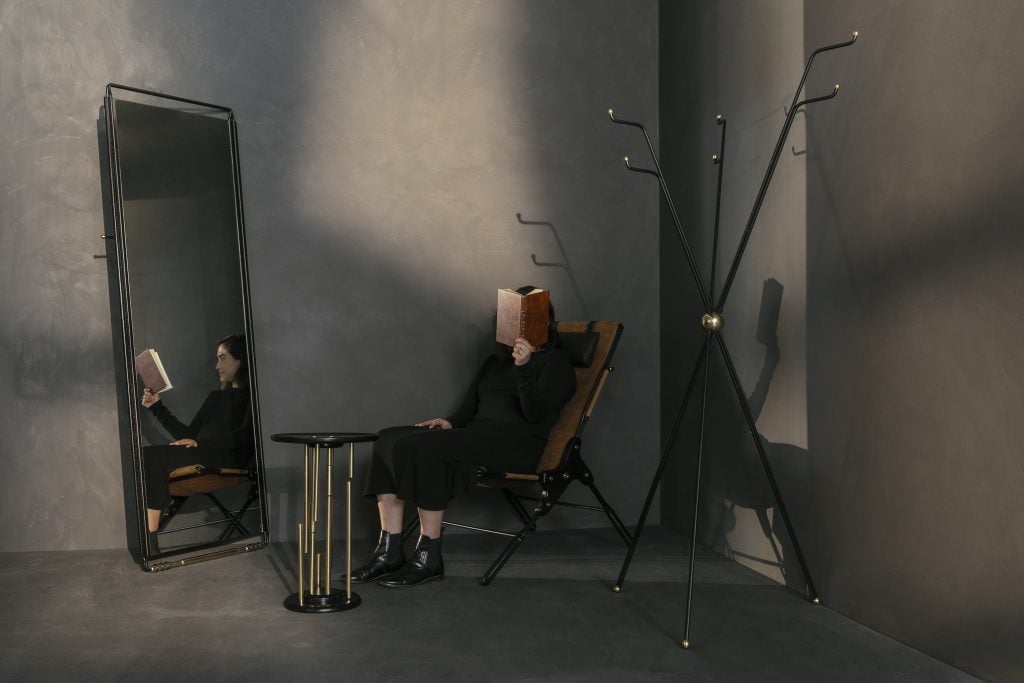
Place mirrors to multiply light. A glass wall mirror opposite or beside a window bounces daylight deeper into the room. Sculptural mirrors with irregular edges also work as art above a console or a bed.
How to Care for Glass Furniture
Clean glass with a soft microfiber cloth and a mild glass cleaner or a mix of water and a little vinegar, and avoid abrasive pads that can scratch. Use coasters and felt pads under objects, and lift rather than slide heavy items across the surface. Check that tabletops are tempered or laminated, keep edges away from busy walkways, and leave at least 45 cm (18 in) between a coffee table and the sofa so legs and knees have room.
8 Glass Furniture Designs From Independent Studios
The Shifting Side Table by em ef studio
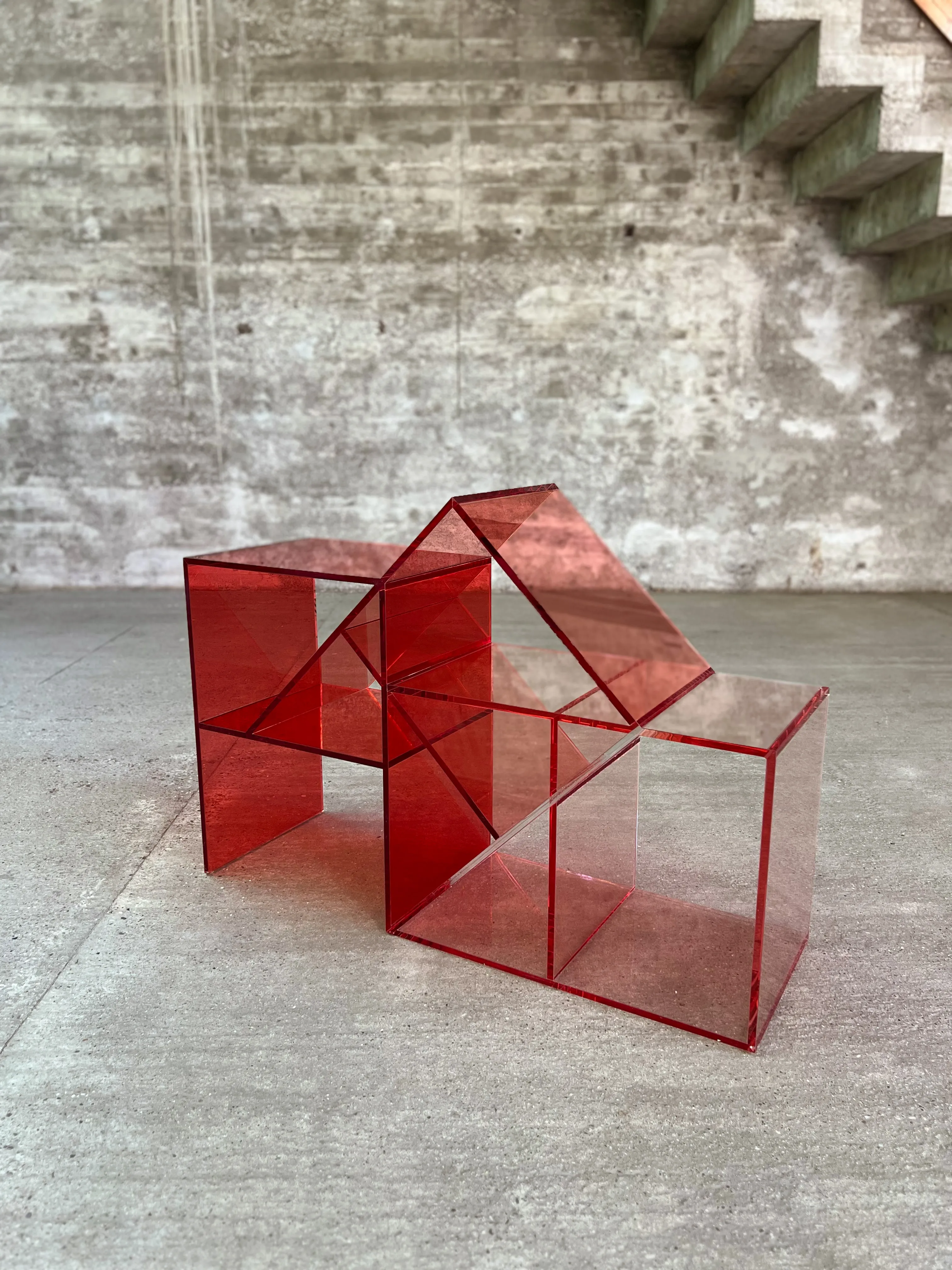
Part of em ef studio’s “in the moment” series, The Shifting is built from three interlocking acrylic glass boxes that tilt to one side in slow, successive steps, as if the table were caught mid-movement. Each element is finished in a graduated shade of translucent red, and the whole piece is made entirely by hand. At about 110 cm (43.3 in) long, it works as a side table, a low shelf or a piece of sculpture.
By em ef studio
€11,000 incl. tax
Labyrinth Dining Table by Benjamin Nordsmark
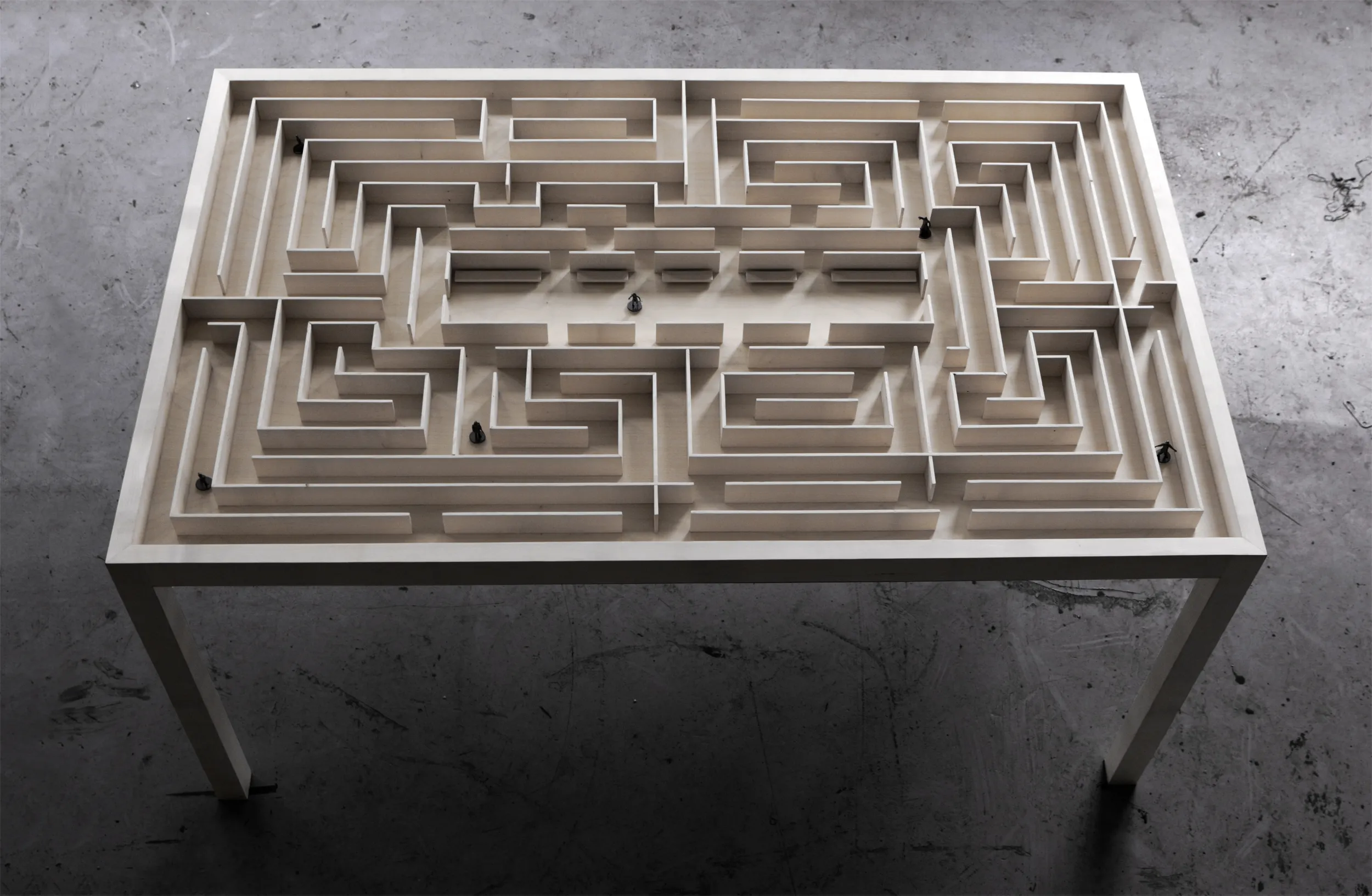
Benjamin Nordsmark hides a small world inside this dining table: a maple labyrinth sits under a sheet of diamond glass, and six figures can be steered through it with magnetic handles underneath. The glass top keeps the maze visible and the surface practical for everyday meals. A steel core clad in 5 mm (0.2 in) of solid maple makes it a table built to last for decades.
By Benjamin Nordsmark
€9,000 incl. tax
Paws Side Table by LMNOH
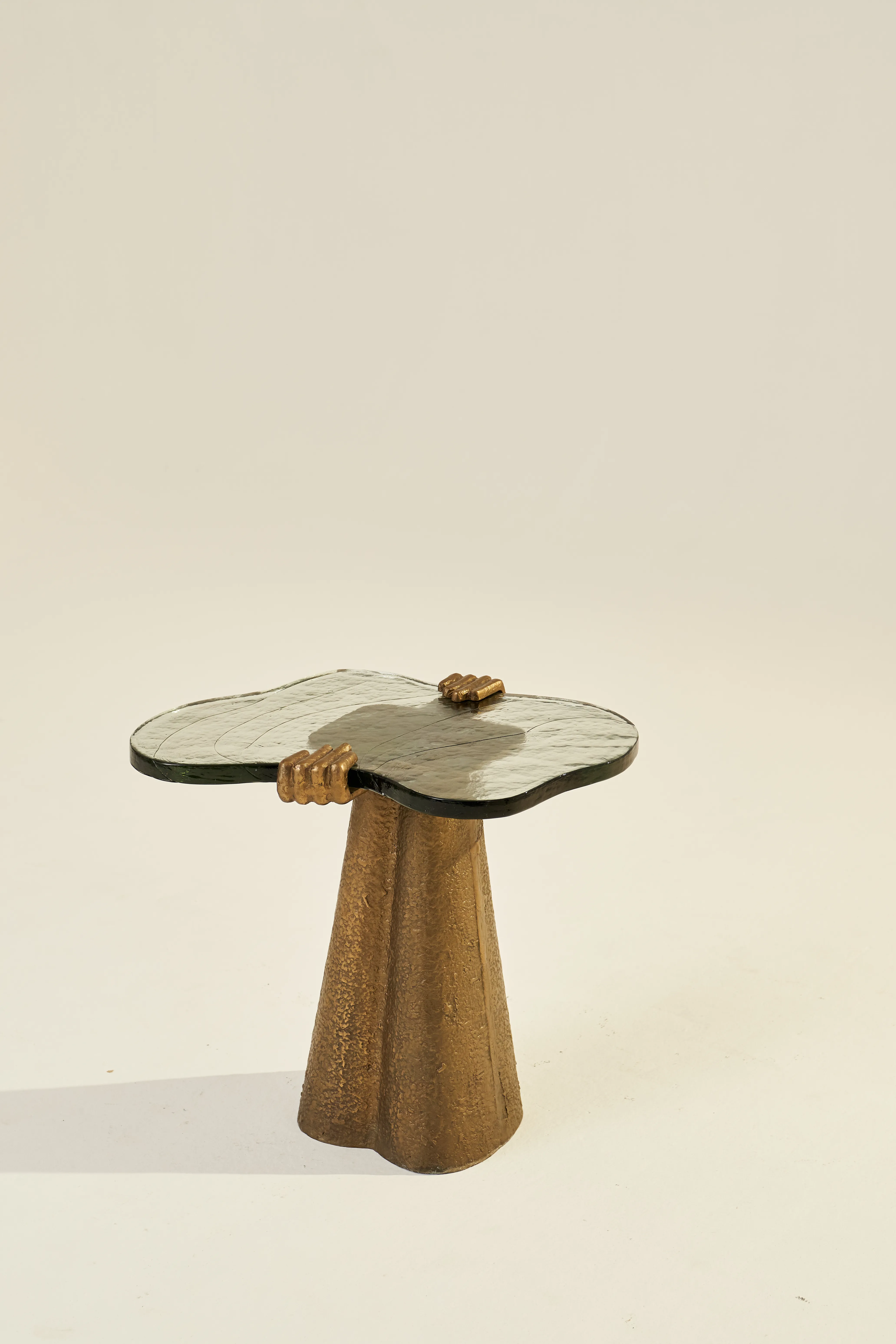
LMNOH’s Paws celebrates the rawness of cast aluminum in its fluted base, but the star is the thick cast glass top, held up by small sculpted paws that do the heavy lifting. Cast glass has a rippled, watery depth that clear sheet glass cannot match. Paws is a limited edition, and customization is available on request.
By LMNOH
€1,950 incl. tax
Umbra Wall Mirror by Hasik Design Studio
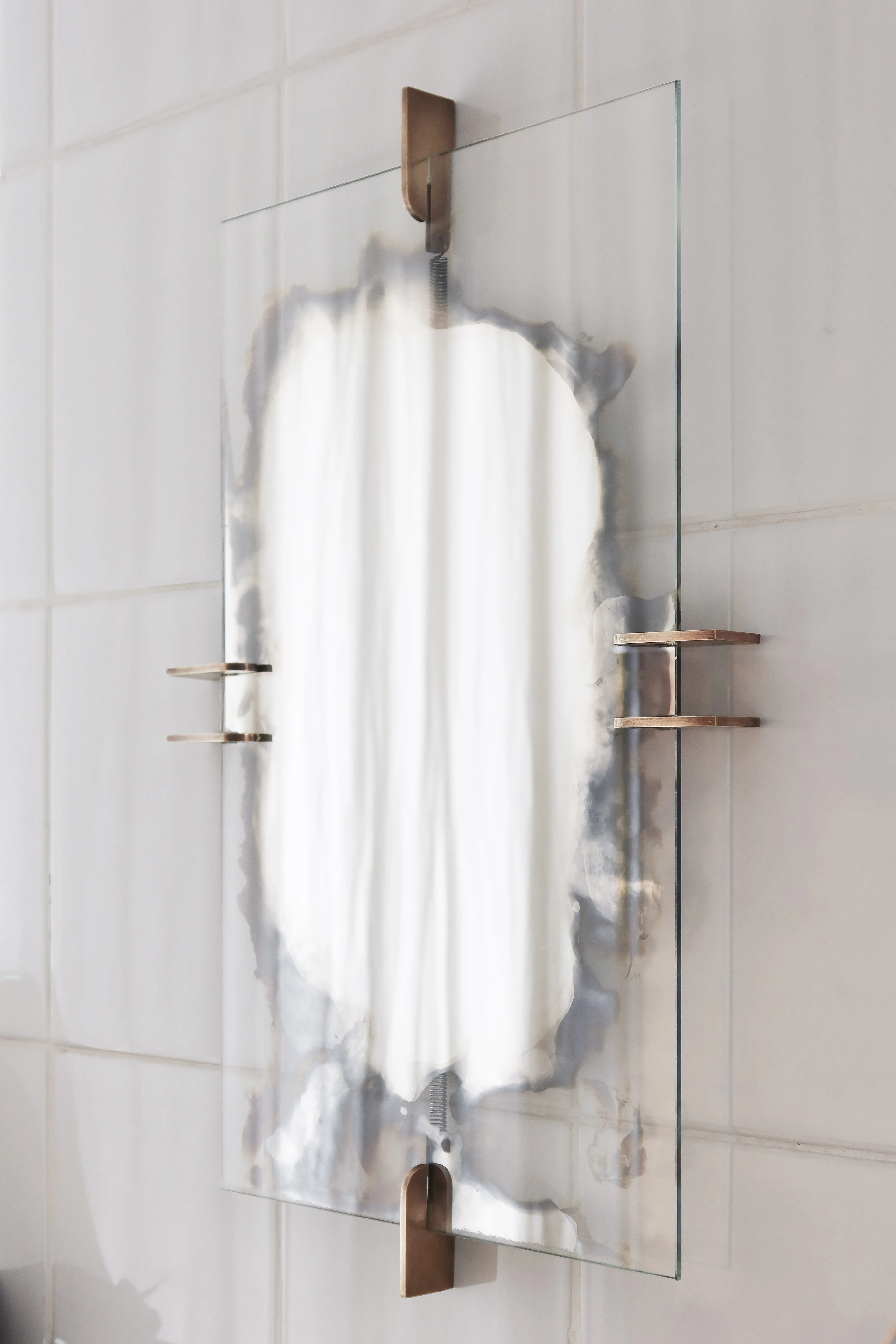
Hasik Design Studio suspends a 4 mm (0.16 in) glass pane in patinated brass holders stretched with steel springs. Because the mirror coating is applied by hand, its edge dissolves irregularly into clear glass, blurring what is reflected and what is real. The standard mirrored glass measures 30 × 49 cm (11.8 × 19.3 in), with larger sizes on request. Umbra premiered at Milan Design Week 2026.
By Hasik Design Studio
€1,500 incl. tax
Persona Mirror Sculpture by MILA ZILA
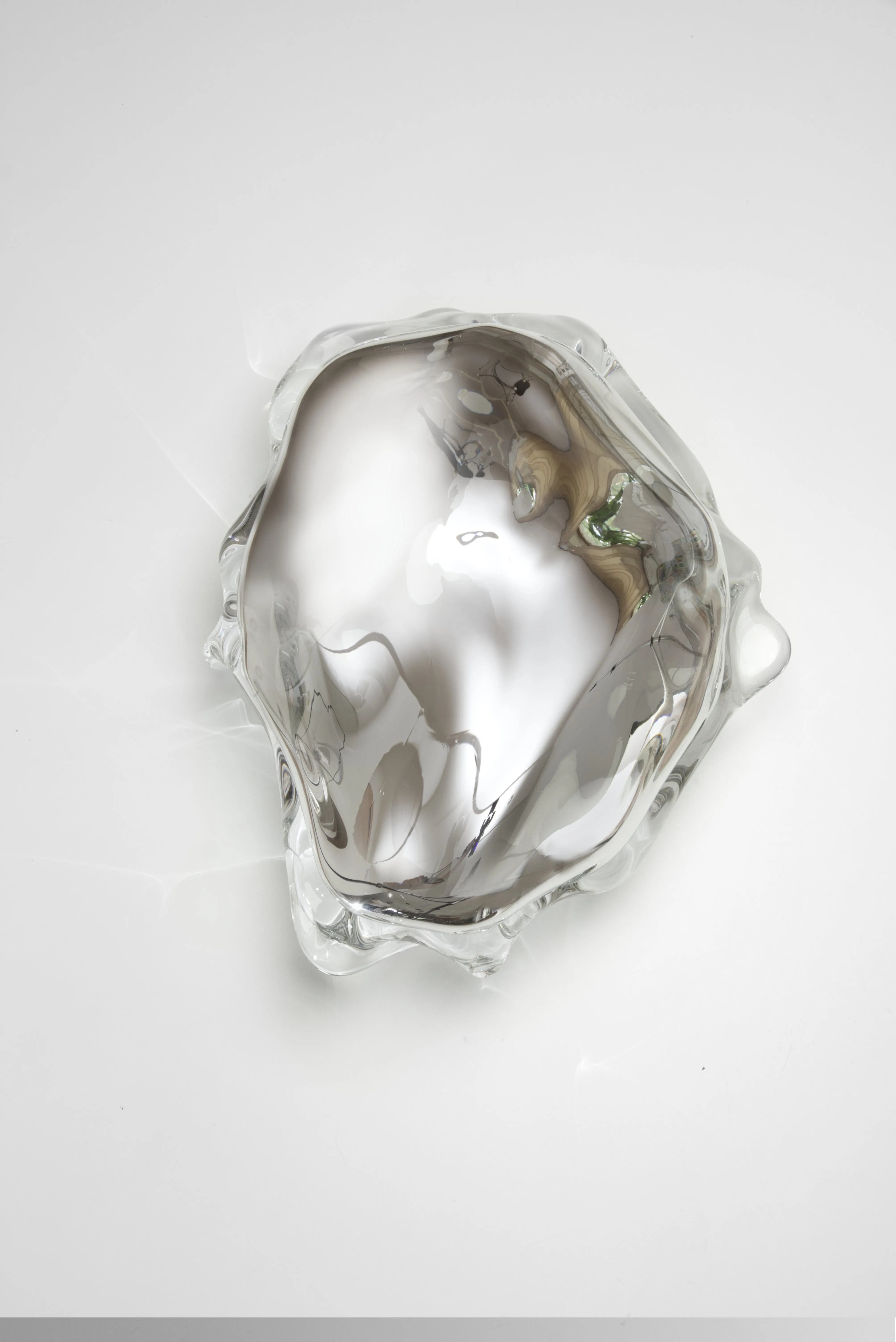
MILA ZILA lets hot glass shape itself, gathering and spinning it freely so that every Persona mirror grows into its own irregular form. The studio compares it to a personality that develops naturally rather than following a script. Silvered on the back, the result is part mirror, part wall sculpture, and no two are the same.
By MILA ZILA
€2,100 incl. tax
Bubble Coffee Table by Panorammma Atelier
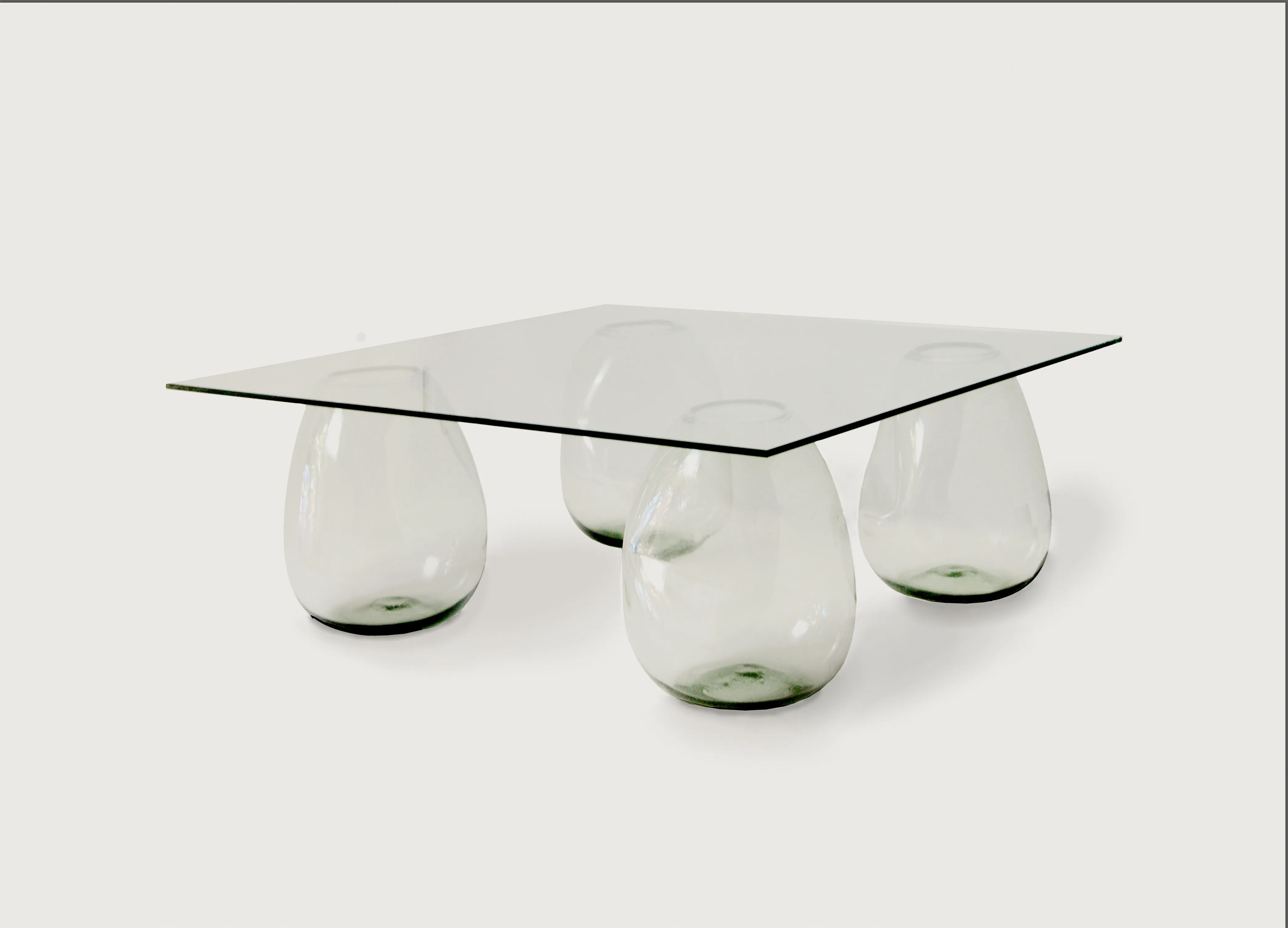
Panorammma Atelier’s Bubble coffee table balances a square glass top on four hand-blown glass bubbles, a retro-futuristic image drawn from old visions of flying saucers and speculative technology. It is entirely glass, so it almost disappears in a room while still catching the light. Bubble is a limited edition, with custom sizes and an obsidian version available on quotation.
By Panorammma Atelier
€6,400 incl. tax
Bright Side Table by Ziroru Studio

Ziroru Studio combines a glass side table and a floor lamp in one continuous stainless steel line, inspired by single-line drawing and Bauhaus principles. The tinted glass top keeps the frame visible, and the cordless, rechargeable bulb means it can sit anywhere, beside a sofa or a bed. It comes in right- and left-hand versions for a symmetrical pair.
By Ziroru Studio
€1,485 incl. tax
Curve Coffee Table by Sophia Taillet
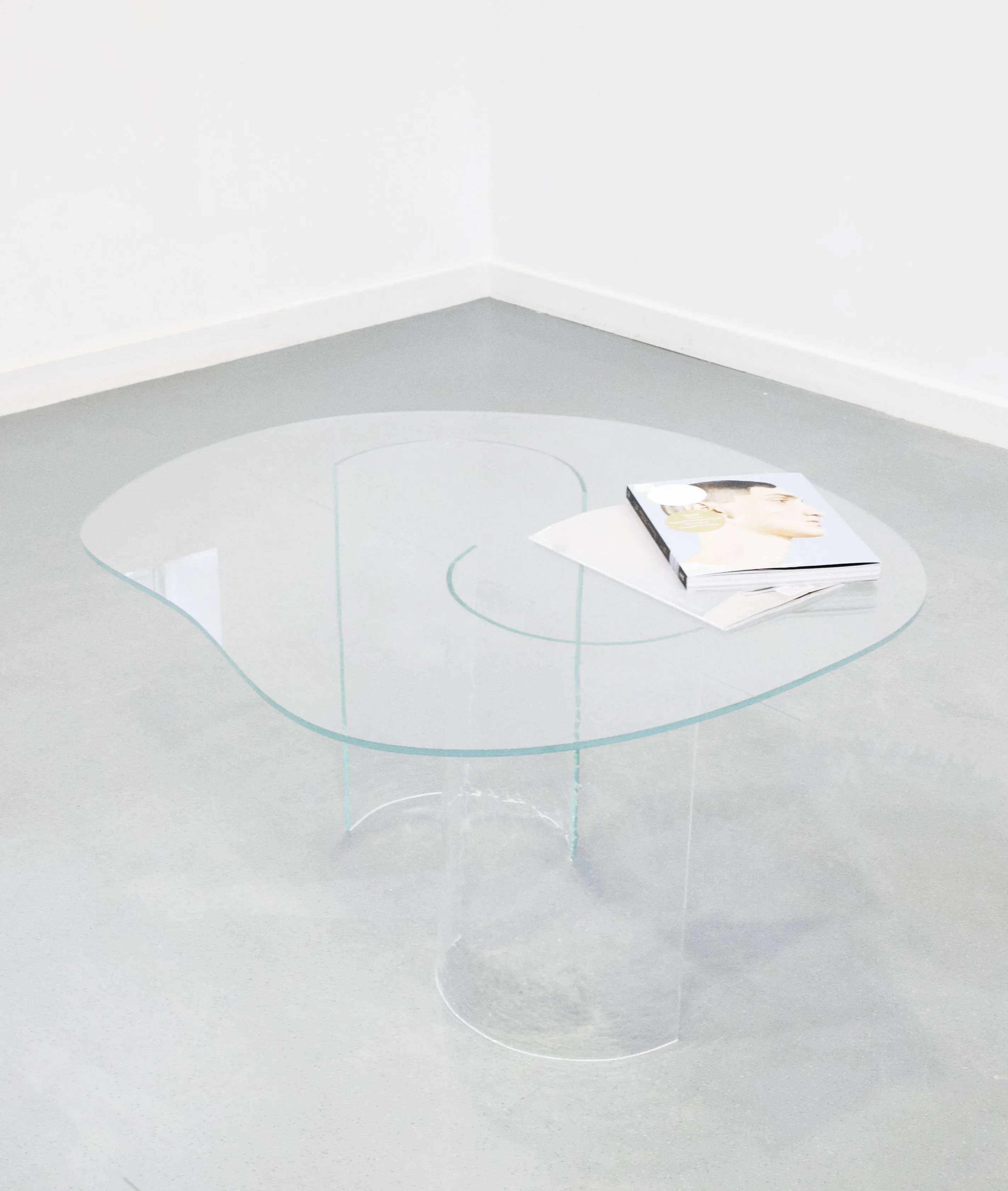
Sophia Taillet designed Curve during a glass-making residency in France. A single glass plate is thermoformed, bent at high temperature, so the curved legs flow into the top without joints. The effect is close to water: reflective, transparent and in motion. It is organic in form but minimal in composition, and suits a calm living room.
By Sophia Taillet
€4,800 incl. tax
Frequently Asked Questions
Is glass furniture strong enough for everyday use?
Yes, when it is made from tempered, laminated or thick cast glass. Tempered glass is about four to five times stronger than ordinary glass, and quality glass furniture is designed to carry everyday loads like books, dishes and lamps.
Does glass furniture make a room look bigger?
It does. Because you can see through it, glass furniture takes up less visual space than wood or upholstery, which makes it especially useful in small living rooms and apartments.
How do you stop a glass table from scratching?
Use coasters, placemats and felt pads under decorative objects, lift items instead of sliding them, and clean only with soft cloths and non-abrasive cleaners.
What is the difference between glass and acrylic furniture?
Glass is heavier, harder and more scratch-resistant, with a cool, crisp feel. Acrylic is lighter, easier to color and shape, and less likely to break, but it scratches more easily.