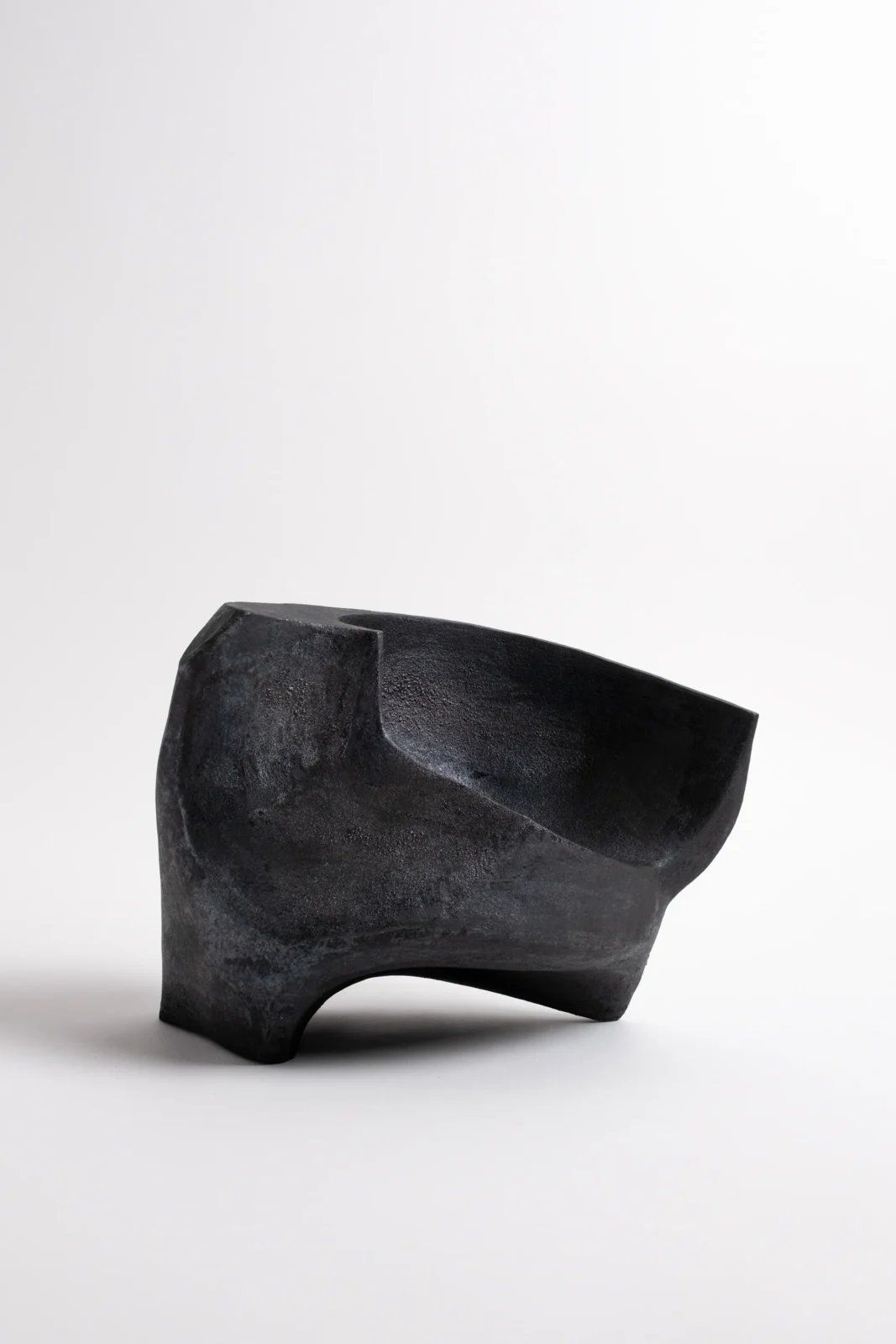
“Is there a better description of a cube than its construction?”
Updated on: October 20, 2026
Those words, spoken by László Tóth in the film The Brutalist, sum up an architectural movement that is still both revered and reviled. Brutalism is confrontational, unadorned and honest, qualities that make it a fitting metaphor for Tóth, a Hungarian-Jewish architect rebuilding his life in postwar America.
Today, Brutalism has moved from city skylines into living rooms. Below, ADORNO explains what Brutalism is and what the film reveals about it, then shows how to bring Brutalist interior design into your home with six pieces by independent studios.
What is Brutalism?
Brutalism emerged in the mid-20th century from the urgent need to rebuild cities after the Second World War. Rooted in Modernism, it was defined by raw materials, above all béton brut (raw concrete), and by a rejection of ornament. Pioneers such as Le Corbusier and Ernő Goldfinger, a Hungarian-born Jewish architect much like the fictional Tóth, built monumental yet practical housing and civic buildings. The style divided opinion from the start; even King Charles famously derided it, as Architectural Digest recalls.
One common misunderstanding lies in the name. Brutalism does not come from the English “brutal,” with its sense of cruelty, but from the French béton brut, meaning raw concrete. The style was never about harshness; it was about honesty, utility and resilience.
The elements of Brutalism
Raw materials: mostly unfinished concrete, but also steel and brick; in The Brutalist, marble plays a role too. Exposed structure: beams, columns and supports are shown, not hidden. Geometric forms: large, angular, bold shapes. Textured surfaces: concrete often keeps the imprint of the wooden boards used to cast it. Modular elements: repeated components create order. No ornament: the material itself is the decoration.
What The Brutalist reveals
Much of the film remains unsaid, leaving the audience to interpret it, and Brutalism works the same way. Tóth, like the movement, is shaped by trauma, yet he turns pain into structure. Who, or what, is “The Brutalist”? Tóth himself, his patron, the movement or the scarred postwar world? Meanwhile, buildings once dismissed as symbols of decay, such as London’s Barbican and Montreal’s Habitat 67, are now celebrated. What was once shunned becomes revered, which is why Brutalism keeps finding new admirers.
Brutalist interior design at home
You don’t need a concrete tower to live with Brutalism. Brutalist interior design borrows its principles at a domestic scale: honest materials such as concrete, raw steel, brick and stone; visible structure and joints; and heavy, geometric forms. Start with one monolithic piece, a coffee table or a stool, and balance it with soft textiles, warm wood and plenty of light so the room feels calm rather than cold. For more ideas, see ADORNO’s guide to Brutalist furniture and its edit of Brutalist lamps.
6 Brutalist pieces for the home
Each of these pieces shows how it was made, from cast concrete to folded steel, and each comes from a different studio.
Windows of Bo Bardi – Butter by Linde Freya Tangelder

Lina Bo Bardi’s SESC Pompéia in São Paulo, with its organic windows cut into raw concrete, inspired this stool by Destroyers/Builders. Rounded forms soften a monolithic base, and with 10 sales it is the most collected piece here.
By Linde Freya Tangelder
€1.300 incl. tax
Cofit-20 Table Lamp In Coal Concrete by Atelier Haute Cuisine

Rather than hiding the bulb, Atelier Haute Cuisine cast a brick of coal concrete as a pedestal to display it. It is béton brut at desk scale: raw material, exposed function, nothing added.
By Atelier Haute Cuisine
€380 incl. tax
B.A.R.E Series Table Lamp in Brick and Copper by Lucas Muñoz Muñoz

Brick, appliances, rods and electricity give the series its name. A thin rod grows from a brick base to carry the light, exposing every connection, just as Brutalist buildings show their structure.
By Lucas Muñoz Muñoz
€250 incl. tax
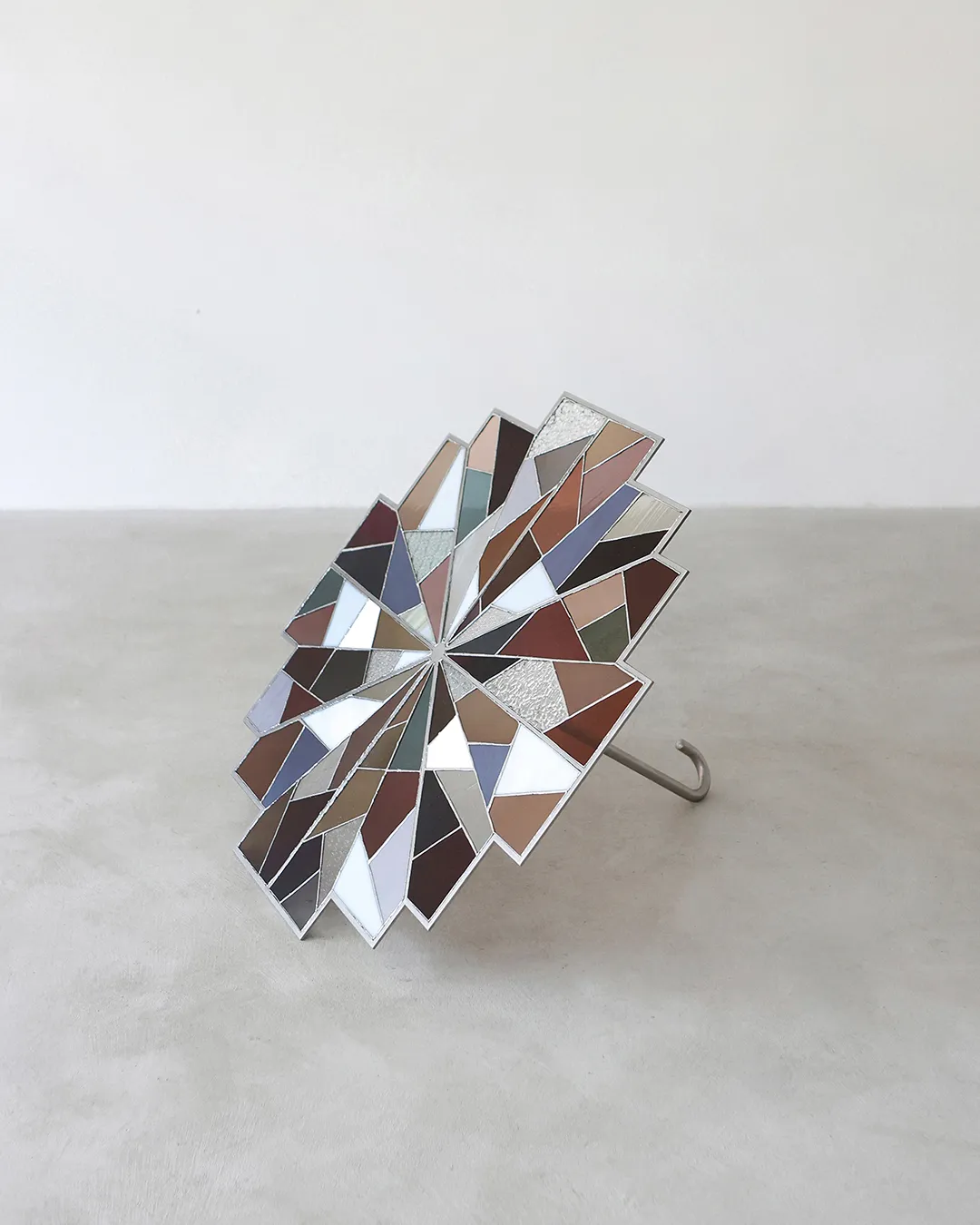
Barvinok Side Table in Heat-Treated Stainless Steel by FURN OBJECT
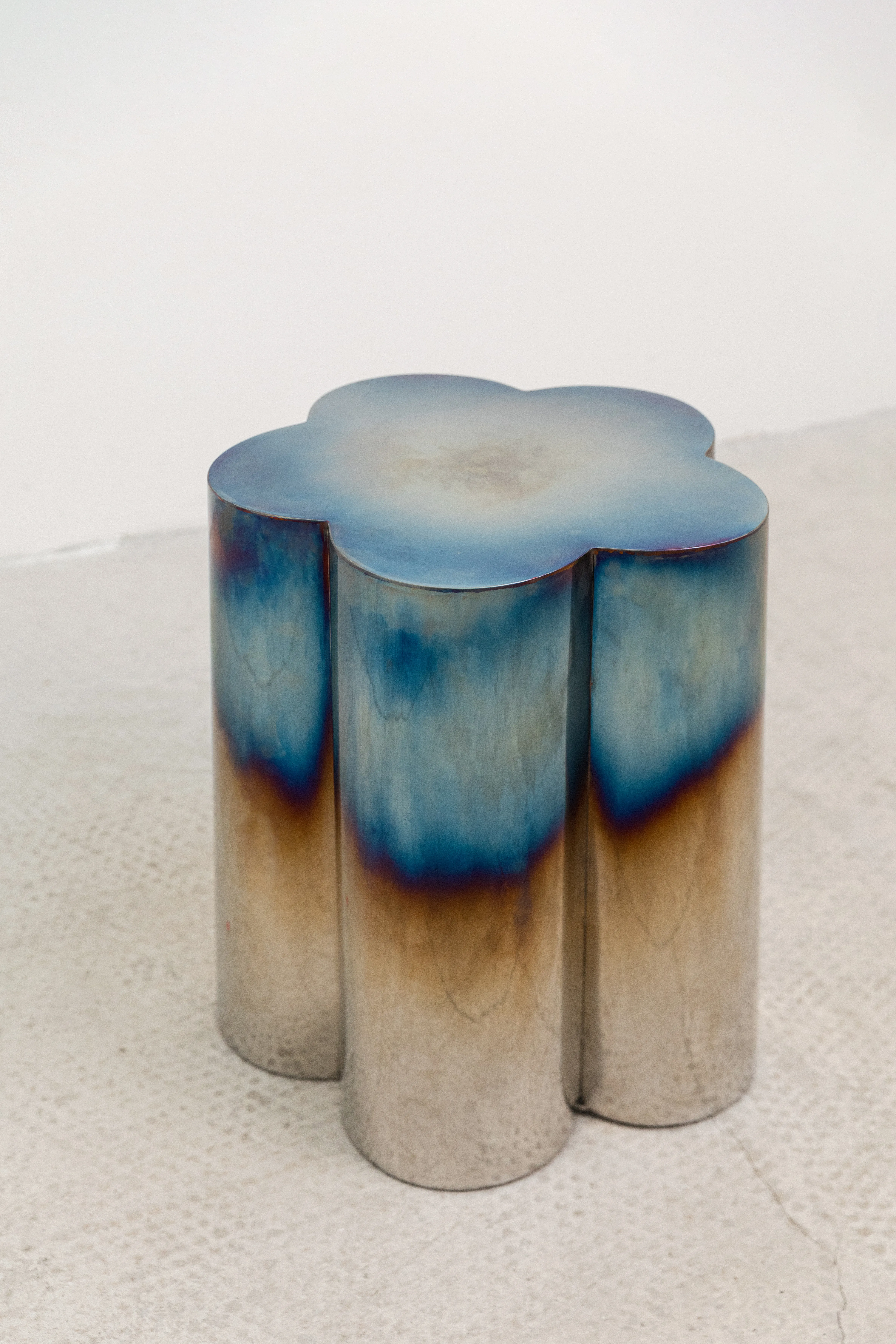
Shaped like a periwinkle flower, a symbol of renewal in Ukraine, Barvinok is formed in stainless steel and heat-treated until blue and bronze tints bloom across the surface. Raw process becomes the decoration.
By FURN OBJECT
€2.700 incl. tax
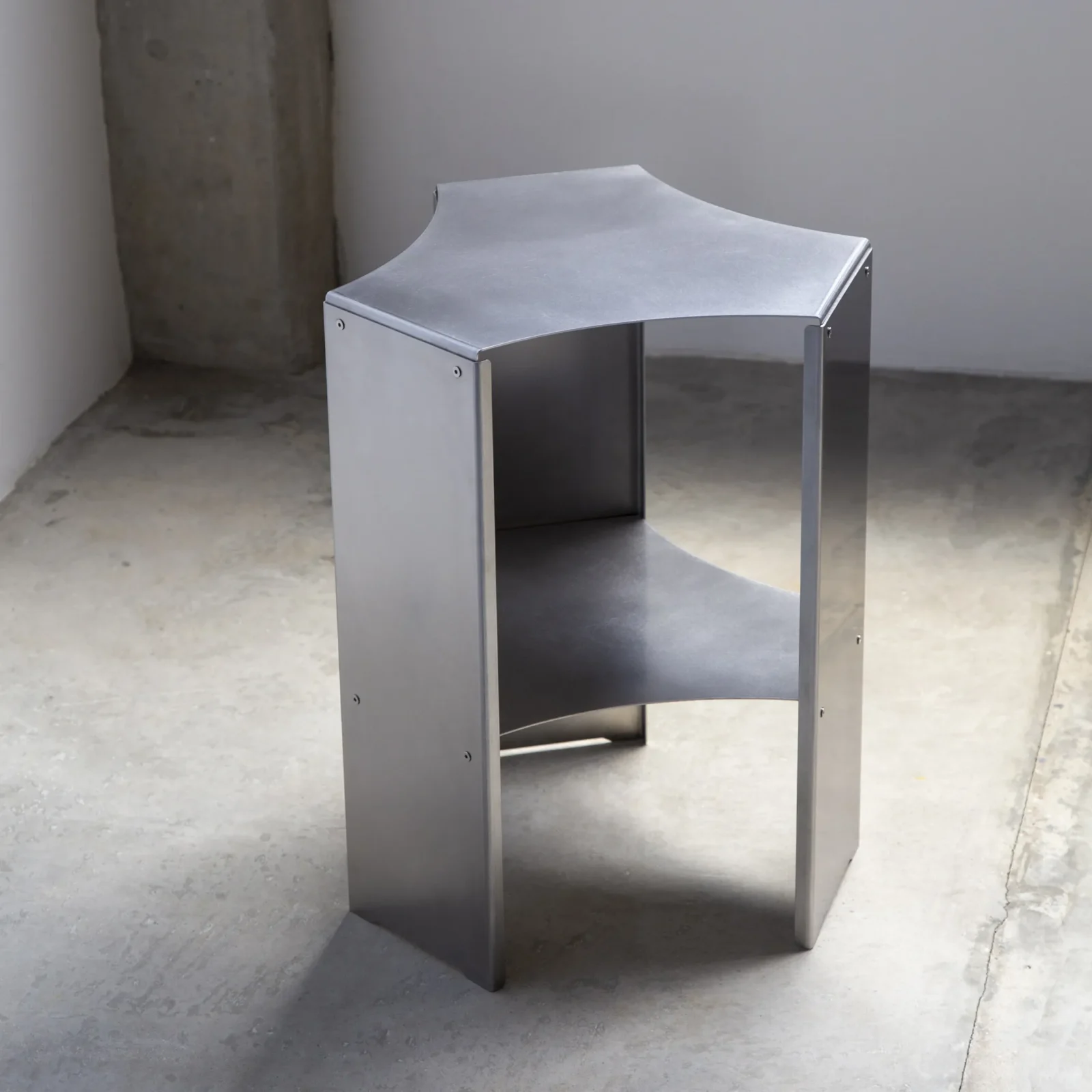
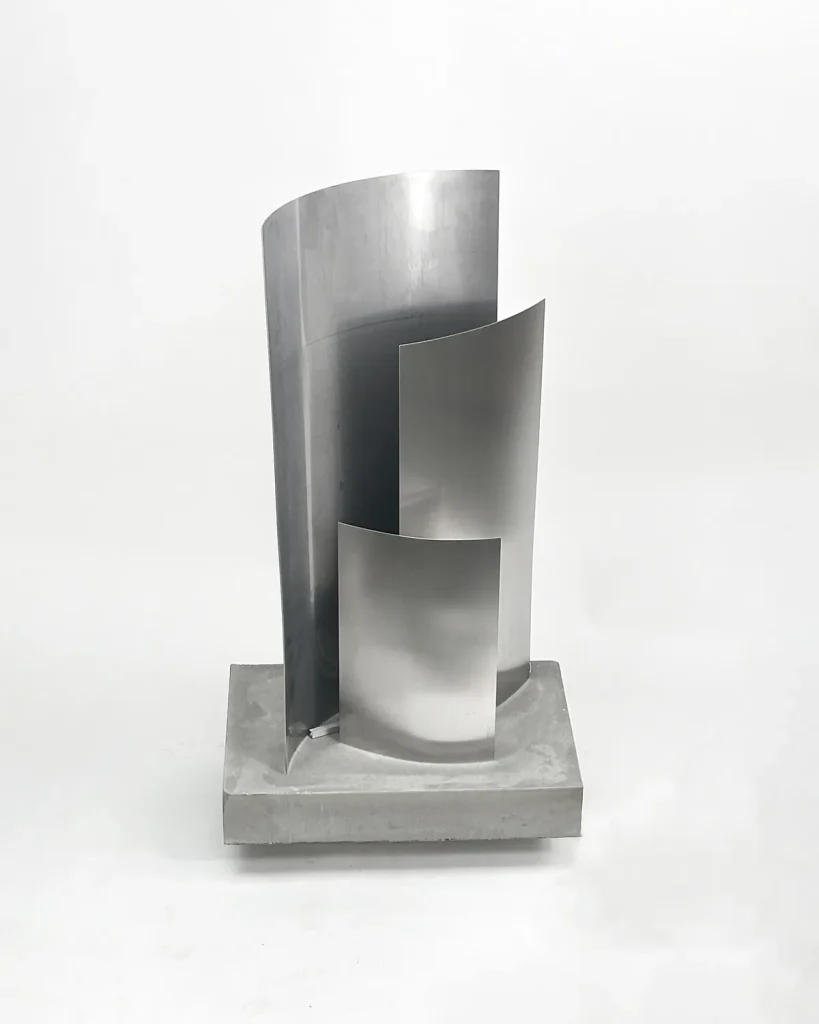
Camber – Bar Stool by Paul Coenen

Folded from a single sheet of stainless steel, the Camber bar stool shows exactly how it was made. It brings the honesty of exposed structure to a kitchen counter.
By Paul Coenen
€685 incl. tax
Isolation Coffee Table in Cork and Burnt Pine by Vital Lainé

Cork and burnt pine combine into a monolithic, mineral-looking slab that is far lighter than it appears. It brings Brutalism’s mass to a living room without its weight.
By Vital Lainé
€1.800 incl. tax
Brutalist decor, room by room
Living room. Anchor the space with one monolithic coffee table or side table, then soften it with wool, linen and a low sofa. Concrete and stone look warmest next to natural textiles.
Kitchen and dining. Folded steel bar stools and a raw stone or concrete counter suit the practical spirit of Brutalism. Keep surfaces clear so the materials can speak.
Bedroom and study. A concrete or brick table lamp brings Brutalist character in a small, manageable dose. Pair it with warm, low light to avoid a cold feel.
Frequently asked questions
What is Brutalism?
A mid-20th-century architectural style defined by raw concrete, exposed structure, bold geometric forms and an absence of ornament.
Why is it called Brutalism?
The name comes from the French béton brut, meaning raw concrete, not from the English word “brutal.”
Is The Brutalist based on a real architect?
No. László Tóth is fictional, though his story echoes real émigré architects such as Ernő Goldfinger and Marcel Breuer.
How do I bring Brutalist interior design into a small home?
Choose one or two pieces in raw materials, such as a concrete lamp or a steel stool, and keep the rest of the room light and simple.
Which materials define Brutalist decor?
Concrete, raw or heat-treated steel, brick, stone and dark, monolithic wood, all left close to their natural state.
Room for meaning in the raw
In the end, The Brutalist is not only about architecture; it is about resilience and starting over. Brutalism, both style and philosophy, reminds us that even after destruction there is room for creation, and for meaning, in the raw and unadorned.