
In Mexico, the newest tools often serve the oldest hands.
Updated on: October 20, 2026
In a country with a long and rich heritage of traditions and identities, finding a new voice is a challenge. Contemporary Mexican design meets it by drawing on long-held techniques, materials and forms while working closely with the craftspeople who keep them alive. Stone carvers in Puebla, coppersmiths in Michoacán and weavers across the south bring knowledge no software can replace.
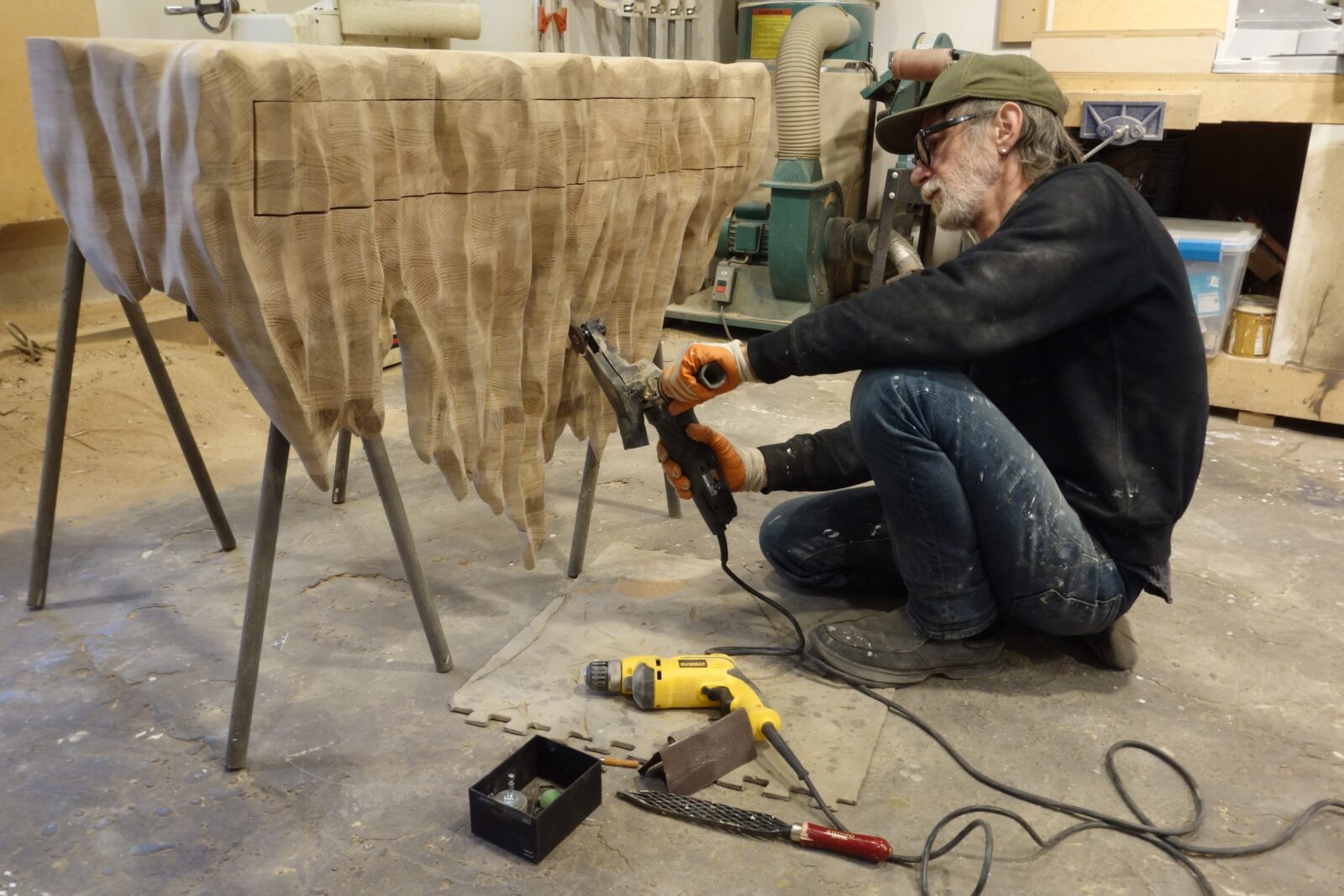
At the same time, a new generation of designers sketches in 3D, cuts metal by laser and rethinks how things are assembled. Below, ADORNO looks at where craft meets digital in Mexican design, revisits the work of industrial designer Jorge Diego Etienne, and picks eight pieces by Mexican studios available now.
What defines contemporary Mexican design?
Three things recur. First, material with a sense of place: marble and volcanic stone, copper, clay, wood and woven fiber. Second, collaboration, since designers increasingly share credit with the artisans who make their work. Third, a willingness to mix those traditions with industrial materials and digital fabrication. The result is work rooted in Mexico but made for homes anywhere, a scene Wallpaper* continues to follow through Mexico City Art Week.
Craft meets digital: the case of Jorge Diego Etienne
Few designers show the meeting of craft and digital as clearly as Jorge Diego Etienne. Trained in industrial design at Tec de Monterrey, he interned in Amsterdam with designer Khodi Feiz and studied craft in Kyoto before founding his studio in Monterrey in 2012. He was the only Mexican designer to show at Salone Satellite in Milan three years in a row, and his Mesas Candela received Architectural Digest’s Iconos del Diseño award for best furniture design of 2018.
His Galeana collection, made with master craftsman Francisco Charles, turned 3D models into carved stone bowls, vases and stools. “Every object is a dialogue and, for us in the studio, it was key to be receptive to how Francisco interpreted each object to make them unique and of the highest quality in both concept and execution,” Etienne told ADORNO. His wider philosophy is just as clear: “We don’t design in a vacuum and we do not create objects for merely décor. Our starting point is always the people who will use it, how they will use it, and where they will use it.”
Galeana is no longer available on ADORNO, yet its approach, digital design translated by expert hands, runs through the pieces below.
8 pieces of Mexican design to collect now
From hand-carved vases to laser-cut table lamps, these pieces come from eight different Mexican studios.
Lago Marble Vase by Studio Ayres

Hand-carved from a single block of marble by artisans in Puebla, Lago bends into a soft U that holds stems in a glass insert. Studio Ayres works on fair terms with its carvers, and with 12 sales it is one of the most collected stone vases on ADORNO.
By Studio Ayres
€830 incl. tax
Tzom – Solid Stone Planter by piedrafuego

Carved in solid stone, Tzom is covered in rows of small skulls, a nod to the tzompantli walls that protected sacred spaces across Mesoamerica. It is ancient iconography made small enough for a windowsill.
By piedrafuego
€311 incl. tax
Artefacto Ls 16 Floor Lamp In Woven Wicker Fiber by LØRDAG & SØNDAG
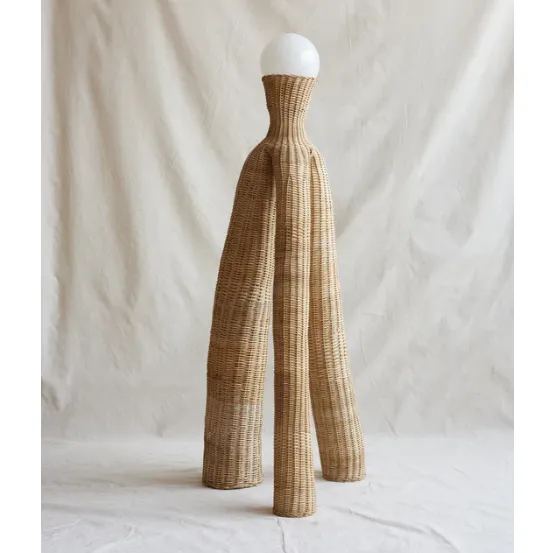
Woven entirely in G’noo Xombé Nisin fiber, this floor lamp stands without any metal frame inside, so the weave alone carries the piece. With 11 sales, it shows how a traditional technique can become a contemporary best seller.
By LØRDAG & SØNDAG
€1.090 incl. tax
Mar De Cobre – Wall Decoration by Aura Carpio®

Made by master coppersmiths in Santa Clara del Cobre, Michoacán, Mar de Cobre is cast from copper scraps recovered from local workshops, which almost eliminates waste. Its rippling surface reads like the sea, and it brings warmth to a bare wall.
By Aura Carpio®
€2.200 incl. tax
Chainmail Sculptural Chair, Nickel Plated Steel Finish, Hand Linked Mesh by Panorammma Atelier
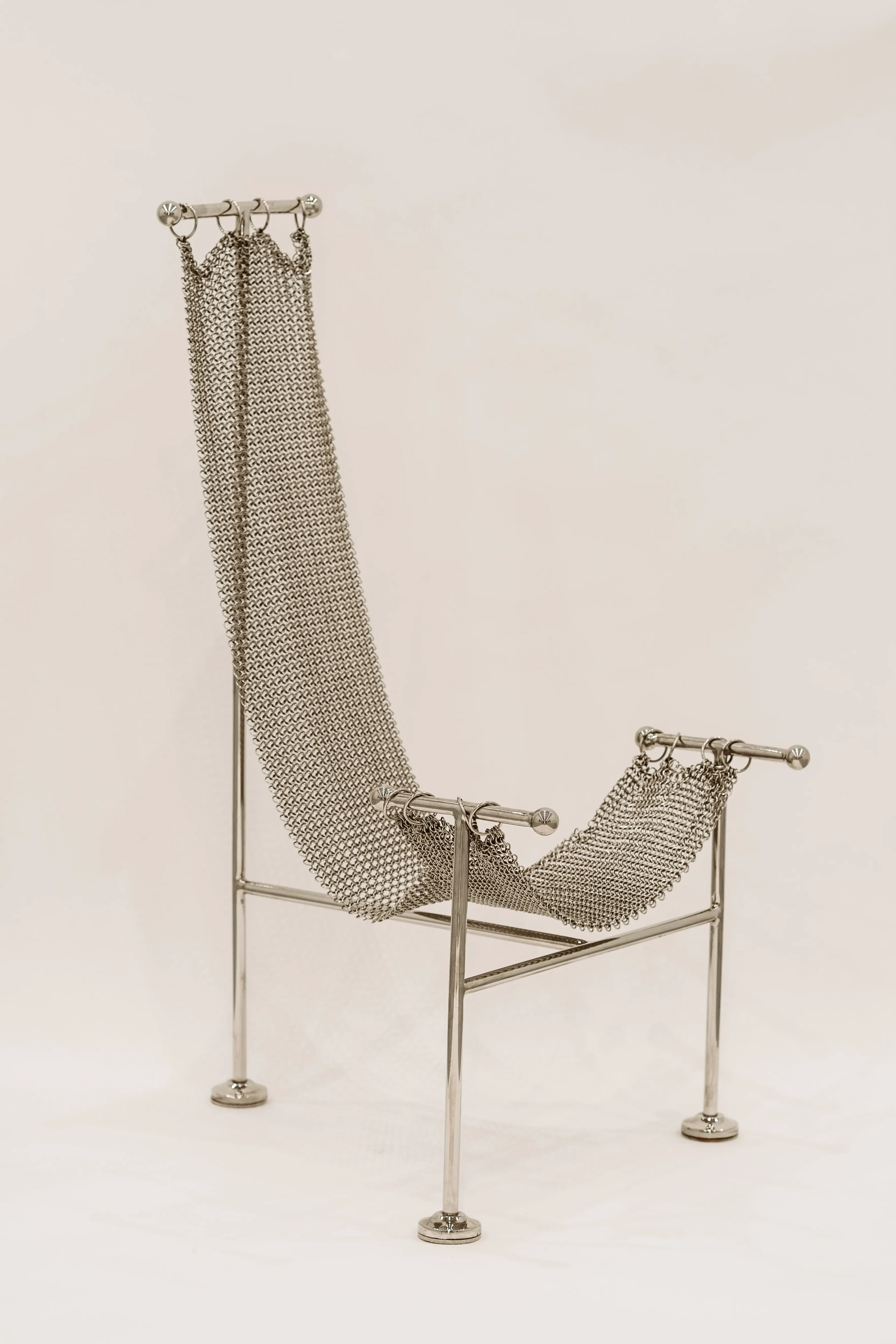
A new take on William Katavolos’s 1952 T-Chair, Chainmail drapes a seat of hand-linked metal rings from a steel frame. The mesh is strong and flexible, so a piece that looks like armor turns out to be comfortable.
By Panorammma Atelier
€4.200 incl. tax
Pe 02 Table Lamp In Polished Aluminum by BuRRo

Named after the Spanish saying “de Pe a Pa,” from beginning to end, the Pe 02 is rolled from polished aluminum and can be fully assembled or taken apart for storage. It is industrial thinking at its most approachable, and at €110 an easy first piece.
By BuRRo
€110 incl. tax
Hoja Table Lamp in Steel by Natural Urbano – Sebastián Beltrán

Sebastián Beltrán borrows the geometry of folded paper and builds it in steel. The single folded gesture gives the lamp character without noise, so it sits as easily in an office as on a nightstand.
By Natural Urbano – Sebastián Beltrán
€335 incl. tax
Dahlia Blossom Wall Sconce in Blown Glass and Steel by Toro Manifesto
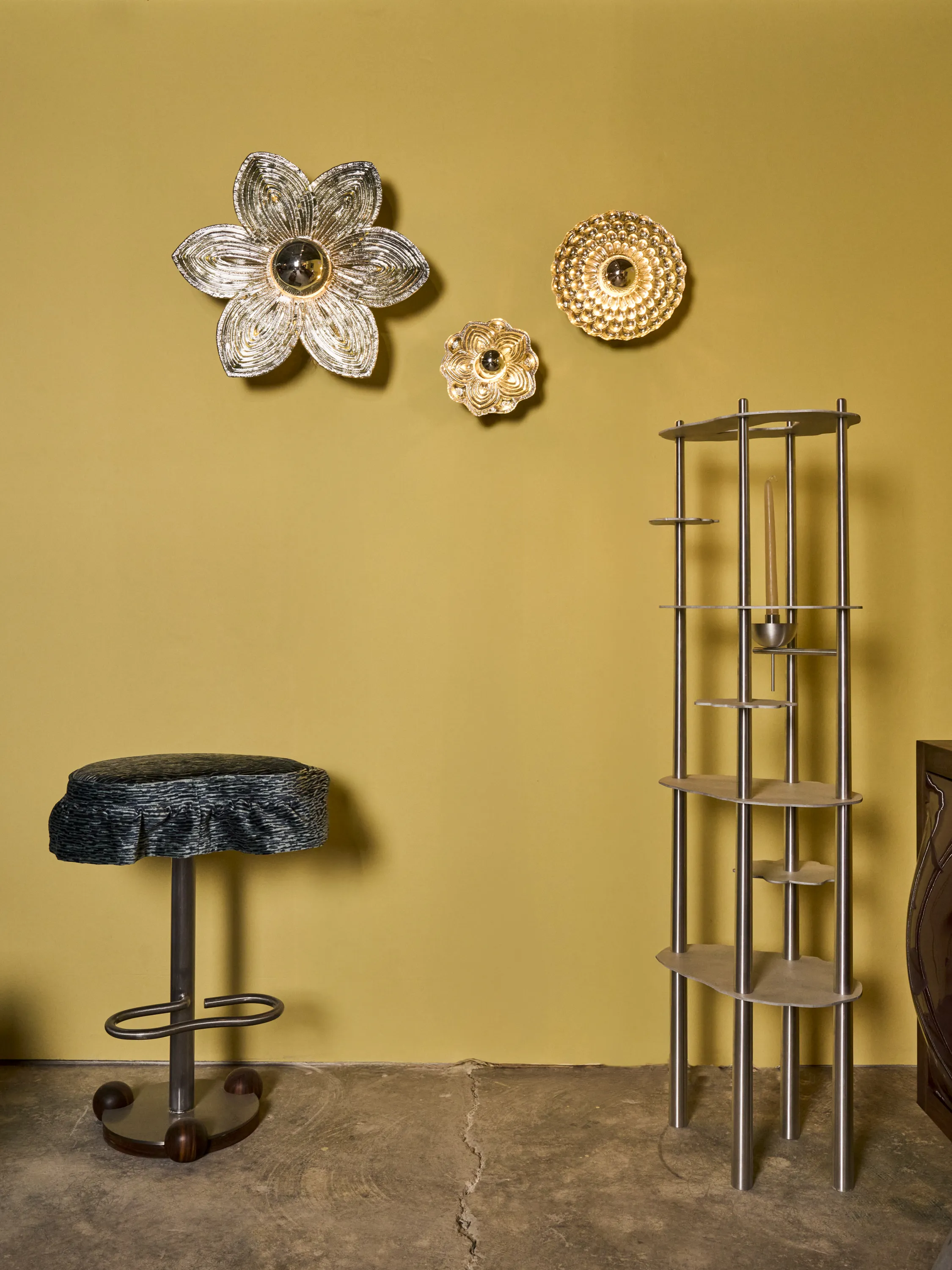
Part of the Ehecatl series, Dahlia Blossom is made by flat-blowing glass into molds and firing it in a kiln, then mounting it on a carbon steel base. Lit, its petals throw caustic reflections across the wall.
By Toro Manifesto
€1.500 incl. tax
How to bring Mexican design into your home
Start with one material story, such as stone or woven fiber, and let it lead a room. Pair a handmade piece with something industrial, a carved vase next to an aluminum lamp, so each sharpens the other. Finally, buy from studios that name their makers; the best Mexican design is a collaboration, and the story is part of the object. For a more playful take, see ADORNO’s profile of Joyful Objects, Yes!.
Frequently asked questions
What is Mexican design known for?
Strong materials, bold color and close collaboration with artisans, combining pre-Hispanic and colonial traditions with contemporary form.
Which materials are typical of Mexican furniture and design?
Marble and volcanic stone, hammered copper, clay, solid woods such as parota and pine, and natural fibers like wicker and palm.
What is Santa Clara del Cobre copper?
A town in Michoacán known for hand-hammered copper since pre-Hispanic times, where master coppersmiths still work by hand.
How do Mexican designers use digital tools?
Many model in 3D, then hand the design to artisans to carve or weave, or use laser cutting and 3D printing alongside traditional techniques.
Where can I buy contemporary Mexican design?
ADORNO works directly with independent Mexican studios. Browse all design from Mexico on ADORNO.
Why Mexican design travels
Mexican design works far from Mexico because it carries both a place and a process. As Jorge Diego Etienne put it, the aim is work that can “be a part of homes everywhere in the world, but with a story worth being told.”






Responses