The entryway is the room you pass through fastest. A bench slows it down.
Every home has a threshold, and most of them are treated as circulation rather than as a room. Coats go over a chair back. Shoes accumulate in a drift by the door. Keys land wherever there is a flat surface. An entryway bench interrupts that pattern by giving the transition a place to happen — somewhere to sit while you deal with laces, somewhere to set a bag down before it reaches the kitchen counter. Notably, the bench is also the first object a visitor reads, which means it carries more narrative weight per square foot than almost anything else you own.
Most entryway benches are built to a price. The eight pieces below were built to a position. They come from independent studios in Brazil, Germany, Spain, India and the United Kingdom, in solid ash, folded aluminum, handwoven cane and salvaged timber. Some hold storage underneath. One arrives with a mirror, hooks and a shoe rack in a single form. All of them were selected against real interest from people browsing emerging design on ADORNO — not against a catalogue quota.
How to choose an entryway bench
Start with the corridor, not the bench. Measure the clear width of the space and subtract the depth of the piece you are considering; whatever remains is the passage two people have to share while one of them is sitting down. Under 70 centimeters of residual width, the room stops working. Consequently, depth matters more than length in most entryways — a bench of 40 centimeters deep and 175 long will read as generous, while one of 55 deep and 90 long will feel like an obstruction. Seat height is the second constraint. Between 40 and 45 centimeters suits the act of putting shoes on; anything lower turns into a perch you have to climb out of.
Then decide whether you actually want storage. Open shelving underneath is honest about what it holds, which means it looks considered when tidy and chaotic when not. A closed lid hides the contents and hides the mess, though it also requires you to move whatever is on the seat before you can reach anything. By contrast, a bench with no storage at all asks the wall to do that work — hooks, a shelf, a console or mirror above it. Finally, consider the floor. Entryways take grit, water and salt, so a piece that sits on adjustable feet or rubber discs will outlast one that rests four bare wooden legs directly on stone.
Materials and construction
Material determines almost everything about how an entryway bench ages, because no other seat in the house meets weather, footwear and daily friction in the same concentration.
Solid wood
Ash, oak and the Brazilian hardwoods absorb impact and can be sanded back when the surface dulls, which makes solid wood the most forgiving choice for a high-traffic threshold. Grain runs through the whole thickness rather than sitting on top as a veneer, so a chip reads as wear rather than damage. Moreover, wood moves with humidity, and a bench built with that movement in mind — floating tenons, slatted tops, joints allowed to breathe — will stay flat where a rigidly glued panel eventually cups. Our longer piece on wood seating traces why the material keeps returning to this form.
Aluminum
Aluminum is the entryway material that solves water. It does not rot, does not swell, and takes a brushed or anodised finish that resists the marks left by wet coats and dripping umbrellas. Folded and screwed rather than welded, it also allows a structure to stay thin — a seat of three-millimetre plate can carry serious load while reading as a line rather than a mass. As a result, an aluminum bench often occupies less visual space than a wooden one of identical footprint, which matters in a narrow hall.
Rattan and cane
Woven cane introduces air. A handwoven seat spans its frame with almost no material, so the bench sits lightly in a dim corridor where a solid slab would block the sightline. Cane also has give, which makes it more comfortable than any hard surface at the same height. Meanwhile, it is the least tolerant of moisture on this list — direct sun dries and brittles the fibres, and standing water stains them — so a woven bench belongs in a hallway rather than a mudroom.
Reclaimed and burnt timber
Salvaged beams arrive with their history already written — splits, insect tracks, saw marks from a previous life. Rather than filling those, some studios stabilize them and let them show, occasionally charring the surface to seal it and unify the tone. The technique has deep precedent, which we traced in our piece on shou sugi ban. Specifically, burning converts the outer layer to carbon, which repels water and resists rot, making a charred bench unexpectedly practical for the place where wet boots land. The wider argument for working this way sits in our look at thrifted and salvaged design.
Textile and upholstery
A padded seat is the most comfortable option and the least suited to the front door. Handwoven cotton and wool hold warmth and soften an otherwise hard corridor; equally, they hold water, grit and whatever came in on a coat. Therefore an upholstered entryway bench works best one step inside — at the foot of a bed, or in a dressing area — or in a covered porch where the weather never actually reaches it. Where a textile seat does sit by the door, removable covers are worth insisting on.
Stone, concrete and mixed construction
Stone anchors. A concrete or marble seat on a slim metal frame will not shift when someone leans on it to pull a boot off, and it takes water without consequence. The trade-off is weight and floor loading — a stone bench is a decision you make once, since moving it later requires two people and a plan. Our history of marble in design covers what the material asks of you in return.
8 entryway benches from independent studios
Tudo – Hallway Bench With Coat Rack & Mirror by atelier PASSARELLI
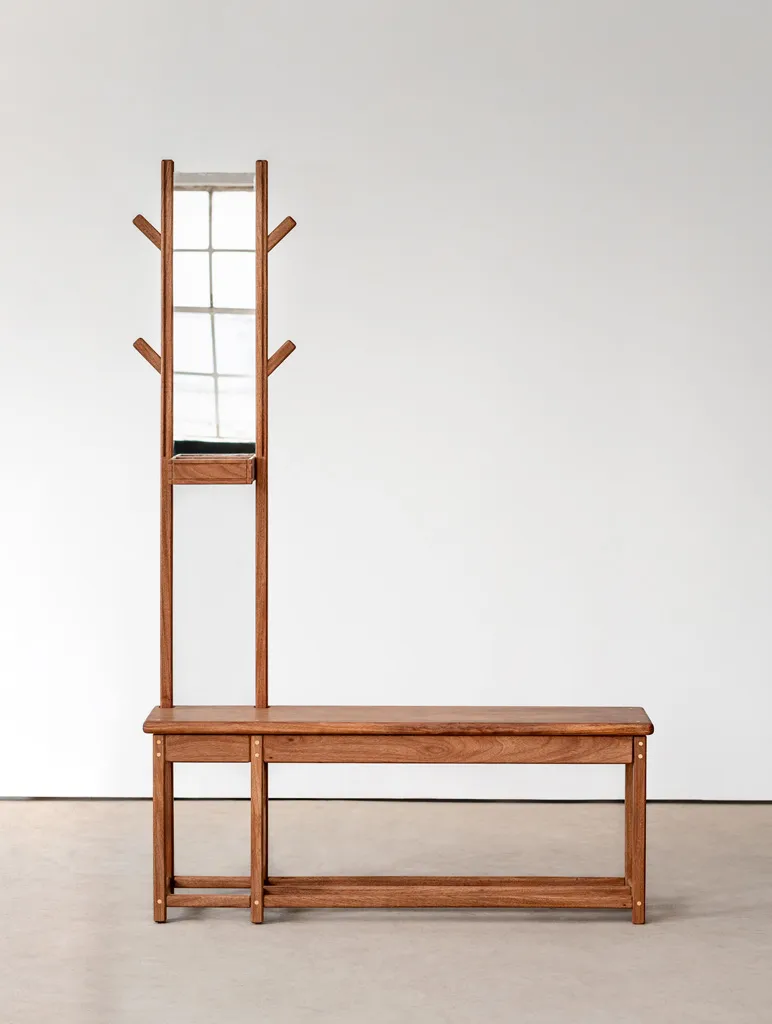
Built in certified solid wood at Atelier Passarelli in Rio de Janeiro, Tudo gathers the entire entryway into one piece — bench, shoe rack, mirror, hooks and a small organiser box. The carved detailing that runs through the studio’s work pulls a functional object toward something closer to inherited furniture, sentimental rather than systematic. It took first place at the Novos Talentos Brasileiros award in 2021, and it remains the most complete answer here for anyone with a single wall to work with.
€2.435 incl. tax
Wing Bench by Obscure Objects
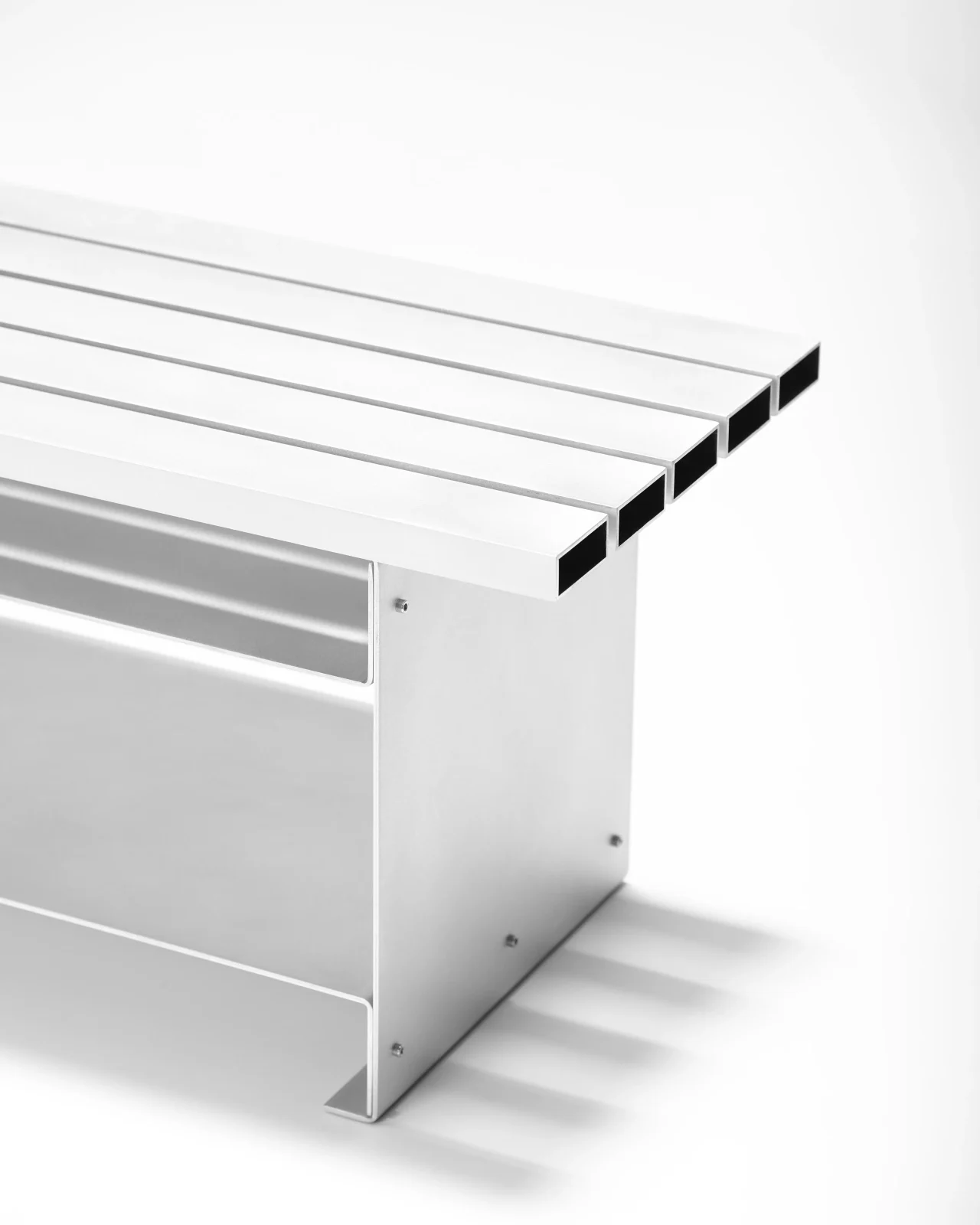
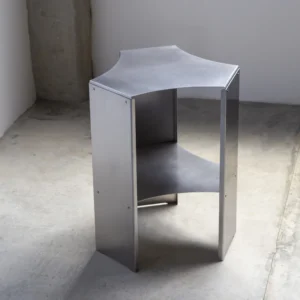
Folded aluminum sheets, joined visibly by nuts and screws, carry the whole structure — no welds, no concealment. Two long elements span between the outer legs to stiffen the frame and double as a storage layer beneath the seat, while five rectangular profiles riveted from underneath form the top. Every edge and corner is chamfered by hand, and the brushed surface ties the separate parts into one reading. Handmade to order in Germany, it drew the strongest interest of any bench in this selection over the past ninety days.
€1.220 incl. tax
Birah Bench by Shivangi Vasudeva
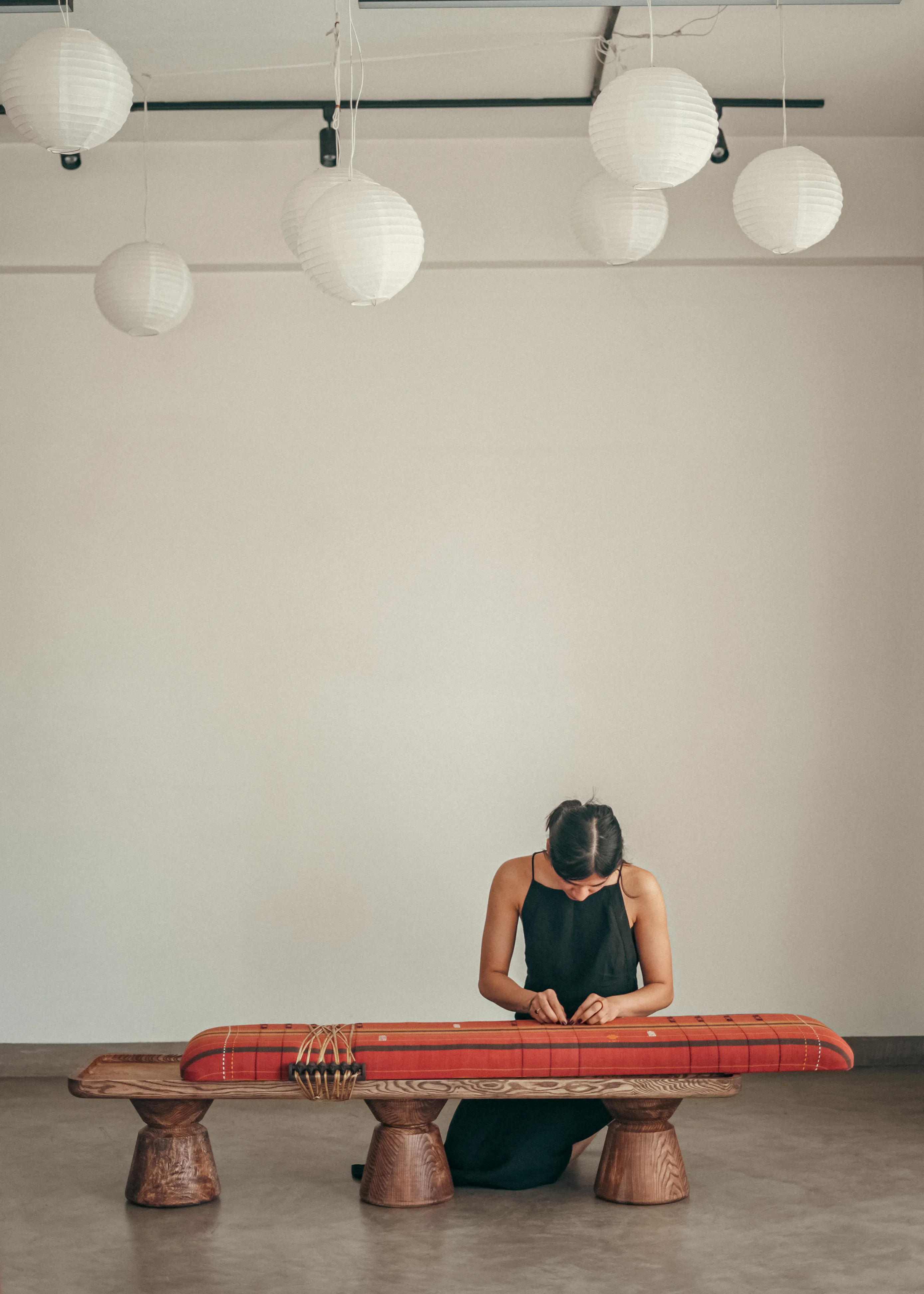
White ash finished with zero-VOC oil, handwoven cotton and cane fiber, drawn from the antique boxes the Naga used to store feathers. The recessed body borrows the profile of a casket and disguises what the piece is for, so the function arrives a moment after the form does. Wooden slats appear to float above stouter legs, tied with cane slivers that exaggerate the offset rather than resolve it. At 175 centimeters long and only 42 deep, it suits a long hallway wall better than almost anything else on this list. Studios working in this register run through our survey of Indian design.
€3.250 incl. tax
Rahi Gallery Bench by Project 810
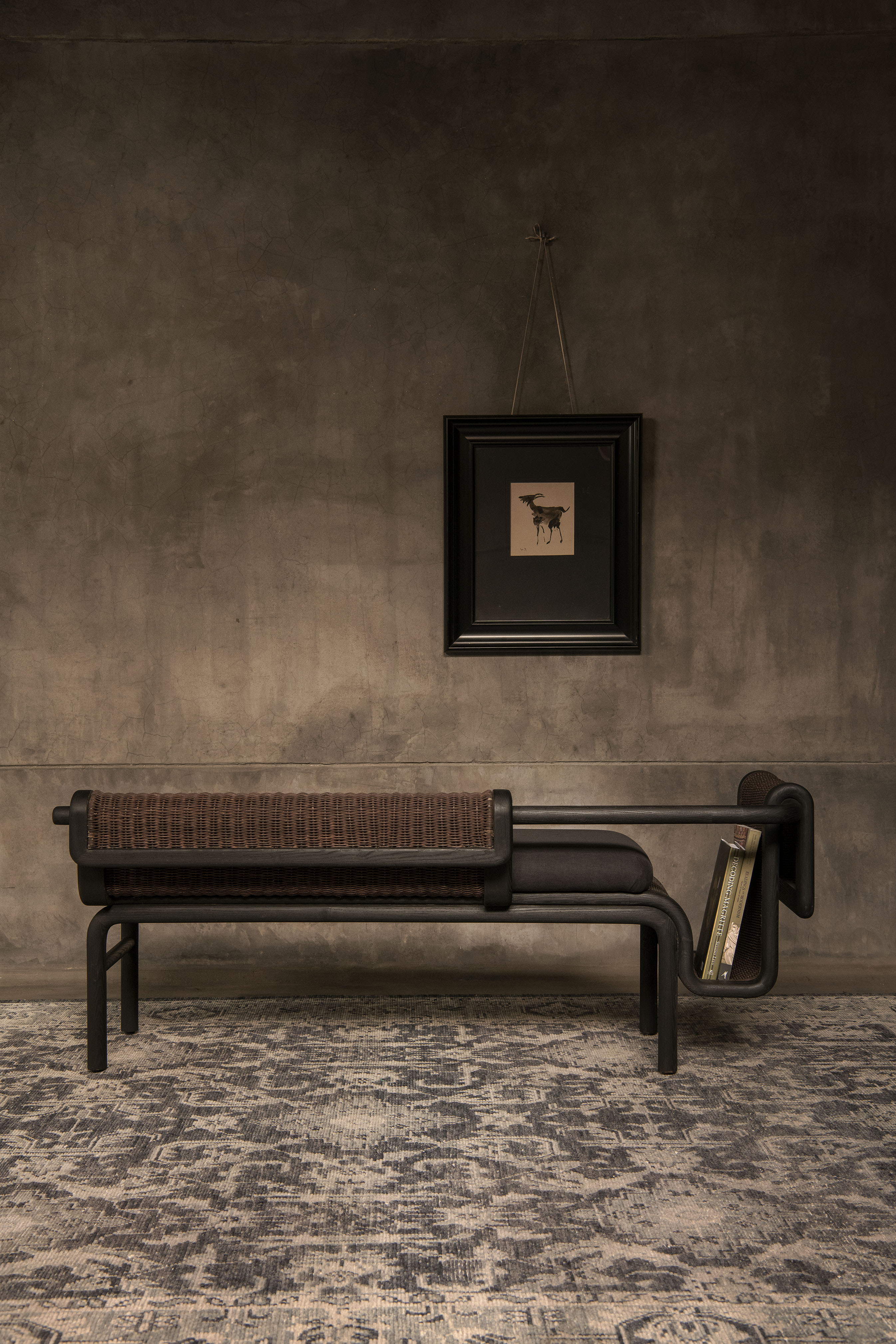
Woven expanses stretched across a frame of soft curves, built for the pause rather than the meal. The Rahi collection works in understated warmth, and this bench carries it through texture instead of ornament — the weave does the visual work, the curve does the rest. Indoor use only, and it wants to stay out of direct sunlight, which places it in a hallway rather than beside a glazed front door.
By Project 810
€1.800 incl. tax
Knot – Bench – Solid Ash Wood by Luis Gimeno Design
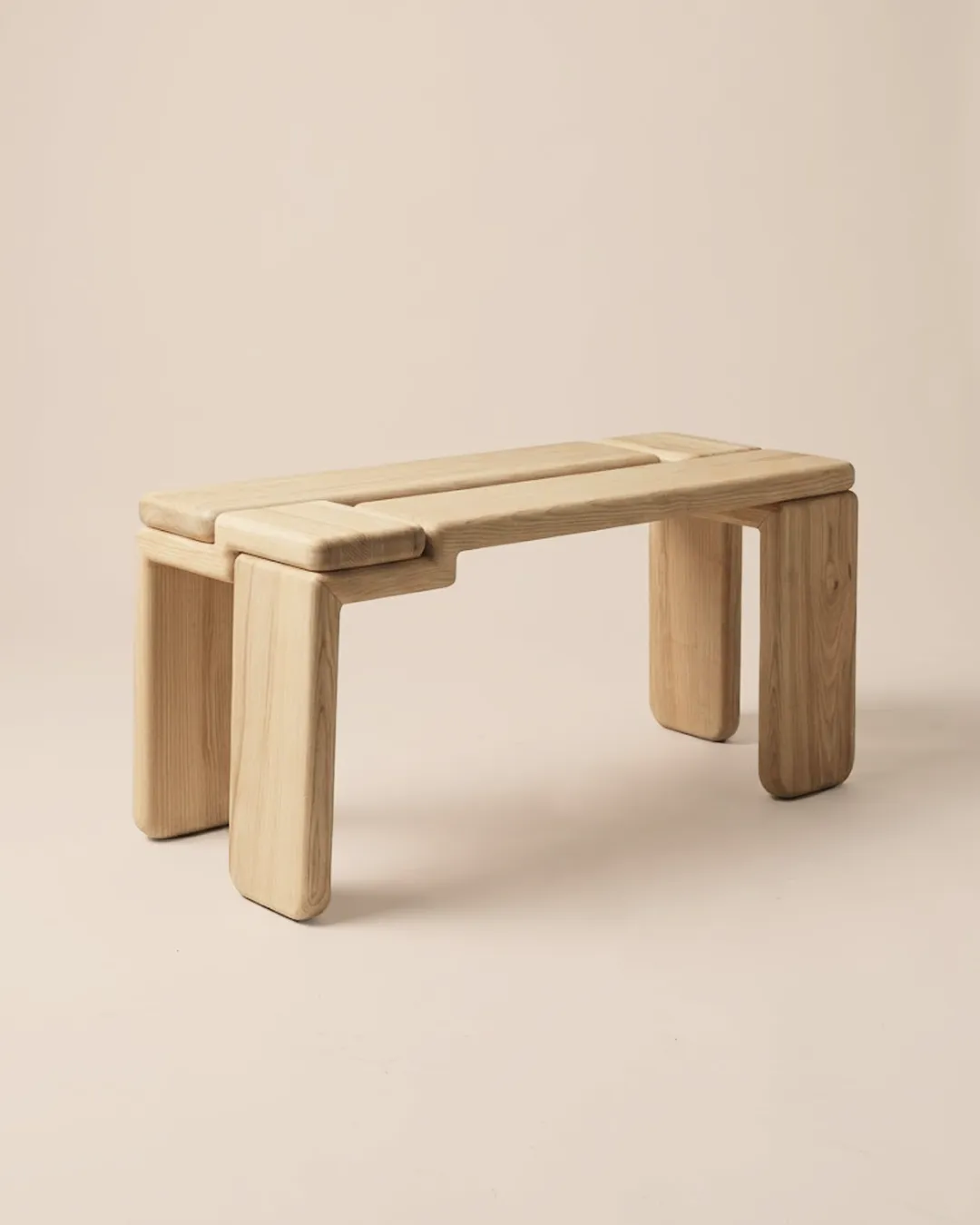
Solid ash worked by hand until each curve and joint settles into a knot-like language, softness held against structure. The material leads and the form follows, which means grain, tone and texture shift from one bench to the next rather than repeating. Designed in Spain in 2026 at 97 centimeters long, it reads as a sculptural object that happens to seat two — the kind of piece that argues for the hand in making.
€1.400 incl. tax
Aluminum Bench With Storage by andykim.global
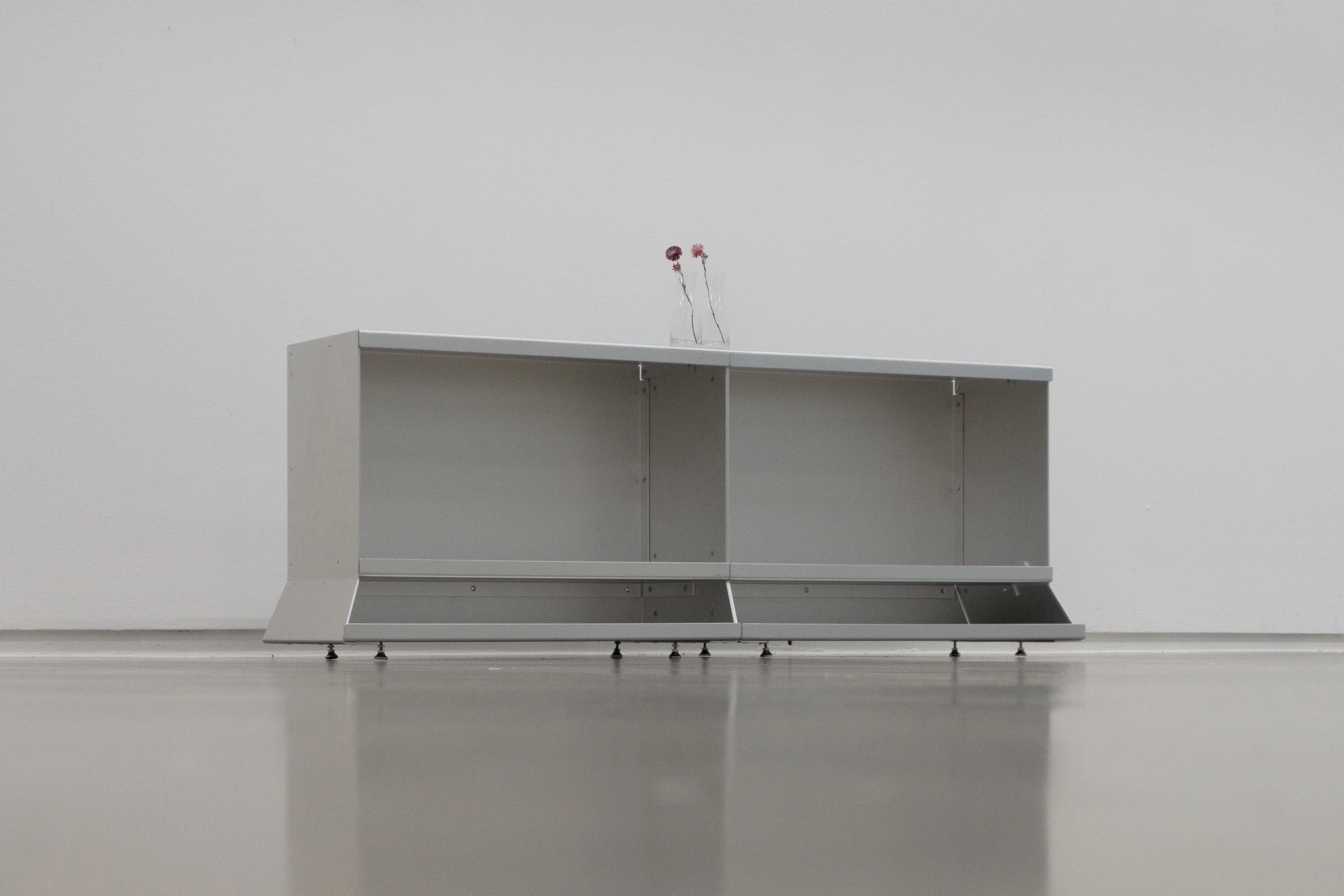
Oxidised and sandblasted aluminum, originally drawn up by Andy Kim for a client named Harry. The shelving was sized to take whatever the room throws at it — books, shoes, pots, towels, a television — so the piece functions as much as low storage as it does as a seat. Adjustable levelling feet let it float clear of an uneven floor, which is the single most useful feature a bench can have in an older hallway.
€2.217 incl. tax
Canto – Aluminum Bench by Luiz Solano
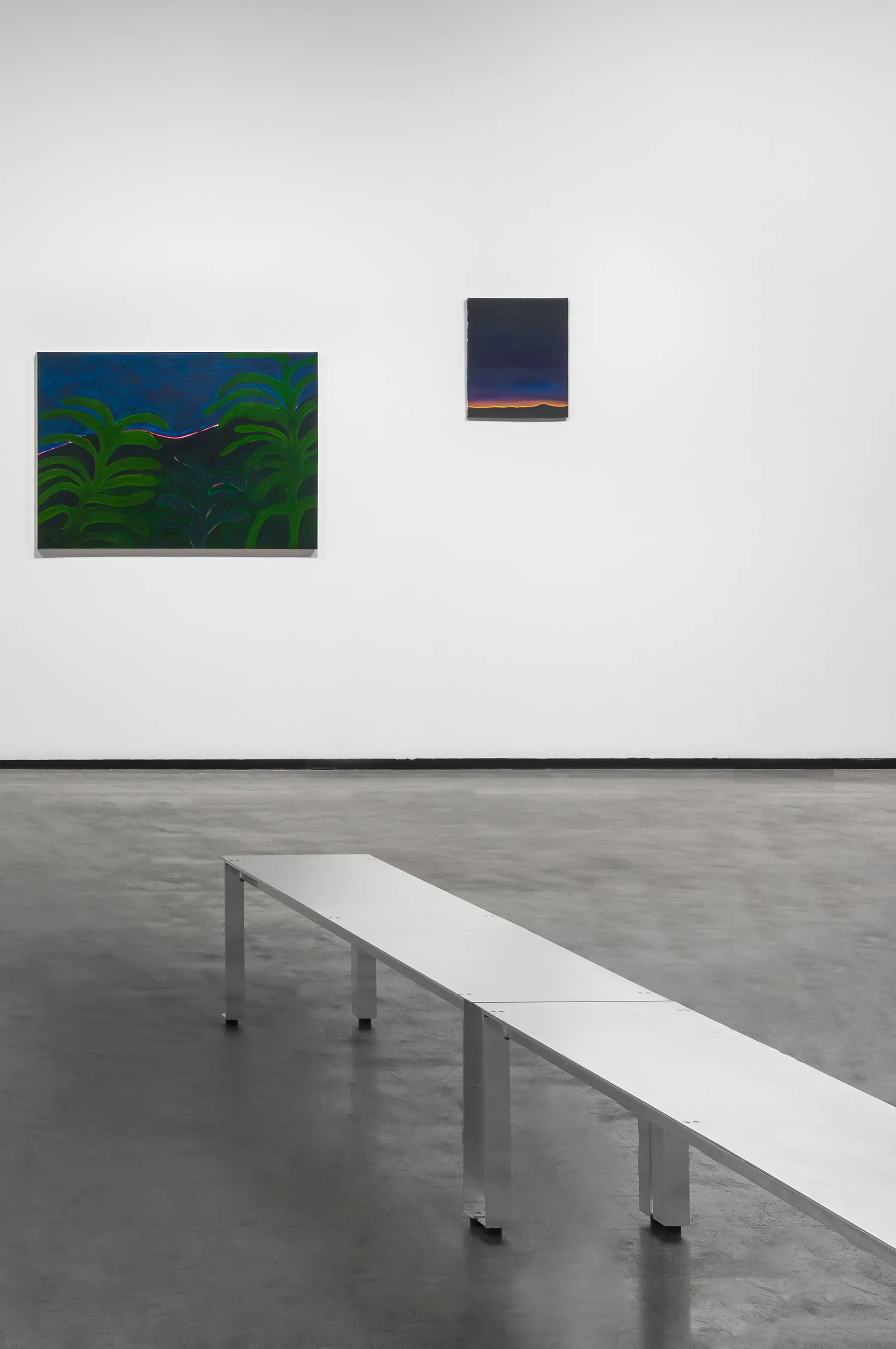
Three-millimetre brushed and anodised aluminum, cut into angles and plates: the angles welded, the plates screwed onto the structure, rubber discs fixed beneath the legs to meet whatever the floor is doing. The construction is entirely legible, which is the point — nothing about the CANTO series hides how it was assembled. Rated to 300 kilograms and suitable outdoors as well as in, it handles a covered porch or a back entrance where water is a given.
By Luiz Solano
€1.000 – €1.400 incl. tax
Bimschtal No 2 – Wooden Bench by StorqueStudios
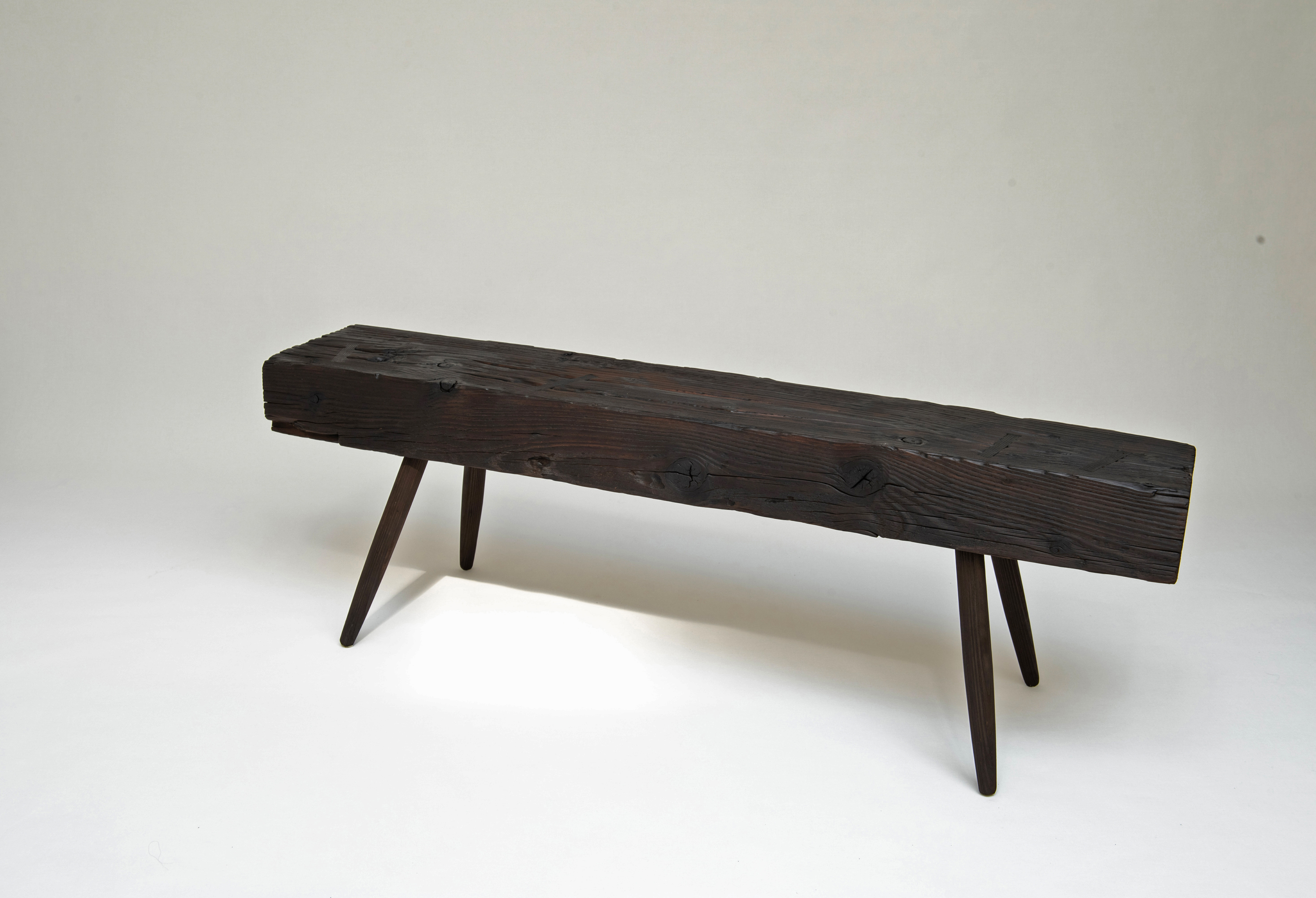
A salvaged beam, heavily damaged, its surface burnt to camouflage the worst of it and birch plywood driven through to reinforce the deep tearing. Those plywood dowels — the studio calls them Plydowels — carry the character of the piece, lifting a mass of heavy timber with something closer to the lightness of a toothpick. The approach is deliberately non-invasive, taking its cue from David Pye’s instruction not to torture your material. No assembly required, and it arrives already carrying more history than most furniture accumulates.
€1.457 incl. tax
Benches per entryway type
The front hall and foyer
In a hall with genuine width, the bench can sit as the primary object rather than a fixture pushed against plaster. Centre it on a wall and give it vertical support above — hooks, a shelf, or a mirror that returns light into a space that rarely has a window. Scale up rather than down: a 175-centimetre bench in a wide foyer looks intentional where a 90-centimetre one looks stranded. Furthermore, a runner underneath defines the zone and takes the grit, and our guide to choosing rugs by scale covers the proportions that work.
A narrow corridor
Depth is the only number that matters here. A bench of 40 centimeters or less keeps the passage usable, and a slatted or woven seat keeps the corridor from reading as blocked. Long and shallow beats short and deep every time, since the eye travels the length of the piece and the hallway feels extended rather than interrupted. By contrast, a lidded storage bench in a tight corridor tends to fail in practice — there is nowhere to stand while you open it.
The mudroom and back entrance
This is where material selection stops being aesthetic and becomes structural. Water, mud and salt arrive daily, so aluminum, charred timber or stone will hold up where cane and cotton will not. Open storage underneath earns its place in a mudroom specifically because wet boots need air to dry, and a closed box traps the damp against the timber. Accordingly, look for adjustable feet or rubber discs, since back-entrance floors are rarely level and often tiled.
The bedroom and dressing area
An entryway bench moved to the foot of a bed is one of the most reliable second lives in furniture. The dimensions translate directly — most bed widths sit close to standard bench lengths — and the function barely changes, since you are still sitting to deal with shoes. Here the upholstered and woven options come into their own, protected from weather and asked only to be comfortable. Our bedroom design guide works through how the piece sits against the bed.
Troubleshooting entryway benches
Levelling on uneven floors
Entryways sit on the oldest floors in most houses — original tile, worn stone, boards that have moved for a century. A bench that rocks is usually meeting a dip rather than being badly made. Adjustable feet solve it in seconds; without them, felt pads stacked under the short leg will do the job, though check the fit again after a few weeks as the pads compress. Notably, a rocking bench also loosens its own joints over time, so this is worth fixing early rather than living with.
Wet coats, shoes and humidity
The threshold is the most humid place in the house that nobody thinks of as humid. Wet outerwear draped over a wooden seat will lift the finish and eventually raise the grain; standing water in an open shelf will mark timber and stain cane. Therefore keep a tray or mat under the storage layer for footwear, and wipe standing water rather than letting it sit. Oiled surfaces recover from this better than lacquered ones, since a refresh coat of oil blends where a damaged lacquer has to be stripped.
Tightening joints and hardware
Any bench assembled with visible nuts, screws or rivets should be checked twice a year, because the daily action of someone dropping their weight onto one end works fasteners loose in a way that gentle use never would. Tighten by hand rather than with a driver on aluminum — the threads are softer than steel and strip easily. On wooden benches, movement in a joint usually means seasonal shrinkage rather than failure, and a season later it often takes up again on its own.
Protecting the seat and the floor beneath
Bags with metal feet and buckles do more damage to an entryway bench than people do. A folded runner or a leather pad across one end absorbs that without turning the piece into upholstery. Underneath, felt pads protect stone and timber floors from the grit that inevitably works its way under a leg and grinds. In addition, sliding a bench to sweep behind it is how most scratches happen — lift it, or fit glides designed to move.
Weight rating and daily use
A bench in a hallway takes point loads rather than distributed ones — one person landing on one end, repeatedly, often carrying something. Check the stated rating and treat it as a guide to construction quality as much as a limit; Canto’s 300-kilogram figure signals a frame engineered rather than assembled. Consequently, if the piece will also be stood on to reach a high shelf, that is worth confirming with the studio before you buy rather than after.
Frequently asked questions
What is the best bench for an entryway?
The one that fits the corridor with room to pass. Beyond that, a seat height of 40 to 45 centimeters, a depth of 40 or less in a narrow space, and a material that tolerates water — solid wood, aluminum or charred timber. Storage is optional and often better handled by the wall above.
What do you call an entryway bench?
Several names describe the same object: hall bench, foyer bench, mudroom bench, shoe bench, or hallway bench. Where it includes a back panel with hooks and a shelf above, it is usually called a hall tree or, in older usage, a settle. The terms shift with the region rather than the form.
Which is better for an entryway, a bench or a table?
A bench if you sit to deal with shoes; a console table if the entry is a pass-through and you need a surface at hand height for keys and post. Benches suit households with children, boots or a genuine mudroom. Consoles suit apartment entries where nobody lingers. In a hall with the width for both, the bench goes on the long wall and the console faces the door.
What are some modern ideas for a bench in my entryway?
Treat the bench as the object and the wall as its support rather than buying a matched set. A long shallow bench in folded aluminum under a single oversized mirror. A charred timber beam on a stone floor with hooks mounted straight into the plaster. A woven seat lit from above rather than beside.
What is the standard height for an entryway bench?
Between 40 and 45 centimeters, roughly 16 to 18 inches, which matches chair seat height. Lower reads as a perch and makes standing up harder; higher leaves shorter users without floor contact, which is the opposite of what a shoe bench is for.
How much weight should an entryway bench hold?
Look for at least 150 kilograms for a two-seat bench, and considerably more where the piece is long enough for three. The number matters less than where the load goes — a bench rated generously but supported only at the ends will flex in the middle over years of one person always sitting in the same place.
Why entryway benches earn their place
The threshold is the only part of a home that every person who enters it uses, and it is almost always the least considered. A bench changes that with very little effort, because it converts a corridor into somewhere you can stop. Indeed, the piece does its work at the exact moment a house is most functional and least composed — coats coming off, bags going down, the day being set aside — which is why the material and the making matter more here than in a room that only gets looked at.
All eight of these come from independent studios producing in small numbers, several of them made to order, which means they arrive with variation in grain, tone and finish rather than uniformity. That is the trade for a piece nobody else in your building owns. Collected once and cared for reasonably, an entryway bench in solid ash or brushed aluminum will still be holding the threshold long after the rest of the hall has been repainted twice. Our selection of versatile stools and our accent chairs cover the seating that follows once past the door.